
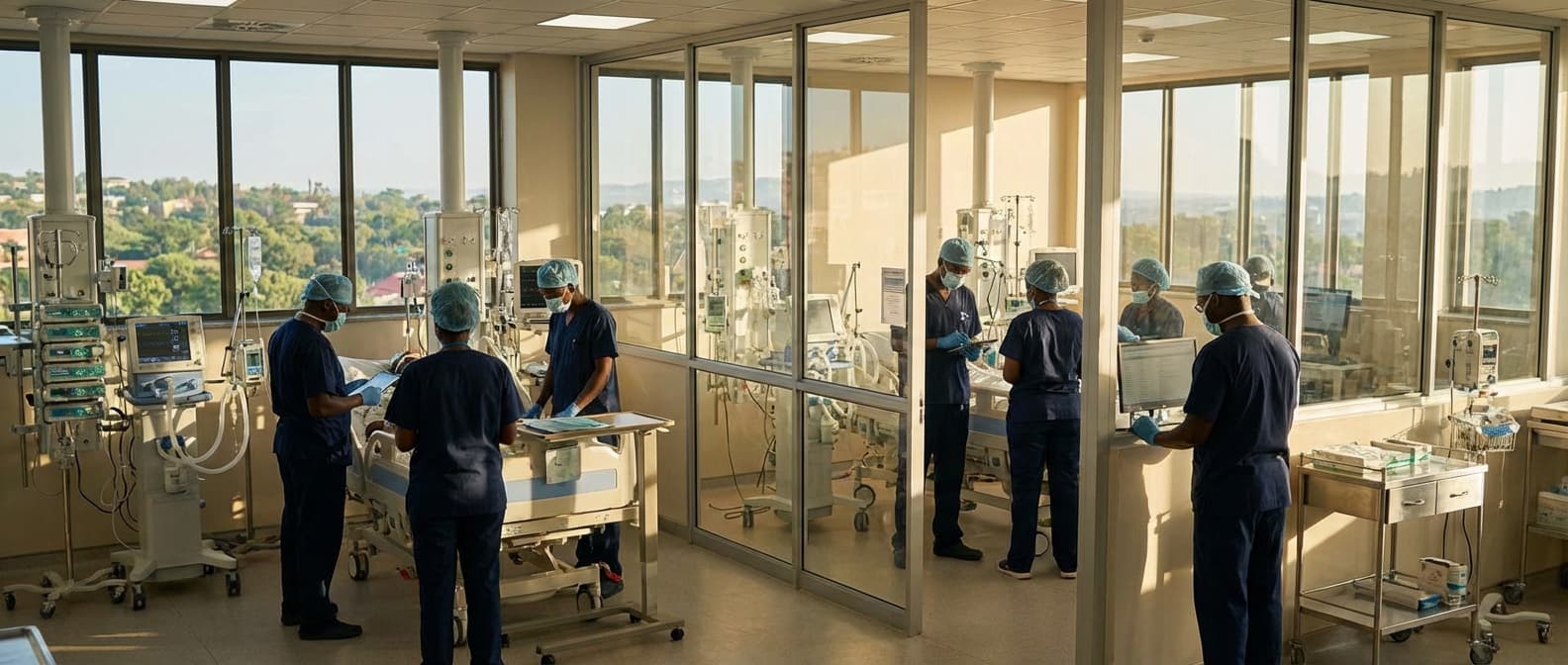
Ventilator Fleet Management & PM in Egypt
Engineering Excellence & Technical Support
Preventive maintenance and fleet management for ICU ventilators High-standard technical execution following OEM protocols and local regulatory frameworks.
Comprehensive Ventilator Fleet Tracking
Leveraging IoT sensors and cloud-based platforms for real-time location, status, and utilization monitoring of the entire ventilator fleet across Egyptian healthcare facilities. This enables proactive resource allocation and immediate response to critical needs.
Predictive Maintenance & Extended Lifespan
Implementing AI-driven predictive maintenance algorithms that analyze operational data from ventilators. This forecasts potential component failures, allowing for scheduled maintenance before critical breakdowns, ensuring continuous availability and optimizing equipment lifespan.
Enhanced Sterilization & Compliance Monitoring
Establishing a robust system for tracking and verifying ventilator sterilization cycles and compliance with national and international medical device standards. This minimizes infection risks and ensures regulatory adherence for patient safety and operational integrity.
What Is Ventilator Fleet Management & Pm In Egypt?
Ventilator Fleet Management & Preventive Maintenance (PM) in Egypt refers to the systematic oversight and scheduled servicing of mechanical ventilators deployed within healthcare facilities across the nation. This service encompasses the entire lifecycle of ventilator assets, from procurement and deployment to ongoing operational monitoring, maintenance, repair, and eventual decommissioning. The objective is to ensure optimal device availability, functionality, and longevity, thereby safeguarding patient care continuity and adherence to stringent medical device regulations. The service is critical for managing the significant capital investment ventilators represent and mitigating risks associated with equipment failure during critical patient care scenarios.
| Service Component | Description | Who Needs It | Typical Use Cases |
|---|---|---|---|
| Asset Tracking | Maintaining a comprehensive registry of all ventilator units, their specifications, and deployment locations. | Hospitals (Public & Private), Intensive Care Units (ICUs), Emergency Departments, Respiratory Care Centers, Medical Device Companies operating in Egypt. | Locating specific ventilator models for deployment in response to patient needs or outbreaks. Auditing inventory for regulatory compliance. Calculating asset depreciation. |
| Preventive Maintenance (PM) | Scheduled inspections, cleaning, calibration, and replacement of consumables to ensure optimal performance and prevent failures. | All healthcare facilities utilizing mechanical ventilators. Biomedical Engineering Departments. Third-party medical equipment service providers. | Routine checks before patient use. Seasonal or annual servicing. Calibration of sensors and alarms. Filter replacement. |
| Corrective Maintenance & Repair | Diagnosis and repair of malfunctioning ventilators, including component replacement and software updates. | Biomedical Engineering Departments. Specialized medical equipment repair services. Ventilator manufacturers' authorized service partners. | Responding to alarm conditions. Troubleshooting ventilation circuit leaks. Repairing power supply failures. Replacing damaged touchscreens or control panels. |
| Performance Monitoring | Collecting and analyzing data on ventilator usage, error logs, and patient-ventilator synchrony to identify trends and potential issues. | Clinical Engineering departments. Quality assurance teams. Data analytics providers specializing in healthcare. | Identifying ventilators with high failure rates. Optimizing ventilator settings for patient outcomes. Predicting maintenance needs based on usage patterns. |
| Regulatory Compliance | Ensuring all ventilators and their maintenance records meet Egyptian MOHP regulations and international standards. | Hospitals. Regulatory affairs departments. Third-party compliance auditors. | Documenting PM schedules and service reports for inspections. Ensuring devices are certified and approved for use. Maintaining traceability of all maintenance activities. |
Key Components of Ventilator Fleet Management & PM in Egypt
- Asset Tracking and Inventory Management: Maintaining an accurate, real-time database of all ventilator units, including serial numbers, acquisition dates, location, status, and service history.
- Preventive Maintenance Scheduling and Execution: Developing and adhering to a rigorous schedule of routine inspections, cleaning, calibration, and component replacement as per manufacturer specifications and regulatory guidelines.
- Corrective Maintenance and Repair: Promptly addressing equipment malfunctions and failures, involving diagnostics, parts procurement, and certified technician intervention.
- Performance Monitoring and Optimization: Utilizing data analytics to track ventilator usage patterns, identify potential issues before they escalate, and optimize resource allocation.
- Compliance and Regulatory Adherence: Ensuring all ventilators meet Egyptian Ministry of Health and Population (MOHP) and international standards for medical device safety and efficacy.
- Training and Competency Assessment: Providing or facilitating training for biomedical engineers, technicians, and clinical end-users on proper operation, maintenance, and troubleshooting of various ventilator models.
- End-of-Life Management: Planning for and executing the decommissioning and disposal of aging or obsolete ventilator units in an environmentally and regulatory compliant manner.
Who Needs Ventilator Fleet Management & Pm In Egypt?
Effective ventilator fleet management and preventative maintenance (PM) are crucial for ensuring the optimal performance, availability, and longevity of vital medical equipment in Egypt. This proactive approach minimizes costly breakdowns, reduces patient risk, and ensures compliance with regulatory standards. The need extends across various healthcare settings and departments that rely on these life-saving devices.
| Customer Segment | Key Departments/Users | Primary Needs & Benefits of FM/PM |
|---|---|---|
| Public Hospitals | ICU, ED, OR, Respiratory Therapy | Maximize equipment uptime for critical patient care, cost-effective maintenance, regulatory compliance, extended equipment lifespan, optimized resource allocation. |
| Private Hospitals | ICU, ED, OR, Pulmonology, Anesthesiology | Ensure high patient satisfaction, competitive service offering, minimize revenue loss due to equipment downtime, proactive risk management. |
| Specialized Centers (e.g., Cardiac, Pediatric) | NICU, PICU, ICU | Maintain specialized equipment for vulnerable patient populations, ensure accuracy and reliability of complex ventilation modes. |
| Home Healthcare Providers | Patient Care Teams, Technical Support | Ensure patient safety and comfort at home, timely servicing of equipment used in long-term care, manage distributed assets. |
| EMS/Ambulance Services | Paramedics, Fleet Managers | Reliable ventilators for pre-hospital care, rapid deployment readiness, compliance with safety standards during transport. |
| Government Health Organizations | Procurement, Operations, Quality Assurance | Standardized maintenance protocols across facilities, data-driven decision-making for equipment acquisition and replacement, public health preparedness. |
| Medical Equipment Lessors | Asset Management, Technical Service Teams | Maximize asset utilization and profitability, maintain equipment value, ensure contractual obligations for servicing are met. |
Target Customers and Departments in Egypt Requiring Ventilator Fleet Management & PM
- Hospitals (Public and Private)
- Intensive Care Units (ICUs)
- Emergency Departments (EDs)
- Operating Rooms (ORs)
- Pulmonology Departments
- Anesthesiology Departments
- Neonatal Intensive Care Units (NICUs)
- Pediatric Intensive Care Units (PICUs)
- Respiratory Therapy Departments
- Home Healthcare Providers
- Emergency Medical Services (EMS) / Ambulance Services
- Military Hospitals and Clinics
- Government Health Organizations and Ministries
- Medical Equipment Leasing Companies
- Medical Training and Simulation Centers
Ventilator Fleet Management & Pm Process In Egypt
This document outlines the workflow for Ventilator Fleet Management and Preventive Maintenance (PM) processes in Egypt, from initial inquiry through to execution and closure. The process is designed to ensure the optimal performance, longevity, and availability of the ventilator fleet through proactive maintenance and efficient management.
| Stage | Activity | Responsible Party | Key Documents/Tools | Outcome/Deliverable | Notes/Considerations |
|---|---|---|---|---|---|
| Hospital identifies a need for PM or repair, or a new ventilator deployment. | Hospital Biomedical Engineering / Clinical Staff | Internal Request Form, Email, Phone Call | Formal PM request or new equipment inquiry logged. | Urgency of request to be clearly stated. |
| Received inquiry is reviewed for completeness, urgency, and budget allocation (if applicable). PM schedules are checked. | Fleet Management Team / Biomedical Engineering Supervisor | Fleet Management System (FMS), Hospital Budget Records | Request validated and prioritized. PM appointment scheduled or repair initiated. | Coordination with MoHP guidelines for essential equipment maintenance. |
| For specialized PM or complex repairs, the relevant authorized service provider or vendor is contacted. | Fleet Management Team / Biomedical Engineering Department | Service Level Agreements (SLAs), Vendor Contact List, Purchase Orders (POs) | Service technician assigned, appointment confirmed, and parts availability checked. | Ensure vendor is accredited and has valid service contracts. |
| PM schedule is finalized, or repair appointment is set. Logistics for equipment movement (if required) and technician's arrival are arranged. | Fleet Management Team / Logistics Team / Service Provider | FMS, Calendar, Dispatch System, Transportation Logs | Confirmed schedule, technician dispatched, necessary tools/parts allocated. | Consider hospital operating hours and patient care continuity. |
| Technician performs scheduled PM according to manufacturer's guidelines and hospital protocols. | Maintenance Technician / Service Provider Technician | PM Checklist, Manufacturer's Service Manual, FMS Mobile App | Completed PM checklist, calibration records, any minor adjustments documented. | Standardized PM protocols for all ventilator models are crucial. |
| Technician diagnoses and repairs faulty ventilators. Parts are ordered and replaced as needed. | Maintenance Technician / Service Provider Technician | Diagnostic Tools, Parts Inventory, Repair Log, FMS Mobile App | Defect identified, repair performed, functionality verified, parts replaced documented. | Ensure use of genuine/certified replacement parts. |
| Post-PM or repair, the ventilator undergoes rigorous testing and calibration to ensure it meets performance specifications. | Maintenance Technician / Service Provider Technician | Calibration Equipment, Test Lung, Manufacturer's Calibration Procedures | Calibration certificate issued, performance data logged in FMS. | Regular calibration is critical for patient safety. |
| All activities, findings, parts used, and calibration results are meticulously documented in the FMS. | Maintenance Technician / Service Provider Technician | FMS (Desktop/Mobile), Service Reports, Calibration Certificates | Up-to-date FMS records, comprehensive service/repair reports. | Accurate data entry is vital for historical tracking and future planning. |
| Completed service reports and documentation are reviewed for accuracy and adherence to standards. | Biomedical Engineering Supervisor / Fleet Management Team Lead | FMS, Quality Checklists | Service report approved, work order closed in FMS. | Spot checks and audits can enhance quality assurance. |
| Invoices from service providers are processed and payments are made based on approved service reports and contracts. | Finance Department / Procurement Department | Invoices, Service Reports, Purchase Orders, Payment System | Payment to service provider completed. | Ensure timely processing to maintain good vendor relationships. |
| Feedback is gathered from hospitals on service quality and equipment performance. Lessons learned inform process improvements. | Fleet Management Team / Hospital Management | Feedback Forms, Post-Service Surveys, Performance Metrics | Identified areas for improvement, updated PM schedules or protocols. | Regular review meetings with stakeholders. |
Key Stakeholders Involved
- Hospitals/Clinics (End-Users)
- Ministry of Health and Population (MoHP) / Regulatory Bodies
- Biomedical Engineering Departments (in hospitals)
- Service Providers/Vendors (authorized for specific brands)
- Logistics & Warehousing Teams
- Maintenance Technicians
- Fleet Management System Administrator
Ventilator Fleet Management & Pm Cost In Egypt
Managing a ventilator fleet in Egypt involves significant operational and maintenance costs. These costs are influenced by several factors, including the type and age of the ventilators, the complexity of their technology, the availability of spare parts, the expertise of the maintenance technicians, and the service level agreements (SLAs) in place with Original Equipment Manufacturers (OEMs) or third-party maintenance providers. Regular preventive maintenance (PM) is crucial for ensuring the reliability and longevity of medical equipment, and its cost is a substantial component of overall fleet management. The pricing for ventilator PM services in Egypt can vary considerably, making it essential for healthcare institutions to understand the key drivers of these costs to budget effectively and negotiate favorable contracts. These costs are typically quoted and paid in Egyptian Pounds (EGP).
| Service Type | Estimated Price Range (EGP per Ventilator per Year) | Notes |
|---|---|---|
| Basic Preventive Maintenance (Annual Check-up) | 5,000 - 15,000 | Includes inspection, calibration, cleaning, and basic functional testing. Excludes parts and significant repairs. |
| Comprehensive Preventive Maintenance (Annual) | 10,000 - 30,000 | Includes basic PM plus replacement of wear-and-tear parts (e.g., filters, seals), and some minor adjustments. May or may not include specific sensor replacements depending on the SLA. |
| Full Service Contract (Annual) | 25,000 - 70,000+ | Includes all PM, unlimited planned and unplanned repairs, labor, and potentially all parts (depending on the contract's specifics). This is a premium service offering. Costs can be significantly higher for very advanced critical care ventilators. |
| On-Demand Repair Services (per incident) | 2,000 - 10,000+ (plus parts) | Cost for a single repair call-out, including technician labor. Parts are billed separately and can vary widely. |
| Extended Warranty/Service Plans (beyond OEM warranty) | Varies greatly, often a percentage of the equipment's original cost annually. | Can be bundled with new equipment purchases or negotiated for existing fleets. |
Key Pricing Factors for Ventilator Fleet Management & PM in Egypt
- Ventilator Type & Model: High-end, complex ventilators (e.g., ICU ventilators with advanced modes) generally have higher PM costs than simpler, transport ventilators.
- Age of Equipment: Older ventilators may require more frequent maintenance and potentially more expensive repairs due to wear and tear and the availability of parts.
- OEM vs. Third-Party Maintenance: OEM services often come at a premium but may offer guaranteed parts and specialized knowledge. Third-party providers can sometimes offer more competitive pricing.
- Service Level Agreement (SLA) Scope: PM contracts can range from basic checks to comprehensive service plans that include parts, labor, emergency repairs, and response times. More comprehensive SLAs will naturally be more expensive.
- Frequency of PM: The recommended frequency of PM (e.g., annually, semi-annually) dictated by the manufacturer and usage patterns impacts the total annual cost.
- Spare Parts Availability & Cost: The cost and ease of sourcing specific spare parts in Egypt can significantly influence PM pricing. Imported parts can be subject to customs duties and currency fluctuations.
- Technician Expertise & Certification: Highly skilled and certified technicians command higher labor rates.
- Geographic Location within Egypt: While less of a primary driver for PM contracts, travel costs for technicians might be factored in for remote locations.
- Volume Discounts: Larger fleets managed under a single contract might benefit from negotiated volume discounts.
- Inflation & Currency Fluctuations: As PM costs are in EGP, general inflation and significant fluctuations in the EGP against major currencies (affecting imported parts) can influence pricing over time.
Affordable Ventilator Fleet Management & Pm Options
Managing a medical ventilator fleet efficiently and ensuring timely preventative maintenance (PM) is crucial for patient care and operational cost control. This requires a strategic approach to procurement, utilization, and servicing. Value bundles offer a way to integrate services and equipment for greater cost-effectiveness, while implementing smart cost-saving strategies can significantly reduce the overall financial burden associated with ventilator fleet management.
| Value Bundle Type | Key Inclusions | Potential Cost Savings |
|---|---|---|
| Equipment + PM Contracts | Ventilator purchase/lease, scheduled PM, parts replacement | Reduced upfront costs, predictable maintenance expenses, extended equipment lifespan |
| Lease + Service Packages | Ventilator lease, all-inclusive maintenance, potential upgrades | Lower capital outlay, predictable operational expenses, access to latest technology without full purchase |
| Parts & Training Bundles | Bulk spare parts, in-house technician training | Reduced service call costs, faster repair times, increased in-house technical capability |
| Technology Integration Bundles | Ventilators, monitoring software, data analytics | Improved operational efficiency, better patient outcomes through data insights, streamlined workflow |
Key Components of Affordable Ventilator Fleet Management & PM Options
- Understanding Value Bundles: Value bundles combine multiple services and/or equipment into a single package, often at a discounted price compared to purchasing each component separately. This can include the initial purchase or lease of ventilators, extended warranties, PM services, parts, and even training. The goal is to create predictable costs and streamline the acquisition and maintenance process.
- **Types of Value Bundles:
- ["Equipment + PM Contracts: Bundles that include the upfront cost of ventilators along with a multi-year agreement for scheduled preventative maintenance.","Lease + Service Packages: Leasing ventilators with a comprehensive service plan that covers all PM, repairs, and potential upgrades.","Parts & Training Bundles: Acquiring a stock of essential spare parts along with training for in-house biomedical technicians to perform routine PM and minor repairs.","Technology Integration Bundles: Combining ventilator acquisition with associated monitoring software and data management solutions."]
- **Cost-Saving Strategies for Ventilator Fleet Management:
- ["Strategic Procurement:",["Volume Discounts: Negotiate better pricing by consolidating purchases across multiple departments or facilities.","Lease vs. Buy Analysis: Conduct thorough financial analysis to determine the most cost-effective option based on usage patterns, depreciation, and technological obsolescence.","Refurbished Equipment: Consider purchasing certified refurbished ventilators for less critical applications or as backup units, significantly reducing upfront costs.","Standardization: Standardizing on a limited number of ventilator models simplifies training, maintenance, and spare parts inventory."],"Proactive Preventative Maintenance (PM):",["Scheduled PM: Adhering to manufacturer-recommended PM schedules prevents costly breakdowns and extends equipment lifespan.","In-House vs. Outsourced PM: Evaluate the cost-effectiveness of performing PM in-house (if you have trained staff and resources) versus outsourcing to third-party service providers or the manufacturer.","Remote Monitoring & Diagnostics: Utilize connected ventilators to enable remote monitoring and early detection of potential issues, reducing the need for on-site interventions.","Data-Driven Maintenance: Analyze equipment usage data and failure rates to optimize PM schedules and identify problematic models."],"Optimized Fleet Utilization:",["Inventory Management: Maintain an appropriate inventory level to meet demand without excessive overstocking, which ties up capital.","Equipment Tracking & Location: Implement systems to accurately track the location and status of all ventilators to ensure they are available when needed and prevent loss.","Repurposing Equipment: Identify opportunities to repurpose ventilators for different levels of care or different departments within the facility."],"**Supplier Relationship Management:",["Long-Term Contracts: Negotiate long-term contracts with suppliers for parts and service to secure predictable pricing and priority support.","Competitive Bidding: Regularly solicit bids from multiple vendors to ensure competitive pricing for both equipment and services.","Performance-Based Contracts: Incorporate performance metrics into service contracts to ensure quality and timely execution."]]
Verified Providers In Egypt
In Egypt's evolving healthcare landscape, discerning patients seek assurance of quality and reliability. Verified providers represent a critical benchmark for patient safety and treatment efficacy. Franance Health stands out as a leading platform in this regard, meticulously vetting healthcare professionals and facilities to ensure they meet the highest standards. This rigorous credentialing process not only safeguards patient well-being but also empowers individuals to make informed decisions about their healthcare journey. By prioritizing transparency and excellence, Franance Health cultivates trust and facilitates access to superior medical services across Egypt. Choosing a Franance Health-verified provider means opting for expertise, ethical practice, and a commitment to patient-centered care.
| Credentialing Area | Franance Health Standard | Benefit to Patients |
|---|---|---|
| Professional Licenses & Certifications | Valid, up-to-date, and recognized by Egyptian authorities. | Ensures providers are legally qualified and meet basic professional requirements. |
| Clinical Experience & Specialization | Demonstrated years of practice and relevant specialization in their field. | Guarantees access to experienced doctors and specialists with the right expertise for your condition. |
| Continuing Medical Education (CME) | Active participation in recognized CME programs to stay updated with advancements. | Ensures patients receive care informed by the latest medical knowledge and techniques. |
| Patient Feedback & Outcomes | Positive patient testimonials and evidence of successful treatment outcomes (where applicable and ethically permissible). | Provides insights into patient satisfaction and the effectiveness of care received. |
| Facility Standards (for clinics/hospitals) | Adherence to hygiene, safety, and equipment maintenance standards. | Ensures a safe, clean, and well-equipped environment for diagnosis and treatment. |
| Ethical Practice & Professional Conduct | Commitment to patient confidentiality, informed consent, and ethical medical practice. | Guarantees respectful and trustworthy medical interactions. |
Why Franance Health Credentials Matter in Egypt:
- Uncompromising Quality Assurance: Franance Health's verification process goes beyond basic licensing, examining clinical expertise, patient outcomes, and adherence to ethical guidelines.
- Enhanced Patient Safety: Verified providers have demonstrated a commitment to stringent safety protocols, minimizing risks and ensuring optimal treatment environments.
- Access to Top Medical Talent: We identify and endorse healthcare professionals who consistently deliver exceptional care and possess specialized skills.
- Trust and Transparency: Our verification mark provides patients with a clear indicator of a provider's legitimacy and commitment to high standards, fostering confidence.
- Streamlined Healthcare Navigation: By pre-vetting providers, Franance Health simplifies the process of finding reliable healthcare solutions for various medical needs.
- Continuous Improvement: Verified providers are often engaged in ongoing professional development and are subject to periodic reviews, ensuring they remain at the forefront of medical advancements.
Scope Of Work For Ventilator Fleet Management & Pm
This Scope of Work (SOW) outlines the requirements for comprehensive Ventilator Fleet Management and Preventative Maintenance (PM) services. The objective is to ensure optimal performance, reliability, and patient safety for the entire ventilator fleet. This document details the technical deliverables and standard specifications required from the service provider.
| Technical Deliverable | Description | Standard Specification / Requirement |
|---|---|---|
| Fleet Inventory Database | A digital database containing comprehensive information for each ventilator. | Must include: Asset ID, Manufacturer, Model, Serial Number, Acquisition Date, Location, Current Status (Active, In Repair, Decommissioned), Last PM Date, Next PM Due Date, Service History Log. |
| Preventative Maintenance (PM) Schedule | A documented schedule for all PM activities. | Aligned with manufacturer's recommendations, with deviations justified and approved. Minimum PM frequency: [Specify frequency, e.g., annually, semi-annually]. |
| PM Checklist | Standardized checklists for each ventilator model to ensure consistent and thorough PM procedures. | Must cover all functional checks, safety tests, cleaning, lubrication, and component replacements as per manufacturer guidelines. Include specific test parameters and acceptable ranges. |
| Calibration Certificates | Documentation verifying that ventilators have been calibrated to traceable standards. | Each calibration must be accompanied by a certificate detailing: Date of Calibration, Equipment Used, Calibration Standards Traceability, Pre- and Post-Calibration Readings, Acceptable Tolerance Limits, Technician's Signature, and Equipment ID. |
| Repair Reports | Detailed reports for all corrective maintenance and repair actions. | Must include: Date of report, Equipment ID, Nature of problem, Troubleshooting steps, Parts replaced (part number, quantity, cost), Labor hours, Technician's name, Date of repair completion, and Outcome of repair (functional, tested). |
| Software Update Logs | Records of all software updates and upgrades applied to ventilators. | Include: Date of update, Ventilator ID, Software version installed, Source of update, and any observed changes or issues. |
| Service Manuals & Technical Documentation | Access to up-to-date service manuals, technical bulletins, and schematics for all managed ventilator models. | Must be readily available to authorized service personnel. Digital format preferred. |
| Performance Verification Reports | Reports confirming the operational parameters and performance of ventilators post-maintenance or repair. | Must include: Ventilator ID, Test Date, Parameters Tested (e.g., Tidal Volume accuracy, Pressure accuracy, Flow rate accuracy, Alarm functionality), Measured values, Target values, and Technician's sign-off. |
| Competency Assessment for Technicians | Proof of technician qualifications and competency. | Technicians must be certified by the manufacturer or possess equivalent documented training and experience for the specific ventilator models they service. Ongoing training and recertification records required. |
| Response Time SLA | Service Level Agreements for response times to service requests. | Emergency/Critical Failure: [Specify time, e.g., within 2 hours]. Routine/Non-critical: [Specify time, e.g., within 24 hours]. |
Key Service Components
- Fleet Inventory and Asset Management: Maintaining an accurate and up-to-date inventory of all ventilators, including serial numbers, model, acquisition date, location, and service history.
- Preventative Maintenance (PM): Performing scheduled PM on all ventilators according to manufacturer recommendations and established protocols to prevent failures and ensure optimal performance.
- Corrective Maintenance and Repair: Responding promptly to equipment malfunctions and performing necessary repairs to restore functionality.
- Calibration and Performance Verification: Regularly calibrating ventilators to ensure accuracy and verify performance against specified parameters.
- Software Updates and Upgrades: Managing and implementing software updates and upgrades as recommended by manufacturers.
- Training and Competency: Providing training to clinical staff on the proper use, care, and basic troubleshooting of ventilator equipment.
- Reporting and Documentation: Maintaining detailed records of all maintenance activities, repairs, calibrations, and inventory. Providing regular reports on fleet status, PM compliance, and equipment reliability.
- Quality Assurance and Compliance: Ensuring all services are performed in compliance with relevant regulatory standards (e.g., FDA, ISO) and organizational policies.
- Equipment Decommissioning and Disposal: Managing the process of retiring and disposing of obsolete or irreparable equipment in an environmentally responsible manner.
Service Level Agreement For Ventilator Fleet Management & Pm
This Service Level Agreement (SLA) outlines the terms and conditions for the management and preventative maintenance (PM) of the hospital's ventilator fleet. It defines response times for critical issues and guarantees a minimum uptime for essential equipment, ensuring patient care continuity. Key performance indicators (KPIs) will be regularly monitored and reported to ensure adherence to these service levels.
| Service Type | Priority Level | Response Time Target | Resolution Time Target | Uptime Guarantee |
|---|---|---|---|---|
| Ventilator Malfunction (Critical - Patient Impacted) | Critical | Within 15 minutes of notification | Within 2 hours (for repair or replacement) | 98% of all ventilators operational and available for use at any given time. |
| Ventilator Malfunction (High - Potential Patient Impact) | High | Within 1 hour of notification | Within 4 hours (for repair or replacement) | 99% of scheduled preventative maintenance completed on time. |
| Scheduled Preventative Maintenance (PM) | Standard | As per pre-approved schedule | As per pre-approved schedule | |
| Routine Equipment Checks / Calibration | Standard | As per pre-approved schedule | As per pre-approved schedule |
Scope of Service
- Comprehensive management of the entire ventilator fleet, including inventory tracking, deployment, and retrieval.
- Scheduled preventative maintenance (PM) to ensure optimal equipment performance and longevity.
- On-demand repair services for all ventilator models.
- Calibration and safety checks as per manufacturer recommendations and regulatory standards.
- Spare parts management and inventory control.
- Staff training on basic equipment operation and troubleshooting (as defined in a separate training agreement).
- Regular reporting on fleet status, maintenance activities, and performance metrics.
Frequently Asked Questions

Ready when you are
Let's scope your Ventilator Fleet Management & PM in Egypt project in Egypt.

Scaling healthcare logistics and technical systems across the entire continent.