
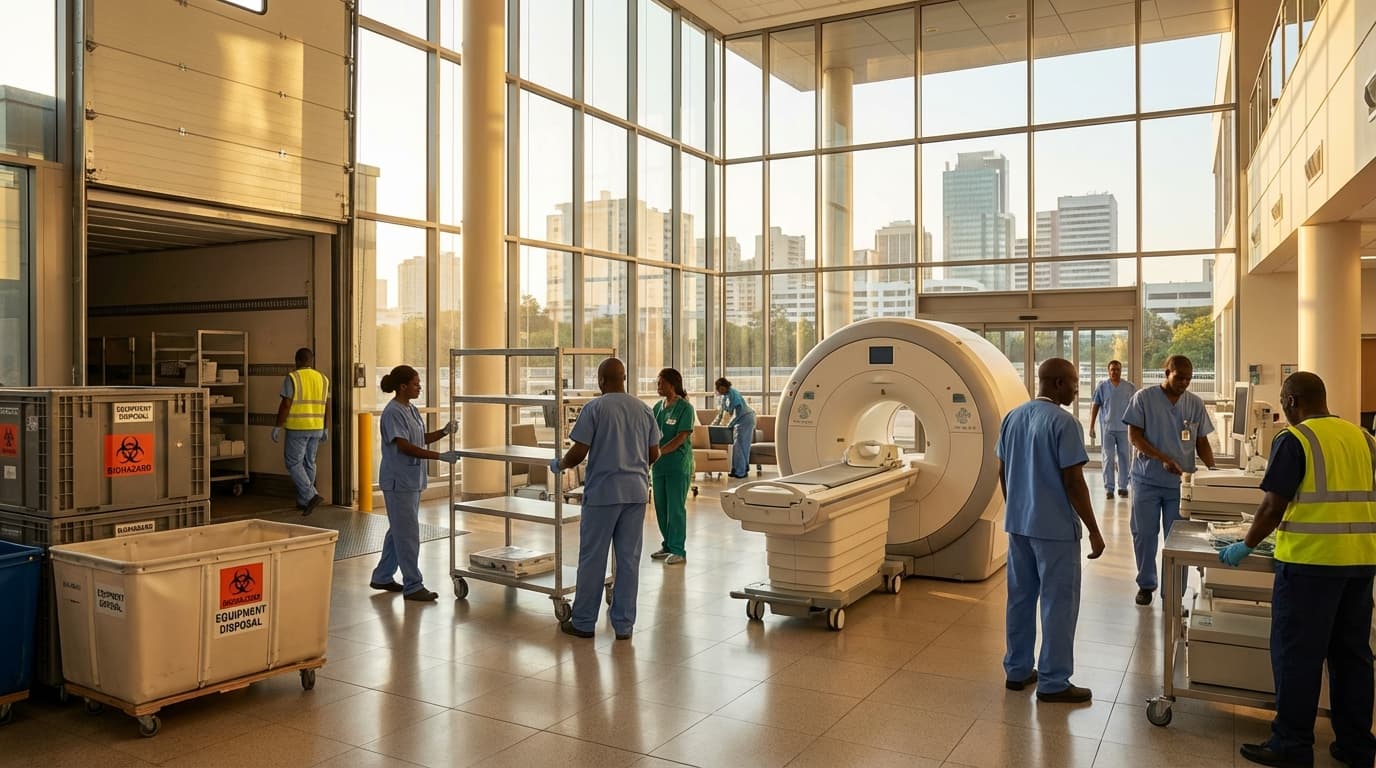
Site Restoration Service After Equipment Removal in Egypt
Engineering Excellence & Technical Support
Site Restoration Service After Equipment Removal High-standard technical execution following OEM protocols and local regulatory frameworks.
Comprehensive Soil Remediation & Stabilization
Leveraging advanced geo-technical analysis and tailored bioremediation techniques, we restore soil integrity and health to pre-disturbance levels after heavy equipment removal. Our Egyptian-context specific approach addresses compaction, contamination, and erosion, ensuring a stable and productive future landscape.
Advanced Hydroseeding & Irrigation Systems
Implementing precision hydroseeding with native, drought-resistant seed mixes and integrating efficient subsurface irrigation systems, we accelerate revegetation and promote long-term ecological recovery in Egypt's arid and semi-arid environments. This minimizes water usage while maximizing plant establishment.
Integrated GIS Mapping & Environmental Monitoring
Utilizing cutting-edge GIS technology for pre- and post-restoration site mapping, we provide detailed spatial data on vegetation cover, soil conditions, and water flow. Continuous environmental monitoring ensures adherence to regulatory standards and demonstrates measurable progress in ecological restoration.
What Is Site Restoration Service After Equipment Removal In Egypt?
Site restoration after equipment removal in Egypt is a critical environmental and operational service focused on returning land that has hosted industrial, commercial, or construction equipment to a safe, stable, and environmentally sound condition. This process is essential for compliance with Egyptian environmental regulations, asset handover, land repurposing, and mitigating long-term environmental liabilities. The service encompasses a range of activities designed to address the physical and chemical impacts resulting from the presence and eventual removal of machinery, infrastructure, and associated materials.
| Who Needs Site Restoration? | Typical Use Cases in Egypt | |||||
|---|---|---|---|---|---|---|
| Industrial Facilities: Manufacturing plants, refineries, chemical processing sites, power generation facilities undergoing equipment upgrades or complete decommissioning. | Construction Projects: Sites where heavy machinery, temporary structures, or storage yards have been established for infrastructure development (e.g., highways, bridges, dams, new urban developments). | Mining and Extractive Industries: Operational areas, processing plants, and associated infrastructure (e.g., workshops, fuel storage) post-extraction or during mine closure. | Oil and Gas Sector: Exploration and production sites, processing terminals, pipelines, and associated support facilities. | Port and Terminal Operations: Areas used for heavy lifting equipment, storage, and maintenance within port facilities. | Government and Defense Agencies: Military bases or government infrastructure projects where equipment has been removed. | Agricultural Operations: Large-scale farms that have utilized specialized heavy machinery and associated infrastructure. |
| Decommissioning of Legacy Industrial Sites: Restoring land for redevelopment or environmental protection after the closure of old factories or processing plants. | End-of-Lease or Land Repurposing: Preparing land previously occupied by temporary industrial or construction operations for agricultural, commercial, or residential use. | Environmental Compliance and Permitting: Meeting stringent Egyptian environmental agency requirements for site closure and land transfer. | Asset Handover and Sale: Ensuring a clean and compliant site for the sale or transfer of property to new owners or operators. | Mitigation of Environmental Liabilities: Addressing historical contamination and reducing the risk of long-term environmental and legal responsibilities. | Infrastructure Project Completion: Restoring areas impacted by the construction of major transportation or utility projects. | Emergency Response Site Cleanup: Addressing contamination from temporary equipment used in disaster response. |
Key Components of Site Restoration:
- Decontamination and Remediation: This involves the identification and removal of hazardous substances, including oils, greases, fuels, solvents, heavy metals, and other chemicals that may have leaked or been spilled during equipment operation and removal. Techniques can include soil excavation and off-site disposal, in-situ treatment (e.g., bioremediation, chemical oxidation), or capping of contaminated areas.
- Hazardous Materials Management: Proper identification, segregation, containment, transportation, and disposal of any residual hazardous materials encountered during the removal and restoration phases, adhering to national and international waste management protocols.
- Structural Demolition and Decommissioning: Safely dismantling and removing any remaining non-hazardous structural elements associated with the equipment or its operation, such as foundations, support structures, pipelines, and storage tanks. This includes managing demolition debris through recycling or appropriate disposal.
- Soil Stabilization and Regrading: Addressing any soil compaction, erosion, or loss of soil structure caused by heavy equipment traffic. This may involve tilling, amendment, and re-grading to achieve stable topography and prevent future erosion.
- Vegetation Management and Revegetation: Where applicable, the removal of invasive species, the establishment of appropriate soil conditions, and the reintroduction of native or approved vegetation to promote ecological recovery and prevent erosion. This can range from simple seeding to more complex landscape restoration.
- Waterway and Groundwater Protection: Implementing measures to prevent further contamination of surface water and groundwater sources during and after the restoration process. This may involve the installation of containment barriers or pump-and-treat systems.
- Final Site Survey and Reporting: Comprehensive post-restoration assessments, including soil and water sampling, to verify that remediation objectives have been met and to provide detailed documentation for regulatory compliance and client records.
Who Needs Site Restoration Service After Equipment Removal In Egypt?
Following the removal of large-scale equipment, whether for upgrades, decommissioning, or relocation, many sites in Egypt require specialized restoration services. This process is crucial for environmental compliance, safety, and preparing the land for its next use. Identifying the right customers and departments responsible for these decisions is key to understanding the demand for such services.
| Target Customer/Industry | Responsible Departments/Roles | Key Motivations for Restoration | Examples of Equipment Removal |
|---|---|---|---|
| Industrial Facilities | Operations & Maintenance (O&M) Department, Environmental, Health & Safety (EHS) Department, Facilities Management, Engineering Department, Procurement Department | Environmental compliance (soil, water, air quality), land remediation, safety compliance, lease agreements, site reuse/sale, operational efficiency (clearing space) | Old machinery, production lines, storage tanks, pipelines, generators, processing units, mining equipment |
| Construction Companies | Project Management Office (PMO), Site Supervisors, Environmental Officers, Contract Managers | Meeting contractual obligations, site handover, environmental regulations, future project planning, safety during subsequent construction phases | Temporary site infrastructure, heavy machinery used during construction, excavation equipment, temporary power generators |
| Government and Municipal Authorities | Ministry of Environment, Ministry of Petroleum & Mineral Resources, Ministry of Electricity & Energy, Ministry of Housing, Utilities & Urban Communities, Local Governorate Offices, Municipalities, Public Works Departments | Environmental protection, public health and safety, land repurposing (e.g., for public parks, residential areas, new infrastructure), legacy site management, regulatory enforcement | Abandoned industrial sites, decommissioned military equipment, outdated utility infrastructure, formerly occupied government facilities |
| Real Estate Developers | Development Department, Project Planning, Environmental Compliance Team, Legal Department | Preparing land for new development (residential, commercial, industrial), meeting zoning regulations, enhancing property value, environmental due diligence | Demolished industrial buildings and their associated equipment, former agricultural machinery, outdated infrastructure on undeveloped land |
| Agricultural Estates | Farm Management, Estate Owners, Environmental Consultants | Land clearing for new crops, soil health restoration, compliance with agricultural regulations, sale or lease of land | Old tractors, harvesting machinery, irrigation systems, storage silos, processing equipment |
| Logistics and Warehousing Hubs | Operations Management, Facilities Management, EHS Department | Optimizing space utilization, site upgrades, compliance with safety and environmental standards, preparing for new tenants or operations | Old conveyor systems, loading docks, heavy lifting equipment, temporary storage structures, older IT infrastructure |
| Infrastructure Project Owners | Project Management, Engineering Departments, Regulatory Compliance Teams (e.g., Ministry of Transportation, Ministry of Water Resources), Public Utility Companies | Site decommissioning after project completion, environmental rehabilitation, ensuring long-term safety and stability of the area, handover to responsible bodies | Construction equipment used on large infrastructure projects (e.g., bridges, dams, roads), temporary power and water supply units, specialized tunneling machinery |
Target Customers and Departments Requiring Site Restoration Services in Egypt
- Industrial Facilities (Manufacturing, Oil & Gas, Mining, Power Generation)
- Construction Companies and Project Managers
- Government and Municipal Authorities
- Real Estate Developers
- Agricultural Estates
- Logistics and Warehousing Hubs
- Infrastructure Project Owners (e.g., transportation, utilities)
Site Restoration Service After Equipment Removal Process In Egypt
This document outlines the comprehensive workflow for Site Restoration Services in Egypt following the removal of industrial or construction equipment. The process is designed to be efficient, environmentally responsible, and compliant with all relevant Egyptian regulations, ensuring the site is returned to its pre-project state or an agreed-upon condition. Our services prioritize safety, sustainability, and minimal disruption.
| Stage | Description | Key Activities | Responsible Party | Duration (Estimated) |
|---|---|---|---|---|
| Inquiry and Initial Consultation | The client contacts the service provider to request site restoration services after equipment removal. | Understanding client needs, initial scope definition, preliminary information exchange. | Client, Service Provider | 1-2 business days |
| Site Assessment and Planning | A detailed inspection of the site to evaluate the extent of work required. | Site survey, photographic documentation, identification of potential hazards, soil testing, environmental impact assessment, development of restoration plan. | Service Provider | 3-7 business days |
| Proposal and Agreement | A formal proposal is submitted to the client detailing the scope, methodology, timeline, and costs. | Cost estimation, service definition, timeline projection, contractual agreement. | Service Provider, Client | 2-5 business days |
| Permitting and Approvals | Securing necessary permits and approvals from relevant Egyptian authorities. | Liaising with environmental agencies, municipal bodies, obtaining work permits, waste disposal permits. | Service Provider | Variable (dependent on authority response times, typically 5-20 business days) |
| Mobilization and Site Preparation | Mobilizing personnel and equipment to the site and preparing the area for restoration. | Setting up site offices, establishing safety protocols, fencing off work areas, utility isolation confirmation. | Service Provider | 1-3 business days |
| Hazardous Material Identification and Management | Identifying and safely managing any hazardous materials present from previous operations. | Sampling and testing for contaminants, containment, specialized removal and disposal. | Service Provider (Specialized Teams) | Variable (dependent on quantity and type of hazardous materials) |
| Decontamination and Cleaning | Cleaning the site to remove residual contaminants, oils, greases, and other residues. | Washing, scrubbing, pressure washing, chemical cleaning as required. | Service Provider | 2-7 business days |
| Demolition and Debris Removal | Dismantling any remaining structures or foundations and removing all debris. | Controlled demolition, segregation of waste materials (recyclable, non-recyclable), transportation to authorized disposal sites. | Service Provider | 5-15 business days |
| Soil Remediation and Landscaping | Restoring soil quality and re-establishing a desired landscape. | Soil excavation and treatment, backfilling with clean soil, grading, planting, seeding, or other agreed-upon landscaping. | Service Provider | 7-20 business days |
| Final Inspection and Handover | A final inspection with the client to ensure all restoration requirements are met. | Joint site walk-through, verification against agreed scope, client sign-off. | Service Provider, Client | 1-2 business days |
| Documentation and Reporting | Providing comprehensive documentation of the entire restoration process. | Progress reports, photographic records, waste manifests, disposal certificates, final project report. | Service Provider | 3-5 business days |
Site Restoration Workflow: Inquiry to Execution
- Inquiry and Initial Consultation
- Site Assessment and Planning
- Proposal and Agreement
- Permitting and Approvals
- Mobilization and Site Preparation
- Equipment Removal and Decommissioning (if applicable, often a precursor)
- Hazardous Material Identification and Management
- Decontamination and Cleaning
- Demolition and Debris Removal
- Soil Remediation and Landscaping
- Final Inspection and Handover
- Documentation and Reporting
Site Restoration Service After Equipment Removal Cost In Egypt
Site restoration is a crucial step after equipment removal, ensuring the land is returned to its original or a safe, usable condition. In Egypt, the cost of this service is influenced by several key factors, leading to a variable price range. These factors include the size and complexity of the restoration area, the type of equipment removed (e.g., heavy machinery, pipelines, storage tanks), the extent of ground disturbance and contamination, the required remediation techniques (e.g., soil excavation, regrading, revegetation, hazardous waste disposal), and the accessibility of the site. Labor costs, material expenses (like topsoil, seeds, or concrete), and the duration of the project all contribute to the final price. Local regulations regarding environmental impact and disposal of materials can also add to the overall cost. It's important to obtain detailed quotes from reputable restoration companies in Egypt for accurate pricing based on your specific project needs.
| Service Component | Estimated Cost Range (EGP) | Notes |
|---|---|---|
| Site Assessment & Planning | 5,000 - 20,000 | Initial survey, environmental assessment, and project plan development. |
| Demolition & Debris Removal (if applicable) | 10,000 - 50,000+ | Varies greatly depending on the volume and type of structures or foundations. |
| Excavation & Soil Remediation | 100 - 500+ per cubic meter | Includes removal of contaminated soil, backfilling, and compaction. Higher if hazardous materials are involved. |
| Regrading & Landscaping | 50 - 200 per square meter | Restoring the natural contours of the land and preparing for vegetation. |
| Revegetation (Seeding/Planting) | 20 - 100 per square meter | Cost of seeds, saplings, and labor for planting. |
| Hazardous Waste Disposal | 5,000 - 100,000+ | Highly variable based on the type and quantity of hazardous waste. Subject to strict regulations. |
| Final Site Inspection & Certification | 2,000 - 10,000 | Ensuring compliance with regulations and project closure. |
| Contingency (10-15%) | Variable | Recommended for unforeseen issues. |
Key Factors Influencing Site Restoration Costs in Egypt:
- Site size and complexity
- Type and size of removed equipment
- Degree of ground disturbance and contamination
- Required remediation techniques (e.g., excavation, regrading, revegetation, hazardous waste disposal)
- Accessibility of the site for equipment and personnel
- Labor costs and availability
- Material costs (e.g., topsoil, seeds, fertilizers, concrete)
- Duration of the restoration project
- Local environmental regulations and permits
- Waste disposal fees (especially for hazardous materials)
Affordable Site Restoration Service After Equipment Removal Options
Site restoration after equipment removal is crucial for safety, environmental compliance, and returning the property to its intended use. This service can involve a range of activities, from filling holes and leveling ground to soil remediation and reseeding. Fortunately, there are affordable options and cost-saving strategies available. Understanding value bundles and implementing smart planning can significantly reduce the overall expense.
| Value Bundle | Description | Cost-Saving Benefits |
|---|---|---|
| Basic Restoration Package | Covers essential services like debris removal, backfilling, and basic grading to return the site to a usable, safe condition. | Lower upfront cost, ideal for less complex sites with minimal soil contamination. |
| Environmental Compliance Package | Includes basic restoration plus soil testing and targeted remediation for minor contaminations, ensuring regulatory compliance. | Prevents costly fines and future remediation needs by addressing issues proactively. |
| Full Site Rejuvenation Package | Encompasses all basic and environmental services, plus advanced soil amendment, full vegetation restoration (e.g., professional landscaping), and detailed reporting. | Provides a complete, long-term solution, enhancing property value and minimizing future maintenance. |
| Phased Restoration Plan | Breaking down the restoration process into manageable stages, addressing immediate safety needs first and deferring less critical tasks. | Allows for budget flexibility and spreading costs over time. |
Key Site Restoration Activities
- Debris removal and disposal
- Backfilling and compaction of excavations
- Grading and leveling of surfaces
- Soil testing and remediation (if necessary)
- Vegetation restoration (seeding, sodding)
- Pavement repair or replacement
- Hazardous material containment and removal
- Environmental monitoring and reporting
Verified Providers In Egypt
In Egypt's rapidly evolving healthcare landscape, discerning patients seek assurance of quality and reliability. Verified providers stand out, offering a benchmark of excellence. Franance Health, a leading name in healthcare management and patient advocacy, plays a crucial role in identifying and promoting these trusted institutions and professionals. Their rigorous credentialing process ensures that providers meet stringent standards for medical expertise, patient care, ethical practices, and operational efficiency. Choosing a Franance Health-verified provider means opting for a healthcare experience characterized by safety, efficacy, and a patient-centered approach. This verification signifies a commitment to international best practices and a dedication to delivering superior health outcomes.
| Category | Franance Health Verification Focus | Benefits for Patients |
|---|---|---|
| Medical Expertise | Valid licenses, board certifications, advanced training, and continuous professional development. | Access to highly qualified and up-to-date medical professionals. |
| Patient Care & Safety | Adherence to international patient safety goals, quality of nursing care, and patient rights. | A secure and comfortable healthcare environment with a focus on well-being. |
| Infrastructure & Technology | State-of-the-art medical equipment, sterile facilities, and robust diagnostic capabilities. | Accurate diagnoses and effective treatments supported by advanced resources. |
| Ethical Conduct | Transparency in billing, informed consent procedures, and adherence to medical ethics. | Trustworthy interactions and clear understanding of treatment plans and costs. |
| Operational Efficiency | Streamlined patient flow, effective appointment management, and responsive administrative support. | A smooth and hassle-free healthcare experience from arrival to discharge. |
Why Franance Health Credentials Matter:
- Rigorous Vetting Process: Franance Health employs a multi-faceted evaluation that includes examination of medical licenses, certifications, specialized training, and peer reviews.
- Commitment to Patient Safety: Verified providers adhere to strict protocols for infection control, patient identification, and medication management.
- High Standards of Care: The credentialing process assesses the quality of clinical services, diagnostic capabilities, and treatment methodologies.
- Ethical and Transparent Practices: Franance Health ensures that verified providers operate with integrity, offering clear communication and fair pricing.
- Continuous Quality Improvement: Providers are regularly reviewed to ensure ongoing compliance and adaptation to the latest medical advancements.
- Enhanced Patient Trust: The Franance Health seal of verification builds confidence and peace of mind for patients seeking reliable healthcare.
- Access to Expertise: Collaboration with Franance Health helps identify specialists and centers of excellence for specific medical needs.
Scope Of Work For Site Restoration Service After Equipment Removal
This Scope of Work (SOW) outlines the requirements for the complete restoration of a site following the removal of industrial equipment. The objective is to return the site to a safe, clean, and environmentally compliant condition, meeting all applicable technical deliverables and standard specifications.
| Task/Activity | Description | Technical Deliverables | Standard Specifications / Reference Documents |
|---|---|---|---|
| Site Assessment & Planning | Conduct a thorough site assessment to identify the extent of contamination and the scope of restoration required. Develop a detailed work plan. | Phase I/II Environmental Site Assessment Report, Remedial Action Plan (RAP), Site Restoration Work Plan. | ASTM E1527 (Phase I ESA), ASTM E1903 (Phase II ESA), EPA guidelines for site characterization and remediation, Local environmental regulations. |
| Equipment & Foundation Removal | Dismantle, remove, and dispose of all specified equipment, including associated foundations, concrete pads, anchor bolts, and piping. | Demolition Plan, Equipment Removal Log, Waste Manifests, Certificate of Disposal. | OSHA safety standards for demolition, DOT regulations for transportation of hazardous waste, Local building codes. |
| Hazardous Material Management | Identify, characterize, and manage any hazardous materials encountered during equipment removal (e.g., asbestos, lead-based paint, PCBs, contaminated soil). | Hazardous Materials Survey Report, Hazardous Waste Disposal Manifests, Chain of Custody Records. | EPA RCRA regulations, OSHA standards for hazardous materials, State and local environmental protection agency guidelines. |
| Soil Remediation | Excavate and treat or dispose of contaminated soil in accordance with the approved RAP. Backfill with clean, certified fill material. | Excavation Log, Soil Analytical Reports (pre and post-excavation), Confirmation Sampling Reports, Certificate of Imported Fill Material. | EPA Risk Assessment Guidance, ASTM D1556 (Sand Cone Density Test), ASTM D6938 (Nuclear Density Gauge), Local soil quality standards. |
| Groundwater Remediation (if applicable) | Implement approved groundwater remediation technologies to address any contamination. | Groundwater Monitoring Reports, Remediation System Performance Reports. | EPA guidance on groundwater remediation technologies, State and local groundwater quality standards. |
| Site Grading & Resurfacing | Restore the site to the pre-disturbance grade or a specified final grade. This may include grading, compaction, and installation of topsoil and seeding/vegetation. | Grading Plan, Compaction Test Reports, Final Site Survey, Vegetation Establishment Report. | ASTM D1556 (Sand Cone Density Test), ASTM D6938 (Nuclear Density Gauge), Local land use regulations, Native vegetation restoration guidelines (if applicable). |
| Final Site Inspection & Sign-off | Conduct a final site walk-through with the client and relevant regulatory agencies to confirm all work is completed satisfactorily. | Final Project Report, Certificate of Completion, Regulatory Agency Sign-off Documentation. | Client-specific acceptance criteria, Regulatory agency closure requirements. |
| Documentation & Reporting | Provide a comprehensive final report detailing all activities, results, and compliance with specifications. | Final Project Report, As-Built Drawings, Photographic Documentation (before, during, and after), All analytical and testing reports. | Client reporting requirements, Regulatory agency reporting formats. |
Key Objectives
- Ensure all remnants of equipment, including foundations, anchors, and associated utilities, are removed.
- Remediate any soil or groundwater contamination resulting from the equipment's presence or operation.
- Restore the disturbed land surface to a specified grade and condition.
- Comply with all local, state, and federal environmental regulations.
- Provide comprehensive documentation of all removal, remediation, and restoration activities.
Service Level Agreement For Site Restoration Service After Equipment Removal
This Service Level Agreement (SLA) outlines the response times and uptime guarantees for the site restoration service provided after the removal of equipment. This SLA aims to ensure a prompt and efficient restoration of the affected site to its agreed-upon pre-removal condition.
| Service Component | Target Response Time | Maximum Response Time | Uptime Guarantee |
|---|---|---|---|
| Initial Site Inspection & Assessment (Post-Removal) | Within 4 business hours of confirmed equipment removal and site access approval | Within 8 business hours of confirmed equipment removal and site access approval | N/A (This is an assessment phase) |
| Commencement of Restoration Work | Within 24 business hours of assessment completion and approval of restoration plan | Within 48 business hours of assessment completion and approval of restoration plan | N/A (This is a mobilization phase) |
| Standard Site Restoration (Minor Damage) | Completion within 5 business days of commencement | Completion within 10 business days of commencement | 99.5% availability of restored area/service within 7 days of completion |
| Complex Site Restoration (Major Damage/Environmental Impact) | Completion within 15 business days of commencement (subject to complexity and material availability, to be specified in Restoration Plan) | Completion within 30 business days of commencement (subject to complexity and material availability, to be specified in Restoration Plan) | 98.0% availability of restored area/service within 14 days of completion |
| Re-inspection and Final Sign-off | Within 4 business hours of request for final sign-off | Within 8 business hours of request for final sign-off | N/A (This is a verification phase) |
Key Service Level Objectives
- Response Time: The time taken for our team to acknowledge and begin work on a restoration request after it has been officially logged and approved.
- Restoration Completion Time: The time taken to complete the site restoration activities to the agreed-upon standard.
- Uptime Guarantee: The commitment to maintaining the availability of restored services or areas as per the agreed-upon restoration scope.
Frequently Asked Questions

Ready when you are
Let's scope your Site Restoration Service After Equipment Removal in Egypt project in Egypt.

Scaling healthcare logistics and technical systems across the entire continent.