
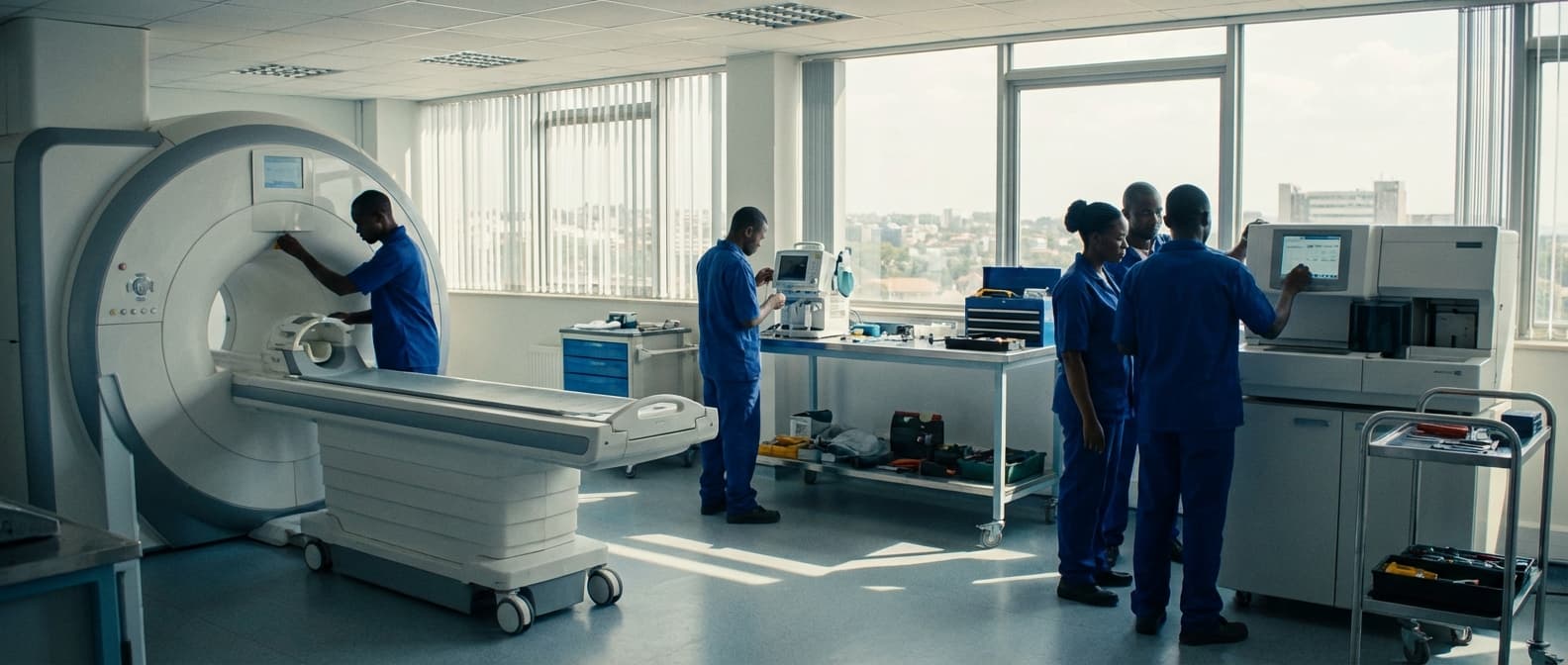
Uptime, Downtime & Root-Cause Analysis Reporting Service in Egypt
Engineering Excellence & Technical Support
Uptime, Downtime & Root-Cause Analysis Reporting Service High-standard technical execution following OEM protocols and local regulatory frameworks.
Real-time Uptime Monitoring & SLA Compliance
Leverage our advanced monitoring infrastructure to gain immediate visibility into your system's uptime. We provide granular, real-time data ensuring strict adherence to Service Level Agreements (SLAs), with automated alerts for any deviations, empowering proactive management of your critical infrastructure across Egypt.
Rapid Downtime Incident Detection & Notification
Our service is engineered for speed. Detect critical downtime events the moment they occur. Receive instant notifications with detailed incident context, enabling your IT teams to mobilize and address issues swiftly, minimizing business impact and restoring operations in the shortest possible timeframe within the Egyptian market.
AI-Powered Root-Cause Analysis (RCA) for Faster Resolution
Go beyond simply identifying downtime. Our integrated Root-Cause Analysis engine utilizes AI to sift through logs, metrics, and event data, pinpointing the precise origin of issues. This drastically accelerates your mean time to resolution (MTTR), enabling data-driven improvements and preventing recurring problems for your Egyptian operations.
What Is Uptime, Downtime & Root-cause Analysis Reporting Service In Egypt?
Uptime, Downtime & Root-Cause Analysis Reporting Service in Egypt refers to a specialized offering focused on monitoring, documenting, and investigating the operational availability and unavailability of IT infrastructure and business-critical systems within the Egyptian market. This service provides organizations with actionable insights into system performance, identifying the reasons for any disruptions and recommending corrective measures to enhance reliability and minimize future incidents. It encompasses proactive monitoring, reactive incident response, detailed reporting, and in-depth analysis to pinpoint the fundamental causes of system failures or performance degradation.
| Who Needs This Service? | Typical Use Cases | |||||||||
|---|---|---|---|---|---|---|---|---|---|---|
| Enterprises with critical IT infrastructure: Organizations heavily reliant on their IT systems for core business operations (e.g., financial services, telecommunications, e-commerce, healthcare, government). | E-commerce platforms: Ensuring continuous availability of online stores to prevent lost sales and customer dissatisfaction. | Financial institutions: Maintaining uninterrupted access to banking services, trading platforms, and payment gateways. | Telecommunications providers: Guaranteeing network uptime for voice and data services. | Healthcare organizations: Ensuring the availability of patient management systems, diagnostic equipment, and communication channels. | Government agencies: Maintaining public service portals, critical infrastructure management systems, and national security platforms. | Cloud service providers and SaaS vendors: Demonstrating reliability and meeting customer SLAs. | Manufacturing and industrial sectors: Ensuring the uptime of production lines, SCADA systems, and supply chain management software. | IT service providers and Managed Service Providers (MSPs): Offering robust uptime assurance and incident management to their clients. | Organizations undergoing digital transformation: Identifying and mitigating risks associated with new system deployments and integrations. | Businesses operating in regulated industries: Meeting compliance requirements for system availability and incident reporting. |
Key Components of the Service:
- Uptime Monitoring: Continuous surveillance of system availability, performance metrics (latency, throughput, error rates), and service health checks to ensure optimal operational status.
- Downtime Incident Management: Real-time detection, logging, and notification of system outages or performance degradation impacting service delivery.
- Root-Cause Analysis (RCA): Systematic investigation methodologies (e.g., 5 Whys, Fishbone diagrams, fault tree analysis) to identify the underlying technical, human, or process-related factors leading to downtime.
- Impact Assessment: Quantification of the business and technical consequences of downtime, including financial loss, reputational damage, and user experience degradation.
- Reporting and Documentation: Generation of comprehensive reports detailing uptime statistics, downtime incidents, RCA findings, and recommended remediation strategies.
- Preventive Recommendations: Proposing actionable steps to prevent recurrence of identified issues, such as system hardening, process optimization, or technology upgrades.
- SLA Compliance Tracking: Monitoring and reporting against Service Level Agreements (SLAs) to ensure adherence to agreed-upon availability targets.
Who Needs Uptime, Downtime & Root-cause Analysis Reporting Service In Egypt?
Organizations in Egypt operating critical IT infrastructure, complex systems, and sensitive data can benefit immensely from a specialized Uptime, Downtime & Root-Cause Analysis Reporting Service. This service provides in-depth insights into system performance, identifies the origins of disruptions, and offers actionable recommendations to prevent future outages. Ultimately, it empowers businesses to enhance reliability, minimize financial losses, and maintain customer trust.
| Department/Role | Key Responsibilities Benefiting from Reporting | Impact of Downtime | Key Metrics/Focus Areas |
|---|---|---|---|
| IT Operations / Infrastructure Management | System monitoring, maintenance, incident response, capacity planning. | Service disruptions, prolonged outages, user complaints, increased operational costs. | Server uptime, network latency, application availability, MTTR (Mean Time To Recover). |
| DevOps / Site Reliability Engineering (SRE) | Ensuring system stability, automating deployments, performance optimization, incident investigation. | Application errors, slow response times, failed deployments, production issues. | Uptime percentage, error rates, deployment success rates, latency. |
| Network Operations Center (NOC) | 24/7 monitoring of network performance, traffic analysis, fault detection, and initial troubleshooting. | Network congestion, service degradation, connectivity issues, impacting all connected users. | Bandwidth utilization, packet loss, jitter, network device status. |
| Security Operations Center (SOC) | Monitoring for security incidents, analyzing logs, and responding to threats. Downtime can sometimes mask or be a consequence of security breaches. | Data breaches, system compromise, unauthorized access, regulatory non-compliance. | Downtime associated with security incidents, recovery time post-breach. |
| Business Continuity & Disaster Recovery (BCDR) Teams | Developing and testing plans to maintain essential functions during disruptions. | Inability to recover critical systems, prolonged business interruption, significant financial and reputational damage. | RTO (Recovery Time Objective), RPO (Recovery Point Objective) adherence, effectiveness of DR plans. |
| Executive Management & Business Leaders | Strategic decision-making, budget allocation, risk management, ensuring business continuity and profitability. | Lost revenue, decreased customer satisfaction, damaged brand reputation, competitive disadvantage. | Overall system reliability, cost of downtime, ROI of IT investments. |
| Application Support Teams | Troubleshooting application-specific issues, user support, performance tuning of business applications. | User productivity loss, workflow interruptions, inability to complete business processes. | Application error rates, user-reported issues, resolution times. |
Target Customers & Departments in Egypt:
- {"title":"Telecommunications Companies","description":"Essential for monitoring network uptime, identifying causes of service interruptions (e.g., fiber cuts, equipment failures), and ensuring consistent connectivity for millions of users."}
- {"title":"Financial Institutions (Banks, Investment Firms, Insurance Companies)","description":"Critical for maintaining transactional uptime, preventing data breaches, and understanding the root cause of any system slowdowns or outages that could impact financial operations and customer access."}
- {"title":"E-commerce and Online Retailers","description":"Downtime directly translates to lost sales and damaged reputation. Analysis helps pinpoint issues causing cart abandonment, payment gateway failures, or slow website loading times."}
- {"title":"Government Agencies & Public Sector Organizations","description":"For services like citizen portals, online tax filing, and emergency response systems, high availability and rapid issue resolution are paramount. Analysis helps ensure these critical services remain operational."}
- {"title":"Healthcare Providers (Hospitals, Clinics, HealthTech Companies)","description":"Patient care depends on the availability of Electronic Health Records (EHRs), diagnostic systems, and communication platforms. Downtime can have severe consequences."}
- {"title":"Cloud Service Providers & Data Centers","description":"Offering reliable hosting and cloud services requires robust monitoring and a proactive approach to identifying and resolving any performance bottlenecks or outages for their clients."}
- {"title":"Manufacturing & Industrial Operations (Smart Factories, IoT Deployments)","description":"Downtime in production lines leads to significant financial losses. Analysis helps identify causes of equipment failure, network disruptions, or software glitches affecting automated processes."}
- {"title":"Energy & Utilities Companies","description":"Ensuring continuous power supply, water distribution, and other essential services relies heavily on the uptime of control systems and infrastructure. Analysis is key to preventing widespread disruptions."}
- {"title":"Large Enterprises with Complex IT Infrastructures","description":"Any organization with multiple interconnected systems, diverse applications, and a significant reliance on IT for daily operations can benefit from a structured approach to uptime and downtime analysis."}
Uptime, Downtime & Root-cause Analysis Reporting Service Process In Egypt
This document outlines the standard workflow for Uptime, Downtime & Root-Cause Analysis (RCA) Reporting Services offered by [Service Provider Name] in Egypt. This process ensures a structured and efficient approach to identifying, analyzing, and reporting on service disruptions, enabling clients to improve system reliability and prevent future incidents.
| Phase | Key Activities | Deliverables | Responsible Parties |
|---|---|---|---|
| Inquiry & Scope Definition | Client expresses interest, detailed discussion of needs, service parameters, and reporting requirements. | Service Proposal, Scope of Work (SOW) | Client, Service Provider Sales/Consulting |
| Agreement & Onboarding | Contract finalization, access provisioning, system familiarization, team introduction. | Signed Agreement, Access Credentials, System Documentation | Client, Service Provider Project Management/Technical Team |
| Monitoring & Data Collection | Deployment of monitoring tools, continuous data gathering on system health and performance. | Raw Monitoring Data, Performance Metrics | Service Provider Technical Team |
| Downtime Incident Detection & Notification | Real-time anomaly detection, immediate client alert via agreed channels. | Incident Notification Alert | Service Provider Monitoring System/Team |
| Initial Impact Assessment | Quick evaluation of business disruption caused by the incident. | Preliminary Impact Statement | Service Provider Technical Team/Analyst |
| Root-Cause Analysis (RCA) Initiation | Formation of RCA team, commencement of deep-dive investigation. | RCA Team Assignment | Service Provider Project Management/RCA Lead |
| Data Correlation & Hypothesis Formation | Analyzing collected data to identify patterns and potential causes. | Identified Potential Causes | Service Provider RCA Team |
| Hypothesis Testing & Verification | Validating potential causes through testing and further analysis. | Verified Root Cause(s) | Service Provider RCA Team |
| RCA Report Generation | Documenting findings, incident details, root cause, and contributing factors. | Draft Root-Cause Analysis Report | Service Provider RCA Team |
| Actionable Recommendations Development | Formulating practical steps to prevent future occurrences. | List of Actionable Recommendations | Service Provider RCA Team |
| Report Review & Presentation | Client review of draft report, presentation of findings and recommendations. | Feedback on Draft Report, Presentation Slides | Client, Service Provider RCA Team/Project Management |
| Final Report & Knowledge Transfer | Delivery of finalized report, knowledge sharing session. | Final Root-Cause Analysis Report, Knowledge Transfer Summary | Service Provider Project Management/RCA Team, Client |
| Follow-up & Validation (Optional) | Monitoring implementation of recommendations, re-evaluation of system performance. | Follow-up Report (if applicable) | Service Provider Technical Team/Project Management, Client |
Uptime, Downtime & Root-Cause Analysis Reporting Service Process
- Inquiry & Scope Definition: Client initiates contact, and a preliminary discussion defines the scope of services required, including the systems/applications to be monitored, the duration of the analysis, and specific reporting needs.
- Agreement & Onboarding: A service agreement is finalized. The client provides necessary access credentials, system information, and any existing documentation. The service provider's team is onboarded and familiarized with the client's environment.
- Monitoring & Data Collection: The service provider implements or utilizes existing monitoring tools to collect real-time data on system performance, availability, and key metrics. This phase spans the agreed-upon monitoring period.
- Downtime Incident Detection & Notification: Upon detection of a significant downtime event, the service provider immediately notifies the client according to the pre-defined communication protocols. Initial information about the incident is shared.
- Initial Impact Assessment: The service provider performs an immediate assessment of the impact of the downtime on business operations, prioritizing the severity of the incident.
- Root-Cause Analysis (RCA) Initiation: A dedicated RCA team is assigned. They begin investigating the incident by reviewing logs, system configurations, network traffic, application behavior, and any relevant user reports.
- Data Correlation & Hypothesis Formation: The RCA team correlates data from various sources to identify potential causes and form hypotheses about the root cause of the downtime.
- Hypothesis Testing & Verification: Each hypothesis is systematically tested and verified using diagnostic tools and further investigation to pinpoint the definitive root cause.
- RCA Report Generation: A comprehensive RCA report is drafted. This report details the incident timeline, impact, identified root cause(s), contributing factors, and a clear explanation of the sequence of events leading to the downtime.
- Actionable Recommendations Development: Based on the RCA findings, the service provider develops specific, actionable recommendations to prevent recurrence. These recommendations may include changes to configurations, software updates, process improvements, or training.
- Report Review & Presentation: The draft RCA report and recommendations are shared with the client for review and discussion. A formal presentation is often scheduled to walk through the findings and proposed solutions.
- Final Report & Knowledge Transfer: Upon client approval, the final RCA report is delivered. The service provider may also conduct knowledge transfer sessions to ensure the client's internal teams understand the findings and can implement the recommendations effectively.
- Follow-up & Validation (Optional): In some cases, the service provider may offer follow-up services to validate the implementation of recommendations and monitor for any recurring issues, ensuring long-term system stability.
Uptime, Downtime & Root-cause Analysis Reporting Service Cost In Egypt
The cost of Uptime, Downtime & Root-Cause Analysis (RCA) Reporting Services in Egypt is influenced by several key factors. These services are crucial for businesses to monitor their IT infrastructure's availability, identify and resolve performance issues, and understand the underlying causes of any disruptions. Pricing typically varies based on the complexity of the infrastructure, the volume of data to be analyzed, the required level of detail in reporting, and the vendor's expertise and reputation. For businesses in Egypt, these services are often quoted in Egyptian Pounds (EGP) or US Dollars (USD) with a local conversion rate applied. It's important to note that these are estimates, and actual costs can fluctuate.
| Service Tier/Complexity | Estimated Monthly Cost (EGP) | Estimated Monthly Cost (USD equivalent, approx.) |
|---|---|---|
| Basic Uptime/Downtime Monitoring (Small to Medium Business, limited infrastructure) | 3,000 - 10,000 EGP | $100 - $350 USD |
| Standard Uptime, Downtime & Basic RCA (Medium Business, moderate infrastructure, weekly reporting) | 10,000 - 30,000 EGP | $350 - $1,000 USD |
| Comprehensive Uptime, Downtime & Advanced RCA (Large Enterprise, complex infrastructure, frequent/detailed reporting, custom integrations) | 30,000 - 100,000+ EGP | $1,000 - $3,500+ USD |
| Specialized/Consulting RCA (Per incident/project, deep-dive analysis, complex root cause identification) | Custom Quote (often hourly or project-based) | Custom Quote |
Key Pricing Factors for Uptime, Downtime & RCA Reporting Services in Egypt:
- Scope of Monitoring: The number of servers, applications, network devices, and cloud instances being monitored. Larger and more complex environments naturally incur higher costs.
- Data Volume and Retention: The amount of historical data that needs to be collected, processed, and stored for analysis. Longer retention periods will increase costs.
- Reporting Frequency and Detail: The regularity of reports (daily, weekly, monthly) and the depth of analysis required. Basic uptime/downtime reports are less expensive than in-depth RCA with actionable recommendations.
- Automation and Tooling: The sophistication of the monitoring and analysis tools employed by the service provider. Advanced AI-powered RCA tools may command higher prices.
- Service Level Agreements (SLAs): Guarantees around response times, resolution times, and uptime targets can influence the cost, especially if they require dedicated resources.
- Vendor Expertise and Reputation: Established providers with a proven track record and specialized expertise in RCA might charge a premium.
- Integration Requirements: The need to integrate with existing IT systems, ticketing systems (like Jira or ServiceNow), or other business intelligence platforms.
- Customization: Bespoke reporting formats, specific performance metrics, or tailored RCA methodologies will impact pricing.
- Support Levels: The availability and responsiveness of technical support to address issues identified by the reporting service.
Affordable Uptime, Downtime & Root-cause Analysis Reporting Service Options
This service offers comprehensive uptime and downtime monitoring, coupled with in-depth root-cause analysis reporting, to ensure your systems are operational and identify performance bottlenecks. We understand that budget is a key concern, so we provide flexible value bundles and cost-saving strategies tailored to your specific needs.
| Value Bundle Name | Included Services | Ideal For | Estimated Monthly Cost (USD) |
|---|---|---|---|
| Essentials Bundle | Basic Uptime Monitoring (10 services), Standard Downtime Alerts, Weekly RCA Summary | Small businesses, startups with critical but limited services | $49 |
| Professional Bundle | Advanced Uptime Monitoring (50 services), Real-time Downtime Alerts & Notifications, Bi-weekly In-depth RCA Reports, Basic Trend Analysis | Growing businesses, SMBs with moderate infrastructure | $129 |
| Enterprise Bundle | Comprehensive Uptime Monitoring (Unlimited services), High-Frequency Alerts, On-demand & Daily RCA Reports, Advanced Performance Analytics, SLA Reporting | Large enterprises, organizations with complex and mission-critical systems | $399+ |
Key Features & Benefits
- Proactive Uptime Monitoring: Real-time alerts for any service disruptions.
- Detailed Downtime Reporting: Comprehensive analysis of incident duration and impact.
- Root-Cause Analysis (RCA): Identification of underlying issues to prevent recurrence.
- Actionable Insights: Recommendations for system improvements and optimizations.
- Customizable Dashboards: Visualize your system's performance according to your priorities.
- Scalable Solutions: Adaptable to businesses of all sizes, from startups to enterprises.
Verified Providers In Egypt
In Egypt's evolving healthcare landscape, discerning the quality and reliability of medical providers is paramount. This is where Verified Providers in Egypt, and specifically Franance Health, emerge as critical allies for individuals seeking trustworthy and high-standard healthcare services. Franance Health's rigorous credentialing process ensures that their network comprises only the most competent and ethically sound medical professionals and facilities, offering a distinct advantage for patients navigating the healthcare system.
| Feature | Franance Health Verification Process | Benefit to Patients |
|---|---|---|
| Qualification Scrutiny | Examines medical licenses, board certifications, academic credentials, and ongoing training of all healthcare professionals. | Ensures competence and up-to-date medical knowledge. |
| Experience Assessment | Reviews the clinical experience, specializations, and track record of providers and institutions. | Connects patients with practitioners skilled in their specific medical needs. |
| Ethical Practice Evaluation | Includes checks for disciplinary actions, malpractice history, and adherence to ethical medical codes. | Guarantees that providers operate with integrity and prioritize patient welfare. |
| Facility Standards Check | Assesses the infrastructure, equipment, hygiene protocols, and safety measures of medical facilities. | Provides access to safe and well-equipped healthcare environments. |
| Patient Feedback Integration | Considers patient reviews and satisfaction levels as part of the ongoing verification process. | Reinforces a commitment to excellent patient service and positive outcomes. |
Why Franance Health Represents the Best Choice for Verified Providers in Egypt:
- Uncompromising Credentialing Standards: Franance Health goes above and beyond standard verification. They meticulously assess the qualifications, licenses, certifications, and experience of every provider in their network. This ensures that patients are connected with specialists and institutions that meet the highest benchmarks of medical excellence and patient safety.
- Focus on Patient-Centric Care: Beyond technical proficiency, Franance Health prioritizes providers who demonstrate a commitment to patient well-being, effective communication, and ethical practice. Their verification process often includes evaluating patient feedback and adherence to patient rights protocols.
- Access to a Curated Network: Franance Health offers access to a pre-vetted and trusted selection of healthcare providers across various specialties. This saves patients considerable time and effort in their search for reliable medical care, reducing the anxiety often associated with seeking treatment.
- Transparency and Trust: The 'Verified Provider' designation by Franance Health acts as a powerful symbol of trust. Patients can be confident that they are engaging with entities that have undergone thorough scrutiny, fostering a more transparent and secure healthcare experience.
- Continuous Monitoring and Quality Assurance: Franance Health's commitment doesn't end at initial verification. They maintain ongoing quality assurance measures, including periodic reviews and responsiveness to patient concerns, to ensure that their network consistently upholds its high standards.
- Specialized Expertise: Whether seeking routine medical attention or highly specialized treatments, Franance Health's verified network encompasses a broad spectrum of medical disciplines, ensuring access to the right expertise for every need.
Scope Of Work For Uptime, Downtime & Root-cause Analysis Reporting Service
This document outlines the Scope of Work (SOW) for a comprehensive Uptime, Downtime, and Root-Cause Analysis (RCA) Reporting Service. The service aims to provide clients with detailed insights into the availability and performance of their critical systems, enabling proactive identification of issues and informed decision-making for continuous improvement. This SOW covers the technical deliverables and standard specifications for the service.
| Deliverable | Description | Standard Specifications | Frequency | Format |
|---|---|---|---|---|
| Uptime/Downtime Report | Detailed report on system availability, including total uptime, total downtime, and individual downtime event durations. | Accuracy to within +/- 1 minute for downtime events. Reporting of all unscheduled downtime exceeding 5 minutes. Categorization of downtime by system component and impact level. | Daily, Weekly, Monthly | CSV, PDF, Online Dashboard |
| Downtime Event Log | A comprehensive log of all unscheduled downtime incidents, including start time, end time, duration, affected systems, and initial impact assessment. | Timestamp accuracy to the second. Inclusion of all relevant system identifiers. Categorization of impact (e.g., High, Medium, Low). | Real-time (as events occur) or Daily | CSV, JSON, Database Access |
| Root-Cause Analysis (RCA) Report | In-depth analysis of significant downtime events to identify the underlying causes, contributing factors, and corrective/preventative actions. | Utilizes established RCA methodologies (e.g., 5 Whys, Fishbone Diagram). Includes timelines, impact assessments, identified root causes, and detailed action plans. Recommendations must be SMART (Specific, Measurable, Achievable, Relevant, Time-bound). | Per significant downtime event (defined as > 1 hour or impacting critical services) | PDF, Word Document, Online Presentation |
| Performance Trend Analysis | Analysis of uptime and downtime trends over time to identify patterns, recurring issues, and areas for improvement. | Includes graphical representations of uptime/downtime percentages, identification of peak downtime periods, and correlation with system changes or other relevant factors. | Monthly, Quarterly | PDF, PowerPoint Presentation, Online Dashboard |
| Executive Summary Report | High-level overview of system availability, major incidents, and key recommendations for senior management. | Concise and easy-to-understand language. Focus on business impact and strategic recommendations. Includes key performance indicators (KPIs) for availability. | Monthly, Quarterly | PDF, PowerPoint Presentation |
Key Objectives of the Reporting Service
- To accurately track and report on system uptime and downtime.
- To perform in-depth root-cause analysis for all significant downtime events.
- To provide actionable insights and recommendations for preventing future occurrences.
- To establish clear metrics and reporting standards for performance monitoring.
- To enhance overall system reliability and availability.
Service Level Agreement For Uptime, Downtime & Root-cause Analysis Reporting Service
This Service Level Agreement (SLA) outlines the guaranteed uptime, response times for incidents, and the process for root-cause analysis reporting for the Uptime, Downtime & Root-Cause Analysis Reporting Service provided by [Your Company Name] (hereinafter referred to as "Provider") to [Client Company Name] (hereinafter referred to as "Client").
| Severity Level | Description | Impact | Provider Response Time Target | Provider Resolution Time Target (Aspirational) |
|---|---|---|---|---|
| Severity 1 (Critical) | Complete loss of Service or critical functionality. No workaround available. | Major impact on Client's business operations; potential for significant financial loss or reputational damage. | < 15 minutes | < 4 hours |
| Severity 2 (High) | Significant degradation of Service or loss of non-critical functionality. Workaround may exist but is difficult or inefficient. | Moderate impact on Client's business operations; potential for minor financial loss or inconvenience. | < 1 hour | < 8 hours |
| Severity 3 (Medium) | Minor degradation of Service or a non-critical feature is unavailable. Impact on Client's operations is minimal. | Low impact on Client's business operations; primarily an inconvenience. | < 4 business hours | < 24 business hours |
| Severity 4 (Low) | General questions, feature requests, or minor cosmetic issues. | No impact on Client's business operations. | < 1 business day | As per normal development cycles |
Key Definitions
- Uptime: The percentage of time the Uptime, Downtime & Root-Cause Analysis Reporting Service is operational and available for use by the Client.
- Downtime: The period when the Uptime, Downtime & Root-Cause Analysis Reporting Service is not operational or available for use by the Client.
- Scheduled Downtime: Planned maintenance or upgrades to the Service, communicated to the Client at least [Number] business days in advance.
- Unscheduled Downtime: Any Downtime not classified as Scheduled Downtime, including but not limited to hardware failures, software errors, or network issues.
- Incident: Any event that causes or may cause a disruption to the Service, including but not limited to errors, performance degradation, or complete unavailability.
- Severity Levels: A classification of Incidents based on their impact on the Service and the Client's operations. See Table 1 for detailed definitions.
- Response Time: The maximum time allowed for the Provider to acknowledge and begin working on an Incident after it has been reported by the Client.
- Resolution Time: The maximum time allowed for the Provider to restore the Service to its intended functionality after an Incident has been reported. This is an aspirational goal and may vary based on Incident complexity.
- Root-Cause Analysis (RCA): A systematic process to identify the underlying causes of an Incident to prevent recurrence. RCA reports will be provided for Severity 1 and Severity 2 Incidents.
Frequently Asked Questions

Ready when you are
Let's scope your Uptime, Downtime & Root-Cause Analysis Reporting Service in Egypt project in Egypt.

Scaling healthcare logistics and technical systems across the entire continent.