
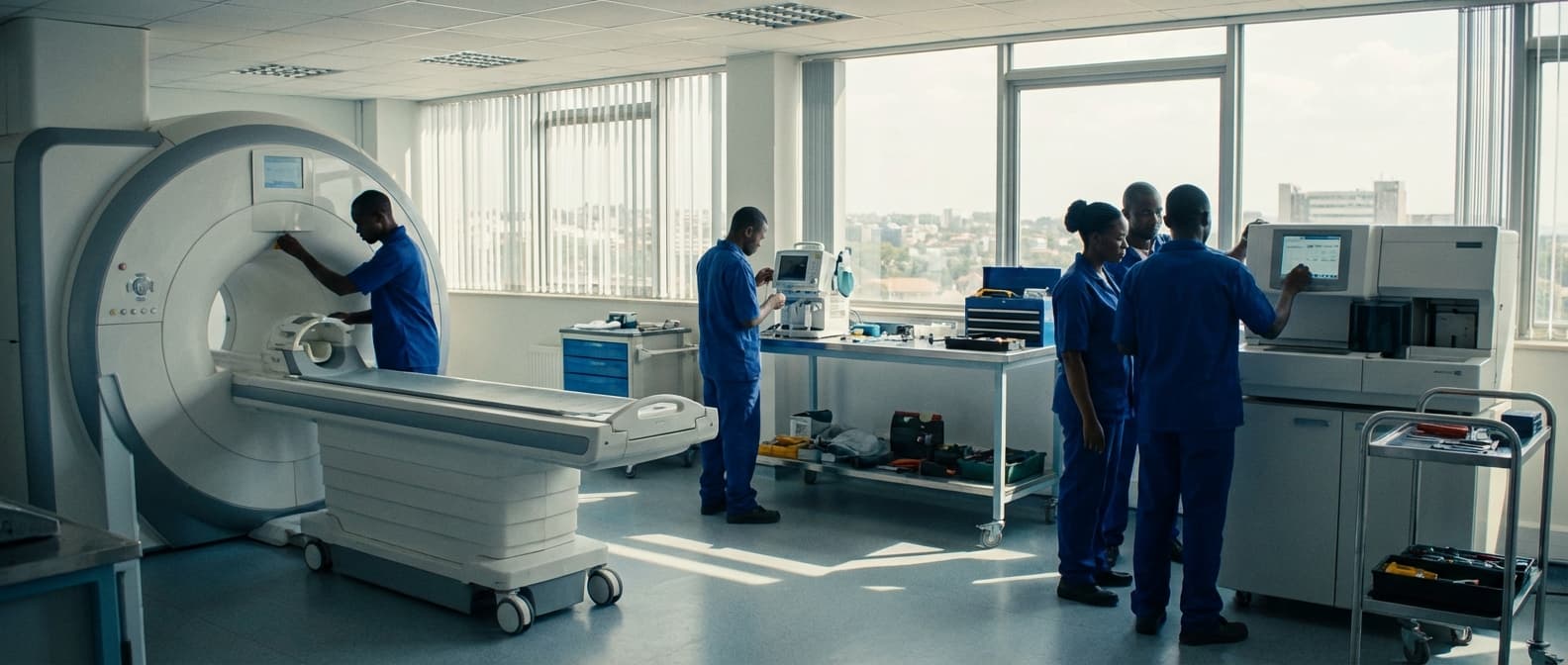
Planned Shutdown Coordination Service for Critical Equipment in Egypt
Engineering Excellence & Technical Support
Planned Shutdown Coordination Service for Critical Equipment High-standard technical execution following OEM protocols and local regulatory frameworks.
Optimized Shutdown Scheduling for Uninterrupted Operations
Leveraging advanced predictive analytics and real-time data from Egyptian critical infrastructure, our service meticulously plans and schedules equipment shutdowns to minimize downtime, ensuring uninterrupted power generation, water supply, and industrial output across key regions.
Mitigating Risks Through Comprehensive Safety Protocols
We implement rigorous risk assessment methodologies and tailor-made safety protocols, adhering to Egyptian regulatory standards and international best practices. This ensures the secure and efficient execution of planned shutdowns for vital equipment, safeguarding personnel and assets.
Streamlined Resource Allocation for Cost-Effective Maintenance
Our service optimizes the allocation of specialized labor, equipment, and spare parts across Egypt's critical sectors. By coordinating shutdown activities efficiently, we reduce operational costs and accelerate equipment restoration, contributing to the long-term sustainability of essential services.
What Is Planned Shutdown Coordination Service For Critical Equipment In Egypt?
Planned Shutdown Coordination Service for Critical Equipment in Egypt refers to the organized, scheduled, and controlled cessation of operation of essential industrial and infrastructure assets. This service is crucial for maintenance, upgrades, repairs, and regulatory compliance activities that cannot be performed while the equipment is in active service. It encompasses meticulous planning, resource allocation, risk assessment, execution, and post-shutdown analysis to minimize operational disruption, ensure safety, and maximize asset lifecycle efficiency.
| Who Needs the Service? | Typical Use Cases |
|---|---|
| Energy Sector (Oil & Gas, Power Generation): Refineries, power plants, offshore platforms, transmission networks. | Routine preventive maintenance on turbines, generators, reactors, and pipelines. Mandatory safety inspections and compliance audits. Installation of new equipment or upgrades to existing systems. Decommissioning or modification of plant sections. Emergency preparedness drills requiring temporary system isolation. |
| Industrial Manufacturing: Petrochemical plants, fertilizer production, cement factories, steel mills. | Overhaul of heavy machinery (e.g., kilns, furnaces, rolling mills). Cleaning and inspection of process vessels and heat exchangers. Replacement of worn-out components. Implementation of process optimization initiatives. Environmental compliance upgrades. |
| Infrastructure: Water treatment facilities, wastewater management plants, port facilities, transportation networks. | Maintenance of pumps, filters, and treatment units. Repair or upgrade of critical distribution and collection systems. Dockside crane and conveyor system overhauls. Tunnel or bridge inspections and repairs requiring traffic diversion. |
| Mining and Metallurgy: Smelters, processing plants, extraction facilities. | Maintenance of crushers, conveyors, and smelting furnaces. Replacement of refractory linings. Environmental control system upgrades. Reconfiguration of processing lines. |
Key Components of Planned Shutdown Coordination Service:
- Scope Definition: Clearly outlining the objectives, boundaries, and deliverables of the shutdown.
- Scheduling and Timeline Management: Developing a detailed, realistic schedule with critical path analysis and buffer times.
- Resource Planning: Identifying and securing necessary personnel (internal and external), materials, tools, and specialized equipment.
- Risk Assessment and Mitigation: Proactive identification of potential hazards and development of safety protocols and contingency plans.
- Permitting and Regulatory Compliance: Ensuring all required permits and adherence to relevant Egyptian standards and regulations.
- Stakeholder Communication: Establishing clear communication channels with all affected parties, including internal departments, external contractors, and regulatory bodies.
- Execution Oversight: Managing the shutdown activities in real-time, ensuring adherence to the plan and addressing unforeseen issues.
- Post-Shutdown Verification and Handover: Performing inspections, testing, and commissioning to confirm successful completion and safe re-integration into operation.
- Documentation and Reporting: Maintaining comprehensive records of all activities, findings, and lessons learned.
Who Needs Planned Shutdown Coordination Service For Critical Equipment In Egypt?
Planned Shutdown Coordination Service for Critical Equipment in Egypt is essential for organizations that rely on continuous operation of vital machinery and infrastructure. This service minimizes downtime, optimizes resource allocation, and ensures safety during planned maintenance, upgrades, or repairs of critical equipment. It is particularly crucial in sectors where unscheduled outages can lead to significant financial losses, safety hazards, or disruption of essential services.
| Industry/Sector | Key Departments Requiring Coordination |
|---|---|
| Oil & Gas | Operations, Maintenance, Production, Safety, Supply Chain |
| Power Generation & Distribution | Plant Operations, Grid Management, Maintenance, Engineering, Safety |
| Petrochemical | Process Engineering, Operations, Maintenance, Safety, Logistics |
| Water & Wastewater Treatment | Plant Operations, Maintenance, Engineering, Water Quality Control, Safety |
| Manufacturing & Heavy Industry | Production Management, Plant Engineering, Maintenance, Quality Control, Health & Safety |
| Telecommunications | Network Operations, Infrastructure Maintenance, Engineering, Field Services |
| Mining & Metallurgy | Mine Operations, Processing Plants, Maintenance, Safety, Logistics |
| Transportation Hubs | Operations, Maintenance (Facilities & Equipment), Safety, Security, Logistics |
| Healthcare Facilities | Biomedical Engineering, Facilities Management, Operations, IT (for networked equipment), Safety |
Target Customers and Departments
- Oil & Gas Sector
- Power Generation & Distribution
- Petrochemical Industry
- Water & Wastewater Treatment
- Manufacturing & Heavy Industry
- Telecommunications Infrastructure
- Mining & Metallurgy
- Large-Scale Transportation Hubs (Ports, Airports)
- Healthcare Facilities (Critical Medical Equipment)
Planned Shutdown Coordination Service For Critical Equipment Process In Egypt
This document outlines the workflow for the Planned Shutdown Coordination Service for Critical Equipment in Egypt. This service aims to ensure safe, efficient, and timely planned shutdowns of critical equipment, minimizing disruption to operations and adhering to all safety and regulatory requirements. The process begins with an inquiry from the client and culminates in the successful completion of the shutdown and post-shutdown review.
| Phase | Stage | Description | Key Activities | Deliverables | Responsible Parties | Timeline (Indicative) |
|---|---|---|---|---|---|---|
| Initial Contact | Client identifies the need for a planned shutdown of critical equipment and contacts the service provider. | Receive client's inquiry, understand initial requirements, gather basic information about the equipment and desired shutdown window. | Acknowledgement of Inquiry, Preliminary Understanding of Needs | Client, Service Provider (Business Development) | 1-2 Days |
| Needs Analysis | Detailed understanding of the client's specific requirements, operational context, and potential constraints. | Conduct site visits (if necessary), review existing documentation (e.g., equipment manuals, past shutdown reports), hold detailed discussions with client's technical team. | Needs Analysis Report, Preliminary Risk Assessment | Service Provider (Technical Lead, Project Manager), Client (Operations, Maintenance) | 3-5 Days |
| Scope of Work (SOW) Development | Formalizing the exact activities, scope, and objectives of the planned shutdown. | Define specific equipment to be shut down, tasks involved (e.g., inspection, maintenance, repair, replacement), required permits, safety protocols, and success criteria. | Draft Scope of Work (SOW) | Service Provider (Project Manager, Technical Lead), Client (Engineering, Operations) | 5-7 Days |
| Detailed Planning | Developing a comprehensive plan covering all aspects of the shutdown. | Create detailed work schedules, risk management plans, communication protocols, emergency response plans, contingency plans, and quality assurance plans. | Detailed Project Plan, Risk Management Plan, Communication Plan | Service Provider (Project Manager, Safety Officer, Technical Experts), Client (Operations, Safety, Procurement) | 7-14 Days |
| Budgeting and Proposal | Estimating costs and presenting a formal proposal to the client. | Develop a detailed cost breakdown, prepare a comprehensive proposal outlining scope, methodology, timeline, resources, and pricing. | Formal Proposal, Budget Estimate | Service Provider (Project Manager, Commercial Team), Client (Finance, Management) | 3-5 Days |
| Contracting and Approval | Formal agreement between the client and service provider. | Client reviews and approves the proposal; contract negotiation and signing. | Signed Contract | Client (Legal, Procurement), Service Provider (Legal, Management) | 5-10 Days |
| Team Formation | Assembling the necessary skilled personnel. | Identify and assign project managers, supervisors, technicians, safety officers, and specialized personnel based on the SOW. | Mobilized Project Team Roster | Service Provider (Project Manager, HR) | 2-3 Days |
| Material and Equipment Procurement | Ensuring all necessary materials, tools, and equipment are available. | Procure spare parts, consumables, specialized tools, testing equipment, safety gear, and any required temporary facilities. | Procured Materials and Equipment List | Service Provider (Procurement, Logistics), Client (Warehousing, Inventory) | Varies based on lead times (can be concurrent with planning) |
| Site Mobilization | Setting up the necessary infrastructure at the client's site. | Establish site offices, communication systems, safety stations, temporary storage, and logistical support. | Mobilized Site Infrastructure | Service Provider (Logistics, Site Manager), Client (Site Access, Utilities) | 2-4 Days (Pre-Shutdown) |
| Permitting and Clearances | Obtaining all required permits and authorizations. | Secure work permits, hot work permits, confined space entry permits, and any other necessary regulatory approvals. | Approved Permits and Clearances | Service Provider (Safety Officer), Client (Safety Department, Operations) | 2-3 Days (Pre-Shutdown) |
| Pre-Shutdown Briefings and Training | Ensuring all personnel are aware of the plan and safety procedures. | Conduct pre-job safety meetings, toolbox talks, and specialized training for critical tasks. | Briefed and Trained Personnel | Service Provider (Project Manager, Supervisors, Safety Officer), Client (All Involved Personnel) | 1-2 Days (Pre-Shutdown) |
| Equipment Isolation and Preparation | Safely preparing the equipment for shutdown. | Isolate power, fluids, and other energy sources; depressurize and drain systems; conduct initial visual inspections. | Isolated and Prepared Equipment | Client (Operations, Maintenance), Service Provider (Technicians) | 1-2 Days (Pre-Shutdown) |
| Shutdown Activities Commencement | Initiating the core shutdown and maintenance tasks. | Execute scheduled maintenance, repairs, inspections, replacements, and any other planned activities as per the SOW and work orders. | Progress on Work Orders | Service Provider (Technicians, Supervisors), Client (Observers, Quality Control) | Duration of shutdown (as per plan) |
| Continuous Monitoring and Communication | Ensuring the shutdown progresses safely and efficiently. | Daily progress meetings, real-time tracking of activities, immediate communication of any deviations or issues, adherence to safety protocols. | Daily Progress Reports, Incident Logs | Service Provider (Project Manager, Supervisors), Client (Operations, Management) | Throughout execution |
| Quality Control and Assurance | Verifying the quality of work performed. | Conduct in-process inspections, testing, and documentation of completed tasks. | Completed Work Order Sign-offs, Inspection Reports | Service Provider (QA/QC), Client (QA/QC) | Throughout execution |
| Reinstatement and Testing | Bringing the equipment back online safely. | Reassemble equipment, perform functional tests, pressure tests, performance tests, and ensure all safety systems are operational. | Successful Test Results, Commissioning Reports | Service Provider (Technicians, Engineers), Client (Operations, Testing Team) | 2-5 Days |
| Demobilization | Clearing the site and returning resources. | Remove temporary facilities, equipment, and personnel; restore the site to its original condition. | Site Clearance Certificate | Service Provider (Logistics, Site Manager) | 1-2 Days |
| Final Handover | Formally transferring the equipment back to the client. | Provide all documentation, test results, and maintenance records; obtain client's formal acceptance. | Final Handover Documentation, Acceptance Certificate | Service Provider (Project Manager), Client (Operations, Maintenance) | 1 Day |
| Final Report Compilation | Documenting the entire shutdown process and outcomes. | Prepare a comprehensive report including scope, activities, timelines, costs, deviations, incident reports, lessons learned, and recommendations. | Final Shutdown Report | Service Provider (Project Manager, Technical Lead) | 5-7 Days |
| Post-Shutdown Review Meeting | Analyzing the performance and identifying areas for improvement. | Conduct a meeting with client stakeholders to review the final report, discuss performance, and identify best practices for future shutdowns. | Actionable Improvement Points, Meeting Minutes | Service Provider (Management, Project Manager), Client (Management, Operations, Maintenance) | 1-2 Days (after report submission) |
Planned Shutdown Coordination Service Workflow
- Inquiry and Initial Assessment
- Scope Definition and Planning
- Resource Allocation and Mobilization
- Pre-Shutdown Preparations
- Execution of Planned Shutdown
- Post-Shutdown Activities
- Reporting and Review
Planned Shutdown Coordination Service For Critical Equipment Cost In Egypt
This document outlines the cost factors and pricing ranges for a Planned Shutdown Coordination Service for Critical Equipment in Egypt. Effective coordination is crucial to minimize downtime, optimize maintenance schedules, and ensure the safety and efficiency of operations in sectors like oil & gas, power generation, petrochemicals, and heavy manufacturing. The pricing of such a service is influenced by several key variables, making it a bespoke offering.
| Service Component / Factor | Typical Pricing Range (EGP) | Notes |
|---|---|---|
| Project Management / Coordination Fee (Daily) | 5,000 - 25,000+ | Covers planning, scheduling, communication, stakeholder management. Varies by seniority and scope. |
| On-Site Supervision (Daily) | 3,000 - 15,000+ | For experienced supervisors overseeing operations. Dependent on complexity and number of teams. |
| Specialized Engineering Consultation (Daily) | 7,000 - 30,000+ | For niche expertise (e.g., rotating equipment, electrical, instrumentation specialists). |
| Safety Officer / Coordinator (Daily) | 2,500 - 10,000 | Essential for ensuring compliance with safety regulations. |
| Logistics & Travel (Per Project) | Variable | Includes accommodation, transportation for coordination team. Depends on location and duration. |
| Reporting & Documentation (Per Project) | Variable | May be included in PM fee or charged separately based on report complexity. |
| Contingency Planning & Risk Assessment (Per Project) | Variable | Often a percentage of the total project cost or a fixed fee for in-depth analysis. |
| Total Project Coordination Package (Example - 1 Week Shutdown) | 50,000 - 300,000+ | This is a broad estimate for a moderate complexity shutdown, including a small coordination team. |
| Total Project Coordination Package (Example - 4 Weeks Shutdown) | 200,000 - 1,500,000+ | For a large, complex, and extended shutdown requiring significant resources. |
Key Pricing Factors:
- Scope of Services: The breadth of services offered, from initial planning and scheduling to on-site supervision, resource management, and post-shutdown analysis, directly impacts cost. A comprehensive service will be priced higher than a basic coordination role.
- Duration of Shutdown: Longer shutdown periods require more extensive planning, personnel, and on-site presence, leading to increased costs. This is typically measured in man-days or calendar days.
- Complexity of Equipment/Plant: The number, type, and criticality of the equipment requiring shutdown and maintenance. Highly complex systems (e.g., entire refinery units, large power plant turbines) necessitate specialized expertise and more intricate coordination.
- Number of Personnel Involved: The size of the coordination team provided by the service provider, as well as the number of maintenance crews, contractors, and other stakeholders to be managed.
- Geographical Location: While the service is for Egypt, the specific location of the plant within Egypt might influence logistics costs (travel, accommodation for personnel).
- Required Expertise and Specialization: The need for highly specialized engineers, safety officers, or project managers with specific industry experience will increase the hourly or daily rates.
- Level of On-Site Presence: Whether the coordination team is required to be on-site 24/7, during specific shifts, or on an as-needed basis.
- Reporting and Documentation Requirements: The extent and detail of reports, progress updates, and final documentation required by the client.
- Risk and Contingency Planning: The level of detail and resources dedicated to risk assessment, mitigation, and contingency planning for unforeseen events.
- Client's Internal Capabilities: If the client has some internal coordination capacity, the service might focus on augmenting their efforts, potentially reducing costs. Conversely, a complete outsourcing of coordination will be more expensive.
- Contractual Terms and Payment Schedule: Flexibility in payment terms and contract duration can sometimes influence the overall price.
- Regulatory Compliance and Safety Standards: Ensuring adherence to stringent Egyptian safety regulations and industry-specific standards adds a layer of complexity and cost to the coordination effort.
Affordable Planned Shutdown Coordination Service For Critical Equipment Options
Our Affordable Planned Shutdown Coordination Service is designed to minimize downtime and optimize maintenance operations for your critical equipment. We offer flexible value bundles and implement proven cost-saving strategies to ensure your planned shutdowns are efficient, safe, and budget-friendly. By leveraging our expertise, you can reduce unexpected failures, extend equipment lifespan, and maximize operational output.
| Cost-Saving Strategy | Description | Benefit |
|---|---|---|
| Optimized Scheduling | Minimizing the duration of the shutdown through meticulous planning and resource allocation. | Reduced labor costs, less lost production time. |
| Vendor Negotiation & Management | Leveraging our network and experience to secure competitive rates and efficient service from third-party vendors. | Lower expenditure on external services and parts. |
| Preventative & Predictive Maintenance Integration | Identifying potential issues before they become critical, allowing for planned repairs during scheduled downtime. | Reduced emergency repairs, avoided costly failures, extended equipment life. |
| Resource Optimization | Ensuring the right people and equipment are available at the right time, avoiding overstaffing or idle resources. | Reduced labor and equipment rental costs. |
| Standardized Procedures | Implementing proven, efficient, and safe shutdown procedures to streamline operations. | Increased efficiency, reduced errors, enhanced safety, and faster completion times. |
| Spare Parts Management | Ensuring necessary spare parts are readily available and strategically managed to avoid delays. | Minimizing procurement delays and expedited shipping costs. |
Value Bundles:
- {"title":"Essential Shutdown Planning","features":["On-site or remote planning meetings","Development of a detailed shutdown schedule","Identification of key stakeholders and their responsibilities","Pre-shutdown readiness checks"],"description":"Includes scope definition, resource scheduling, risk assessment, and basic communication plan."}
- {"title":"Comprehensive Shutdown Management","features":["All features of Essential Planning","Real-time shutdown progress monitoring","On-site presence of a coordinator during critical phases","Coordination of external vendors and contractors","Post-shutdown debrief and lessons learned"],"description":"Builds upon the Essential bundle with enhanced oversight and execution support."}
- {"title":"Proactive Maintenance Integration","features":["All features of Comprehensive Management","Analysis of historical maintenance data","Recommendations for optimized maintenance intervals","Integration of condition monitoring data into shutdown planning","Development of a long-term maintenance strategy"],"description":"Integrates planned shutdowns with your overall preventative and predictive maintenance programs."}
Verified Providers In Egypt
In the dynamic landscape of healthcare in Egypt, identifying reliable and high-quality providers is paramount for ensuring optimal patient outcomes. This is where the rigorous credentialing and verification processes of organizations like Franance Health become invaluable. Franance Health's commitment to vetting medical professionals and facilities establishes a benchmark for excellence, providing patients with the confidence and assurance they need when making critical healthcare decisions. Their comprehensive approach not only validates individual expertise but also scrutinizes the infrastructure and operational standards of healthcare institutions, guaranteeing a high level of care. Choosing a provider verified by Franance Health signifies a commitment to quality, safety, and ethical practice.
| Provider Category | Franance Health Verification Criteria | Benefits for Patients |
|---|---|---|
| Physicians & Surgeons | Medical degree validation, board certification, peer review, disciplinary record check, experience verification. | Access to highly qualified and experienced specialists, reduced risk of medical errors, improved treatment efficacy. |
| Hospitals & Clinics | Accreditation status, quality management systems, patient safety protocols, infection control measures, infrastructure assessment. | Safe and sterile environment, access to advanced medical technology, standardized high-quality care, improved patient experience. |
| Diagnostic Laboratories | Laboratory accreditation (e.g., CAP, ISO), quality control procedures, equipment calibration and maintenance, staff qualifications. | Accurate and reliable diagnostic results, timely reporting, confidence in test outcomes for treatment planning. |
| Specialty Centers (e.g., Cardiology, Oncology) | Demonstrated expertise in specific fields, specialized equipment availability, multidisciplinary team composition, patient outcome tracking. | Access to cutting-edge treatments and specialized knowledge, comprehensive care plans, better management of complex conditions. |
Why Franance Health Verification Matters:
- Ensures practitioners meet stringent educational and licensing requirements.
- Confirms adherence to best practices and ethical medical standards.
- Validates the quality and safety of healthcare facilities and equipment.
- Provides patients with a trusted resource for identifying top-tier medical care.
- Promotes transparency and accountability within the Egyptian healthcare sector.
Scope Of Work For Planned Shutdown Coordination Service For Critical Equipment
This Scope of Work (SOW) outlines the services required for the planned shutdown coordination of critical equipment. The objective is to ensure a safe, efficient, and timely execution of maintenance, repair, and inspection activities during scheduled plant outages, minimizing downtime and associated risks. The service will encompass all phases from initial planning and preparation through execution and post-shutdown reporting. The following sections detail the technical deliverables and standard specifications for this service.
| Deliverable | Description | Standard Specification/Reference | Format |
|---|---|---|---|
| Shutdown Master Plan | Comprehensive plan detailing scope, objectives, timelines, responsibilities, risk assessment, and communication protocols for the entire shutdown. | Industry best practices, client-specific shutdown procedures. | Digital Document (e.g., PDF, MS Project File) |
| Detailed Work Packages | Task-specific instructions for maintenance, inspection, and repair activities, including required resources, safety precautions, and acceptance criteria. | Client-approved work order system standards, OEM recommendations. | Digital Document (e.g., MS Word, PDF) |
| Critical Path Schedule | Detailed Gantt chart or similar representation of all shutdown activities, highlighting critical path tasks and dependencies. | MS Project, Primavera P6, or equivalent scheduling software. | Digital File (e.g., MPP, XER) |
| Resource Matrix | Identification and allocation of all required personnel (internal and external), equipment, and materials for each phase of the shutdown. | Skills matrix, availability checks, procurement lead times. | Spreadsheet (e.g., MS Excel) |
| Risk Assessment and Mitigation Plan | Identification of potential hazards and risks associated with shutdown activities, along with detailed mitigation strategies and contingency plans. | HAZOP studies, JSA (Job Safety Analysis), client safety policies. | Digital Document (e.g., PDF) |
| Safety and Environmental Management Plan | Procedures for ensuring compliance with all safety regulations and environmental protection measures during the shutdown. | OSHA, EPA regulations, client HSE policies, permit-to-work system. | Digital Document (e.g., PDF) |
| Daily Progress Reports | Summary of activities completed, encountered issues, safety incidents, and planned activities for the next 24 hours. | Standard reporting templates, agreed upon frequency (e.g., daily). | Digital Document (e.g., MS Word, PDF, Email) |
| Post-Shutdown Report | Comprehensive report summarizing the entire shutdown, including performance against plan, lessons learned, outstanding issues, and recommendations for future shutdowns. | Industry benchmarks, client satisfaction metrics. | Digital Document (e.g., PDF) |
| Equipment Readiness Reports | Confirmation of equipment status post-maintenance, including successful testing and handover for operation. | Test procedures, acceptance criteria, handover checklists. | Digital Document (e.g., PDF) |
| Spare Parts and Consumables Log | Inventory and usage tracking of all spare parts and consumables utilized during the shutdown. | Material tracking system, stock reconciliation. | Spreadsheet (e.g., MS Excel) |
Key Service Areas
- Shutdown Planning and Scheduling
- Resource Management and Mobilization
- Execution Oversight and Coordination
- Safety and Environmental Management
- Quality Assurance and Control
- Documentation and Reporting
Service Level Agreement For Planned Shutdown Coordination Service For Critical Equipment
This Service Level Agreement (SLA) outlines the terms and conditions for the Planned Shutdown Coordination Service for Critical Equipment. It defines the expected response times for requests related to planned shutdowns and the uptime guarantees for the service itself. This SLA is designed to ensure efficient and predictable coordination of planned maintenance activities for critical operational assets.
| Service Component | Response Time Target | Uptime Guarantee |
|---|---|---|
| Initial Response to Planned Shutdown Request | Within 4 business hours of submission | N/A (Coordination service) |
| Provision of Initial Shutdown Schedule Draft | Within 2 business days of request confirmation | N/A (Coordination service) |
| Availability of Coordination Platform/Tools | 99.9% during business hours (Monday-Friday, 8 AM - 6 PM local time) | 99.5% (24/7) |
| Response to Urgent Shutdown Rescheduling Requests | Within 1 business hour | N/A (Coordination service) |
| Availability of Support Personnel for Coordination | 99.9% during business hours (Monday-Friday, 8 AM - 6 PM local time) | 99.5% (24/7) |
Scope of Service
- Coordination of scheduled downtime for critical equipment.
- Facilitation of communication between relevant stakeholders (operations, maintenance, engineering, IT, etc.).
- Provision of scheduling tools and resources for planned shutdowns.
- Post-shutdown reporting and analysis support.
- Incident management related to planned shutdown coordination.
Frequently Asked Questions

Ready when you are
Let's scope your Planned Shutdown Coordination Service for Critical Equipment in Egypt project in Egypt.

Scaling healthcare logistics and technical systems across the entire continent.