
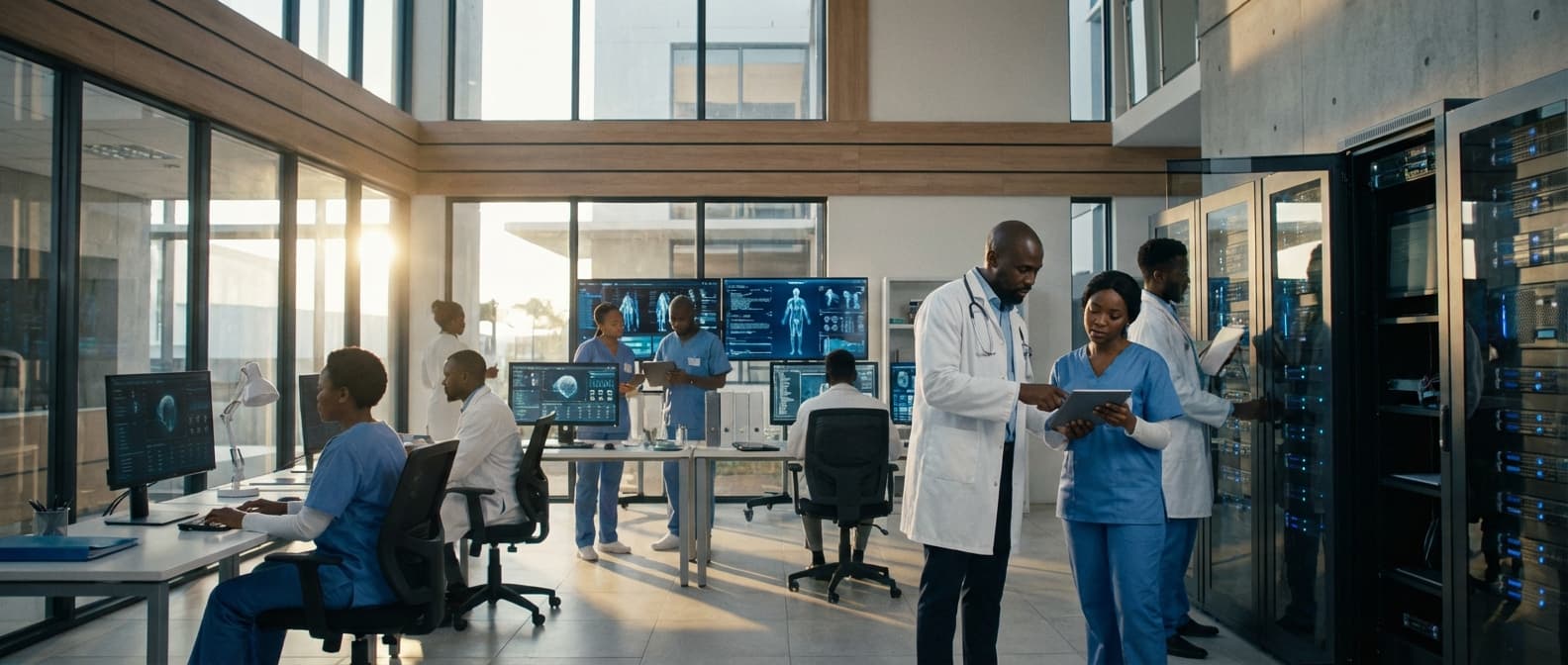
Tele-Radiology in Egypt
Engineering Excellence & Technical Support
24/7 access to certified radiologists providing rapid, accurate remote interpretation of diagnostic imaging studies. High-standard technical execution following OEM protocols and local regulatory frameworks.
Rapid Diagnostic Turnaround for Remote Areas
Leveraging advanced tele-radiology platforms, we enable radiologists to interpret medical images from underserved or remote areas of Egypt in real-time. This significantly reduces diagnostic turnaround times, crucial for timely patient care and intervention, especially in emergency situations.
Bridging the Specialist Gap
Our tele-radiology services provide access to a wider pool of sub-specialized radiologists across Egypt and internationally. This ensures patients in any location receive expert opinions for complex cases, overcoming geographical limitations and enhancing the quality of diagnostic services.
Secure and Compliant Medical Imaging Transfer
We implement robust, HIPAA-compliant (or equivalent Egyptian standards) security protocols for the transmission and storage of medical images. Our encrypted network ensures the confidentiality and integrity of patient data, fostering trust and adherence to data privacy regulations in Egypt's evolving healthcare landscape.
What Is Tele-radiology In Egypt?
Tele-radiology in Egypt refers to the transmission of radiological images (such as X-rays, CT scans, MRIs, and ultrasounds) from one location to another for the purpose of interpretation and reporting by a radiologist. This service leverages telecommunications technology and digital imaging to bridge geographical distances, enabling remote access to diagnostic imaging expertise. The core functionality involves image acquisition at a primary healthcare facility, secure transmission of these digital images to a remote radiologist or a teleradiology service provider, followed by the radiologist's interpretation and the generation of a diagnostic report. This report is then transmitted back to the referring physician or facility. The growing adoption of Picture Archiving and Communication Systems (PACS) and Electronic Medical Records (EMRs) facilitates the seamless integration and workflow of tele-radiology services within the Egyptian healthcare ecosystem.
| Who Needs Tele-Radiology in Egypt? | Typical Use Cases | ||||||
|---|---|---|---|---|---|---|---|
| Hospitals in Remote or Underserved Areas: Facilities lacking in-house radiologist coverage, particularly during off-hours or for specialized imaging modalities. | Emergency Departments (EDs): Expedited interpretation of critical imaging studies (e.g., head CTs for stroke, chest X-rays for pulmonary embolism) for rapid patient management. | Specialized Clinics: Diagnostic imaging centers and private practices that require expert interpretation for complex cases or to optimize workflow efficiency. | Tertiary Care Centers: Augmenting existing radiology departments to manage high volumes of imaging studies or to provide subspecialty interpretations (e.g., neuro-radiology, interventional radiology). | Public Health Initiatives: Supporting screening programs or disaster response efforts where immediate access to radiological interpretation is crucial. | Medical Training Programs: Facilitating remote learning and case review for radiology residents and fellows. | Patients Requiring Second Opinions: Enabling access to a wider pool of expert radiologists for confirmation or alternative diagnostic opinions. | |
| Neurological Imaging: Interpretation of CT scans and MRIs for stroke, brain tumors, trauma, and neurodegenerative diseases. | Oncological Imaging: Monitoring disease progression, treatment response, and detection of recurrence through CT, MRI, and PET scans. | Musculoskeletal Imaging: Diagnosis of fractures, joint pathologies, and soft tissue injuries from X-rays, CTs, and MRIs. | Thoracic Imaging: Evaluation of lung nodules, pneumonia, pulmonary embolism, and other respiratory conditions using chest X-rays and CT scans. | Gastrointestinal and Genitourinary Imaging: Diagnosis of abdominal pathologies, renal stones, and other related conditions via CT and ultrasound. | Pediatric Radiology: Specialized interpretation of imaging studies in children, often requiring expertise in specific pediatric conditions. | Mammography and Breast Imaging: Screening and diagnostic interpretation of mammograms and breast ultrasounds. | Interventional Radiology Support: Providing preliminary or follow-up interpretations for procedures. |
Key Components of Tele-Radiology in Egypt
- Image Acquisition: Digital capture of radiological images at the originating healthcare facility.
- Image Transmission: Secure and efficient transfer of DICOM (Digital Imaging and Communications in Medicine) compliant images over a network (e.g., internet, dedicated lines).
- Image Storage (PACS): Utilization of Picture Archiving and Communication Systems for temporary or long-term storage of digital images.
- Remote Interpretation: A qualified radiologist, located at a different geographical site, reviews and analyzes the transmitted images.
- Report Generation: Creation of a comprehensive diagnostic report by the radiologist, detailing findings and conclusions.
- Report Transmission: Secure delivery of the diagnostic report back to the referring clinician or healthcare facility.
Who Needs Tele-radiology In Egypt?
Tele-radiology, the practice of interpreting medical images remotely, is a rapidly growing field with significant potential to enhance healthcare delivery in Egypt. The demand for this service stems from a multifaceted need, driven by the desire to overcome geographical barriers, improve diagnostic accuracy and speed, and optimize the utilization of scarce radiological expertise. As Egypt continues to invest in its healthcare infrastructure and strives to provide equitable access to quality medical services, tele-radiology emerges as a crucial solution for both public and private healthcare providers.
| Customer Segment | Key Needs Addressed by Tele-Radiology | Specific Departments/Use Cases |
|---|---|---|
| Public Hospitals (especially rural/remote) | Radiologist shortage, extended wait times, access to subspecialty | Emergency Department, General Radiology, Inpatient Services, ICU |
| Private Hospitals & Clinics | 24/7 coverage, reduced recruitment costs, access to niche expertise, enhanced service offering | Emergency Department, Operating Room, Outpatient Imaging, Specialist Consultations |
| Rural Health Centers | Lack of local radiologists, delayed diagnoses, patient transfers | Primary care diagnostics, basic imaging interpretation, referral support |
| Diagnostic Imaging Centers | Extended reporting hours, subspecialty interpretations, efficient workflow | CT, MRI, X-ray, Ultrasound interpretation for all modalities |
| Specialized Medical Centers (e.g., Oncology) | Precise tumor staging, treatment monitoring, complex case analysis | Oncology imaging (CT, MRI), interventional radiology support |
| Emergency Departments (EDs) | Rapid interpretation of critical findings, reduced door-to-needle/door-to-incision times | Stroke imaging, trauma imaging, acute abdomen, chest pain |
| Intensive Care Units (ICUs) | Timely interpretation of serial imaging, patient monitoring support | Bedside X-ray, CT scan interpretation for critically ill patients |
| Research Institutions | Data sharing for research, remote learning, access to diverse imaging datasets | Clinical trials imaging, educational case reviews, multi-center studies |
Target Customers and Departments for Tele-Radiology in Egypt
- {"title":"Public Hospitals & Healthcare Facilities","description":"These institutions often face challenges related to understaffing of radiologists, long waiting times for image interpretation, and limited access to subspecialist expertise, especially in remote or underserved areas. Tele-radiology can bridge these gaps."}
- {"title":"Private Hospitals & Clinics","description":"While often better resourced, private entities can benefit from tele-radiology to offer 24/7 coverage, reduce the need for in-house radiologist recruitment and retention, and access specialized interpretations for complex cases, thereby enhancing their service offerings and patient satisfaction."}
- {"title":"Rural and Remote Healthcare Centers","description":"These facilities often lack in-house radiologists. Tele-radiology provides a lifeline, enabling them to access timely and accurate diagnoses for a wide range of imaging modalities, improving patient outcomes and reducing the need for costly transfers to urban centers."}
- {"title":"Emerging Diagnostic Centers & Imaging Hubs","description":"New facilities focusing on imaging services can leverage tele-radiology to offer a broader range of interpretations without the immediate need to hire a full team of radiologists, facilitating rapid scaling and market penetration."}
- {"title":"Emergency Departments (EDs)","description":"The ability to receive rapid interpretations of critical imaging studies (e.g., CT scans for stroke or trauma) from anywhere, at any time, is vital for efficient patient management and improved outcomes in emergency settings."}
- {"title":"Intensive Care Units (ICUs)","description":"ICUs often require frequent imaging for patient monitoring. Tele-radiology can provide quick turnaround times for these studies, aiding in timely clinical decisions and interventions."}
- {"title":"Outpatient Diagnostic Imaging Centers","description":"These centers can use tele-radiology to extend their reporting capabilities beyond typical business hours or to gain access to subspecialist interpretations for specific modalities (e.g., musculoskeletal, neuroimaging)."}
- {"title":"Specialized Medical Centers (e.g., Oncology, Cardiology, Neurology)","description":"These departments frequently require highly specialized radiological interpretations for diagnosis, treatment planning, and follow-up. Tele-radiology offers access to a wider pool of subspecialists, improving diagnostic precision for complex cases."}
- {"title":"Tertiary and Quaternary Care Hospitals","description":"Even large hospitals can benefit from tele-radiology for overflow management, accessing niche subspecialists, or ensuring continuous coverage during peak demand or staff shortages."}
- {"title":"Research Institutions & Medical Schools","description":"Tele-radiology platforms can facilitate the sharing of anonymized imaging data for research purposes, as well as provide remote learning opportunities for radiology residents and fellows."}
Tele-radiology Process In Egypt
The Tele-Radiology process in Egypt, while still evolving, typically follows a structured workflow to facilitate remote radiological interpretations and consultations. This workflow aims to bridge geographical gaps, improve access to specialized expertise, and enhance the efficiency of diagnostic imaging services. The process generally begins with an inquiry or a request for a radiological interpretation, originating either from a referring physician at a remote healthcare facility or directly from a patient seeking a second opinion. This inquiry triggers a series of steps involving image acquisition, secure transmission, expert interpretation, report generation, and finally, the delivery of the findings back to the requesting party.
| Stage | Key Activities | Responsible Parties | Technology/Tools |
|---|---|---|---|
| Inquiry/Request | Referring physician or patient requests radiological interpretation. | Referring Physician, Patient | Phone, Email, EHR, Referral Forms |
| Image Acquisition | Performing imaging procedure (X-ray, CT, MRI, US). | Radiographer/Technologist | Imaging Modalities (CT Scanner, MRI Machine, X-ray Machine, Ultrasound Machine) |
| Data Preparation & Transmission | Digitizing images, DICOM formatting, secure transmission. | Radiographer/Technologist, IT Support | PACS, DICOM viewers, Secure Network (VPN, SSL), Internet |
| Platform Reception & Triage | Receiving images, prioritizing urgent cases, assigning to radiologist. | Teleradiology Platform, Teleradiology Coordinator | Teleradiology Platform, Worklist Management System |
| Interpretation | Analyzing images, formulating diagnosis. | Radiologist (on-site or remote) | Teleradiology Workstation, Advanced Visualization Software, DICOM Viewer |
| Report Generation | Dictating or typing diagnostic report. | Radiologist | Speech Recognition Software, Structured Reporting Templates, Word Processor |
| Quality Assurance (Optional) | Reviewing report for accuracy and completeness. | Senior Radiologist, QA Manager | Teleradiology Platform, QA Protocols |
| Report Delivery | Transmitting finalized report and images back to referring facility. | Teleradiology Platform, IT Support | Teleradiology Platform, EHR Integration, Secure Email |
| Billing & Administration | Invoicing, payment processing, record keeping. | Administrative Staff, Billing Department | Billing Software, Accounting Systems |
Tele-Radiology Workflow in Egypt
- Image Acquisition: This is the initial step where the diagnostic imaging procedure (e.g., X-ray, CT, MRI, Ultrasound) is performed at the local healthcare facility. The radiographer or technologist ensures the images are of optimal diagnostic quality and prepared for digital transmission.
- Image Archiving and Transmission: Once acquired, the medical images are digitized and stored in a Picture Archiving and Communication System (PACS) at the local facility. These images are then securely transmitted over a dedicated network or the internet to a tele-radiology service provider or a central interpreting center. Encryption and adherence to data privacy regulations (e.g., patient confidentiality) are crucial at this stage.
- Teleradiology Platform Integration: The tele-radiology service provider utilizes a specialized teleradiology platform. This platform acts as a central hub for managing incoming studies, assigning them to radiologists, and facilitating communication. It often integrates with the referring facility's PACS or operates as a standalone system.
- Study Triage and Assignment: Upon receiving the images, the teleradiology platform, or a designated teleradiologist, triages the studies. Critical or urgent cases are prioritized. The study is then assigned to an appropriate radiologist based on their subspecialty, availability, and workload.
- Radiologist Interpretation: The assigned radiologist accesses the images and associated patient clinical information through the teleradiology platform. They perform a detailed interpretation, using advanced visualization tools and their expertise to diagnose any abnormalities or provide a report on normal findings.
- Report Generation: Following the interpretation, the radiologist dictates or writes a comprehensive diagnostic report. This report includes findings, impressions, and recommendations. The report is typically generated using structured reporting templates to ensure consistency and completeness.
- Report Quality Assurance (QA): In many advanced tele-radiology setups, a peer-review or quality assurance process is implemented. Another experienced radiologist may review the report before it is finalized, especially for complex cases or to ensure adherence to standards.
- Report Transmission and Delivery: The finalized report is securely transmitted back to the referring healthcare facility via the teleradiology platform or directly into the referring facility's Electronic Health Record (EHR) system. The referring physician receives the report, often with the interpreted images, for review and patient management.
- Billing and Administration: This involves the administrative processes of invoicing the referring facility or patient for the tele-radiology services rendered, managing payments, and maintaining service records.
- Follow-up and Communication: The teleradiology service provider may engage in further communication with the referring physician if clarification is needed or if follow-up imaging is recommended. This ensures a collaborative approach to patient care.
Tele-radiology Cost In Egypt
Tele-radiology, the practice of interpreting medical images remotely, is gaining traction in Egypt as a means to enhance access to specialized diagnostic services, particularly in underserved areas. The cost of tele-radiology services in Egypt is influenced by several key factors, leading to a range of pricing. These factors include the expertise and specialization of the remote radiologist, the complexity and type of imaging study, the urgency of the report, the volume of studies performed, and the technology infrastructure involved. While specific pricing can vary significantly between providers and contracts, a general overview of pricing factors and their potential impact on costs in Egyptian Pounds (EGP) can be outlined. The market is still developing, and pricing structures are becoming more standardized. However, understanding these variables is crucial for healthcare facilities considering tele-radiology adoption.
| Imaging Study Type | Estimated Price Range (EGP) | Notes |
|---|---|---|
| Basic X-ray Interpretation | 200 - 500 EGP | Standard interpretation, non-urgent. |
| CT Scan Interpretation (Abdomen/Pelvis) | 700 - 1,500 EGP | Standard protocol, includes basic findings. |
| MRI Scan Interpretation (Brain) | 1,000 - 2,000 EGP | Standard protocol, includes basic findings. |
| Ultrasound Interpretation | 400 - 800 EGP | Standard abdominal or obstetric ultrasound. |
| Complex/Subspecialty Interpretation (e.g., Neuro CT Angiogram) | 1,500 - 3,000+ EGP | Requires advanced expertise, detailed analysis. |
| Urgent/STAT Interpretation Surcharge | 150 - 500 EGP (added) | On top of the base study cost. |
Key Pricing Factors for Tele-Radiology in Egypt:
- {"title":"Radiologist's Expertise and Specialization:","description":"Highly specialized radiologists (e.g., neuroradiologists, interventional radiologists) command higher fees due to their advanced training and niche expertise. General radiologists for routine interpretations will be more cost-effective."}
- {"title":"Complexity and Type of Imaging Study:","description":"Simple X-rays are generally less expensive to interpret than complex MRI or CT scans. Studies requiring detailed measurements, comparisons with previous scans, or advanced post-processing will incur higher costs."}
- {"title":"Urgency of Report (Turnaround Time):","description":"Standard reporting times are typically factored into base pricing. Urgent or STAT interpretations, requiring immediate attention and potentially disrupting a radiologist's workflow, often incur a premium fee."}
- {"title":"Volume of Studies:","description":"Healthcare providers with a high volume of imaging studies may negotiate volume-based discounts or per-study rates. Smaller facilities or those with sporadic needs might face higher per-study costs."}
- {"title":"Technology and Platform Fees:","description":"Some tele-radiology providers may include costs for their secure PACS (Picture Archiving and Communication System) and reporting platforms. Others might require clients to have their own compatible systems."}
- {"title":"Subspecialty Coverage:","description":"Access to a broad range of subspecialists for complex cases may come at a higher price point compared to basic diagnostic services."}
- {"title":"Contractual Agreements:","description":"Pricing can be structured differently, including per-study fees, monthly retainers, or capitation models, depending on the agreement between the tele-radiology provider and the healthcare institution."}
Affordable Tele-radiology Options
Tele-radiology offers a valuable solution for healthcare providers seeking to expand their diagnostic capabilities without the significant overhead of in-house radiologists. This service involves remote interpretation of medical images (X-rays, CT scans, MRIs, etc.) by qualified radiologists. Affordable tele-radiology options are becoming increasingly accessible, driven by technological advancements and evolving business models. Understanding value bundles and implementing cost-saving strategies are crucial for maximizing the benefits of these services.
| Cost-Saving Strategy | Description | Impact on Affordability |
|---|---|---|
| Volume-Based Pricing | Negotiating lower per-study rates when committing to a higher volume of interpretations. | Directly reduces the cost per image read, making overall service more economical. |
| Off-Peak Hour Utilization | Leveraging tele-radiology services during non-peak hours when demand and costs might be lower. | Can significantly reduce costs if your practice has a flexible workflow for non-urgent studies. |
| Subspecialty Triage | Using general tele-radiologists for initial reads and only engaging subspecialists for complex or ambiguous cases. | Optimizes radiologist utilization and reduces costs by avoiding unnecessary subspecialist fees. |
| Dedicated vs. Shared Services | Choosing between a dedicated radiologist (or team) for your practice versus a shared service model where radiologists interpret for multiple clients. | Shared services are generally more affordable due to distributed costs across multiple clients. |
| Technology Integration | Ensuring seamless integration with your PACS (Picture Archiving and Communication System) and EHR (Electronic Health Record) to minimize manual data entry and workflow disruptions. | Reduces operational inefficiencies, saving time and labor costs for your staff. |
| Clear Service Level Agreements (SLAs) | Establishing clear expectations for turnaround times (TAT), report quality, and communication protocols. | Prevents costly misunderstandings and ensures you receive the value you're paying for, avoiding rework or delayed diagnoses. |
| Bundled Reporting and QA | Opting for bundles that include comprehensive reporting features and quality assurance processes. | Avoids paying extra for these essential components and ensures consistent, high-quality diagnostic services. |
Understanding Value Bundles in Tele-Radiology
- {"title":"What are Value Bundles?","description":"Value bundles in tele-radiology are pre-defined packages of services designed to meet specific healthcare needs at a predictable cost. Instead of paying per study or per radiologist hour, providers can opt for a bundle that typically includes a set volume of interpretations, specific types of imaging studies, and often includes associated reporting and quality assurance measures."}
- {"title":"Types of Value Bundles","description":"Bundles can be customized based on factors such as imaging modality (e.g., CT abdomen/pelvis bundle), subspecialty coverage (e.g., neuro-radiology bundle), 24/7 coverage, or a combination of these. Some providers offer 'all-inclusive' bundles for smaller practices with a predictable workflow."}
- {"title":"Benefits of Value Bundles","description":"Key benefits include budget predictability, reduced administrative overhead, potential for volume-based discounts, and simplified contract management. This allows practices to focus on patient care rather than managing complex billing and scheduling with multiple vendors."}
Verified Providers In Egypt
In the rapidly evolving healthcare landscape of Egypt, the need for reliable and trustworthy medical services is paramount. "Verified Providers in Egypt" aims to shed light on the importance of choosing healthcare partners with strong credentials, particularly highlighting Franance Health as a leading example. Franance Health stands out due to its rigorous vetting processes, commitment to quality care, and extensive network of specialized medical professionals and facilities. Their approach ensures that patients receive not only high-quality medical treatment but also a seamless and supportive healthcare experience. By prioritizing transparency, patient safety, and ethical practices, Franance Health has established itself as a benchmark for excellence in the Egyptian healthcare sector, making them the best choice for individuals and organizations seeking dependable medical solutions.
| Provider Type | Franance Health's Assurance | Key Benefits for Patients |
|---|---|---|
| Hospitals & Clinics | Accredited and licensed facilities with advanced technology and stringent hygiene protocols. | Access to state-of-the-art medical equipment and evidence-based treatment plans. |
| Specialist Doctors | Board-certified physicians with proven expertise in their respective fields. | Consultations with highly qualified professionals ensuring accurate diagnoses and effective treatments. |
| Diagnostic Centers | Certified laboratories and imaging centers adhering to international quality standards. | Reliable and accurate diagnostic results, crucial for timely medical interventions. |
| Medical Tourism Services | Comprehensive support for international patients, including logistics, accommodation, and translation. | A comfortable and stress-free medical travel experience with personalized attention. |
Why Franance Health is the Best Choice:
- Rigorous credentialing and vetting of all medical professionals and facilities.
- Unwavering commitment to the highest standards of quality and patient safety.
- Extensive network of specialized doctors, hospitals, and diagnostic centers across Egypt.
- Focus on transparency in billing and medical procedures.
- Dedication to ethical practices and patient-centric care.
- Streamlined healthcare management and coordination for a seamless patient journey.
Scope Of Work For Tele-radiology
This document outlines the Scope of Work (SOW) for the provision of Tele-Radiology services, including technical deliverables and standard specifications. The objective is to establish a high-quality, reliable, and secure tele-radiology service that supports diagnostic imaging interpretation for [Client Organization Name].
| Key Performance Indicator (KPI) | Target Value | Measurement Method |
|---|---|---|
| Average Turnaround Time (TAT) for routine X-rays | < 4 hours | Calculated from image acquisition timestamp to report availability |
| Average Turnaround Time (TAT) for routine CT/MRI | < 8 hours | Calculated from image acquisition timestamp to report availability |
| Emergency TAT for CT/MRI (e.g., stroke, trauma) | < 1 hour | Calculated from image acquisition timestamp to report availability |
| Radiologist Availability | 99.5% | Uptime monitoring of the tele-radiology platform and radiologist login status |
| Report Accuracy Rate | 98% | Peer review and quality assurance audits |
| System Uptime | 99.9% | Platform monitoring tools |
Scope of Work Components
- 1. Tele-Radiology Services:
- Provision of remote radiology interpretation services for various imaging modalities (e.g., X-ray, CT, MRI, Ultrasound, Mammography).- Availability of qualified and board-certified radiologists for interpretation.- Timely turnaround times (TAT) for preliminary and final reports, as defined in Service Level Agreements (SLAs).- 24/7 availability for emergency and routine interpretations.- Second opinion and subspecialty interpretations as required.- Quality assurance and peer review processes.- Integration with existing PACS (Picture Archiving and Communication System) and RIS (Radiology Information System) if applicable.- Secure transmission of medical images and reports.- Technical support and maintenance of the tele-radiology platform.- Training and onboarding of relevant client personnel.- Incident management and escalation procedures.- 2. Technical Deliverables:
- Secure and robust tele-radiology platform (cloud-based or on-premise as agreed).- DICOM (Digital Imaging and Communications in Medicine) compliant image viewer for radiologists.- Secure VPN (Virtual Private Network) or equivalent secure connection for data transfer.- Integration APIs (Application Programming Interfaces) for seamless data flow with client systems (PACS, RIS, EMR/EHR).- Secure report generation and distribution mechanism (e.g., PDF, HL7).- Auditing and logging capabilities for all data access and system activities.- Disaster recovery and business continuity plan.- Performance monitoring and reporting tools.- 3. Standard Specifications:
- **Platform Security:** Compliance with HIPAA (Health Insurance Portability and Accountability Act), GDPR (General Data Protection Regulation), and other relevant data privacy regulations. Encryption of data in transit and at rest. Multi-factor authentication for user access.- **Image Viewer:** High-resolution image display, advanced visualization tools (e.g., MPR, MIP, 3D rendering), measurement tools, windowing/leveling controls, multi-planar reformatting (MPR) capabilities.- **Connectivity:** High-speed, reliable internet connectivity with sufficient bandwidth. Redundant network connections where feasible.- **Data Storage:** Secure, compliant, and scalable data storage for images and reports.- **Reporting Standards:** Structured reporting formats, adherence to ACR (American College of Radiology) guidelines and other relevant standards. Capability for voice recognition and dictation.- **Interoperability:** Support for HL7 (Health Level Seven International) messaging for seamless integration with RIS/EMR.- **Scalability:** The platform should be scalable to accommodate future growth in patient volume and demand.- **Reliability:** High availability and uptime with minimal disruptions.- **Audit Trails:** Comprehensive audit trails for all system actions, including access, viewing, and modification of patient data.- **User Interface:** Intuitive and user-friendly interface for both radiologists and client administrators.- **Compliance:** Adherence to all applicable medical device regulations and certifications.
Service Level Agreement For Tele-radiology
This Service Level Agreement (SLA) defines the agreed-upon performance standards for the tele-radiology services provided by [Tele-Radiology Provider Name] (hereinafter referred to as "Provider") to [Client Institution Name] (hereinafter referred to as "Client"). This SLA covers response times for critical interpretations and overall system uptime.
| Service Component | Service Level Objective (SLO) | Measurement Method | Exclusions |
|---|---|---|---|
| Critical Interpretation Response Time (e.g., Stroke, PE, AAA) | Within 30 minutes of image acquisition timestamp. | System logs tracking image upload time and report generation time. | Unforeseen downtime (covered by Uptime Guarantee), Client network issues, delays in providing clinical history. |
| Urgent Interpretation Response Time (e.g., fracture identification on trauma images) | Within 60 minutes of image acquisition timestamp. | System logs tracking image upload time and report generation time. | Unforeseen downtime (covered by Uptime Guarantee), Client network issues, delays in providing clinical history. |
| Routine Interpretation Response Time (e.g., non-urgent scans) | Within 24 hours of image acquisition timestamp. | System logs tracking image upload time and report generation time. | Unforeseen downtime (covered by Uptime Guarantee), Client network issues, delays in providing clinical history, study complexity requiring further consultation. |
| System Uptime Guarantee | 99.5% availability of the tele-radiology platform (viewing, reporting, and transmission capabilities). | Monthly calculation based on total minutes in the month minus minutes of unplanned downtime. Downtime is defined as the inability to access or utilize core platform functionalities. | Scheduled maintenance windows (communicated at least 48 hours in advance), force majeure events, issues originating from Client's IT infrastructure or internet service provider. |
| Report Accessibility | Reports will be accessible via the secure portal within 15 minutes of generation. | System logs tracking report generation and portal availability. | Scheduled maintenance windows, Client network issues. |
Key Performance Indicators
- Critical Interpretation Response Time
- Routine Interpretation Response Time
- System Uptime Guarantee
- Reporting and Notification Procedures
Frequently Asked Questions

Ready when you are
Let's scope your Tele-Radiology in Egypt project in Egypt.

Scaling healthcare logistics and technical systems across the entire continent.