
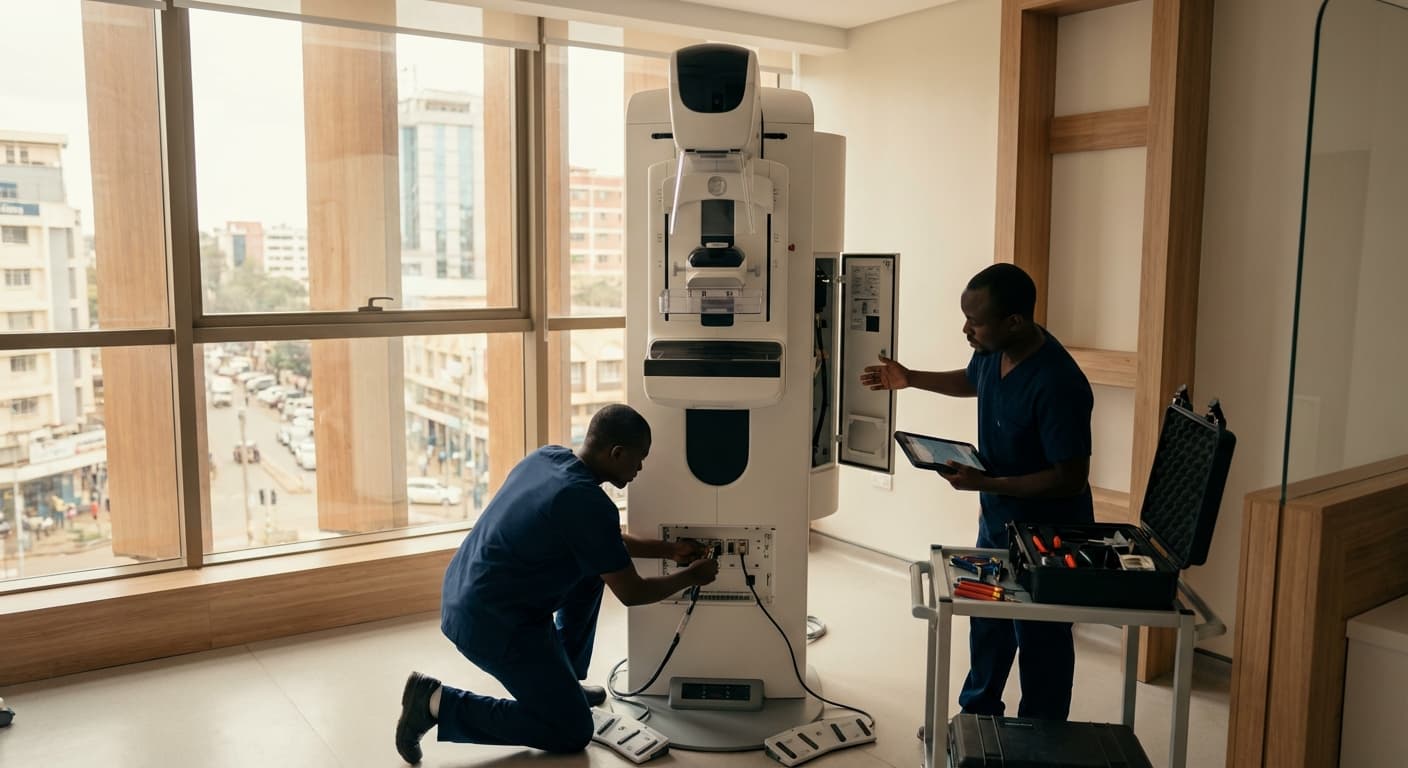
Mammography Installation Service in Egypt
Engineering Excellence & Technical Support
Mammography Installation Service High-standard technical execution following OEM protocols and local regulatory frameworks.
Advanced Imaging System Integration
Seamless installation and integration of state-of-the-art mammography systems in leading Egyptian healthcare facilities, ensuring optimal performance and diagnostic accuracy.
Expert Calibration & Validation
Our certified technicians provide meticulous calibration and validation of all mammography units, adhering to international quality standards and Egyptian regulatory requirements for patient safety.
Comprehensive Technical Training
We offer specialized training programs for radiology technologists and biomedical engineers in Egypt, empowering them with the skills to operate and maintain advanced mammography equipment effectively.
What Is Mammography Installation Service In Egypt?
Mammography Installation Service in Egypt refers to the comprehensive process of setting up, configuring, and validating mammography imaging equipment within healthcare facilities. This service encompasses the physical placement, electrical and network integration, calibration, quality assurance testing, and initial operational training for medical professionals. It ensures that the mammography unit is fully functional, meets all relevant regulatory standards, and delivers diagnostic-quality images for breast cancer screening and diagnosis.
| Who Needs It | Typical Use Cases | Key Considerations for Egypt | |||||
|---|---|---|---|---|---|---|---|
| Hospitals and large medical centers with dedicated radiology departments. | Routine mammographic screening for asymptomatic individuals to detect early-stage breast cancer. | Diagnostic mammography for patients with palpable breast abnormalities or suspicious findings on screening. | Follow-up imaging for patients with a history of breast cancer or at high risk. | Compliance with Egyptian Ministry of Health and Population (MOHP) regulations for medical device installation and operation. | Ensuring equipment interoperability with existing Picture Archiving and Communication Systems (PACS) and Radiology Information Systems (RIS) within the Egyptian healthcare infrastructure. | Availability of qualified and certified installation technicians by manufacturers or authorized service providers. | Consideration of local climate conditions and power grid stability impacting equipment performance and installation requirements. |
| Specialized breast imaging centers. | Screening and diagnostic procedures are the primary functions. | Post-operative assessment and monitoring of breast augmentation or reconstruction. | Research and academic institutions requiring advanced mammography capabilities for studies. | Adherence to international safety standards (e.g., IEC 60601) and local radiation protection guidelines. | Selection of mammography systems with features suitable for the demographic profile and prevalent disease patterns in Egypt. | Logistical planning for equipment transportation and installation in diverse geographical locations across Egypt. | Provision of post-installation technical support and preventive maintenance contracts. |
| Private clinics and diagnostic imaging facilities. | Providing a comprehensive range of breast imaging services to a wider patient population. | Ensuring optimal image quality for accurate diagnosis and treatment planning. | Facilitating the integration of advanced imaging modalities like tomosynthesis (3D mammography) as technology advances. | Training healthcare professionals to effectively utilize the new mammography equipment and interpret images. | Post-installation quality control procedures to maintain consistent diagnostic accuracy over time. | Understanding and mitigating potential challenges related to import regulations and customs clearance for medical equipment. |
Key Components of Mammography Installation Service:
- Site assessment and planning
- Equipment delivery and unboxing
- Physical installation and mounting
- Electrical and power supply integration
- Network connectivity for PACS/RIS integration
- Radiation shielding verification (if applicable)
- System configuration and software setup
- Image acquisition parameter optimization
- Quality Assurance (QA) testing and calibration
- Acceptance testing and performance validation
- Operator training and basic maintenance guidance
- Documentation and warranty activation
Who Needs Mammography Installation Service In Egypt?
Mammography installation services are crucial for healthcare facilities in Egypt that are acquiring or upgrading their mammography equipment. This specialized service ensures the proper setup, calibration, and integration of these vital diagnostic tools. From initial site assessment to final testing and staff training, professional installation is paramount for accurate imaging, patient safety, and optimal equipment performance. Without expert installation, facilities risk suboptimal image quality, potential equipment malfunctions, and delays in diagnostic workflows, ultimately impacting patient care.
| Customer Type | Key Departments Involved | Reason for Need | Specific Considerations |
|---|---|---|---|
| Hospitals (Public & Private) | Radiology Department, Breast Imaging Unit, Oncology Department, Administration/Procurement | Acquiring new mammography units, replacing outdated equipment, expanding breast screening programs. | Need for integration with Picture Archiving and Communication Systems (PACS), adherence to local health regulations, and training for radiology technicians and physicians. |
| Specialized Diagnostic Centers | Radiology Department, Women's Health Services, Technical Management | Focusing on comprehensive diagnostic services, particularly for women's health. Often the first adopters of advanced imaging technology. | Emphasis on speed and efficiency of installation, minimal disruption to patient schedules, and potential for advanced features requiring specialized integration. |
| Women's Health Clinics | Clinical Services, Technical Staff, Practice Management | Dedicated to women's health services, requiring reliable and accessible mammography for screening and diagnosis. | Need for user-friendly equipment and straightforward installation processes, often with a focus on patient comfort and accessibility. |
| Radiology Departments | Chief of Radiology, Senior Radiologists, Radiology Technologists, IT/PACS Administrators | The primary users of mammography equipment. Require accurate calibration and optimal performance for diagnostic interpretation. | Focus on image quality, dose optimization, workflow integration, and ongoing technical support post-installation. |
| Oncology Centers | Oncologists, Radiologists, Breast Surgeons, Medical Physicists | Mammography is a critical tool for early detection and monitoring of breast cancer. Accurate and timely imaging is essential for treatment planning. | High demand for precision and reliability, integration with treatment planning software, and strict adherence to quality assurance protocols. |
| Government Health Initiatives | Ministry of Health Departments, Public Hospitals, Health Project Management | Implementing national breast cancer screening programs, aiming for widespread access to mammography services across the country. | Need for large-scale installations, cost-effective solutions, standardization of equipment and services, and training for staff in remote or underserved areas. |
| Medical Research Institutions | Research Radiologists, Medical Physicists, Research Coordinators | Utilizing mammography for research studies, often requiring specific configurations or integration with research databases. | Potential need for specialized software integration, data management capabilities, and adherence to research protocols. |
Target Customers and Departments for Mammography Installation Service in Egypt
- Hospitals (Public and Private)
- Specialized Diagnostic Centers
- Women's Health Clinics
- Radiology Departments
- Oncology Centers
- Government Health Initiatives and Projects
- Medical Research Institutions
Mammography Installation Service Process In Egypt
The mammography installation service process in Egypt encompasses a structured workflow designed to ensure efficient and compliant setup of advanced medical imaging equipment. This process typically begins with an initial inquiry from a healthcare facility and culminates in a fully operational mammography unit, ready for patient use. It involves several key stages, each with specific tasks and considerations tailored to the Egyptian regulatory environment and the technical requirements of mammography systems.
| Stage | Key Activities | Responsible Parties | Key Considerations (Egypt Specific) |
|---|---|---|---|
| Initial Inquiry and Consultation | Client expresses interest, requests proposal, initial needs assessment, technical consultation regarding specific mammography models, budget discussion. | Healthcare Facility, Equipment Vendor/Service Provider | Understanding of facility's existing infrastructure, patient volume, and specific imaging needs. Availability of qualified personnel. |
| Site Assessment and Preparation | Detailed evaluation of installation site (space, power, ventilation, radiation shielding requirements), site surveys, architectural/electrical modifications planning, environmental assessments. | Equipment Vendor/Service Provider, Facility's Engineering/Maintenance Team, Architects/Contractors | Compliance with Egyptian building codes and safety regulations. Radiation protection standards (based on IAEA recommendations and local regulations). Ensuring adequate space for the unit, control room, and changing areas. |
| Equipment Procurement and Logistics | Finalizing equipment order, manufacturing and quality checks, shipping and customs clearance, transportation to the facility. | Equipment Vendor, Logistics Company, Customs Brokers | Navigating Egyptian import regulations and customs procedures. Ensuring secure and appropriate transportation of sensitive medical equipment. |
| Regulatory Approvals and Licensing | Submission of necessary documentation to relevant Egyptian authorities (e.g., Ministry of Health and Population, Atomic Energy Authority), obtaining permits for import, installation, and operation, radiation safety approvals. | Equipment Vendor/Service Provider, Healthcare Facility | Crucial stage requiring thorough understanding of Egyptian Ministry of Health (MOH) and Atomic Energy Authority (AEA) regulations. Timelines can vary. Proper documentation is paramount. |
| Installation and Calibration | Unpacking, physical installation of the mammography unit and associated components (workstation, printer), electrical connections, network integration, initial system setup. | Certified Installation Technicians, Equipment Vendor/Service Provider | Adherence to manufacturer's specifications. Ensuring proper grounding and power supply stability. Verification of all connections. |
| Testing, Validation, and Quality Assurance | Performing comprehensive diagnostic tests, phantom imaging, image quality assessments, performance validation against manufacturer's standards, ensuring adherence to diagnostic imaging quality standards. | Application Specialists, Service Engineers, Facility's Radiologists/Physicists | Crucial for ensuring diagnostic accuracy and patient safety. Compliance with international quality standards (e.g., ACR) is often a requirement or best practice, even if not strictly mandated by local law. Mammography quality control protocols. |
| Training and Handover | Training for radiographers on system operation, image acquisition techniques, and basic troubleshooting. Training for radiologists on image interpretation and system features. Formal handover of the installed system. | Application Specialists, Trainers, Facility's Medical Staff | Ensuring competence of staff in using the new technology. Understanding of local language for training materials may be beneficial. |
| Post-Installation Support and Maintenance | Providing warranty services, scheduled preventive maintenance, responding to service calls, supplying spare parts, ongoing technical support. | Equipment Vendor/Service Provider, Facility's Maintenance Team | Establishing service level agreements (SLAs). Availability of local technical support and spare parts is vital for minimizing downtime. |
Mammography Installation Service Process in Egypt: Key Stages
- Initial Inquiry and Consultation
- Site Assessment and Preparation
- Equipment Procurement and Logistics
- Regulatory Approvals and Licensing
- Installation and Calibration
- Testing, Validation, and Quality Assurance
- Training and Handover
- Post-Installation Support and Maintenance
Mammography Installation Service Cost In Egypt
The cost of mammography installation services in Egypt can vary significantly based on several factors. These factors influence the overall price, from the initial site assessment and preparation to the final calibration and training. Understanding these elements is crucial for healthcare facilities to budget effectively for this essential medical equipment. The price is typically quoted in Egyptian Pounds (EGP).
| Service Component/Type | Estimated Price Range (EGP) | Notes |
|---|---|---|
| Site Assessment & Consultation | 5,000 - 15,000 EGP | Initial evaluation of space, power, and structural needs. |
| Basic Installation (Digital Mammography) | 30,000 - 70,000 EGP | Includes unpacking, positioning, and initial setup of a standard FFDM unit. |
| Advanced Installation (3D Mammography/Tomosynthesis) | 50,000 - 120,000 EGP | More complex setup for tomosynthesis units, potentially involving specialized software integration. |
| Radiation Shielding (if required) | 20,000 - 80,000+ EGP | Highly variable based on room size, materials, and required protection levels. Can be significantly higher for extensive modifications. |
| Electrical & HVAC Upgrades | 10,000 - 40,000 EGP | Depending on existing infrastructure and power demands of the unit. |
| PACS Integration & Workstation Setup | 15,000 - 50,000 EGP | Connecting to existing PACS or setting up new workstations and software. |
| Comprehensive Training & Calibration | 10,000 - 30,000 EGP | Essential for optimal performance and user competency. |
| Transportation & Logistics | 5,000 - 20,000 EGP | Varies by distance and accessibility within Egypt. |
| Total Estimated Installation Package | 100,000 - 400,000+ EGP | This is a broad estimate for a complete installation including common upgrades and services. Actual costs can be lower or much higher depending on specific site needs and equipment. |
Key Pricing Factors for Mammography Installation in Egypt
- Type of Mammography Machine: Digital mammography (FFDM) and 3D mammography (tomosynthesis) units have different installation requirements and complexities, impacting labor and potential infrastructure upgrades. More advanced systems generally incur higher installation costs.
- Site Preparation & Infrastructure: This includes the cost of electrical upgrades, radiation shielding (if not already present or needing enhancement), ventilation, HVAC systems, and any necessary structural modifications to accommodate the weight and dimensions of the mammography unit. Older buildings may require more extensive preparation.
- Location of Installation: Accessibility to the installation site within Egypt can affect transportation costs for equipment and personnel. Remote or less accessible locations might incur additional charges.
- Vendor and Service Provider: Different manufacturers and specialized installation companies will have their own pricing structures. Reputation, experience, and the scope of services offered (e.g., full turnkey solutions vs. basic installation) play a role.
- Additional Equipment & Accessories: Installation may include setting up PACS (Picture Archiving and Communication System) integration, workstations, printers, or other complementary medical imaging equipment, which adds to the overall service cost.
- Training & Calibration: Comprehensive training for radiographers and radiologists on the operation and maintenance of the mammography unit, along with precise calibration, is usually part of the installation package and contributes to the total price.
- Warranty and Maintenance Agreements: While not strictly installation, ongoing maintenance and warranty packages are often discussed and can influence the initial decision and perceived value of the installation service.
- Regulatory Compliance & Permits: Ensuring the installation meets all local health and safety regulations, including obtaining necessary permits, can involve administrative costs and specialized services.
Affordable Mammography Installation Service Options
Securing reliable and affordable mammography installation services is crucial for healthcare facilities. This section explores various options, emphasizing value bundles and cost-saving strategies to make this essential medical equipment accessible and efficient to implement.
| Strategy | Description | Benefits |
|---|---|---|
| Value Bundles | Many vendors offer bundled packages that combine the cost of the mammography equipment with installation, initial training, and sometimes even a limited maintenance plan. These bundles can streamline the procurement process and offer a predictable overall investment. | Simplified budgeting, potential for discounted pricing compared to separate purchases, integrated service and support. |
| Negotiate Installation Costs | Don't accept the initial quote without negotiation. Discuss specific line items and explore if any costs can be reduced without compromising quality. | Direct cost savings, ensures you're paying a fair market price. |
| Phased Installation | For larger projects or facilities with limited capital, consider a phased approach where essential components are installed first, with additional features or upgrades added later. | Manages cash flow, allows for gradual integration of new technology. |
| Compare Multiple Quotes | Obtain detailed installation quotes from at least three different reputable vendors. Compare not only the price but also the scope of work, included services, and warranty terms. | Identifies the most competitive pricing, allows for informed decision-making. |
| Leverage Existing Infrastructure | Assess if your current facility can accommodate the mammography system with minimal modifications. This could involve utilizing existing electrical outlets, room layouts, or shielding where possible. | Reduces site preparation costs, expedites installation timeline. |
| Used or Refurbished Equipment | While installation costs are similar, purchasing a certified used or refurbished mammography system can significantly reduce the overall capital expenditure, making installation more affordable in proportion. | Lower upfront equipment cost, making the installation budget more manageable. |
| Extended Warranties and Service Contracts | While an upfront cost, a comprehensive service contract after the initial warranty period can prevent unexpected, high repair bills, making the long-term cost of ownership more predictable and affordable. | Predictable maintenance costs, reduced risk of costly emergency repairs. |
| Partnerships and Group Purchasing Organizations (GPOs) | Healthcare facilities can join GPOs to leverage collective purchasing power, often securing better pricing on equipment and installation services. | Access to pre-negotiated discounts, streamlined procurement. |
Key Considerations for Affordable Mammography Installation
- Type of Mammography System: Digital mammography (2D and 3D/tomosynthesis) will have different installation requirements and costs than analog systems.
- Site Preparation Needs: This includes electrical upgrades, radiation shielding, structural modifications, and HVAC adjustments. The extent of this work significantly impacts the overall cost.
- Installation Complexity: Factors like the building's layout, accessibility for large equipment, and the need for specialized rigging will influence labor costs.
- Vendor Reputation and Experience: Choosing a reputable installer with proven experience in mammography setups ensures quality and minimizes potential future issues, saving on long-term repair costs.
- Training and Support: Comprehensive training for radiographers and technicians is a vital part of the installation package.
- Post-Installation Services: Warranty, maintenance contracts, and ongoing technical support should be factored into the total cost of ownership.
Verified Providers In Egypt
In Egypt's burgeoning healthcare landscape, identifying trustworthy and qualified medical providers is paramount. Franance Health has emerged as a leading platform dedicated to verifying healthcare professionals and institutions, ensuring that patients receive safe, effective, and high-quality care. Their rigorous credentialing process is built on a foundation of thorough vetting, industry best practices, and a commitment to transparency, making them the definitive choice for finding verified providers.
| Provider Type | Verification Criteria Example | Franance Health Benefit |
|---|---|---|
| Doctors | Valid medical license, board certification, years of active practice, verifiable patient reviews | Access to specialists with proven expertise and ethical practice. |
| Hospitals & Clinics | Accreditation from recognized bodies, adherence to safety protocols, qualified medical staff, advanced equipment | Assurance of a safe, well-equipped, and professionally managed healthcare facility. |
| Specialized Therapists (e.g., Physical, Psychological) | Relevant degree, professional licensing, specialized training certifications, supervised practice experience | Connection with certified professionals offering targeted and effective therapeutic interventions. |
| Diagnostic Laboratories | Licensing, quality control certifications (e.g., ISO), qualified laboratory technicians, validated equipment | Reliable and accurate diagnostic results from accredited facilities. |
Why Franance Health Credentials Matter:
- Uncompromising Verification Standards: Franance Health goes beyond superficial checks, meticulously scrutinizing medical licenses, educational qualifications, professional experience, and any relevant certifications of healthcare providers. This multi-faceted approach guarantees that only genuinely qualified individuals gain their endorsement.
- Commitment to Patient Safety: Patient well-being is at the core of Franance Health's mission. By rigorously verifying credentials, they actively mitigate the risks associated with unqualified practitioners, thereby enhancing patient safety and confidence in the Egyptian healthcare system.
- Transparency and Accessibility: Franance Health provides a clear and accessible platform where patients can easily search for and identify verified providers. This transparency empowers individuals to make informed decisions about their healthcare choices.
- Promoting Excellence in Healthcare: By setting a high bar for provider qualification, Franance Health encourages a culture of excellence within the Egyptian medical community. This, in turn, benefits patients by fostering a more skilled and reliable healthcare ecosystem.
- Building Trust and Confidence: In a market where trust is essential, Franance Health's verified provider badge serves as a powerful symbol of credibility. It assures patients that the listed professionals have met stringent standards, fostering greater trust and confidence in their chosen medical care.
Scope Of Work For Mammography Installation Service
This Scope of Work (SOW) outlines the requirements for the installation of a new mammography system. It details the technical deliverables, standard specifications, and responsibilities of the vendor and the client. The objective is to ensure a seamless and compliant installation that integrates the mammography system into the existing healthcare facility infrastructure and meets all regulatory and operational standards.
| Category | Item | Description | Standard Specifications / Deliverables | Client Responsibility | Vendor Responsibility |
|---|---|---|---|---|---|
| Site Preparation | Room Dimensions & Layout | Ensuring adequate space for the mammography unit, operator console, and patient workflow. | Room must comply with manufacturer's minimum space requirements (refer to Appendix A). | Provide accurate room blueprints. Confirm existing layout meets requirements. | Conduct site survey to confirm room suitability. Advise on any necessary modifications. |
| Site Preparation | Power Requirements | Adequate and stable electrical supply for the mammography system and associated equipment. | Dedicated power circuits (refer to manufacturer's specifications for voltage, amperage, and breaker type). Backup power (UPS) may be required. | Ensure availability of required power outlets and circuits. Coordinate with facility electrician. | Provide detailed power requirements. Verify installation of correct power infrastructure. |
| Site Preparation | HVAC and Environmental Controls | Maintaining optimal temperature and humidity for system performance and longevity. | Ambient temperature: 18-24°C (64-75°F). Relative humidity: 40-60% non-condensing. | Ensure HVAC system maintains specified environmental conditions. | Monitor and confirm environmental conditions during installation. |
| Site Preparation | Radiation Shielding | Implementing appropriate shielding to protect staff and patients from radiation exposure. | Compliance with local and national radiation safety regulations. Lead shielding or equivalent may be required. | Provide existing building plans. Identify potential shielding needs. | Recommend and verify shielding requirements based on system and room configuration. May subcontract shielding work if specified. |
| Equipment Delivery | Shipping and Logistics | Safe and secure transport of the mammography system components to the installation site. | Delivery to the designated installation room. Includes all necessary crating and protection. | Provide clear access routes. Designate receiving area. | Manage shipping and logistics. Ensure equipment arrives undamaged. |
| Equipment Delivery | Unpacking and Inspection | Careful unpacking of all system components and visual inspection for damage. | All components unpacked and visually inspected. Damage noted and reported. | Be present during unpacking and inspection. | Unpack all components. Conduct initial visual inspection. Document any shipping damage. |
| System Installation | Physical Installation | Assembly and placement of the mammography unit, console, and related peripherals. | System assembled and positioned according to manufacturer's guidelines and site layout. | Provide clear access to installation location. Clearance of obstacles. | Install and assemble all system components. Ensure correct positioning and alignment. |
| System Installation | Electrical Connections | Connecting the system to the prepared power infrastructure. | All power connections made securely and in accordance with electrical codes and manufacturer specifications. | Ensure power circuits are live and accessible. | Connect system to provided power infrastructure. Perform initial power-up tests. |
| System Installation | Network Connectivity | Establishing network connection for PACS, RIS, and other relevant systems. | Successful network connection established and verified. IP addressing and configuration completed. | Provide network ports and access. Provide network configuration details (e.g., IP range, subnet). | Connect system to the network. Configure network settings. Perform network connectivity tests. |
| System Installation | Software Installation and Configuration | Installing and configuring the mammography system software, including operating system and applications. | System software installed and configured. All user-defined parameters set. | Provide necessary user credentials for software installation. | Install and configure system software. Set up user accounts and permissions as required. |
| Integration | PACS/RIS Integration | Connecting the mammography system to the Picture Archiving and Communication System (PACS) and Radiology Information System (RIS). | Successful DICOM conformance and data transfer to PACS/RIS. HL7 integration if applicable. | Provide PACS/RIS server details and network access. Assist with configuration of PACS/RIS for new modality. | Configure DICOM send/receive. Verify data transfer with PACS administrator. Configure HL7 if applicable. |
| Integration | Printer/Scanner Integration | Integrating any required printers or scanners for hardcopy output or digital input. | Printers/scanners connected, configured, and tested for functionality. | Provide network ports for printers/scanners if applicable. | Connect and configure printers/scanners. Test functionality. |
| Testing and Calibration | System Performance Testing | Verifying that all system functions operate as intended and meet performance benchmarks. | All imaging modes, image acquisition parameters, and post-processing functions tested. Performance metrics documented. | Provide access to the system for testing. | Perform comprehensive system performance tests. Document test results. |
| Testing and Calibration | Image Quality Calibration | Ensuring the system produces images of diagnostic quality, meeting regulatory and clinical standards. | Calibration performed using certified phantoms. Image quality assessment completed. QC logs initiated. | Provide necessary test phantoms if not included in the vendor package. | Perform initial calibration and image quality checks. Provide calibration report. |
| Testing and Calibration | Safety and Compliance Testing | Verifying compliance with all relevant safety standards and regulations. | Radiation safety checks completed. Electrical safety tests performed. All required certifications obtained. | Facilitate access for regulatory inspectors if required. | Perform all required safety and compliance tests. Provide test reports and certifications. |
| User Training | Operator Training | Comprehensive training for radiographers and technologists on system operation and basic maintenance. | Training sessions covering all aspects of system operation, image acquisition, quality control, and basic troubleshooting. Training materials provided. | Ensure availability of staff for training sessions. Provide a suitable training environment. | Deliver operator training. Provide training documentation. |
| User Training | Physician/User Training | Training for radiologists and other relevant medical staff on image interpretation and workflow integration. | Training tailored to physician needs, focusing on image display, manipulation, and integration with diagnostic workstations. | Ensure availability of physicians for training sessions. | Deliver physician/user training. Address workflow-specific questions. |
| Documentation | Installation Report | A detailed report documenting the entire installation process, including any deviations or issues encountered. | Report includes installation dates, personnel involved, system configuration, test results, and sign-off. | Review and approve the installation report. | Prepare and submit a comprehensive installation report. |
| Documentation | User Manuals & Technical Documentation | Provision of all necessary user manuals, service manuals, and technical documentation. | Complete set of up-to-date manuals in electronic and/or hardcopy format. | Provide adequate storage space for physical manuals if applicable. | Provide all relevant user and technical documentation. |
| Documentation | As-Built Drawings | Updated drawings reflecting the final installation configuration, including cabling and component placement. | Accurate drawings showing the final system layout, cable runs, and connections. | Provide existing building drawings for reference. | Provide as-built drawings for the installed system. |
| Handover | Final Acceptance | Formal client acceptance of the installed mammography system after successful testing and training. | Signed acceptance certificate by authorized client representative. | Designate an authorized representative for final acceptance. | Obtain formal acceptance of the installed system. |
| Post-Installation | Warranty and Support | Provision of warranty terms and details of post-installation support services. | Clearly defined warranty period and service level agreements (SLAs) for technical support and spare parts. | Understand warranty terms and conditions. | Provide warranty information and outline post-installation support services. |
| Post-Installation | Troubleshooting and Maintenance | Procedures for reporting issues and scheduled preventive maintenance. | Clear escalation path for technical issues. Preventive maintenance schedule provided. | Report any issues promptly. Schedule and facilitate preventive maintenance visits. | Provide troubleshooting guidance. Offer ongoing maintenance services as per agreement. |
Key Project Phases
- Site Preparation and Assessment
- Equipment Delivery and Unpacking
- System Installation and Configuration
- Integration with Existing Systems
- Testing and Calibration
- User Training
- Documentation and Handover
- Post-Installation Support
Service Level Agreement For Mammography Installation Service
This Service Level Agreement (SLA) outlines the response times and uptime guarantees for the Mammography Installation Service provided by [Your Company Name] to [Client Name]. This SLA is an integral part of the overall service contract and aims to ensure the efficient and reliable operation of the installed mammography equipment.
| Service Level | Response Time Target | Uptime Guarantee | Notes |
|---|---|---|---|
| Critical (Complete System Failure) | Within 2 business hours | 99.5% monthly | Immediate dispatch of qualified technician. Issue requires immediate attention to prevent patient care disruption. |
| High (Significant Performance Degradation/Partial Failure) | Within 4 business hours | 99.0% monthly | Technician assigned to begin diagnosis and troubleshooting. Impacts patient throughput or image quality. |
| Medium (Minor Malfunction/Non-critical Issue) | Within 8 business hours | 98.0% monthly | Issue will be addressed by a qualified technician during standard business hours. Does not significantly impact patient care. |
| Low (Inquiry/Request for Information/Routine Check) | Within 24 business hours | N/A (Does not impact operational uptime) | Response for non-urgent requests or information. No direct impact on equipment functionality. |
Key Service Metrics
- Response Time: The time taken for [Your Company Name] to acknowledge and begin addressing a reported service issue.
- Resolution Time: The time taken to fully resolve a reported service issue, restoring the mammography equipment to full operational capacity.
- Uptime Guarantee: The percentage of time the mammography equipment is guaranteed to be operational and available for use, excluding scheduled maintenance.
- Scheduled Maintenance: Planned periods for preventative maintenance, upgrades, or inspections, communicated in advance to the client.
Frequently Asked Questions

Ready when you are
Let's scope your Mammography Installation Service in Egypt project in Egypt.

Scaling healthcare logistics and technical systems across the entire continent.