
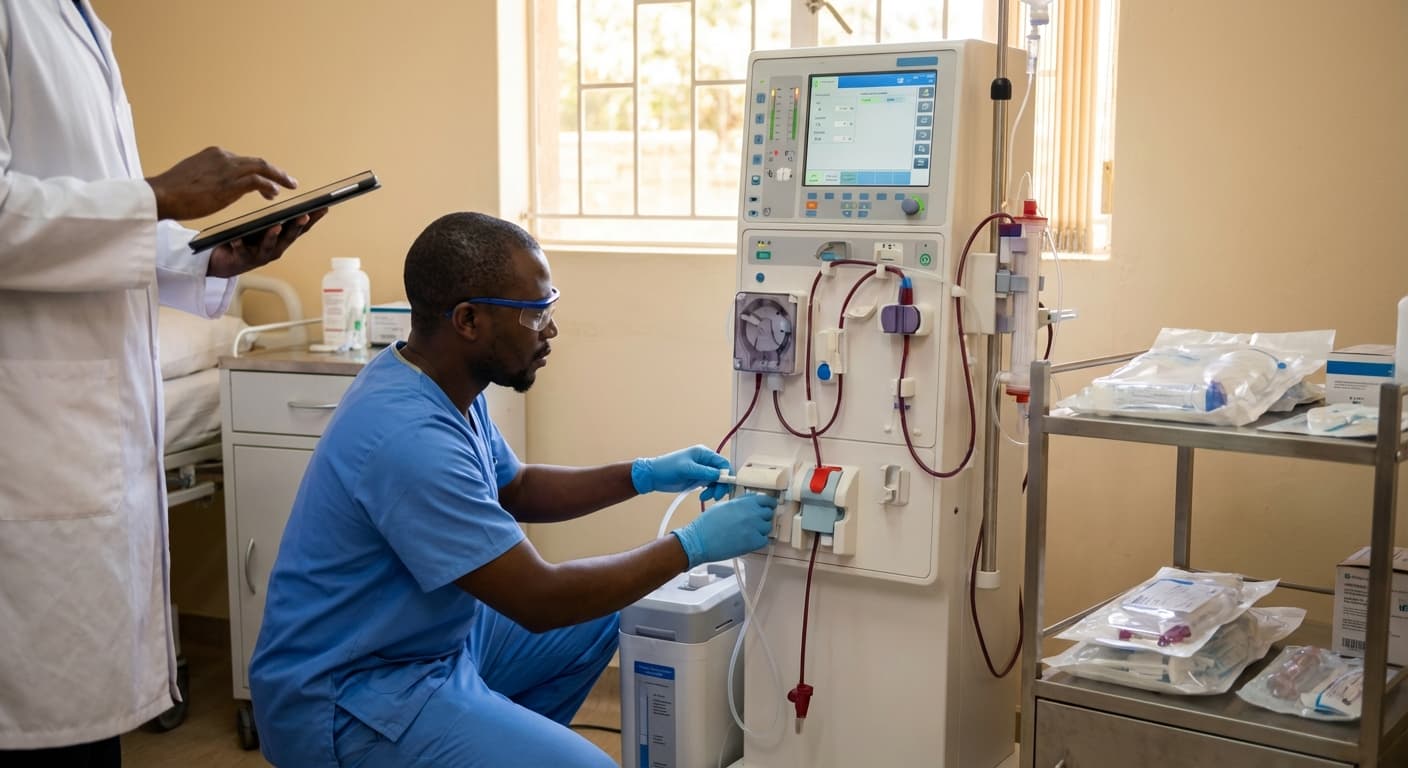
Hemodialysis Machine Installation Service in Egypt
Engineering Excellence & Technical Support
Hemodialysis Machine Installation Service High-standard technical execution following OEM protocols and local regulatory frameworks.
Nationwide Network & Certified Technicians
Leveraging a strategically located network of certified and highly trained technicians across all major Egyptian governorates ensures rapid response and expert installation of your hemodialysis machines, minimizing downtime and maximizing patient care availability.
Compliance-Driven Installation Protocols
Our installation process adheres strictly to Egyptian Ministry of Health and Population (MOHP) regulations and international best practices, guaranteeing a safe, compliant, and fully functional hemodialysis unit from day one.
Integrated Site Assessment & Utility Readiness
We provide comprehensive site assessment services to ensure optimal machine placement and integration with existing electrical, plumbing, and waste disposal infrastructure, guaranteeing seamless operation and adherence to all utility requirements specific to Egyptian healthcare facilities.
What Is Hemodialysis Machine Installation Service In Egypt?
Hemodialysis Machine Installation Service in Egypt refers to the comprehensive process of setting up, configuring, and validating hemodialysis machines within healthcare facilities across Egypt. This service ensures that the critical equipment used for renal replacement therapy is functional, safe, and compliant with all relevant medical and regulatory standards. The installation encompasses the physical placement of the machine, connection to necessary utilities (water, power, waste disposal), integration with existing medical infrastructure, and initial testing to guarantee optimal performance.
| Who Needs Hemodialysis Machine Installation Service? | Typical Use Cases |
|---|---|
| Hospitals (public and private) | Establishment of new dialysis centers or expansion of existing ones within hospital premises. |
| Dedicated Dialysis Centers/Clinics | Setting up standalone facilities specifically for providing hemodialysis treatment. |
| Medical Equipment Suppliers/Distributors | As part of their sales agreements to deliver and install purchased hemodialysis machines to healthcare providers. |
| Government Health Authorities | For projects involving the equipping of public healthcare facilities or national health initiatives. |
| International Aid Organizations | When deploying hemodialysis equipment to support healthcare infrastructure in Egypt. |
| Research Institutions | For setting up specialized dialysis units for clinical research purposes. |
Key Components of Hemodialysis Machine Installation Service
- Site Assessment and Preparation: Evaluating the installation location for space, power, water, and drainage requirements, and preparing the site accordingly.
- Machine Unpacking and Physical Setup: Carefully unpacking the hemodialysis machine and positioning it in its designated operational area.
- Utility Connections: Establishing secure and compliant connections to potable water supply (often with pre-treatment systems), electrical power, and medical waste drainage systems.
- Ancillary Equipment Integration: Connecting and configuring associated equipment such as dialyzers, blood lines, dialysate concentrate delivery systems, and patient monitoring devices.
- Calibration and Functional Testing: Performing rigorous calibration procedures and running diagnostic tests to verify all operational parameters, including flow rates, pressures, conductivity, and temperature.
- Safety Checks and Validation: Conducting comprehensive safety inspections and validation protocols to ensure the machine meets all national and international safety standards and is ready for clinical use.
- User Training: Providing initial training to the clinical staff (nephrologists, nurses, technicians) on the operation, basic maintenance, and troubleshooting of the newly installed machine.
- Documentation and Handover: Completing all necessary installation reports, validation certificates, and providing comprehensive documentation to the facility, formally handing over the operational unit.
- Post-Installation Support (Optional/Contractual): Offering follow-up support, maintenance agreements, or extended warranty services.
Who Needs Hemodialysis Machine Installation Service In Egypt?
Hemodialysis is a life-sustaining treatment for individuals with end-stage renal disease (ESRD). The proper installation and maintenance of hemodialysis machines are critical for ensuring patient safety and treatment efficacy. In Egypt, a country with a growing population and an increasing prevalence of chronic kidney disease (CKD), the demand for reliable hemodialysis machine installation services is significant. This service is essential for healthcare facilities to establish or upgrade their dialysis units, ensuring they can provide high-quality care to patients requiring this vital therapy.
| Customer Segment | Key Departments Involved | Primary Needs |
|---|---|---|
| Public Hospitals (MOHP) | Nephrology Department, Biomedical Engineering Department, Procurement Department, Maintenance Department | Cost-effective solutions, large-scale installations, compliance with national standards, robust maintenance contracts |
| Private Hospitals | Nephrology Department, Biomedical Engineering Department, Administration, Facilities Management | High-quality equipment, advanced technology, patient comfort, efficient workflow, comprehensive service packages |
| University Hospitals and Medical Centers | Nephrology Department, Biomedical Engineering Department, Research & Development, Clinical Training | Cutting-edge technology for research and training, reliable performance, integration with existing systems, expert technical support |
| Specialized Kidney Dialysis Centers | Nephrology Department, Clinical Staff, Technical Team, Center Management | Dedicated dialysis infrastructure, specialized equipment, seamless operation, patient-centric approach, efficient patient throughput |
| NGOs Operating Healthcare Facilities | Healthcare Management, Clinical Department, Technical Support Staff | Affordable installation, durable equipment, accessible maintenance, training for local staff, meeting basic healthcare needs |
| New Healthcare Facility Developments | Project Management Team, Architects, Engineers, Procurement Specialists, Clinical Leads | Turnkey installation solutions, expert consultation on infrastructure requirements, early integration of dialysis units, compliance with building codes and healthcare regulations |
Target Customers & Departments for Hemodialysis Machine Installation Services in Egypt:
- Public Hospitals (Ministry of Health and Population - MOHP)
- Private Hospitals
- University Hospitals and Medical Centers
- Specialized Kidney Dialysis Centers
- Non-Governmental Organizations (NGOs) operating healthcare facilities
- New healthcare facility developments and expansions
Hemodialysis Machine Installation Service Process In Egypt
This document outlines the comprehensive workflow for Hemodialysis Machine Installation Services in Egypt, from initial client inquiry to the final execution and handover. The process is designed to ensure a smooth, efficient, and compliant installation, meeting all client and regulatory requirements. This workflow emphasizes clear communication, meticulous planning, and expert execution by certified technicians.
| Stage | Description | Key Activities | Responsible Party | Timeline (Typical) |
|---|---|---|---|---|
| Inquiry and Needs Assessment | Initial contact from the client to express interest in installation services. | Receive inquiry, understand client's specific requirements (machine model, number of units, facility type), gather preliminary information. | Client, Sales Representative | 1-3 Business Days |
| Site Survey and Technical Evaluation | On-site assessment of the installation location to determine feasibility and identify requirements. | Evaluate space, power supply, water supply and quality, drainage, ventilation, existing infrastructure, safety regulations adherence. | Technical Specialist, Client Representative | 3-5 Business Days (after initial inquiry) |
| Proposal and Quotation | Development of a detailed proposal and cost estimate based on the site survey. | Prepare a comprehensive proposal including scope of work, equipment list, installation plan, timelines, and detailed quotation. | Technical Sales Team | 2-4 Business Days (after site survey) |
| Contract Agreement | Formalization of the service agreement between the client and the service provider. | Review and sign the contract, including terms and conditions, payment schedule, warranty information, and service level agreements. | Client, Legal Department, Service Provider Management | 5-10 Business Days (depending on negotiation) |
| Logistics and Machine Procurement | Acquisition and preparation of the hemodialysis machine and necessary accessories. | Order machines, accessories, and spare parts. Coordinate with suppliers for timely delivery. Verify machine serial numbers and specifications. | Procurement Department, Logistics Team | Variable (depends on machine availability and lead times) |
| Site Preparation | Ensuring the installation site meets all technical and safety requirements. | Client to prepare the space according to agreed-upon specifications (e.g., plumbing, electrical outlets, air conditioning). Service provider may offer guidance or oversee. | Client, with guidance from Service Provider | Variable (prior to machine delivery) |
| Machine Delivery and Unpacking | Safe transportation and unpacking of the hemodialysis machine at the client's facility. | Coordinate delivery logistics. Inspect packaging for damage. Carefully unpack the machine and its components. | Logistics Team, Installation Technicians | 1 Business Day (on arrival at site) |
| Installation and Connection | Physical installation and connection of the hemodialysis machine to utilities. | Assemble the machine, connect to power, water inlet, and drain. Ensure all connections are secure and compliant with manufacturer guidelines and local regulations. | Certified Installation Technicians | 1-3 Business Days (per machine, depending on complexity) |
| Testing and Calibration | Comprehensive testing to ensure the machine functions correctly and is calibrated accurately. | Perform functional tests, leak tests, safety checks, and calibrate critical parameters (e.g., flow rates, pressures, temperatures). Verify alarm systems. | Certified Installation Technicians, Biomedical Engineers | 1-2 Business Days (per machine) |
| User Training | Training healthcare professionals on the operation and basic maintenance of the installed machine. | Conduct hands-on training sessions for nurses and technicians. Cover machine setup, operation, troubleshooting, disinfection, and safety protocols. | Application Specialists, Certified Trainers | 1-2 Business Days (per group) |
| Documentation and Handover | Formal handover of the installed machine and relevant documentation to the client. | Provide user manuals, service records, calibration certificates, and warranty information. Obtain client sign-off on successful installation. | Installation Team Lead, Client Representative | 1 Business Day |
| Post-Installation Support and Follow-up | Ongoing support and maintenance to ensure continued optimal performance. | Provide warranty support, schedule routine maintenance, offer remote troubleshooting assistance, and address any client concerns. Conduct follow-up visits as per contract. | Customer Support Team, Field Service Engineers | Ongoing |
Key Stages in Hemodialysis Machine Installation Service Process
- Inquiry and Needs Assessment
- Site Survey and Technical Evaluation
- Proposal and Quotation
- Contract Agreement
- Logistics and Machine Procurement
- Site Preparation
- Machine Delivery and Unpacking
- Installation and Connection
- Testing and Calibration
- User Training
- Documentation and Handover
- Post-Installation Support and Follow-up
Hemodialysis Machine Installation Service Cost In Egypt
The cost of installing a hemodialysis machine in Egypt can vary significantly based on several key factors. These factors influence the overall price, from the initial purchase or lease of the machine to the necessary infrastructure and ongoing support. Understanding these elements is crucial for healthcare providers and facilities planning for hemodialysis services. The local currency, the Egyptian Pound (EGP), is used for all cost estimations, but it's important to note that prices can fluctuate due to market conditions, import duties, and supplier negotiations.
Key Pricing Factors:
- Type and Brand of Hemodialysis Machine: Different manufacturers offer machines with varying levels of sophistication, features, and technological advancements. High-end, advanced machines with more integrated monitoring and treatment options will naturally command higher prices than basic models. Brand reputation and after-sales service also play a role.
- New vs. Refurbished Machine: Purchasing a new machine involves a higher upfront cost compared to acquiring a certified refurbished unit. Refurbished machines can offer a cost-effective solution, but their reliability and warranty terms need careful consideration.
- Purchase vs. Lease Agreement: Facilities can either buy the hemodialysis machine outright or enter into a lease agreement. Leasing typically involves lower initial investment but can accrue higher costs over the long term. Lease agreements often include maintenance and service contracts.
- Infrastructure Requirements: The installation goes beyond just the machine. It necessitates specific infrastructure, including:
* **Water Treatment System (RO/DI):** This is critical for producing ultrapure water required for dialysis. The complexity and capacity of the reverse osmosis (RO) and deionization (DI) systems will impact cost.
* **Plumbing and Electrical Work:** Modifications to existing plumbing and electrical systems, or the installation of new ones, to accommodate the machine's requirements are essential.
* **Ventilation and Air Conditioning:** Proper environmental controls are needed for patient comfort and machine performance.
* **Specialized Dialysis Chairs/Beds:** Ergonomically designed chairs or beds for patients during treatment.
* **Backup Power Supply (UPS/Generator):** Essential to ensure uninterrupted treatment during power outages.
- Installation and Commissioning Services: This includes the physical setup of the machine, connecting it to water and power, and initial calibration and testing. The complexity of the installation and the expertise of the technicians involved influence this cost.
- Training: Comprehensive training for medical staff (nurses, technicians) on the operation, maintenance, and troubleshooting of the hemodialysis machine is vital and is often included in the installation package or as a separate service.
- Maintenance and Service Contracts: Post-installation, ongoing maintenance and service contracts are crucial for ensuring the machine's optimal performance and longevity. These contracts can be bundled with the purchase or lease, or acquired separately.
- Location and Accessibility: For rural or remote areas, transportation and accessibility can add to the installation costs. The effort required to deliver and set up the equipment in such locations might be higher.
- Regulatory Approvals and Certifications: Ensuring the machine and installation meet Egyptian health regulations and standards might involve associated fees or services.
Estimated Cost Ranges in Egyptian Pounds (EGP):
It's challenging to provide exact figures without specific machine models and service provider quotes. However, based on general market information for Egypt, the following ranges can be considered. These are indicative and can vary significantly.
| Component/Service | Estimated Cost Range (EGP) |
|---|---|
| New Hemodialysis Machine (Entry-Level to Mid-Range) | 1,000,000 - 3,000,000+ |
| New Hemodialysis Machine (High-End/Advanced) | 3,000,000 - 7,000,000+ |
| Refurbished Hemodialysis Machine (Certified) | 500,000 - 1,500,000 |
| Water Treatment System (RO/DI - Complete Unit) | 200,000 - 800,000+ |
| Installation & Commissioning (Basic Setup) | 50,000 - 150,000 |
| Installation & Commissioning (Complex/Full Infrastructure) | 150,000 - 400,000+ |
| Staff Training (Per Session/Module) | 20,000 - 75,000 |
| Annual Maintenance Contract (Basic) | 100,000 - 300,000 |
| Annual Maintenance Contract (Comprehensive) | 300,000 - 700,000+ |
| Dialysis Chair/Bed | 30,000 - 150,000 |
| Backup Power Supply (UPS/Generator - depending on capacity) | 100,000 - 500,000+ |
Factors Influencing Hemodialysis Machine Installation Costs in Egypt
- Type and Brand of Hemodialysis Machine
- New vs. Refurbished Machine
- Purchase vs. Lease Agreement
- Infrastructure Requirements (Water Treatment, Electrical, Plumbing, HVAC)
- Installation and Commissioning Services
- Staff Training
- Maintenance and Service Contracts
- Location and Accessibility
- Regulatory Compliance
Affordable Hemodialysis Machine Installation Service Options
Installing a hemodialysis machine is a critical step in establishing or expanding dialysis services. This service involves the careful setup, calibration, and testing of the machine to ensure safe and effective patient treatment. Choosing the right installation service can significantly impact operational efficiency and long-term costs. This guide explores affordable hemodialysis machine installation service options, focusing on value bundles and cost-saving strategies.
| Service Component | Description | Cost-Saving Strategies |
|---|---|---|
| Pre-Installation Site Assessment | Evaluation of facility's electrical, plumbing, water treatment, and space readiness. | Bundle with installation service; utilize in-house facilities team for initial assessment if qualified. |
| Machine Delivery and Unpacking | Safe transport and unpacking of the hemodialysis machine(s). | Coordinate delivery with machine purchase/lease; inquire about included delivery from manufacturer. |
| Physical Installation and Connection | Setting up the machine, connecting to water, power, and drainage systems. | Ensure existing infrastructure is compatible to avoid modifications; inquire about bundled pricing for multiple units. |
| Calibration and Testing | Ensuring the machine operates within manufacturer specifications and safety standards. | Part of a value bundle; ensure comprehensive testing is included to prevent future issues. |
| Initial Staff Training | Training biomedical technicians and nursing staff on machine operation, basic troubleshooting, and maintenance. | Opt for comprehensive training as part of a bundle; explore manufacturer-provided training options. |
| Post-Installation Verification | Final checks and documentation to confirm successful installation and functionality. | Ensure this is a standard part of the service; confirms quality and reduces risk of follow-up visits for minor issues. |
| Warranty and Service Contracts | Ongoing support and maintenance for the installed machine. | Compare bundled service contract costs with standalone options; negotiate terms for longer coverage. |
Key Considerations for Affordable Hemodialysis Machine Installation
- Define Your Needs: Clearly understand the type and number of machines, your facility's existing infrastructure (water treatment, electrical, plumbing), and any specific regulatory requirements.
- Research Service Providers: Obtain quotes from multiple reputable installation companies, including those that specialize in medical equipment or are authorized by machine manufacturers.
- Understand Value Bundles: Look for packages that include not just the physical installation but also pre-installation assessments, post-installation testing, initial training, and potentially maintenance agreements.
- Explore Manufacturer Packages: Some hemodialysis machine manufacturers offer installation as part of their purchase or lease agreements. Compare these to independent service provider costs.
- Consider Off-Peak Scheduling: Negotiate installation during less busy periods for your facility to potentially secure better rates and minimize disruption.
- Bundle Multiple Services: If you are acquiring multiple machines or other related equipment, inquire about discounted rates for bundled installation services.
- Leverage Existing Infrastructure: Ensure your facility's water purification systems, electrical capacity, and plumbing are adequate and properly maintained to avoid costly retrofitting during installation.
- Request Detailed Quotes: Ensure all costs, including labor, travel, materials, testing, and any potential site modifications, are clearly itemized.
- Inquire About Extended Warranties/Service Contracts: While an upfront cost, a comprehensive service contract post-installation can prevent unexpected repair expenses and ensure timely maintenance.
- Prioritize Certified Technicians: While potentially slightly more expensive, using certified technicians guarantees adherence to safety standards and manufacturer specifications, preventing future issues.
- Understand Training Components: Effective initial training for your staff is crucial for machine longevity and operational efficiency, which can be a cost-saving in the long run by reducing errors and downtime.
- Negotiate Payment Terms: Discuss flexible payment plans or early payment discounts with service providers.
Verified Providers In Egypt
In Egypt's evolving healthcare landscape, identifying trustworthy and qualified medical providers is paramount for patients seeking quality care. Verified providers, especially those with robust credentials like Franance Health, offer a crucial layer of assurance. Franance Health distinguishes itself through its rigorous vetting process, commitment to continuous professional development, and a patient-centric approach that prioritizes safety, efficacy, and ethical practice. This dedication to excellence makes their network of providers the optimal choice for individuals and families navigating healthcare needs in Egypt.
| Credential Type | Verification Process | Provider Benefit | Patient Benefit |
|---|---|---|---|
| Medical Licenses | Cross-referenced with Egyptian Medical Syndicate and international licensing bodies. | Ensures legal and ethical practice. | Guarantees providers are authorized to practice medicine. |
| Educational Qualifications | Verification of degrees and certifications from recognized medical schools and universities. | Confirms foundational knowledge and expertise. | Assures patients are treated by highly educated professionals. |
| Professional Experience | Documented work history, peer recommendations, and potentially practical skill assessments. | Validates practical application of knowledge and experience. | Provides confidence in the provider's ability to handle specific conditions. |
| Specialization Certifications | Validation of board certifications and specialized training in specific medical fields. | Confirms advanced expertise in a particular area of medicine. | Ensures access to leading specialists for complex or niche medical needs. |
| Continuing Medical Education (CME) | Tracked attendance and participation in accredited medical courses and conferences. | Demonstrates commitment to staying current with medical advancements. | Guarantees patients benefit from the latest diagnostic and treatment techniques. |
| Ethical Conduct Review | Background checks and adherence to a strict code of conduct, with mechanisms for addressing patient complaints. | Upholds professional integrity and patient rights. | Ensures a safe, respectful, and trustworthy healthcare environment. |
Why Franance Health Represents the Best Choice for Verified Providers in Egypt:
- Rigorous Credentialing and Verification: Franance Health employs a multi-stage verification process for all its affiliated healthcare professionals. This includes thorough background checks, validation of medical licenses, verification of educational qualifications from accredited institutions, and confirmation of relevant experience and specializations.
- Commitment to Continuous Professional Development (CPD): Franance Health mandates and supports ongoing training and education for its providers. This ensures that practitioners remain at the forefront of medical advancements, adopt the latest treatment protocols, and maintain the highest standards of practice.
- Patient-Centric Care Philosophy: Beyond technical expertise, Franance Health emphasizes providers who demonstrate exceptional communication skills, empathy, and a genuine commitment to patient well-being. This fosters trust and ensures a positive and effective healthcare experience.
- Adherence to Ethical Standards and Best Practices: All Franance Health providers are expected to uphold the highest ethical principles and adhere to international best practices in healthcare delivery. This includes patient confidentiality, informed consent, and transparent treatment planning.
- Specialized Network Access: Franance Health curates a diverse network of specialists across various medical disciplines. This allows patients to access the most appropriate and highly qualified professional for their specific health concerns, from primary care to complex surgical interventions.
- Quality Assurance and Patient Feedback Mechanisms: Franance Health implements systems for ongoing quality assurance and actively solicits patient feedback. This continuous improvement loop ensures that standards are maintained and that patient satisfaction remains a top priority.
Scope Of Work For Hemodialysis Machine Installation Service
This Scope of Work (SOW) outlines the requirements for the professional installation of new hemodialysis machines. The service includes all necessary technical tasks, materials, and adherence to specified standards to ensure the machines are fully operational, safe, and meet regulatory compliance. The focus is on providing a seamless and effective installation process from site preparation through to final testing and commissioning.
| Task/Phase | Description | Technical Deliverables | Standard Specifications / Requirements |
|---|---|---|---|
| Site Assessment and Preparation | Evaluate the installation site to ensure it meets all technical and safety requirements for hemodialysis machine operation. | Site readiness report, including any necessary modifications identified. | Adequate electrical power (dedicated circuits, surge protection, UPS backup), suitable water supply (quality, pressure, flow rate), proper drainage, ventilation, and physical space for the machines and associated equipment. Compliance with local building codes and electrical safety standards. |
| Machine Unpacking and Inspection | Carefully unpack each hemodialysis machine and accessory, performing a visual inspection for any shipping damage. | Damage report (if any), inventory of received components. | Adherence to manufacturer's guidelines for unpacking. ISO 13485 standards for medical device handling. |
| Assembly and Positioning | Assemble the hemodialysis machine and any integrated accessories according to manufacturer instructions. Position machines in their designated locations. | Assembled and correctly positioned machines. | Manufacturer's assembly manual specifications, ergonomic placement for staff and patient access, adherence to facility layout plans. |
| Electrical Connections | Connect the hemodialysis machines to the prepared electrical supply, ensuring all connections are secure and meet safety standards. | Documented electrical connection verification. | Compliance with NETA (InterNational Electrical Testing Association) standards, local electrical codes, and manufacturer's electrical requirements. Grounding and bonding verification. |
| Water and Dialysate System Integration | Connect the machines to the facility's water treatment system (e.g., RO, DI) and dialysate preparation system. | Functional water and dialysate flow to each machine. | Manufacturer's plumbing specifications, adherence to water quality standards for dialysis (e.g., AAMI, ISO), leak-free connections, proper filtration. |
| Drainage System Connection | Connect machine waste lines to the facility's designated drainage system. | Secure and functional drainage connections. | Compliance with plumbing codes, prevention of backflow and contamination, adequate flow capacity. |
| Initialization and Calibration | Power on the machines, perform initial setup, and execute all manufacturer-specified calibration procedures. | Calibrated machines ready for testing, calibration logs. | Manufacturer's operating manual, specific calibration protocols for each model, ensuring accuracy of sensors and flow rates. |
| Functional Testing | Conduct comprehensive tests to verify the operational functionality of all machine features, including fluid pathways, alarms, and safety mechanisms. | Functional test report, including test parameters and results. | Manufacturer's performance test protocols, simulated dialysis runs, validation of all alarm functions, pressure and flow rate accuracy verification. |
| Safety Testing and Verification | Perform all safety-related tests, including electrical safety, pressure relief, and alarm system integrity. | Electrical safety test report, safety system verification checklist. | IEC 60601 standards for medical electrical equipment, FDA regulations, facility-specific safety protocols. |
| Disinfection and Sterilization (if applicable) | Perform initial disinfection/sterilization procedures as per manufacturer guidelines. | Machines prepared for patient use. | Manufacturer's disinfection/sterilization protocols. |
| Final Inspection and Handover | Conduct a final walkthrough with facility staff to ensure all installations are complete and satisfactory. Handover documentation. | Signed-off installation acceptance form, all relevant documentation. | Facility's quality assurance checklist, agreement on operational status. |
| Operator Training (Basic) | Provide basic operational training to designated facility staff on machine use, routine checks, and basic troubleshooting. | Training attendance record, training materials. | Manufacturer's user manual, facility's in-service training requirements. |
Key Objectives and Deliverables
- Successful installation and operational readiness of all specified hemodialysis machines.
- Verification of all connections, power supplies, and water systems to ensure safe and efficient operation.
- Completion of all required testing and calibration according to manufacturer specifications and local regulations.
- Provision of comprehensive documentation, including installation reports, test results, and user training materials.
- Ensuring compliance with all relevant healthcare facility policies, safety standards, and industry best practices.
Service Level Agreement For Hemodialysis Machine Installation Service
This Service Level Agreement (SLA) outlines the guaranteed response times and uptime for the Hemodialysis Machine Installation Service provided by [Your Company Name] (hereinafter referred to as 'Provider') to [Client Name] (hereinafter referred to as 'Client'). This SLA is an integral part of the master service agreement between the Provider and the Client.
| Service Component | Response Time (Business Hours) | Resolution Target (Business Hours) | Uptime Guarantee (%) |
|---|---|---|---|
| Initial Response to Installation Issue (e.g., delayed delivery, missing parts) | 4 Business Hours | 24 Business Hours | N/A (Focus is on timely installation) |
| On-site Technician Arrival for Scheduled Installation | On Scheduled Date and Time (within 1-hour window) | N/A | N/A |
| Troubleshooting of Installation-Related Faults | 2 Business Hours | 8 Business Hours | N/A (Focus is on successful installation) |
| Post-Installation Support (for initial 30 days, related to installation quality) | 4 Business Hours | 12 Business Hours | 99.5% (for the installed machine's ability to be powered on and initiate a test cycle without installation-related faults) |
| Firmware/Software Updates during Installation | As per Project Schedule | As per Project Schedule | N/A |
Scope of Service
- Installation of new hemodialysis machines as per agreed-upon project timelines.
- Configuration and calibration of installed hemodialysis machines.
- Testing and validation of installed hemodialysis machines.
- Initial training for client staff on the operation and basic maintenance of the installed machines.
Frequently Asked Questions

Ready when you are
Let's scope your Hemodialysis Machine Installation Service in Egypt project in Egypt.

Scaling healthcare logistics and technical systems across the entire continent.