
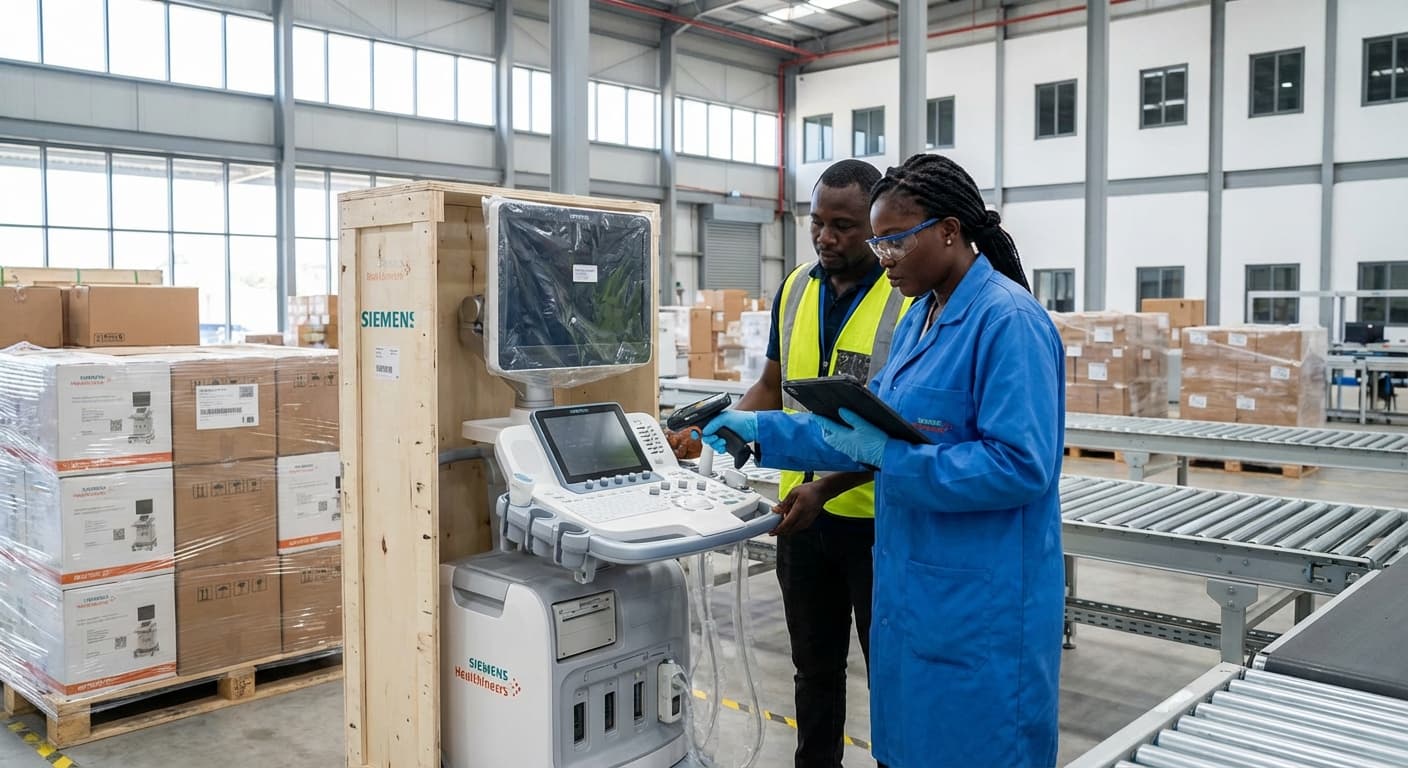
Warehouse Receiving Inspection Service (Medical Equipment) in Egypt
Engineering Excellence & Technical Support
Warehouse Receiving Inspection Service (Medical Equipment) High-standard technical execution following OEM protocols and local regulatory frameworks.
Regulatory Compliance Assurance
Ensure all incoming medical equipment meticulously adheres to Egyptian Ministry of Health and Population (MOHP) regulations, ISO 13485 standards, and relevant international quality benchmarks. Our service guarantees precise documentation, validation, and certification to prevent customs delays and ensure market access.
Advanced Defect Detection & Verification
Leverage state-of-the-art inspection methodologies, including visual assessment, functional testing, and documentation review, to identify any manufacturing defects, damage, or non-conformities. We provide real-time reporting and detailed photographic evidence for swift resolution with suppliers.
Unique Device Identification (UDI) & Traceability
Implement robust UDI scanning and verification processes to establish complete traceability from import to point-of-use. Our service ensures accurate data capture for inventory management, recall preparedness, and compliance with Egypt's evolving UDI mandates.
What Is Warehouse Receiving Inspection Service (Medical Equipment) In Egypt?
Warehouse Receiving Inspection Service (Medical Equipment) in Egypt refers to the systematic, objective verification process conducted upon the arrival of medical equipment at a designated storage facility within Egypt. This service ensures that received items conform to specified requirements, including but not limited to, contractual agreements, purchase orders, manufacturer specifications, regulatory standards (e.g., Egyptian Organization for Standards and Quality Control - EOS, Ministry of Health and Population regulations), and quality parameters. The inspection aims to identify discrepancies, damage, or non-compliance before the equipment is accepted into inventory, thus mitigating risks associated with substandard or incorrect procurements.
| Who Needs It? | Typical Use Cases | ||||
|---|---|---|---|---|---|
| Hospitals and Healthcare Facilities (Public and Private): Essential for ensuring the safety, efficacy, and regulatory compliance of procured medical devices and equipment. | Importation of new medical equipment for sale or distribution within Egypt. This includes diagnostic imaging equipment, surgical instruments, patient monitoring systems, laboratory equipment, and consumables. | Procurement of medical equipment for government tenders and public health initiatives. | Third-party logistics (3PL) providers managing medical equipment warehousing on behalf of healthcare entities. | Medical device manufacturers or distributors establishing or operating a distribution center in Egypt. | Research institutions and laboratories acquiring specialized medical equipment. |
| Warehousing of returned medical equipment for assessment and potential refurbishment or disposal. | Receiving medical equipment as part of humanitarian aid or disaster relief efforts. | Ensuring the integrity and suitability of spare parts or accessories for existing medical equipment inventories. |
Key Components of the Service:
- Document Verification: Cross-referencing received items against purchase orders, invoices, packing lists, certificates of origin, and other relevant documentation.
- Quantity Verification: Auditing the number of units received against the documented quantities.
- Physical Inspection: Assessing the condition of packaging and the equipment itself for any signs of damage, tampering, or defects.
- Identification and Labeling Check: Verifying serial numbers, lot numbers, model numbers, expiry dates, and compliance with Egyptian labeling requirements.
- Functional/Performance Testing (if applicable and feasible at receiving): Preliminary checks to ascertain basic operational capability or adherence to critical specifications.
- Compliance Verification: Ensuring adherence to local import regulations, customs clearance documentation, and any pre-approved import permits.
- Documentation of Findings: Detailed reporting of any discrepancies, damages, or non-conformities observed, including photographic evidence.
- Recommendation for Action: Providing a formal assessment and recommending appropriate actions, such as acceptance, rejection, partial acceptance, or return to supplier.
Who Needs Warehouse Receiving Inspection Service (Medical Equipment) In Egypt?
In Egypt, companies that import, distribute, or utilize medical equipment on a large scale often require professional warehouse receiving inspection services. These services are crucial for ensuring the quality, integrity, and compliance of incoming medical devices before they enter the supply chain or patient care facilities. This meticulous process safeguards against damaged, counterfeit, or non-compliant products, mitigating risks and ensuring patient safety.
| Target Customer/Entity | Key Departments Involved | Why they need the service |
|---|---|---|
| Medical Equipment Importers & Distributors | Logistics/Warehouse, Quality Assurance (QA), Supply Chain Management, Procurement | To verify incoming shipments against purchase orders, check for damage during transit, ensure product authenticity, and confirm compliance with Egyptian regulations before onward distribution. |
| Hospitals & Healthcare Networks | Procurement/Purchasing, Biomedical Engineering Department, Warehouse/Logistics, Quality Management | To ensure that purchased medical equipment meets specifications, is free from defects, and is safe for patient use upon arrival at their facility or central warehouse. |
| Government Health Ministries & Agencies (e.g., Egyptian Authority for Unified Procurement, Medical Supply and Technology) | Procurement, Quality Control, Regulatory Affairs, Warehousing & Logistics | To uphold national standards for medical equipment, prevent the entry of substandard or counterfeit devices, and ensure public health safety across the nation's healthcare system. |
| Medical Device Manufacturers (with local warehousing) | Quality Control, Operations, Logistics, Warehousing | To maintain the integrity of their products upon arrival at their local distribution points, ensuring they meet the manufacturer's quality standards and are ready for sale or deployment. |
| Third-Party Logistics (3PL) Providers specializing in medical equipment | Operations, Warehouse Management, Quality Control, Client Services | To provide a value-added service to their medical equipment clients by offering independent receiving inspection, ensuring compliance and quality for the goods they store and transport. |
| Pharmaceutical Wholesalers (handling medical devices) | Warehouse Management, Inventory Control, Quality Assurance | To ensure that any medical devices they handle as part of their broader inventory are accurately received, undamaged, and meet the necessary quality and regulatory requirements before being distributed. |
Target Customers and Departments for Warehouse Receiving Inspection Service (Medical Equipment) in Egypt
- Medical Equipment Importers & Distributors
- Hospitals & Healthcare Networks
- Government Health Ministries & Agencies
- Medical Device Manufacturers (with local warehousing)
- Third-Party Logistics (3PL) Providers specializing in medical equipment
- Pharmaceutical Wholesalers (handling medical devices)
Warehouse Receiving Inspection Service (Medical Equipment) Process In Egypt
The Warehouse Receiving Inspection Service for Medical Equipment in Egypt is a crucial process designed to ensure the quality, safety, and compliance of imported medical devices before they enter the local supply chain. This service involves a thorough examination of medical equipment upon arrival at designated warehouses, verifying its integrity, functionality, and adherence to Egyptian regulations and manufacturer specifications. The workflow encompasses several key stages, from the initial inquiry by a client (importer or manufacturer) to the final execution of the inspection and issuance of reports.
| Phase | Key Activities | Responsible Parties | Deliverables/Outcomes | Notes/Considerations |
|---|---|---|---|---|
| Client contacts the inspection service provider to request warehouse receiving inspection for medical equipment. | Client (Importer/Manufacturer), Inspection Service Provider (ISP) | Service quotation, agreement on scope and fees, scheduling initial consultation. | Clarify specific equipment types, quantities, and required inspection standards (e.g., manufacturer's specifications, international standards, Egyptian regulatory requirements). |
| ISP reviews import documentation (e.g., packing lists, invoices, certificates of origin, import permits, product registration documents from the Egyptian Ministry of Health and Population - MOHP). | ISP, Client | Confirmation of readiness for inspection, identification of potential compliance issues, development of the inspection plan. | Ensure all necessary import and product registration documents are available and valid. Understand the specific regulatory requirements for the medical equipment category. |
| ISP conducts a physical inspection of the medical equipment at the designated warehouse in Egypt. | ISP Inspectors, Warehouse Personnel, Client Representative (optional) | Visual inspection for damage, correct quantity verification, checking packaging integrity, identification of equipment against documentation, verification of labels and markings. | Inspection should be conducted in a controlled environment. Use of calibrated inspection tools. Document any discrepancies with photographic evidence. |
| If specified or if visual inspection reveals potential quality issues, samples may be sent for laboratory analysis. | ISP, Accredited Testing Laboratory | Test results confirming product performance, safety, and compliance with relevant standards. | Testing protocols should be clearly defined and agreed upon. Choice of accredited and recognized laboratories is crucial. |
| ISP compiles all findings into a comprehensive inspection report. | ISP | Detailed inspection report including observations, findings (conformities and non-conformities), test results (if applicable), recommendations, and a statement of compliance or non-compliance. | Reports should be clear, concise, and objective. Include photographic evidence to support findings. |
| ISP submits the report to the client for review. Based on the report, the client decides on the next steps. | Client, ISP | Client's decision to accept, reject, or request corrective actions for the inspected equipment. Release of the equipment for further distribution or onward processing. | If non-conformities are found, the client may need to implement corrective actions or seek further guidance from regulatory authorities. |
| ISP maintains records of all inspections conducted, reports issued, and communications with clients. | ISP | Archived inspection records for future reference and audits. | Compliance with data retention policies and client confidentiality is essential. |
Warehouse Receiving Inspection Service (Medical Equipment) Process in Egypt Workflow
- Inquiry and Service Request
- Documentation Review and Pre-Inspection Planning
- On-Site Inspection Execution
- Laboratory Testing (if required)
- Reporting and Documentation
- Client Approval and Release
- Follow-up and Record Keeping
Warehouse Receiving Inspection Service (Medical Equipment) Cost In Egypt
The cost of Warehouse Receiving Inspection Services for medical equipment in Egypt is influenced by several key factors. These services are crucial for ensuring the quality, safety, and compliance of medical devices before they are stored and distributed. The pricing is typically determined on a per-shipment or per-container basis, though some providers may offer project-based or retainer contracts. The complexity of the equipment, the volume of items, the required inspection depth, and the location of the warehouse all play a significant role in the final quote. Specific tests and certifications required, such as functional testing, calibration checks, or verification against regulatory standards (e.g., Egyptian Ministry of Health and Population requirements), will also impact the overall cost.
| Service Scope | Estimated Range (EGP) | Notes |
|---|---|---|
| Basic Visual Inspection (per container/shipment) | 2,000 - 5,000 EGP | Checks for visible damage, correct labeling, quantity verification against documentation. |
| Standard Inspection (per container/shipment) | 5,000 - 15,000 EGP | Includes visual inspection, basic functional checks, documentation review. |
| Comprehensive Inspection (per container/shipment) | 15,000 - 50,000+ EGP | Involves detailed functional testing, calibration checks, safety testing, and extensive documentation review for complex equipment. |
| Per Item Inspection (for smaller quantities) | 500 - 3,000 EGP per item | Varies significantly based on equipment complexity. |
| Specialized Testing (e.g., Electrical Safety, Calibration) | Add 10% - 30% to base inspection cost | Dependent on specific tests and equipment. |
| Project-Based/Retainer (Customized) | Negotiable | For ongoing partnerships or large-scale projects, tailored quotes are provided. |
Key Pricing Factors for Warehouse Receiving Inspection Services (Medical Equipment) in Egypt
- Type and Complexity of Medical Equipment: Highly specialized or complex equipment (e.g., imaging machines, surgical robots) requires more expertise and time for inspection compared to simpler devices.
- Volume of Shipments/Items: Larger quantities of equipment or a higher number of individual items within a shipment generally lead to higher inspection costs.
- Depth of Inspection Required: Basic visual inspection is less expensive than comprehensive functional testing, calibration, and documentation review.
- Specific Testing and Validation: Services like electrical safety testing, performance validation, software verification, and sterility checks will add to the cost.
- Regulatory Compliance Requirements: Ensuring adherence to Egyptian Ministry of Health and Population regulations, or international standards like ISO 13485, necessitates detailed checks and documentation.
- Documentation and Reporting: The extent of detailed reports, certificates of conformity, and photographic evidence required will influence pricing.
- Location of Warehouse: Accessibility and logistical considerations for the inspection team to reach the warehouse can affect costs, especially in remote areas.
- Urgency of Service: Rush inspections or those requiring immediate turnaround may incur premium charges.
- Provider's Expertise and Reputation: Established inspection firms with a strong track record and specialized knowledge often command higher fees.
- Additional Services: Services like sample retrieval, packaging inspection, or pre-shipment verification can be bundled and priced accordingly.
Affordable Warehouse Receiving Inspection Service (Medical Equipment) Options
Securing reliable and affordable warehouse receiving inspection services for medical equipment is crucial for maintaining product integrity, ensuring regulatory compliance, and preventing costly downstream issues. This guide outlines various options, focusing on value bundles and cost-saving strategies tailored to the unique demands of the medical equipment sector.
| Service Level/Bundle | Core Inclusions | Value-Added Features | Ideal For | Estimated Cost Savings Strategy |
|---|---|---|---|---|
| Basic Receiving Inspection | Visual inspection for damage, quantity verification, basic documentation check (PO vs. delivery note). | Standardized reporting templates. | Low-volume, non-critical equipment, or initial quality screening. | Leverage internal resources for basic checks; use this service for critical verification points. |
| Standard Receiving Inspection Bundle | Includes Basic Inclusions plus: detailed damage assessment, serial number/lot code verification, basic compliance checklist (e.g., presence of essential documents). | Digital report generation with photo documentation, online portal access for tracking. | Most medical equipment, routine shipments, maintaining basic compliance. | Pre-negotiate rates for volume. Combine with other warehousing services for bulk discounts. |
| Comprehensive Medical Equipment Inspection Bundle | Includes Standard Inclusions plus: functional testing (basic checks), environmental control verification (if applicable), in-depth compliance review (regulatory documentation validation), cross-referencing with ERP/WMS. | Customizable inspection protocols, root cause analysis support for recurring issues, integration with client's quality management systems. | High-value, critical, or regulated medical devices requiring stringent checks and advanced traceability. | Long-term contracts with predictable volume; automation of data entry and reporting; outsourcing to specialized providers reduces in-house training and equipment costs. |
| On-Demand / Ad-Hoc Inspection | Specific inspection protocols tailored to individual shipments based on client request. | Flexible scheduling, rapid response times. | Unexpected shipments, special projects, or when internal capacity is exceeded. | Utilize on-demand services judiciously for true emergencies; focus on bundling for regular needs to secure better rates. |
Key Considerations for Medical Equipment Receiving Inspections
- Accuracy and Traceability: Ensuring precise documentation and tracking of incoming goods.
- Regulatory Compliance: Adherence to FDA, ISO, and other relevant medical device regulations.
- Damage Detection: Identifying any physical damage or defects that could compromise functionality.
- Completeness and Accuracy of Documentation: Verifying all accompanying paperwork (e.g., Certificates of Analysis, sterilisation records).
- Temperature and Environmental Control Verification: For sensitive equipment requiring specific storage conditions.
- Serialization and Lot Tracking: Crucial for recalls and product lifecycle management.
- Personnel Expertise: Inspectors knowledgeable in medical device classifications, common defects, and handling requirements.
- Timeliness: Rapid inspection to avoid warehouse bottlenecks and ensure timely onward movement.
Verified Providers In Egypt
In Egypt's dynamic healthcare landscape, ensuring access to qualified and trustworthy medical professionals is paramount. Verified providers offer peace of mind, guaranteeing adherence to stringent standards and ethical practices. Franance Health stands out as a leading platform for connecting individuals with such verified healthcare providers, offering a comprehensive credentialing process that sets a benchmark for excellence. This commitment to verification makes them the best choice for anyone seeking reliable and high-quality medical care in Egypt.
| Verification Aspect | Franance Health Standard | Benefit to Patients |
|---|---|---|
| Medical Licensure | Up-to-date and valid Egyptian Ministry of Health licenses. | Ensures providers are legally authorized to practice. |
| Educational Qualifications | Verified degrees and specializations from accredited institutions. | Guarantees a strong foundation of medical knowledge. |
| Professional Experience | Thorough review of past practice and clinical history. | Confirms practical expertise and competence. |
| Reputation and Ethics | Background checks and peer reviews for ethical conduct. | Promotes patient trust and avoids malpractice concerns. |
| Specialty Certifications | Validation of advanced training and board certifications. | Confirms specialized skills and expertise. |
Why Franance Health is Your Top Choice for Verified Providers in Egypt:
- Rigorous Vetting Process: Franance Health employs a multi-stage verification system to ensure every listed provider meets stringent professional and ethical criteria.
- Comprehensive Credentialing: This includes checking medical licenses, certifications, educational backgrounds, and professional experience.
- Commitment to Patient Safety: By partnering only with verified professionals, Franance Health prioritizes the safety and well-being of its users.
- Trust and Transparency: The verification process fosters trust, allowing patients to make informed decisions about their healthcare.
- Access to Top Talent: Franance Health curates a network of highly skilled and reputable healthcare professionals across various specializations.
- Streamlined User Experience: Finding and booking appointments with verified providers is made easy and efficient through the Franance Health platform.
Scope Of Work For Warehouse Receiving Inspection Service (Medical Equipment)
This Scope of Work (SOW) outlines the requirements for providing comprehensive warehouse receiving inspection services for medical equipment. The service includes a detailed examination of all incoming medical equipment to ensure compliance with purchase orders, manufacturer specifications, regulatory standards, and client-specific quality requirements. The goal is to identify and document any discrepancies, damages, or non-conformities before the equipment is accepted into inventory.
| Task/Activity | Description | Technical Deliverables | Standard Specifications / Acceptance Criteria |
|---|---|---|---|
| Receipt and Quarantine | Upon arrival, all shipments will be received, logged, and temporarily quarantined until inspection is complete. | Receiving Log with date/time of arrival, carrier, PO number, and initial quantity. | Shipments acknowledged within 2 hours of arrival. Equipment segregated and clearly marked as 'Under Inspection'. |
| Document Verification | Cross-reference incoming shipments against Purchase Orders (POs), packing lists, and advance shipping notices (ASNs). | Matched PO/Packing List/ASN documentation. | 100% verification of item number, description, quantity, and lot/serial numbers against PO. Any discrepancies immediately flagged. |
| Visual Inspection | Thorough examination of packaging and equipment for any signs of external or internal damage, tampering, or cosmetic defects. | Detailed visual inspection report including photographic evidence of any damages or defects. | No visible signs of damage to external packaging or equipment casing, labels, or components. Protection mechanisms (e.g., shock indicators) assessed. |
| Functional Testing | Perform basic functional tests (if applicable and pre-defined) to verify operational status. | Functional test report for each unit tested, detailing test performed, results, and any observed anomalies. | Tests to be performed as per agreed-upon test protocols. Equipment to power on and execute basic functions as specified. Pass/Fail status recorded. |
| Component and Accessory Verification | Confirm the presence and condition of all included accessories, components, manuals, and certificates. | List of verified components, accessories, and documentation against the manufacturer's manifest or PO requirements. | All listed components and accessories present and in good working order/condition. Manuals legible and complete. Certificates of conformance/analysis present where required. |
| Labeling and Identification | Verify that all equipment has correct and legible labeling, including serial numbers, model numbers, and regulatory markings. | Verification checklist for labeling completeness and legibility. | All required labels (e.g., UDI, CE, FDA, serial number, model number) present, legible, and correctly affixed. Match to documentation. |
| Sampling and Quality Control | Implement a sampling plan for large or recurring shipments as defined in the Quality Assurance Plan. | Sampling plan execution records. | Sampling conducted as per ANSI/ASQ Z1.4 or client-defined AQL. Results documented and reviewed. |
| Non-Conformance Reporting | Document and report any identified discrepancies, damages, or non-conformities in a timely manner. | Formal Non-Conformance Report (NCR) for each identified issue, including description, quantity affected, and photographic evidence. | NCRs submitted to client within 24 hours of identification. Severity of non-conformance categorized (e.g., critical, major, minor). |
| Data Entry and Record Keeping | Accurately record all inspection results into the client's inventory management system or designated database. | Populated inspection records in the client's system or provided digital reports. | Data accuracy of 99% for all recorded fields. Records maintained for a minimum of [Specify Duration, e.g., 7 years] as per regulatory requirements. |
| Release of Goods | Authorize the release of compliant equipment for inventory stocking and onward movement. | Signed inspection release documentation or system update signifying acceptance. | Only equipment passing all inspection criteria and deemed compliant will be released. Defective/non-conforming items remain quarantined pending disposition. |
Key Service Components
- Receipt and Quarantine of Incoming Shipments
- Document Verification and Matching
- Visual Inspection for Damage and Defects
- Functional Testing (as applicable)
- Verification of Accessories, Components, and Documentation
- Sampling and Quality Control Checks
- Non-Conformance Reporting and Escalation
- Data Entry and Record Keeping
- Reconciliation and Release of Compliant Goods
Service Level Agreement For Warehouse Receiving Inspection Service (Medical Equipment)
This Service Level Agreement (SLA) outlines the expected service levels and guarantees for Warehouse Receiving Inspection Service of Medical Equipment. It defines the response times for reported issues and the guaranteed uptime for the inspection process and associated reporting systems.
| Service Component | Response Time (Business Hours) | Uptime Guarantee | Target Resolution Time (Business Hours) |
|---|---|---|---|
| Initial Acknowledgement of Inspection Request | 4 Business Hours | N/A | N/A |
| Critical Issue (e.g., system outage preventing inspection) | 1 Business Hour | 99.5% | 8 Business Hours |
| High Priority Issue (e.g., inaccurate inspection report affecting next steps) | 2 Business Hours | 99.5% | 16 Business Hours |
| Medium Priority Issue (e.g., minor discrepancy in documentation) | 4 Business Hours | 99.5% | 48 Business Hours |
| Low Priority Issue (e.g., cosmetic defect not impacting functionality) | 8 Business Hours | 99.5% | 72 Business Hours |
| Reporting System Availability (for accessing inspection results) | N/A | 99.8% | N/A |
Key Service Metrics
- Response Time: The maximum time allowed for the service provider to acknowledge and begin addressing a reported issue.
- Uptime Guarantee: The percentage of time the inspection service and its supporting systems are available and operational.
- Resolution Time (Target): The desired time to fully resolve reported issues, though not a strict guarantee in all cases.
Frequently Asked Questions

Ready when you are
Let's scope your Warehouse Receiving Inspection Service (Medical Equipment) in Egypt project in Egypt.

Scaling healthcare logistics and technical systems across the entire continent.