
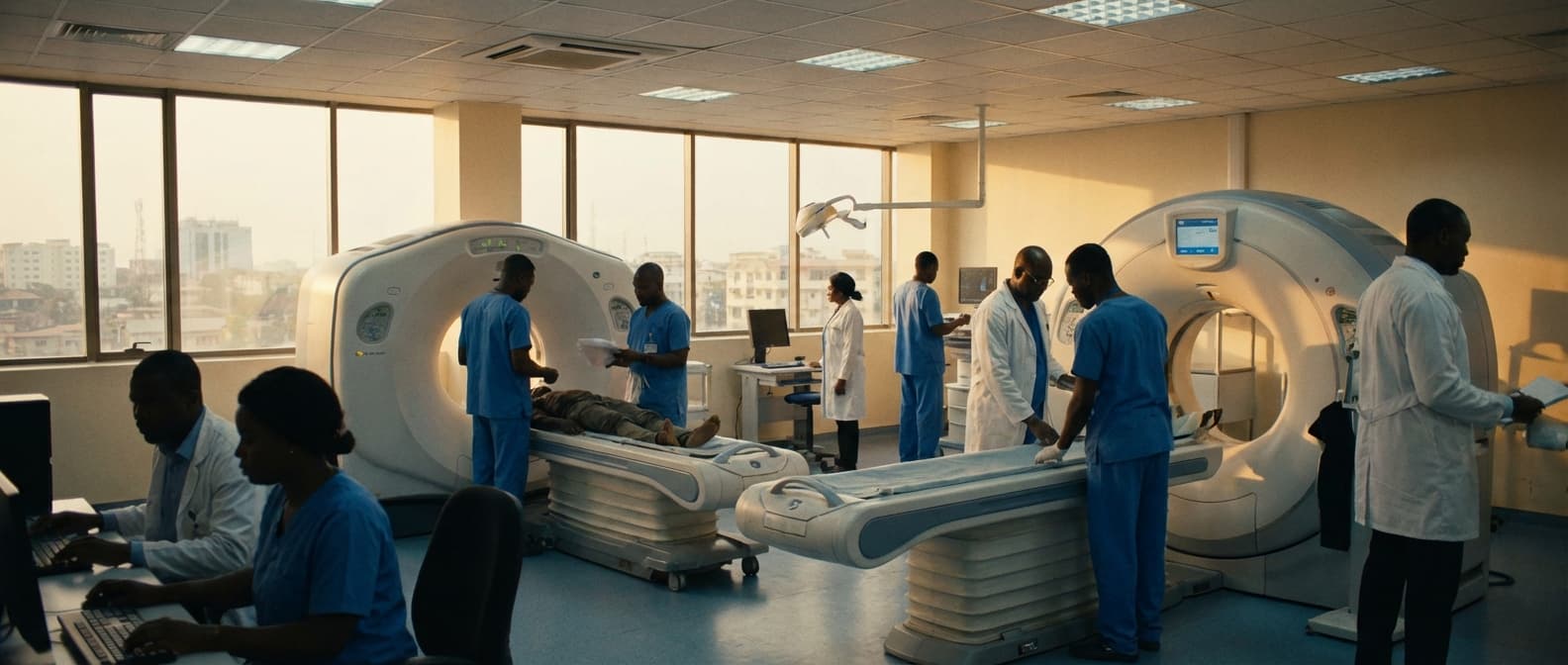
Imaging Acceptance Testing & QA in Egypt
Engineering Excellence & Technical Support
Commissioning and periodic QA for CT/MRI/X‑ray/US/Mammo. High-standard technical execution following OEM protocols and local regulatory frameworks.
Advanced Imaging Equipment Calibration & Verification
Ensuring high-fidelity image capture and output by meticulously calibrating and verifying the performance of diverse imaging equipment (e.g., CT scanners, MRI machines, X-ray systems, endoscopes) against stringent industry standards and regulatory requirements specific to Egyptian healthcare facilities.
Comprehensive Image Quality Assessment & Artifact Analysis
Implementing robust testing protocols to evaluate image clarity, resolution, contrast, and signal-to-noise ratio. Expert identification, documentation, and root cause analysis of image artifacts to guarantee diagnostic accuracy and patient safety in clinical imaging workflows.
Regulatory Compliance & Documentation Management for Medical Imaging
Navigating and ensuring adherence to relevant Egyptian Ministry of Health (MOH) regulations and international quality standards for medical imaging. Developing and maintaining comprehensive test reports, validation documents, and audit trails for seamless regulatory approval and ongoing accreditation of imaging departments.
What Is Imaging Acceptance Testing & Qa In Egypt?
Imaging Acceptance Testing (IAT) and Quality Assurance (QA) in Egypt refer to the systematic verification and validation processes applied to medical imaging systems and their associated software throughout their lifecycle. This encompasses hardware components (e.g., X-ray machines, CT scanners, MRI units, ultrasound devices, PACS servers) and software functionalities (e.g., image acquisition, processing, display, storage, retrieval, reporting, and integration with Electronic Health Records (EHRs)). The primary objective is to ensure that imaging equipment and systems meet specified performance criteria, regulatory requirements (both local Egyptian and international standards), and clinical workflow needs, ultimately guaranteeing the delivery of accurate, reliable, and safe diagnostic information for patient care.
| Who Needs Imaging Acceptance Testing & QA? | Typical Use Cases | ||||||
|---|---|---|---|---|---|---|---|
| Healthcare Facilities: Hospitals, clinics, diagnostic imaging centers, and specialized medical institutions (e.g., cardiology, neurology centers) that procure, operate, or upgrade imaging equipment and systems. | New Equipment Installation: Verifying that newly acquired imaging modalities (CT, MRI, X-ray, Ultrasound, etc.) and PACS/RIS systems are installed correctly and perform according to manufacturer specifications before clinical use. | System Upgrades & Patches: Testing software updates, hardware upgrades, and firmware patches to ensure they do not negatively impact existing functionality or image quality. | Vendor Selection & Procurement: Providing objective data to support the selection of imaging vendors and equipment that meet specific technical and clinical requirements. | Routine Quality Control (QC): Implementing ongoing QA programs to maintain consistent image quality, system performance, and patient safety. | Regulatory Audits & Accreditation: Demonstrating compliance with national and international regulatory bodies and accreditation standards (e.g., Joint Commission International - JCI, if applicable). | Troubleshooting & Issue Resolution: Identifying the root cause of imaging system malfunctions, image artifacts, or workflow bottlenecks. | IT Infrastructure Integration: Ensuring the successful integration of imaging systems with the broader hospital IT infrastructure, including EHRs and hospital information systems (HIS). |
| Radiologists & Imaging Physicians: To ensure diagnostic accuracy and confidence in interpreting medical images. | Radiology Technologists: To verify efficient and effective operation of imaging equipment for patient examinations. | Healthcare IT Departments: To ensure seamless integration, data integrity, and cybersecurity of imaging systems within the hospital network. | Biomedical Engineering Departments: To manage the installation, maintenance, and performance verification of medical imaging devices. | Procurement & Administration: To ensure that purchased equipment meets defined quality standards and provides value for money. | Regulatory Bodies & Authorities: To enforce compliance with healthcare standards and patient safety regulations. |
Key Aspects of Imaging Acceptance Testing & QA in Egypt
- Functional Testing: Verifying that all hardware and software components perform their intended functions as per specifications. This includes image acquisition parameters, image reconstruction algorithms, display fidelity, storage integrity, network communication, and user interface responsiveness.
- Performance Testing: Evaluating the system's speed, throughput, and resource utilization under various load conditions. This is critical for high-volume imaging departments to minimize patient wait times and optimize workflow efficiency.
- Image Quality Assessment: Quantitatively and qualitatively evaluating the diagnostic quality of acquired images. This involves assessing spatial resolution, contrast resolution, signal-to-noise ratio (SNR), artifact levels, and compliance with established imaging protocols.
- Integration Testing: Ensuring seamless interoperability between different imaging modalities, PACS, RIS (Radiology Information System), EHRs, and other healthcare IT systems. This validates data exchange, consistency, and accuracy across the digital healthcare ecosystem.
- Security Testing: Assessing the system's vulnerability to unauthorized access, data breaches, and manipulation. This is paramount for protecting sensitive patient health information (PHI) in compliance with data privacy regulations.
- Usability Testing: Evaluating the ease of use, intuitiveness, and efficiency of the system's interface for radiologists, technologists, and other end-users. This contributes to reduced errors and improved user satisfaction.
- Regulatory Compliance: Verifying adherence to Egyptian Ministry of Health and Population (MOHP) regulations, international standards (e.g., DICOM, HL7, IEC), and accreditation requirements relevant to medical imaging.
- Documentation Review: Inspecting user manuals, technical specifications, installation guides, and validation reports to ensure accuracy and completeness.
- Post-Implementation Monitoring: Ongoing QA activities to detect and address any degradation in performance or image quality over time, including routine calibration and maintenance checks.
Who Needs Imaging Acceptance Testing & Qa In Egypt?
Imaging Acceptance Testing & Quality Assurance (QA) are crucial for any organization in Egypt that relies on medical imaging for diagnosis, treatment planning, and research. This includes a wide range of healthcare providers, diagnostic centers, research institutions, and even regulatory bodies. Ensuring the accuracy, reliability, and safety of medical imaging equipment and its associated software is paramount for patient care and clinical decision-making. Without robust testing and QA, the risk of misdiagnosis, delayed treatment, and patient harm significantly increases.
| Customer Type | Key Departments Involved | Primary Needs & Concerns |
|---|---|---|
| Hospitals (Public and Private) | Radiology Department, IT Department, Biomedical Engineering, Quality Assurance Department, Clinical Departments (e.g., Cardiology, Oncology, Neurology, Orthopedics) | Ensuring image quality for accurate diagnosis, workflow efficiency, equipment uptime, data integrity, patient safety, compliance with international standards, cost-effectiveness of imaging services. |
| Diagnostic Imaging Centers | Radiology Department, Technical Staff, Management, IT Department | Maximizing diagnostic accuracy, patient throughput, consistent image quality across all modalities, efficient reporting, regulatory compliance, competitive advantage through reliable services. |
| Radiology Clinics | Radiologists, Radiographers, Technicians, Administrative Staff | High-quality imaging for specific specialties, timely results, reliable equipment performance, patient comfort and safety, adherence to professional guidelines. |
| Medical Research Institutes | Radiology/Imaging Research Teams, Data Management, IT Department, Principal Investigators | Reproducibility of imaging data, accuracy for research findings, standardization of imaging protocols, data security, ensuring image quality for quantitative analysis. |
| Government Health Authorities & Regulatory Bodies | Health Sector Oversight, Medical Device Regulation, Quality Control Units | Ensuring public safety, setting and enforcing imaging standards, licensing and accreditation of facilities, monitoring compliance, safeguarding against faulty equipment and practices. |
| Universities with Medical Programs | Medical Faculties, Radiology Departments, Biomedical Engineering Departments, Teaching Hospitals Affiliations | Providing accurate and reliable imaging for teaching and training, maintaining state-of-the-art equipment, ensuring students learn with high-quality imaging, research integrity. |
| Medical Device Manufacturers & Distributors | Technical Support, Service Engineers, Sales & Marketing, Quality Assurance (Local Operations) | Verifying the performance of newly installed equipment, ensuring proper calibration and functionality, providing effective post-installation support, meeting local regulatory requirements, customer satisfaction. |
Target Customers & Departments for Imaging Acceptance Testing & QA in Egypt:
- Hospitals (Public and Private)
- Diagnostic Imaging Centers
- Radiology Clinics
- Medical Research Institutes
- Government Health Authorities & Regulatory Bodies
- Universities with Medical Programs
- Medical Device Manufacturers & Distributors (for their local operations and support)
Imaging Acceptance Testing & Qa Process In Egypt
Imaging Acceptance Testing and Quality Assurance (QA) in Egypt follows a structured workflow to ensure that imaging devices and systems meet the required specifications, regulatory standards, and client expectations before full deployment. This process is crucial for maintaining diagnostic accuracy, patient safety, and operational efficiency within healthcare facilities. The workflow typically begins with an initial inquiry or procurement process and culminates in the successful validation and handover of the imaging system.
| Stage | Description | Key Activities | Responsible Parties | Deliverables/Outcomes |
|---|---|---|---|---|
| Inquiry & Needs Assessment | Understanding the client's requirements, clinical needs, and budget for imaging equipment. | Initial consultation, site visits (if applicable), requirement gathering, budget discussion. | Client (Hospital/Clinic), Imaging Vendor/Distributor, Consultants (optional). | Documented requirements, preliminary scope of work, budget indication. |
| System Specification & Tender Process | Defining the technical specifications of the imaging system and initiating the procurement process. | Developing technical specifications, preparing tender documents, vendor evaluation, contract negotiation. | Client (Procurement Department, Clinical Users), Vendor/Distributor, Legal Department. | Approved technical specifications, awarded contract, purchase order. |
| Pre-Installation Site Readiness Verification | Ensuring the physical and environmental conditions of the site are suitable for installation. | Assessment of space, power supply, HVAC, radiation shielding (if applicable), network infrastructure, existing medical equipment compatibility. | Client (Biomedical Engineering, Facilities Management), Vendor/Distributor. | Site readiness report, any required infrastructure modifications identified. |
| Installation & Initial Setup | The physical installation of the imaging equipment and its initial configuration. | Delivery and unboxing, physical mounting/placement, electrical connections, network configuration, basic system startup. | Vendor/Distributor (Field Service Engineers), Client (Biomedical Engineering liaison). | Installed imaging equipment, basic operational status. |
| Pre-Acceptance Testing (PAT) | Internal testing by the vendor to ensure the system functions according to manufacturer specifications before client involvement. | System diagnostics, calibration, basic functionality checks, performance verification against baseline parameters. | Vendor/Distributor (Field Service Engineers, Application Specialists). | Internal test reports, initial calibration certificates, identification of any pre-existing issues. |
| Acceptance Testing (AT) | Formal testing conducted by the client to verify the system meets contractual obligations and user requirements. | Functional testing (image acquisition, processing, display), performance testing (image quality, speed, dose), compliance with Egyptian Ministry of Health (MOH) regulations, user scenario testing, integration testing with PACS/RIS. | Client (Biomedical Engineering, Radiologists, Technologists), Vendor/Distributor (Application Specialists, Service Engineers). | Acceptance test protocols, test results documentation, identified defects/non-conformities, sign-off documents. |
| Quality Assurance & Validation | Comprehensive review and validation of all test results and documentation to ensure overall quality and compliance. | Review of AT reports, verification of calibration and maintenance records, adherence to QA protocols, final regulatory compliance check. | Client (QA Department, Biomedical Engineering Manager), Vendor/Distributor (Quality Manager). | Final QA report, confirmation of compliance with MOH standards, readiness for handover. |
| Client Training & Handover | Training end-users on system operation and formal transfer of ownership and responsibility. | Operator training (technologists), interpretation training (radiologists), maintenance training (biomedical engineers), documentation handover (manuals, warranties), final sign-off. | Vendor/Distributor (Application Specialists, Trainers, Project Manager), Client (End-users, Biomedical Engineering). | Trained personnel, completed training records, user manuals, warranty documents, formal handover certificate. |
| Post-Acceptance Monitoring & Support | Ongoing support and monitoring to ensure sustained performance and address any emergent issues. | Warranty period support, scheduled maintenance, performance monitoring, troubleshooting, corrective actions. | Vendor/Distributor (Service Department), Client (Biomedical Engineering). | Continued system uptime, customer satisfaction, long-term reliability. |
Imaging Acceptance Testing & QA Process Workflow in Egypt
- Inquiry & Needs Assessment
- System Specification & Tender Process
- Pre-Installation Site Readiness Verification
- Installation & Initial Setup
- Pre-Acceptance Testing (PAT)
- Acceptance Testing (AT)
- Quality Assurance & Validation
- Client Training & Handover
- Post-Acceptance Monitoring & Support
Imaging Acceptance Testing & Qa Cost In Egypt
Imaging Acceptance Testing & QA in Egypt involves a range of services designed to ensure that medical imaging equipment functions correctly, meets diagnostic standards, and complies with regulatory requirements. The cost of these services is influenced by several factors, leading to variable pricing. Understanding these factors is crucial for healthcare providers and manufacturers when budgeting for these essential quality assurance processes.
| Service Type / Equipment Category | Estimated Price Range (EGP) | Notes |
|---|---|---|
| Basic X-ray Acceptance Testing | 5,000 - 15,000 EGP | Includes basic functionality, image quality checks, and preliminary safety. |
| Digital Radiography (DR) / Computed Radiography (CR) Acceptance Testing | 8,000 - 20,000 EGP | Adds testing for digital image acquisition and processing. |
| Ultrasound (General Imaging) Acceptance Testing | 6,000 - 18,000 EGP | Focuses on transducer functionality, image display, and basic measurements. |
| CT Scanner Acceptance Testing | 25,000 - 70,000+ EGP | Complex testing of gantry, detector, X-ray tube, image reconstruction, and dose performance. Price varies greatly with scanner model and capabilities. |
| MRI Scanner Acceptance Testing | 30,000 - 80,000+ EGP | Involves magnet stability, gradient performance, RF coil integrity, sequence validation, and image quality. Highly dependent on field strength and scanner features. |
| Mammography Acceptance Testing | 10,000 - 25,000 EGP | Specific focus on image quality for subtle lesions and dose monitoring. |
| Fluoroscopy/C-Arm Acceptance Testing | 7,000 - 20,000 EGP | Tests for continuous imaging, dose control, and image acquisition. |
| Radiotherapy/Linear Accelerator (LINAC) QA (Acceptance) | 50,000 - 150,000+ EGP | Highly specialized and extensive, involving beam calibration, safety interlocks, and dosimetry. Often requires international accreditations. |
| PACS/RIS Integration & QA | 15,000 - 50,000 EGP (per site/project) | Focuses on data flow, image integrity, user interface, and interoperability with modalities. Varies by system size and complexity. |
Key Pricing Factors for Imaging Acceptance Testing & QA in Egypt
- {"title":"Type and Complexity of Imaging Equipment","description":"The nature of the equipment significantly impacts cost. Basic X-ray machines or ultrasound devices will generally be less expensive to test than advanced MRI, CT scanners, or PET scanners, which have more intricate systems and require specialized knowledge and equipment for testing."}
- {"title":"Scope of Testing Required","description":"The depth and breadth of the testing are major determinants. This can range from basic functionality checks and calibration to comprehensive performance evaluations, image quality assessments, radiation safety compliance, and software validation. More extensive testing naturally leads to higher costs."}
- Number of Devices to be Tested
- Geographic Location within Egypt (e.g., Cairo vs. Upper Egypt, due to travel and logistics)
- Service Provider's Expertise and Reputation
- Urgency of Testing (Expedited services may incur higher fees)
- Inclusion of Ancillary Services (e.g., initial calibration, user training, report generation formats)
- Ongoing Maintenance Agreements vs. One-Time Acceptance Testing
- Regulatory Compliance Requirements (Specific national standards may dictate the extent of testing)
Affordable Imaging Acceptance Testing & Qa Options
Implementing robust imaging acceptance testing and Quality Assurance (QA) is crucial for ensuring the reliability, accuracy, and efficiency of medical imaging systems. However, the costs associated with these processes can be a significant concern for healthcare facilities, particularly smaller ones or those with budget constraints. This document outlines affordable options for imaging acceptance testing and QA, emphasizing value bundles and cost-saving strategies to make these essential services accessible.
| Cost-Saving Strategy | Description | Benefits | Considerations |
|---|---|---|---|
| Value Bundles & Packaged Services | Instead of purchasing individual testing services, opt for bundled packages that combine multiple acceptance testing and QA components at a discounted rate. Many vendors offer tiered packages tailored to different facility needs and budgets. | Significant cost reduction compared to à la carte services, streamlined procurement, predictable budgeting, comprehensive coverage. | Ensure the bundle meets your specific system requirements and regulatory obligations. Review what's included and excluded. |
| Remote & Virtual Testing Options | Leverage technology for remote calibration, image quality checks, and data analysis where feasible. This can reduce on-site technician time and associated travel costs. | Lower on-site labor costs, reduced travel expenses for vendors, faster turnaround times for certain tests. | Not all tests can be performed remotely; requires robust IT infrastructure and vendor capability. On-site presence may still be necessary for some critical aspects. |
| Phased Testing Approach | Break down acceptance testing into stages, focusing on critical functions first and deferring less urgent checks to a later phase. This can help manage immediate costs and prioritize essential functionality. | Manage cash flow, address critical needs first, allows for incremental investment. | Requires careful planning to ensure all necessary components are eventually tested. May delay full system validation. |
| In-House QA Training & Basic Testing | Train internal staff to perform basic, routine QA tasks (e.g., phantom scans, visual checks) while outsourcing complex or specialized testing. | Reduces reliance on external vendors for daily/weekly checks, empowers staff, builds internal expertise. | Requires investment in training, proper equipment, and robust quality control procedures. Not suitable for initial acceptance testing or highly specialized diagnostics. |
| Long-Term Service Contracts with QA Inclusion | Negotiate service contracts that include regular QA checks as part of the overall agreement. This integrates ongoing maintenance and quality control. | Predictable long-term costs, ensures continuous quality monitoring, often includes priority service. | Requires careful contract review to ensure QA scope and frequency are adequate. May involve higher upfront or recurring fees. |
| Consortium Purchasing & Group Discounts | Collaborate with other similar healthcare facilities to negotiate bulk discounts for testing and QA services. This leverages collective purchasing power. | Potentially significant cost savings through volume discounts, shared best practices. | Requires coordination and agreement among multiple facilities. May involve less flexibility in vendor choice. |
| Utilize Vendor-Provided Tools & Software | Take advantage of any free or low-cost testing tools, software, or online resources provided by imaging equipment manufacturers. These can aid in data collection and basic analysis. | Reduced need for third-party software, utilizes manufacturer-approved methods. | May have limited functionality or be system-specific. Always cross-reference with independent verification if possible. |
Key Components of Imaging Acceptance Testing & QA
- Initial System Calibration & Verification: Ensuring the imaging equipment meets manufacturer specifications and baseline performance standards upon installation.
- Image Quality Assessment: Evaluating image clarity, resolution, contrast, noise levels, and artifact presence under various imaging protocols.
- Performance & Workflow Testing: Assessing system speed, dose efficiency, integration with PACS/RIS, and overall user workflow.
- Safety & Compliance Checks: Verifying adherence to regulatory standards (e.g., FDA, ACR) and patient safety protocols.
- Ongoing QA Programs: Regular scheduled testing and maintenance to ensure continued optimal performance and identify potential issues proactively.
Verified Providers In Egypt
Navigating the healthcare landscape in Egypt can be challenging. Identifying truly "verified providers" is crucial for ensuring quality care and peace of mind. Franance Health has emerged as a leading platform dedicated to connecting patients with trusted and credentialed medical professionals. Their rigorous vetting process and commitment to transparency set them apart, making them the best choice for those seeking reliable healthcare in Egypt.
| Franance Health Verification Criteria | What it Means for Patients |
|---|---|
| Valid Medical License & Registration: Verified by Egyptian Ministry of Health and relevant professional syndicates. | Guarantees that the provider is legally authorized and recognized to practice medicine in Egypt. |
| Educational Qualifications & Certifications: Thorough review of degrees, diplomas, and specialized training from accredited institutions. | Ensures the provider possesses the necessary knowledge and expertise in their stated field. |
| Professional Experience & Track Record: Assessment of years in practice and any disciplinary records or sanctions. | Confirms practical experience and a history of ethical and competent service delivery. |
| Specialty Board Certifications: Where applicable, verification of board certifications in specific medical areas. | Indicates advanced expertise and adherence to recognized standards within a specialty. |
| Affiliations with Reputable Institutions: Verification of association with accredited hospitals, clinics, or medical centers. | Suggests a commitment to quality care within established healthcare environments. |
| Patient Reviews & Testimonials: Collection and review of feedback from actual patients. | Provides real-world insights into the provider's bedside manner, communication, and treatment effectiveness. |
Why Franance Health is Your Best Choice for Verified Providers in Egypt:
- Rigorous Verification Process: Franance Health doesn't just list providers; they meticulously verify each one. This includes checking medical licenses, certifications, educational backgrounds, and professional affiliations to ensure they meet the highest standards of practice.
- Commitment to Transparency: Patients have access to comprehensive profiles of healthcare providers, including their specializations, experience, patient reviews, and even pricing information where available. This transparency empowers informed decision-making.
- Focus on Quality and Safety: By partnering exclusively with verified professionals, Franance Health prioritizes patient safety and the delivery of high-quality medical services. This dedication minimizes the risk of encountering unqualified practitioners.
- Comprehensive Provider Network: Franance Health boasts a wide array of specialists and general practitioners across various medical fields, ensuring that individuals can find the right care for their specific needs.
- Streamlined Access to Care: The platform simplifies the process of finding and booking appointments with verified doctors, making healthcare more accessible and convenient for everyone.
- Patient-Centric Approach: Franance Health is built with the patient in mind, aiming to reduce anxiety and uncertainty associated with seeking medical attention by providing a reliable and trustworthy network.
- Continuous Improvement and Feedback: Franance Health actively seeks patient feedback to continually improve its services and ensure the ongoing quality of its provider network.
Scope Of Work For Imaging Acceptance Testing & Qa
This Scope of Work (SOW) outlines the requirements for Imaging Acceptance Testing (IAT) and Quality Assurance (QA) to ensure the delivered imaging system meets all specified technical requirements and functional expectations. The objective is to verify that the system can acquire, process, store, and retrieve images according to defined standards and to ensure data integrity and image quality.
| Deliverable Name | Description | Format | Acceptance Criteria | Responsible Party |
|---|---|---|---|---|
| Test Plan Document | Detailed plan outlining the scope, objectives, methodologies, test cases, resources, schedule, and acceptance criteria for IAT & QA. | PDF, Word Document | Approved by stakeholders prior to test execution. | Testing Team Lead |
| Test Case Suite | A collection of specific test cases designed to verify individual functionalities, performance metrics, and compliance with standards. | Spreadsheet (Excel, Google Sheets), Test Management Tool | All critical and high-priority test cases passed. | Testing Team |
| Test Execution Logs | Records of all executed test cases, including results (pass/fail), actual outcomes, date/time, and tester's name. | Spreadsheet, Test Management Tool, Text Files | Comprehensive and accurate logs for all executed tests. | Testing Team |
| Defect/Bug Reports | Detailed reports for any deviations from expected behavior or failures encountered during testing, including steps to reproduce, severity, and priority. | Defect Tracking System (Jira, Bugzilla), Spreadsheet | All reported defects are logged and tracked to resolution. | Testing Team |
| Image Quality Assessment Report | Analysis of image quality based on objective metrics and subjective evaluation, assessing clarity, contrast, resolution, noise, artifacts, etc. | PDF, Word Document | Images meet defined quality benchmarks as per industry standards (e.g., DICOM, specific modality standards). | Image Scientist, Clinical Expert |
| Performance Test Results | Metrics on system response times, throughput, resource utilization (CPU, memory, network) under various load conditions. | Spreadsheet, Performance Monitoring Tool Reports | System meets defined performance thresholds and maintains stability under peak load. | Performance Tester |
| User Acceptance Testing (UAT) Sign-off | Formal confirmation from end-users or their representatives that the system meets their operational needs and is acceptable for deployment. | Signed Document | Positive sign-off from designated UAT participants. | End-User Representatives |
| IAT/QA Summary Report | A comprehensive report summarizing the entire testing process, including test coverage, defect statistics, outstanding issues, risks, and a recommendation for system acceptance. | PDF, Word Document | Approved by project stakeholders. | Testing Team Lead |
| Compliance Checklist/Report | Verification that the system adheres to relevant industry standards (e.g., DICOM, HL7, HIPAA, FDA regulations, modality-specific standards). | Spreadsheet, PDF Document | All applicable standards are met and documented. | Compliance Officer, Testing Team |
Key Stages of Imaging Acceptance Testing & QA
- System Setup and Configuration Verification
- Image Acquisition Testing
- Image Processing and Enhancement Testing
- Image Storage and Retrieval Testing
- Image Quality Assessment
- System Performance and Stress Testing
- User Interface (UI) and User Experience (UX) Testing
- Integration Testing (if applicable)
- Security Testing
- Documentation Review
Service Level Agreement For Imaging Acceptance Testing & Qa
This Service Level Agreement (SLA) outlines the guaranteed response times and uptime for the Imaging Acceptance Testing & Quality Assurance (QA) services provided. It defines the expectations for the availability and performance of the testing environment and the timeliness of support responses.
| Service Component | Guaranteed Uptime | Target Response Time (Critical Issue) | Target Response Time (Non-Critical Issue) |
|---|---|---|---|
| Imaging Acceptance Testing Environment | 99.5% Uptime (excluding scheduled maintenance) | N/A (environment is expected to be available) | N/A (environment is expected to be available) |
| QA Support (Issue Triage & Initial Response) | N/A (support is for response, not environment uptime) | 1 Business Hour | 4 Business Hours |
| QA Support (Escalated Issue Resolution - Dependent on External Factors) | N/A | Next Business Day (for initial workaround or next steps) | 3 Business Days (for initial workaround or next steps) |
Key Service Components
- Imaging Acceptance Testing Environment Availability
- QA Support Response Times
- Uptime Guarantees
Frequently Asked Questions

Ready when you are
Let's scope your Imaging Acceptance Testing & QA in Egypt project in Egypt.

Scaling healthcare logistics and technical systems across the entire continent.