
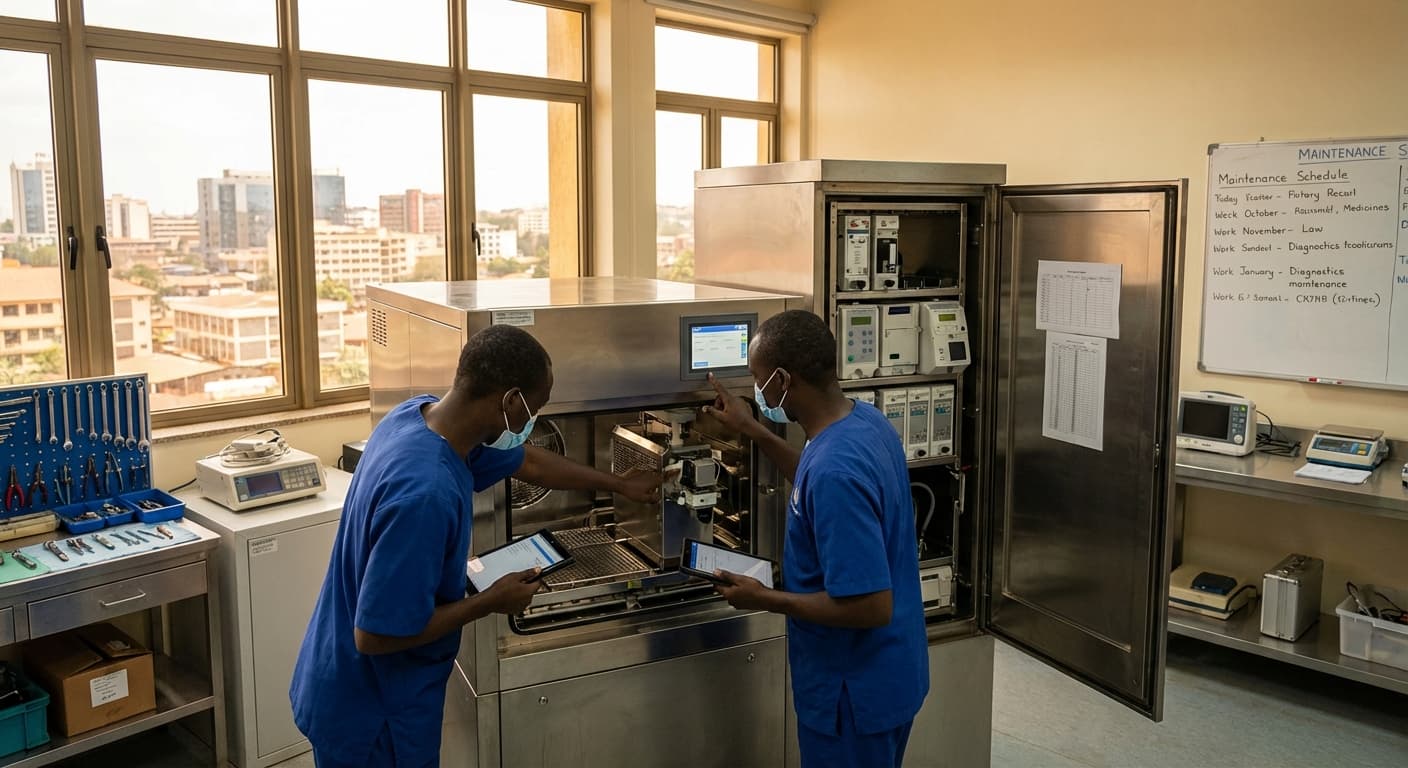
Total Cost of Ownership (TCO) & Lifecycle Budgeting Service in Egypt
Engineering Excellence & Technical Support
Total Cost of Ownership (TCO) & Lifecycle Budgeting Service High-standard technical execution following OEM protocols and local regulatory frameworks.
Optimized Asset Lifecycle Management
Leverage our advanced TCO modeling to accurately forecast and control asset acquisition, operation, maintenance, and disposal costs throughout their entire lifecycle. Our service in Egypt ensures your investments deliver maximum value, minimizing unforeseen expenses and maximizing ROI.
Data-Driven Budgetary Precision
Gain unparalleled visibility into your operational expenditures with our rigorous TCO analysis. We empower Egyptian businesses with precise, data-backed budgeting for all asset-related costs, enabling proactive financial planning and robust cost-saving strategies. From energy consumption to repair cycles, no detail is overlooked.
Proactive Maintenance & Risk Mitigation
Our TCO and lifecycle budgeting services in Egypt go beyond initial purchase. We integrate predictive maintenance insights and potential failure cost analyses into your budget, allowing for proactive resource allocation, reduced downtime, and significantly lower long-term maintenance expenditures. Secure your operational continuity and financial stability.
What Is Total Cost Of Ownership (Tco) & Lifecycle Budgeting Service In Egypt?
Total Cost of Ownership (TCO) & Lifecycle Budgeting Service in Egypt refers to a comprehensive financial and operational management methodology applied to assets and projects throughout their entire lifespan, from acquisition to disposal. This service aims to provide stakeholders with a holistic understanding of all direct and indirect costs associated with an asset or project, enabling more informed strategic decision-making, risk mitigation, and optimization of resource allocation within the Egyptian business and governmental landscape.
| Who Needs TCO & Lifecycle Budgeting Service in Egypt? | Typical Use Cases in Egypt | ||||||
|---|---|---|---|---|---|---|---|
| Large Enterprises & Corporations: Across sectors like manufacturing, oil & gas, telecommunications, and banking, to manage substantial capital investments and operational expenditures. | Government Ministries & Agencies: For infrastructure projects (e.g., transportation, energy, water), public services procurement, and strategic asset management, ensuring long-term value for public funds. | Real Estate Developers & Property Management Firms: To assess the profitability and long-term viability of commercial and residential properties, considering operational and maintenance costs. | Information Technology (IT) Departments & CIOs: For evaluating hardware, software, cloud services, and IT infrastructure, optimizing total spending and preventing unexpected costs. | Facility Managers & Operations Directors: To budget for building maintenance, equipment replacement, and operational efficiency across diverse facilities. | Procurement and Supply Chain Professionals: To conduct robust vendor and supplier evaluation, factoring in the total cost of goods or services over their lifecycle. | Financial Institutions & Investors: For due diligence on asset-heavy investments and to assess the financial health and sustainability of companies. | Environmental, Social, and Governance (ESG) Focused Organizations: To integrate sustainability costs and benefits into financial planning, aligning with evolving regulatory and stakeholder expectations in Egypt. |
| Infrastructure Projects: Evaluating the long-term economic feasibility of roads, bridges, power plants, water treatment facilities, and public transportation systems. | Large-Scale IT System Implementations: Assessing the TCO of enterprise resource planning (ERP) systems, cloud migration, and data center upgrades. | Fleet Management: Optimizing the acquisition, operation, maintenance, and eventual disposal of vehicle fleets for logistics, transportation, and service industries. | Manufacturing Equipment Procurement: Determining the most cost-effective machinery considering purchase price, energy efficiency, maintenance, and expected lifespan. | Energy Sector Investments: Analyzing the TCO of renewable energy installations (solar, wind) versus traditional power generation, including operational and decommissioning costs. | Real Estate Portfolio Management: Assessing the long-term financial performance of commercial buildings, factoring in rental income, operational expenses, and capital expenditures. | Public Sector Asset Management: Managing the lifecycle costs of public buildings, utilities, and equipment to ensure efficient use of taxpayer money. | Technology Refresh Cycles: Planning for the systematic replacement and upgrade of IT hardware and software to maintain optimal performance and security. |
Key Components of TCO & Lifecycle Budgeting Service
- Acquisition Costs: Initial purchase price, including taxes, duties, delivery, and installation.
- Operational Costs: Ongoing expenses for energy consumption, maintenance, repairs, consumables, labor, and software licenses.
- Support and Maintenance Costs: Service level agreements (SLAs), warranties, spare parts inventory, and third-party support.
- Upgrade and Enhancement Costs: Capital expenditures for system upgrades, feature enhancements, and technology refreshes.
- Downtime and Productivity Loss Costs: Quantifiable impact of asset unavailability on operational efficiency and revenue generation.
- Disposal Costs: Decommissioning, dismantling, environmental remediation, and resale or recycling.
- Financing Costs: Interest payments, depreciation, and opportunity costs associated with capital tied up.
- Training and Skill Development Costs: Investment in personnel to operate and maintain assets effectively.
- Security and Compliance Costs: Expenses related to data security, regulatory adherence, and audits.
- Environmental and Social Impact Costs: Costs associated with sustainability initiatives, waste management, and ethical sourcing.
Who Needs Total Cost Of Ownership (Tco) & Lifecycle Budgeting Service In Egypt?
In Egypt's dynamic business landscape, understanding the true cost of assets and projects goes beyond the initial purchase price. Total Cost of Ownership (TCO) and Lifecycle Budgeting services are crucial for organizations aiming for sustainable financial health, operational efficiency, and strategic long-term planning. These services provide a comprehensive view of all expenses associated with an asset or project, from acquisition and operation to maintenance, disposal, and even environmental impact. This holistic approach allows for more informed decision-making, risk mitigation, and ultimately, a stronger return on investment.
| Target Customer | Key Departments Involved | Why TCO & Lifecycle Budgeting is Crucial |
|---|---|---|
| Manufacturing Companies | Operations, Finance, Procurement, Maintenance | Optimizing machinery lifespan, predicting maintenance costs, ensuring profitability of production lines, evaluating technology upgrades. |
| Real Estate Developers & Property Management Firms | Finance, Asset Management, Facilities Management, Development | Forecasting long-term property upkeep costs, evaluating project viability, optimizing energy efficiency, planning for renovations and upgrades. |
| Transportation & Logistics Companies | Fleet Management, Finance, Operations, Maintenance | Analyzing vehicle acquisition vs. operational costs, predicting maintenance and fuel expenses, optimizing fleet replacement cycles, ensuring efficient supply chain operations. |
| Energy & Utilities Sector | Finance, Engineering, Operations, Asset Management | Managing the long-term costs of power generation and distribution assets, planning for infrastructure upgrades and replacements, assessing the financial impact of regulatory changes, evaluating renewable energy investments. |
| Information Technology (IT) Departments & Companies | IT Management, Finance, Procurement, Operations | Evaluating hardware and software lifecycle costs, predicting maintenance and support expenses, planning for cloud migration and data center operations, understanding the total cost of IT solutions. |
| Government Agencies & Public Sector Projects | Finance, Public Works, Planning, Procurement, Project Management | Ensuring responsible allocation of public funds, evaluating the long-term cost-effectiveness of infrastructure projects (roads, bridges, utilities), managing public assets efficiently, long-term strategic planning. |
| Large Conglomerates with Diverse Assets | Group Finance, Divisional Management, Procurement, Asset Management | Consolidating and optimizing costs across multiple business units and asset types, identifying synergies, improving group-level financial planning and risk management. |
| Companies Investing in Sustainability Initiatives | Sustainability, Finance, Operations, R&D | Quantifying the long-term financial benefits of sustainable practices, evaluating the cost-effectiveness of green technologies, aligning environmental goals with financial objectives. |
Who Needs TCO & Lifecycle Budgeting Services in Egypt?
- Businesses seeking to optimize operational expenditures and identify cost-saving opportunities.
- Organizations with significant capital investments in infrastructure, machinery, or technology.
- Companies aiming to improve financial forecasting accuracy and long-term budgeting reliability.
- Entities facing complex procurement processes or managing a diverse asset portfolio.
- Government bodies and public sector organizations responsible for large-scale infrastructure projects and asset management.
- Companies committed to sustainability and environmental responsibility, seeking to quantify the long-term impact of their choices.
- Businesses undergoing digital transformation or implementing new technologies, requiring a clear understanding of ongoing costs.
- Sectors with high maintenance and operational costs, such as manufacturing, energy, and transportation.
Total Cost Of Ownership (Tco) & Lifecycle Budgeting Service Process In Egypt
This document outlines the typical workflow for our Total Cost of Ownership (TCO) & Lifecycle Budgeting Service, specifically tailored for clients operating in Egypt. The process begins with an initial inquiry and progresses through detailed analysis, reporting, and ongoing support to ensure comprehensive financial understanding and strategic planning for assets and projects.
| Stage | Description | Key Activities | Deliverables/Outcomes | Egyptian Context Considerations |
|---|---|---|---|---|
| Inquiry & Initial Consultation | The client expresses interest in TCO & Lifecycle Budgeting services. This stage involves understanding their broad needs and determining the suitability of our services. | Initial contact (phone, email, meeting). Needs assessment. Service overview explanation. Preliminary proposal discussion. | Understanding of client's core requirements. Initial assessment of project scope and complexity. Agreement on next steps. | Awareness of specific Egyptian business environments and regulatory nuances that might impact TCO (e.g., import duties, local content requirements). |
| Information Gathering & Scope Definition | A detailed understanding of the client's assets, projects, and objectives is established, leading to a precisely defined service scope. | Detailed requirement gathering meetings. Identification of specific assets/projects to be analyzed. Definition of the TCO/Lifecycle period. Agreement on key performance indicators (KPIs) and reporting requirements. | Signed Statement of Work (SOW). Defined project scope and objectives. List of required data points. | Understanding of common Egyptian asset types (e.g., infrastructure, industrial equipment) and their typical operational lifecycles within the country. |
| Data Collection & Analysis | All relevant financial and operational data pertaining to the defined scope is systematically collected and verified. | Gathering historical cost data (acquisition, operation, maintenance, disposal). Collecting operational data (usage, performance, downtime). Researching market data (inflation, currency fluctuations, expected residual values). Data validation and cleansing. | Comprehensive dataset for analysis. Identified data gaps and assumptions made. Cleaned and structured data repository. | Navigating Egyptian data availability challenges. Utilizing local sources for pricing, labor costs, and regulatory fees. Understanding potential for data fragmentation across different Egyptian entities. |
| TCO & Lifecycle Cost Modeling | The collected data is used to build robust financial models that forecast all costs associated with an asset or project throughout its lifecycle. | Developing TCO models based on industry best practices and client-specific factors. Incorporating direct and indirect costs. Forecasting future expenses using appropriate discount rates and inflation assumptions. Sensitivity analysis and scenario planning. | Developed TCO/Lifecycle cost models. Quantified present and future costs. Identified key cost drivers and risk factors. | Incorporating Egyptian specific cost elements like customs duties, VAT, social insurance contributions, and potential changes in local tax laws. Considering currency exchange rate volatility impacting imported components. |
| Reporting & Presentation | The findings and insights from the TCO analysis are compiled into clear, actionable reports and presented to the client. | Generating detailed TCO/Lifecycle reports. Visualizing cost breakdowns and projections. Presenting findings, recommendations, and strategic implications. Client review and feedback sessions. | Comprehensive TCO/Lifecycle report. Executive summary and detailed analysis. Actionable recommendations for cost optimization and strategic decision-making. | Tailoring reports to reflect Egyptian business reporting standards and regulatory requirements. Ensuring clarity for stakeholders with diverse backgrounds within the Egyptian context. |
| Implementation Support & Training | Assisting the client in implementing recommendations and embedding TCO principles into their organizational processes. | Facilitating the adoption of recommended cost-saving measures. Providing training on TCO concepts and tools. Assisting in the development of new budgeting and procurement strategies. | Successful implementation of recommendations. Enhanced internal capability in TCO management. Integration of TCO into financial planning processes. | Providing support in navigating local procurement processes and vendor management within Egypt. Training staff on how to incorporate TCO into decision-making within the Egyptian operational framework. |
| Ongoing Review & Updates | Periodically reviewing and updating TCO models to reflect changes in operational conditions, market dynamics, and business objectives. | Regular review of asset performance and cost data. Updating models with current market prices and economic indicators. Re-forecasting costs based on updated assumptions. Continuous improvement of TCO methodologies. | Updated TCO/Lifecycle reports. Proactive identification of emerging cost trends. Ongoing strategic financial guidance. | Monitoring and incorporating updates in Egyptian economic policies, regulations, and inflation rates that may significantly impact long-term costs. Adapting to evolving local market conditions. |
Workflow Stages
- Inquiry & Initial Consultation
- Information Gathering & Scope Definition
- Data Collection & Analysis
- TCO & Lifecycle Cost Modeling
- Reporting & Presentation
- Implementation Support & Training
- Ongoing Review & Updates
Total Cost Of Ownership (Tco) & Lifecycle Budgeting Service Cost In Egypt
The Total Cost of Ownership (TCO) and Lifecycle Budgeting service is crucial for organizations in Egypt to accurately forecast, manage, and optimize all costs associated with an asset or project from acquisition to disposal. This service helps in making informed investment decisions, identifying cost-saving opportunities, and mitigating financial risks over the long term.
The pricing for TCO and Lifecycle Budgeting services in Egypt is influenced by several key factors, leading to a range of costs depending on the complexity and scope of the engagement. Understanding these factors is essential for businesses seeking to procure such services.
| Pricing Factor | Description | Potential Impact on Cost (Low to High) |
|---|---|---|
| Scope and Complexity | The more intricate the asset or project (e.g., large-scale infrastructure, complex IT systems), the more resources and time are required for analysis. | Low to High |
| Data Availability and Quality | If historical data is readily available and well-organized, it reduces the effort. Poor or missing data necessitates extensive research and data collection. | Low to High |
| Number and Type of Assets | Analyzing a single, simple asset will be less costly than a portfolio of diverse assets (e.g., a fleet of vehicles, multiple buildings, various software licenses). | Low to High |
| Lifecycle Duration | Longer lifecycles (e.g., 20-30 years for real estate) require more detailed forecasting and consideration of inflation, technological obsolescence, and maintenance trends. | Medium to High |
| Level of Detail | High-level summaries are less expensive than detailed, granular cost breakdowns for every component and phase. | Low to Medium |
| Provider Expertise | Highly experienced consultants with specialized knowledge in specific industries or asset types command higher fees. | Medium to High |
| Geographic Scope | If the asset or project has multiple locations within Egypt or internationally, it adds complexity in terms of data collection and local cost variations. | Low to Medium |
| Reporting and Deliverables | Standard reports are less costly than customized, in-depth analyses, interactive dashboards, or bespoke software solutions. | Low to Medium |
| Technology and Tools | The use of advanced TCO software or specialized analytical tools can increase upfront or recurring costs, but may also improve efficiency. | Low to Medium |
| Consultant Availability | In periods of high demand for TCO expertise, rates can increase due to limited supply of qualified professionals. | Medium to High |
Key Pricing Factors for TCO & Lifecycle Budgeting Services in Egypt
- Scope and Complexity of the Project/Asset:
- Data Availability and Quality:
- Number and Type of Assets Included:
- Duration of the Lifecycle:
- Level of Detail and Granularity Required:
- Expertise and Experience of the Service Provider:
- Geographic Scope (if multi-location):
- Reporting and Deliverable Format:
- Technology and Tools Utilized:
- Consultant Availability and Demand:
Affordable Total Cost Of Ownership (Tco) & Lifecycle Budgeting Service Options
Our Affordable Total Cost of Ownership (TCO) & Lifecycle Budgeting service empowers your organization to make informed financial decisions by providing comprehensive cost analysis and strategic budgeting for the entire lifespan of your assets and projects. We focus on delivering exceptional value through carefully designed service bundles and implementing proven cost-saving strategies throughout the lifecycle.
| Value Bundle Name | Description | Key Features | Ideal For |
|---|---|---|---|
| Core TCO Essentials | A foundational service for understanding and managing the primary costs associated with your assets. | Initial TCO assessment, acquisition cost analysis, operational cost tracking (energy, consumables), basic maintenance cost projection. | Small to medium-sized businesses, new project initiation, standard asset classes. |
| Comprehensive Lifecycle Budgeting | Extends TCO analysis to encompass the full lifecycle, including end-of-life considerations and strategic planning. | Includes Core TCO Essentials plus, depreciation calculation, projected repair & upgrade costs, disposal/decommissioning cost estimation, multi-year budgeting framework, scenario planning. | Organizations with longer asset lifecycles, capital-intensive industries, organizations seeking robust long-term financial control. |
| Strategic Cost Optimization | A premium bundle focused on actively identifying and implementing cost-saving measures throughout the asset lifecycle. | Includes Comprehensive Lifecycle Budgeting plus, vendor negotiation support, alternative solution analysis, preventive maintenance optimization, energy efficiency audits, waste reduction strategies, ROI analysis for upgrades. | Organizations aiming for significant cost reductions, proactive financial management, supply chain optimization. |
| Customized TCO Solutions | Tailored to your specific organizational needs, industry requirements, and unique asset portfolios. | Bespoke TCO modeling, industry-specific cost drivers, unique asset lifecycle analysis, integration with existing financial systems, specialized risk assessment. | Large enterprises, organizations with highly specialized assets, unique business models, complex operational environments. |
Key Benefits of Our TCO & Lifecycle Budgeting Services
- Predictable Financial Planning: Gain clear visibility into all associated costs, enabling accurate long-term budgeting and preventing unexpected expenses.
- Optimized Resource Allocation: Identify opportunities to reduce costs and reallocate resources to higher-priority initiatives.
- Informed Decision-Making: Make data-driven choices regarding procurement, maintenance, upgrades, and disposal.
- Enhanced Asset Management: Maximize the return on investment for your assets by understanding their true cost and performance over time.
- Risk Mitigation: Proactively identify and address potential cost overruns and financial risks.
- Competitive Advantage: Achieve operational efficiencies and cost leadership within your industry.
Verified Providers In Egypt
In Egypt's evolving healthcare landscape, the concept of 'Verified Providers' is gaining traction, signifying a commitment to quality, transparency, and patient safety. Franance Health stands at the forefront of this movement, offering a robust system for credentialing and verifying healthcare professionals and facilities. This meticulous process ensures that patients have access to reliable and competent medical services, making Franance Health a paramount choice for those seeking trustworthy healthcare in Egypt. Their verification process is not merely a formality; it's a deep dive into the qualifications, experience, and ethical standing of providers, offering a crucial layer of assurance in a system where distinguishing genuine excellence can be challenging.
| Provider Type | Franance Health Verification Focus | Benefit to Patients |
|---|---|---|
| Individual Practitioners (Doctors, Dentists, Therapists) | Medical school accreditation, specialization certifications, license validity, peer reviews, ethical compliance. | Confidence in medical expertise, assurance of proper licensing and ethical practice. |
| Hospitals and Clinics | Accreditation status (local and international), patient safety protocols, quality of care metrics, equipment standards, staff qualifications. | Access to facilities with proven high standards of care and safety, reliable infrastructure. |
| Diagnostic Laboratories | Equipment calibration and maintenance, quality control procedures, staff expertise, accreditation with relevant bodies. | Trust in the accuracy and reliability of diagnostic test results. |
| Specialized Medical Centers (e.g., Fertility, Cardiac) | Specific certifications for the specialization, advanced training of staff, outcome data, patient satisfaction surveys. | Assurance of receiving specialized care from experts with proven success rates. |
Why Franance Health Credentials Represent the Best Choice:
- Rigorous Verification Process: Franance Health employs a multi-stage verification that scrutinizes educational background, professional licenses, certifications, and continuing education records.
- Experience Validation: Beyond qualifications, Franance Health verifies the practical experience and track record of providers, including any specialized training or successful case histories.
- Ethical and Professional Standards: A key component of their verification includes assessing adherence to ethical guidelines and professional conduct, ensuring patient well-being is paramount.
- Up-to-Date Information: Franance Health maintains a dynamic database, regularly updating provider credentials to reflect current practices and qualifications.
- Patient Empowerment: By providing access to verified provider information, Franance Health empowers patients to make informed decisions about their healthcare.
- Commitment to Quality: Their verification system is intrinsically linked to a commitment to elevating the overall quality of healthcare services available in Egypt.
Scope Of Work For Total Cost Of Ownership (Tco) & Lifecycle Budgeting Service
This Scope of Work (SOW) outlines the services to be provided for the Total Cost of Ownership (TCO) and Lifecycle Budgeting service. The objective is to establish a comprehensive understanding of all costs associated with an asset or system from acquisition through disposal, and to develop a robust lifecycle budget to ensure financial predictability and optimize long-term value. This document details the scope of work, technical deliverables, and standard specifications for this engagement.
| Phase | Key Activities | Deliverables | Standard Specifications |
|---|---|---|---|
| Phase 1: Planning & Discovery | Define TCO scope and objectives Identify key stakeholders Review existing documentation and data sources Establish data collection methodology | Project Kick-off Meeting Minutes Stakeholder Register Data Collection Plan Customized TCO Framework Outline | Engagement with key stakeholders within 2 business days of project commencement. Data collection plan to be finalized within 7 business days. TCO framework to align with industry best practices (e.g., ISO 55000 series principles). |
| Phase 2: Data Collection & Analysis | Gather direct and indirect cost data across the lifecycle (acquisition, operation, maintenance, disposal) Validate data accuracy and completeness Categorize and normalize cost data Perform historical cost analysis | Comprehensive Cost Data Repository Data Validation Report Normalized Cost Database Initial Cost Trend Analysis Report | Data collection to cover at least 80% of identified cost categories. Data validation to include cross-referencing with at least two independent sources where possible. All data to be stored in a secure, encrypted format. |
| Phase 3: TCO Modeling & Scenario Planning | Develop TCO models based on collected data Define key lifecycle stages and their associated cost drivers Conduct sensitivity analysis on key variables Develop 'what-if' scenarios (e.g., increased usage, technological obsolescence) | TCO Model(s) (e.g., spreadsheet-based, dedicated software) Sensitivity Analysis Report Scenario Planning Matrix Key Cost Driver Identification | TCO models to be dynamic and capable of forecasting costs over the defined lifecycle. Sensitivity analysis to cover a range of +/- 15% for critical cost drivers. Scenarios to be realistic and relevant to the asset's operational environment. |
| Phase 4: Lifecycle Budget Formulation | Translate TCO model outputs into a structured lifecycle budget Allocate costs to specific budget periods (e.g., annual, quarterly) Identify funding requirements and timing Develop contingency planning | Lifecycle Budget Document Cash Flow Projections Funding Requirement Schedule Contingency Allocation Recommendations | Lifecycle budget to align with the organization's financial reporting standards. Cash flow projections to be presented with monthly granularity for the first 2 years and quarterly thereafter. Contingency to be a minimum of 10% of the estimated total lifecycle cost, adjusted based on risk assessment. |
| Phase 5: Risk Assessment & Reporting | Identify potential risks impacting lifecycle costs Assess the probability and impact of identified risks Develop mitigation strategies and recommendations Prepare final TCO and lifecycle budget reports and presentations | Risk Register Risk Mitigation Strategy Report Final TCO & Lifecycle Budget Report Executive Summary Presentation | Risk assessment to consider at least 10 distinct risk categories relevant to the asset. Final report to be delivered in a clear, concise, and actionable format, suitable for executive review. Presentation to be tailored to the audience's technical and financial understanding. |
| Phase 6: Knowledge Transfer | Provide training on TCO and lifecycle budgeting concepts Train users on TCO model operation and maintenance Document TCO and budgeting processes | Training Materials User Manual for TCO Model Process Documentation | Training sessions to be interactive and include hands-on exercises. User manual to be comprehensive and easy to understand for non-technical users. Process documentation to adhere to established organizational knowledge management standards. |
Service Components
- TCO Framework Development and Customization
- Lifecycle Cost Data Collection and Analysis
- Scenario Planning and Sensitivity Analysis
- Lifecycle Budget Formulation
- Risk Assessment and Mitigation Strategies
- Reporting and Presentation
- Knowledge Transfer and Training
Service Level Agreement For Total Cost Of Ownership (Tco) & Lifecycle Budgeting Service
This Service Level Agreement (SLA) outlines the guaranteed response times and uptime for the Total Cost of Ownership (TCO) & Lifecycle Budgeting Service provided by [Your Company Name] to [Client Name]. This SLA is an appendix to the Master Services Agreement (MSA) dated [MSA Date].
| Service Component | Uptime Guarantee | Response Time (Incident Severity 1 - Critical) | Response Time (Incident Severity 2 - Major) | Response Time (Incident Severity 3 - Minor) | Resolution Target (Incident Severity 1) | Resolution Target (Incident Severity 2) | Resolution Target (Incident Severity 3) |
|---|---|---|---|---|---|---|---|
| Core TCO & Lifecycle Budgeting Platform Access | 99.9% (monthly) | 15 minutes (initial acknowledgement) | 1 hour (initial acknowledgement) | 4 business hours (initial acknowledgement) | 4 business hours | 1 business day | 5 business days |
| Data Integration & Aggregation Services | 99.5% (monthly) | 30 minutes (initial acknowledgement) | 2 hours (initial acknowledgement) | 8 business hours (initial acknowledgement) | 8 business hours | 2 business days | 7 business days |
| Expert Consultation & Support | N/A (Availability based on scheduled appointments) | Scheduled Appointment Time | Scheduled Appointment Time | Scheduled Appointment Time | As per agreed consultation scope | As per agreed consultation scope | As per agreed consultation scope |
| Reporting & Analytics Generation | 99.0% (monthly) | 1 hour (initial acknowledgement) | 4 hours (initial acknowledgement) | 1 business day (initial acknowledgement) | 4 business hours | 1 business day | 3 business days |
Service Scope
- The TCO & Lifecycle Budgeting Service includes the provision of analytical tools, data aggregation, forecasting models, and expert consultation focused on optimizing the total cost of ownership and lifecycle budgeting for [Client Name]'s assets and operations.
- Specific services covered include: initial TCO assessment, ongoing lifecycle cost monitoring, budget scenario planning, cost reduction identification, and financial reporting.
- The service is delivered via [Specify Delivery Method, e.g., cloud-based platform, dedicated portal, scheduled consultation meetings].
Frequently Asked Questions

Ready when you are
Let's scope your Total Cost of Ownership (TCO) & Lifecycle Budgeting Service in Egypt project in Egypt.

Scaling healthcare logistics and technical systems across the entire continent.