
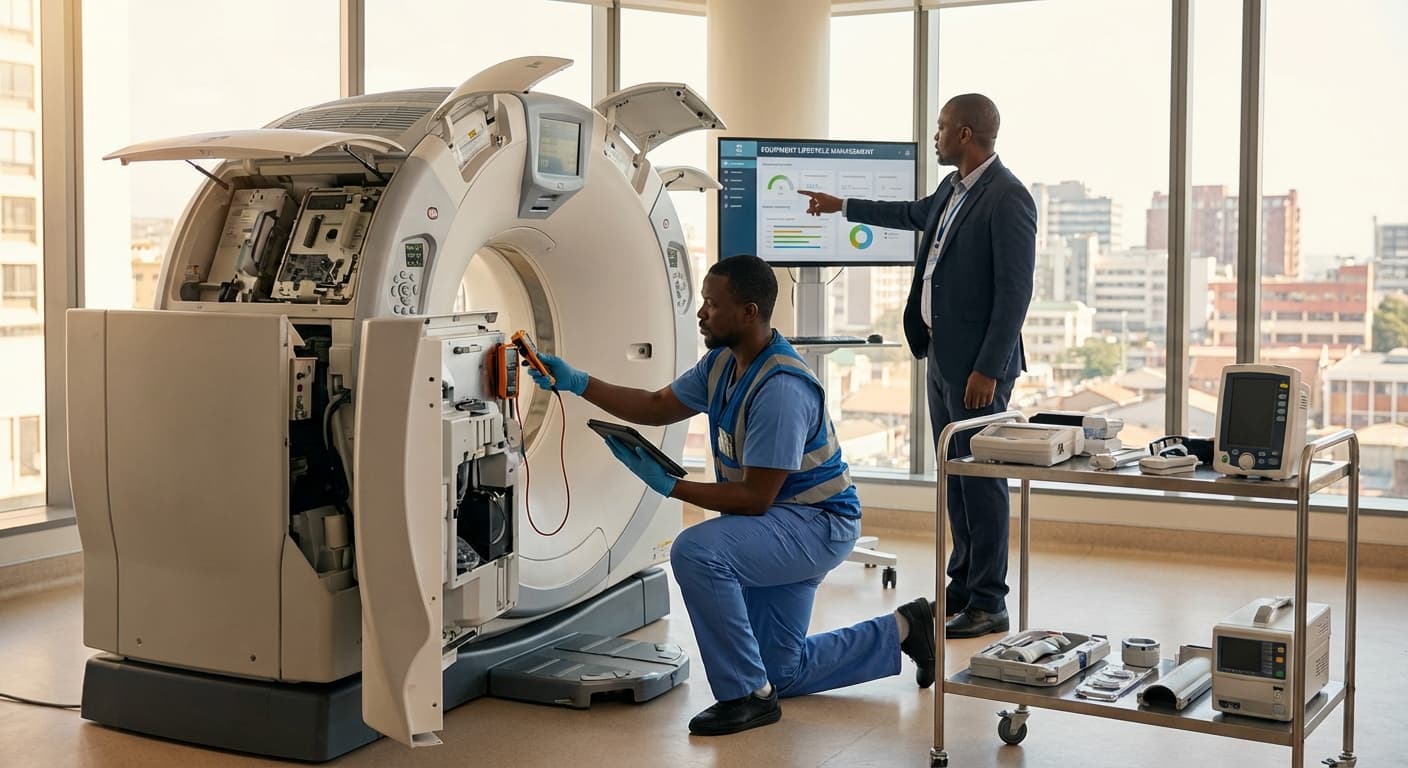
Equipment Replacement Planning & Obsolescence Strategy Service in Egypt
Engineering Excellence & Technical Support
Equipment Replacement Planning & Obsolescence Strategy Service High-standard technical execution following OEM protocols and local regulatory frameworks.
Proactive Asset Lifecycle Management
Leveraging advanced data analytics and IoT integration to predict equipment failures and obsolescence, enabling proactive replacement strategies that minimize downtime and optimize operational efficiency for Egyptian industries.
Supply Chain Resilience & Risk Mitigation
Developing robust obsolescence strategies that identify and mitigate risks associated with single-source suppliers and end-of-life components, ensuring a secure and uninterrupted supply chain for critical equipment in Egypt's evolving industrial landscape.
Cost Optimization & Enhanced ROI
Implementing data-driven equipment replacement models that balance upfront investment with long-term operational costs, driving significant cost savings and maximizing return on investment for Egyptian businesses by ensuring the right equipment is in place at the optimal time.
What Is Equipment Replacement Planning & Obsolescence Strategy Service In Egypt?
Equipment Replacement Planning & Obsolescence Strategy Service in Egypt refers to a specialized consulting and operational framework designed to proactively manage the lifecycle of industrial, commercial, and infrastructure assets. It encompasses the systematic evaluation of existing equipment to determine optimal replacement timelines, assess the risks and implications of technological obsolescence, and develop comprehensive strategies for asset renewal and modernization. This service is critical for maintaining operational efficiency, ensuring compliance with evolving standards, mitigating supply chain vulnerabilities, and maximizing return on investment throughout the asset's lifespan. It involves a multidisciplinary approach, integrating technical assessments, financial analysis, risk management, and strategic foresight.
| Who Needs This Service? | Typical Use Cases in Egypt | |
|---|---|---|
| Manufacturing Companies: Across various sectors (e.g., automotive, textiles, food & beverage, pharmaceuticals) facing aging production lines and the need to adopt Industry 4.0 technologies. | Upgrading outdated manufacturing machinery to improve production efficiency, reduce downtime, and meet international quality standards. | Replacing obsolete control systems and automation components to integrate with newer IoT platforms and data analytics tools. |
| Energy and Utilities Sector: Power generation plants, water treatment facilities, and oil & gas operations managing complex and long-lifespan infrastructure. | Assessing the reliability and efficiency of aging turbines, transformers, and pumps to prevent critical failures and ensure continuous service delivery. | Strategizing the replacement of legacy SCADA systems and communication networks with modern, secure, and more scalable solutions. |
| Infrastructure and Construction: Government agencies and private developers responsible for public works, transportation, and building management. | Planning the replacement of aging road maintenance equipment, traffic control systems, and public transportation fleets. | Evaluating the obsolescence of building management systems (BMS) and HVAC equipment in large commercial or governmental structures. |
| Telecommunications Providers: Managing extensive networks of base stations, switching equipment, and transmission infrastructure. | Phasing out older generations of network hardware (e.g., 2G/3G) to deploy and support newer technologies like 5G. | Ensuring the availability of spare parts and technical support for critical network components nearing end-of-life. |
| Healthcare Institutions: Hospitals and clinics relying on advanced medical equipment. | Replacing diagnostic imaging equipment (MRI, CT scanners) and surgical instruments that are no longer supported or offer suboptimal performance. | Managing the lifecycle of laboratory automation systems and sterilization equipment. |
| Logistics and Warehousing: Companies with automated storage and retrieval systems (AS/RS) and material handling equipment. | Upgrading conveyor systems, forklifts, and automated guided vehicles (AGVs) to enhance operational speed and precision. | Assessing the obsolescence of warehouse management software (WMS) and its integration with physical infrastructure. |
Key Components of the Service
- Asset Inventory and Condition Assessment: Detailed cataloging of all relevant equipment, including age, operational status, maintenance history, and performance metrics.
- Obsolescence Risk Analysis: Identification of components, technologies, or systems that are at risk of becoming outdated, unsupported, or difficult to maintain due to technological advancements or dwindling manufacturer support.
- Performance Benchmarking: Comparison of current equipment performance against industry best practices and emerging technologies to identify performance gaps.
- Total Cost of Ownership (TCO) Analysis: Evaluation of the complete costs associated with owning and operating equipment over its lifecycle, including acquisition, maintenance, repair, energy consumption, and eventual disposal or upgrade costs.
- Replacement/Upgrade Scenario Modeling: Development and analysis of various scenarios, including immediate replacement, phased upgrades, refurbishment, or continued operation with mitigation strategies.
- Strategic Planning and Roadmapping: Creation of long-term plans for equipment renewal, aligning with business objectives, budget constraints, and technological evolution.
- Risk Mitigation Strategies: Implementation of measures to address the risks associated with obsolescence, such as alternative sourcing, redesign, or proactive technology adoption.
- Implementation Support: Assistance with the procurement, installation, and integration of new or upgraded equipment.
- End-of-Life Management: Planning for the responsible decommissioning, disposal, or recycling of retired assets.
Who Needs Equipment Replacement Planning & Obsolescence Strategy Service In Egypt?
In Egypt's rapidly evolving industrial and technological landscape, proactive planning for equipment replacement and obsolescence is no longer a luxury but a strategic imperative. This service is crucial for organizations seeking to maintain operational efficiency, minimize downtime, manage costs effectively, and ensure long-term competitiveness. Failing to plan can lead to costly breakdowns, production halts, security vulnerabilities, and the inability to adopt newer, more efficient technologies.
| Target Customer Profile | Key Departments Benefiting |
|---|---|
| Large-Scale Manufacturing Plants (e.g., Petrochemicals, Food & Beverage, Textiles, Automotive) | Operations, Maintenance & Engineering, Procurement, Finance, IT |
| Infrastructure & Utilities Providers (e.g., Power Generation, Water Treatment, Telecommunications) | Asset Management, Operations, Engineering, Planning, Finance, IT |
| Oil & Gas Exploration and Production Companies | Asset Integrity, Operations, Maintenance, Engineering, Procurement, HSE (Health, Safety, and Environment) |
| Mining and Extractive Industries | Operations, Maintenance, Engineering, Asset Management, Procurement, Safety |
| Pharmaceutical and Healthcare Institutions (especially those with complex medical equipment) | Biomedical Engineering, Facilities Management, IT, Procurement, Quality Assurance |
| Transportation and Logistics Companies (e.g., Airlines, Shipping, Rail, Fleet Management) | Fleet Management, Maintenance & Engineering, Operations, Procurement, IT |
| Technology-Driven Service Providers (e.g., Data Centers, Cloud Providers) | IT Infrastructure, Operations, Procurement, Finance, Security |
| Government and Public Sector Agencies (managing large fleets of vehicles, IT systems, or specialized equipment) | Procurement, Facilities Management, IT, Asset Management, Operations |
Who Needs Equipment Replacement Planning & Obsolescence Strategy Service in Egypt?
- Industries heavily reliant on specialized machinery and technology.
- Organizations with a significant installed base of aging equipment.
- Companies operating in sectors with rapid technological advancements.
- Businesses aiming to optimize capital expenditure and operational budgets.
- Entities with stringent regulatory or safety compliance requirements.
- Organizations looking to improve sustainability and reduce their environmental footprint through efficient resource management.
Equipment Replacement Planning & Obsolescence Strategy Service Process In Egypt
This document outlines the Equipment Replacement Planning & Obsolescence Strategy Service Process in Egypt. The service aims to help organizations proactively manage their aging and obsolete equipment by developing strategic replacement plans and obsolescence mitigation strategies. The workflow encompasses several key stages, from initial client inquiry to final service execution and reporting.
| Stage | Description | Key Activities | Deliverables | Responsible Parties |
|---|---|---|---|---|
| Inquiry & Initial Consultation | The client expresses interest in the service and initiates contact. | Initial meeting, understanding client's general challenges, preliminary discussion of service benefits. | Interest confirmation, basic service overview. | Client, Service Provider Sales/Business Development |
| Needs Assessment & Scope Definition | Deep dive into the client's specific needs, current situation, and desired outcomes. | Detailed interviews with stakeholders, site visits (if applicable), review of existing documentation, defining project objectives, scope, and key performance indicators (KPIs). | Project proposal, Statement of Work (SOW), agreed-upon scope and objectives. | Client, Service Provider Project Manager/Consultants |
| Data Collection & Analysis | Gathering comprehensive data on the client's existing equipment. | Inventory of equipment (make, model, serial number, purchase date, installation date, maintenance history), operational data, performance metrics, cost of ownership, regulatory requirements. | Detailed equipment inventory database, preliminary performance reports. | Client (providing data), Service Provider Data Analysts/Consultants |
| Obsolescence Assessment | Evaluating the current and future risk of equipment obsolescence. | Analyzing manufacturer support lifecycles, availability of spare parts, technological advancements, regulatory changes, and criticality of the equipment to operations. | Obsolescence risk assessment report, identification of critical obsolete or soon-to-be-obsolete equipment. | Service Provider Obsolescence Specialists/Engineers |
| Replacement Planning & Strategy Development | Formulating actionable plans for equipment replacement and obsolescence mitigation. | Developing phased replacement schedules, evaluating replacement options (new equipment, refurbishment, upgrades), cost-benefit analysis of replacement scenarios, developing maintenance strategies for remaining life, identifying alternative suppliers or technologies. | Equipment replacement roadmap, obsolescence mitigation strategy document, financial models for replacement. | Service Provider Strategists/Engineers/Financial Analysts |
| Recommendation & Approval | Presenting the findings and recommendations to the client for decision-making. | Formal presentation of the developed strategy, detailed explanation of recommendations, addressing client queries, securing formal approval. | Approved replacement plan and obsolescence strategy. | Service Provider Consultants, Client Management/Decision Makers |
| Implementation Support | Assisting the client in executing the approved plan. | Procurement support, vendor selection assistance, project management for new installations, decommissioning of old equipment, training for new systems. | Successful implementation of replacement projects, updated asset register. | Service Provider Project Managers/Technical Specialists, Client Project Team |
| Monitoring & Review | Ongoing tracking of the implemented strategy and performance. | Regular performance reviews against KPIs, periodic updates to the obsolescence assessment, adjustments to the replacement plan as needed, post-implementation review. | Performance reports, updated strategy documents, lessons learned. | Service Provider Consultants, Client Asset Management/Operations |
Equipment Replacement Planning & Obsolescence Strategy Service Process Stages
- Inquiry & Initial Consultation
- Needs Assessment & Scope Definition
- Data Collection & Analysis
- Obsolescence Assessment
- Replacement Planning & Strategy Development
- Recommendation & Approval
- Implementation Support
- Monitoring & Review
Equipment Replacement Planning & Obsolescence Strategy Service Cost In Egypt
Planning for equipment replacement and developing obsolescence strategies are critical for Egyptian businesses to maintain operational efficiency, mitigate risks, and optimize capital expenditure. The cost of such specialized services in Egypt is influenced by several key pricing factors, leading to a range of investment levels depending on the project's scope and complexity. Understanding these factors is crucial for organizations seeking to budget effectively and select the right service provider.
The primary drivers behind the cost of Equipment Replacement Planning & Obsolescence Strategy services in Egypt include:
- Scope of the Project: This is arguably the most significant factor. A comprehensive assessment covering all company assets versus a targeted replacement plan for a specific critical piece of equipment will naturally have vastly different costs. The number of assets, their types, criticality, and the depth of analysis required all contribute.
- Complexity of Assets: Evaluating simple, off-the-shelf equipment will be less costly than assessing highly specialized, custom-built, or technologically advanced machinery. The availability and accessibility of technical data for each asset also play a role.
- Data Availability and Quality: If the client has well-organized and readily accessible data on asset history, maintenance records, performance metrics, and vendor information, the consultant's work will be more efficient, potentially reducing costs. Conversely, extensive data collection and validation efforts will increase the service cost.
- Required Analysis and Deliverables: The level of detail in the analysis (e.g., lifecycle cost analysis, risk assessment, ROI calculations for replacements) and the specific deliverables (e.g., detailed reports, implementation roadmaps, tender documents) will impact pricing. More sophisticated analyses and comprehensive documentation command higher fees.
- Consultant Expertise and Reputation: Experienced consultants with a proven track record and specialized knowledge in asset management, engineering, and financial analysis will generally charge more. Smaller, less established firms might offer lower rates but may lack the depth of experience.
- Project Duration and Timeline: Projects with shorter, more aggressive timelines may require more resources dedicated to the project, potentially increasing the overall cost. Conversely, longer, more phased approaches might allow for more resource flexibility.
- Geographic Location and Site Visits: While less of a factor for remote analysis, if site visits and physical assessments of equipment are required, travel and accommodation costs within Egypt will be factored in.
- Technology and Software Utilized: The use of advanced asset management software, simulation tools, or specialized analytical platforms by the consultant can add to their operational costs, which might be reflected in their pricing.
- Level of Client Involvement: The extent to which the client's internal team can actively participate in data gathering, validation, and decision-making can influence the consultant's workload and thus the cost.
Pricing Ranges in EGP (Egyptian Pounds):
Given the variability of the factors above, it's challenging to provide exact figures. However, based on market observations in Egypt, the pricing can be broadly categorized as follows:
- Small-Scale/Targeted Assessment: For a limited number of assets or a specific piece of equipment with clear obsolescence concerns, the cost might range from EGP 50,000 to EGP 150,000. This would typically involve a focused analysis and a concise report.
- Medium-Scale/Comprehensive Assessment: For a moderate number of assets across a department or a significant portion of a company's critical infrastructure, expect costs to range from EGP 150,000 to EGP 500,000. This would involve more in-depth analysis, including lifecycle cost modeling and risk assessments.
- Large-Scale/Enterprise-Wide Strategy: For a complete asset inventory, detailed obsolescence strategy development across an entire organization, including risk mitigation, financial planning, and implementation roadmaps, costs can range from EGP 500,000 to EGP 1,500,000 or more. Highly complex industrial settings or multinational corporations with extensive assets would fall into this category.
It is essential for organizations to obtain detailed proposals from multiple service providers, clearly outlining the scope of work, methodology, deliverables, and associated costs, to make an informed decision.
| Service Tier | Typical Scope | Estimated Price Range (EGP) |
|---|---|---|
| Small-Scale/Targeted Assessment | Limited assets or a specific critical piece of equipment | 50,000 - 150,000 |
| Medium-Scale/Comprehensive Assessment | Moderate number of assets across a department or significant infrastructure | 150,000 - 500,000 |
| Large-Scale/Enterprise-Wide Strategy | Complete asset inventory, organization-wide strategy, risk mitigation, financial planning | 500,000 - 1,500,000+ |
Key Pricing Factors for Equipment Replacement Planning & Obsolescence Strategy Services in Egypt
- Scope of the Project (number and types of assets, depth of analysis)
- Complexity of Assets (standard vs. specialized equipment)
- Data Availability and Quality (client-provided data)
- Required Analysis and Deliverables (reports, roadmaps, ROI calculations)
- Consultant Expertise and Reputation
- Project Duration and Timeline
- Geographic Location and Site Visits (travel costs)
- Technology and Software Utilized by the Consultant
- Level of Client Involvement
Affordable Equipment Replacement Planning & Obsolescence Strategy Service Options
Our Affordable Equipment Replacement Planning & Obsolescence Strategy Service is designed to empower your organization with proactive solutions to manage aging assets and avoid costly disruptions. We offer flexible value bundles that cater to diverse needs and budgets, ensuring you can optimize your capital expenditures and mitigate risks associated with outdated technology. By understanding your current equipment lifecycle, maintenance history, and future operational demands, we develop tailored obsolescence mitigation plans that minimize downtime, reduce emergency repair costs, and secure access to critical spare parts. Our strategies focus on extending the useful life of existing equipment where feasible, planning strategic replacements, and identifying end-of-life support gaps before they become critical issues. This approach not only saves significant capital but also improves operational efficiency and predictability.
| Service Component | Essential Planning | Strategic Optimization | Proactive Mitigation |
|---|---|---|---|
| High-Level Equipment Audit | ✔ | ✔ | ✔ |
| Initial Obsolescence Risk Assessment | ✔ | ✔ | ✔ |
| Basic Replacement Roadmap (1-3 Years) | ✔ | ✔ | ✔ |
| Detailed Lifecycle Analysis | ✔ | ✔ | |
| Predictive Maintenance Integration | ✔ | ✔ | |
| Multi-Year Replacement Budget Forecast | ✔ | ✔ | |
| Continuous Obsolescence Monitoring | ✔ | ||
| Critical Component Risk Mitigation | ✔ | ||
| End-of-Life Support Strategy | ✔ | ||
| Scenario Planning & Contingency | ✔ |
Value Bundles & Cost-Saving Strategies
- {"items":["Essential Planning: A foundational service providing a high-level overview of critical equipment, initial obsolescence risk assessment, and a basic replacement roadmap.","Strategic Optimization: Builds upon Essential Planning with detailed lifecycle analysis, predictive maintenance integration, and a multi-year replacement budget forecast.","Proactive Obsolescence Mitigation: The most comprehensive bundle, including continuous monitoring, risk mitigation strategies for critical components, vendor relationship management for end-of-life support, and scenario planning for unforeseen technological shifts.","Customizable Bundles: Tailor a package to your specific industry, asset types, and organizational goals."],"title":"Value Bundle Options"}
- {"items":["Extended Equipment Lifespan: Implementing best practices in maintenance and upgrades to maximize the operational life of current assets.","Reduced Emergency Repairs: Proactive identification and replacement of components before catastrophic failures occur, drastically cutting unplanned downtime and expensive rush orders.","Optimized Capital Expenditure: Strategic planning ensures equipment is replaced based on need and ROI, avoiding unnecessary early upgrades or prolonged use of inefficient machinery.","Bulk Purchasing & Negotiation: Consolidating future replacement needs to leverage volume discounts and negotiate favorable terms with vendors.","Spare Parts Management: Developing a strategic inventory of critical spare parts for end-of-life equipment, preventing costly delays when essential components are no longer manufactured.","Technology Refresh Planning: Aligning equipment upgrades with business objectives and emerging technologies that offer genuine operational improvements and cost efficiencies.","Vendor Consolidation & Standardization: Streamlining vendor relationships to benefit from preferred pricing and simplified support structures."],"title":"Cost-Saving Strategies Implemented"}
Verified Providers In Egypt
In the dynamic landscape of healthcare in Egypt, discerning patients seek reliable and trustworthy medical professionals. "Verified Providers in Egypt" is a crucial initiative aimed at bringing transparency and assurance to healthcare services. This document focuses on Franance Health credentials and explains why they represent the best choice for your medical needs. Franance Health is committed to upholding the highest standards of quality, safety, and patient care, making their network of providers a beacon of excellence.
| Credential Type | Franance Health Verification Standard | Benefit to Patient |
|---|---|---|
| Medical Licenses & Certifications | Ensured validity and current standing with Egyptian medical authorities. | Guarantees providers are legally qualified and possess essential expertise. |
| Specialty Board Certifications | Confirmation of advanced training and recognized expertise in specific medical fields. | Ensures access to highly specialized care and advanced treatment options. |
| Professional Experience & Hospital Affiliations | Verified history of practice and affiliations with reputable healthcare institutions. | Indicates a strong professional background and access to quality medical infrastructure. |
| Peer Reviews & Patient Feedback | Regular review of performance metrics and patient satisfaction scores. | Reflects a commitment to ongoing quality improvement and positive patient experiences. |
| Continuing Medical Education (CME) | Verification of participation in ongoing educational programs to stay abreast of medical advancements. | Ensures providers are up-to-date with the latest diagnostic and treatment methodologies. |
Why Choose Franance Health Verified Providers:
- Rigorous Vetting Process: Franance Health employs a stringent selection process for all its affiliated providers, ensuring they meet and exceed industry standards.
- Exceptional Clinical Expertise: Providers are chosen based on their proven track record, specialized skills, and commitment to continuous professional development.
- Patient-Centric Approach: Emphasis is placed on providers who prioritize patient well-being, communication, and personalized treatment plans.
- State-of-the-Art Facilities: Franance Health partners with facilities equipped with the latest medical technology to ensure accurate diagnosis and effective treatment.
- Ethical Practice and Integrity: All verified providers adhere to a strict code of ethics and professional conduct, guaranteeing trustworthy healthcare.
- Comprehensive Range of Services: From general practice to specialized medical fields, Franance Health offers access to a wide spectrum of healthcare expertise.
Scope Of Work For Equipment Replacement Planning & Obsolescence Strategy Service
This Scope of Work (SOW) outlines the services to be provided for Equipment Replacement Planning & Obsolescence Strategy. The objective is to develop a comprehensive and actionable strategy to manage equipment obsolescence, optimize replacement cycles, and ensure operational continuity. This involves assessing the current state of equipment, forecasting future needs, identifying risks associated with obsolescence, and recommending strategic replacement and lifecycle management plans.
| Deliverable Name | Description | Format | Owner | Acceptance Criteria |
|---|---|---|---|---|
| Equipment Inventory & Condition Report | Detailed listing of all relevant equipment, including manufacturer, model, serial number, installation date, condition assessment, and maintenance history. | Excel Spreadsheet / Database | Service Provider | Completeness of inventory, accuracy of data, standardized condition rating. |
| Obsolescence Risk Register | Identified equipment at risk of obsolescence, categorized by risk level (e.g., High, Medium, Low), with supporting rationale (e.g., manufacturer EOL notice, lack of spares). | Excel Spreadsheet / Database | Service Provider | Clear identification of at-risk equipment, documented reasons for risk, consistent risk rating methodology. |
| Lifecycle Cost Analysis Report | Analysis of current and projected lifecycle costs for key equipment, including cost breakdown for acquisition, O&M, and disposal. | PDF Report with supporting Excel models | Service Provider | Accuracy of cost data, clarity of assumptions, comparison of different scenarios. |
| Equipment Replacement Strategy Document | Defines criteria for replacement, prioritization framework, and recommended replacement timelines for critical equipment. | PDF Report | Service Provider | Alignment with business objectives, clear and justifiable criteria, actionable recommendations. |
| Obsolescence Mitigation Plan | Outlines specific actions to mitigate obsolescence risks, including recommendations for parts stocking, vendor engagement, or alternative solutions. | PDF Report | Service Provider | Practical and cost-effective mitigation strategies, clear action items. |
| Technology Roadmap | Illustrates the planned evolution of equipment over time, aligning with business growth and technological advancements. | Visio Diagram / PDF Report | Service Provider | Logical progression, consideration of future needs, alignment with business strategy. |
| Implementation Roadmap & Budget Estimate | Phased plan for executing the replacement strategy, including timelines, resource requirements, and preliminary budget estimates. | PDF Report with Gantt Chart | Service Provider | Realistic timelines, clear resource allocation, comprehensive budget considerations. |
| Final Project Report & Executive Summary | Comprehensive document detailing all findings, analysis, recommendations, and the strategic plan. Includes an executive summary for senior management. | PDF Report | Service Provider | Completeness of findings, clarity of recommendations, consensus from stakeholders. |
Key Activities and Deliverables
- Current State Assessment: Documenting the existing equipment inventory, condition, age, maintenance history, and operational criticality.
- Obsolescence Risk Identification: Analyzing equipment for technological obsolescence, parts availability issues, and end-of-life support from manufacturers.
- Lifecycle Cost Analysis: Evaluating total cost of ownership for existing and potential replacement equipment, including acquisition, maintenance, operation, and disposal.
- Replacement Strategy Development: Defining criteria for replacement, developing prioritization methodologies, and recommending optimal replacement timelines.
- Obsolescence Mitigation Strategies: Proposing solutions such as extended support contracts, redesign, refurbishment, or phased replacement.
- Risk Management Plan: Identifying potential risks related to equipment failure, obsolescence, and replacement execution, and outlining mitigation and contingency plans.
- Technology Roadmapping: Aligning equipment strategy with future business objectives and technological advancements.
- Implementation Roadmap: Creating a phased plan for executing the recommended strategies, including resource allocation and timelines.
- Final Report and Presentation: Consolidating all findings, recommendations, and the strategic plan into a comprehensive report and presenting to stakeholders.
Service Level Agreement For Equipment Replacement Planning & Obsolescence Strategy Service
This Service Level Agreement (SLA) outlines the guaranteed response times and uptime for the Equipment Replacement Planning & Obsolescence Strategy Service. It defines the performance standards that [Your Company Name] will adhere to in delivering this service to [Client Company Name].
| Service Component | Response Time (Business Hours) | Uptime Guarantee |
|---|---|---|
| Initial Report Acknowledgment (Critical Issue) | 1 Hour | N/A |
| Initial Report Acknowledgment (High Priority Issue) | 2 Business Hours | N/A |
| Initial Report Acknowledgment (Medium Priority Issue) | 4 Business Hours | N/A |
| Initial Report Acknowledgment (Low Priority Issue/Request) | 8 Business Hours | N/A |
| Platform Availability (for planning tools, dashboards, etc.) | N/A | 99.5% per month |
| Data Refresh Frequency (Obsolescence data) | N/A | Daily (within 24 hours of source availability) |
| Strategy Report Generation/Delivery (as per agreed schedule) | N/A | On schedule (as defined in service scope) |
Service Level Objectives
- Response Time: This refers to the maximum time taken to acknowledge a reported issue or request from the client.
- Uptime Guarantee: This refers to the percentage of time the service is expected to be operational and accessible to the client.
Frequently Asked Questions

Ready when you are
Let's scope your Equipment Replacement Planning & Obsolescence Strategy Service in Egypt project in Egypt.

Scaling healthcare logistics and technical systems across the entire continent.