
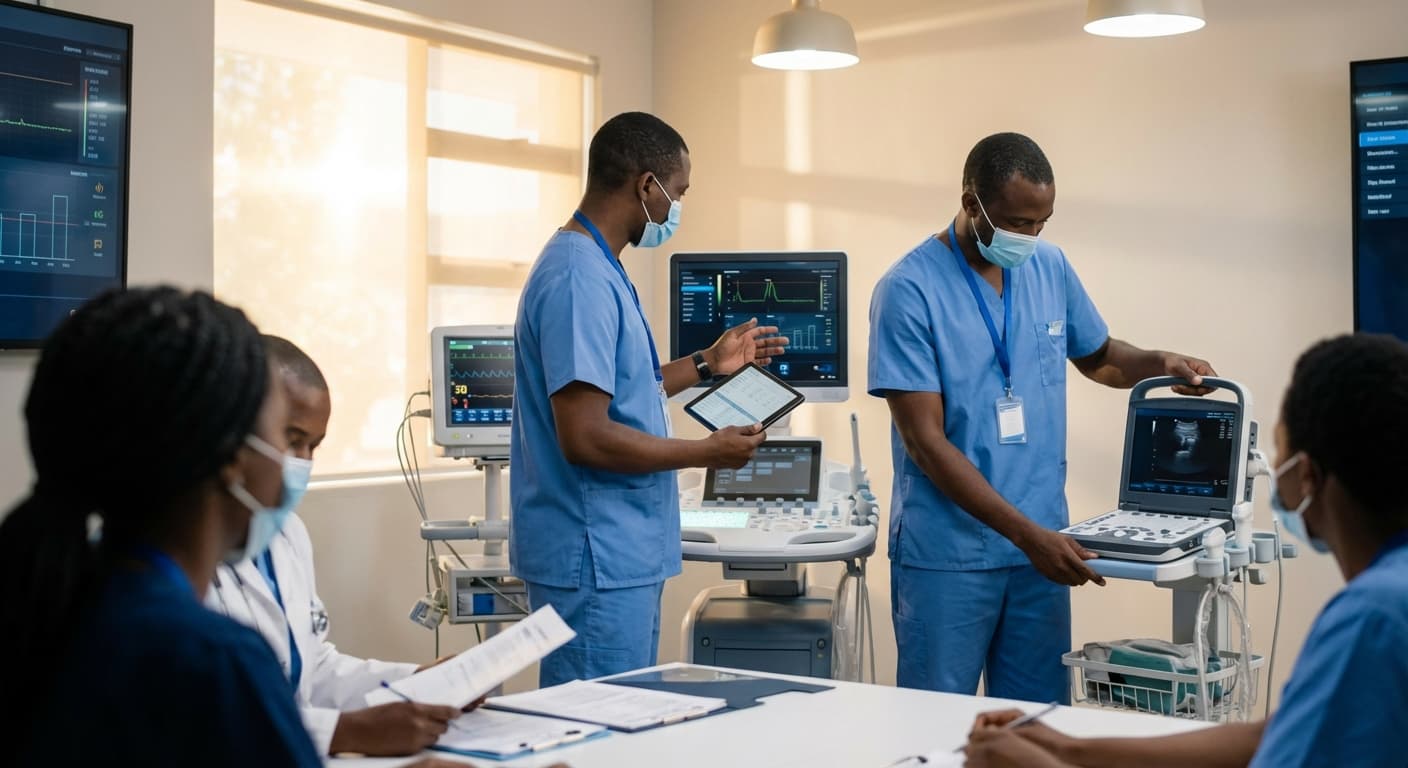
Clinical Needs Assessment for Medical Equipment in Egypt
Engineering Excellence & Technical Support
Clinical Needs Assessment for Medical Equipment High-standard technical execution following OEM protocols and local regulatory frameworks.
Needs Identification & Prioritization Engine
Leverages AI-driven analysis of epidemiological data, patient demographics, and existing healthcare infrastructure across Egyptian governorates to pinpoint critical equipment gaps and prioritize procurement based on urgency and impact on public health outcomes.
Cost-Benefit & Lifecycle Cost Analysis Tool
Provides robust financial modeling for medical equipment, forecasting total cost of ownership (TCO) including acquisition, maintenance, consumables, and eventual disposal. This empowers Egyptian healthcare facilities to make informed, sustainable investment decisions aligned with budget constraints and long-term operational efficiency.
Stakeholder Collaboration & Validation Platform
Facilitates seamless communication and data sharing between Ministry of Health officials, hospital administrators, clinical end-users (doctors, nurses), biomedical engineers, and potential suppliers. This ensures that needs assessments are comprehensive, clinically relevant, and achieve consensus for optimal equipment deployment and utilization in Egypt's diverse healthcare settings.
What Is Clinical Needs Assessment For Medical Equipment In Egypt?
Clinical Needs Assessment for Medical Equipment in Egypt is a systematic process designed to evaluate and quantify the current and future requirements for medical devices and technologies within healthcare facilities, or across a specific healthcare sector in Egypt. This service involves a comprehensive analysis of patient demographics, disease prevalence, existing clinical protocols, technological obsolescence, and strategic healthcare development plans to identify gaps and inform procurement decisions. The objective is to ensure that the medical equipment portfolio is aligned with the clinical demands, operational capacity, and financial sustainability of the healthcare provider.
| Who Needs This Service? | Typical Use Cases in Egypt | ||||||||||
|---|---|---|---|---|---|---|---|---|---|---|---|
| Public Hospitals and Healthcare Networks: Ministries of Health, regional health directorates, and large public hospital complexes requiring strategic planning for equipment across multiple facilities. | Private Hospital Groups and Chains: Organizations aiming to standardize equipment across their network, enhance service offerings, and maintain competitive advantage. | Specialized Medical Centers: Facilities focusing on specific medical disciplines (e.g., oncology, cardiology, pediatrics) needing to ensure their equipment aligns with advanced treatment protocols. | Newly Established Healthcare Facilities: Greenfield projects or expansions requiring comprehensive equipment planning from inception. | International Development Agencies and NGOs: Organizations funding or supporting healthcare infrastructure development in Egypt who need to ensure efficient and effective allocation of resources. | Biomedical Engineering Departments: To inform long-term asset management, maintenance planning, and technology roadmaps. | Healthcare Investment Firms and Developers: For due diligence and feasibility studies of new healthcare ventures. | Governmental Health Authorities: For national health strategy development, resource allocation, and regulatory oversight. | Procurement Departments within Healthcare Institutions: To provide evidence-based justification for equipment purchases and tenders. | Planning and Development Units: To align medical equipment strategies with broader institutional or national healthcare goals. | Disaster preparedness and response initiatives: To identify critical equipment needs for emergency situations. | Implementation of new national health programs or initiatives: Such as those related to non-communicable diseases or maternal and child health, requiring specific equipment upgrades or acquisitions. |
Key Components of a Clinical Needs Assessment for Medical Equipment
- Data Collection and Analysis: Gathering data on patient utilization patterns, diagnostic and therapeutic procedures performed, staff expertise, infrastructure limitations, and current equipment inventory. This includes both quantitative metrics (e.g., patient volumes, procedure rates) and qualitative assessments (e.g., staff feedback, adherence to clinical guidelines).
- Gap Identification: Comparing current equipment availability and capabilities against identified clinical needs and international best practices. This involves assessing whether existing equipment is sufficient in quantity, meets technological standards, and is appropriately deployed.
- Future Demand Forecasting: Projecting future equipment requirements based on demographic shifts, epidemiological trends, advancements in medical science, and anticipated changes in healthcare policy or service delivery models within Egypt.
- Technological Evaluation: Assessing the suitability of existing and potential new technologies, considering factors such as efficacy, safety, interoperability, maintenance requirements, and cost-effectiveness.
- Resource Allocation and Prioritization: Developing recommendations for equipment acquisition, upgrade, replacement, or divestment, prioritizing based on clinical impact, urgency, and budgetary constraints.
- Stakeholder Consultation: Engaging with clinicians, hospital administrators, biomedical engineers, procurement specialists, and potentially regulatory bodies to ensure comprehensive input and buy-in.
Who Needs Clinical Needs Assessment For Medical Equipment In Egypt?
A robust clinical needs assessment for medical equipment in Egypt is crucial for ensuring that healthcare facilities procure the right technology to meet patient care demands efficiently and cost-effectively. This process helps avoid under- or over-investment in equipment, optimizes resource allocation, and ultimately improves the quality of healthcare services delivered. It involves a systematic evaluation of current and future patient populations, disease prevalence, available clinical services, existing equipment inventory, and technological advancements.
| Department | Key Needs Assessment Focus | Examples of Equipment |
|---|---|---|
| Emergency Department | Rapid response capabilities, patient stabilization, immediate diagnostic tools. | Defibrillators, ventilators, resuscitation carts, portable X-ray, ultrasound, ECG machines. |
| Intensive Care Unit (ICU) | Continuous patient monitoring, life support, advanced respiratory care. | ICU beds, ventilators, hemodynamic monitors, infusion pumps, dialysis machines. |
| Operating Room (OR) | Surgical procedures, anesthesia, sterile instrumentation, imaging guidance. | Surgical lights, operating tables, anesthesia machines, electrosurgical units, laparoscopes, C-arms. |
| Radiology/Imaging | Diagnostic imaging for various conditions, image quality, radiation safety. | MRI scanners, CT scanners, X-ray machines (fixed and portable), ultrasound machines, mammography units. |
| Cardiology | Diagnosis and treatment of heart conditions, cardiac monitoring, interventional procedures. | ECG machines, Holter monitors, echocardiography machines, cardiac catheterization labs, defibrillators. |
| Oncology | Cancer diagnosis, treatment (radiation, chemotherapy), patient support. | Linear accelerators, brachytherapy units, chemotherapy infusion pumps, biopsy equipment. |
| Pediatrics | Specialized care for infants, children, and adolescents, growth monitoring, neonatal care. | Neonatal incubators, infant ventilators, phototherapy units, pediatric stethoscopes, specialized imaging equipment. |
| Laboratory Services | Diagnostic testing, blood analysis, microbiology, pathology. | Hematology analyzers, biochemistry analyzers, microscopes, PCR machines, centrifuges. |
| Rehabilitation Services | Physical therapy, occupational therapy, speech therapy. | Treadmills, exercise equipment, ultrasound therapy units, electrical stimulation devices. |
| Sterilization and Central Supply | Maintaining sterile environments for instruments and supplies. | Autoclaves, sterilizers, washer-disinfectors. |
Target Customers for Medical Equipment Clinical Needs Assessment in Egypt
- Public Hospitals (Ministry of Health and Population - MoHP)
- University Hospitals
- Private Hospitals and Clinics
- Specialized Medical Centers (e.g., Oncology, Cardiology, Pediatrics)
- Diagnostic and Imaging Centers
- Ambulatory Surgery Centers
- Primary Healthcare Units
- Non-Governmental Organizations (NGOs) providing healthcare services
- Medical Equipment Suppliers and Distributors (for understanding market demand and service offerings)
- Healthcare Administrators and Procurement Departments
- Clinical Department Heads and Medical Professionals
- Health Insurance Providers (for understanding service coverage and equipment needs)
- Government Regulatory Bodies (for policy and standards development)
Clinical Needs Assessment For Medical Equipment Process In Egypt
This document outlines the workflow for a Clinical Needs Assessment for Medical Equipment process in Egypt, from initial inquiry to final execution. The process aims to ensure that healthcare facilities acquire appropriate and necessary medical equipment that aligns with their clinical needs, patient demographics, and healthcare objectives. This structured approach helps optimize resource allocation, improve patient care, and enhance the overall efficiency of the healthcare system.
| Stage | Description | Key Activities | Responsible Parties | Deliverables | Timelines (Indicative) |
|---|---|---|---|---|---|
| Inquiry & Initial Contact | The process begins with a formal or informal request from a healthcare facility or stakeholder to initiate a clinical needs assessment for medical equipment. | Receiving and acknowledging the inquiry, initial discussion of the facility's general requirements and context. | Requesting Facility (e.g., Hospital Administration, Department Head), Ministry of Health and Population (MoHP) representative, or designated assessment body. | Acknowledgement of inquiry, preliminary understanding of scope. | 1-2 days |
| Needs Identification & Data Collection | Thorough investigation of the healthcare facility's current services, patient load, disease prevalence, existing infrastructure, and future strategic plans. | Conducting site visits, interviews with clinical staff (doctors, nurses, technicians), review of patient records and statistics, analysis of existing equipment inventory and maintenance logs. | Clinical Staff, Department Heads, Biomedical Engineers, MoHP Assessment Team, Data Analysts. | Needs Assessment Report (initial draft), data collection forms, interview transcripts, patient statistics summaries. | 1-3 weeks |
| Equipment Prioritization & Specification Development | Analyzing the collected data to identify critical equipment gaps, prioritize needs based on clinical impact and urgency, and define detailed technical specifications for each required piece of equipment. | Gap analysis, clinical impact assessment, prioritization matrix development, drafting technical specifications (including performance, safety, and compatibility requirements). | Clinical Specialists, Biomedical Engineers, Procurement Specialists, MoHP Technical Committee. | Prioritized list of medical equipment, detailed technical specifications for each item, justification for each selection. | 2-4 weeks |
| Budgetary Planning & Resource Allocation | Estimating the cost of acquiring, installing, and maintaining the prioritized equipment, and securing the necessary financial resources. | Cost estimation (equipment, installation, training, maintenance), identifying funding sources (government budget, grants, private sector), budget approval process. | Finance Department, Procurement Department, MoHP Budgeting Unit, Funding Agencies. | Approved budget for medical equipment acquisition, funding commitment letters. | 2-4 weeks |
| Procurement Process & Vendor Selection | Managing the tendering process, evaluating bids, and selecting qualified vendors based on technical compliance, price, and after-sales support. | Developing tender documents, advertising tenders, bid evaluation (technical and financial), site visits to potential vendors (if applicable), contract negotiation and award. | Procurement Department, Legal Department, Technical Evaluation Committee, MoHP Tendering Authority. | Awarded contracts for medical equipment, vendor performance reports. | 4-8 weeks (depending on complexity and regulations) |
| Installation & Commissioning | Ensuring the safe and correct installation of the acquired equipment, and verifying its performance against specifications. | Delivery, unpacking, site preparation, installation, calibration, functional testing, safety checks, performance verification. | Vendors, Biomedical Engineers, Facility Maintenance Staff, MoHP Oversight Team. | Installation reports, commissioning certificates, calibrated equipment logs. | 1-4 weeks (per equipment type) |
| Training & User Acceptance | Providing comprehensive training to the clinical and technical staff on the proper operation, maintenance, and troubleshooting of the new equipment. | Developing training materials, conducting hands-on training sessions, competency assessments, user acceptance forms. | Vendors, Clinical Educators, Biomedical Engineers, End-Users (clinical staff). | Trained personnel, signed user acceptance forms, training evaluation reports. | 1-2 weeks (per equipment type) |
| Monitoring & Evaluation | Continuously assessing the utilization, performance, and impact of the newly acquired equipment on patient care and operational efficiency. | Regular equipment performance checks, user feedback collection, patient outcome analysis, maintenance record review, post-implementation review meetings. | Biomedical Engineering Department, Clinical Department Heads, MoHP Quality Assurance Unit. | Performance monitoring reports, utilization statistics, user feedback summaries, impact assessments, recommendations for future improvements. | Ongoing (e.g., quarterly, annually) |
Clinical Needs Assessment Workflow Stages
- Inquiry & Initial Contact
- Needs Identification & Data Collection
- Equipment Prioritization & Specification Development
- Budgetary Planning & Resource Allocation
- Procurement Process & Vendor Selection
- Installation & Commissioning
- Training & User Acceptance
- Monitoring & Evaluation
Clinical Needs Assessment For Medical Equipment Cost In Egypt
This document presents a clinical needs assessment for medical equipment costs in Egypt, focusing on pricing factors and ranges in local currency (Egyptian Pound - EGP). The objective is to provide a foundational understanding for healthcare providers, procurement specialists, and policymakers to make informed decisions regarding medical equipment acquisition. The Egyptian healthcare sector, like many developing economies, faces challenges related to budget constraints, import duties, and fluctuating exchange rates. Therefore, a realistic appraisal of equipment costs, considering the local context, is crucial for efficient resource allocation and improved patient care. This assessment will explore various categories of medical equipment, outlining the key drivers of their pricing and providing estimated cost ranges. It is important to note that these figures are indicative and subject to change based on market dynamics, supplier negotiations, and specific technical configurations.
| Equipment Category | Typical Unit (EGP) | Estimated Range (EGP - Low) | Estimated Range (EGP - High) | Notes |
|---|---|---|---|---|
| Basic Diagnostic Tools (e.g., Stethoscope, Sphygmomanometer) | 200 - 1,000 | 50 | 2,500 | Varies by brand and material quality. |
| Vital Signs Monitor (Basic) | 5,000 - 15,000 | 3,000 | 25,000 | Features like NIBP, SpO2, and Pulse Rate are standard. |
| ECG Machine (12-Channel) | 20,000 - 70,000 | 15,000 | 100,000 | Includes interpretation features and print capabilities. |
| Ultrasound Machine ( portátil, básico) | 100,000 - 300,000 | 70,000 | 500,000 | Basic abdominal, cardiac, or OB/GYN capabilities. |
| X-ray Machine (Basic Fixed) | 250,000 - 700,000 | 200,000 | 1,000,000 | Includes generator, tube, and basic imaging system. Digital is significantly higher. |
| Anesthesia Machine | 300,000 - 800,000 | 250,000 | 1,500,000 | Includes vaporizers, ventilators, and monitoring. |
| Hospital Bed (Manual) | 3,000 - 10,000 | 2,000 | 20,000 | Basic manual adjustment vs. semi-electric/electric. |
| Infusion Pump | 7,000 - 25,000 | 5,000 | 40,000 | Programmable features and safety mechanisms. |
| Ventilator ( ICU) | 300,000 - 1,000,000 | 250,000 | 2,000,000 | Advanced modes, monitoring, and critical care capabilities. |
| Laboratory Analyzer (Basic Chemistry) | 50,000 - 200,000 | 40,000 | 350,000 | Throughput and test menu are key differentiators. |
| Defibrillator (AED) | 15,000 - 40,000 | 10,000 | 60,000 | Automated external defibrillators are more affordable than manual ones. |
Key Pricing Factors for Medical Equipment in Egypt
- Import Duties and Taxes: Egypt imposes import duties and taxes on medical equipment, which significantly add to the final cost. These can vary based on the type of equipment and its classification.
- Value-Added Tax (VAT): A standard VAT rate is applied to most goods and services in Egypt, including medical equipment, further increasing the price.
- Exchange Rate Fluctuations: As a significant portion of medical equipment is imported, the EGP to USD or EUR exchange rate directly impacts the cost. Volatility in the currency market can lead to unpredictable price changes.
- Supplier Markups and Distribution Costs: Local distributors and suppliers add their own markups to cover operational expenses, logistics, marketing, and profit margins.
- Brand and Manufacturer Reputation: Premium brands with a global reputation for quality and advanced technology typically command higher prices.
- Technical Specifications and Features: The complexity, sophistication, and specific features of a medical device directly correlate with its cost. Advanced diagnostic capabilities, automation, and integrated software are more expensive.
- New vs. Refurbished Equipment: While new equipment offers the latest technology and warranties, refurbished units can be a more cost-effective option, though they may come with shorter warranties or reduced lifespan.
- Maintenance and Service Contracts: The cost of ongoing maintenance, repair, and service contracts is often factored into the overall acquisition cost or purchased separately. This is particularly important for complex and high-usage equipment.
- Training and Installation: The initial setup, installation, and training for medical staff on how to operate and maintain new equipment can add to the overall expenditure.
- Volume Discounts and Negotiation: The volume of equipment purchased can influence the final price through negotiation and bulk discounts offered by suppliers.
Affordable Clinical Needs Assessment For Medical Equipment Options
A clinical needs assessment is a critical first step in acquiring medical equipment. It ensures that procured devices align with patient care requirements, operational workflows, and budgetary constraints. Affordable assessments focus on maximizing value and minimizing unnecessary expenditure. This involves understanding your specific needs, exploring diverse vendor offerings, and leveraging cost-saving strategies. Value bundles offer a streamlined and often cost-effective approach to acquiring multiple related pieces of equipment or services, while proactive cost-saving strategies can be implemented throughout the procurement and lifecycle of medical devices.
| Value Bundle Concept | Description | Benefits | Considerations |
|---|---|---|---|
| Integrated System Bundles | A package of interconnected devices designed to work together seamlessly, e.g., a diagnostic imaging system with associated viewing stations and PACS integration. | Enhanced interoperability, streamlined workflow, potential for bulk discounts, simplified implementation and training. | Ensure all components are truly compatible and meet all clinical requirements. Verify vendor support for the entire bundle. |
| Service and Maintenance Packages | Bundling the initial equipment purchase with extended warranties, preventative maintenance plans, and on-site service agreements. | Predictable maintenance costs, reduced downtime, access to skilled technicians, extended equipment lifespan. | Carefully review the scope of services included. Compare bundled service costs against independent service contracts. Understand contract duration and renewal terms. |
| Training and Education Bundles | Integrating comprehensive training programs for clinical and technical staff as part of the equipment acquisition. | Improved user proficiency, optimized equipment utilization, enhanced patient safety, reduced errors. | Ensure training is tailored to your specific workflows and staff skill levels. Consider ongoing training needs. |
| Consumables and Accessory Packages | Negotiating preferential pricing or inclusion of essential consumables and accessories required for the equipment's operation. | Cost savings on ongoing supplies, assured availability of critical items, simplified inventory management. | Verify the quality and compatibility of bundled consumables. Quantify anticipated usage to ensure the bundle meets demand. |
Key Components of an Affordable Clinical Needs Assessment
- Define Clinical Requirements: Clearly articulate the specific patient populations, procedures, and diagnostic/therapeutic needs the equipment must address. Involve clinical staff extensively in this phase.
- Assess Current Infrastructure and Workflow: Evaluate how new equipment will integrate with existing systems, space, IT infrastructure, and clinical workflows to avoid costly modifications or disruptions.
- Identify Essential Features vs. "Nice-to-Haves": Prioritize features that are clinically essential for patient care and operational efficiency, distinguishing them from advanced or optional functionalities that may increase costs without proportional benefit.
- Market Research and Vendor Engagement: Explore a range of manufacturers and suppliers, considering both established and emerging players. Request detailed specifications and pricing information.
- Total Cost of Ownership (TCO) Analysis: Look beyond the initial purchase price to include installation, training, maintenance, service contracts, consumables, and potential upgrade costs.
- Phased Acquisition Planning: If budget is a significant constraint, consider acquiring essential equipment in phases, prioritizing immediate needs and deferring less critical purchases.
- Leverage Existing Contracts and Group Purchasing Organizations (GPOs): Investigate if your organization can benefit from pre-negotiated pricing through GPOs or existing vendor contracts.
Verified Providers In Egypt
In the increasingly complex landscape of healthcare, identifying trusted and reliable providers is paramount. In Egypt, "Verified Providers" signifies a commitment to quality, patient safety, and adherence to stringent standards. Franance Health stands at the forefront of this movement, distinguishing itself through its rigorous credentialing process and dedication to excellence. Their credentials are not merely badges; they are a testament to a proactive approach in ensuring patients receive the highest caliber of medical care. This commitment translates into tangible benefits for patients, making Franance Health the optimal choice for their healthcare needs in Egypt.
| Credentialing Aspect | Franance Health's Standard | Patient Benefit |
|---|---|---|
| Medical Professional Qualifications | Verification of licenses, board certifications, and ongoing education. | Assurance of highly skilled and up-to-date medical expertise. |
| Facility Standards | Inspection of infrastructure, equipment, and adherence to infection control protocols. | Access to safe, modern, and well-equipped medical facilities. |
| Patient Experience and Satisfaction | Regular feedback mechanisms and assessment of patient outcomes. | Focus on compassionate care and positive health results. |
| Ethical and Professional Conduct | Adherence to a strict code of ethics and professional conduct. | Protection of patient rights and promotion of trust. |
| Continuous Quality Improvement | Ongoing monitoring and evaluation of provider performance. | Commitment to consistently delivering excellent healthcare. |
Why Franance Health's Verified Provider Status is Crucial:
- Unwavering Commitment to Quality: Franance Health meticulously vets its network of healthcare professionals and facilities, ensuring they meet and exceed established benchmarks for medical expertise, patient care, and ethical practices.
- Enhanced Patient Safety: Verification protocols include thorough background checks, continuous performance reviews, and adherence to strict safety and hygiene standards, significantly reducing risks for patients.
- Access to Specialized Expertise: Franance Health's network encompasses a wide range of specialists, all credentialed for their specific skills and experience, guaranteeing access to the right care for every condition.
- Transparency and Trust: The "Verified Provider" status offers a clear indicator of quality, building essential trust between patients and healthcare providers in a market where discerning reliable services can be challenging.
- Streamlined Healthcare Navigation: By partnering with verified providers, Franance Health simplifies the process of finding and accessing high-quality medical services, saving patients time and reducing stress.
Scope Of Work For Clinical Needs Assessment For Medical Equipment
This document outlines the Scope of Work (SOW) for a comprehensive Clinical Needs Assessment (CNA) for medical equipment. The assessment will identify current and future medical equipment requirements for [Healthcare Facility Name] to ensure optimal patient care, operational efficiency, and technological advancement. The CNA will involve a detailed review of clinical workflows, patient demographics, existing equipment inventory, and strategic growth plans. Key technical deliverables include detailed equipment specifications, justification reports, and recommendations for procurement and implementation. Standard specifications will be adhered to, ensuring interoperability and compliance with relevant regulatory bodies.
| Phase | Activities | Key Deliverables | Standard Specifications / Considerations |
|---|---|---|---|
| Phase 1: Project Initiation & Planning | Define project scope, objectives, and timeline. Establish stakeholder communication channels. Form assessment team. | Project Charter, Stakeholder Register, Communication Plan. | ISO 13485 (Medical devices — Quality management systems), Project Management Body of Knowledge (PMBOK). |
| Phase 2: Data Collection & Analysis | Review existing equipment inventory and maintenance records. Analyze patient demographics and service utilization data. Conduct interviews and site surveys with clinical staff. Assess current clinical workflows and identify pain points. | Equipment Inventory Report, Patient Data Analysis Summary, Interview Transcripts, Workflow Mapping Documentation. | HIPAA (Health Insurance Portability and Accountability Act) for patient data privacy, Relevant clinical guidelines (e.g., from professional bodies). |
| Phase 3: Needs Identification & Prioritization | Identify equipment gaps and future needs. Prioritize equipment based on clinical impact, patient safety, regulatory compliance, and financial feasibility. Develop preliminary functional requirements. | Gap Analysis Report, Prioritized Equipment List, Preliminary Functional Requirements Document. | Evidence-based medicine principles, Cost-benefit analysis frameworks. |
| Phase 4: Technical Specification Development | Develop detailed technical specifications for prioritized equipment. Include performance requirements, safety features, interoperability needs, and usability criteria. Document obsolescence risks for existing equipment. | Detailed Technical Specifications for each Equipment Item, Obsolescence Risk Assessment Report. | IEC 60601 (Medical electrical equipment) series, Manufacturer-specific technical documentation, Interoperability standards (e.g., HL7, DICOM). |
| Phase 5: Reporting & Recommendations | Compile comprehensive CNA report. Present findings and recommendations to stakeholders. Provide budget estimates and implementation roadmap. Outline training and support requirements. | Final Clinical Needs Assessment Report, Procurement Recommendations, Implementation Roadmap, Training & Support Plan. | ISO 9001 (Quality Management Systems) for report quality, Relevant procurement policies of [Healthcare Facility Name]. |
Key Objectives of the Clinical Needs Assessment
- To identify critical gaps in current medical equipment provision.
- To forecast future medical equipment needs based on projected patient volumes and service expansion.
- To evaluate the suitability and performance of existing medical equipment.
- To define functional and technical specifications for required new and replacement equipment.
- To develop a prioritized list of medical equipment based on clinical impact, urgency, and cost-effectiveness.
- To provide recommendations for equipment maintenance, training, and lifecycle management.
- To ensure compliance with all relevant national and international standards and regulations.
Service Level Agreement For Clinical Needs Assessment For Medical Equipment
This Service Level Agreement (SLA) outlines the guaranteed response times and uptime for the Clinical Needs Assessment (CNA) service for medical equipment. The CNA service is critical for ensuring that healthcare facilities have the appropriate medical equipment to meet patient care demands and operational requirements. This SLA defines the performance standards expected from the provider of the CNA service.
| Service Component | Severity Level | Response Time (Business Hours) | Uptime Guarantee |
|---|---|---|---|
| Initial Consultation & Data Gathering for CNA | New Request/Initiation | Within 8 business hours | N/A (Service is proactive) |
| Analysis of Clinical Workflow & Equipment Usage | New Request/Initiation | Within 2 business days (post data receipt) | N/A (Service is proactive) |
| Technology Review & Gap Analysis | New Request/Initiation | Within 3 business days (post analysis completion) | N/A (Service is proactive) |
| Report Generation & Presentation | New Request/Initiation | Within 5 business days (post analysis completion) | N/A (Service is proactive) |
| Technical Support for CNA Platform/Tools | Critical Incident | Within 1 business hour | 99.9% (Monthly) |
| Technical Support for CNA Platform/Tools | Major Incident | Within 4 business hours | 99.9% (Monthly) |
| Technical Support for CNA Platform/Tools | Minor Incident | Within 8 business hours | 99.9% (Monthly) |
| Access to CNA Data & Reporting Tools | Critical Incident | Within 2 business hours | 99.9% (Monthly) |
| Access to CNA Data & Reporting Tools | Major Incident | Within 6 business hours | 99.9% (Monthly) |
Key Definitions
- Clinical Needs Assessment (CNA): The process of evaluating the current and future clinical requirements for medical equipment, including but not limited to technology assessment, usage patterns, patient demographics, and clinical workflow analysis.
- Medical Equipment: All devices, instruments, apparatus, implants, software, or other article intended by the manufacturer to be used alone or in combination for human beings for the diagnosis, prevention, monitoring, treatment or alleviation of disease, or for the diagnosis, monitoring, treatment, alleviation of, or compensation for an injury or disability, or for the investigation, replacement or modification of the anatomy or of a physiological process or the control of conception.
- Response Time: The maximum time allowed for the CNA service provider to acknowledge and begin working on a reported issue or request, measured from the moment of notification by the Client.
- Downtime: Any period during which the CNA service is unavailable to the Client, preventing them from accessing or utilizing the service for its intended purpose.
- Uptime: The percentage of time the CNA service is operational and available to the Client, as defined in this SLA.
- Critical Incident: An event that significantly impacts the ability of the Client to perform essential clinical functions due to the unavailability or malfunction of the CNA service, requiring immediate attention.
- Major Incident: An event that causes a significant degradation of the CNA service, impacting multiple users or functionalities, but not completely preventing essential clinical functions.
- Minor Incident: An event that has a minimal impact on the CNA service, affecting a single user or a non-critical functionality.
Frequently Asked Questions

Ready when you are
Let's scope your Clinical Needs Assessment for Medical Equipment in Egypt project in Egypt.

Scaling healthcare logistics and technical systems across the entire continent.