
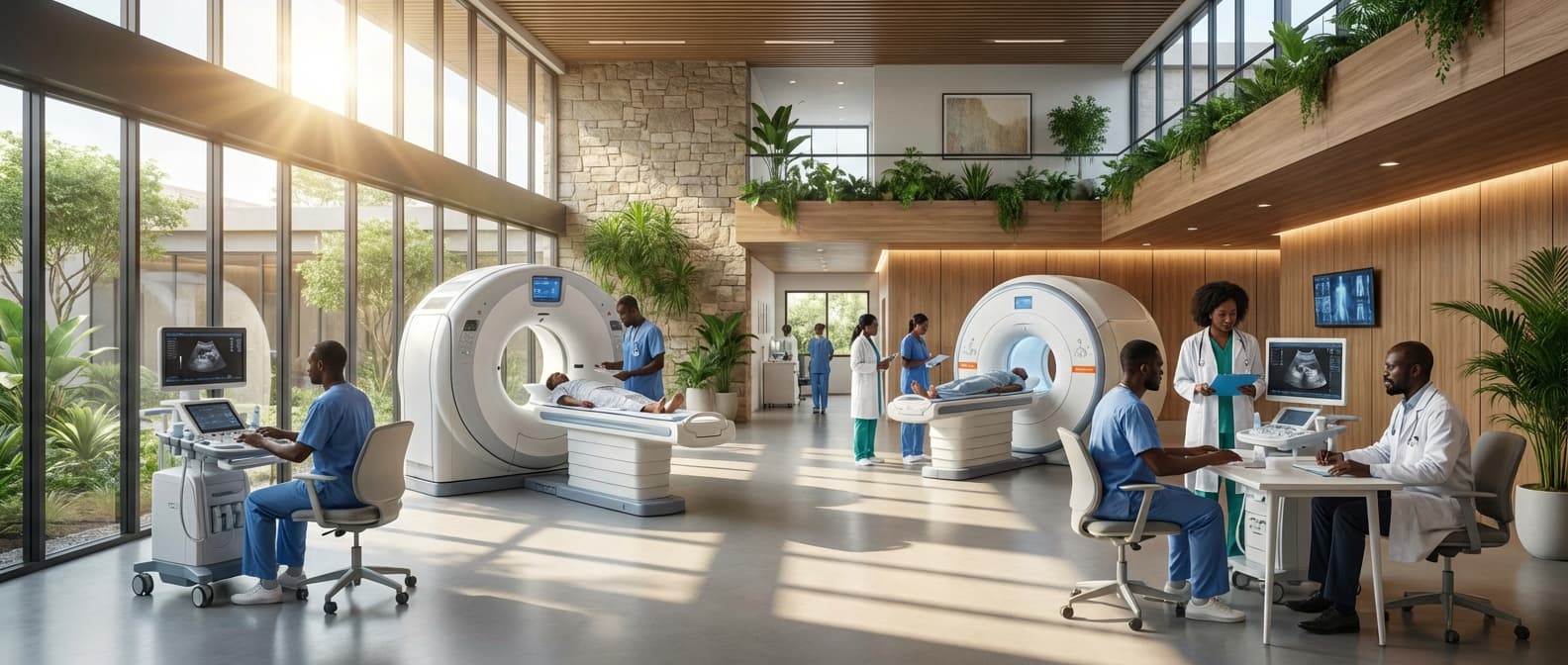
Diagnostic Imaging in Egypt
Engineering Excellence & Technical Support
High-resolution imaging systems including CT scanners, MRI, X-ray, and ultrasound technology for accurate clinical diagnosis. High-standard technical execution following OEM protocols and local regulatory frameworks.
AI-Powered Early Detection of Tuberculosis
Leveraging advanced AI algorithms trained on vast Egyptian datasets, this initiative enables significantly earlier and more accurate detection of tuberculosis from X-ray and CT scans, improving patient outcomes and reducing disease spread.
Nationwide Tele-Radiology Network
A robust tele-radiology network connecting remote healthcare facilities across Egypt to specialized diagnostic imaging centers. This ensures access to expert interpretation of medical images, even in underserved areas, bridging geographical disparities in care.
Deployment of Portable Ultrasound Units in Rural Communities
Equipping primary healthcare units in rural and remote Egyptian communities with advanced, portable ultrasound devices. This expands diagnostic capabilities for common conditions, facilitating timely referrals and immediate patient care at the point of need.
What Is Diagnostic Imaging In Egypt?
Diagnostic imaging in Egypt encompasses a broad spectrum of medical imaging techniques utilized for the non-invasive visualization of internal body structures to aid in the diagnosis, monitoring, and management of diseases and injuries. This field relies on sophisticated technologies that capture images based on the differential interaction of various energy forms with biological tissues. The primary objective is to provide anatomical and physiological information that assists clinicians in forming accurate diagnoses, planning therapeutic interventions, and evaluating treatment efficacy.
| Who Needs Diagnostic Imaging? | Typical Use Cases |
|---|---|
| Patients with suspected or confirmed diseases/conditions | Initial diagnosis of pathologies (e.g., fractures, tumors, infections) |
| Individuals experiencing acute trauma or injury | Assessing the extent of injuries (e.g., internal bleeding, organ damage) |
| Patients undergoing cancer screening or monitoring | Detecting cancer, staging disease, and evaluating treatment response |
| Individuals with chronic illnesses requiring ongoing management | Monitoring disease progression and effectiveness of treatment |
| Patients referred for pre-operative assessment | Planning surgical interventions and identifying anatomical variations |
| Pregnant women | Monitoring fetal development and maternal health (primarily ultrasound) |
| Individuals with neurological symptoms (e.g., stroke, seizures, headaches) | Diagnosing brain tumors, vascular abnormalities, and degenerative diseases |
| Patients with suspected cardiovascular issues | Assessing heart function, blood vessel blockages, and cardiac anatomy |
| Individuals experiencing gastrointestinal symptoms | Evaluating abdominal organs for inflammation, masses, or blockages |
Key Diagnostic Imaging Modalities in Egypt
- Radiography (X-ray): Utilizes electromagnetic radiation to produce 2D images of internal structures, particularly bones and dense tissues. Basic radiography is widely available and essential for skeletal assessments, chest imaging, and detecting foreign bodies.
- Computed Tomography (CT): Employs X-rays and computational reconstruction to generate cross-sectional images (slices) of the body. CT offers superior detail for soft tissues, organs, and vascular structures, making it invaluable for trauma, oncological staging, and neurological assessments.
- Magnetic Resonance Imaging (MRI): Leverages strong magnetic fields and radio waves to create highly detailed images of soft tissues, brain, spinal cord, muscles, and ligaments. MRI is crucial for neurological, musculoskeletal, and oncological evaluations, offering excellent soft tissue contrast without ionizing radiation.
- Ultrasound (Sonography): Employs high-frequency sound waves to generate real-time images of internal organs and blood flow. Ultrasound is non-ionizing, portable, and cost-effective, widely used in obstetrics and gynecology, abdominal imaging, vascular assessments, and superficial structure evaluations.
- Nuclear Medicine Imaging (e.g., PET-CT, SPECT): Utilizes small amounts of radioactive tracers administered to the patient to visualize physiological processes and metabolic activity. These techniques are vital for detecting and characterizing cancer, assessing cardiac function, and evaluating neurological disorders.
Who Needs Diagnostic Imaging In Egypt?
Diagnostic imaging plays a crucial role in modern healthcare, enabling accurate diagnosis, treatment planning, and disease monitoring. In Egypt, the demand for these services is driven by a variety of patient needs and healthcare settings. Identifying the target customers and the departments that utilize these services is key to understanding the market and ensuring efficient allocation of resources.
| Department | Key Services Provided | Patient Focus |
|---|---|---|
| Radiology Department | X-ray, CT scans, MRI, Ultrasound, Fluoroscopy, Mammography | All age groups, broad range of conditions |
| Cardiology Department | Echocardiography, Cardiac MRI, Cardiac CT Angiography | Patients with heart disease, chest pain, arrhythmias |
| Neurology Department | MRI of the brain and spine, CT scans of the brain, EMG (electromyography) | Patients with strokes, epilepsy, Parkinson's disease, MS, headaches |
| Oncology Department | CT scans, MRI, PET scans (where available), Bone scans | Patients with suspected or diagnosed cancers for diagnosis, staging, and treatment response monitoring |
| Orthopedics Department | X-ray, CT scans, MRI (especially for joints and soft tissues) | Patients with fractures, dislocations, arthritis, sports injuries, spinal issues |
| Gastroenterology Department | Abdominal Ultrasound, CT scans, MRI of the abdomen and pelvis, Barium studies | Patients with digestive issues, liver disease, gallstones, bowel obstructions |
| Pulmonology Department | Chest X-ray, CT scans of the chest, Pulmonary angiography | Patients with lung infections, asthma, COPD, lung cancer, pulmonary embolism |
| Emergency Department (ER) | X-ray, CT scans, Ultrasound (for trauma, acute abdominal pain, etc.) | Patients with acute injuries, sudden illnesses, life-threatening conditions |
| Obstetrics and Gynecology (OB/GYN) Department | Pelvic Ultrasound, Obstetric Ultrasound (including 3D/4D) | Pregnant women for fetal development, potential complications, and for gynecological conditions |
Target Customers for Diagnostic Imaging in Egypt
- Patients with acute injuries and trauma
- Individuals experiencing chronic pain or discomfort
- Patients undergoing pre-operative assessments
- Individuals requiring follow-up after treatment
- Patients with suspected or diagnosed cancers
- Pregnant women for prenatal monitoring
- Pediatric patients with developmental concerns or illnesses
- Elderly patients with age-related health issues
- Individuals seeking routine health screenings
- Athletes requiring injury assessment
- Patients with neurological conditions
- Individuals with cardiovascular concerns
Diagnostic Imaging Process In Egypt
The diagnostic imaging process in Egypt, like in many other countries, involves a structured workflow to ensure accurate and timely diagnoses. This process typically begins with a patient's presentation to a healthcare provider, followed by the physician's decision to order imaging. The patient then proceeds to an imaging center or hospital department, where the procedure is scheduled, performed, and finally interpreted by a radiologist. The results are then communicated back to the referring physician for further patient management.
| Stage | Description | Key Players Involved | Typical Duration |
|---|---|---|---|
| Patient Inquiry & Consultation | Patient experiences symptoms or seeks a routine check-up. Consults with a primary care physician or specialist. | Patient, Primary Care Physician/Specialist | Varies (minutes to hours) |
| Physician Referral | Based on clinical assessment, the physician determines the need for diagnostic imaging to aid in diagnosis or monitor a condition. A referral order is issued. | Physician | Varies (minutes) |
| Scheduling & Appointment Booking | The patient or their representative contacts an imaging center/hospital department to schedule the examination. This may involve providing referral details, insurance information, and preferred times. | Patient/Representative, Administrative Staff (Imaging Center/Hospital) | Varies (minutes to hours for scheduling, days to weeks for appointment) |
| Patient Preparation | Depending on the imaging modality, patients may receive specific instructions for preparation, such as fasting, avoiding certain medications, or drinking contrast agents. | Patient, Nursing Staff/Technologist | Varies (hours to days before the exam) |
| Image Acquisition (The Imaging Procedure) | The patient undergoes the scheduled imaging procedure (e.g., X-ray, CT scan, MRI, Ultrasound) performed by a qualified radiographer/technologist. | Patient, Radiographer/Technologist | Varies (minutes to hours depending on modality and complexity) |
| Image Processing & Quality Control | Acquired images are processed, enhanced, and checked for quality and diagnostic adequacy by the technologist or a PACS administrator. | Radiographer/Technologist, PACS Administrator | Varies (minutes to hours post-acquisition) |
| Radiological Interpretation | A board-certified radiologist reviews the processed images, analyzes findings, and correlates them with the patient's clinical history and referral information. | Radiologist | Varies (hours to days post-acquisition) |
| Report Generation | The radiologist dictates or writes a detailed report summarizing the findings, diagnosis, and any recommendations. This report is typically generated using a Picture Archiving and Communication System (PACS) or a Radiology Information System (RIS). | Radiologist, Medical Secretary/Scribe (sometimes) | Varies (hours to days post-interpretation) |
| Report Delivery & Follow-up | The final report is sent to the referring physician, who then reviews it with the patient and determines the next steps in management, treatment, or further investigations. | Radiologist, Referring Physician, Patient | Varies (hours to days after report generation) |
Diagnostic Imaging Workflow in Egypt
- Patient Inquiry & Consultation
- Physician Referral
- Scheduling & Appointment Booking
- Patient Preparation
- Image Acquisition (The Imaging Procedure)
- Image Processing & Quality Control
- Radiological Interpretation
- Report Generation
- Report Delivery & Follow-up
Diagnostic Imaging Cost In Egypt
Diagnostic imaging plays a crucial role in modern healthcare, providing essential information for diagnosis, treatment planning, and monitoring. In Egypt, the cost of these services can vary significantly due to a multitude of factors. These include the type of imaging modality used, the complexity of the examination, the specific body part being scanned, the geographical location within Egypt (major cities versus rural areas), the reputation and accreditation of the imaging center, the technology and equipment employed, and whether the service is provided by a public or private facility. Private hospitals and specialized imaging centers generally have higher prices compared to public healthcare institutions. Furthermore, the inclusion of contrast agents, the need for sedation, and the involvement of specialized radiologists can also contribute to the overall cost. Patients often face out-of-pocket expenses, though health insurance coverage is gradually expanding.
| Imaging Modality | Typical Cost Range (EGP) | Notes |
|---|---|---|
| X-ray (e.g., Chest X-ray) | 150 - 500 | Basic imaging, widely available. |
| Ultrasound (e.g., Abdominal, Pelvic, Thyroid) | 200 - 800 | Common for soft tissue imaging, variety of applications. |
| CT Scan (e.g., Head, Chest, Abdomen) | 700 - 3,000+ | Cost increases with body part complexity and slices. Contrast adds to the price. |
| MRI Scan (e.g., Brain, Spine, Joints) | 1,200 - 6,000+ | Generally more expensive than CT. Contrast and specific sequences increase cost. |
| Mammography | 300 - 1,000 | Specific to breast imaging. |
| Echocardiogram | 400 - 1,200 | Ultrasound of the heart. |
| PET-CT Scan | 6,000 - 15,000+ | High-end imaging, used for cancer staging and detection. Often requires referral. |
Key Factors Influencing Diagnostic Imaging Costs in Egypt
- Type of Imaging Modality (e.g., X-ray, Ultrasound, CT, MRI, PET-CT)
- Complexity and Scope of the Examination
- Specific Body Part or Region Being Scanned
- Geographical Location (Urban vs. Rural, Major Cities)
- Accreditation and Reputation of the Imaging Center
- Technological Advancement and Equipment Quality
- Public vs. Private Healthcare Provider
- Use of Contrast Agents
- Requirement for Sedation
- Radiologist's Expertise and Specialization
- Insurance Coverage and Reimbursement Policies
Affordable Diagnostic Imaging Options
Diagnostic imaging plays a crucial role in medical diagnosis and treatment planning. However, the cost of these services can be a significant burden for patients. Fortunately, several affordable diagnostic imaging options and cost-saving strategies are available. Understanding value bundles and exploring proactive measures can lead to substantial savings while ensuring access to necessary medical care.
| Concept | Description | Benefit for Affordability |
|---|---|---|
| Value Bundles | A package of related diagnostic tests or services offered at a reduced price compared to paying for each service individually. These can include multiple imaging modalities for a specific condition or a combination of imaging and subsequent consultation. | Provides predictable costs and potential savings when multiple services are needed. |
| Price Transparency Tools | Online platforms and hospital/clinic websites that allow patients to compare the cost of specific imaging procedures at different locations. Many insurers also offer tools to help estimate costs. | Empowers patients to shop around for the most cost-effective provider. |
| Negotiated Rates/Self-Pay Discounts | When paying out-of-pocket, inquire if the imaging facility offers a discounted rate. Sometimes, negotiating with the billing department can lead to a reduction in the overall cost. | Directly reduces the out-of-pocket expense for uninsured or underinsured patients. |
| Generic vs. Brand-Name Imaging? | While not a direct analogy to medication, this refers to choosing imaging centers that may have lower overhead costs and thus offer more competitive pricing than larger hospital systems. | Often, independent imaging centers are more affordable than hospital-based departments for the same quality of service. |
Key Strategies for Affordable Diagnostic Imaging
- Understand Your Insurance Coverage
- Inquire About Cash Discounts
- Explore Free and Low-Cost Clinics
- Compare Prices Across Facilities
- Consider Imaging Centers vs. Hospitals
- Ask About Out-of-Pocket Maximums and Deductibles
- Utilize Health Savings Accounts (HSAs) and Flexible Spending Accounts (FSAs)
Verified Providers In Egypt
In the increasingly complex landscape of healthcare, identifying and accessing verified providers is paramount. For individuals in Egypt seeking reliable and high-quality medical services, understanding the credentials of healthcare organizations is crucial. Franance Health stands out as a beacon of trust and excellence, offering a robust network of verified providers that represent the best choice for your health needs. Their rigorous vetting process ensures that every affiliated provider meets stringent standards for medical expertise, ethical practice, and patient care.
| Provider Type | Franance Health Verification Criteria | Benefits for Patients |
|---|---|---|
| Hospitals & Clinics | Accreditation by national/international bodies, adherence to hygiene and safety protocols, advanced medical technology, patient feedback scores. | Access to state-of-the-art facilities, comprehensive treatment options, safe and sterile environments. |
| Specialist Doctors | Board certification in their specialty, minimum years of experience, peer reviews, active medical license, criminal background checks. | Expert diagnosis and treatment from highly qualified professionals, specialized care for complex conditions. |
| Diagnostic Centers | Accuracy and reliability of testing procedures, qualified technicians, adherence to quality control measures, timely report generation. | Accurate diagnostic results, early detection of diseases, informed treatment planning. |
| Emergency Services | Availability of 24/7 medical personnel, advanced life support capabilities, rapid response times, established protocols for critical care. | Immediate and efficient medical attention during emergencies, life-saving interventions when needed. |
Why Franance Health is Your Best Choice for Verified Providers in Egypt:
- Unparalleled Access to Top-Tier Medical Professionals: Franance Health partners with a curated selection of Egypt's leading doctors, specialists, and healthcare facilities.
- Rigorous Credentialing and Verification: Every provider undergoes a comprehensive background check and credential verification, ensuring they are licensed, qualified, and maintain excellent standing.
- Commitment to Patient-Centric Care: Franance Health prioritizes patient well-being, focusing on empathetic communication, transparent treatment plans, and positive outcomes.
- Seamless Healthcare Navigation: Their platform simplifies the process of finding and booking appointments with verified specialists, reducing stress and saving valuable time.
- Adherence to International Quality Standards: Franance Health aligns its operational principles with global best practices in healthcare delivery and patient safety.
- Trust and Reliability: By choosing Franance Health, you gain peace of mind knowing you are entrusting your health to proven and reputable medical experts.
Scope Of Work For Diagnostic Imaging
This document outlines the Scope of Work (SOW) for Diagnostic Imaging services, detailing the technical deliverables and standard specifications required to ensure high-quality patient care and efficient operational workflows. The objective is to provide a comprehensive framework for procuring and managing diagnostic imaging services, encompassing all aspects from equipment to reporting.
| Technical Deliverable | Description | Standard Specifications | Key Performance Indicators (KPIs) |
|---|---|---|---|
| Imaging Equipment | Provision and maintenance of state-of-the-art imaging modalities (e.g., MRI, CT, X-ray, Ultrasound, PET). | Compliance with FDA, CE, and other relevant regulatory approvals. Latest generation technology with appropriate resolution, speed, and patient safety features. Minimum uptime guarantee of 98%. | Equipment uptime percentage. Mean Time Between Failures (MTBF). Service response time. |
| Imaging Procedures | Execution of a comprehensive menu of diagnostic imaging procedures as per physician orders. | Adherence to established clinical protocols and best practices (e.g., ACR guidelines). Patient preparation instructions clearly defined and communicated. Procedure time adherence within agreed limits. | Procedure volume. Patient wait times for scheduled procedures. Patient satisfaction scores. |
| Image Acquisition | High-quality digital image acquisition with optimal contrast, resolution, and minimal artifacts. | DICOM (Digital Imaging and Communications in Medicine) compliance. Image storage in PACS (Picture Archiving and Communication System) with appropriate compression standards. Pixel resolution meeting or exceeding industry standards for each modality. | Image quality assessment scores. Artifact incidence rate. |
| Image Interpretation and Reporting | Timely and accurate interpretation of all imaging studies by board-certified radiologists. | Standardized reporting templates. Inclusion of all clinically relevant findings. Comparison with prior studies where available. Turnaround time for preliminary and final reports (e.g., STAT reads within 1 hour, routine within 24 hours). | Radiologist turnaround time for reports. Report accuracy rate (measured by peer review). Number of report revisions requested. |
| PACS/RIS Integration | Seamless integration of imaging equipment with the Picture Archiving and Communication System (PACS) and Radiology Information System (RIS). | Bi-directional HL7 (Health Level Seven) messaging for patient demographics, orders, and reports. Support for DICOM SR (Structured Reporting). Secure data transfer protocols. | Data transfer success rate. System integration uptime. Error rate in data exchange. |
| Quality Assurance (QA) Program | Implementation and ongoing monitoring of a comprehensive QA program. | Regular equipment calibration and performance checks. Peer review of interpreted studies. Tracking of adverse events and implementation of corrective actions. Adherence to ACR accreditation standards. | Number of QA audits conducted. Compliance with QA metrics. Reduction in identified quality issues. |
| Data Security and Privacy | Strict adherence to patient data privacy regulations (e.g., HIPAA). | Secure storage and transmission of all patient imaging data. Access controls and audit trails. Regular security assessments and vulnerability testing. | Number of data breaches or privacy violations. Compliance with audit trail requirements. |
Key Components of Diagnostic Imaging Services
- Procurement and maintenance of advanced diagnostic imaging equipment.
- Provision of qualified and licensed radiology professionals.
- Execution of a wide range of diagnostic imaging procedures.
- Timely and accurate interpretation and reporting of imaging studies.
- Implementation of robust quality assurance and control programs.
- Adherence to all relevant regulatory and accreditation standards.
- Integration with existing Electronic Health Record (EHR) systems.
- Continuous improvement and adoption of new imaging technologies.
Service Level Agreement For Diagnostic Imaging
This Service Level Agreement (SLA) outlines the performance standards and guarantees provided by [Provider Name] for its diagnostic imaging services to [Client Name].
| Service Component | Response Time Target | Uptime Guarantee | Remedy for Breach |
|---|---|---|---|
| Critical Imaging Interpretation (e.g., stroke, trauma) | Within 30 minutes of image receipt | 99.9% | Service credit of 10% of monthly fee for each hour of downtime exceeding 0.1%. |
| Urgent Imaging Interpretation (e.g., suspected fracture, acute abdominal pain) | Within 1 hour of image receipt | 99.8% | Service credit of 5% of monthly fee for each hour of downtime exceeding 0.2%. |
| Routine Imaging Interpretation (e.g., follow-up studies, screening) | Within 4 business hours of image receipt | 99.5% | Service credit of 2% of monthly fee for each hour of downtime exceeding 0.5%. |
| PACS System Availability | N/A (continuous monitoring) | 99.9% | Service credit of 5% of monthly fee for each cumulative 15-minute outage per month. |
| Image Archival and Retrieval | Available within 1 business hour upon request | 99.9% | Service credit of 5% of monthly fee for each hour of unavailability exceeding 0.1%. |
Scope of Services
- On-site and remote diagnostic imaging interpretation services.
- Radiology report generation.
- Image archival and retrieval.
- PACS (Picture Archiving and Communication System) access.
Frequently Asked Questions

Ready when you are
Let's scope your Diagnostic Imaging in Egypt project in Egypt.

Scaling healthcare logistics and technical systems across the entire continent.