
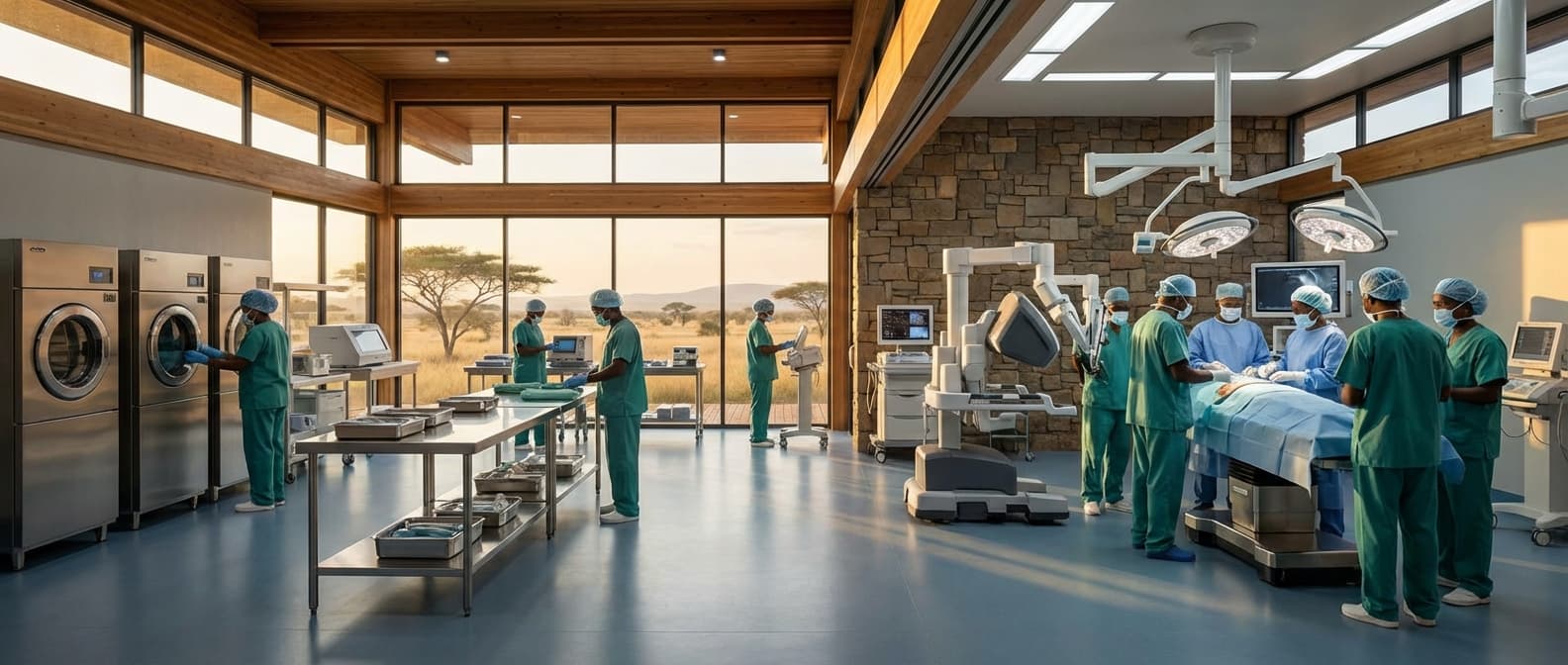
CSSD Design & Validation in Egypt
Engineering Excellence & Technical Support
CSSD workflow design, validation and process development High-standard technical execution following OEM protocols and local regulatory frameworks.
Expert CSSD Design & Sterilization Validation
Leveraging decades of combined experience, our team in Egypt designs and validates Central Sterile Supply Departments (CSSDs) adhering to the highest international standards (ISO 13485, AAMI ST79). We ensure optimal workflow, infection control, and sterilization efficacy for hospitals and healthcare facilities.
Advanced Validation & Compliance Services
We provide comprehensive validation services for all sterilization methods (steam, EtO, plasma, etc.) in Egypt, including IQ (Installation Qualification), OQ (Operational Qualification), and PQ (Performance Qualification). Our meticulous approach guarantees regulatory compliance and patient safety through robust documentation and reporting.
Customized CSSD Layouts & Process Optimization
Our Egyptian CSSD design experts create tailored layouts that maximize space utilization, efficiency, and staff safety. We analyze existing processes and recommend data-driven optimizations to reduce turnaround times, minimize errors, and enhance overall operational performance for healthcare providers.
What Is Cssd Design & Validation In Egypt?
CSSD (Central Sterile Services Department) design and validation in Egypt refers to the comprehensive process of planning, configuring, and verifying the functionality and compliance of a CSSD facility. This service ensures that the department is optimally structured and operates according to international standards and local regulations for the safe and effective sterilization of medical devices. It encompasses architectural planning, equipment selection and layout, workflow optimization, environmental control, and rigorous testing to confirm the efficacy of sterilization processes. The objective is to minimize the risk of healthcare-associated infections (HAIs) by guaranteeing that all reusable medical instruments are rendered sterile and safe for patient use.
| Stakeholder/Entity | Need for CSSD Design & Validation | Typical Use Cases |
|---|---|---|
| Hospitals (Public & Private) | Essential for ensuring patient safety, preventing HAIs, optimizing operational efficiency, and meeting accreditation requirements. | Construction of new hospitals, expansion or renovation of existing CSSD facilities, upgrade of sterilization equipment, implementation of new sterilization technologies, preparation for accreditation audits. |
| Surgical Centers | Critical for maintaining sterile environments for invasive procedures, reducing infection risks, and ensuring the availability of sterile instruments. | Setting up a new surgical center, enhancing existing sterile processing capabilities, compliance with healthcare regulations. |
| Dental Clinics (Large Scale/Specialized) | Necessary for the safe reprocessing of dental instruments used in various procedures, preventing cross-contamination. | Establishing a large dental practice or specialized clinic with high instrument turnover, ensuring compliance with dental health regulations. |
| Medical Device Manufacturers | May require validation of sterile packaging and terminal sterilization processes for their devices intended for sale in Egypt. | Developing and validating sterile barrier systems, validating terminal sterilization methods for medical devices. |
| Healthcare Consulting Firms | Provide expert services to clients in designing, validating, and optimizing CSSD operations. | Project management for CSSD upgrades, feasibility studies for new facilities, quality assurance consulting. |
| Regulatory Bodies (e.g., MOHP) | Set standards and guidelines for CSSD operations to ensure public health and patient safety. | Developing and enforcing regulations related to sterilization practices, conducting inspections. |
Key Components of CSSD Design & Validation in Egypt
- Facility Layout and Workflow Design: Optimizing the physical space to ensure unidirectional flow, prevent cross-contamination, and maximize efficiency in decontamination, preparation, packaging, sterilization, and storage areas.
- Equipment Specification and Selection: Identifying and procuring appropriate sterilization equipment (e.g., autoclaves, low-temperature sterilizers), washer-disinfectors, material handling systems, and ancillary equipment based on volume, device types, and sterilization modalities.
- Environmental Control Systems: Designing and implementing HVAC systems to maintain appropriate temperature, humidity, air pressure differentials, and air filtration levels for different zones within the CSSD.
- Materials and Finishes: Specifying durable, non-porous, and easily cleanable materials for walls, floors, and surfaces to facilitate effective disinfection and minimize microbial adherence.
- Sterilization Process Validation: Conducting performance qualification (PQ) and operational qualification (OQ) for all sterilization equipment and processes to demonstrate consistent and effective microbial inactivation.
- Documentation and Standard Operating Procedures (SOPs): Developing comprehensive documentation for design, installation, operational parameters, maintenance, and troubleshooting, along with detailed SOPs for all CSSD activities.
- Regulatory Compliance: Ensuring adherence to relevant Egyptian Ministry of Health and Population (MOHP) regulations, international standards (e.g., ISO 13485, ISO 17665, AAMI ST series), and best practices.
- Training and Competency Assessment: Designing and implementing training programs for CSSD personnel to ensure proficiency in operating equipment, performing procedures, and maintaining quality standards.
Who Needs Cssd Design & Validation In Egypt?
Central Sterile Services Department (CSSD) design and validation are crucial for ensuring patient safety and operational efficiency in healthcare facilities. In Egypt, where the healthcare sector is rapidly growing and evolving, specialized expertise in CSSD design and validation is becoming increasingly essential. This service is vital for institutions that prioritize infection prevention, adhere to international standards, and aim to optimize their sterile processing workflows.
| Target Customer Type | Key Departments Involved/Benefiting | Specific Needs Addressed |
|---|---|---|
| Large Hospitals (General & Teaching) | Operating Theatres (OT), Intensive Care Units (ICU), Emergency Departments (ED), Outpatient Clinics, Inpatient Wards | High volume of sterile instruments, complex workflow management, adherence to international accreditation standards (e.g., JCI), reduction of surgical site infections (SSIs), optimization of space and resource utilization. |
| Private Hospitals & Clinics | Operating Rooms, Procedure Rooms, Sterile Storage Areas | Ensuring consistent quality of sterilization, meeting patient expectations for safety, compliance with local regulations, improving staff efficiency, reducing turnaround time for instruments. |
| Specialized Surgical Centers | Endoscopy Suites, Cataract Surgery Units, Laparoscopic Surgery Departments | Validation of specific sterilization methods for delicate instruments, ensuring sterility of specialized equipment, meeting the high-frequency demand for sterile items. |
| Government Health Institutions | Central Sterilization Units, Public Hospitals | Cost-effective design solutions, standardization of processes across multiple facilities, capacity building for local staff, ensuring adequate sterile supply for a large patient population. |
| Medical Device Manufacturers & Suppliers | Quality Assurance (QA) / Quality Control (QC) Departments, R&D | Validation of cleaning and sterilization cycles for their devices, ensuring compliance with regulatory requirements for market entry, providing validation reports to their clients. |
Target Customers and Departments for CSSD Design & Validation in Egypt:
- Hospitals (Government and Private)
- Surgical Centers and Day Surgery Units
- Specialized Clinics (e.g., Ophthalmology, Dentistry, Endoscopy)
- Research Laboratories and Diagnostic Centers requiring sterile equipment
- Medical Device Manufacturers and Suppliers (for equipment validation)
Cssd Design & Validation Process In Egypt
The design and validation process for a Central Sterile Supply Department (CSSD) in Egypt follows a structured workflow, beginning with an initial inquiry and culminating in the operational validation of the facility. This process is crucial for ensuring that the CSSD meets international standards for infection control and patient safety, adheres to local regulations, and functions efficiently to support healthcare delivery. It involves multiple stakeholders, including hospital administration, CSSD management, architects, engineers, equipment suppliers, and regulatory bodies.
| Stage | Key Activities | Responsible Parties | Deliverables | Egyptian Context/Considerations |
|---|---|---|---|---|
| 1. Inquiry & Needs Assessment | Initial contact from healthcare facility. Understanding the scope of services, projected workload (instrument types, sterilization cycles), existing infrastructure limitations, budget, and desired capacity. Site survey and assessment. | Hospital Administration, CSSD Management, Potential CSSD Consultant/Designer. | Needs assessment report, preliminary scope of work, initial budget estimation. | Understanding specific needs of Egyptian hospitals (public vs. private, specialized facilities). Availability of local expertise for consultancy. |
| 2. Conceptual Design & Planning | Developing a preliminary layout based on the needs assessment, considering workflow principles (clean vs. sterile separation), space requirements for different zones (receiving, decontamination, packing, sterilization, storage, distribution), and compliance with infection control guidelines (e.g., WHO, national guidelines). Preliminary selection of sterilization technologies. | CSSD Consultant/Designer, Architect, Hospital Management. | Conceptual layout drawings, preliminary equipment list, initial project timeline, refined budget. | Adherence to Egyptian building codes and healthcare facility regulations. Consideration of local climate and its impact on ventilation and temperature control. |
| 3. Detailed Design & Engineering | Developing detailed architectural, mechanical, electrical, and plumbing (MEP) drawings. Specification of all materials, finishes, and equipment. Detailed workflow diagrams and process mapping. Fire safety and emergency preparedness planning. Submission for regulatory approvals. | Architects, MEP Engineers, Equipment Specialists, CSSD Consultant, Project Manager. | Full set of detailed construction drawings, MEP schematics, equipment specifications, bill of quantities (BOQ), project execution plan, regulatory submission documents. | Navigating the Egyptian Ministry of Health (MOH) and relevant local authorities for design approvals. Ensuring availability of specified materials and equipment within Egypt or efficient import processes. |
| 4. Procurement & Construction/Renovation | Tendering and procurement of construction services and equipment. Construction or renovation of the CSSD space according to approved detailed designs. Supervision of construction progress. | Project Manager, Procurement Department, Contractors, Suppliers, Site Engineers. | Completed construction/renovation of the CSSD space, all procured equipment delivered to site. | Local sourcing of construction materials and labor where possible. Ensuring smooth customs clearance for imported equipment. Building contractor experience with healthcare facility construction. |
| 5. Equipment Installation & Commissioning | Installation of all CSSD equipment (autoclaves, washer-disinfectors, ultrasonic cleaners, drying cabinets, packaging machines, etc.). Initial functional testing of all equipment to ensure it operates as per manufacturer specifications. | Equipment Suppliers/Manufacturers, Technical Specialists, CSSD Manager. | Installed and functionally tested equipment. | Ensuring trained technicians for installation and initial troubleshooting. Availability of spare parts and local service support for imported equipment. |
| 6. Validation & Training | Installation Qualification (IQ): Verifying that the equipment is installed correctly according to specifications. Operational Qualification (OQ): Testing the equipment's functionality across its operational range. Performance Qualification (PQ): Verifying that the equipment consistently performs as intended under typical operating conditions using actual load types. Training of CSSD staff on equipment operation, maintenance, and infection control protocols. Development of Standard Operating Procedures (SOPs). | Validation Specialists, CSSD Staff, Equipment Manufacturers, CSSD Manager. | IQ, OQ, and PQ reports, validated SOPs, trained CSSD personnel. | Ensuring validation protocols align with international standards (e.g., ISO 13485, AAMI). Providing comprehensive training in Arabic and English. Potential need for MOH approval of validation documentation. |
| 7. Operationalization & Continuous Monitoring | Opening of the CSSD for full operation. Ongoing monitoring of processes, equipment performance, and staff adherence to protocols. Regular maintenance and recalibration of equipment. Internal audits and continuous improvement initiatives. Periodic revalidation as required. | CSSD Manager, CSSD Staff, Hospital Management, Quality Assurance Department. | Operational CSSD, documented performance data, quality improvement reports, maintenance logs. | Establishing a robust quality management system. Tracking key performance indicators (KPIs) relevant to the Egyptian healthcare context. Staying updated on evolving national and international guidelines. |
CSSD Design & Validation Workflow in Egypt
- Phase 1: Inquiry & Needs Assessment
- Phase 2: Conceptual Design & Planning
- Phase 3: Detailed Design & Engineering
- Phase 4: Procurement & Construction/Renovation
- Phase 5: Equipment Installation & Commissioning
- Phase 6: Validation & Training
- Phase 7: Operationalization & Continuous Monitoring
Cssd Design & Validation Cost In Egypt
Designing and validating a Central Sterile Supply Department (CSSD) in Egypt involves several critical phases, each contributing to the overall cost. These phases typically include conceptual design, detailed engineering, equipment procurement, installation, commissioning, and validation. The cost is influenced by a multitude of factors, making a definitive price range challenging to pinpoint without specific project details. However, we can outline the key pricing factors and provide estimated ranges in EGP (Egyptian Pounds).
| Cost Component | Estimated Price Range (EGP) | Notes |
|---|---|---|
| Conceptual Design & Feasibility Study | 50,000 - 250,000+ | Varies by consultant's reputation and scope. |
| Detailed Engineering Design | 150,000 - 750,000+ | Depends on facility size, complexity, and number of sterilization units. |
| Sterilization Equipment (Autoclaves, Washer-Disinfectors, etc.) | 1,500,000 - 15,000,000+ | Major cost driver. Depends on capacity, technology (steam vs. low-temp), and brand. |
| Ancillary Equipment (Instrument cleaning, packaging, storage) | 300,000 - 2,000,000+ | Includes ultrasonic cleaners, sealing machines, sterile storage cabinets. |
| Installation & Civil Works/Renovations | 500,000 - 5,000,000+ | Highly variable based on site readiness and extent of modifications needed. |
| Validation Services (IQ/OQ/PQ) | 200,000 - 1,000,000+ | Covers process validation, equipment calibration, and documentation. |
| Project Management | 100,000 - 500,000+ | Percentage of total project cost or fixed fee. |
| Contingency (10-15%) | Typically added to the total | Essential for unforeseen expenses. |
Key Pricing Factors for CSSD Design & Validation in Egypt
- Scope and Complexity of the CSSD: The size of the facility, the number of sterilization bays, the types of sterilization processes (steam, low-temperature, etc.), and the volume of instruments to be processed significantly impact design and equipment costs.
- Technology and Equipment Selection: High-end, automated equipment for cleaning, disinfection, and sterilization will command higher prices compared to more basic or manual systems. The number and sophistication of analytical instruments for validation also play a role.
- Regulatory Requirements and Standards: Adherence to international standards (e.g., ISO 13485, AAMI ST series) and specific Egyptian healthcare regulations can necessitate more robust design features, documentation, and validation protocols, thus increasing costs.
- Consultant and Engineering Fees: The reputation, experience, and scope of work of the design consultants and engineering firms engaged will influence their fees.
- Equipment Procurement and Sourcing: Whether equipment is imported or sourced locally, along with import duties, shipping costs, and supplier markups, will affect the final price.
- Installation and Commissioning: The complexity of installation, the need for specialized infrastructure (e.g., HVAC, steam, medical gases), and the duration of commissioning activities are cost drivers.
- Validation Services: The extent and rigor of the validation process, including IQ (Installation Qualification), OQ (Operational Qualification), and PQ (Performance Qualification), as well as the type of validation studies and the expertise of the validation team, will contribute to the cost.
- Site Conditions and Renovation: If the CSSD is being built in an existing facility, renovation costs, structural modifications, and upgrades to existing utilities can add significant expenses.
- Project Management: The effectiveness and scope of project management services will also be reflected in the overall cost.
- Geographical Location within Egypt: While less of a primary driver, localized costs for labor and materials might see slight variations between major cities like Cairo and Alexandria versus more remote areas.
Affordable Cssd Design & Validation Options
Designing and validating a Central Sterile Supply Department (CSSD) is crucial for infection control and patient safety. However, budget constraints can be a significant challenge. This document outlines affordable CSSD design and validation options, focusing on value bundles and cost-saving strategies. We aim to provide practical solutions that meet regulatory requirements and operational efficiency without compromising quality.
| Value Bundle Option | Description | Cost-Saving Focus | Key Benefits | Considerations |
|---|---|---|---|---|
| Basic Operational Suite | Focuses on core decontamination, sterilization, and sterile storage areas. Utilizes standard, proven equipment. Prioritizes efficient workflow over extensive customization. | Minimizing upfront construction costs, standard equipment procurement, efficient space utilization. | Meets essential regulatory requirements. Lower initial investment. Scalable for future expansion. | May require more manual processes initially. Limited scope for advanced automation. Suitable for smaller facilities or those with existing infrastructure to adapt. |
| Digital Workflow Integration | Combines a functional design with integrated instrument tracking software, digital record-keeping, and automated scheduling. Emphasizes efficiency through technology. | Reducing paper-based costs, minimizing errors and rework during validation, optimizing staff time. | Improved traceability and compliance. Reduced validation documentation burden. Enhanced operational visibility. | Requires investment in software and training. Integration with existing IT systems can be complex. Data security protocols are essential. |
| Modular & Phased Approach | Utilizes pre-fabricated modules for specific CSSD functions (e.g., sterile storage, cleaning bays) allowing for phased implementation and expansion. Design is adaptable. | Reduced site disruption and construction time. Flexibility in scaling. Potential for lower labor costs. | Faster deployment. Ability to adapt to evolving needs. Minimizes disruption to ongoing hospital operations. | Requires careful planning for module integration. May have aesthetic limitations compared to fully custom builds. Long-term maintenance of modular components. |
| Refurbished Equipment Package | Offers a bundled package of essential CSSD equipment (e.g., washer-disinfectors, autoclaves) that has been professionally refurbished and certified. | Significant reduction in capital expenditure for equipment. Extended equipment lifespan. | Substantial cost savings on major equipment purchases. Often comes with a warranty. | Availability of specific models can vary. Rigorous vetting of suppliers is critical. Understanding warranty terms and service contracts. |
Key Cost-Saving Strategies for CSSD Design & Validation
- Prioritize essential functional areas and workflow optimization to avoid over-designing or unnecessary space.
- Explore modular and pre-fabricated CSSD solutions which can reduce construction timelines and labor costs.
- Leverage digital solutions for documentation and tracking (e.g., instrument tracking software) to minimize paper-based processes and associated errors.
- Implement a phased approach to upgrades and new equipment purchases, focusing on immediate needs and future scalability.
- Consider refurbished or reconditioned medical equipment from reputable suppliers for non-critical or auxiliary functions.
- Engage in bulk purchasing of consumables and sterilizing agents to secure volume discounts.
- Optimize staff training to improve efficiency, reduce rework, and minimize errors, thus lowering validation costs.
- Standardize instrument sets and reprocessing protocols to simplify workflow, reduce inventory complexity, and streamline validation efforts.
- Seek grants and funding opportunities specific to healthcare infrastructure and infection control improvements.
- Conduct thorough needs assessments to avoid investing in equipment or space that is not fully utilized.
Verified Providers In Egypt
In Egypt's evolving healthcare landscape, discerning patients seek assurance of quality and trustworthiness. Verified providers offer this crucial peace of mind. Franance Health stands out as a leader in this regard, meticulously vetting and credentialing healthcare professionals and facilities. Their rigorous process ensures that only the most competent, ethical, and patient-centered entities earn their endorsement. This commitment to excellence translates directly into superior patient outcomes and a more positive healthcare experience. By choosing a Franance Health-verified provider, patients are making an informed decision to prioritize their well-being with a trusted partner.
| Benefit for Patients | Franance Health's Role | Why It's the Best Choice |
|---|---|---|
| Trust and Confidence | Franance Health meticulously vets providers, ensuring they meet high standards. | Eliminates the guesswork, providing assurance of quality care. |
| Access to Expertise | Verification confirms practitioners possess the necessary qualifications and experience. | Ensures you are treated by skilled and knowledgeable healthcare professionals. |
| Enhanced Safety | Franance Health scrutinizes facilities for adherence to safety protocols and infection control. | Minimizes risks and promotes a secure treatment environment. |
| Patient-Centric Care | Verified providers demonstrate a commitment to patient well-being and satisfaction. | Experience healthcare services that prioritize your needs and comfort. |
| Streamlined Experience | Franance Health's network offers easy access to a pre-vetted selection of top providers. | Saves time and effort in finding reliable healthcare solutions. |
Why Franance Health Verification is Paramount:
- Rigorous credentialing of medical professionals
- Strict adherence to international quality standards
- Focus on patient safety and satisfaction
- Commitment to ethical medical practices
- Streamlined access to trusted healthcare services
Scope Of Work For Cssd Design & Validation
This document outlines the Scope of Work (SOW) for the Design & Validation of a Central Sterile Supply Department (CSSD), including key technical deliverables and associated standard specifications. The objective is to ensure the CSSD is designed and validated to meet stringent infection control standards, operational efficiency, and regulatory compliance. This SOW covers the entire lifecycle from initial design concepts through to final validation and handover.
| Technical Deliverable | Description | Standard Specifications / Reference Documents |
|---|---|---|
| CSSD Layout and Flow Diagrams | Detailed architectural drawings illustrating the optimal arrangement of functional zones (decontamination, preparation, sterile storage, packing, etc.) and the logical flow of instruments to prevent cross-contamination. | HTM 01-01 (UK), AAMI ST79 (USA), ISO 13485, Local Health Authority Guidelines, Manufacturer's Guidelines |
| Equipment Specifications & Selection | Detailed technical specifications for all CSSD equipment (autoclaves, washer-disinfectors, instrument washers, ultrasonic cleaners, drying cabinets, sealing machines, etc.) including capacity, performance, energy efficiency, and interface requirements. | Manufacturer's Technical Data Sheets, CE Marking Directives, FDA Regulations (if applicable), Energy Star Ratings |
| Mechanical, Electrical, and Plumbing (MEP) Designs | Integration of MEP systems tailored for CSSD operations, including ventilation (negative/positive pressure zones), water quality (RO/DI systems), steam generation, power supply, and drainage. | ASHRAE Standards, NFPA Standards, Local Building Codes, Water Quality Standards (e.g., AAMI TIR34) |
| Material and Finish Specifications | Selection of appropriate, durable, and easily cleanable materials for floors, walls, ceilings, and work surfaces to maintain hygiene and prevent microbial growth. | Hospital Grade Finishes, Chemical Resistance Charts, Anti-microbial Surface Treatments (if specified) |
| Validation Master Plan (VMP) | Comprehensive plan outlining the strategy and scope for the validation activities of the CSSD, including IQ, OQ, and PQ. | GHTF/IMDRF SG3/N99-10 (Validation of Pharmaceutical Processes), ISO 13485 (Quality Management Systems) |
| Installation Qualification (IQ) Protocols & Reports | Protocols to verify that all equipment and systems are installed correctly according to design specifications and manufacturer recommendations. Reports documenting successful installation. | Manufacturer's Installation Manuals, Design Drawings, Commissioning Checklists |
| Operational Qualification (OQ) Protocols & Reports | Protocols to verify that equipment and systems operate according to their intended specifications within their defined operating ranges. Reports documenting successful operation. | Equipment Performance Specifications, Process Flow Diagrams, Standard Operating Procedures (SOPs) |
| Performance Qualification (PQ) Protocols & Reports | Protocols to demonstrate that the CSSD system consistently performs as intended under normal operating conditions, using representative loads and cycles. Reports documenting successful performance. | Load Testing Data, Biological Indicators, Chemical Indicators, Simulated Use Scenarios |
| Standard Operating Procedures (SOPs) | Development of detailed SOPs for all CSSD processes, from receiving contaminated items to dispatching sterile supplies, including cleaning, disinfection, sterilization, and storage procedures. | Manufacturer's Operating Manuals, Best Practice Guidelines (e.g., AAMI ST79), Regulatory Requirements |
| Risk Management Plan | Identification and assessment of potential risks to infection control and operational efficiency within the CSSD, with mitigation strategies. | ISO 14971 (Medical Devices - Application of Risk Management to Medical Devices), FMEA (Failure Mode and Effects Analysis) |
| Training Materials & Program | Development of comprehensive training materials and a program for CSSD staff covering all aspects of CSSD operations, infection control, and equipment usage. | SOPs, Manufacturer's Training Manuals, Regulatory Training Requirements |
| CSSD Validation Report | Consolidated report summarizing all validation activities (IQ/OQ/PQ), confirming that the CSSD meets all predefined acceptance criteria and regulatory requirements. Includes recommendations for ongoing monitoring. | Regulatory Authority Guidelines, GHTF/IMDRF Guidelines |
Key Stages and Activities
- Phase 1: Conceptualization & Feasibility Study
- Phase 2: Detailed Design & Engineering
- Phase 3: Procurement & Construction Oversight
- Phase 4: Commissioning & Qualification (IQ/OQ/PQ)
- Phase 5: Validation Report & Handover
Service Level Agreement For Cssd Design & Validation
This Service Level Agreement (SLA) outlines the performance standards and commitments for the design and validation services provided by [Your Company Name] for Central Sterile Supply Departments (CSSD). This SLA details response times for critical issues and uptime guarantees for access to relevant project documentation and communication channels.
| Service Component | Response Time Guarantee (Business Hours) | Uptime Guarantee (Communication Platforms/Document Repository) |
|---|---|---|
| Critical Design Issue (e.g., regulatory non-compliance, safety concern) | 2 Business Hours | 99.5% |
| Urgent Design Question (e.g., impacting immediate construction) | 4 Business Hours | 99.5% |
| Standard Design Question/Request | 8 Business Hours | 99.5% |
| Validation Protocol Review/Feedback | 24 Business Hours | 99.5% |
| Minor Documentation Update/Correction | 48 Business Hours | 99.5% |
| Access to Project Management Portal/Document Repository | N/A (Covered by Uptime Guarantee) | 99.5% |
Scope of Services
- Design consultation and schematic development for CSSD facilities.
- Development of detailed CSSD workflows and process maps.
- Selection and specification of CSSD equipment.
- Validation protocol development and execution for CSSD equipment and processes.
- Documentation review and approval cycles.
- Project management and communication support.
Frequently Asked Questions

Ready when you are
Let's scope your CSSD Design & Validation in Egypt project in Egypt.

Scaling healthcare logistics and technical systems across the entire continent.