
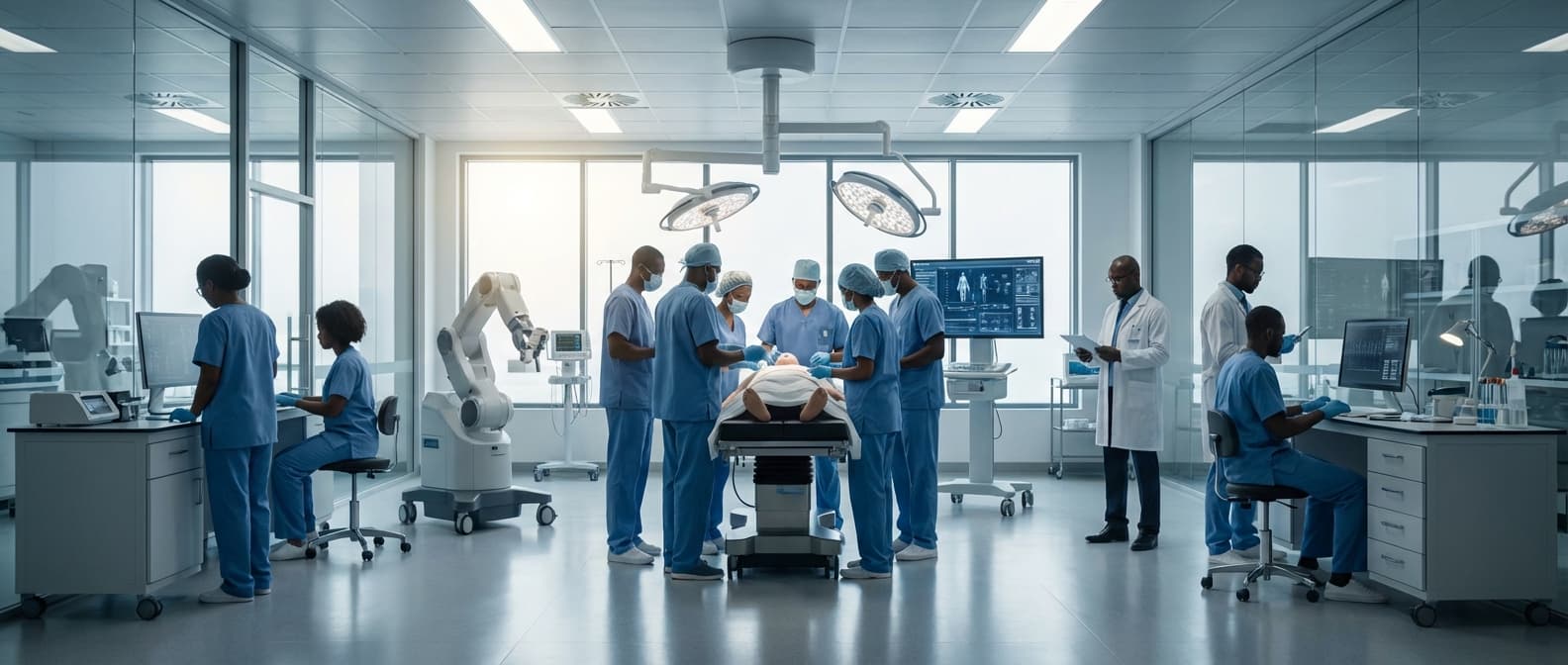
Biomedical Engineering Consulting in Egypt
Engineering Excellence & Technical Support
Equipment selection, procurement and implementation consulting High-standard technical execution following OEM protocols and local regulatory frameworks.
Advanced Biocompatibility Testing & Regulatory Compliance
We offer comprehensive biocompatibility assessment services for medical devices and implants, ensuring adherence to ISO 10993 standards and navigating the complex regulatory landscape of Egypt and international markets. Our expertise streamlines product approval and minimizes time-to-market.
Innovative Medical Device Design & Development
Leveraging cutting-edge simulation tools and rapid prototyping, our team specializes in designing and developing safe, effective, and user-centric medical devices tailored to the specific needs of the Egyptian healthcare sector, from diagnostics to therapeutic solutions.
Strategic Healthcare Informatics & Digital Health Integration
We provide expert consulting on the implementation and optimization of healthcare informatics systems, including EMR integration, telemedicine solutions, and data analytics. Our focus is on enhancing clinical workflows, improving patient outcomes, and driving digital transformation within Egyptian healthcare institutions.
What Is Biomedical Engineering Consulting In Egypt?
Biomedical Engineering Consulting in Egypt represents a specialized professional service focused on providing expert technical guidance, strategic planning, and operational optimization within the healthcare technology and life sciences sectors. This field leverages the principles of engineering, medicine, and biology to address complex challenges in the design, development, implementation, validation, and management of medical devices, healthcare facilities, and biomedical research infrastructure. Consultants in this domain offer objective, data-driven insights and solutions tailored to the unique regulatory, economic, and technological landscape of Egypt.
| Service Recipient Profile | Typical Needs and Challenges Addressed | Examples of Use Cases |
|---|---|---|
| Hospitals and Healthcare Providers (Public and Private) | Optimizing medical equipment inventory and maintenance, improving patient safety, ensuring regulatory compliance, designing new facilities or renovating existing ones, selecting and integrating new technologies, developing robust clinical engineering departments. | Developing a hospital-wide medical device management plan; advising on the procurement and installation of a new MRI suite; implementing a preventive maintenance program for critical care equipment; performing a gap analysis against healthcare facility accreditation standards. |
| Medical Device Manufacturers and Distributors (Local and International) | Navigating Egyptian regulatory approval processes (NFDA), establishing local distribution networks, ensuring post-market surveillance compliance, optimizing manufacturing processes, product localization and adaptation, market entry strategy. | Securing marketing authorization for a new diagnostic device; establishing a compliant post-market surveillance system for imported medical equipment; advising on local manufacturing capabilities and regulatory pathways; conducting a feasibility study for a local assembly plant. |
| Biomedical Research Institutions and Universities | Selecting and maintaining specialized research equipment, designing experimental setups, ensuring data integrity and compliance, developing intellectual property, commercializing research outcomes. | Advising on the acquisition of advanced microscopy equipment for a research lab; assisting in the validation of a custom-built experimental apparatus; providing guidance on regulatory aspects of developing a novel diagnostic tool from research. |
| Government Agencies and Ministries of Health | Developing national healthcare technology strategies, assessing public health infrastructure needs, setting procurement standards, evaluating technology adoption policies, contributing to regulatory framework development. | Contributing to the development of national guidelines for medical device registration; advising on the procurement strategy for essential medical equipment for public hospitals; evaluating the impact of new medical technologies on the national healthcare system. |
| Investors and Financial Institutions | Due diligence for healthcare technology investments, assessing the technical viability and market potential of biomedical startups, evaluating asset management practices of healthcare companies. | Performing technical due diligence on a medical device startup seeking venture capital funding; assessing the operational efficiency and asset quality of a hospital group undergoing acquisition. |
Key Service Components of Biomedical Engineering Consulting in Egypt:
- Medical Device Lifecycle Management: Including design, prototyping, regulatory submission (Egyptian FDA/NFDA), manufacturing oversight, post-market surveillance, and obsolescence planning.
- Healthcare Facility Planning and Design: Optimizing space utilization, equipment procurement strategies, workflow analysis, infection control integration, and infrastructure development for hospitals, clinics, and diagnostic centers.
- Biomedical Equipment Management (BEM): Development and implementation of robust BEM programs for asset acquisition, inventory control, preventive maintenance scheduling, repair management, and technology assessment.
- Regulatory Compliance and Quality Assurance: Navigating Egyptian and international (e.g., ISO 13485) regulatory requirements for medical devices and healthcare services, including GMP, GLP, and QMS establishment.
- Technology Assessment and Integration: Evaluating emerging biomedical technologies, advising on adoption strategies, and ensuring seamless integration with existing healthcare IT systems.
- Clinical Engineering Services: Providing technical expertise to clinical departments for the safe and effective use of medical equipment, risk management, and user training.
- Biomedical Research and Development Support: Assisting research institutions and companies with experimental design, equipment selection, data analysis, and translation of research into marketable products.
- Feasibility Studies and Business Case Development: Conducting in-depth market analysis, financial projections, and risk assessments for new healthcare ventures and technology investments.
- Training and Capacity Building: Developing and delivering specialized training programs for healthcare professionals and technical staff in areas such as medical device operation, maintenance, and regulatory affairs.
Who Needs Biomedical Engineering Consulting In Egypt?
Biomedical Engineering consulting services in Egypt are crucial for a diverse range of entities seeking to navigate the complex landscape of healthcare technology, medical device development, regulatory compliance, and operational efficiency. These services offer specialized expertise that can accelerate innovation, ensure patient safety, and optimize the utilization of medical equipment and facilities.
| Customer Type | Specific Departments/Needs Served | Key Benefits of Consulting |
|---|---|---|
| Medical Device Manufacturers | Research & Development (R&D), Product Design, Quality Assurance (QA), Regulatory Affairs, Manufacturing Process Optimization, Market Entry Strategy | Faster time-to-market, improved product quality, successful regulatory submissions, cost reduction, enhanced competitiveness. |
| Hospitals and Healthcare Facilities | Clinical Engineering, Equipment Planning & Procurement, Technology Assessment, Infrastructure Development, Patient Safety, Workflow Optimization, Maintenance & Service Management | Improved patient care, reduced operational costs, extended equipment lifespan, enhanced safety compliance, efficient resource allocation. |
| Research & Development Institutions | Experimental Design, Prototype Development, Data Analysis, Intellectual Property (IP) Protection, Technology Transfer, Grant Proposal Support | Accelerated research outcomes, effective translation of research into practical applications, successful funding acquisition, robust IP strategy. |
| Government Regulatory Bodies | Standard Development, Policy Formulation, Device Review & Approval Process Enhancement, Market Surveillance Strategy, Capacity Building | Streamlined regulatory processes, improved public health outcomes, effective oversight of medical devices, enhanced national healthcare standards. |
| Start-ups and Entrepreneurs | Concept Validation, Product Development Roadmaps, Business Plan Development, Funding Strategy, Regulatory Pathway Navigation, Market Research | De-risking innovation, securing investment, navigating complex regulatory hurdles, achieving market viability, rapid growth potential. |
| Academic Institutions | Curriculum Development (Biomedical Engineering Programs), Research Project Support, Lab Setup & Management, Industry Collaboration Facilitation, Technology Commercialization | Enhanced educational offerings, improved research impact, stronger industry-academia linkages, successful translation of academic discoveries. |
| Investors and Venture Capital Firms | Technology Due Diligence, Market Opportunity Assessment, Risk Analysis (Technical & Regulatory), Investment Recommendation Support, Portfolio Company Support | Informed investment decisions, identification of high-potential ventures, mitigation of investment risks, maximized return on investment. |
Target Customers for Biomedical Engineering Consulting in Egypt
- Medical Device Manufacturers (Local and International)
- Hospitals and Healthcare Facilities (Public and Private)
- Research and Development Institutions
- Government Regulatory Bodies
- Start-ups and Entrepreneurs in the Health Tech Sector
- Academic Institutions
- Investors and Venture Capital Firms
Biomedical Engineering Consulting Process In Egypt
Biomedical Engineering consulting in Egypt follows a structured workflow designed to address the specific needs of healthcare institutions, medical device manufacturers, and research bodies. This process ensures that projects are initiated effectively, meticulously planned, and executed efficiently, leading to successful outcomes in a regulated and rapidly evolving field. The workflow typically begins with an initial inquiry and progresses through detailed analysis, proposal development, execution, and final reporting, with continuous communication and quality assurance integrated throughout.
| Stage | Description | Key Activities | Deliverables |
|---|---|---|---|
| The first contact point where a client expresses a need or problem requiring biomedical engineering expertise. This stage focuses on understanding the client's objectives and the scope of the required service. | Initial client meeting, understanding project goals, identifying key stakeholders, preliminary information gathering. | Understanding of client's problem, preliminary scope definition, confirmation of interest to proceed. |
| A detailed investigation into the technical viability and practical feasibility of the proposed solution or project. This involves in-depth analysis of existing systems, regulations, and potential challenges. | Site visits, review of existing infrastructure/equipment, regulatory research (e.g., CAPMAS, Ministry of Health regulations), technology assessment, risk identification. | Feasibility report, identification of critical success factors, preliminary solution outline, risk assessment. |
| Based on the needs assessment and feasibility study, a comprehensive proposal is developed outlining the project's objectives, methodology, timeline, budget, and expected outcomes. This leads to a formal agreement. | Defining project scope and deliverables, estimating resources and costs, developing a detailed project plan, legal and contractual review, negotiation. | Formal project proposal, cost estimate, project timeline, service level agreement (SLA) or contract. |
| Once the agreement is signed, a detailed project plan is created, and a specialized team of biomedical engineers and relevant experts is assembled. | Detailed task breakdown, resource allocation, risk management planning, communication protocols establishment, team onboarding and briefing. | Detailed project plan, assigned project team, communication matrix, risk mitigation strategies. |
| The core phase where the planned activities are carried out. This involves design, development, installation, calibration, testing, and training as per the project plan. | Procurement of equipment/materials, system design and development, installation and integration, testing and validation, user training, compliance checks. | Installed and validated systems/equipment, trained personnel, operational procedures, compliance documentation. |
| Continuous oversight of the project's progress, performance, and adherence to quality standards and regulatory requirements. This happens concurrently with execution. | Regular progress meetings, performance tracking against milestones, quality control checks, adherence to Egyptian standards and regulations, corrective actions. | Progress reports, quality audit reports, updated risk logs, performance metrics. |
| A formal presentation of project outcomes, findings, and recommendations. This phase marks the official completion of the consulting engagement. | Final project report preparation, presentation of results to the client, documentation of lessons learned, final invoicing and payment. | Final project report, project completion certificate, knowledge transfer documentation. |
| Offering continued support, maintenance, or further consultation to ensure the long-term success and optimization of the implemented solutions. | Troubleshooting, maintenance planning, ongoing technical support, feedback collection, future project identification. | Maintenance agreements, ongoing support services, client satisfaction feedback, potential for follow-on projects. |
Biomedical Engineering Consulting Workflow in Egypt
- Initial Inquiry and Needs Assessment
- Technical and Feasibility Study
- Proposal Development and Agreement
- Project Planning and Team Formation
- Execution and Implementation
- Monitoring, Evaluation, and Quality Assurance
- Reporting and Project Closure
- Post-Project Support and Follow-up
Biomedical Engineering Consulting Cost In Egypt
Biomedical engineering consulting costs in Egypt are influenced by a variety of factors, leading to a broad range of pricing. These factors include the complexity and scope of the project, the experience and reputation of the consulting firm or individual, the duration of the engagement, and the specific services required. For instance, advising on regulatory compliance for a new medical device will typically command a different rate than providing in-depth design and prototyping services for a novel diagnostic tool.
Consulting services can range from initial feasibility studies and market analysis to detailed technical design, prototyping, testing, and regulatory affairs support. Smaller, more focused projects might be billed on an hourly basis, while larger, long-term engagements are often priced as fixed-fee projects or retainers. The local economic climate and the demand for specialized biomedical engineering expertise within Egypt also play a role in shaping the prevailing rates.
In terms of pricing, expect a tiered structure. Emerging or smaller consulting practices may offer more competitive rates, while established firms with a proven track record and a team of senior engineers will generally charge a premium. The level of specialization required is also a key differentiator. Consulting on cutting-edge fields like AI in medical imaging or advanced biomaterials will naturally be more expensive than general advice on medical equipment maintenance.
| Service Type/Consultant Level | Estimated Cost Range (EGP - Egyptian Pounds) |
|---|---|
| Junior Consultant/Basic Advisory (Hourly) | 500 - 1,200 EGP |
| Mid-Level Consultant/Specialized Advice (Hourly) | 1,000 - 2,500 EGP |
| Senior Consultant/Project Management (Hourly) | 2,000 - 4,000+ EGP |
| Feasibility Study/Market Analysis (Project-Based) | 15,000 - 50,000 EGP |
| Regulatory Affairs Support (Project-Based) | 20,000 - 75,000 EGP |
| Product Design & Prototyping (Project-Based) | 50,000 - 200,000+ EGP |
| Comprehensive Consulting Package (Retainer/Long-term Project) | Negotiable, often starting from 100,000 EGP per month |
Key Factors Influencing Biomedical Engineering Consulting Costs in Egypt:
- Project Scope and Complexity: The more intricate and extensive the project, the higher the cost.
- Consultant's Experience and Reputation: Highly experienced and reputable consultants command higher fees.
- Duration of Engagement: Longer-term projects may have different pricing structures than short-term consultations.
- Specific Services Required: Regulatory affairs, design, prototyping, testing, and market analysis all have varying costs.
- Level of Specialization: Niche or cutting-edge expertise is generally more expensive.
- Consulting Firm Size and Overhead: Larger firms often have higher operational costs.
- Economic Conditions in Egypt: Local market demand and economic stability influence pricing.
- Urgency of the Project: Rush projects may incur additional charges.
Affordable Biomedical Engineering Consulting Options
Navigating the complexities of biomedical engineering can be a significant undertaking for startups and established companies alike. Seeking expert advice is crucial for product development, regulatory compliance, market entry, and innovation. However, the cost of specialized consulting services can often be a barrier. This document explores affordable biomedical engineering consulting options, focusing on the strategic use of value bundles and effective cost-saving strategies.
| Strategy | Description | Impact on Cost |
|---|---|---|
| Targeted Service Packages | Instead of a broad, open-ended contract, define specific, achievable milestones and deliverables for each phase of a project. This limits scope creep and provides clear value for money. | Reduces overall project expenditure by focusing on essential needs. Enhances predictability. |
| Phased Engagements | Break down larger projects into smaller, manageable phases. Each phase can be assessed and budgeted independently, allowing for review and adjustment before committing to the next stage. | Allows for cost control at each step. Provides flexibility to pivot if initial findings suggest a change in direction, avoiding wasted investment. |
| Retainer Models for Ongoing Support | For companies requiring regular, but not constant, expert advice, a monthly retainer for a set number of hours or specific advisory tasks can be more cost-effective than ad-hoc hourly billing. | Offers predictable monthly costs. Often comes with a reduced hourly rate compared to one-off consultations. |
| Leveraging Junior Consultants with Senior Oversight | Employing a team that includes more junior engineers for standard tasks, overseen by experienced senior consultants, can reduce hourly rates while ensuring quality and strategic direction. | Significantly lowers hourly billing rates. Requires effective project management to ensure efficiency. |
| Collaborative Project Models | Partnering with other specialized firms or academic institutions for specific expertise can distribute costs and leverage shared resources or knowledge. | Can lead to shared costs and access to a wider pool of talent. Requires strong coordination. |
| Focus on Knowledge Transfer | Consultants can be engaged not just to solve a problem, but to train and empower internal teams, reducing reliance on external expertise over time. | Reduces long-term consulting costs by building internal capacity. |
| Remote Consulting and Virtual Teams | Utilizing video conferencing and collaborative online tools can reduce travel expenses and allow access to a global talent pool, often with more competitive rates. | Minimizes travel and accommodation costs. Expands the range of potentially affordable expertise. |
| Standardized Methodologies and Toolkits | Consultancies that have developed proprietary methodologies or reusable toolkits can apply them efficiently to client problems, reducing the time and cost required for custom solutions. | Increases efficiency and reduces project duration, leading to lower overall costs. |
Understanding Value Bundles in Consulting
- {"title":"Definition:","description":"Value bundles are packages of services designed to offer comprehensive solutions at a potentially lower aggregate cost than purchasing individual services. They leverage the synergy of combined expertise to address multiple client needs efficiently."}
- {"title":"Examples in Biomedical Engineering:","description":"A bundle might include early-stage feasibility studies, intellectual property landscape analysis, and initial regulatory pathway assessment. Another could focus on product design iteration, prototype testing, and a preliminary risk management plan."}
- {"title":"Benefits for Clients:","description":"Bundles often provide a more predictable budget, streamlined project management, and a holistic approach to problem-solving. Clients gain access to a broader range of expertise in a single engagement."}
- {"title":"Benefits for Consultants:","description":"Consultancies can optimize resource allocation, build stronger client relationships through ongoing partnerships, and differentiate themselves in a competitive market."}
Verified Providers In Egypt
In Egypt's rapidly evolving healthcare landscape, identifying trusted and qualified providers is paramount for ensuring quality care. Franance Health stands out as a leading organization committed to rigorous verification and credentialing of medical professionals. Their meticulous process ensures that all affiliated providers meet the highest standards of expertise, ethics, and patient safety, making them the premier choice for individuals seeking reliable healthcare services in Egypt.
| Verification Criterion | Franance Health Approach | Benefit to Patients |
|---|---|---|
| Educational Background | Thorough validation of degrees, diplomas, and certifications from accredited institutions. | Ensures providers have foundational knowledge and theoretical understanding. |
| Professional Licenses & Registrations | Verification of current and valid medical licenses with relevant Egyptian authorities. | Confirms legal authorization to practice and adherence to regulatory requirements. |
| Clinical Experience & Competence | Assessment of years of practice, surgical logs (where applicable), and peer reviews. | Guarantees practical skills and demonstrated proficiency in chosen medical areas. |
| Ethical Conduct & Professionalism | Background checks for disciplinary actions, malpractice claims, and patient complaints. | Provides peace of mind regarding trustworthy and responsible medical care. |
| Continuing Medical Education (CME) | Confirmation of participation in ongoing training and professional development programs. | Ensures providers stay updated with the latest medical advancements and techniques. |
Why Franance Health Represents the Best Choice:
- Uncompromising Verification Standards: Franance Health employs a multi-faceted verification process that scrutinizes educational qualifications, professional licenses, past performance, and ethical conduct of all healthcare providers.
- Focus on Expertise and Specialization: Beyond basic qualifications, Franance Health prioritizes providers with proven experience and specialized knowledge in their respective fields, ensuring you receive care from the most competent professionals.
- Commitment to Patient Safety: Patient well-being is at the core of Franance Health's mission. Their credentialing process includes checks for any disciplinary actions or malpractice history, providing an added layer of security for patients.
- Ethical Practice Enforcement: Franance Health upholds a strict code of ethics, ensuring that all their verified providers adhere to the highest moral and professional standards in their practice.
- Streamlined Access to Quality Care: By partnering with Franance Health, patients gain convenient access to a network of pre-vetted, high-quality healthcare professionals, saving them the time and uncertainty of searching independently.
- Continuous Monitoring and Re-evaluation: Franance Health doesn't stop at initial verification. They maintain ongoing monitoring of their providers to ensure continued adherence to their standards, providing long-term assurance of quality.
Scope Of Work For Biomedical Engineering Consulting
This Scope of Work (SOW) outlines the services provided by [Consulting Firm Name] (hereinafter referred to as "Consultant") to [Client Name] (hereinafter referred to as "Client") for Biomedical Engineering consulting. The objective is to leverage the Consultant's expertise to [briefly state the primary goal, e.g., 'assess the feasibility of a new medical device concept', 'improve the manufacturing process of an existing device', 'develop a regulatory submission strategy']. The project will encompass [list key phases or areas of focus]. Detailed technical deliverables and adherence to standard specifications are paramount to the success of this engagement.
| Deliverable | Description | Standard Specification/Reference | Acceptance Criteria |
|---|---|---|---|
| Project Initiation Report | Formal commencement of the project, detailing confirmed objectives, scope, team roles, and initial timeline. | Internal Company SOPs | Client sign-off on confirmed scope and timeline. |
| Requirements Specification Document | Comprehensive document outlining functional, performance, safety, and regulatory requirements for the [medical device/system/process]. | ISO 13485:2016 (Quality Management Systems) | Completeness of identified requirements and client agreement on their validity. |
| Technical Feasibility Study Report | Analysis of the technical viability of the proposed solution, including potential challenges, risks, and alternative approaches. | IEEE Standards for Biomedical Engineering | Clear identification of technical risks and proposed mitigation strategies. |
| Design Specifications (Conceptual/Detailed) | Drawings, schematics, material lists, and operational descriptions for the [medical device/system/process]. | IEC 60601-1 (Medical electrical equipment - Part 1: General requirements for basic safety and essential performance) | Adherence to specified dimensions, materials, and functional parameters. |
| Risk Management Plan and Report | Identification, evaluation, and control of potential risks associated with the [medical device/system/process]. | ISO 14971:2019 (Medical devices – Application of risk management to medical devices) | Completion of hazard identification, risk assessment, and documented control measures. |
| Verification and Validation (V&V) Protocols | Detailed plans for testing the [medical device/system/process] to ensure it meets design specifications and user needs. | FDA Guidance Documents (e.g., Design Controls, Pre-market Notification) | Clear, testable procedures and defined success criteria. |
| Test Reports (V&V) | Results of conducted verification and validation testing, including raw data and analysis. | GLP/GMP guidelines (as applicable) | Accuracy and completeness of reported test results. |
| Regulatory Strategy Document | Outline of the regulatory pathway, required documentation, and submission strategy for [target market/region]. | Relevant country-specific medical device regulations (e.g., FDA 21 CFR Part 820, EU MDR) | Alignment with current regulatory requirements and client business objectives. |
| Draft Regulatory Submission Documents (e.g., 510(k), PMA, CE Mark Technical File) | Preparation of initial drafts of regulatory submission components based on V&V data and regulatory strategy. | Specific submission guidelines for the relevant regulatory body | Completeness and accuracy of information as per regulatory requirements. |
| Final Project Report and Recommendations | Comprehensive summary of project activities, findings, and actionable recommendations for future steps. | Client-defined reporting format | Clarity, conciseness, and relevance of recommendations. |
Project Phases and Key Activities
- Phase 1: Discovery and Requirements Gathering
- Phase 2: Technical Design and Feasibility Analysis
- Phase 3: Prototyping and Testing (if applicable)
- Phase 4: Regulatory Strategy and Documentation
- Phase 5: Final Reporting and Recommendations
Service Level Agreement For Biomedical Engineering Consulting
This Service Level Agreement (SLA) outlines the response times and uptime guarantees for Biomedical Engineering consulting services provided by [Your Company Name] to [Client Name]. This agreement ensures a consistent and reliable level of service for critical biomedical engineering needs.
| Service Category | Severity Level | Response Time Target | Uptime Guarantee |
|---|---|---|---|
| Critical System Failure (e.g., life-support equipment malfunction) | Severity 1 | 1 hour | 99.5% |
| Urgent Equipment Malfunction (e.g., diagnostic imaging issue) | Severity 2 | 4 business hours | 99.0% |
| Routine Maintenance/Consultation Request | Severity 3 | 8 business hours | 98.0% |
| General Inquiry/Information Request | Severity 4 | 24 business hours | N/A (as it does not impact operational uptime) |
Key Service Commitments
- Response Times: Defined as the maximum allowable time from initial contact by the client to acknowledgement and initial assessment of the issue by [Your Company Name].
- Uptime Guarantees: Applicable to remote support and access to shared documentation platforms. It is important to note that on-site or equipment-dependent services are subject to external factors.
- Severity Levels: Issues will be categorized into severity levels to prioritize response and resolution efforts.
- Exclusions: Certain situations are excluded from these guarantees, as detailed in the full SLA document.
- Reporting: Regular reports will be provided detailing service performance against these SLAs.
Frequently Asked Questions

Ready when you are
Let's scope your Biomedical Engineering Consulting in Egypt project in Egypt.

Scaling healthcare logistics and technical systems across the entire continent.