
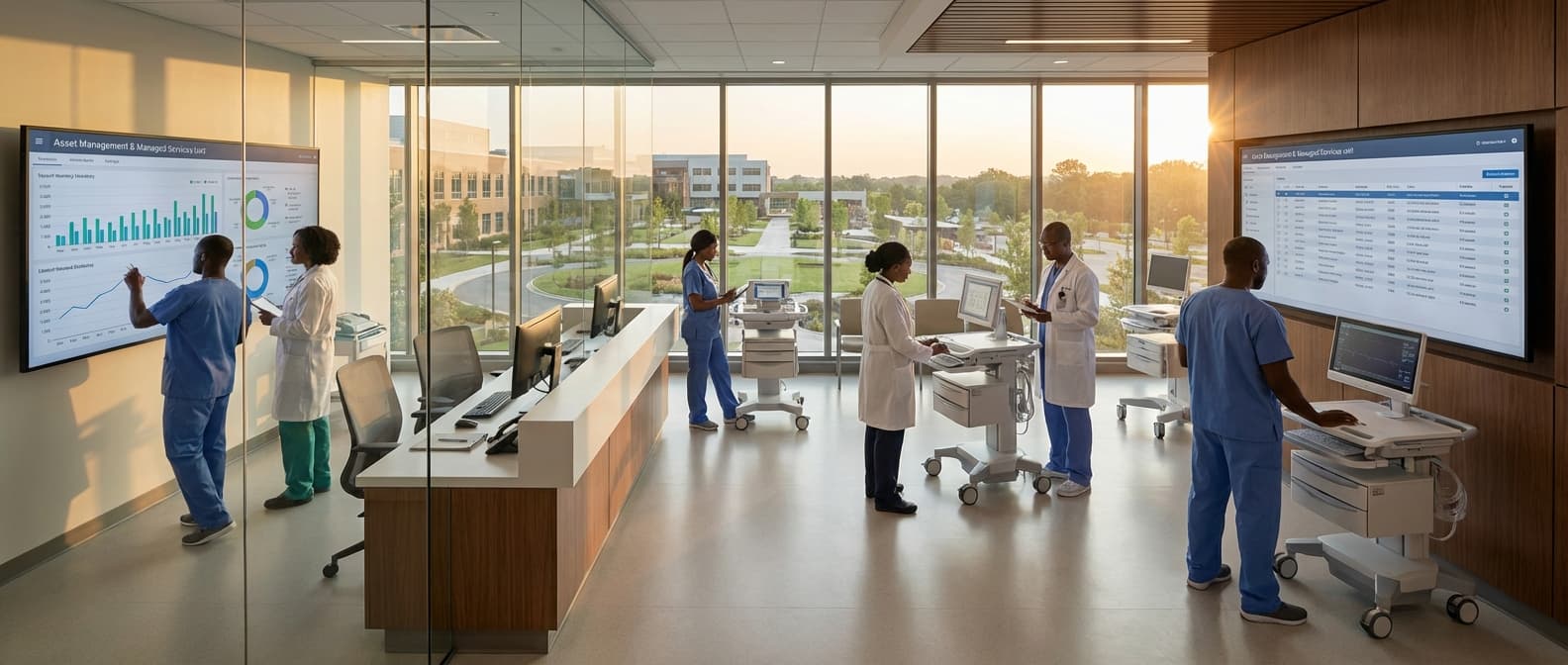
Maintenance KPI Reporting Service (Uptime/MTBF/MTTR) in Egypt
Engineering Excellence & Technical Support
Maintenance KPI Reporting Service (Uptime/MTBF/MTTR) High-standard technical execution following OEM protocols and local regulatory frameworks.
Maximizing Production Uptime
Our service empowers Egyptian manufacturers to significantly boost production line uptime by providing real-time, actionable insights into equipment performance. We track critical uptime metrics, identify root causes of downtime, and recommend preventative maintenance strategies to ensure continuous operation and maximize output in the dynamic Egyptian industrial landscape.
Enhancing Equipment Reliability (MTBF)
Reduce unexpected equipment failures across Egypt's diverse industrial sectors. Our advanced analytics delve deep into Mean Time Between Failures (MTBF) data, pinpointing recurring issues and informing proactive maintenance schedules. This leads to increased asset lifespan, reduced spare parts inventory, and predictable operational costs for Egyptian businesses.
Accelerating Repair Efficiency (MTTR)
Minimize costly downtime by rapidly resolving equipment issues. Our Maintenance KPI Reporting Service optimizes Mean Time To Repair (MTTR) by providing your Egyptian maintenance teams with instant access to historical repair data, diagnostic tools, and best-practice workflows. This ensures faster troubleshooting, efficient resource allocation, and quicker return to full operational capacity.
What Is Maintenance Kpi Reporting Service (Uptime/mtbf/mttr) In Egypt?
Maintenance KPI Reporting Service (Uptime/MTBF/MTTR) in Egypt refers to the provision of structured data analysis and reporting focused on key performance indicators (KPIs) crucial for effective maintenance operations. This service aims to quantify and track the performance of physical assets and infrastructure, providing actionable insights to optimize maintenance strategies, minimize downtime, and enhance overall operational efficiency. The core KPIs typically include:
- Uptime: The percentage of time a system or asset is operational and available for use. It directly reflects reliability and availability.
- Mean Time Between Failures (MTBF): The average time elapsed between one failure of a repairable system and the commencement of the next failure. A higher MTBF indicates greater reliability.
- Mean Time To Repair (MTTR): The average time it takes to repair a failed system or component and return it to operational status. A lower MTTR signifies faster recovery and reduced downtime impact.
This service involves the collection, aggregation, analysis, and visualization of data related to equipment performance, maintenance activities, failure events, and repair durations. The output is typically presented in the form of reports, dashboards, and predictive analytics, enabling informed decision-making for maintenance planning, resource allocation, and continuous improvement initiatives within organizations operating in Egypt.
| Typical Use Cases | Description |
|---|---|
| Predictive Maintenance Planning | Analyzing historical failure data (MTBF) to predict future failure patterns and schedule proactive maintenance, thereby reducing unexpected breakdowns and associated costs. |
| Downtime Reduction Strategies | Identifying root causes of frequent failures and implementing corrective actions to improve equipment reliability and increase Uptime. Optimizing repair processes to decrease MTTR. |
| Resource Allocation and Budgeting | Using KPI data to justify maintenance budgets, allocate technician resources effectively, and forecast spare parts inventory requirements based on predicted maintenance needs. |
| Performance Benchmarking | Comparing the performance of similar assets or assets across different sites to identify best practices and areas for improvement. Benchmarking against industry standards. |
| Contractual Obligation Management | Ensuring adherence to Service Level Agreements (SLAs) with vendors or clients by demonstrating consistent asset availability and performance through KPI reporting. |
| Risk Management and Safety Assurance | Minimizing the risk of catastrophic failures by understanding asset condition and reliability, thereby enhancing operational safety and mitigating potential liabilities. |
| Asset Lifecycle Management | Informing decisions regarding asset replacement, refurbishment, or upgrade by evaluating their long-term performance and reliability trends (Uptime, MTBF). |
| Operational Efficiency Improvement | Providing management with clear visibility into the effectiveness of maintenance operations, enabling data-driven decision-making to boost overall productivity. |
Who Needs Maintenance KPI Reporting Service (Uptime/MTBF/MTTR) in Egypt?
- Manufacturing and Industrial Facilities: Companies operating plants, production lines, and heavy machinery that require high availability and minimal unplanned downtime.
- Oil and Gas Sector: Exploration, production, and refining operations with critical infrastructure and significant financial implications of asset failure.
- Power Generation and Utilities: Entities responsible for maintaining power grids, water treatment plants, and other essential services where continuous operation is paramount.
- Telecommunications Companies: Providers of communication networks and infrastructure requiring high uptime for services like mobile, internet, and landlines.
- Transportation and Logistics: Airlines, railway operators, shipping companies, and large fleet management organizations where asset reliability is directly tied to operational efficiency and safety.
- Healthcare Institutions: Hospitals and clinics relying on medical equipment and infrastructure that demand high availability to ensure patient care.
- Large Commercial Real Estate and Facility Management: Owners and managers of office buildings, shopping malls, and other commercial properties requiring consistent operation of HVAC, elevators, and other building systems.
- Government and Public Infrastructure Projects: Agencies managing critical public assets such as bridges, public transport systems, and water distribution networks.
Who Needs Maintenance Kpi Reporting Service (Uptime/mtbf/mttr) In Egypt?
In Egypt's dynamic industrial and commercial landscape, businesses across various sectors are increasingly recognizing the critical importance of robust maintenance KPI reporting for optimizing operations, minimizing downtime, and maximizing asset lifespan. This service, focused on key metrics like Uptime, Mean Time Between Failures (MTBF), and Mean Time To Repair (MTTR), offers invaluable insights for proactive maintenance strategies. Organizations in Egypt that are seeking to enhance their operational efficiency, reduce costs associated with unexpected breakdowns, and improve overall productivity will find significant value in a specialized maintenance KPI reporting service.
| Target Customer Segment | Key Departments Benefiting | Specific Needs/Benefits |
|---|---|---|
| Manufacturing | Production Management, Maintenance Engineering, Operations Management, Quality Control | Reducing unplanned downtime, improving production throughput, optimizing spare parts inventory, enhancing equipment reliability and lifespan. |
| Oil & Gas | Asset Integrity Management, Maintenance & Reliability Engineering, Operations, Health, Safety, and Environment (HSE) | Ensuring operational continuity, minimizing risk of catastrophic failures, optimizing maintenance schedules for critical assets, improving safety. |
| Power Utilities | Operations & Maintenance (O&M), Grid Management, Engineering | Maximizing power generation uptime, ensuring grid stability, reducing service interruption times, optimizing preventive maintenance programs. |
| Telecommunications | Network Operations Center (NOC), Field Service Management, Technical Operations | Minimizing network outages, improving service availability, optimizing repair response times, managing field technician efficiency. |
| Transportation & Logistics | Fleet Management, Operations, Maintenance, Safety | Ensuring vehicle/asset availability, reducing operational delays, optimizing maintenance costs, enhancing fleet reliability and safety. |
| Facility Management | Operations Management, Building Services, Technical Maintenance | Ensuring building systems (HVAC, elevators, etc.) are operational, minimizing tenant disruption, optimizing maintenance budgets, improving asset longevity. |
Target Customers in Egypt for Maintenance KPI Reporting Service
- Manufacturing Companies (Automotive, Food & Beverage, Textiles, Pharmaceuticals, Cement, etc.)
- Oil & Gas Sector (Exploration, Production, Refining)
- Power Generation and Distribution Utilities
- Telecommunications Providers
- Transportation and Logistics Companies (Airlines, Shipping, Railways, Trucking)
- Real Estate Developers and Facility Management Companies
- Mining and Quarrying Operations
- Water and Wastewater Treatment Plants
- Large Industrial Complexes and Free Zones
- Companies with significant fleets of vehicles or specialized equipment.
Maintenance Kpi Reporting Service (Uptime/mtbf/mttr) Process In Egypt
This document outlines the workflow for the Maintenance KPI Reporting Service, specifically focusing on Uptime, Mean Time Between Failures (MTBF), and Mean Time To Repair (MTTR) reporting within Egypt. The service aims to provide clients with accurate and timely data to assess and improve their maintenance operations. The process begins with an initial inquiry and culminates in the delivery of comprehensive reports.
| Step | Description | Responsible Party | Output/Deliverable | Timeframe (Typical) |
|---|---|---|---|---|
| Potential client contacts the service provider to express interest in maintenance KPI reporting. Initial discussions focus on client needs, scope of reporting, and desired KPIs (Uptime, MTBF, MTTR). | Client & Service Provider Business Development | Understanding of client requirements, preliminary scope definition, and potential service agreement outline. | 1-3 Business Days |
| Based on the consultation, a detailed proposal is prepared outlining the service scope, methodology, data collection requirements, reporting frequency, pricing, and terms. Upon client approval, a service agreement is signed. | Service Provider & Client | Signed Service Agreement and Approved Proposal. | 3-7 Business Days |
| Collaboration to identify the client's existing data sources (e.g., CMMS, SCADA systems, manual logs). Planning for data extraction and integration methods, including any necessary API configurations or data mapping. | Service Provider Technical Team & Client IT/Maintenance | Identified data sources, data integration plan, and access credentials/permissions. | 5-10 Business Days |
| The service provider sets up and executes the agreed-upon data collection methods. Initial data is gathered and rigorously validated for accuracy, completeness, and consistency against established definitions of failure and repair. | Service Provider Data Engineers/Analysts | Raw and validated maintenance data. | Ongoing (depending on data source frequency) |
| Using the validated data, the service provider calculates the Uptime, MTBF, and MTTR for the specified assets or systems according to agreed-upon formulas and methodologies. | Service Provider Data Analysts | Calculated KPI values. | Concurrent with Data Validation |
| Comprehensive reports are generated, presenting the calculated KPIs in a clear and actionable format. This typically includes trend analysis, comparisons, and visualizations. | Service Provider Data Analysts/Report Designers | Draft Maintenance KPI Reports. | 2-5 Business Days |
| The draft reports are shared with the client for review. The client provides feedback, asks clarifying questions, and suggests any necessary adjustments. | Client & Service Provider | Feedback on draft reports and approved report content. | 3-5 Business Days |
| The final, approved maintenance KPI reports are delivered to the client in the agreed-upon format (e.g., PDF, dashboard access). | Service Provider | Final Maintenance KPI Reports. | 1 Business Day |
| Periodic meetings are held with the client to discuss the KPI reports, identify areas for improvement, and refine the reporting process. This step ensures the service remains aligned with evolving client needs and industry best practices in Egypt. | Service Provider & Client | Actionable insights, process improvements, and ongoing client satisfaction. | Quarterly/As per agreement |
Key Maintenance KPIs Covered
- Uptime: The percentage of time a piece of equipment or a system is operational and available for use.
- Mean Time Between Failures (MTBF): The average time a repairable system or component operates between failures.
- Mean Time To Repair (MTTR): The average time it takes to repair a failed system or component and return it to operational status.
Maintenance Kpi Reporting Service (Uptime/mtbf/mttr) Cost In Egypt
Determining the precise cost of a Maintenance KPI Reporting Service (focusing on Uptime, Mean Time Between Failures - MTBF, and Mean Time To Repair - MTTR) in Egypt requires a nuanced understanding of various factors. These services are crucial for optimizing operational efficiency, minimizing downtime, and managing maintenance budgets effectively. Pricing can vary significantly based on the complexity of the implementation, the scope of services, the number of assets being monitored, the required level of customization, and the vendor's expertise and reputation.
| Service Tier/Complexity | Estimated Monthly Cost Range (EGP) | Typical Features Included |
|---|---|---|
| Basic Reporting (Limited Assets, Standard KPIs) | 3,000 - 8,000 EGP | Standard Uptime, MTBF, MTTR calculation; basic dashboards; monthly reports. |
| Intermediate Reporting (Moderate Assets, Custom KPIs, Some Integration) | 8,000 - 20,000 EGP | Customizable dashboards; trend analysis; integration with one major system (e.g., CMMS); more frequent reporting. |
| Advanced/Comprehensive Reporting (Large Asset Base, IoT Integration, Predictive Analytics) | 20,000 - 50,000+ EGP | Real-time dashboards; advanced analytics (predictive, prescriptive); IoT sensor integration; API integrations; dedicated support. |
| Enterprise/Bespoke Solutions (Highly Complex, Full Integration, Unique Requirements) | Negotiable (often starting from 50,000+ EGP) | Fully customized platform; extensive system integrations; dedicated project teams; advanced AI/ML capabilities. |
Key Pricing Factors for Maintenance KPI Reporting Services in Egypt:
- Scope of Services: Basic reporting versus comprehensive solutions including predictive maintenance, prescriptive analytics, or integration with existing ERP/CMMS systems.
- Number and Type of Assets: The volume and complexity of machinery, equipment, or infrastructure to be monitored. More assets generally mean higher costs.
- Data Collection Methods: Manual data entry, sensor integration (IoT), or existing SCADA/PLC system integration will impact setup and ongoing costs.
- Reporting Frequency and Granularity: Daily, weekly, monthly reports, or real-time dashboards with detailed drill-down capabilities.
- Customization and Integration: Need for bespoke dashboards, specific KPI calculations, or integration with other business systems.
- Vendor Expertise and Support: Reputation, experience in the Egyptian market, and the level of technical support and training offered.
- Software Licensing Model: Per-user, per-asset, or tiered subscription models.
- Implementation and Training Costs: Initial setup, configuration, data migration, and user training.
- Cloud vs. On-Premise Deployment: Cloud-based solutions often have subscription fees, while on-premise might involve higher upfront hardware and software licensing costs.
- Service Level Agreements (SLAs): Guaranteed uptime of the reporting system and response times for support.
Affordable Maintenance Kpi Reporting Service (Uptime/mtbf/mttr) Options
Our Affordable Maintenance KPI Reporting Service provides essential visibility into your operational performance, focusing on critical metrics like Uptime, Mean Time Between Failures (MTBF), and Mean Time To Repair (MTTR). By offering flexible value bundles and implementing cost-saving strategies, we empower businesses of all sizes to optimize their maintenance operations without breaking the bank.
| Value Bundle | Key Features | Ideal For | Pricing Tier |
|---|---|---|---|
| Basic Visibility | Core KPI dashboards (Uptime, MTBF, MTTR) for up to 5 assets. Basic historical data storage (3 months). Standard reporting frequency (monthly). | Small businesses, startups, or those new to KPI tracking. | Entry-Level |
| Operational Insight | All Basic Visibility features + real-time data streaming (where applicable). Customizable dashboards. Advanced historical data storage (1 year). Weekly reporting options. Basic alert notifications for critical events. | Growing businesses, SMEs looking for deeper operational understanding. | Mid-Tier |
| Strategic Optimization | All Operational Insight features + predictive analytics integration (optional). Root cause analysis tools. Customizable alert thresholds. Dedicated account manager. API access for integration with other systems. Annual reporting and trend analysis. | Larger enterprises, businesses with complex operations, or those focused on proactive maintenance and continuous improvement. | Premium |
Key Maintenance KPIs Explained
- Uptime: The percentage of time a piece of equipment or system is operational and available for use. Higher uptime directly translates to increased productivity and revenue.
- Mean Time Between Failures (MTBF): The average time a repairable component or system operates between breakdowns. A higher MTBF indicates greater reliability and less frequent disruptions.
- Mean Time To Repair (MTTR): The average time it takes to repair a failed component or system and restore it to operational status. A lower MTTR minimizes downtime and associated costs.
Verified Providers In Egypt
Finding reliable and trustworthy healthcare providers in Egypt can be a challenge. This is where Franance Health distinguishes itself by focusing on verified providers, ensuring patients receive quality care from credentialed professionals. Our rigorous vetting process guarantees that all listed healthcare professionals and facilities meet the highest standards of medical expertise, ethical practice, and patient safety. Choosing a Franance Health verified provider means opting for peace of mind and a superior healthcare experience.
| Provider Type | Franance Health Verification Criteria | Benefits to Patients |
|---|---|---|
| Physicians | Medical Degree (MD/MBBCh), Licensing Board Approval, Board Certification (if applicable), Specialty Training Completion, Clean Disciplinary Record, Peer Review (where applicable) | Access to specialists with proven expertise, confidence in diagnosis and treatment, assurance of ethical medical practice. |
| Hospitals & Clinics | Accreditation (e.g., JCI, national accreditation), Compliance with Egyptian Ministry of Health regulations, Quality Management Systems, Patient Satisfaction Scores, Infection Control Protocols | Safe and sterile environment, access to advanced medical technology, comprehensive range of services, high standards of patient care and safety. |
| Diagnostic Centers (Labs & Imaging) | Accreditation, Certified Technologists, Equipment Calibration and Maintenance Records, Quality Control Measures, Turnaround Time Performance | Accurate and reliable diagnostic results, use of up-to-date technology, timely reporting for faster treatment decisions. |
| Dental Practices | Dental Degree, Licensing, Specialty Certifications (e.g., Orthodontics, Periodontics), Sterilization Protocols, Patient Feedback | Experienced dental professionals, high-quality oral care, safe and hygienic treatment environment, personalized dental solutions. |
Why Franance Health Verified Providers are the Best Choice in Egypt
- Rigorous Credentialing: We go beyond basic licensing, verifying educational background, professional experience, and any specialized certifications.
- Commitment to Quality: Our network includes providers consistently recognized for their patient care, outcomes, and adherence to best medical practices.
- Enhanced Patient Safety: Verified providers undergo regular checks to ensure compliance with safety regulations and ethical guidelines.
- Transparency and Trust: We provide clear information about provider qualifications, empowering patients to make informed decisions.
- Streamlined Healthcare Journey: Access to a trusted network simplifies finding the right specialist or facility, saving you time and stress.
- Focus on Patient Experience: Verified providers are committed to delivering compassionate and effective care, prioritizing your well-being.
Scope Of Work For Maintenance Kpi Reporting Service (Uptime/mtbf/mttr)
This Scope of Work (SOW) outlines the requirements for a Maintenance Key Performance Indicator (KPI) Reporting Service, focusing on Uptime, Mean Time Between Failures (MTBF), and Mean Time To Repair (MTTR). The service aims to provide accurate, timely, and insightful reporting to enable proactive maintenance strategies, optimize asset performance, and reduce operational downtime. This SOW details the technical deliverables and standard specifications required for the successful implementation and ongoing execution of this service.
| Deliverable | Description | Technical Specification | Frequency | Format |
|---|---|---|---|---|
| Initial Data Integration & Validation Report | Assessment of existing data sources, data quality, and initial integration of maintenance data into the reporting platform. Includes identification of any data gaps or inconsistencies. | Data sources identified (CMMS, SCADA, etc.), data mapping documented, validation scripts executed, data cleansing recommendations. | Once (post-contract signing) | PDF Report |
| Monthly KPI Dashboard | A dynamic, interactive dashboard visualizing Uptime, MTBF, and MTTR trends for key assets or asset groups. | Web-based, interactive visualization tool (e.g., Power BI, Tableau). Customizable views for different user roles. Real-time or near real-time data refresh. | Monthly | Web-based Dashboard Access |
| Monthly KPI Summary Report | A concise written report summarizing key findings, trends, and actionable insights derived from the monthly KPI data. Includes performance against targets and recommendations. | Structured narrative report with key statistics, trend analysis, root cause analysis (for significant deviations), and recommendations. May include graphical representations. | Monthly | PDF Report |
| Quarterly Performance Review Presentation | A presentation to stakeholders detailing the overall maintenance performance based on KPI trends over the quarter, highlighting successes, challenges, and strategic recommendations. | Presentation slides (e.g., PowerPoint) covering aggregated KPI data, significant performance shifts, and proposed future actions. | Quarterly | Presentation File (.pptx) & accompanying PDF |
| Ad-hoc KPI Analysis | On-demand analysis of specific events, asset failures, or performance issues upon request from the client. | Data extraction, analysis, and reporting for specific incidents or queries. Scope and timeline to be agreed upon per request. | As requested | PDF Report or direct data export (e.g., CSV) |
| Data Dictionary & Methodology Document | A comprehensive document defining all KPIs, data sources, calculation methodologies, and assumptions used in the reporting. | Detailed explanation of each KPI, data field definitions, calculation formulas, data validation rules, and any assumptions made. Version controlled. | Once (initially) & updated as needed | PDF Document |
| API/Data Export Specification (Optional) | If required, specifications for accessing raw or processed KPI data via API or scheduled data exports. | RESTful API endpoints with clear documentation, or specification for scheduled SFTP/cloud storage data dumps. Data formats (e.g., JSON, CSV) to be defined. | As per agreement | API Documentation / Data Export Specification Document |
Key Performance Indicators (KPIs)
- Uptime: The percentage of time that a system or asset is operational and available for use. This will be measured against planned operational periods.
- Mean Time Between Failures (MTBF): The average time between a repairable system's successive failures. Calculated as total operational time divided by the number of failures.
- Mean Time To Repair (MTTR): The average time required to repair a failed component or system. Calculated as total downtime divided by the number of repairs.
Service Level Agreement For Maintenance Kpi Reporting Service (Uptime/mtbf/mttr)
This Service Level Agreement (SLA) outlines the performance standards and guarantees for the Maintenance KPI Reporting Service, specifically focusing on Uptime, Mean Time Between Failures (MTBF), and Mean Time To Repair (MTTR). This SLA defines the responsibilities of both the Service Provider and the Client, and establishes the metrics and procedures for monitoring and reporting.
1. Service Overview
The Maintenance KPI Reporting Service provides clients with access to dashboards, reports, and analytical tools that track key maintenance performance indicators. This includes but is not limited to:
- Uptime: The percentage of time the reporting service is accessible and operational.
- Mean Time Between Failures (MTBF): The average time between system failures during normal operation.
- Mean Time To Repair (MTTR): The average time it takes to resolve a system failure from the moment it is detected.
2. Service Availability (Uptime Guarantee)
The Service Provider guarantees a minimum uptime of 99.9% for the Maintenance KPI Reporting Service, calculated on a monthly basis. This excludes scheduled maintenance windows.
3. Definitions
- Service Interruption: Any period where the Maintenance KPI Reporting Service is unavailable to the Client due to a failure in the Service Provider's infrastructure or software.
- Scheduled Maintenance: Pre-announced periods where the Service Provider will take the reporting service offline for planned updates, upgrades, or maintenance. Notification of scheduled maintenance will be provided at least [Number] ([e.g., 48]) hours in advance.
- System Failure: An event that renders the Maintenance KPI Reporting Service inaccessible or inoperable.
4. Uptime Measurement
Uptime will be measured by the Service Provider using automated monitoring tools that track the availability of the core reporting functionalities. The measurement period is one calendar month.
5. MTBF and MTTR Guarantees
While direct uptime is the primary guarantee, the Service Provider aims to maintain the following performance levels for MTBF and MTTR, reflecting the overall health and responsiveness of the reporting service:
- MTBF Target: The Service Provider will strive to achieve an average MTBF of at least [Number] ([e.g., 720]) hours.
- MTTR Target: The Service Provider will strive to achieve an average MTTR of no more than [Number] ([e.g., 4]) hours for critical service interruptions.
Note: MTBF and MTTR are target metrics reflecting operational excellence and will be monitored. While not subject to direct service credits as uptime is, consistent failure to meet these targets may trigger a review of the service's underlying performance.
6. Response Times
The Service Provider commits to the following response times for incidents reported by the Client:
- Critical Incidents (Service Unavailable): Acknowledgment and commencement of troubleshooting within [Number] ([e.g., 30]) minutes.
- Major Incidents (Significant Performance Degradation): Acknowledgment and commencement of troubleshooting within [Number] ([e.g., 1]) hour.
- Minor Incidents (Non-critical issues): Acknowledgment and commencement of troubleshooting within [Number] ([e.g., 4]) business hours.
7. Incident Prioritization
Incidents will be categorized and prioritized as follows:
- Critical: Complete loss of service or core functionality. No workaround available.
- Major: Significant degradation of service or loss of non-core functionality. Workaround may be available but is inconvenient.
- Minor: Minor functional issues, performance slowdowns, or cosmetic defects. Service is still largely usable.
8. Reporting
The Service Provider will furnish the Client with a monthly report detailing:
- Actual Uptime percentage.
- Number and duration of Service Interruptions.
- Calculated MTBF and MTTR (where applicable and measurable).
- Details of reported incidents and their resolution times.
9. Service Credits
If the Service Provider fails to meet the 99.9% Uptime Guarantee in any given month, the Client will be eligible for service credits as follows:
- 99.0% to 99.89% Uptime: [Percentage]% of the monthly service fee.
- Less than 99.0% Uptime: [Percentage]% of the monthly service fee.
Service credits are the sole and exclusive remedy for the Service Provider's failure to meet the Uptime Guarantee.
10. Exclusions
This SLA does not apply to performance issues or service unavailability caused by:
- Factors outside the Service Provider's reasonable control (Force Majeure).
- Client's acts or omissions, including misuse of the service or unauthorized modifications.
- Third-party services or equipment not managed by the Service Provider.
- Scheduled maintenance.
11. Review and Amendments
This SLA will be reviewed annually or as needed. Any amendments to this SLA must be in writing and signed by both parties.
| Uptime Achieved (%) | Service Credit (%) | Service Fee Basis |
|---|---|---|
| 99.0 - 99.89 | 5 | Monthly Service Fee |
| < 99.0 | 10 | Monthly Service Fee |
Key Performance Indicators (KPIs) and Guarantees
- Uptime Guarantee: 99.9% monthly
- MTBF Target: 720 hours (average)
- MTTR Target: 4 hours (average for critical failures)
- Response Time (Critical Incidents): 30 minutes acknowledgment
- Response Time (Major Incidents): 1 hour acknowledgment
- Response Time (Minor Incidents): 4 business hours acknowledgment
Frequently Asked Questions

Ready when you are
Let's scope your Maintenance KPI Reporting Service (Uptime/MTBF/MTTR) in Egypt project in Egypt.

Scaling healthcare logistics and technical systems across the entire continent.