
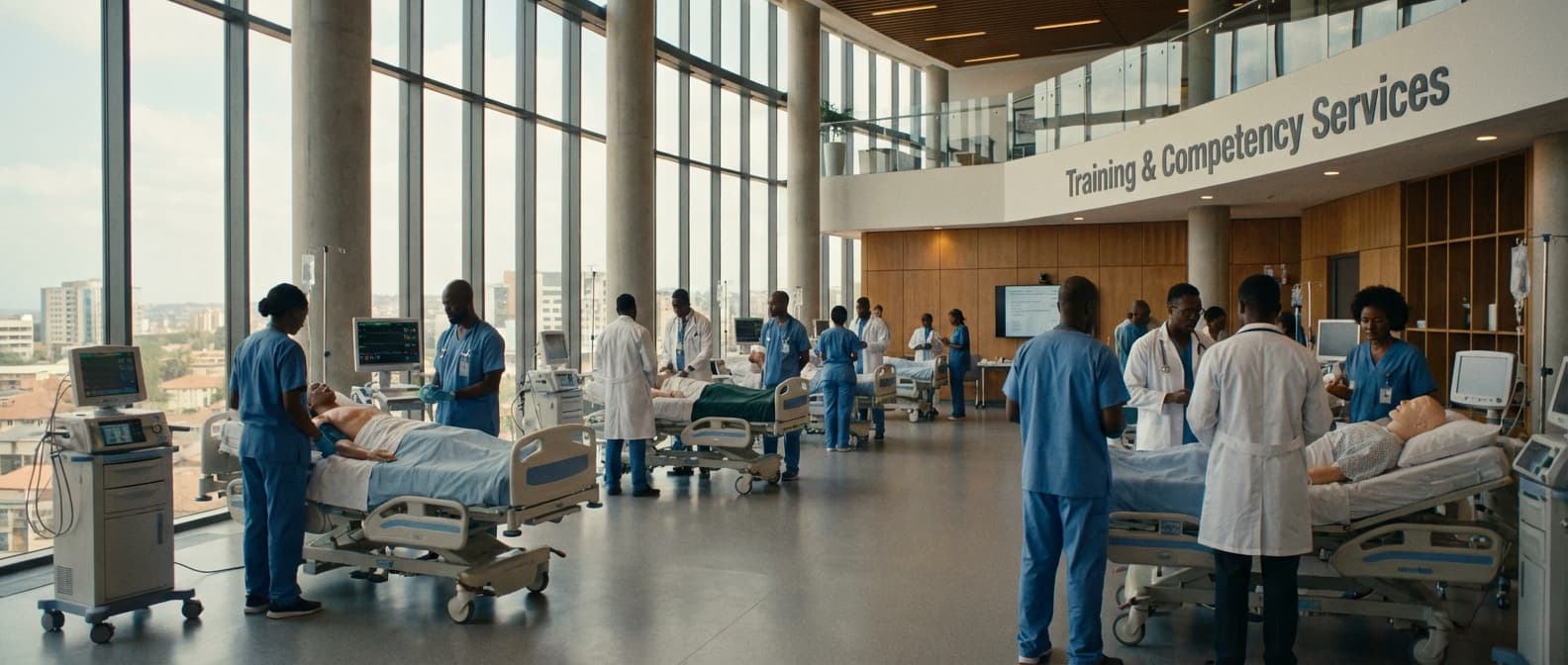
Ventilator User Training Service (Nurses) in Djibouti
Engineering Excellence & Technical Support
Ventilator User Training Service (Nurses) High-standard technical execution following OEM protocols and local regulatory frameworks.
Advanced Ventilation Modes Mastery
Gain expert proficiency in operating and optimizing advanced ventilator modes (e.g., Pressure Support Ventilation, Volume Control Ventilation, Synchronized Intermittent Mandatory Ventilation) tailored for diverse patient conditions encountered in Djibouti's healthcare settings. Learn critical parameter adjustments for effective patient-ventilator synchrony and lung protection strategies.
Real-time Patient Monitoring & Alarms
Master the interpretation of real-time ventilator waveforms and numerical data. This module focuses on recognizing and responding promptly to critical alarms, understanding their underlying causes, and implementing appropriate interventions to ensure patient safety and optimal respiratory support.
Troubleshooting & Emergency Preparedness
Develop practical skills in identifying and resolving common ventilator malfunctions and circuit issues. This section emphasizes systematic troubleshooting protocols and emergency response procedures to maintain continuous ventilation and manage critical patient scenarios effectively in resource-constrained environments.
What Is Ventilator User Training Service (Nurses) In Djibouti?
Ventilator User Training Service (Nurses) in Djibouti refers to specialized educational programs designed to equip registered nurses and other qualified healthcare professionals with the knowledge and practical skills required for the safe and effective operation, management, and monitoring of mechanical ventilators within the Djiboutian healthcare system. This service aims to enhance patient care outcomes for individuals requiring ventilatory support by ensuring competent personnel are available to manage these critical devices. The training is typically delivered through a combination of theoretical instruction, hands-on simulation, and clinical exposure, focusing on the principles of mechanical ventilation, ventilator modes, troubleshooting, patient monitoring, and emergency procedures. It addresses the unique challenges and resource considerations relevant to the Djiboutian context, including potential infrastructure limitations and the availability of specific ventilator models.
| Who Needs This Service? | Typical Use Cases | |||||
|---|---|---|---|---|---|---|
| Registered Nurses working in critical care units (ICUs), emergency departments, operating rooms, and post-anesthesia care units (PACUs) in Djibouti. | Management of patients with acute respiratory failure (e.g., due to severe pneumonia, COVID-19, ARDS). | Support for patients undergoing general anesthesia or sedation requiring mechanical ventilation. | Management of patients with chronic respiratory conditions exacerbating their condition. | Stabilization and transport of critically ill patients requiring ventilatory support. | Assisting in the weaning process of patients from mechanical ventilation. | Emergency response situations requiring immediate ventilatory support. |
| Enrolled Nurses with designated responsibilities for patient monitoring and basic ventilator operation under supervision. | Respiratory Therapists (where available) to augment their existing skillsets. | Healthcare professionals in remote or underserved areas of Djibouti who may be required to manage ventilators with limited immediate specialist support. |
Key Components of Ventilator User Training Service (Nurses) in Djibouti
- Principles of respiratory physiology and pathophysiology.
- Fundamentals of mechanical ventilation, including pressure control, volume control, and other advanced modes.
- Ventilator setup, calibration, and routine maintenance procedures.
- Patient assessment and ventilator synchrony monitoring.
- Interpretation of ventilator graphics and alarms.
- Troubleshooting common ventilator-related issues and critical event management.
- Ventilator weaning protocols and strategies.
- Infection control practices related to mechanical ventilation.
- Ethical considerations and documentation requirements.
- Familiarization with specific ventilator models commonly used in Djiboutian healthcare facilities.
Who Needs Ventilator User Training Service (Nurses) In Djibouti?
This document outlines the critical need for Ventilator User Training Services specifically tailored for nurses in Djibouti. As healthcare infrastructure evolves, ensuring that medical professionals are proficient in operating and managing complex medical equipment like ventilators is paramount for patient safety and effective care delivery. This training aims to equip nurses with the knowledge and practical skills necessary to confidently and competently use ventilators across various clinical settings.
| Department/Unit | Rationale for Training | Specific Roles Requiring Training |
|---|---|---|
| Intensive Care Units (ICU)/Critical Care Units (CCU) | Ventilators are a mainstay of critical care, essential for managing respiratory failure in critically ill patients. Nurses in these units require advanced skills in ventilator management, monitoring, and troubleshooting. | ICU Nurses, Respiratory Therapists (if applicable and working alongside nurses), Nurse Managers of ICUs. |
| Emergency Departments (ED) | Nurses in EDs frequently encounter patients requiring immediate ventilatory support. Rapid and correct initiation of ventilation is critical in life-threatening situations. | Emergency Department Nurses, Trauma Nurses, Triage Nurses (basic understanding). |
| Operating Rooms (OR) | Anesthetist nurses and perioperative nurses often manage patients on ventilators during surgical procedures. Familiarity with various ventilator modes and settings is essential. | Anesthetist Nurses, Perioperative Nurses, Recovery Room Nurses. |
| Post-Anesthesia Care Units (PACU)/Recovery Rooms | Patients recovering from anesthesia may require ventilatory support. Nurses in these units need to monitor respiratory status and manage mechanical ventilation as needed. | PACU Nurses, Recovery Room Nurses. |
| Medical/Surgical Wards (with ventilator capabilities) | Even general wards may have patients requiring short-term ventilatory support, especially those with chronic respiratory conditions or post-operative complications. Nurses on these wards need foundational training. | General Medical/Surgical Ward Nurses, Pulmonology Ward Nurses (if applicable). |
| Pediatric Wards/Neonatal Intensive Care Units (NICU) (if applicable) | Specialized training is crucial for nurses caring for pediatric and neonatal patients requiring ventilation, as equipment and physiological considerations differ significantly. | Pediatric Nurses, NICU Nurses, Neonatal Respiratory Therapists (if applicable). |
| Infection Prevention and Control Department | Understanding ventilator circuits, cleaning protocols, and maintenance contributes to preventing hospital-acquired infections. | Nurses involved in equipment sterilization and disinfection protocols. |
| Nursing Education Department | To ensure the sustainability of skilled ventilator users, the nursing education department will be key in integrating and delivering this training. | Nurse Educators, Clinical Nurse Specialists. |
Target Customers and Departments for Ventilator User Training Service (Nurses) in Djibouti
- {"title":"Primary Target Customers: Registered Nurses","description":"All registered nurses working in clinical environments where ventilators are utilized, including those in critical care, emergency departments, operating rooms, and general medical/surgical wards. The training is especially crucial for nurses who may not have had recent or comprehensive training on the specific models of ventilators available in Djiboutian healthcare facilities."}
- {"title":"Secondary Target Customers: Nurse Educators and Supervisors","description":"Nurse educators responsible for in-service training and ongoing professional development, as well as nurse supervisors and head nurses who oversee patient care and equipment management. Training these individuals can create a multiplier effect, enabling them to train and mentor their teams effectively."}
Ventilator User Training Service (Nurses) Process In Djibouti
This document outlines the workflow for the Ventilator User Training Service for Nurses in Djibouti, from initial inquiry to the successful execution of the training. The service aims to equip nursing staff with the necessary knowledge and practical skills to safely and effectively operate mechanical ventilators. The process is designed to be comprehensive, ensuring that all participants receive high-quality training and support.
| Phase | Key Activities | Responsible Party |
|---|---|---|
| Initial contact, understanding training needs, reporting requirements. | Healthcare Facility & Training Provider |
| Developing and presenting training proposal, contract negotiation and signing. | Training Provider & Healthcare Facility |
| Scheduling, registration, material preparation, equipment setup. | Training Provider & Healthcare Facility |
| Theoretical and practical sessions, hands-on practice, simulations, assessments. | Training Provider |
| Final assessments, feedback, certification, ongoing support, reporting. | Training Provider & Healthcare Facility |
Ventilator User Training Service (Nurses) Process in Djibouti - Workflow
- {"steps":[{"stepNumber":1,"description":"Hospital/Healthcare Facility Inquiry: A healthcare facility in Djibouti expresses interest in ventilator user training for its nursing staff. This can be through email, phone, or an official request form."},{"stepNumber":2,"description":"Initial Consultation: A representative from the training provider holds an initial meeting with the facility's administration and nursing leadership to understand their specific needs. This includes identifying the number of nurses to be trained, their current skill levels, existing ventilator models in use, and any specific training requirements or challenges."},{"stepNumber":3,"description":"Needs Assessment Report: Based on the consultation, a detailed needs assessment report is compiled, outlining the scope of training, target audience, learning objectives, and any required equipment or materials."}],"title":"Phase 1: Inquiry and Needs Assessment"}
- {"steps":[{"stepNumber":4,"description":"Training Proposal Development: A comprehensive training proposal is developed. This includes the training curriculum, methodology (theory, practical sessions, simulations), duration, trainer qualifications, schedule options, and a detailed cost breakdown."},{"stepNumber":5,"description":"Proposal Review and Negotiation: The proposal is submitted to the healthcare facility for review. Discussions and negotiations may occur to finalize the scope, schedule, and budget."},{"stepNumber":6,"description":"Contract/Agreement Signing: Once terms are agreed upon, a formal contract or service agreement is signed by both parties, outlining the deliverables, responsibilities, payment terms, and confidentiality clauses."}],"title":"Phase 2: Proposal and Agreement"}
- {"steps":[{"stepNumber":7,"description":"Logistics and Scheduling: The training provider and the healthcare facility finalize the training dates, times, and location. This includes booking training rooms, ensuring access to ventilators (either the facility's own or provided by the trainer), and confirming participant availability."},{"stepNumber":8,"description":"Participant Registration: The healthcare facility provides a list of participating nurses. The training provider may use a registration system to manage participant details."},{"stepNumber":9,"description":"Training Material Preparation: Training materials, including presentations, handbooks, case studies, and assessment tools, are prepared and finalized. These materials are often translated into French or Arabic if required."},{"stepNumber":10,"description":"Equipment Check and Setup: If specialized training ventilators or simulation equipment are required, they are procured, checked, and set up at the training venue well in advance."}],"title":"Phase 3: Pre-Training Preparation"}
- {"steps":[{"stepNumber":11,"description":"Theoretical Session: The training commences with theoretical sessions covering the principles of mechanical ventilation, indications, contraindications, ventilator modes, parameters, monitoring, and troubleshooting. This often involves interactive lectures and Q&A."},{"stepNumber":12,"description":"Practical Demonstrations: Trainers demonstrate the operation of various ventilator models, including setting up the equipment, initiating ventilation, adjusting settings, and responding to alarms."},{"stepNumber":13,"description":"Hands-on Practice and Simulation: Nurses participate in hands-on practice sessions using actual ventilators or high-fidelity simulators. They are guided through various clinical scenarios, practicing patient connection, ventilation management, and emergency response."},{"stepNumber":14,"description":"Case Study Analysis: Real-world or simulated case studies are used to apply learned concepts and develop critical thinking skills in managing ventilated patients."},{"stepNumber":15,"description":"Assessment and Feedback: Regular assessments, including written tests and practical evaluations, are conducted to gauge participant understanding and skill acquisition. Constructive feedback is provided throughout the training."}],"title":"Phase 4: Training Execution"}
- {"steps":[{"stepNumber":16,"description":"Post-Training Assessment: A final assessment is administered to evaluate overall competence. Successful completion leads to the issuance of a training certificate."},{"stepNumber":17,"description":"Feedback Collection: Participants and the healthcare facility are invited to provide feedback on the training program through evaluation forms. This feedback is crucial for continuous improvement."},{"stepNumber":18,"description":"Certificate Issuance: Upon successful completion of the training and assessments, certificates are issued to all participating nurses."},{"stepNumber":19,"description":"Post-Training Support: The training provider offers post-training support, which may include answering follow-up questions, providing access to online resources, or offering refresher courses if needed."},{"stepNumber":20,"description":"Reporting and Review: A comprehensive training report is submitted to the healthcare facility, summarizing the training activities, participant performance, and feedback received. A post-training review meeting may be held to discuss outcomes and future training needs."}],"title":"Phase 5: Post-Training and Follow-up"}
Ventilator User Training Service (Nurses) Cost In Djibouti
Providing ventilator user training for nurses in Djibouti involves a multifaceted cost structure. The pricing is influenced by several key factors, including the duration and depth of the training, the qualifications and experience of the trainers, the location of the training (on-site at a facility or off-site at a dedicated training center), the number of participants, and any specialized equipment or materials required. Additionally, the availability of local expertise versus the need to import specialized trainers can significantly impact the overall cost. Demand within Djibouti for such specialized nursing training also plays a role in price determination.
| Training Type | Estimated Price Range (DJF) |
|---|---|
| Basic Ventilator Familiarization (1-2 Days) | 50,000 - 100,000 |
| Comprehensive Ventilator Management (3-5 Days) | 100,000 - 250,000 |
| Advanced Ventilator Techniques & Troubleshooting (5+ Days) | 200,000 - 400,000+ |
| Per-Participant Rate (for group training) | 15,000 - 50,000 |
Key Factors Influencing Ventilator User Training Costs for Nurses in Djibouti
- Duration and Intensity of Training: Longer, more in-depth courses with hands-on simulations will naturally incur higher costs.
- Trainer Expertise and Credentials: Highly qualified and experienced critical care nurses or respiratory therapists as trainers will command higher fees.
- Training Location: On-site training at a hospital might reduce travel costs for participants but could require the training provider to account for facility access and potential disruption.
- Number of Participants: Larger groups may lead to a lower per-participant cost due to economies of scale.
- Training Materials and Equipment: The cost of printed materials, access to simulation equipment (mannequins, actual ventilators for practice), and consumables will be factored in.
- Travel and Accommodation for Trainers: If trainers are not local, their travel and accommodation expenses will be added to the total cost.
- Certification and Assessment: Costs associated with administering and grading any certifications or assessments.
- Customization of Training Content: Tailoring the training to specific hospital protocols or ventilator models can add to the development cost.
- Administrative Overhead: Costs related to organizing the training, scheduling, and communication.
Affordable Ventilator User Training Service (Nurses) Options
This document outlines affordable ventilator user training services specifically tailored for nurses, focusing on value bundles and cost-saving strategies. Effective and accessible training is crucial for ensuring patient safety and optimal ventilator utilization. We explore various service packages designed to meet diverse institutional needs and budgets.
| Value Bundle Option | Description | Target Audience | Key Features | Estimated Cost-Saving Strategies |
|---|---|---|---|---|
| Basic Competency Package | Foundation training for general ward nurses needing basic ventilator operation skills. | RNs, LPNs working on general medical-surgical floors. | Core ventilator principles, common modes (AC/VC, PCV), basic alarms, patient connection/disconnection. Online modules + limited in-person practical. | Leverages online learning for broad reach, reduces trainer travel costs. Group discounts for multiple nurses. |
| Intermediate Critical Care Package | Advanced training for nurses in ICUs and critical care units requiring in-depth knowledge. | ICU RNs, Critical Care RNs. | Includes basic package plus advanced modes (APRV, PSV, BiPAP), waveform analysis, weaning parameters, complex troubleshooting. Blended learning: extensive online + on-site simulation. | Cost-effective if institutions have in-house simulation equipment. Off-peak training scheduling to reduce facility rental costs. |
| Specialized Respiratory Training Package | Training focused on specific patient populations (e.g., pediatric, neonatal) or advanced ventilation techniques. | Pediatric/Neonatal ICU RNs, Respiratory Therapists supporting nurses. | Tailored content for specific age groups, modes like high-frequency ventilation, ECMO interface (if applicable). Highly interactive on-site sessions with expert trainers. | Train-the-trainer model for sustainable in-house expertise. Collaborative training with neighboring facilities to share trainer costs. |
| On-Demand & Refresher Package | Access to updated training materials and short, focused sessions for ongoing competency maintenance. | All nursing staff requiring ventilator skills. | Online library of refreshers, micro-learning modules on new features or common errors, annual competency checks. Periodic webinars. | Subscription-based model provides predictable costs. Reduces need for full re-training. Digital delivery minimizes printing and distribution expenses. |
Key Components of Affordable Ventilator User Training
- Comprehensive curriculum covering ventilator modes, settings, troubleshooting, and patient monitoring.
- Hands-on practical sessions using simulated or actual equipment.
- Case-based learning scenarios to enhance critical thinking.
- Post-training support and refresher courses.
- Flexible delivery methods (on-site, remote, blended learning).
- Certification or competency assessment upon completion.
Verified Providers In Djibouti
In Djibouti, ensuring access to reliable and high-quality healthcare is paramount. This is where the verification and credentialing of healthcare providers become crucial. Franance Health stands out as a leading organization committed to this rigorous process. Their comprehensive credentialing procedures guarantee that healthcare professionals affiliated with them meet stringent standards of education, training, experience, and ethical conduct. Choosing a Franance Health-verified provider means entrusting your well-being to practitioners who have undergone thorough scrutiny, ensuring competence and a commitment to patient safety. This rigorous vetting process is why Franance Health credentials represent the best choice for individuals seeking dependable healthcare services in Djibouti.
| Credentialing Aspect | Franance Health's Scrutiny | Why it Matters to Patients |
|---|---|---|
| Educational Background | Verification of degrees, diplomas, and accreditations from recognized institutions. | Ensures providers have a solid foundation in medical knowledge. |
| Clinical Experience | Thorough review of work history, references, and documented patient care experience. | Confirms practical skills and proficiency in their specialty. |
| Licensure and Certifications | Validation of current and valid professional licenses and board certifications. | Confirms legal authorization to practice and adherence to specialty standards. |
| Professional Conduct and Ethics | Background checks and review of any disciplinary actions or malpractice claims. | Guarantees providers adhere to high ethical standards and patient-centered care. |
| Continuous Professional Development | Assessment of ongoing training and commitment to staying updated with medical advancements. | Ensures providers are current with the latest treatments and technologies. |
Key Benefits of Choosing Franance Health Verified Providers:
- Enhanced Patient Safety and Trust
- Guaranteed Competence and Expertise
- Commitment to Ethical Medical Practices
- Access to a Network of Reputable Professionals
- Peace of Mind in Healthcare Decisions
Scope Of Work For Ventilator User Training Service (Nurses)
This Scope of Work (SOW) outlines the requirements for a comprehensive Ventilator User Training Service specifically designed for nursing staff. The objective is to equip nurses with the necessary knowledge and practical skills to safely and effectively operate, monitor, and manage patients requiring mechanical ventilation. This service will ensure adherence to best practices, enhance patient safety, and improve clinical outcomes. The training will cover theoretical concepts, hands-on equipment operation, and critical decision-making scenarios.
| Training Module | Key Topics Covered | Learning Activities | Assessment Methods | Duration (Approx.) |
|---|---|---|---|---|
| Module 1: Introduction to Mechanical Ventilation | Indications for ventilation, modes of ventilation (assist-control, SIMV, CPAP/PSV), principles of positive pressure ventilation, lung mechanics. | Lecture, interactive Q&A, case study discussions. | Quiz, participation in discussions. | 2 hours |
| Module 2: Ventilator Setup and Operation | Component identification (circuits, filters, humidifier), pre-use checks, circuit management, initial ventilator settings, patient connection. | Demonstration, hands-on practice with actual ventilator units, simulated patient scenarios. | Practical skills checklist, observation of setup. | 3 hours |
| Module 3: Monitoring and Alarm Management | Ventilator graphics and waveforms (flow, pressure, volume), physiological monitoring (SpO2, ETCO2), common alarms (high/low pressure, apnea, disconnection), troubleshooting strategies. | Interactive lectures, analysis of patient data, simulation of alarm situations. | Case-based scenario evaluation, alarm response simulation. | 4 hours |
| Module 4: Ventilator Adjustments and Weaning | Titration of ventilator parameters based on patient response, initiation and progression of weaning, spontaneous breathing trials (SBTs), extubation criteria. | Group discussions, case study analysis focusing on weaning, role-playing weaning scenarios. | Written exam, scenario-based problem-solving. | 3 hours |
| Module 5: Specialized Modes and Considerations | Non-invasive ventilation (NIV), high-frequency ventilation (HFV - overview), proning, airway pressure release ventilation (APRV) (overview). | Lecture, presentation of advanced cases, Q&A. | Conceptual understanding quiz. | 2 hours |
| Module 6: Infection Control and Maintenance | Humidification management, circuit changes, ventilator cleaning and disinfection protocols, preventing ventilator-associated pneumonia (VAP). | Demonstration of cleaning procedures, discussion of infection control guidelines. | Observation of sterile technique, quiz on protocols. | 1.5 hours |
Training Objectives
- To provide a thorough understanding of ventilator principles of operation and fundamental physiology of mechanical ventilation.
- To enable nurses to confidently set up, initiate, and manage various ventilation modes relevant to common clinical scenarios.
- To train nurses in continuous patient monitoring, including interpretation of ventilator waveforms, alarms, and physiological parameters.
- To equip nurses with the skills to troubleshoot common ventilator alarms and identify potential causes and appropriate interventions.
- To ensure competence in performing basic ventilator maintenance and hygiene procedures.
- To enhance nurses' ability to communicate effectively with physicians and other healthcare professionals regarding ventilator management.
- To promote a culture of patient safety and adherence to evidence-based practices in ventilator care.
Service Level Agreement For Ventilator User Training Service (Nurses)
This Service Level Agreement (SLA) outlines the response times and uptime guarantees for the Ventilator User Training Service provided to nurses. It defines the expected performance and availability of the training platform and support channels.
| Service Component | Response Time (Business Hours) | Uptime Guarantee |
|---|---|---|
| Online Training Platform Availability | N/A (Continuous Access) | 99.5% |
| Technical Support (Email/Ticket) | Within 4 business hours | N/A |
| Technical Support (Phone) | Within 1 business hour | N/A |
| Live Webinar Registration/Access Issues | Within 30 minutes of notification | N/A |
| Clinical Support (Email/Ticket) | Within 8 business hours | N/A |
| On-Demand Video Module Availability | N/A (Continuous Access) | 99.5% |
Key Service Components
- Online training platform access (web-based).
- Live webinar-based training sessions.
- On-demand video training modules.
- Technical support for the training platform.
- Clinical support for training content inquiries.
Frequently Asked Questions

Ready when you are
Let's scope your Ventilator User Training Service (Nurses) in Djibouti project in Djibouti.

Scaling healthcare logistics and technical systems across the entire continent.