
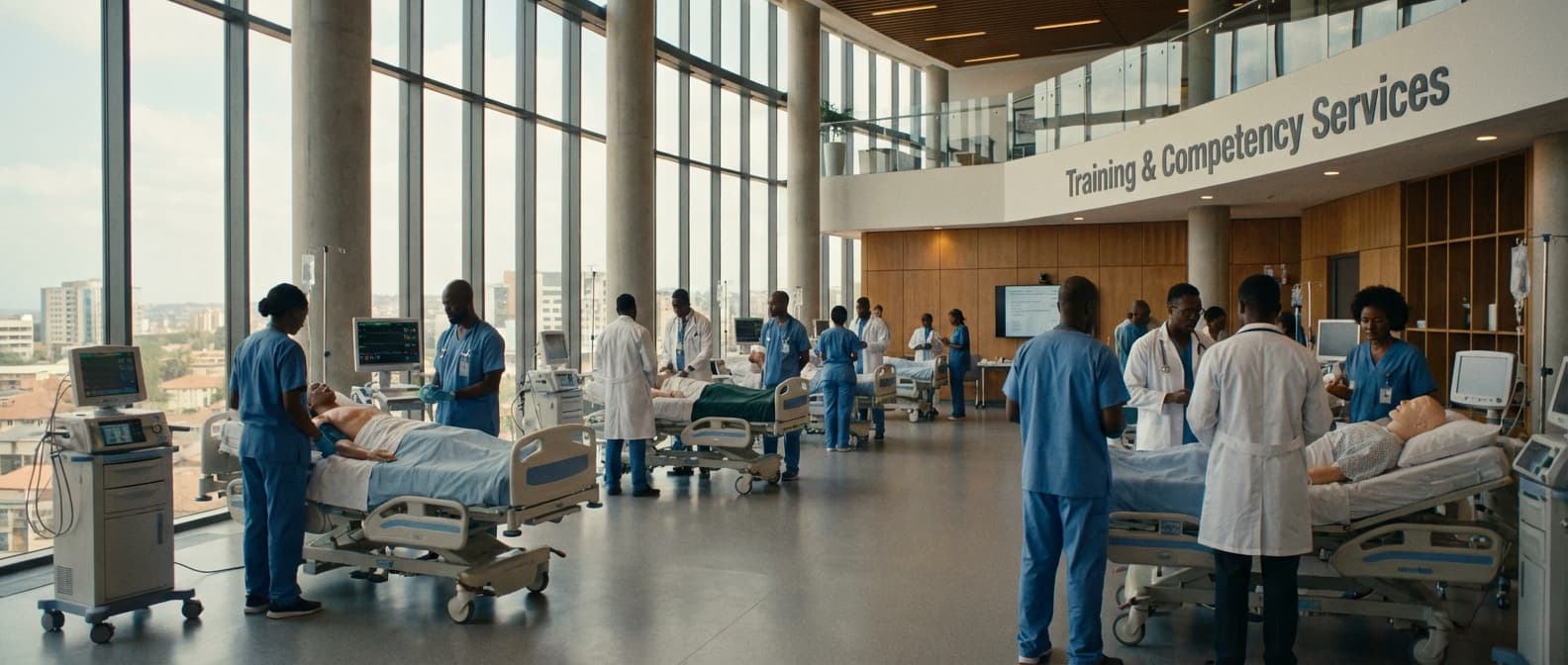
Ultrasound Application Training Service (Protocol-Based) in Djibouti
Engineering Excellence & Technical Support
Ultrasound Application Training Service (Protocol-Based) High-standard technical execution following OEM protocols and local regulatory frameworks.
Cardiac Ultrasound Mastery
Our protocol-driven training program delivers comprehensive hands-on experience in essential cardiac ultrasound protocols, ensuring Djibouti's healthcare professionals achieve diagnostic proficiency in key echocardiographic examinations for improved patient care.
Musculoskeletal (MSK) Ultrasound Expertise
Gain in-depth knowledge of standardized MSK ultrasound protocols, enabling accurate diagnosis and guidance for a wide range of orthopedic and rheumatologic conditions. Our training empowers Djibouti's clinicians to confidently utilize ultrasound for MSK assessments.
Pediatric & Neonatal Ultrasound Certification
Specialized training in evidence-based pediatric and neonatal ultrasound protocols. Participants in Djibouti will develop critical skills for evaluating common and complex conditions in young patients, leading to earlier detection and intervention.
What Is Ultrasound Application Training Service (Protocol-based) In Djibouti?
Ultrasound Application Training Service (Protocol-Based) in Djibouti refers to a structured educational program designed to equip healthcare professionals with the knowledge and practical skills necessary to perform and interpret diagnostic ultrasound examinations according to established clinical protocols. This service is crucial for enhancing the diagnostic capabilities of medical facilities in Djibouti, ensuring consistent quality of care, and optimizing resource utilization.
| Who Needs It | Typical Use Cases | |||||||
|---|---|---|---|---|---|---|---|---|
| Radiologists & Imaging Specialists: To expand their expertise in specific ultrasound modalities or to reinforce adherence to standardized protocols. | Obstetricians & Gynecologists: For prenatal screening, fetal anomaly detection, and gynecological assessment. | General Practitioners & Family Physicians: To gain proficiency in point-of-care ultrasound (POCUS) for initial diagnostic evaluations. | Emergency Medicine Physicians: For rapid assessment of trauma (e.g., FAST exam), detection of free fluid, and guidance for procedures. | Cardiologists: For echocardiography to assess cardiac structure and function. | Urologists: For renal, bladder, and prostate ultrasound examinations. | Pediatricians: For evaluating pediatric abdominal organs, hips, and brain. | Sonographers & Ultrasound Technicians: To enhance their technical skills and broaden their scope of practice. | Medical Students & Residents: As part of their clinical training to develop foundational ultrasound skills. |
| Abdominal Imaging: Evaluation of liver, gallbladder, pancreas, spleen, kidneys, and aorta. | Obstetric Ultrasound: Gestational dating, fetal biometry, nuchal translucency, anomaly scans, and Doppler assessments. | Gynecological Ultrasound: Uterine and ovarian assessment, evaluation of pelvic masses, and early pregnancy assessment. | Vascular Ultrasound: Assessment of carotid arteries, peripheral arteries and veins, and deep vein thrombosis (DVT) screening. | Echocardiography: Assessment of cardiac chambers, valves, and blood flow. | Musculoskeletal Ultrasound: Evaluation of joints, tendons, ligaments, and soft tissues. | Thyroid & Breast Ultrasound: Assessment of nodules and diffuse changes. | Superficial Structures Ultrasound: Evaluation of lymph nodes, salivary glands, and hernias. | Point-of-Care Ultrasound (POCUS): Rapid bedside assessments in various clinical settings. |
Service Involves
- Didactic Instruction: Comprehensive theoretical modules covering ultrasound physics, knobology, anatomy, pathology, and interpretation principles for specific applications.
- Protocol-Driven Learning: Emphasis on adhering to standardized examination protocols for various organ systems and clinical scenarios, ensuring comprehensive data acquisition and reproducible results.
- Hands-on Simulation & Practice: Extensive supervised practical sessions using ultrasound phantoms and, where ethically permissible and feasible, live patient scanning, focusing on probe manipulation, image optimization, and artifact recognition.
- Image Interpretation Training: Guidance on analyzing ultrasound images, identifying normal and abnormal findings, and correlating them with clinical information.
- Case Review & Feedback: Analysis of real-world ultrasound cases, providing trainees with opportunities to present their findings and receive constructive feedback from experienced sonographers and radiologists.
- Competency Assessment: Formal evaluation of acquired skills and knowledge through written examinations, practical assessments, and case-based scenarios to ensure proficiency.
Who Needs Ultrasound Application Training Service (Protocol-based) In Djibouti?
This service provides essential protocol-based ultrasound application training for healthcare professionals in Djibouti. The training focuses on standardized protocols to ensure consistent, accurate, and reproducible diagnostic ultrasound examinations. This leads to improved patient care, reduced diagnostic errors, and more efficient use of ultrasound equipment.
| Customer Segment | Primary Need for Training | Benefit of Protocol-Based Training |
|---|---|---|
| Public Hospitals & Clinics | Standardizing diagnostic accuracy and workload management. | Ensures consistent interpretation across different radiologists and sonographers, improving patient outcomes and reducing repeat scans. |
| Private Clinics & Diagnostic Centers | Enhancing diagnostic capabilities and competitive edge. | Allows for specialized services and builds a reputation for reliable and high-quality ultrasound diagnostics. |
| NGOs with Healthcare Initiatives | Delivering essential maternal and child health services in resource-limited settings. | Provides a structured approach to screen and diagnose critical conditions, maximizing impact with limited resources. |
| Medical Training Institutions | Educating the next generation of healthcare professionals. | Equips trainees with foundational, internationally recognized protocols for early and effective practice. |
| Government Health Ministries | Improving national healthcare standards and workforce competency. | Facilitates the establishment of national guidelines, ensures quality of care across the country, and supports professional development initiatives. |
Target Customers and Departments in Djibouti:
- {"customer":"Public Hospitals and Clinics","departments":["Radiology/Medical Imaging","Obstetrics and Gynecology","Pediatrics","Internal Medicine","Emergency Medicine","Cardiology"]}
- {"customer":"Private Clinics and Diagnostic Centers","departments":["Radiology/Medical Imaging","Obstetrics and Gynecology","General Practice (with ultrasound capabilities)"]}
- {"customer":"Non-Governmental Organizations (NGOs) with Healthcare Initiatives","departments":["Maternal and Child Health","Primary Healthcare","Emergency Response Units"]}
- {"customer":"Medical Training Institutions (Universities, Technical Schools)","departments":["Medical Imaging Departments","Nursing Schools","Physician Assistant Programs"]}
- {"customer":"Government Health Ministries and Agencies","departments":["Public Health Programs","Healthcare Quality Assurance","Professional Development Units"]}
Ultrasound Application Training Service (Protocol-based) Process In Djibouti
This document outlines the workflow for the Ultrasound Application Training Service (Protocol-Based) provided by [Your Organization Name] in Djibouti. The process is designed for clarity, efficiency, and to ensure all client needs are met from initial inquiry to successful completion of the training.
| Phase | Step | Description | Key Activities | Responsible Party |
|---|---|---|---|---|
| 1.1 Initial Contact | Potential clients in Djibouti reach out to inquire about the Ultrasound Application Training Service. | Receive inquiry (email, phone, website form); Acknowledge receipt; Schedule initial consultation. | Client, [Your Organization Name] Sales/Training Coordinator |
| 1.2 Needs Assessment Meeting | A detailed understanding of the client's specific training requirements is established. | Discuss existing ultrasound knowledge/equipment, target applications (e.g., obstetrics, radiology, cardiology), desired outcomes, number of participants, preferred dates, and budget. | [Your Organization Name] Training Consultant/Sales Representative, Client Stakeholders | |
| 2.1 Training Proposal Development | Based on the needs assessment, a tailored training proposal is created. | Outline training modules, learning objectives, duration, methodology (didactic, hands-on), faculty, required equipment, logistical arrangements, and investment. | [Your Organization Name] Training Department |
| 2.2 Proposal Review & Negotiation | The client reviews the proposal and any necessary adjustments are made. | Client feedback, revisions to proposal, clarification of terms. | Client, [Your Organization Name] Sales/Management | |
| 2.3 Contract & Agreement | Formal agreement is reached and documented. | Finalize contract terms, sign service agreement, issue invoice for deposit/full payment. | Client, [Your Organization Name] Legal/Finance Department | |
| 3.1 Logistics & Scheduling | All practical arrangements for the training are finalized. | Confirm training dates and venue, arrange travel and accommodation for trainers (if applicable), confirm participant list and their pre-requisites. | [Your Organization Name] Training Coordinator, Client Facilities Manager |
| 3.2 Material Preparation | Training materials are prepared and distributed. | Develop/customize training manuals, presentations, case studies, and any necessary simulations. Distribute pre-reading materials to participants (if applicable). | [Your Organization Name] Training Faculty, [Your Organization Name] Training Coordinator | |
| 3.3 Equipment & Venue Setup | Ensure the training environment is fully equipped. | Verify availability and functionality of ultrasound machines, phantoms, simulators, and other necessary equipment. Ensure the venue is set up for effective learning (e.g., seating, projection). | [Your Organization Name] Technical Support, Client IT/Facilities | |
| 4.1 On-Site/Remote Training Delivery | The protocol-based ultrasound application training is delivered. | Conduct didactic sessions (lectures, discussions), hands-on practice on models/phantoms, supervised scanning sessions with real patients (if applicable and ethical), case review and interpretation. | [Your Organization Name] Certified Trainers, Participants |
| 4.2 Skill Assessment & Feedback | Ongoing assessment of participant learning and performance. | Formative assessments during training, immediate feedback from trainers, identification of areas needing reinforcement. | [Your Organization Name] Certified Trainers, Participants | |
| 5.1 Participant Evaluation | Gather feedback on the training effectiveness from participants. | Distribute and collect training evaluation forms; Analyze feedback to identify strengths and areas for improvement. | Participants, [Your Organization Name] Training Coordinator |
| 5.2 Trainer Debrief | Trainers provide insights on participant progress and training delivery. | Hold debriefing session with trainers to discuss participant performance, challenges encountered, and overall training effectiveness. | [Your Organization Name] Certified Trainers, [Your Organization Name] Training Manager | |
| 5.3 Client Report & Recommendations | Provide a comprehensive report to the client. | Submit a training report detailing participant progress, key learnings, identified skill gaps, and recommendations for continued practice or advanced training. Discuss report findings with client stakeholders. | [Your Organization Name] Training Department, Client Management | |
| 6.1 Certification Issuance | Upon successful completion, participants receive formal recognition. | Issue certificates of completion to participants who meet the training objectives and assessment criteria. | [Your Organization Name] Training Department |
| 6.2 Ongoing Support | Offer continued assistance to ensure knowledge retention and application. | Provide access to online resources, refresher course options, or ad-hoc consultation services. Follow-up communications to gauge application of learned skills. | [Your Organization Name] Customer Support/Training Department |
Ultrasound Application Training Service (Protocol-Based) Workflow
- Inquiry & Needs Assessment
- Proposal & Agreement
- Pre-Training Preparation
- Training Execution
- Post-Training Follow-up & Evaluation
- Certification & Continuous Support
Ultrasound Application Training Service (Protocol-based) Cost In Djibouti
Providing ultrasound application training services in Djibouti, particularly those that are protocol-based, involves a range of costs influenced by several key factors. These factors determine the overall investment a healthcare institution or individual practitioner will make to enhance their diagnostic imaging skills. Understanding these elements is crucial for accurate budgeting and for selecting the most suitable training program.
| Training Type/Scope | Estimated Price Range (DJF) | Notes |
|---|---|---|
| Basic Ultrasound Principles & Applications (e.g., introductory abdominal/obstetric) | 75,000 - 150,000 | Typically 1-3 days, suitable for new practitioners. May include basic protocol overview. |
| Intermediate Ultrasound Applications (e.g., in-depth abdominal, obstetric, or gynecological) | 150,000 - 300,000 | Typically 3-5 days, focusing on specific organ systems and protocols. Hands-on practice is usually a key component. |
| Advanced/Specialized Ultrasound Applications (e.g., vascular, musculoskeletal, interventional, pediatric) | 300,000 - 600,000+ | Can range from 3 days to 1 week or more, highly specialized, may involve simulation or expert case reviews. Protocol adherence is critical. |
| Protocol-Specific Training (e.g., training on implementing specific hospital or international guidelines) | Variable (often custom quoted) | Cost depends heavily on the complexity of the protocol and the extent of customization required. Can be bundled with other training types. |
| Train-the-Trainer Programs | 400,000 - 800,000+ | Designed to equip local trainers with the skills and knowledge to deliver ongoing training. Often longer duration. |
Key Pricing Factors for Ultrasound Application Training in Djibouti
- Level of Expertise and Experience of Trainers: Highly experienced sonographers and radiologists with extensive practical and teaching experience command higher fees. Their ability to impart nuanced skills and address complex scenarios is a significant value addition.
- Duration of the Training Program: Longer and more comprehensive training courses, covering a wider array of ultrasound applications and advanced techniques, will naturally be more expensive than shorter, introductory sessions.
- Scope of Ultrasound Applications Covered: Training focused on specialized areas like obstetric and gynecological ultrasound, abdominal imaging, vascular ultrasound, or musculoskeletal ultrasound will generally have different cost structures. More specialized training often requires specialized equipment and expertise.
- Training Modality (On-site vs. Remote/Hybrid): On-site training, where trainers come to the facility in Djibouti, incurs additional costs related to travel, accommodation, and per diem for the instructors. Remote or hybrid models might be more cost-effective but can sometimes lack the hands-on intensity of in-person sessions.
- Number of Participants: Group training sessions can often be more cost-effective on a per-participant basis due to the shared cost of the trainer and resources. Individual or small-group training will likely have a higher per-person cost.
- Provision of Training Equipment and Materials: Whether the training provider supplies ultrasound machines for hands-on practice, phantoms, simulators, and comprehensive training manuals or if the host institution is expected to provide them can impact the overall cost.
- Accreditation and Certification: Training programs that offer recognized accreditation or certification upon completion may carry a higher price tag, reflecting the value and credibility associated with such credentials.
- Curriculum Development and Customization: Tailored training programs designed to meet the specific needs and protocols of a particular hospital or clinic in Djibouti may involve additional curriculum development costs.
- Administrative and Logistical Support: The level of administrative support provided, including scheduling, participant management, and post-training follow-up, can also be factored into the pricing.
- Local Economic Conditions and Currency Fluctuations: The general economic climate in Djibouti, inflation rates, and the stability of the Djiboutian Franc (DJF) can influence the pricing of services.
Affordable Ultrasound Application Training Service (Protocol-based) Options
Our Affordable Ultrasound Application Training Service offers comprehensive, protocol-based education designed to equip sonographers with essential skills for various medical imaging specialties. We understand the financial considerations faced by healthcare professionals and institutions, and have developed flexible training options and cost-saving strategies to make high-quality ultrasound education accessible.
| Strategy | Description | Benefit |
|---|---|---|
| Early Bird Registration | Register for training courses well in advance of the start date. | Receive a significant discount on course fees. |
| Group Discounts | Enroll multiple sonographers from the same institution. | Reduced per-person training cost, fostering team development. |
| Bundle Savings | Purchase a value bundle (e.g., Specialty Focus, Comprehensive Suite) instead of individual modules. | Lower overall cost compared to purchasing training separately. |
| Online & Blended Learning Options | Utilize our flexible online modules and webinars alongside limited in-person sessions. | Reduces travel and accommodation expenses, allowing for self-paced learning. |
| Protocol Standardization Focus | Prioritize training on your existing or desired standardized protocols. | Ensures consistency and efficiency in your practice, leading to better diagnostic accuracy and reduced rework. |
| Return on Investment (ROI) Consultation | We can help you quantify the benefits of our training in terms of improved scan quality, reduced repeat scans, and enhanced diagnostic confidence. | Demonstrates the long-term financial value of investing in our training. |
Value Bundles: Maximizing Your Training Investment
- {"title":"Core Competency Bundle","description":"Ideal for new sonographers or those seeking to solidify fundamental skills. Covers essential protocols for common applications like abdominal, pelvic, and basic vascular imaging. Includes foundational theory, hands-on practice, and case study analysis."}
- {"title":"Specialty Focus Bundle","description":"Tailored for experienced sonographers looking to expand their expertise into specific areas. Choose from options like Echocardiography, Small Parts & Thyroid, Breast Imaging, or Advanced Vascular. Includes advanced protocols, challenging case reviews, and peer-to-peer learning opportunities."}
- {"title":"Comprehensive Suite Bundle","description":"Our most extensive offering, combining core competencies with a choice of two specialty modules. This bundle provides a well-rounded skill set, preparing sonographers for a wider range of clinical scenarios and increasing their versatility."}
- {"title":"Institution Package","description":"Designed for clinics and hospitals, this package offers customized training for multiple sonographers. We can tailor the curriculum to your specific equipment and clinical needs, ensuring consistent protocol adherence across your team. Includes on-site training options and group discounts."}
Verified Providers In Djibouti
In Djibouti's evolving healthcare landscape, identifying trusted and credentialed providers is paramount for ensuring quality care. Franance Health stands out as a beacon of reliability, offering a comprehensive network of verified healthcare professionals and facilities. Their rigorous credentialing process ensures that all affiliated providers meet stringent standards of expertise, experience, and ethical practice, providing patients with peace of mind and access to superior medical services. This commitment to verification is what distinguishes Franance Health and makes them the optimal choice for healthcare needs in Djibouti.
| Credential Type | Franance Health Verification Process | Why it Matters to You |
|---|---|---|
| Medical Licenses & Certifications | Thorough validation of all active and relevant medical licenses and board certifications. | Ensures providers are legally qualified and possess specialized knowledge in their fields. |
| Professional Experience & Training | Verification of educational background, residency, fellowships, and years of practice. | Guarantees that providers have the practical experience to handle complex medical cases. |
| Reputation & Peer Review | Consideration of professional references and any history of disciplinary actions. | Confirms a provider's standing within the medical community and ethical conduct. |
| Facility Accreditation | Assessment of healthcare facilities for adherence to safety, hygiene, and operational standards. | Ensures a safe and well-equipped environment for your treatment and recovery. |
| Continuing Medical Education (CME) | Confirmation of ongoing participation in professional development and training. | Demonstrates a commitment to staying updated with the latest medical advancements and techniques. |
Key Benefits of Choosing Franance Health Verified Providers:
- Unwavering commitment to quality and safety through a stringent verification process.
- Access to a diverse network of specialized medical professionals across various disciplines.
- Enhanced patient trust and confidence in the healthcare services received.
- Streamlined access to appointments and comprehensive medical records.
- A proactive approach to continuous improvement and adherence to international best practices.
Scope Of Work For Ultrasound Application Training Service (Protocol-based)
This Scope of Work (SOW) outlines the requirements for a protocol-based ultrasound application training service. The service provider will deliver comprehensive training to designated personnel on specific ultrasound applications, adhering to established protocols and best practices. The training will focus on both theoretical knowledge and practical hands-on skills, ensuring proficiency and consistency in ultrasound image acquisition and interpretation.
| Phase/Activity | Description | Technical Deliverables | Standard Specifications/Metrics |
|---|---|---|---|
| Phase 1: Needs Assessment & Protocol Review | Understand client's current ultrasound capabilities, training needs, and review existing ultrasound protocols for the target applications. Identify any gaps or areas requiring modification. | Needs assessment report, Documented protocol review with proposed amendments (if any). | Report submitted within 5 business days of project initiation. Protocol amendments align with current industry standards and best practices. |
| Phase 2: Curriculum Development | Develop a comprehensive training curriculum tailored to the specific ultrasound applications and trainee skill levels. This includes theoretical modules, practical sessions, and assessment tools. | Training curriculum document (including learning objectives, lecture outlines, practical session guides), Assessment plan (quizzes, practical evaluations). | Curriculum covers all learning objectives. Assessment plan includes formative and summative evaluations. Curriculum approved by client within 10 business days of submission. |
| Phase 3: Theoretical Training Delivery | Deliver theoretical training sessions covering anatomy, physiology, ultrasound physics, principles of image acquisition, and interpretation for each specified application. | Presentation slides, Lecture notes, Handouts, Online learning modules (if applicable). | Sessions are interactive and engaging. Knowledge retention measured through pre- and post-training quizzes. Average score increase of at least 20% from pre- to post-training quiz. |
| Phase 4: Practical Training Delivery | Provide hands-on training sessions using ultrasound equipment and phantom models, as well as supervised real-patient scanning (if applicable). Focus on protocol adherence and image optimization. | Supervised scanning sessions, Competency checklists for image acquisition, Practical demonstration videos (optional). | Each trainee performs a minimum of X examinations per application (X to be defined based on application complexity). Trainees achieve competency on Y% of protocol-defined views (Y to be defined). Image quality assessed against pre-defined criteria. |
| Phase 5: Assessment & Evaluation | Conduct formal assessments to evaluate trainees' theoretical knowledge and practical skills. Provide feedback and identify areas for further development. | Completed assessment forms (quizzes, practical evaluations), Individual feedback reports. | All trainees undergo both theoretical and practical assessments. Passing score for theoretical assessment: Z% (Z to be defined). Passing score for practical assessment: Successful demonstration of all critical protocol steps. |
| Phase 6: Post-Training Support & Reporting | Provide limited post-training support and submit a final report summarizing the training activities, outcomes, and recommendations. | Final training report, Certificate of completion for successful trainees. | Report submitted within 7 business days of training completion. Certificates issued to trainees who meet the defined competency standards. |
Key Objectives
- To equip trainees with a thorough understanding of the anatomical structures and physiological processes relevant to the target ultrasound applications.
- To train trainees on the correct operation of ultrasound equipment, including transducer selection, machine settings, and image optimization techniques.
- To ensure trainees can consistently acquire high-quality ultrasound images according to predefined protocols for each specific application.
- To develop trainees' ability to identify normal and abnormal ultrasound findings.
- To foster an understanding of ultrasound safety principles and patient care during examinations.
- To ensure adherence to relevant professional guidelines and accreditation standards.
Service Level Agreement For Ultrasound Application Training Service (Protocol-based)
This Service Level Agreement (SLA) outlines the terms and conditions for the Ultrasound Application Training Service (Protocol-Based) provided by [Your Company Name] (hereinafter referred to as "Provider") to [Client Name] (hereinafter referred to as "Client"). This SLA focuses specifically on Response Times and Uptime Guarantees for the training platform and associated support.
| Service Component | Uptime Guarantee | Response Time Target (Triage/Initial Assessment) | Resolution Time Target (Standard Issue) | Resolution Time Target (Critical Issue) |
|---|---|---|---|---|
| Training Platform Accessibility | 99.5% Uptime (Monthly Average) | N/A (Continuous Availability) | N/A | N/A |
| Technical Support (Email/Ticket) | N/A | Within 4 business hours | Within 24 business hours | Within 8 business hours |
| Technical Support (Phone - During Business Hours) | N/A | Within 2 business hours | Within 16 business hours | Within 4 business hours |
| Content Updates (Notification) | N/A | Notification within 48 hours of release | N/A | N/A |
Key Service Components
- Training Platform: Access to the online portal for accessing ultrasound training modules, protocols, and simulated environments.
- Technical Support: Assistance with platform access, technical issues, and user account management.
- Content Updates: Periodic updates to training modules and protocols.
Frequently Asked Questions

Ready when you are
Let's scope your Ultrasound Application Training Service (Protocol-Based) in Djibouti project in Djibouti.

Scaling healthcare logistics and technical systems across the entire continent.