
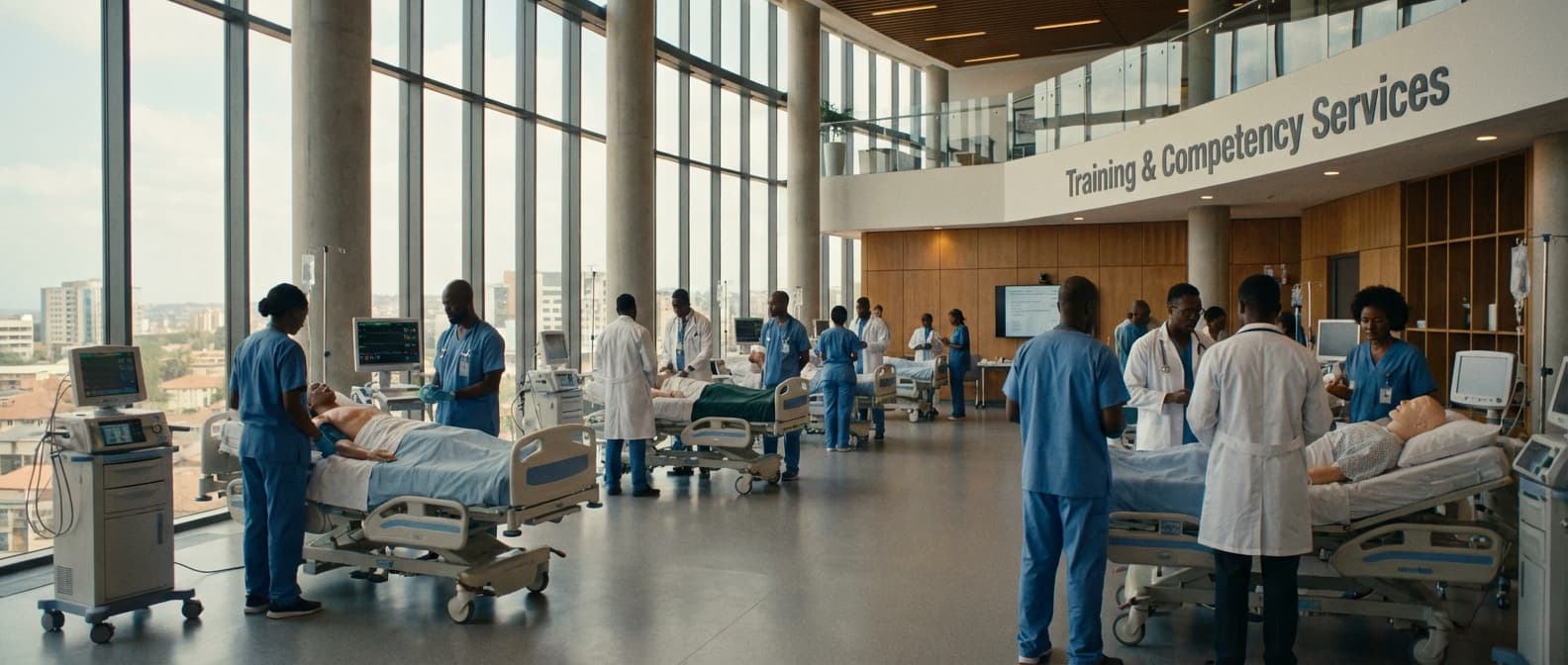
CT Operator Training Service (Radiographers) in Djibouti
Engineering Excellence & Technical Support
CT Operator Training Service (Radiographers) High-standard technical execution following OEM protocols and local regulatory frameworks.
Advanced Imaging Protocol Mastery
Train Djiboutian radiographers on the latest CT imaging protocols, ensuring optimized scan parameters for diverse anatomical regions and diagnostic accuracy, ultimately improving patient outcomes and reducing radiation dose.
Image Reconstruction & Post-Processing Expertise
Equip radiographers with advanced skills in CT image reconstruction techniques and post-processing software, enabling precise artifact reduction, multiplanar reformations, and 3D visualizations for enhanced diagnostic interpretation and complex case analysis.
Radiation Safety & Dose Optimization
Provide comprehensive training on radiation physics, safety standards, and dose optimization strategies specific to CT procedures. Empower Djiboutian radiographers to implement ALARA principles, ensuring patient and staff safety while maintaining diagnostic image quality.
What Is Ct Operator Training Service (Radiographers) In Djibouti?
CT Operator Training Service (Radiographers) in Djibouti refers to specialized educational programs designed to equip radiographers with the theoretical knowledge and practical skills necessary to competently operate Computed Tomography (CT) scanners. This training is crucial for ensuring patient safety, image quality, and efficient utilization of CT technology within healthcare facilities. The service typically encompasses a structured curriculum covering the principles of CT physics, cross-sectional anatomy, scanner operation, image acquisition protocols, patient positioning, radiation safety, quality assurance, and artifact recognition and mitigation. It is delivered through a combination of classroom lectures, hands-on simulator training, and supervised clinical experience on actual CT equipment. The objective is to enable radiographers to perform diagnostic CT examinations accurately and safely, producing high-quality images for interpretation by radiologists.
| Typical Use Cases for CT Operator Training Service | Description |
|---|---|
| Routine Diagnostic Imaging: Training radiographers to acquire optimal CT scans for common diagnostic purposes, including neuroimaging, chest imaging, abdominal imaging, and musculoskeletal imaging. | Ensuring accurate and reproducible image acquisition for the detection of pathologies and for guiding treatment decisions. |
| Specialized CT Protocols: Educating operators on the execution of specific protocols for advanced applications such as CT angiography (CTA), CT venography (CTV), dual-energy CT, and low-dose CT imaging. | Enabling the acquisition of specialized datasets for detailed vascular assessment, material decomposition, and radiation dose reduction. |
| Emergency and Trauma Scenarios: Training radiographers to perform rapid CT examinations in trauma settings, emphasizing efficient patient workflow, protocol selection under pressure, and appropriate contrast administration. | Facilitating timely diagnosis and management of critical injuries. |
| Image Optimization and Quality Control: Imparting knowledge on techniques to minimize imaging artifacts (e.g., motion, beam hardening, metallic artifacts) and implement quality assurance procedures. | Maintaining high image fidelity for accurate radiological interpretation and reducing the need for repeat scans. |
| Radiation Safety and Dose Management: Training on principles of radiation physics, dose calculation, patient dose monitoring, and adherence to national and international radiation protection guidelines. | Ensuring ALARA (As Low As Reasonably Achievable) principles are applied to minimize patient and staff radiation exposure while maintaining diagnostic image quality. |
| Contrast Media Administration: Educating operators on the safe and effective administration of intravenous and oral contrast media, including dose calculation, infusion rates, and management of potential adverse reactions. | Optimizing contrast enhancement for better lesion detection and characterization, and mitigating risks associated with contrast agents. |
Who Needs CT Operator Training Service (Radiographers) in Djibouti?
- Newly qualified radiographers seeking to specialize in CT imaging.
- Existing radiographers transitioning from other imaging modalities (e.g., X-ray, Ultrasound) to CT.
- Radiographers employed in hospitals, diagnostic imaging centers, and clinics in Djibouti equipped with CT scanners.
- Healthcare institutions in Djibouti aiming to enhance the skills and competency of their radiography staff.
- Radiographers requiring refresher courses or advanced training on new CT technologies and protocols.
Who Needs Ct Operator Training Service (Radiographers) In Djibouti?
CT Operator Training Service (Radiographers) in Djibouti is crucial for enhancing the diagnostic imaging capabilities and ensuring the safe and efficient operation of CT scanners. This specialized training is designed to equip radiographers with the advanced knowledge and practical skills required to perform CT scans, interpret preliminary findings, manage patient care during the procedure, and maintain the equipment. The service aims to address the growing demand for skilled medical imaging professionals who can operate modern CT technology effectively, contributing to improved patient outcomes and supporting the healthcare infrastructure in Djibouti.
| Customer Type | Primary Need Addressed | Relevant Departments |
|---|---|---|
| Existing Radiographers | Skill enhancement, specialization in CT technology, staying updated with advancements | Radiology, Diagnostic Imaging Centers |
| Newly Qualified Radiographers | Foundational CT operational skills, patient safety protocols, image acquisition techniques | Radiology, Diagnostic Imaging Centers |
| Healthcare Facilities (Hospitals, Clinics) | Developing or expanding CT services, ensuring qualified personnel for new equipment, improving diagnostic accuracy | Radiology, Emergency, Surgical, Oncology, Neurology, Internal Medicine |
| Government Health Initiatives | Building national capacity in medical imaging, addressing healthcare workforce shortages, improving public health services | All public healthcare facilities, Ministry of Health |
Target Customers and Departments for CT Operator Training Service in Djibouti
- {"items":["Radiographers with existing experience in diagnostic imaging seeking to specialize in CT.","Newly qualified radiographers entering the workforce.","Radiographers in remote or underserved areas of Djibouti needing to acquire CT skills.","Healthcare professionals interested in career advancement into CT operation.","Hospitals and clinics in Djibouti looking to establish or expand their CT imaging services."],"title":"Target Customers"}
- {"items":["Radiology Departments","Diagnostic Imaging Centers","Emergency Departments (for rapid CT scanning)","Surgical Departments (for pre- and post-operative imaging)","Oncology Departments (for treatment monitoring)","Neurology Departments (for brain imaging)","Internal Medicine Departments (for a wide range of diagnoses)","Trauma Centers"],"title":"Target Departments"}
Ct Operator Training Service (Radiographers) Process In Djibouti
This document outlines the typical workflow for a CT Operator Training Service (Radiographers) in Djibouti, from the initial inquiry to the successful execution of the training program. The process is designed to ensure clarity, efficiency, and effectiveness for both the training provider and the participating radiographers.
| Stage | Description | Key Activities | Responsible Parties |
|---|---|---|---|
| Inquiry and Needs Assessment | The process begins when an individual radiographer or an institution in Djibouti expresses interest in CT operator training. | Initial contact (email, phone, website form), discussion of training needs, identification of specific CT equipment, desired skill levels, and number of participants. | Prospective Client (Radiographer/Institution), Training Provider |
| Proposal Development and Quotation | Based on the assessed needs, the training provider develops a comprehensive proposal and a detailed quotation. | Defining training modules, duration, objectives, learning outcomes, instructor qualifications, training materials, venue requirements, and cost breakdown. | Training Provider |
| Contract Negotiation and Agreement | Once the proposal is accepted, negotiations take place to finalize the terms and conditions. | Reviewing and agreeing on payment terms, cancellation policies, intellectual property rights, confidentiality, and signing of a formal training contract. | Prospective Client, Training Provider |
| Training Schedule and Logistics Planning | Detailed planning for the execution of the training program. | Confirming training dates, times, and location (on-site at the client's facility or at a designated training center), arranging travel and accommodation for instructors (if necessary), and ensuring access to CT scanner for practical sessions. | Prospective Client, Training Provider |
| Pre-Training Preparations | Ensuring all necessary resources and information are in place before the training commences. | Distributing pre-reading materials, confirming participant attendance, preparing training aids (presentations, handouts, simulators), and setting up the training environment. | Training Provider, Prospective Client (for site access, participant confirmation) |
| Training Delivery (Theoretical and Practical) | The core of the service, where knowledge and skills are imparted. | Conducting lectures, interactive sessions, case studies, demonstrations, and hands-on practical training on the CT scanner, focusing on image acquisition protocols, patient positioning, radiation safety, and artifact recognition. | Training Provider (Instructors) |
| Assessment and Evaluation | Measuring the participants' understanding and competency. | Administering theoretical assessments (quizzes, exams) and practical evaluations (observed performance on the CT scanner), and collecting feedback from participants on the training effectiveness. | Training Provider, Participants |
| Certification and Post-Training Support | Formal recognition of successful completion and ongoing assistance. | Issuing certificates of completion to successful participants, providing access to supplementary learning resources, and offering post-training support for troubleshooting and follow-up questions. | Training Provider, Participants |
| Feedback and Continuous Improvement | Gathering insights to enhance future training programs. | Analyzing participant feedback and evaluation results to identify areas for improvement in curriculum, delivery methods, and instructor performance, and implementing changes in subsequent training cycles. | Training Provider |
CT Operator Training Service (Radiographers) Process in Djibouti
- Inquiry and Needs Assessment
- Proposal Development and Quotation
- Contract Negotiation and Agreement
- Training Schedule and Logistics Planning
- Pre-Training Preparations
- Training Delivery (Theoretical and Practical)
- Assessment and Evaluation
- Certification and Post-Training Support
- Feedback and Continuous Improvement
Ct Operator Training Service (Radiographers) Cost In Djibouti
The cost of CT Operator Training Services (Radiographers) in Djibouti can vary significantly based on several factors. These include the duration and intensity of the training program, the provider's reputation and experience, the location within Djibouti where the training is conducted, and whether the training is delivered in-person or remotely. Specialized training modules or advanced CT techniques will also command higher fees. The training typically covers theoretical knowledge of CT physics, equipment operation, patient positioning, image acquisition protocols, radiation safety, and image interpretation fundamentals. Practical, hands-on sessions with actual CT scanners are often a crucial component and influence pricing. It's important for institutions seeking this training to obtain detailed quotes from multiple providers to compare offerings and pricing.
| Training Scope | Estimated Cost Range (DJF - Djibouti Francs) | Notes |
|---|---|---|
| Basic CT Operator Training (1-2 weeks, general focus) | 150,000 - 300,000 | Covers fundamental principles and basic operation. May be group rates. |
| Intermediate CT Operator Training (2-3 weeks, broader protocols) | 300,000 - 500,000 | Includes a wider range of examination protocols and troubleshooting. |
| Advanced/Specialized CT Training (3+ weeks, specific modalities/techniques) | 500,000 - 1,000,000+ | Focuses on advanced applications like CT angiography, cardiac CT, or specific vendor equipment. Costs can be significantly higher for highly specialized training. |
| On-site Training (per trainee, per day) | 15,000 - 40,000 | This is an add-on cost for bringing trainers and equipment to a facility. May involve travel and accommodation for trainers. |
| Remote/Online Training (per trainee, per course) | 100,000 - 250,000 | Generally more affordable but may lack hands-on practical experience. Effectiveness depends on platform and content. |
Key Pricing Factors for CT Operator Training in Djibouti:
- Duration and Intensity of Training Program
- Provider's Reputation and Experience
- Location of Training (On-site vs. Off-site)
- In-person vs. Remote Delivery
- Specialization (e.g., specific CT modalities, advanced techniques)
- Inclusion of Practical/Hands-on Sessions
- Accreditation and Certification Offered
- Curriculum Depth and Scope
- Materials and Resources Provided (e.g., manuals, simulators)
- Trainer Qualifications and Expertise
Affordable Ct Operator Training Service (Radiographers) Options
This service focuses on providing accessible and cost-effective CT operator training specifically designed for radiographers. We understand that professional development is crucial, but budget constraints can be a significant barrier. Our offerings are structured to maximize value and minimize expenditure, ensuring radiographers can acquire essential CT skills without financial strain. We achieve this through flexible training formats, carefully curated value bundles, and strategic cost-saving initiatives.
| Value Bundle Type | Included Components | Estimated Savings | Ideal For |
|---|---|---|---|
| Foundational CT Operator | Basic CT Physics, Image Acquisition Protocols, Image Reconstruction Principles, Radiation Safety Fundamentals. | 10-15% compared to individual modules. | Entry-level radiographers or those new to CT. |
| Advanced CT Imaging | Advanced Reconstruction Algorithms, Multiplanar Reconstructions (MPR), Volume Rendering (VR), Contrast Administration Optimization, Artefact Reduction Techniques. | 15-20% compared to individual modules. | Experienced CT operators looking to enhance diagnostic capabilities. |
| Specialized CT Modality (e.g., Cardiac CT) | Cardiac CT Angiography (CTA) protocols, ECG-gating, dose reduction strategies for cardiac imaging, interpretation basics. | 20-25% compared to individual modules. | Radiographers specializing in cardiovascular imaging. |
| Comprehensive CT Proficiency | All components of Foundational & Advanced CT modules, plus introductory specialized modality. | 25-30% compared to purchasing separately. | Institutions seeking well-rounded CT staff or individual radiographers aiming for broad CT expertise. |
| Annual Learning Subscription | Unlimited access to all online CT modules, webinars, and updated content for 12 months. | Variable, but can save up to 50% over multiple individual course purchases annually. | Institutions with continuous training needs or departments undergoing regular protocol updates. |
Key Value Propositions & Cost-Saving Strategies
- Flexible Training Delivery: Options include online modules, in-person workshops, and blended learning approaches, allowing institutions to choose the most cost-effective and convenient method.
- Bundled Training Packages: Combine foundational CT principles with advanced techniques or specialized imaging modalities for a reduced overall cost.
- Group Discounts: Significant savings for multiple radiographers from the same institution enrolling in training programs.
- Early Bird Registration Incentives: Discounted rates for early commitment to training courses.
- Subscription-Based Access: For ongoing learning and access to updated content, offering a predictable and often more economical long-term solution than individual course purchases.
- Train-the-Trainer Programs: Empowering senior radiographers to train their peers internally, reducing external training dependency and associated costs.
- Partnerships with Equipment Manufacturers: Collaborating to offer training integrated with specific CT scanner models, potentially leveraging manufacturer subsidies or bundled deals.
- Modular Curriculum Design: Allows institutions to purchase only the specific modules required, avoiding payment for irrelevant content.
- Access to Online Resources: Free or low-cost access to supplementary materials, case studies, and forums for continued learning and peer support.
Verified Providers In Djibouti
In Djibouti's evolving healthcare landscape, identifying reliable and accredited medical service providers is paramount for individuals and organizations seeking quality care. Franance Health has emerged as a leading entity, distinguished by its rigorous credentialing process and a steadfast commitment to upholding the highest standards of medical practice. This dedication ensures that all Franance Health-affiliated providers meet stringent criteria, offering patients peace of mind and confidence in the medical services they receive.
| Credentialing Aspect | Franance Health Standard | Benefit to Patients |
|---|---|---|
| Medical License Verification | Thorough checks against national and international licensing bodies. | Confirms legal authorization to practice and adherence to regulatory requirements. |
| Education and Training Validation | Verification of degrees, diplomas, and specialized training from accredited institutions. | Ensures providers have a strong theoretical and practical foundation. |
| Professional Experience Assessment | Review of past work history, practice scope, and patient care outcomes. | Guarantees practical competency and a proven track record. |
| Peer Review and Reference Checks | Confidential assessments from colleagues and supervisors. | Provides objective insights into clinical skills and professional conduct. |
| Background and Disciplinary Checks | Screening for any history of malpractice claims or ethical violations. | Protects patients from potentially harmful practitioners. |
| Continuing Medical Education (CME) Compliance | Verification of ongoing participation in accredited educational programs. | Ensures providers stay updated with the latest medical knowledge and techniques. |
Why Franance Health Credentials Represent the Best Choice in Djibouti:
- Uncompromising Quality Assurance: Franance Health's credentialing process meticulously vets medical professionals, ensuring they possess the necessary qualifications, experience, and ethical standing.
- Enhanced Patient Safety: By adhering to strict protocols and verifying licenses and certifications, Franance Health significantly mitigates risks associated with unqualified practitioners.
- Access to Specialized Expertise: Our network comprises a diverse range of specialists, all rigorously assessed to guarantee their proficiency in their respective fields.
- International Best Practices: Franance Health aligns its credentialing with globally recognized healthcare benchmarks, bringing world-class standards to Djibouti.
- Transparency and Trust: A verified provider signifies a commitment to open communication and ethical conduct, fostering a foundation of trust between patients and healthcare professionals.
- Continuous Professional Development: Franance Health often requires ongoing education and training for its accredited providers, ensuring they remain at the forefront of medical advancements.
- Streamlined Healthcare Navigation: Our verified directory simplifies the process of finding competent healthcare services, saving valuable time and reducing uncertainty for patients.
Scope Of Work For Ct Operator Training Service (Radiographers)
This document outlines the Scope of Work (SOW) for providing CT Operator Training Services specifically for Radiographers. It details the technical deliverables and standard specifications required to ensure a comprehensive and effective training program. The objective is to equip radiographers with the advanced knowledge and practical skills necessary to operate CT scanners safely and efficiently, adhere to radiation safety protocols, and optimize image acquisition for diagnostic purposes.
| Category | Specification | Description | Verification Method |
|---|---|---|---|
| Curriculum Content | Modularity & Depth | Covers foundational CT physics, anatomy, image acquisition protocols, patient positioning, radiation safety (ALARA principle), contrast media administration, image processing, artifact recognition, and troubleshooting. Must be tailored to specific CT scanner models and clinical applications. Minimum 80% coverage of core CT principles. | Curriculum document review, content alignment with industry standards (e.g., ARRT, ASRT). |
| Practical Training | Hands-on Time per Participant | Minimum of 16 hours of direct hands-on time per participant on an operational CT scanner. Includes protocol selection, patient simulation, scan execution, and post-processing. | Logbook of participant activities, direct observation by instructor, supervisor sign-off. |
| Radiation Safety | Compliance & Best Practices | Training must adhere to national and local radiation safety regulations. Emphasis on ALARA principle, dose reduction techniques, and quality assurance protocols. Includes practical demonstration of safety checks. | Review of radiation safety modules, practical demonstration during training, post-training assessment questions on radiation safety. |
| Assessment | Validity & Reliability | Includes a comprehensive written examination (minimum 80% passing score) and a practical skills assessment. Assessments must be validated for accuracy and relevance to job tasks. | Review of assessment instruments, statistical analysis of assessment results (if feasible), external expert review. |
| Instructor Qualifications | Experience & Certification | Instructors must be certified radiographers with a minimum of 5 years of experience in CT operation and a proven track record in training. Evidence of teaching certifications or relevant experience required. | Review of instructor CVs, certifications, and references. On-site observation of instructor during training (if requested). |
| Training Environment | Equipment & Safety | Training should ideally be conducted in a clinical setting with access to a functional CT scanner. If simulation is used, it must be a high-fidelity simulation. All training equipment must be in good working order and safety-compliant. | Site visit or detailed description of training facility and equipment, safety compliance documentation review. |
| Documentation & Reporting | Completeness & Timeliness | Provision of detailed training reports, including attendance records, assessment results per participant, and overall program feedback. Reports due within 7 business days of training completion. | Review of submitted reports for completeness, accuracy, and adherence to specified format and deadline. |
Technical Deliverables
- Comprehensive Training Curriculum (Digital & Print)
- Interactive Training Modules (e-learning platform/simulations)
- Hands-on Practical Training Sessions (using actual CT scanners)
- Competency Assessment Tools (written exams, practical evaluations)
- Training Certificates (per participant)
- Post-Training Support Plan (e.g., Q&A sessions, remote assistance)
- Training Equipment and Materials (if not provided by client)
- Trainee Feedback and Evaluation Reports
- Instructor Qualifications and Resumes
- Training Schedule and Logistics Plan
Service Level Agreement For Ct Operator Training Service (Radiographers)
This Service Level Agreement (SLA) outlines the guaranteed response times and uptime for the CT Operator Training Service provided to Radiographers. It establishes clear expectations for service availability and support, ensuring minimal disruption to training schedules and operational efficiency.
| Service Component | SLA Target (Response Time) | SLA Target (Uptime) | Measurement Method | Remedy for Non-Compliance |
|---|---|---|---|---|
| Critical Support Requests (e.g., system outage impacting scheduled training) | Within 1 hour of notification (24/7) | 99.9% monthly | Automated system logs, support ticket timestamps | 10% service credit for every 15 minutes of unplanned downtime exceeding 1 hour per month. |
| Standard Support Requests (e.g., user account issues, minor technical glitches) | Within 4 business hours of notification | 99.5% monthly | Automated system logs, support ticket timestamps | 5% service credit for every 24-hour period of unresolved standard issues impacting training access. |
| Training Platform Availability (for scheduled and on-demand learning modules) | N/A (covered by System Uptime) | 99.9% monthly | Network monitoring tools, platform availability checks | As per Critical Support Requests remedy. |
| Scheduled Training Session Delivery (virtual classrooms, live proctoring) | 15 minutes prior to scheduled start time (for technical checks) | N/A (covered by System Uptime) | Session logs, participant feedback | Rescheduling of affected sessions at no additional cost, or partial refund if rescheduling is not feasible. |
Key Performance Indicators (KPIs)
- Response Time to Support Requests
- System Uptime Guarantee
- Training Platform Availability
Frequently Asked Questions

Ready when you are
Let's scope your CT Operator Training Service (Radiographers) in Djibouti project in Djibouti.

Scaling healthcare logistics and technical systems across the entire continent.