
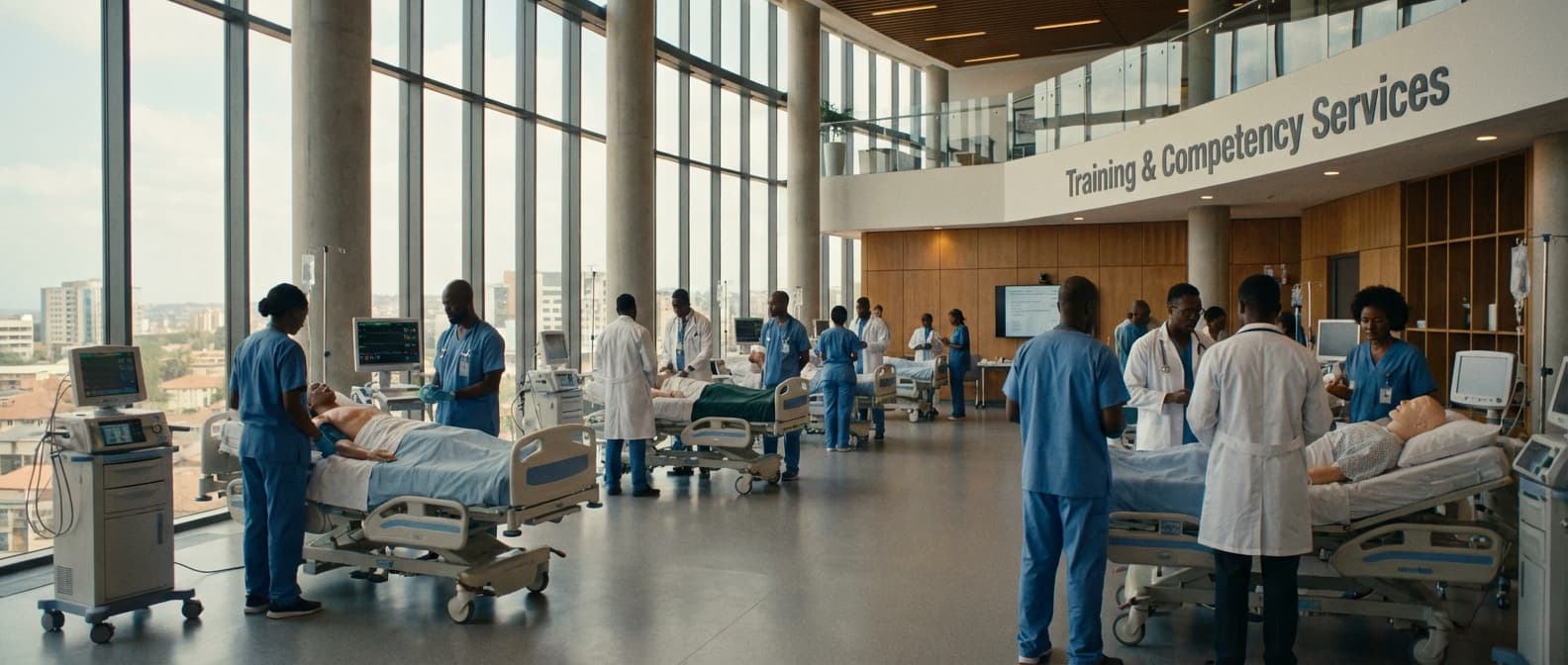
Biomedical Engineering First-Line Support Training Service in Djibouti
Engineering Excellence & Technical Support
Biomedical Engineering First-Line Support Training Service High-standard technical execution following OEM protocols and local regulatory frameworks.
Rapid Diagnostic Equipment Troubleshooting
Empower support technicians to quickly diagnose and resolve common issues with critical diagnostic medical devices (e.g., ECG, patient monitors, basic lab equipment) in Djiboutian healthcare facilities, minimizing downtime and ensuring patient care continuity.
Sterilization & Autoclave System Maintenance
Train personnel on the safe and effective operation, preventative maintenance, and basic troubleshooting of sterilization equipment and autoclaves, vital for infection control in Djibouti's clinics and hospitals.
Basic Imaging Modality Support
Equip first-line responders with the knowledge to perform essential maintenance, calibration checks, and resolve common user errors for foundational imaging devices like X-ray machines and ultrasound units prevalent in Djiboutian medical centers.
What Is Biomedical Engineering First-line Support Training Service In Djibouti?
Biomedical Engineering First-Line Support Training Service in Djibouti refers to the provision of foundational technical education and skill development for personnel responsible for the initial assessment, troubleshooting, and basic maintenance of biomedical equipment within healthcare facilities in Djibouti. This service is crucial for ensuring the operational readiness and longevity of medical devices, thereby directly impacting patient care quality and safety. It aims to equip individuals with the knowledge and practical abilities to identify common equipment malfunctions, perform routine preventive maintenance, and initiate appropriate escalation procedures when complex issues arise. The training emphasizes safety protocols, adherence to manufacturer specifications, and efficient resource utilization in a resource-constrained environment.
| Who Needs the Service? | Typical Use Cases | |||||
|---|---|---|---|---|---|---|
| Healthcare Facility Technicians (non-specialized) | Initial response to a malfunctioning patient monitor in an intensive care unit. | Performing routine safety checks on an X-ray machine before clinical use. | Troubleshooting a faulty infusion pump alarm. | Cleaning and disinfecting a standard hospital bed. | Documenting a preventive maintenance schedule for a batch of diagnostic kits. | Identifying a power issue with a laboratory centrifuge. |
| Clinical Staff with Basic Technical Aptitude | A nurse reporting a blinking light on a vital signs monitor and noting the observed symptoms. | A laboratory technologist performing basic functional checks on a microscope. | A physiotherapist ensuring an ultrasound therapy unit is powered on and displaying a ready status. | A medical assistant performing a visual inspection of a sterilization unit for obvious damage. | ||
| New Biomedical Engineering Department Staff (entry-level) | Onboarding training for newly hired personnel to familiarize them with the facility's equipment inventory and support procedures. | Providing foundational skills before specialized training in specific device categories. | ||||
| Community Health Workers in Remote Areas | Training to perform basic checks and identify critical issues on essential medical devices in clinics with limited access to expert support. |
Key Components of Biomedical Engineering First-Line Support Training:
- Introduction to Biomedical Equipment Principles: Fundamental concepts of operation, physics, and electrical safety relevant to common medical devices.
- Equipment Identification and Categorization: Understanding the different types of biomedical equipment, their intended uses, and primary functional areas.
- Basic Troubleshooting Methodologies: Systematic approaches to diagnosing common faults, including visual inspection, functional testing, and interpreting error codes.
- Preventive Maintenance Procedures: Standard operating procedures for routine inspections, cleaning, lubrication, and calibration of designated equipment.
- Safe Handling and Storage: Protocols for the safe operation, transport, and storage of biomedical devices to prevent damage and ensure user safety.
- Documentation and Reporting: Training on maintaining accurate records of maintenance activities, repairs, and equipment status.
- Escalation Protocols: Understanding when and how to report issues that exceed the scope of first-line support to specialized biomedical engineering personnel or external service providers.
- Regulatory Compliance and Standards: Awareness of relevant local and international standards pertaining to medical device maintenance and safety.
Who Needs Biomedical Engineering First-line Support Training Service In Djibouti?
Biomedical Engineering First-Line Support Training Service in Djibouti is crucial for ensuring the effective and safe operation of medical equipment across various healthcare facilities. This training is designed to empower local technicians and biomedical personnel with the essential skills to perform initial diagnostics, basic troubleshooting, preventative maintenance, and proper reporting of equipment issues. This proactive approach minimizes downtime, extends the lifespan of valuable medical assets, and ultimately improves the quality of patient care.
| Department | Role in First-Line Support | Specific Needs for Training |
|---|---|---|
| Biomedical Engineering Department | Central to equipment management, maintenance, and repair. | Core technical skills in troubleshooting, preventative maintenance, equipment operation, safety protocols, and documentation. |
| Clinical Departments (e.g., Radiology, Cardiology, ICU, Operating Rooms) | End-users of medical equipment; can identify initial issues and report them promptly. | Basic understanding of equipment function, recognizing common malfunctions, safe operation, and proper reporting procedures. |
| Information Technology (IT) Department | Increasingly involved with networked medical devices and electronic health records. | Understanding of network connectivity for medical equipment, cybersecurity basics related to medical devices, and data management. |
| Procurement and Logistics Department | Involved in the acquisition and inventory of medical equipment. | Awareness of the importance of proper maintenance and the implications of inadequate first-line support on equipment lifespan and cost. |
| Administrative and Management Staff | Oversee budgets and resource allocation for equipment maintenance. | Understanding the return on investment of training and the impact of efficient first-line support on operational costs and patient safety. |
Target Customers and Departments
- {"title":"Hospitals (Public and Private)","description":"These are the primary consumers of biomedical engineering services, housing a wide array of complex medical equipment."}
- {"title":"Clinics and Health Centers","description":"Even smaller facilities require trained personnel to manage and maintain their essential medical devices."}
- {"title":"Specialty Medical Centers (e.g., Diagnostic Labs, Rehabilitation Centers)","description":"These centers have specific equipment needs that necessitate specialized first-line support."}
- {"title":"Government Health Ministries and Agencies","description":"Responsible for the oversight and management of public health infrastructure, including equipment maintenance standards."}
- {"title":"Non-Governmental Organizations (NGOs) and International Aid Organizations","description":"Often involved in providing and supporting medical infrastructure in developing regions like Djibouti."}
- {"title":"Medical Equipment Suppliers and Distributors (Local Offices)","description":"May benefit from training their local support staff or offering it as a value-added service to their clients."}
Biomedical Engineering First-line Support Training Service Process In Djibouti
This document outlines the workflow for the Biomedical Engineering First-Line Support Training Service in Djibouti, detailing the process from initial inquiry to the successful execution of the training program.
| Stage | Description | Key Activities | Responsible Party | Deliverables |
|---|---|---|---|---|
| Inquiry & Needs Assessment | Initial contact from the client to request first-line biomedical engineering support training. | Client contacts service provider. Discussion of training objectives, target audience, existing infrastructure, and specific equipment needs. Assessment of current skill levels. | Client, Service Provider (Sales/Consulting Team) | Needs Assessment Report, Initial Scope Definition |
| Proposal Development & Agreement | Formalizing the training requirements and terms into a comprehensive proposal. | Service provider drafts a detailed proposal including curriculum outline, duration, trainers, costs, and proposed dates. Client reviews and negotiates. Agreement signing. | Service Provider (Sales/Technical Team), Client | Formal Training Proposal, Signed Service Agreement/Contract |
| Curriculum Customization & Planning | Tailoring the training content to meet the specific needs identified. | Refining the training modules, case studies, and practical exercises based on agreed-upon equipment and scenarios. Developing a detailed training schedule and agenda. | Service Provider (Training Department/Subject Matter Experts) | Customized Training Curriculum, Detailed Training Schedule/Agenda |
| Resource Allocation & Scheduling | Ensuring all necessary resources are in place and the training is scheduled effectively. | Assigning qualified trainers. Securing training venue and equipment. Procuring training materials (manuals, tools, consumables). Confirming participant list and logistics (travel, accommodation if applicable). | Service Provider (Operations/Logistics Team, Training Department) | Confirmed Trainer Assignments, Scheduled Training Dates, Prepared Training Materials and Equipment |
| Training Delivery | The actual execution of the training program. | Conducting theoretical sessions, practical demonstrations, hands-on exercises, and simulations. Addressing participant questions and providing guidance. On-site supervision and support. | Service Provider (Trainers) | Completed Training Sessions, Participant Engagement Records |
| Post-Training Evaluation & Feedback | Assessing the effectiveness of the training and gathering feedback for improvement. | Administering post-training assessments (written/practical). Collecting feedback from participants and their supervisors. Analyzing evaluation results. | Service Provider (Trainers, Quality Assurance Team), Client (Participants & Supervisors) | Training Assessment Results, Participant Feedback Forms, Post-Training Evaluation Report |
| Certification & Follow-up | Formalizing the completion of training and providing ongoing support. | Issuing certificates of completion to successful participants. Providing a summary report to the client. Offering post-training support channels and scheduling follow-up consultations if agreed upon. | Service Provider (Training Department, Administration) | Certificates of Completion, Final Training Report, Post-Training Support Information |
Service Workflow Stages
- Inquiry & Needs Assessment
- Proposal Development & Agreement
- Curriculum Customization & Planning
- Resource Allocation & Scheduling
- Training Delivery
- Post-Training Evaluation & Feedback
- Certification & Follow-up
Biomedical Engineering First-line Support Training Service Cost In Djibouti
Providing first-line support training for biomedical engineers in Djibouti involves several key cost drivers. These include the complexity of the training curriculum, the duration of the program, the qualifications and experience of the trainers, the chosen training methodology (in-person, online, or hybrid), and the availability of necessary equipment and facilities for practical sessions. Furthermore, administrative costs such as venue rental (if applicable), training materials, and certifications all contribute to the overall price. Demand for specialized biomedical engineering support in Djibouti, while growing, may also influence pricing due to the limited local pool of highly qualified trainers and institutions.
| Training Type/Scope | Estimated Cost Range (DJF) | Notes |
|---|---|---|
| Basic First-Line Troubleshooting (e.g., common medical device errors, preventive maintenance) | 75,000 - 150,000 | Shorter duration, focus on practical skills, potentially online delivery |
| Intermediate First-Line Support (e.g., basic repair, calibration, specific equipment families) | 120,000 - 250,000 | Longer duration, more hands-on sessions, specialized trainers |
| Advanced First-Line Support (e.g., complex diagnostic tools, initial failure analysis, integration) | 200,000 - 400,000+ | Extensive duration, highly experienced trainers, potentially specialized equipment rental |
| Customized Training Programs (tailored to specific hospital needs or equipment) | Negotiable (based on scope) | Requires detailed needs assessment and program design |
| Online/Virtual Training Modules (self-paced or live) | 50,000 - 150,000 | Lower overhead, accessibility, may require supplementary practical kits |
Key Pricing Factors for Biomedical Engineering First-Line Support Training in Djibouti
- Curriculum Complexity and Depth
- Training Duration (hours/days)
- Trainer Qualifications and Experience
- Training Methodology (In-person, Online, Hybrid)
- Equipment and Facility Access for Practical Sessions
- Training Material Development and Provision
- Certification Costs
- Administrative Overhead (venue, logistics, coordination)
- Local Market Demand and Trainer Availability
Affordable Biomedical Engineering First-line Support Training Service Options
Acquiring comprehensive and up-to-date first-line support training for biomedical engineering staff is crucial for ensuring patient safety, optimal equipment functionality, and operational efficiency. However, budgetary constraints can make investing in high-quality training a significant challenge. This document outlines affordable training service options, emphasizing the strategic use of value bundles and cost-saving strategies to maximize return on investment.
| Value Bundle Option | Description | Cost-Saving Strategies | Key Benefits |
|---|---|---|---|
| Core Skills Foundation Package | Bundles foundational training in general biomedical equipment troubleshooting, basic electrical safety, infection control, and documentation best practices. Often includes online modules and downloadable resources. | Group Discounts: Negotiate lower per-person costs for larger cohorts. On-demand access: Reduces scheduling conflicts and allows self-paced learning. Digital materials: Eliminates printing and shipping costs. | Establishes a strong baseline for all first-line support staff, improving response times and reducing reliance on higher-level technicians for common issues. |
| Equipment-Specific Modules (Bundled) | Offers focused training on common medical devices within a department (e.g., vital signs monitors, infusion pumps, ventilators). Often available as supplementary online courses or short, targeted workshops. | Thematic Bundling: Purchase training for categories of equipment rather than individual devices. Train-the-Trainer: Empower internal personnel to deliver standardized training on specific equipment, reducing external dependency. | Enhances proficiency in diagnosing and resolving issues with high-usage equipment, leading to reduced downtime and improved patient care. |
| Blended Learning Solution | Combines online self-paced modules for theoretical knowledge with short, in-person practical sessions or virtual instructor-led training (VILT) for hands-on skills and Q&A. | Reduced Travel Expenses: VILT and online components significantly cut down on accommodation, transportation, and per diem costs associated with traditional on-site training. | Offers a cost-effective and flexible learning experience, catering to diverse schedules and geographical locations while still providing practical application. |
| Subscription-Based Training Portal | Provides continuous access to a library of online courses, webinars, and updated training materials for a recurring fee. Often includes a certain number of user licenses. | Predictable Budgeting: Fixed annual or monthly costs simplify financial planning. Evergreen Content: Access to the latest information without repeated per-course purchases. Volume Licensing: Further discounts for enterprise-wide access. | Ensures ongoing professional development and keeps staff updated on evolving technologies and best practices at a predictable cost. |
| Open-Source & Community-Driven Resources | Leverages free or low-cost online resources, forums, and shared documentation from professional organizations or open-source biomedical communities. | Zero Direct Cost: Primarily relies on volunteer efforts and shared knowledge. Customization: Adapt information to specific organizational needs. | An excellent supplement for foundational knowledge and specific troubleshooting tips, though may require more internal vetting and organization of information. |
Key Considerations for Affordable First-Line Biomedical Engineering Support Training
- Define Training Needs: Clearly identify the specific skills and knowledge gaps that first-line support personnel require (e.g., basic troubleshooting, preventative maintenance, safety protocols, common equipment types).
- Assess Existing Resources: Evaluate internal training materials, subject matter experts, and available technology to leverage existing assets.
- Explore Training Modalities: Consider a blended approach, combining online learning, on-site workshops, and simulation-based training to cater to different learning styles and reduce travel costs.
- Vendor Research: Thoroughly research training providers, comparing their curriculum, instructor qualifications, delivery methods, and pricing structures.
- Scalability: Choose training solutions that can be scaled to accommodate future growth in your biomedical engineering department.
- Return on Investment (ROI) Focus: Prioritize training that demonstrably improves efficiency, reduces downtime, and minimizes costly equipment failures.
Verified Providers In Djibouti
In Djibouti, ensuring access to reliable and trustworthy healthcare is paramount. Franance Health has emerged as a leader, providing a network of verified providers who meet rigorous standards for quality, expertise, and patient care. This commitment to excellence makes them the premier choice for individuals and organizations seeking dependable healthcare solutions in Djibouti. Their stringent credentialing process, coupled with a focus on patient well-being, sets them apart from other options.
| Franance Health Credentialing Factor | What it Means for Patients in Djibouti | Benefit |
|---|---|---|
| Verification of Medical Licenses and Certifications | All providers have undergone thorough checks to ensure they hold valid and recognized medical licenses and certifications. | Guarantees that providers possess the fundamental qualifications and legal authorization to practice medicine. |
| Background and Criminal Record Checks | Comprehensive background checks are conducted on all healthcare professionals. | Ensures a safe and secure environment, protecting patients from potential risks. |
| Professional Experience and Competency Assessment | Franance Health evaluates the practical experience, surgical skills, and overall competency of its providers. | Patients can be confident in receiving care from skilled and experienced practitioners. |
| Reputation and Peer Review | Providers' professional reputations and peer reviews are taken into consideration. | Indicates a history of positive patient outcomes and professional respect within the medical community. |
| Adherence to Ethical Standards and Codes of Conduct | All Franance Health providers are committed to upholding the highest ethical standards in their practice. | Promotes transparency, honesty, and patient-centered care, building strong patient-provider relationships. |
| Continuing Medical Education (CME) Compliance | Providers are required to stay updated with the latest medical advancements through ongoing education. | Ensures patients benefit from the most current and effective treatments and practices. |
Why Franance Health Providers in Djibouti are the Best Choice:
- Rigorous Vetting and Credentialing Process
- Focus on Highly Qualified and Experienced Professionals
- Commitment to Patient Safety and Ethical Practices
- Access to a Diverse Range of Medical Specialties
- Seamless and Efficient Healthcare Navigation
- Enhanced Trust and Peace of Mind for Patients
Scope Of Work For Biomedical Engineering First-line Support Training Service
This document outlines the Scope of Work (SOW) for providing comprehensive first-line support training services for biomedical engineering personnel. The training aims to equip technicians with the fundamental knowledge and practical skills necessary to effectively address common issues with biomedical equipment, escalate complex problems, and ensure patient safety. The deliverables will include training materials, hands-on practical sessions, assessments, and a final report detailing training outcomes and recommendations.
| Deliverable | Description | Standard Specifications | Timeline (example) |
|---|---|---|---|
| Training Curriculum and Materials | Development of comprehensive training modules, including presentations, user manuals, case studies, and practical exercise guides. | Content aligned with industry best practices (e.g., AAMI, IEC standards) and tailored to the organization's specific equipment inventory. Materials to be provided in editable digital format. | Week 1-2 |
| Instructor-Led Training Sessions | Delivery of interactive training sessions to participants, incorporating theoretical explanations and practical demonstrations. | Sessions conducted by certified and experienced biomedical engineering trainers. A trainer-to-participant ratio that facilitates active engagement and individual attention. | Week 3-4 |
| Hands-On Practical Exercises | Opportunity for participants to practice troubleshooting and basic maintenance procedures on simulated or actual equipment under supervision. | Exercises designed to reinforce learned concepts. Availability of a controlled environment with relevant equipment and tools. | Integrated within Weeks 3-4 |
| Participant Assessments | Evaluation of participant comprehension through quizzes, practical skill assessments, and scenario-based evaluations. | Assessments to measure proficiency in troubleshooting, safety protocols, and documentation. A minimum passing score to be established. | End of Week 4 |
| Training Completion Certificates | Issuance of certificates to participants who successfully complete the training program. | Certificates to include participant name, training title, date of completion, and issuing organization. | End of Week 4 |
| Final Training Report | A comprehensive report summarizing the training program, including participant performance, identified skill gaps, and recommendations for ongoing training and support. | Report to include statistical data on assessment results, feedback from participants and instructors, and suggestions for improvement. | Week 5 |
Key Training Modules
- Introduction to Biomedical Equipment Management
- Basic Electrical Safety Principles
- Common Biomedical Equipment Categories and Functionality (e.g., vital signs monitors, infusion pumps, ECG machines)
- Troubleshooting Methodology and Diagnostic Tools
- Preventive Maintenance Fundamentals
- Documentation and Record Keeping
- Patient Safety Protocols related to Equipment Malfunctions
- Escalation Procedures and Communication with Second-Line Support/Manufacturers
- Introduction to Biomedical Information Systems (if applicable)
Service Level Agreement For Biomedical Engineering First-line Support Training Service
This Service Level Agreement (SLA) outlines the performance expectations and guarantees for the Biomedical Engineering First-Line Support Training Service. It defines the response times and uptime guarantees to ensure the effective and timely delivery of training to support personnel.
| Service Component | Uptime Guarantee | Response Time (Initial Contact) | Resolution Time (Target) |
|---|---|---|---|
| Training Platform Availability | 99.5% during scheduled training hours (e.g., Monday-Friday, 8 AM - 5 PM local time). Excludes scheduled maintenance windows. | N/A (Platform is expected to be available) | N/A (Platform is expected to be available) |
| Instructor Availability for Live Sessions | 100% during scheduled live training sessions. In case of instructor unavailability, a substitute instructor will be provided within 2 hours, or the session will be rescheduled within 24 hours. | Within 30 minutes of the scheduled start time. | N/A (Focus is on attendance and delivery) |
| Technical Support for Training Platform Issues | 99.8% during scheduled training hours. | Within 1 hour for critical issues (e.g., inability to access platform), 4 business hours for non-critical issues (e.g., minor display errors). | Critical issues: within 4 business hours. Non-critical issues: within 1 business day. |
| Response to Training-Related Inquiries (Post-Session) | N/A | Within 8 business hours for general inquiries. | Within 1 business day for standard inquiries. Complex technical inquiries may require additional time, with a follow-up notification within 1 business day. |
| Delivery of Training Materials (Pre-Session) | N/A | N/A | Materials will be made available at least 48 hours prior to the scheduled training session. |
Scope of Training Service
- Onboarding training for new first-line biomedical engineering support staff.
- Refresher training on common equipment and troubleshooting procedures.
- Training on new equipment or software introduced to the biomedical engineering support workflow.
- Delivery of training materials, including manuals, presentations, and practical exercises.
- Post-training support for participants to address follow-up questions.
Frequently Asked Questions

Ready when you are
Let's scope your Biomedical Engineering First-Line Support Training Service in Djibouti project in Djibouti.

Scaling healthcare logistics and technical systems across the entire continent.