
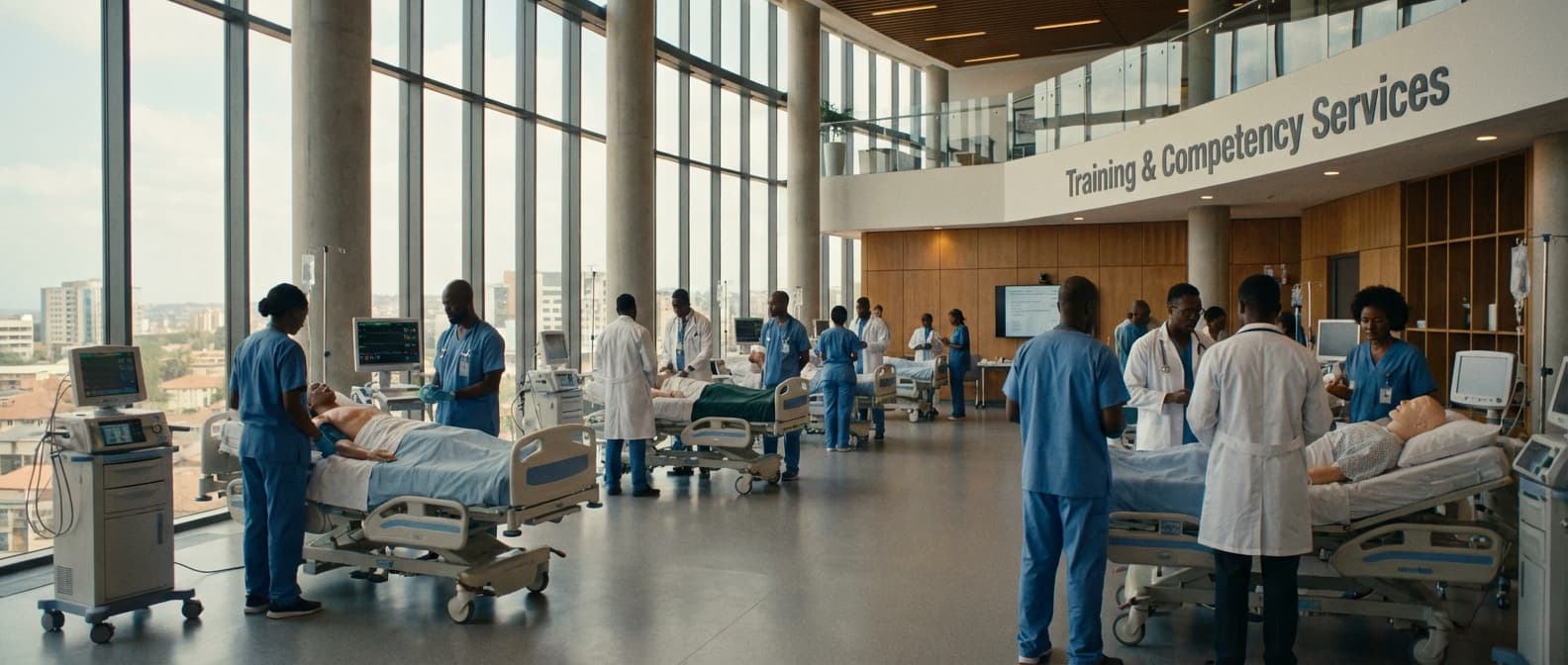
Anesthesia Workstation User Training Service in Djibouti
Engineering Excellence & Technical Support
Anesthesia Workstation User Training Service High-standard technical execution following OEM protocols and local regulatory frameworks.
Expert-Led Anesthesia Workstation Mastery
Our Djibouti-based training program delivers hands-on sessions led by certified anesthesia professionals. Participants will gain in-depth knowledge of your specific workstation's functionalities, safety features, and troubleshooting procedures, ensuring optimal patient care and operational efficiency.
Customized Training Modules & Certification
We offer tailored training modules designed to meet the unique needs of your healthcare facility in Djibouti. Upon successful completion, your staff will receive official certification, validating their proficiency in operating and maintaining the anesthesia workstation, a testament to your commitment to high-quality standards.
On-Site Support & Skill Reinforcement
Our service extends beyond initial training with on-site support and skill reinforcement sessions conducted in Djibouti. We ensure your anesthesia team remains confident and competent, adapting to new features or protocols, and ultimately enhancing patient safety and the overall performance of your anesthesia services.
What Is Anesthesia Workstation User Training Service In Djibouti?
Anesthesia Workstation User Training Service in Djibouti refers to specialized educational programs designed to equip healthcare professionals, primarily anesthesiologists, nurse anesthetists, and biomedical engineers, with the knowledge and practical skills necessary to safely and effectively operate advanced anesthesia workstations. These services ensure proper setup, calibration, functionality testing, patient monitoring integration, ventilation management, and emergency procedures associated with these complex medical devices. The objective is to minimize operational errors, optimize patient care during surgical and critical care procedures, and prolong the lifespan of the equipment through correct usage and basic maintenance.
| Target Audience | Rationale for Training | Typical Use Cases |
|---|---|---|
| Anesthesiologists | To ensure safe and effective administration of anesthesia, optimize patient outcomes, and utilize advanced features for complex cases. | Routine surgical procedures, labor epidurals, intensive care unit ventilation, management of critically ill patients requiring advanced hemodynamic monitoring and respiratory support. |
| Nurse Anesthetists (where applicable and authorized) | To independently administer anesthesia safely and competently, adhering to established protocols and clinical guidelines. | Similar to anesthesiologists, often in settings with physician supervision or in primary care facilities. |
| Biomedical Engineers/Technicians | To perform installation, preventative maintenance, repairs, and to troubleshoot technical issues with the anesthesia workstation. | Initial equipment setup and commissioning, routine scheduled maintenance, corrective maintenance and repair, and ensuring compliance with regulatory standards. |
| Critical Care Physicians/Nurses | To manage ventilated patients in the ICU who may utilize the anesthesia workstation's ventilation capabilities and monitoring features. | Long-term mechanical ventilation in the ICU, advanced hemodynamic monitoring, and weaning from mechanical ventilation. |
| Healthcare Procurement and Logistics Managers | To understand the operational requirements and training needs associated with acquiring new anesthesia workstations, ensuring adequate resources are allocated. | Facility planning, equipment acquisition justification, and ensuring post-installation training is scheduled and completed. |
Key Components of Anesthesia Workstation User Training Service:
- Device Overview and Components: Detailed explanation of the anesthesia workstation's architecture, including gas delivery systems (vaporizers, flow meters), ventilation circuits, patient monitoring modules (ECG, SpO2, EtCO2, NIBP), and integrated software functionalities.
- Pre-use Checks and Calibration: Standardized procedures for system checks, leak testing, fresh gas flow calibration, and vaporizer accuracy verification to ensure readiness for patient use.
- Ventilator Management: In-depth training on various ventilation modes (e.g., volume control, pressure control, SIMV, PSV), parameter setting, waveform interpretation, and troubleshooting common ventilation-related alarms.
- Anesthetic Agent Delivery and Monitoring: Proper filling of vaporizers, understanding agent delivery accuracy, and the interpretation of end-tidal anesthetic gas concentrations.
- Integration with Patient Monitors: Establishing seamless connectivity and data flow between the anesthesia workstation and standalone patient monitoring systems.
- Alarm Management and Troubleshooting: Identification of critical alarms, understanding their physiological significance, and implementing appropriate responses to resolve issues.
- Emergency Procedures and Fail-Safes: Training on emergency shutdown procedures, manual ventilation techniques, and the functionality of built-in fail-safe mechanisms.
- Basic Maintenance and Cleaning: Protocols for routine cleaning, disinfection, and user-level preventative maintenance to ensure optimal performance and hygiene.
- Software Updates and Updates Management: Procedures for installing and verifying software updates and firmware revisions.
Who Needs Anesthesia Workstation User Training Service In Djibouti?
Anesthesia workstation user training is crucial for ensuring safe and effective patient care, particularly in specialized medical environments. In Djibouti, several institutions and departments stand to benefit significantly from comprehensive training services for their anesthesia workstation operators. This training is vital for healthcare professionals to understand the functionalities, maintenance, and troubleshooting of modern anesthesia machines, thereby minimizing risks and optimizing patient outcomes.
| Customer Type | Departments Involved | Key Training Needs |
|---|---|---|
| Government Hospitals | Anesthesiology, Operating Room, Surgical Departments, Biomedical Engineering | Basic and advanced operation, ventilation modes, patient monitoring integration, emergency procedures, troubleshooting, preventive maintenance. |
| Private Hospitals and Clinics | Anesthesiology, Operating Room, Administration, Biomedical Engineering | Workflow optimization, advanced monitoring techniques, integration with hospital information systems, cost-effective operation, emergency response. |
| Tertiary Care Centers | Anesthesiology (specialized sub-groups like Cardiac, Neuro), Intensive Care Unit (ICU), Operating Room | Specialized ventilation strategies, advanced hemodynamic monitoring, drug delivery systems, management of complex comorbidities, crisis management. |
| University Hospitals/Teaching Hospitals | Anesthesiology Residency Programs, Anesthesia Technology Programs, Operating Room Staff, Biomedical Engineering | Comprehensive curriculum development, hands-on training for residents and students, simulation-based training, research applications, advanced troubleshooting. |
| Military Hospitals | Anesthesiology, Operating Room, Field Medicine Units, Logistics and Maintenance | Operation in austere environments, portability and durability of equipment, rapid deployment capabilities, specialized military protocols, robust maintenance training. |
| NGO Hospitals and Clinics | Anesthesiology, Operating Room, Community Health, Biomedical Engineering (if applicable) | Basic operation and maintenance with limited resources, adaptability to different equipment models, training for diverse skill levels, infection control integration. |
| Biomedical Engineering Departments | Biomedical Engineering, Clinical Engineering, Technical Support | In-depth technical understanding, calibration and validation, repair and servicing procedures, software updates, safety testing, inventory management. |
Target Customers and Departments for Anesthesia Workstation User Training in Djibouti
- Government Hospitals: These are the primary healthcare providers in Djibouti and often handle a large volume of surgical procedures. Ensuring their anesthesia teams are well-trained is paramount for public health.
- Private Hospitals and Clinics: As the private healthcare sector grows in Djibouti, these facilities also acquire advanced anesthesia equipment and require skilled personnel to operate them.
- Tertiary Care Centers: Institutions offering specialized surgical services, such as cardiac surgery or neurosurgery, rely heavily on sophisticated anesthesia workstations. Proper training is essential for managing complex cases.
- University Hospitals/Teaching Hospitals: These institutions play a dual role in patient care and medical education. Training anesthesia workstation users here not only benefits current patients but also prepares future anesthesiologists and technicians.
- Military Hospitals: Facilities serving military personnel may have specialized anesthesia equipment and require personnel trained to operate them under various conditions.
- Non-Governmental Organization (NGO) Hospitals and Clinics: Organizations providing healthcare services in Djibouti, especially in underserved areas, often utilize donated or acquired anesthesia equipment. Training is key to maximizing the utility and safety of these resources.
- Emergency Medical Services (EMS) with Surgical Capabilities: While less common, some advanced EMS units might be equipped for immediate surgical interventions and require trained personnel for anesthesia-related aspects.
- Biomedical Engineering Departments: These departments are responsible for the maintenance and repair of medical equipment, including anesthesia workstations. Training ensures they understand the technical specifications and operational requirements.
- Procurement and Logistics Departments: Understanding the operational needs of anesthesia workstations can inform better procurement decisions and ensure appropriate support infrastructure is in place.
Anesthesia Workstation User Training Service Process In Djibouti
This document outlines the standard workflow for the Anesthesia Workstation User Training Service provided in Djibouti, detailing the process from initial inquiry to successful execution. This service aims to equip healthcare professionals with the necessary skills and knowledge to safely and effectively operate anesthesia workstations, ensuring optimal patient care.
| Phase | Key Activities | Responsible Party | Deliverables | Timeline (Indicative) |
|---|---|---|---|---|
| Initial contact from client (hospital, clinic). Discussion of training needs, target audience (anesthesiologists, nurses), specific workstation models, desired learning outcomes, preferred dates, and location. | Client, Service Provider Representative | Understanding of training requirements, preliminary scope definition. | 1-3 business days |
| Based on the needs assessment, the service provider develops a detailed training proposal outlining objectives, curriculum, methodology, duration, trainer qualifications, and costs. A formal quotation is issued. | Service Provider | Formal Training Proposal, Quotation. | 3-5 business days |
| Client reviews and accepts the proposal and quotation. A formal training agreement is signed. Specific training dates, times, and logistical arrangements are confirmed and scheduled. | Client, Service Provider | Signed Training Agreement, Confirmed Training Schedule. | 2-5 business days |
| Service provider: Prepares training materials (presentations, manuals, case studies), ensures trainer availability, confirms equipment requirements (workstations, simulators if applicable). Client: Identifies trainees, ensures workstation availability and functionality for training, makes necessary arrangements for the training venue. | Service Provider, Client | Training materials, Trainer assignment, Venue confirmation, Trainee list. | 5-10 business days before training |
| On-site delivery of the training program. Includes theoretical sessions, practical demonstrations, hands-on exercises, Q&A sessions, and case study discussions. Adherence to the agreed curriculum and schedule. | Service Provider (Trainer) | Delivered Training Sessions, Practical Skill Development. | As per agreed schedule (e.g., 2-3 days) |
| Assessment of trainee comprehension and practical skills through tests or simulations. Issuance of certificates of completion to successful participants. | Service Provider (Trainer) | Assessment Results, Certificates of Completion. | Immediately after training completion |
| Post-training feedback collection from trainees and the client. Provision of ongoing technical support, clarification of doubts, or potential refresher training sessions if required and agreed upon. | Service Provider | Feedback Report, Resolved queries, Potential follow-up plan. | Ongoing, as per agreement |
Anesthesia Workstation User Training Service Process in Djibouti
- Inquiry & Needs Assessment
- Proposal Development & Quotation
- Agreement & Scheduling
- Pre-Training Preparation
- Training Execution
- Post-Training Evaluation & Certification
- Follow-up & Support
Anesthesia Workstation User Training Service Cost In Djibouti
Providing anesthesia workstation user training services in Djibouti involves several factors that influence the overall cost. These factors are crucial for both training providers and healthcare facilities in Djibouti to budget effectively. The cost is not standardized and can vary significantly based on the scope of training, the expertise of the trainers, the duration of the program, and the logistical considerations within Djibouti. It's important for facilities to obtain detailed quotes from potential training providers to understand the specific components contributing to the price.
| Training Service Component | Estimated Cost Range (DJF - Djibouti Francs) | Notes |
|---|---|---|
| Basic Orientation (1-2 days, limited participants) | 150,000 - 300,000 DJF | Covers fundamental operations, safety features. May include local trainers. |
| Intermediate Training (3-5 days, moderate participants) | 300,000 - 750,000 DJF | Includes more detailed feature exploration, common scenarios. Might involve international trainers requiring travel expenses. |
| Advanced/Comprehensive Training (5+ days, multiple participants) | 750,000 - 2,000,000+ DJF | In-depth coverage, troubleshooting, maintenance. Can be highly customized. Significantly influenced by trainer fees and travel. |
| On-site Trainer Travel & Accommodation (if applicable) | 100,000 - 500,000 DJF (per trainer, per trip) | Dependent on origin, duration of stay, and accommodation standards. |
| Training Materials & Manuals (per participant) | 10,000 - 50,000 DJF | Varies by quality and volume of materials. |
| Certification/Assessment Fees | 20,000 - 100,000 DJF | If a formal assessment and certification are provided. |
Key Pricing Factors for Anesthesia Workstation User Training in Djibouti:
- Scope and Depth of Training: A basic orientation session will be less expensive than comprehensive training covering advanced features, troubleshooting, and maintenance. The number of anesthesia workstations to be trained on also impacts cost.
- Trainer Expertise and Experience: Highly qualified and experienced anesthesia educators, often with international recognition or specialized certifications, will command higher fees. The reputation and track record of the training provider are also considered.
- Training Duration: The longer the training program, the higher the overall cost. This includes the number of days, hours per day, and any follow-up sessions.
- Number of Participants: While sometimes offered on a per-participant basis, group discounts are common. However, very large groups might necessitate additional trainers or resources, potentially increasing the overall cost per session.
- Training Location and Logistics: If training is conducted on-site at a healthcare facility in Djibouti, costs may include travel and accommodation for trainers (if they are not local), and potentially rental of training space if the facility's own resources are insufficient.
- Training Materials and Resources: The provision of comprehensive training manuals, case studies, simulators (if applicable), and post-training support materials can add to the cost.
- Customization and Specialization: Tailoring the training content to specific anesthesia workstation models or specialized procedures will likely incur higher costs due to the development effort required.
- Certification and Assessment: If formal certification or assessment of competency is included, this will add to the training cost.
- Anesthesia Workstation Model: Training on complex, high-end anesthesia workstations might be priced differently than training on more standard or older models, reflecting the complexity of the equipment itself.
Affordable Anesthesia Workstation User Training Service Options
This service offers comprehensive training for affordable anesthesia workstations, ensuring safe and efficient operation. We understand that budget is a key consideration for healthcare facilities, and our tiered approach to user training, combined with strategic cost-saving measures, makes professional development accessible and impactful. Our goal is to empower your clinical staff with the knowledge and confidence to maximize the benefits of your anesthesia equipment without breaking the bank.
| Cost-Saving Strategy | Description | Benefit |
|---|---|---|
| Volume Discounts | Discounted rates for training multiple staff members or multiple workstations simultaneously. | Reduced per-person training cost, maximizing budget for larger teams. |
| Train-the-Trainer Programs | Equip selected staff members with the expertise to train their colleagues internally. | Long-term cost reduction, ongoing internal knowledge transfer, and flexibility. |
| Online/Blended Learning Options | Offerings that combine self-paced online modules with shorter, in-person or virtual instructor-led sessions. | Reduces travel and accommodation costs, allows for flexible scheduling. |
| Early Bird Registration Discounts | Incentives for booking training sessions well in advance of the scheduled date. | Further reduces the overall training investment and aids in budget planning. |
| Bundle Package Savings | Purchasing a combination of bundles often results in a lower overall price than buying individual modules. | Provides comprehensive training at a more economical rate. |
| Refresher Training Packages | Discounted rates for ongoing training to maintain proficiency and introduce new features. | Ensures continuous competency and reduces the cost of initial training for existing staff. |
Value Bundles Explained
- {"title":"Core Essentials Bundle","description":"This foundational package covers the fundamental operation, basic troubleshooting, and essential safety protocols for your specific anesthesia workstation. Ideal for new hires or for refreshing core competencies."}
- {"title":"Advanced Features Bundle","description":"Expands on the Core Essentials, delving into advanced functionalities, specific ventilation modes, waveform interpretation, and more in-depth troubleshooting scenarios. Suitable for experienced users looking to optimize their skills."}
- {"title":"Master Clinician Bundle","description":"Our most comprehensive offering, including Core Essentials, Advanced Features, scenario-based simulations, hands-on practice with diverse patient profiles, and updates on best practices and emerging technologies. Designed for educators and lead clinicians."}
- {"title":"Customizable Modules","description":"Tailor training to your specific needs. Select individual modules covering specialized topics such as low-flow anesthesia, capnography interpretation, or integration with patient monitoring systems."}
Verified Providers In Djibouti
In Djibouti, discerning patients seek healthcare providers who not only offer exceptional medical care but also possess verifiable credentials and a commitment to ethical practices. Franance Health stands out as a leading network of healthcare professionals and facilities in the region, distinguished by its stringent vetting process and unwavering dedication to patient well-being. This commitment translates into a higher standard of care, ensuring that when you choose a Franance Health-affiliated provider, you are choosing excellence, reliability, and peace of mind.
| Credential Type | Franance Health Verification Process | Why it's Important for Patients |
|---|---|---|
| Medical Licensure | Verified with Djibouti's Ministry of Health and relevant international bodies. | Ensures providers are legally authorized to practice and meet national standards. |
| Educational Background | Documentary evidence of degrees and certifications from accredited institutions. | Confirms foundational knowledge and specialized training in their respective fields. |
| Post-Graduate Training & Fellowships | Verification of residency programs, internships, and specialized fellowships. | Indicates advanced expertise and specialized skills beyond basic medical education. |
| Board Certifications | Confirmation of certifications from recognized medical boards. | Demonstrates a high level of proficiency and competency in a specific medical specialty. |
| Work History & Peer Review | Thorough background checks and, where applicable, peer recommendations. | Provides insights into professional conduct, experience, and a track record of effective patient care. |
| Continuing Medical Education (CME) | Evidence of ongoing professional development and training. | Ensures providers stay updated with the latest medical advancements and best practices. |
| Facility Accreditation (for partner hospitals/clinics) | Verification of compliance with national and international healthcare facility standards. | Guarantees that the environment of care meets stringent safety and quality benchmarks. |
Why Franance Health Credentials Matter:
- Rigorous Verification: Franance Health employs a comprehensive credentialing process that scrutinizes the education, training, licensure, and professional history of every provider within its network.
- Commitment to Quality: We partner with facilities that adhere to the highest standards of patient safety, infection control, and quality improvement, ensuring a safe and effective healthcare experience.
- Ethical Practice Standards: Franance Health is dedicated to upholding the highest ethical principles in healthcare delivery, promoting transparency, and patient-centered care.
- Access to Specialized Expertise: Our network includes a diverse range of specialists, allowing patients to access a wide spectrum of medical expertise without compromising on quality.
- Enhanced Patient Trust: The Franance Health badge signifies a commitment to excellence, building trust and confidence for individuals seeking reliable medical services in Djibouti.
Scope Of Work For Anesthesia Workstation User Training Service
This Scope of Work (SOW) outlines the requirements for providing comprehensive user training services for anesthesia workstations. The objective is to ensure that all designated users (anesthesiologists, nurse anesthetists, and relevant technical staff) possess the necessary knowledge and skills to operate the anesthesia workstations safely and effectively. This SOW details the technical deliverables, standard specifications, and training methodologies required to achieve this objective.
| Deliverable | Description | Format/Method | Standard Specifications/Requirements | Acceptance Criteria |
|---|---|---|---|---|
| Training Curriculum Development | Creation of a comprehensive and modular training program tailored to the specific anesthesia workstation model. | Document (PDF/Word) and Presentation Slides (PPT) | Includes learning objectives, content modules, duration estimates, assessment methods. Must align with manufacturer's guidelines and best clinical practices. Content validated by medical advisors. | Curriculum approved by client's medical and technical departments. Demonstrates logical flow and coverage of all key areas. |
| Instructor-Led Training Sessions | Delivery of in-person or virtual training sessions by qualified instructors. | Live Sessions (On-site or Virtual) | Led by certified trainers with expertise in the specific workstation. Sessions should be interactive, allowing for questions and hands-on practice. Group size per instructor to be defined (e.g., max 6 participants per workstation). | Participant attendance logged. Post-training assessments completed by participants. Positive feedback from participants via evaluation forms. |
| Hands-on Practical Sessions | Opportunities for participants to operate the anesthesia workstation under supervision. | Practical Exercises on Actual Workstations | Each participant to have adequate hands-on time. Scenarios should simulate real-world clinical situations. Workstations used for training must be fully functional and representative of deployed units. | Observation of participant competency in performing key procedures. Successful completion of practical scenario assessments. |
| Training Manuals and User Guides | Provision of detailed reference materials for participants. | Printed Manuals and/or Digital Documents (PDF) | Comprehensive, accurate, and easy-to-understand. Should include all information covered in the curriculum. Must be specific to the model being trained. Translated into required languages if applicable. | Manuals are complete, error-free, and readily accessible to all trainees. Content matches curriculum. |
| Competency Assessment Tools | Development and administration of tools to evaluate user understanding and proficiency. | Quizzes, Practical Skill Checklists, Simulation Scenarios | Assessments should cover theoretical knowledge and practical skills. Passing scores to be defined. Methods should be objective and consistent. | Assessment results demonstrate a minimum competency level for all participants (e.g., 80% pass rate on written and practical assessments). |
| Post-Training Support | Provision of ongoing support to users after the formal training period. | Email, Phone Support, Online Knowledge Base Access | Defined response times for inquiries. Access to FAQs, troubleshooting guides, and instructional videos. Duration of support period (e.g., 30-90 days post-training). | Support requests are addressed within agreed SLAs. Users report satisfaction with the level of ongoing support. |
| Training Certification | Issuance of certificates to participants who successfully complete the training. | Digital or Printed Certificates | Certificates to include trainee name, workstation model, training date, and issuing authority. Must be formally documented. | Certificates issued to all individuals who meet the defined competency standards. |
Key Training Areas and Objectives
- Basic Operation: Understanding of power-on/off procedures, patient connection, ventilation modes (e.g., Volume Control, Pressure Control, Spontaneous), and gas delivery.
- Advanced Ventilation Modes: Proficiency in using and managing complex modes (e.g., Proportional Assist Ventilation (PAV), Automatic Tube Compensation (ATC), Non-Invasive Ventilation (NIV)).
- Gas Monitoring and Management: Accurate interpretation of anesthetic gas concentrations, oxygen monitoring, and effective management of fresh gas flow.
- Vaporizer Operation: Safe filling, emptying, and setting of anesthetic vaporizers. Understanding of agent-specific characteristics.
- Alarms and Troubleshooting: Recognition of common alarms, understanding their causes, and implementing appropriate corrective actions. Basic troubleshooting steps.
- Patient Monitoring Integration: Understanding how the workstation interfaces with and displays data from integrated patient monitors (e.g., ECG, SpO2, EtCO2, NIBP).
- Breathing Circuit Management: Proper assembly, disassembly, leak testing, and maintenance of the breathing circuit. Humidification and warming techniques.
- System Setup and Configuration: Correct configuration of the workstation for different patient types and surgical procedures.
- Safety Features and Precautions: In-depth knowledge of all safety mechanisms, interlocks, and best practices to prevent patient harm.
- Preventive Maintenance and Basic Servicing: Understanding of daily checks, cleaning procedures, and basic user-level maintenance tasks.
- Emergency Procedures: Response protocols for equipment malfunctions or critical situations during anesthesia delivery.
Service Level Agreement For Anesthesia Workstation User Training Service
This Service Level Agreement (SLA) outlines the terms and conditions for the Anesthesia Workstation User Training Service, focusing on response times and uptime guarantees. This SLA is an appendix to the Master Service Agreement (MSA) between [Your Company Name] (hereinafter referred to as 'Provider') and [Client Company Name] (hereinafter referred to as 'Client').
| Service Component | Service Level Objective (SLO) | Measurement Method | Remedy for Failure |
|---|---|---|---|
| Technical Support Response Time (Critical Issues) | Acknowledge within 30 minutes; Initial Diagnosis within 2 hours | Provider's ticketing system timestamps; validated by Client acknowledgement. | Service credit of 5% of monthly training fee for each instance of failure to meet the SLO. |
| Technical Support Response Time (Non-Critical Issues) | Acknowledge within 4 business hours; Initial Diagnosis within 1 business day | Provider's ticketing system timestamps; validated by Client acknowledgement. | Service credit of 2% of monthly training fee for each instance of failure to meet the SLO. |
| Platform Availability (Uptime) | 99.5% during scheduled training hours | Monitoring by an independent third-party tool (e.g., Pingdom, UptimeRobot); measured monthly. | Service credit of 10% of monthly training fee for each full percentage point below 99.5% uptime in a given month. Maximum credit capped at 30%. |
| Training Content Accessibility | 99.8% availability of all pre-recorded training modules and simulations during scheduled training hours | Provider's internal monitoring systems; monthly review of access logs. | Service credit of 3% of monthly training fee for each full percentage point below 99.8% accessibility in a given month. |
Key Performance Indicators (KPIs)
- Support Request Response Time: The maximum acceptable time for the Provider to acknowledge and begin addressing a submitted support request.
- Uptime Guarantee: The percentage of time the Anesthesia Workstation Training Platform and its associated resources are available for use by the Client's authorized users.
Frequently Asked Questions

Ready when you are
Let's scope your Anesthesia Workstation User Training Service in Djibouti project in Djibouti.

Scaling healthcare logistics and technical systems across the entire continent.