
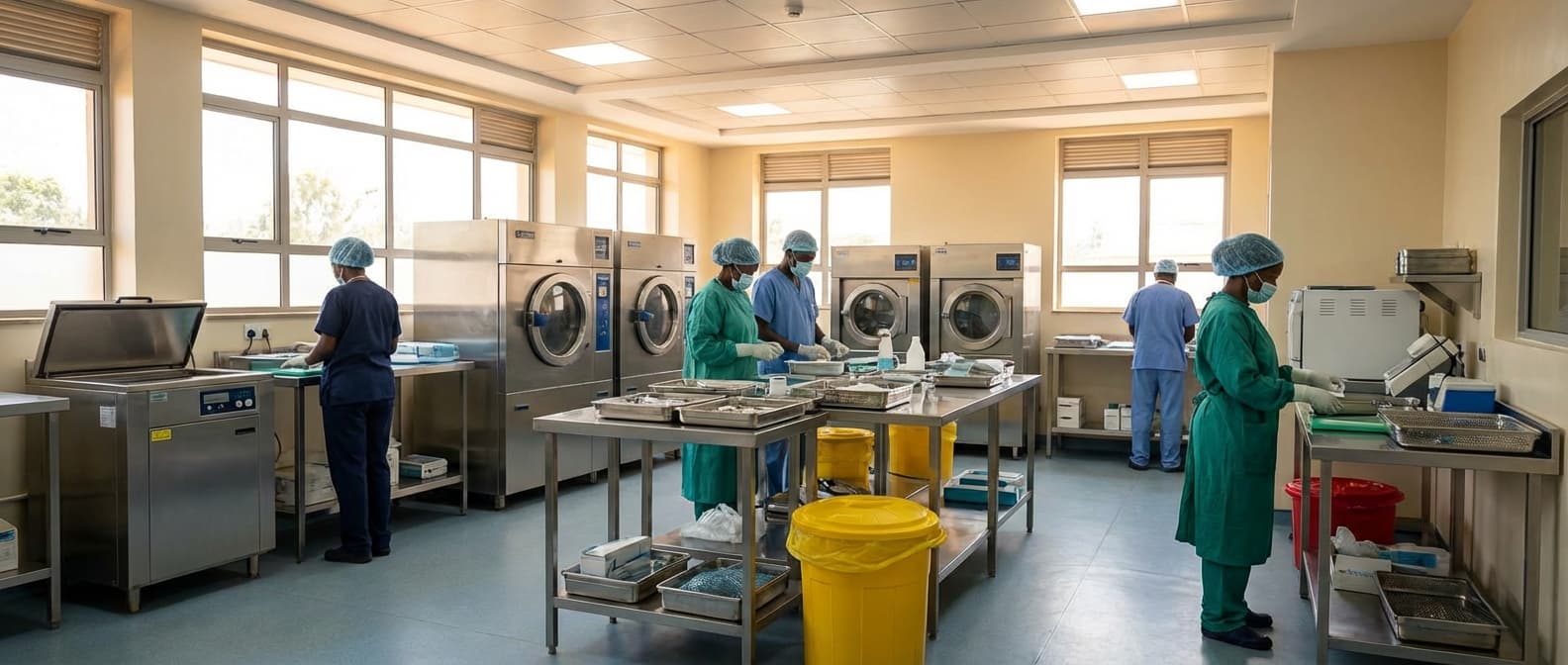
Medical Equipment Decontamination Service (Pre-Repair/Pre-Relocation) in Djibouti
Engineering Excellence & Technical Support
Medical Equipment Decontamination Service (Pre-Repair/Pre-Relocation) High-standard technical execution following OEM protocols and local regulatory frameworks.
Advanced Bio-Decontamination Protocols
Utilizing hospital-grade disinfectants and validated decontamination processes to eliminate bioburden, pathogens, and residual contaminants from medical equipment prior to repair or relocation, ensuring a safe and sterile environment for technicians and the receiving facility.
Comprehensive Equipment Assessment & Certification
Performing thorough visual inspections and targeted decontamination based on equipment type and previous use. Issuing a decontamination certification confirming adherence to stringent safety standards, providing peace of mind for all stakeholders in Djibouti.
Secure & Compliant Logistics Integration
Seamlessly integrating decontamination services with pre-repair or pre-relocation logistics. Our process ensures equipment is safely contained, handled, and transported according to international best practices and Djibouti's specific regulations, minimizing risk and maximizing efficiency.
What Is Medical Equipment Decontamination Service (Pre-repair/pre-relocation) In Djibouti?
Medical Equipment Decontamination Service (Pre-Repair/Pre-Relocation) in Djibouti refers to the comprehensive process of cleaning, disinfecting, and sterilizing medical devices and equipment prior to them being sent for repair or relocation within healthcare facilities. This service is critical for preventing the transmission of infectious agents, ensuring the safety of technicians, and maintaining the integrity of the equipment itself throughout these processes. The decontamination protocols employed are typically aligned with international standards and Djibouti's national health guidelines, focusing on the elimination of bioburden, including bacteria, viruses, fungi, and prions.
| Who Needs This Service? | Typical Use Cases | ||||||
|---|---|---|---|---|---|---|---|
| Healthcare Facilities in Djibouti (Hospitals, Clinics, Diagnostic Laboratories, Dental Practices) | Routine maintenance schedules for medical equipment. | Equipment requiring unscheduled repairs. | Transfer of equipment between departments or facilities. | Receiving new or refurbished medical equipment. | Equipment used in high-risk procedures or isolation areas. | Preparation for relocation of entire departments or facilities. | Compliance with infection control regulations. |
| Medical Equipment Manufacturers and Distributors (for returned or serviced equipment) | Returned equipment for warranty repair or service. | Equipment undergoing manufacturer-level servicing. | Preparation of equipment for shipping to new locations. | ||||
| Third-Party Biomedical Engineering and Repair Companies | Receipt of potentially contaminated equipment for repair. | Ensuring the safety of their technicians and workshop environment. | Preventing cross-contamination within their repair facilities. | ||||
| Government Health Agencies and Regulatory Bodies | Ensuring compliance with national and international safety standards. | Auditing and verification of decontamination protocols. |
Key Components of Medical Equipment Decontamination Service (Pre-Repair/Pre-Relocation)
- Initial Assessment and Classification: Evaluating the type of equipment, its intended use, the potential bioburden, and associated risks.
- Pre-cleaning: Removal of gross soil and visible organic debris using appropriate detergents and mechanical action.
- Cleaning: Thorough washing to remove residual organic and inorganic contaminants, often employing ultrasonic cleaners or automated washer-disinfectors.
- Rinsing: Removal of cleaning agents and loosened debris using purified water.
- Disinfection: Application of chemical germicides or thermal processes to reduce the number of viable microorganisms to a safe level, targeting specific pathogens relevant to the equipment's use.
- Sterilization (if applicable): A more rigorous process designed to eliminate all forms of microbial life, including bacterial spores. This may involve autoclaving (steam sterilization), ethylene oxide sterilization, or hydrogen peroxide plasma sterilization, depending on the equipment's material compatibility.
- Drying: Ensuring the equipment is adequately dried to prevent microbial growth and facilitate subsequent steps.
- Packaging (for transport): Secure and appropriate packaging to maintain sterility (if sterilized) and protect the equipment during transit to repair facilities or relocation.
- Documentation: Detailed record-keeping of all decontamination steps, including the agents used, temperatures, durations, and personnel involved.
Who Needs Medical Equipment Decontamination Service (Pre-repair/pre-relocation) In Djibouti?
In Djibouti, specialized medical equipment decontamination services before repair or relocation are crucial for a variety of entities to ensure patient safety, regulatory compliance, and the longevity of valuable equipment. This proactive measure prevents the spread of infectious agents, protects service technicians, and maintains the integrity of the equipment itself.
| Target Customer | Relevant Departments | Why Decontamination is Crucial |
|---|---|---|
| Hospitals and Clinics | Sterile Processing Department (SPD), Biomedical Engineering, Radiology, Operating Rooms, Intensive Care Units (ICUs), Emergency Departments | Prevent cross-contamination during repair/relocation, protect staff and technicians from biohazards, maintain equipment functionality by removing interfering residues. |
| Diagnostic Laboratories | Laboratory Management, Equipment Maintenance Teams, Microbiology, Pathology | Ensure accuracy of diagnostic tests by removing biological contaminants, prevent cross-contamination between samples and equipment, protect lab personnel. |
| Public Health Facilities | Ministry of Health Departments, Regional Health Centers, Mobile Clinics | Safeguard public health by containing potential pathogens, ensure continuity of essential healthcare services, meet national health regulations. |
| Military Medical Units | Field Hospitals, Combat Support Hospitals, Medical Logistics | Maintain operational readiness, prevent disease outbreaks in deployed settings, protect military personnel and beneficiaries. |
| Non-Governmental Organizations (NGOs) with Healthcare Programs | Program Managers, Medical Coordinators, Field Operations | Ensure safe and effective delivery of healthcare in challenging environments, protect vulnerable populations, uphold ethical and safety standards. |
| Private Medical Practices | Practice Managers, Clinical Staff, Equipment Technicians | Protect patient privacy and safety, maintain the reputation of the practice, ensure equipment is in optimal condition for patient care. |
| Medical Equipment Manufacturers and Distributors | Service Departments, Repair Centers, Logistics and Returns Departments | Protect their technicians and facilities, ensure returned equipment can be safely assessed and repaired, maintain product integrity before resale or reuse. |
| Research Institutions | Research Leads, Laboratory Managers, Biomedical Engineers | Prevent contamination of sensitive research samples, protect researchers from biohazards, ensure the reliability of experimental results. |
Who Needs Medical Equipment Decontamination Service (Pre-Repair/Pre-Relocation) in Djibouti?
- Hospitals and Clinics
- Diagnostic Laboratories
- Public Health Facilities
- Military Medical Units
- Non-Governmental Organizations (NGOs) with Healthcare Programs
- Private Medical Practices
- Medical Equipment Manufacturers and Distributors (for returned or serviced units)
- Research Institutions with Biomedical Equipment
Medical Equipment Decontamination Service (Pre-repair/pre-relocation) Process In Djibouti
This document outlines the workflow for the Medical Equipment Decontamination Service (Pre-Repair/Pre-Relocation) in Djibouti, detailing the process from initial inquiry to the completion of decontamination. This service is crucial for ensuring the safety of personnel and the integrity of medical equipment during repair or relocation, preventing the spread of infectious agents.
| Phase | Step | Description | Responsible Party | Key Outputs/Deliverables | Key Considerations (Djibouti Context) |
|---|---|---|---|---|---|
| 1.1. Client Inquiry | The process begins with a client (e.g., hospital, clinic, repair facility) contacting the decontamination service provider with a need for pre-repair or pre-relocation decontamination of medical equipment. | Client | Initial request for service | Communication channels (phone, email, in-person). Language proficiency (French, Arabic, local dialects) may be important. |
| 1.2. Information Gathering | The service provider gathers preliminary information about the equipment, its intended use, the nature of the suspected contamination (if any), and the reason for decontamination (repair or relocation). | Service Provider | Understanding of client's needs | Assessment of equipment type and complexity. Any known biohazards or chemical contaminants. |
| 2.1. Detailed Equipment Assessment (Remote/On-Site) | A more detailed assessment is conducted. This might involve the client providing a detailed equipment list, manufacturer's specifications, and potentially a site visit by the service provider for complex equipment or scenarios. | Client & Service Provider | Detailed equipment inventory, contamination risk assessment | Accessibility of the equipment for assessment. Identifying specific decontamination requirements per equipment type. |
| 2.2. Decontamination Protocol Development | Based on the assessment, the service provider develops a specific decontamination protocol, including the choice of disinfectants/sterilants, methods, and safety precautions. | Service Provider | Tailored decontamination protocol | Availability and suitability of approved disinfectants in Djibouti. Compliance with local health regulations. |
| 2.3. Quotation and Proposal Submission | The service provider submits a formal quotation outlining the scope of work, decontamination methods, timeline, personnel involved, and associated costs. | Service Provider | Formal quotation and proposal | Clear pricing structure. Payment terms and methods accepted in Djibouti. |
| 2.4. Client Approval and Contract | The client reviews and approves the quotation. A service agreement or contract is finalized. | Client & Service Provider | Signed service agreement/contract | Understanding and adherence to contractual obligations. Legal review if necessary. |
| 3.1. Service Scheduling | The decontamination service is scheduled at a mutually convenient time, considering the client's operational needs and the availability of the service provider's team. | Service Provider & Client | Agreed-upon service schedule | Coordination with facility management. Minimizing disruption to healthcare services. |
| 3.2. Site Preparation and Access | The service provider ensures they have the necessary access to the equipment and the designated decontamination area. This may involve coordination with facility security and maintenance. | Service Provider & Client | Access permissions, designated workspace | Security clearances for personnel. Understanding of building access protocols. |
| 3.3. Material and Equipment Mobilization | The decontamination team mobilizes all necessary equipment, disinfectants, personal protective equipment (PPE), and documentation tools to the site. | Service Provider | On-site presence of trained personnel and equipment | Logistics for transporting chemicals and equipment into Djibouti and within the country. Customs procedures if applicable. |
| 4.1. Pre-Decontamination Site Inspection | Upon arrival, the team conducts a final inspection of the equipment and the work area to confirm readiness and safety. | Service Provider | Confirmation of site readiness | Assessment of any unforeseen site conditions. Ensuring ventilation and containment measures are adequate. |
| 4.2. Equipment Preparation and Containment | Equipment is prepared for decontamination. This may involve disassembly of specific components or containment of the equipment to prevent the spread of aerosols. | Service Provider | Equipment prepared and contained | Protection of surrounding areas and sensitive equipment. Use of appropriate containment materials. |
| 4.3. Application of Decontamination Agents | The approved decontamination agents are applied using the specified methods (e.g., spraying, wiping, fogging) according to the protocol and manufacturer instructions. | Service Provider | Successful application of decontamination agents | Correct dosage and contact time. Ensuring adequate coverage. Monitoring environmental conditions (temperature, humidity). |
| 4.4. Contact Time and Residual Removal | The decontamination agents are allowed to act for the required contact time. Any necessary rinsing or removal of residual chemicals is performed. | Service Provider | Adequate contact time achieved, residuals removed | Proper disposal of decontamination waste according to local regulations. Use of appropriate cleaning agents. |
| 4.5. Ventilation and Drying | The equipment and work area are adequately ventilated and dried to ensure the removal of any volatile organic compounds and to prepare the equipment for the next step (repair/relocation). | Service Provider | Equipment and area are dry and ventilated | Ensuring sufficient airflow without compromising safety. Use of appropriate drying methods. |
| 5.1. Visual Inspection and Verification | A visual inspection is performed to confirm the absence of visible contamination and to ensure the equipment is clean and ready. | Service Provider | Confirmation of cleanliness | Detailed visual checks for any remaining residues or bioburden. |
| 5.2. Documentation of Service | A detailed report is generated, documenting the equipment decontaminated, the methods used, the disinfectants employed, the date and time of service, and any observations. | Service Provider | Decontamination service report | Accurate record-keeping for client and regulatory purposes. Include photos if necessary. |
| 5.3. Issuance of Decontamination Certificate | A certificate of decontamination is issued to the client, certifying that the equipment has undergone the specified decontamination process. | Service Provider | Certificate of Decontamination | Formal, official document for client's records. May be required by repair facilities or for customs. |
| 6.1. Client Sign-off | The client reviews the report and certificate and provides final sign-off, confirming satisfaction with the service rendered. | Client | Client acceptance of service | Ensuring the client understands the scope and limitations of the decontamination. |
| 6.2. Final Invoicing and Payment | The service provider issues the final invoice based on the agreed-upon terms, and the client processes payment. | Service Provider & Client | Final invoice and payment | Timely invoicing. Adherence to payment schedules. Transparency in billing. |
| 6.3. Record Keeping and Follow-up | Service provider maintains records of the completed service for future reference. Potential follow-up for client satisfaction. | Service Provider | Archived service records, client feedback | Building long-term client relationships. Continuous improvement of services. |
Medical Equipment Decontamination Service Workflow (Djibouti)
- Phase 1: Inquiry and Initial Assessment
- Phase 2: Service Request and Quoting
- Phase 3: Scheduling and Preparation
- Phase 4: On-Site Decontamination Execution
- Phase 5: Post-Decontamination Verification and Documentation
- Phase 6: Service Completion and Billing
Medical Equipment Decontamination Service (Pre-repair/pre-relocation) Cost In Djibouti
Decontaminating medical equipment in Djibouti before repair or relocation is a crucial step to prevent the spread of infections and ensure the safety of both technicians and the environment. The cost of this service can vary significantly based on several factors. Understanding these factors will help in estimating potential expenses.
| Equipment Category | Estimated Cost Range (DJF) | Notes |
|---|---|---|
| Small Diagnostic Devices (e.g., Stethoscopes, BP Monitors) | 2,000 - 7,000 | Basic cleaning and disinfection. Relatively quick process. |
| Medium-Sized Devices (e.g., Portable Ultrasound, ECG Machines) | 5,000 - 15,000 | More surfaces to clean, potentially more complex components. May require specific disinfectants. |
| Large Patient Monitoring Systems | 10,000 - 30,000 | Multiple sensors, displays, and housing units. Deeper cleaning required. |
| Specialized Imaging Equipment (e.g., X-ray components, Endoscopes - external cleaning) | 15,000 - 50,000+ | Requires highly specialized knowledge and potentially specific chemicals. Internal cleaning/disinfection not covered. |
| General Laboratory Equipment (e.g., Centrifuges, Incubators - external cleaning) | 7,000 - 25,000 | Depends on the complexity and potential for biological contamination. |
Key Pricing Factors for Medical Equipment Decontamination in Djibouti
- {"title":"Type and Complexity of Equipment","description":"More complex equipment with intricate components, sensitive electronics, or specialized functionalities will generally require more time, specialized cleaning agents, and potentially more skilled personnel, leading to higher costs. For example, a simple portable ultrasound machine will likely be less expensive to decontaminate than a large, multi-parameter patient monitor or an imaging system."}
- {"title":"Level of Contamination","description":"The degree to which the equipment is contaminated plays a significant role. If the equipment has been used in a highly infectious environment or has visible biohazardous material, a more thorough and potentially hazardous decontamination process will be necessary. This might involve specialized disinfectants and protocols, increasing the overall cost."}
- {"title":"Size and Weight of Equipment","description":"Larger and heavier equipment can be more challenging to move, handle, and clean thoroughly. This can translate to increased labor costs and potentially the need for specialized equipment to facilitate the decontamination process, influencing the final price."}
- {"title":"Decontamination Method Used","description":"Various methods are employed, including manual cleaning with disinfectants, high-level disinfection using chemical agents, or sterilization (though sterilization is less common for pre-repair/relocation and more for sterile instruments). The chosen method will depend on the equipment type and the required level of decontamination. More advanced or specialized methods will likely incur higher costs."}
- {"title":"Turnaround Time (Urgency)","description":"If the decontamination service is required urgently, providers may charge a premium for expedited service. Standard decontamination processes can take time, and rush jobs often come with an added fee."}
- {"title":"Provider's Expertise and Reputation","description":"Established decontamination service providers with a proven track record, specialized training, and adherence to international standards might command higher prices due to their reliability and quality of service. Smaller, less experienced providers might offer lower rates."}
- {"title":"Location and Logistics","description":"The physical location of the equipment within Djibouti and the ease of access for the decontamination team can impact costs. If the equipment is located in a remote area or requires special transportation arrangements, additional logistical fees may apply."}
- {"title":"Consumables and Disposal","description":"The cost of specialized cleaning agents, disinfectants, personal protective equipment (PPE), and the safe disposal of contaminated waste will be factored into the overall service price."}
Affordable Medical Equipment Decontamination Service (Pre-repair/pre-relocation) Options
Maintaining the hygiene and safety of medical equipment is paramount, especially before repair or relocation. Our Affordable Medical Equipment Decontamination Service offers cost-effective solutions designed to meet your budgetary needs. We understand that specialized decontamination can be a significant expense, and we've developed value bundles and strategic approaches to make this essential service accessible. Our pre-repair and pre-relocation decontamination ensures equipment is safe for handling, minimizes the risk of cross-contamination, and can even prevent costly damage due to neglected bioburden. Investing in our services upfront can save you money in the long run by reducing repair delays, preventing the spread of infections, and ensuring smoother transitions during relocation.
| Cost-Saving Strategy | Description | Benefit |
|---|---|---|
| Scheduled Maintenance Decontamination | Integrate decontamination into your regular equipment maintenance schedule rather than waiting for issues to arise. | Proactive prevention reduces the likelihood of costly emergency repairs and contamination incidents. |
| Volume-Based Pricing | The more equipment you have decontaminated in a single service call or scheduled period, the lower the per-unit cost. | Economies of scale directly translate to lower overall expenditure. |
| Tiered Service Packages | Choose the level of decontamination that best suits the equipment's usage and risk profile, avoiding unnecessary over-servicing. | Pay only for the decontamination level you truly need. |
| Off-Peak Scheduling Discounts | Inquire about potential discounts for scheduling decontamination services during non-peak hours or days. | Flexible scheduling can lead to reduced service fees. |
| Partnership Programs | Establish a long-term partnership for recurring decontamination needs, unlocking preferential pricing and dedicated service. | Builds a cost-effective and reliable decontamination workflow. |
| Focus on Prevention | Regular, proper decontamination can prevent equipment failure and reduce the need for expensive repairs and replacements. | Long-term equipment longevity and reduced capital expenditure. |
Value Bundles for Decontamination Services
- {"title":"Basic Decontamination Package","description":"Ideal for routine equipment that has undergone standard use. Includes surface cleaning and disinfection with hospital-grade agents."}
- {"title":"Enhanced Decontamination Package","description":"Suitable for equipment with moderate bioburden or requiring a higher level of assurance. Includes basic package plus targeted disinfection of high-touch areas and specific pathogen control."}
- {"title":"Comprehensive Decontamination Package","description":"Recommended for equipment with significant contamination risks, or for critical care devices. Includes enhanced package with specialized sterilization techniques (where applicable), detailed documentation, and certification."}
- {"title":"Bulk Decontamination Discount","description":"Significantly reduces per-unit cost when multiple pieces of equipment are scheduled for decontamination simultaneously. The more you bundle, the more you save."}
- {"title":"Pre-Repair Special","description":"A discounted rate for decontamination performed immediately before sending equipment for repair. Streamlines the repair process and reduces risk for technicians."}
- {"title":"Pre-Relocation Package","description":"Ensures equipment is sanitized and compliant with transport regulations before being moved to a new facility. Includes packing guidance and certification."}
Verified Providers In Djibouti
In Djibouti, ensuring access to reliable and credentialed healthcare providers is paramount for individuals and families. Franance Health stands out as a leading organization committed to vetting and verifying healthcare professionals, guaranteeing a high standard of care. This commitment to rigorous credentialing processes not only safeguards patient well-being but also instills confidence in the healthcare system.
| Credential Aspect | Franance Health's Verification Standard | Benefit to Patients |
|---|---|---|
| Educational Background | Verification of diplomas, degrees, and completion of accredited institutions. | Ensures providers possess foundational medical knowledge and training. |
| Professional Licenses & Certifications | Confirmation of valid, up-to-date licenses and specialized certifications. | Guarantees legal authorization to practice and expertise in specific fields. |
| Work History & Experience | Thorough review of previous employment and clinical experience. | Confirms practical application of skills and relevant professional history. |
| Reputation & References | Inquiry into professional references and a check for any disciplinary actions. | Provides insight into a provider's ethical conduct and professional standing. |
| Continuing Professional Development (CPD) | Assessment of ongoing training and education to stay current with medical advancements. | Ensures providers are up-to-date with the latest medical practices and technologies. |
Why Franance Health Credentials Represent the Best Choice in Djibouti:
- Rigorous Verification Process: Franance Health employs a multi-faceted approach to credentialing, meticulously examining a provider's educational background, professional licenses, certifications, and work history. This ensures that only qualified and competent individuals join their network.
- Commitment to Patient Safety: By prioritizing thorough vetting, Franance Health significantly reduces the risk of encountering unqualified or fraudulent practitioners, thereby enhancing patient safety and trust.
- Access to Specialized Expertise: The verification process allows Franance Health to identify and onboard providers with specific specializations, offering patients access to a diverse range of medical expertise within Djibouti.
- Upholding Ethical Standards: Franance Health's credentialing includes an assessment of a provider's adherence to ethical guidelines and professional conduct, promoting a culture of integrity and patient-centered care.
- Streamlined Healthcare Navigation: For patients, a network of verified providers simplifies the process of finding trusted healthcare professionals, saving time and reducing anxiety.
- Continuous Monitoring and Re-evaluation: Franance Health's commitment extends beyond initial credentialing, with ongoing monitoring and re-evaluation processes to ensure providers maintain their standards of excellence.
Scope Of Work For Medical Equipment Decontamination Service (Pre-repair/pre-relocation)
This Scope of Work (SOW) outlines the requirements for medical equipment decontamination services. The primary objective is to ensure that medical equipment is rendered safe for handling, repair, or relocation by eliminating biological and chemical contaminants. This SOW details the technical deliverables and standard specifications for the decontamination process.
| Service Component | Description | Technical Deliverables | Standard Specifications |
|---|---|---|---|
| Initial Equipment Assessment & Classification | Upon receipt, the equipment will be visually inspected and its intended use/potential contamination identified to determine the appropriate decontamination protocol. | Equipment condition report including initial assessment and identified contamination risks. | Assessment based on manufacturer's guidelines, known use history, and material safety data sheets (MSDS) where applicable. Classification into low, medium, or high bioburden/chemical risk categories. |
| Decontamination Procedure | Application of approved cleaning agents and disinfection/sterilization methods based on equipment type and contamination level. | Detailed log of decontamination procedures performed, including chemicals used, contact times, and temperatures. | Use of EPA-registered, hospital-grade disinfectants and/or validated sterilization methods (e.g., autoclaving, ethylene oxide, low-temperature sterilization) as appropriate. Procedures to be validated and documented. Adherence to manufacturer's cleaning recommendations. |
| Rinsing and Drying | Thorough rinsing to remove residual cleaning agents, followed by effective drying to prevent microbial regrowth. | Confirmation of absence of visible residue after rinsing. Verification of dryness. | Use of sterile or filtered water for rinsing. Drying methods to include air drying in a controlled environment or use of lint-free wipes. Humidity and temperature control in drying areas. |
| Bioburden/Chemical Residue Testing (if applicable) | Sampling and testing to confirm the efficacy of the decontamination process, particularly for high-risk equipment. | Laboratory test results confirming acceptable levels of biological and/or chemical contaminants. | Testing methods to be validated and compliant with relevant industry standards (e.g., AAMI, ISO). Detection limits for target contaminants to be clearly defined. Results to be reported with associated detection limits. |
| Documentation & Certification | Provision of comprehensive documentation to certify that the equipment has undergone the specified decontamination process. | Certificate of Decontamination for each piece of equipment. | Certificate to include equipment identification (serial number, model), date of decontamination, scope of decontamination performed, list of agents/methods used, and signature/stamp of authorized personnel. Compliance with regulatory requirements (e.g., OSHA, EPA, Joint Commission). |
| Packaging & Labeling | Appropriate packaging to maintain decontamination integrity during storage or transport for repair/relocation. | Equipment to be securely packaged in appropriate protective materials and clearly labeled. | Use of sterile barriers, anti-static bags, or other protective packaging as required by equipment type. Clear labeling indicating 'Decontaminated for Repair/Relocation' with date. |
Key Objectives of Decontamination Service
- Eliminate biohazardous materials to prevent cross-contamination and protect personnel.
- Remove chemical residues that may pose health risks or interfere with repair/relocation processes.
- Ensure equipment is returned to a state that meets regulatory and safety standards for subsequent handling.
- Document the decontamination process for compliance and traceability.
Service Level Agreement For Medical Equipment Decontamination Service (Pre-repair/pre-relocation)
This Service Level Agreement (SLA) outlines the guaranteed response times and uptime for the decontamination of medical equipment prior to repair or relocation. This service ensures that equipment is safely rendered non-infectious, protecting personnel and preventing cross-contamination. This SLA applies to all designated medical equipment requiring decontamination as per established protocols. The service provider commits to adhering to the specified response times for decontamination requests and maintaining the agreed-upon uptime for the decontamination process itself. Uptime is defined as the continuous availability of the decontamination service for scheduled or emergency decontamination procedures, excluding scheduled maintenance and force majeure events.
| Service Type | Priority Level | Maximum Response Time | Uptime Guarantee |
|---|---|---|---|
Key Service Level Objectives
- Decontamination Scope: Covers the thorough cleaning, disinfection, and/or sterilization of medical equipment as dictated by its classification, intended use, and risk assessment, prior to being handled for repair or relocation.
- Service Hours: Decontamination services will be available during standard business hours (Monday-Friday, 8:00 AM - 5:00 PM) with options for off-hours and emergency services as detailed in the 'Response Times' section.
- Personnel Qualifications: All decontamination technicians will be trained and certified in relevant infection control protocols and safe handling of medical equipment and decontamination agents.
- Decontamination Agents: Only approved and validated decontamination agents will be utilized, adhering to manufacturer guidelines and regulatory standards.
- Record Keeping: Detailed records of each decontamination procedure, including equipment ID, date, time, agent used, technician, and outcome, will be maintained and made available to the client.
- Reporting: Regular reports on service performance, including response times and uptime statistics, will be provided to the client on a [Specify Frequency, e.g., monthly] basis.
Frequently Asked Questions

Ready when you are
Let's scope your Medical Equipment Decontamination Service (Pre-Repair/Pre-Relocation) in Djibouti project in Djibouti.

Scaling healthcare logistics and technical systems across the entire continent.