
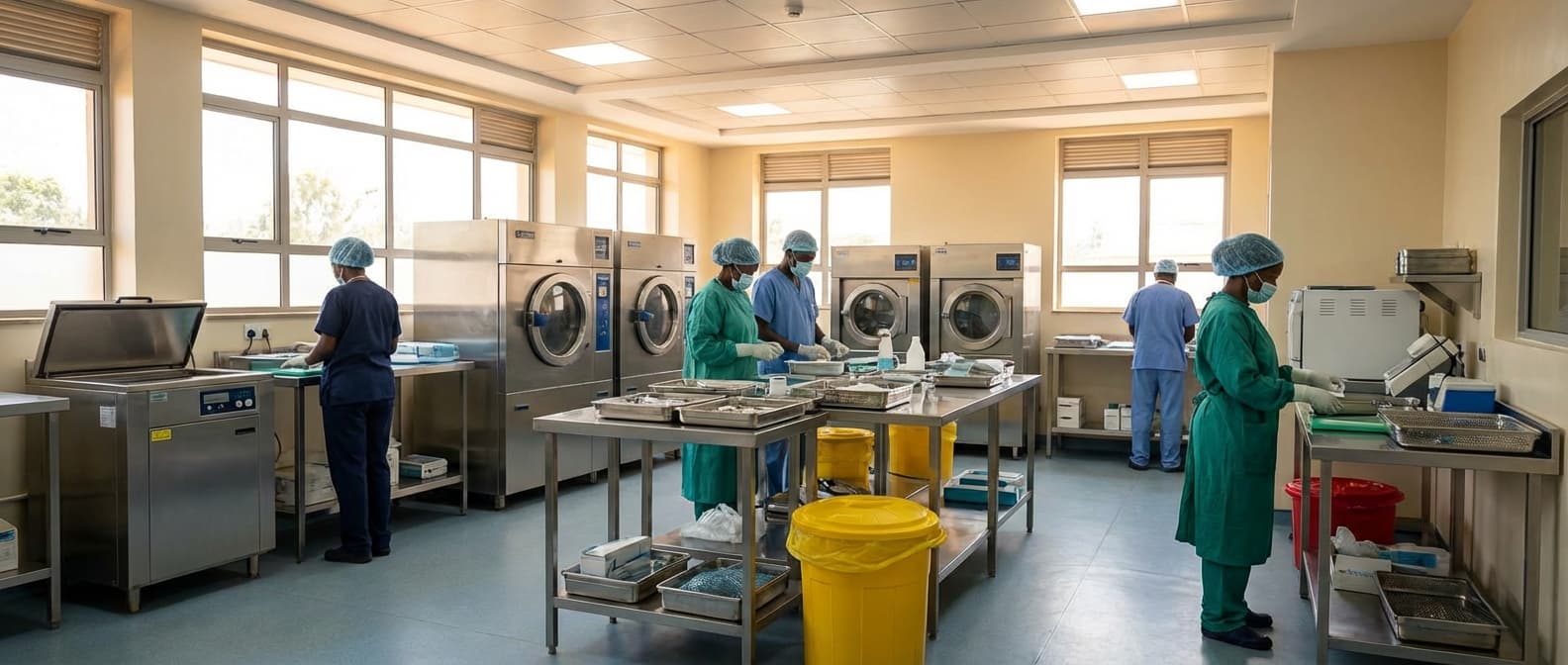
Infection-Control Readiness Support Service for Reusable Equipment in Djibouti
Engineering Excellence & Technical Support
Infection-Control Readiness Support Service for Reusable Equipment High-standard technical execution following OEM protocols and local regulatory frameworks.
Automated Sterilization Compliance Tracking
Leverages IoT sensors and cloud-based software to remotely monitor and log critical sterilization parameters (temperature, pressure, time) for all reusable medical equipment. Provides real-time alerts for deviations, ensuring adherence to Djibouti's national sterilization protocols and minimizing infection risk.
End-to-End Equipment Traceability
Implements a robust RFID tagging and scanning system for every piece of reusable equipment. Tracks equipment from initial use, through cleaning and sterilization, to redeployment. This ensures full accountability, facilitates rapid recall in case of sterilization failure, and supports efficient inventory management.
Predictive Maintenance & Resource Optimization
Utilizes AI-powered analytics on historical equipment performance data and environmental factors to predict potential equipment failures or sterilization process bottlenecks. This proactive approach allows for timely maintenance scheduling, reduces downtime, and optimizes the allocation of cleaning and sterilization resources in Djibouti's healthcare facilities.
What Is Infection-control Readiness Support Service For Reusable Equipment In Djibouti?
Infection-Control Readiness Support Service for Reusable Equipment in Djibouti is a specialized program designed to ensure the safe and effective reprocessing of medical devices that are intended for multiple uses. This service aims to mitigate the risk of healthcare-associated infections (HAIs) by establishing and maintaining robust protocols, infrastructure, and personnel competency for sterilization and disinfection processes. It addresses the critical need for reliable and compliant reprocessing of reusable medical equipment, which is paramount in preventing the transmission of pathogens between patients and healthcare workers within healthcare facilities.
| Need For Service | Target Beneficiaries | Typical Use Cases |
|---|---|---|
| High incidence of HAIs potentially linked to inadequate reprocessing. | Hospitals (public and private) | Sterilization of surgical instruments (scalpels, forceps, retractors). |
| Lack of trained personnel in sterile processing. | Clinics and health centers with surgical capabilities | Reprocessing of endoscopes (gastroscopes, colonoscopes). |
| Outdated or non-functional reprocessing equipment. | Specialized medical facilities (e.g., dental clinics, ophthalmology centers) | Disinfection of respiratory therapy equipment (nebulizers, ventilators). |
| Non-compliance with infection prevention and control standards. | Laboratories requiring sterile consumables | Sterilization of diagnostic equipment components. |
| Need to establish or upgrade sterile processing departments. | Non-governmental organizations (NGOs) operating health facilities | Reprocessing of anesthesia equipment (masks, circuits). |
| Transition to reusable medical devices to reduce costs or improve sustainability. | Military medical facilities | Decontamination and sterilization of dialysis equipment. |
Key Components of the Service:
- Assessment of current reprocessing infrastructure and workflows.
- Development and implementation of Standard Operating Procedures (SOPs) for decontamination, cleaning, disinfection, and sterilization.
- Provision of training and competency assessment for sterile processing personnel.
- Guidance on selection, acquisition, and maintenance of reprocessing equipment (e.g., sterilizers, washer-disinfectors).
- Support for establishing and maintaining quality control and assurance programs for reprocessing.
- Auditing and monitoring of reprocessing practices to ensure compliance with national and international guidelines.
- Consultation on regulatory requirements and accreditation standards related to medical device reprocessing.
- Risk management strategies for reusable equipment.
Who Needs Infection-control Readiness Support Service For Reusable Equipment In Djibouti?
In Djibouti, the provision of infection-control readiness support services for reusable equipment is crucial for a range of healthcare facilities and related organizations. These services ensure that medical devices and instruments are properly cleaned, disinfected, and sterilized, thereby preventing the transmission of healthcare-associated infections (HAIs). This is particularly vital in settings where resources may be limited, and the risk of infection is amplified.
| Customer Type | Key Departments/Units | Specific Needs Related to Reusable Equipment Infection Control |
|---|---|---|
| Public Hospitals | Operating Theaters, Intensive Care Units (ICU), Sterilization Departments (CSSD), Emergency Rooms, Maternity Wards, Outpatient Clinics | Ensuring high-volume sterilization of surgical instruments, management of reusable medical devices like ventilators and endoscopes, staff training on sterilization protocols, maintenance of sterilization equipment. |
| Private Hospitals & Clinics | Similar to public hospitals, with a focus on specialized procedures (e.g., endoscopy units, orthopedic surgery) | Maintaining high standards of patient care to attract clientele, compliance with national and international infection control guidelines, efficient turnaround time for reusable instruments. |
| Clinics & Health Centers | Minor Procedure Rooms, Vaccination Units, Consultation Rooms | Proper disinfection of instruments used for wound care, injections, and minor procedures, safe handling of sharps, basic sterilization knowledge for staff. |
| Surgical Centers | Operating Rooms, Post-Anesthesia Care Units (PACU) | Rigorous sterilization of surgical trays, ensuring sterility assurance levels (SALs), validation of sterilization processes. |
| Dental Clinics | Dental Operatories, Sterilization Areas | Effective disinfection and sterilization of dental instruments (handpieces, scalers, mirrors), management of biohazardous waste. |
| Laboratories | Microbiology Labs, Blood Banks, Pathology Labs | Sterilization of glassware, culture media preparation equipment, instruments used for sample collection and processing, biosafety cabinet decontamination. |
| Emergency Medical Services (EMS) | Ambulances, First Aid Stations | On-site disinfection of reusable equipment (e.g., stretchers, splints, airway management devices), maintaining infection control during patient transport. |
| NGOs & International Aid Organizations | Mobile Clinics, Health Outreach Programs, Disaster Relief Efforts | Establishing and maintaining infection control protocols in temporary or remote settings, providing training and equipment for local staff, ensuring sustainability of infection control practices. |
Target Customers & Departments
- Hospitals (Public & Private)
- Clinics & Health Centers
- Surgical Centers
- Dental Clinics
- Laboratories
- Blood Banks
- Emergency Medical Services
- Non-Governmental Organizations (NGOs) providing healthcare
- International Aid Organizations involved in health initiatives
Infection-control Readiness Support Service For Reusable Equipment Process In Djibouti
This document outlines the workflow for the Infection-Control Readiness Support Service for Reusable Equipment Processes in Djibouti. The service aims to ensure healthcare facilities in Djibouti have the necessary protocols, training, and resources to safely reprocess reusable medical equipment, thereby preventing healthcare-associated infections.
| Stage | Description | Key Activities | Deliverables | Responsible Party |
|---|---|---|---|---|
| Initial contact from a healthcare facility or Ministry of Health in Djibouti expressing interest in the service. Focus on understanding their current challenges and needs regarding reusable equipment reprocessing. |
|
| Client (Healthcare Facility/MOH), Support Service Provider |
| Based on the needs assessment, a tailored service proposal is developed. This outlines the scope of work, objectives, methodologies, timeline, and cost. Upon agreement, a formal contract is signed. |
|
| Support Service Provider, Client (Healthcare Facility/MOH) |
| A more in-depth assessment of the facility's current infrastructure, existing protocols, staff capacity, and available equipment related to reusable item reprocessing. This informs the detailed implementation plan. |
|
| Support Service Provider |
| Direct engagement with facility staff to deliver hands-on training and provide guidance on best practices in cleaning, disinfection, sterilization, and storage of reusable medical equipment. |
|
| Support Service Provider, Client Staff |
| Assessment of the adequacy and functionality of existing reprocessing equipment (e.g., autoclaves, washer-disinfectors) and consumables. Recommendations for upgrades or procurement of necessary items. |
|
| Support Service Provider |
| Assistance in developing or refining Standard Operating Procedures (SOPs) for reusable equipment reprocessing, ensuring they align with national and international guidelines. Support in the implementation of these protocols. |
|
| Support Service Provider, Client (Infection Control Committee/Management) |
| Regular monitoring of the implemented protocols and training effectiveness. This involves assessing adherence to SOPs, staff competency, and the impact on infection rates. |
|
| Support Service Provider, Client (Infection Control Committee/Management) |
| Providing ongoing support and technical assistance to ensure the sustainability of improved reprocessing practices. This may include refresher training, troubleshooting, and addressing emerging challenges. |
|
| Support Service Provider, Client (Healthcare Facility/MOH) |
Infection-Control Readiness Support Service Workflow: Reusable Equipment Process
- 1. Inquiry & Needs Assessment:
- 2. Service Proposal & Agreement:
- 3. Pre-Site Assessment & Planning:
- 4. On-Site Readiness Support & Training:
- 5. Equipment & Supply Review:
- 6. Protocol Development & Implementation:
- 7. Monitoring & Evaluation:
- 8. Follow-Up & Sustained Support:
Infection-control Readiness Support Service For Reusable Equipment Cost In Djibouti
The cost of Infection-Control Readiness Support Services for Reusable Equipment in Djibouti is influenced by several key pricing factors. These services are crucial for ensuring the safety and efficacy of medical devices that are reused, preventing the transmission of healthcare-associated infections (HAIs). The pricing will vary based on the scope and complexity of the services required, the type and volume of equipment, the frequency of support, and the qualifications of the service provider. Given the specific context of Djibouti, which has its own economic landscape and currency, these factors will be discussed in Djiboutian Franc (DJF).
| Service Component / Scope | Estimated Price Range (DJF) - Per Month (Illustrative) |
|---|---|
| Basic Sterilization Monitoring & Validation (per facility/department) | 50,000 - 150,000 DJF |
| Comprehensive Equipment Infection Control Audit (per facility) | 100,000 - 300,000 DJF |
| Staff Training on Reusable Equipment Protocols (per session/group) | 30,000 - 80,000 DJF |
| Development/Review of SOPs for Reusable Equipment | 75,000 - 200,000 DJF (one-time fee, or annualized for ongoing review) |
| Routine Maintenance & Calibration Support (for specific high-risk equipment, e.g., endoscopes) | 150,000 - 500,000+ DJF (highly dependent on equipment type and volume) |
| Full-Service Contract (including monitoring, audits, training, and basic maintenance) | 300,000 - 1,000,000+ DJF (significant variation based on facility size and scope) |
| Ad-hoc Consultation/Troubleshooting | 15,000 - 40,000 DJF (per hour or per incident) |
Key Pricing Factors for Infection-Control Readiness Support Services in Djibouti:
- Scope and Complexity of Services: This includes the breadth of infection control protocols offered, such as sterilization validation, equipment maintenance and repair (if bundled), staff training, auditing and compliance checks, and the development or review of standard operating procedures (SOPs). More comprehensive service packages will naturally command higher prices.
- Type and Volume of Reusable Equipment: Different types of medical equipment (e.g., surgical instruments, endoscopes, respiratory equipment) have varying sterilization requirements and associated costs. The sheer number of items requiring support will also be a significant driver. High-volume contracts may benefit from tiered pricing or discounts.
- Frequency of Support and Monitoring: The need for routine, scheduled support (e.g., monthly, quarterly) versus ad-hoc or emergency interventions will impact the overall cost. Continuous monitoring and proactive maintenance generally involve a higher upfront investment but can lead to long-term cost savings by preventing equipment failure and outbreaks.
- Provider Expertise and Qualifications: The experience, certifications, and reputation of the infection control service provider play a role. Providers with specialized knowledge in specific equipment or advanced infection control techniques may charge a premium. Local vs. international providers can also lead to price differences.
- Geographic Location and Accessibility: While Djibouti is a relatively contained geographical area, the specific location of healthcare facilities within the country (e.g., urban centers vs. remote areas) might influence logistical costs for service providers, potentially affecting pricing.
- Technology and Equipment Utilized by the Provider: The cost of advanced diagnostic tools, sterilization monitoring equipment, and reporting software used by the service provider will be factored into their pricing structure.
- Contract Duration and Commitment: Longer-term contracts often come with more favorable pricing structures as they provide providers with a predictable revenue stream and allow for economies of scale in service delivery.
- Regulatory Compliance Requirements: Adherence to national and international infection control guidelines and standards (e.g., WHO, local Ministry of Health regulations) will dictate the rigor of the services, influencing their cost.
Affordable Infection-control Readiness Support Service For Reusable Equipment Options
Our Affordable Infection-Control Readiness Support Service for Reusable Equipment Options is designed to provide healthcare facilities with comprehensive, cost-effective solutions to ensure the safety and efficacy of their reusable medical devices. We understand the critical importance of robust infection control protocols, especially with the increasing reliance on reusable equipment. Our service leverages value bundles and strategic cost-saving measures to deliver exceptional support without straining your budget. We focus on proactive preparation, expert guidance, and efficient resource management to minimize risks and optimize your operational efficiency.
| Value Bundle Name | Description | Included Services | Target Facility Size/Need | Key Cost-Saving Benefit |
|---|---|---|---|---|
| Essential Readiness Bundle | Foundation-level support for facilities prioritizing basic infection control for reusable equipment. | Equipment risk assessment, basic reprocessing protocol review, staff training on fundamental cleaning/disinfection, access to a standardized documentation template. | Small clinics, dental offices, outpatient surgical centers. | Reduces the need for in-house specialized training and consulting fees. |
| Comprehensive Compliance Bundle | Mid-tier support for facilities needing robust adherence to evolving infection control regulations. | All Essential Readiness Bundle services, plus detailed reprocessing SOP development/validation, advanced sterilization monitoring guidance, on-site protocol audits, and personalized staff training sessions. | Medium-sized hospitals, multi-specialty clinics. | Minimizes risk of non-compliance penalties and associated remediation costs. |
| Optimized Operations Bundle | Premium support focused on maximizing efficiency and minimizing waste in reusable equipment management. | All Comprehensive Compliance Bundle services, plus workflow analysis and optimization, equipment utilization tracking, recommendations for cost-effective supplies and consumables, and predictive maintenance planning. | Large hospitals, academic medical centers, facilities with high reusable equipment volume. | Lowers costs through efficient resource allocation, reduced equipment downtime, and bulk purchasing opportunities. |
| Customized Solutions | Bespoke support designed to address unique challenges and specific requirements of any facility. | Tailored to client needs, can include specialized equipment, high-risk procedures, or specific infection concerns. | Any facility with unique needs. | Ensures investment is focused on essential services, avoiding unnecessary expenditure. |
Key Value Propositions:
- Enhanced Patient Safety: Minimizing the risk of healthcare-associated infections (HAIs) through rigorously maintained reusable equipment.
- Regulatory Compliance: Ensuring adherence to all relevant infection control standards and guidelines.
- Operational Efficiency: Streamlining the decontamination, sterilization, and maintenance processes for reusable equipment.
- Cost Reduction: Implementing strategies to lower overall expenses related to reusable equipment management.
- Risk Mitigation: Proactively identifying and addressing potential infection control vulnerabilities.
- Expert Support: Access to specialized knowledge and guidance on best practices in reusable equipment reprocessing.
- Scalability: Services tailored to meet the unique needs and volume of your facility.
Verified Providers In Djibouti
Finding reliable and credentialed healthcare providers in Djibouti can be a significant challenge. This is where Franance Health stands out. Franance Health is a leading platform dedicated to connecting individuals with verified and high-quality healthcare professionals. Their rigorous vetting process ensures that all listed providers meet stringent standards, offering peace of mind and confidence in the care you receive. By focusing on transparency and quality, Franance Health simplifies the process of accessing expert medical assistance in Djibouti.
| Provider Type | Key Credentials/Benefits Offered by Franance Health |
|---|---|
| General Practitioners | Verified medical degree, registered with Djiboutian Ministry of Health, ongoing professional development. |
| Specialists (e.g., Cardiologists, Pediatricians) | Board certification in their specialty, extensive clinical experience, advanced training. |
| Dentists | Dental degree, licensed to practice, commitment to sterilization and modern techniques. |
| Nurses | Registered nurse (RN) qualifications, specialized certifications (e.g., critical care), proven track record of compassionate care. |
| Pharmacists | Pharmacy degree, licensed, knowledgeable about medications and interactions. |
| Therapists (e.g., Physical Therapists) | Relevant degrees and certifications, experience in rehabilitation and patient recovery. |
Why Franance Health Providers are the Best Choice:
- Rigorous Verification Process: Franance Health employs a multi-stage vetting system that includes credential verification, background checks, and peer reviews to ensure providers are qualified and ethical.
- Comprehensive Provider Profiles: Access detailed profiles for each healthcare professional, including their specializations, experience, educational background, and patient testimonials.
- Diverse Range of Specialties: Whether you need a general practitioner, a specialist, or allied health services, Franance Health covers a wide spectrum of medical disciplines.
- Commitment to Patient Safety: The platform prioritizes patient well-being by only listing providers who adhere to the highest standards of medical practice and ethical conduct.
- Streamlined Access to Care: Franance Health's user-friendly interface makes it easy to search, compare, and book appointments with verified providers, saving you time and reducing stress.
Scope Of Work For Infection-control Readiness Support Service For Reusable Equipment
This Scope of Work (SOW) outlines the services to be provided for Infection-Control Readiness Support for Reusable Equipment. The objective is to ensure that all reusable medical equipment within the organization is processed, stored, and maintained in accordance with current best practices and regulatory requirements to prevent healthcare-associated infections (HAIs). This document details the technical deliverables and standard specifications to be met.
| Technical Deliverable | Description | Standard Specification / Best Practice Reference |
|---|---|---|
| Current State Assessment Report | A comprehensive report detailing the organization's existing practices for the cleaning, disinfection, sterilization, storage, and handling of reusable medical equipment. This includes identification of strengths, weaknesses, and potential risks. | CDC Guidelines for Disinfection and Sterilization of Medical Devices, AAMI ST standards (e.g., ST58, ST79), WHO Guidelines on Infection Prevention and Control of Healthcare-Associated Infections in Health... Facilities, Local regulatory requirements. |
| Revised/New SOPs for Reusable Equipment Processing | Development or revision of detailed, step-by-step Standard Operating Procedures (SOPs) for each category of reusable equipment. SOPs will cover pre-cleaning, cleaning, disinfection, sterilization, packaging, storage, and transport. | Clear, concise language; documented workflows; inclusion of specific chemical concentrations, contact times, temperatures, and monitoring procedures. Reference to manufacturer's instructions for use (IFU) for all equipment and reprocessing agents. |
| Training Materials and Curriculum | Creation of comprehensive training modules and a curriculum for all relevant personnel involved in the processing of reusable equipment. This includes initial training, competency assessment, and ongoing education. | Content aligned with developed SOPs and current best practices. Modules to cover principles of infection control, specific reprocessing techniques, safe handling of chemicals and sharps, and documentation requirements. |
| Training Delivery and Competency Assessment Records | Delivery of training sessions and formal assessment of personnel competency in reusable equipment reprocessing. Provision of records documenting attendance and successful completion of competency evaluations. | Demonstrated understanding and application of SOPs. Competency assessments to include practical demonstrations where applicable. |
| Equipment Audit Protocol and Reports | Development of an audit protocol to assess compliance with SOPs and standard specifications. Regular audit reports documenting findings, non-compliance issues, and recommended corrective actions. | Audit frequency to be defined based on risk assessment. Reports to include quantitative data, qualitative observations, and clear action plans. |
| Process Improvement Recommendations Report | A report outlining recommended changes to existing processes, workflow optimization, and potential technology upgrades (e.g., automated washer-disinfectors, sterilizers, tracking systems) to enhance efficiency and compliance. | Evidence-based recommendations, cost-benefit analysis where applicable, and consideration of integration with existing IT systems. |
| Documentation and Record-Keeping Template | Templates for all necessary documentation and record-keeping related to reusable equipment processing, including cleaning logs, sterilization records, maintenance logs, and staff training records. | Structured templates that facilitate accurate and retrievable record-keeping, meeting regulatory and accreditation requirements. |
| Emergency Preparedness Plan for Reprocessing Equipment | Development of a plan to address potential disruptions to reusable equipment reprocessing, such as equipment failure, supply chain issues, or natural disasters. | Includes alternative reprocessing methods, contingency plans for critical equipment, and communication protocols. |
Key Service Areas
- Assessment of Current Reusable Equipment Processing Practices
- Development and Refinement of Standard Operating Procedures (SOPs)
- Training Program Development and Delivery
- Equipment Auditing and Compliance Monitoring
- Recommendations for Process Improvement and Technology Integration
Service Level Agreement For Infection-control Readiness Support Service For Reusable Equipment
This Service Level Agreement (SLA) outlines the response times and uptime guarantees for the Infection-Control Readiness Support Service (ICRSS) for reusable equipment. This service aims to ensure that reusable medical equipment is consistently available and meets stringent infection control standards, thereby minimizing the risk of healthcare-associated infections.
| Service Component | Response Time Guarantee (Business Hours) | Uptime Guarantee |
|---|---|---|
| Critical Equipment Issue (e.g., equipment failing decontamination, suspected outbreak contamination) | 1 Hour | 99.9% Availability of Infection-Control-Ready Equipment |
| High Priority Issue (e.g., multiple reports of contamination, significant delay in decontamination cycle) | 2 Business Hours | 99.5% Availability of Infection-Control-Ready Equipment |
| Medium Priority Issue (e.g., minor decontamination equipment malfunction, process deviation detected) | 4 Business Hours | 99.0% Availability of Infection-Control-Ready Equipment |
| Low Priority Issue (e.g., routine equipment maintenance, minor protocol clarification) | 8 Business Hours (Next Business Day) | N/A (Non-impact on immediate readiness) |
Service Objectives
- To provide timely support for issues impacting the infection control readiness of reusable equipment.
- To maximize the availability of infection-control-ready reusable equipment.
- To ensure adherence to established infection control protocols for reusable equipment.
- To minimize downtime of critical reusable equipment due to infection control concerns.
Frequently Asked Questions

Ready when you are
Let's scope your Infection-Control Readiness Support Service for Reusable Equipment in Djibouti project in Djibouti.

Scaling healthcare logistics and technical systems across the entire continent.