
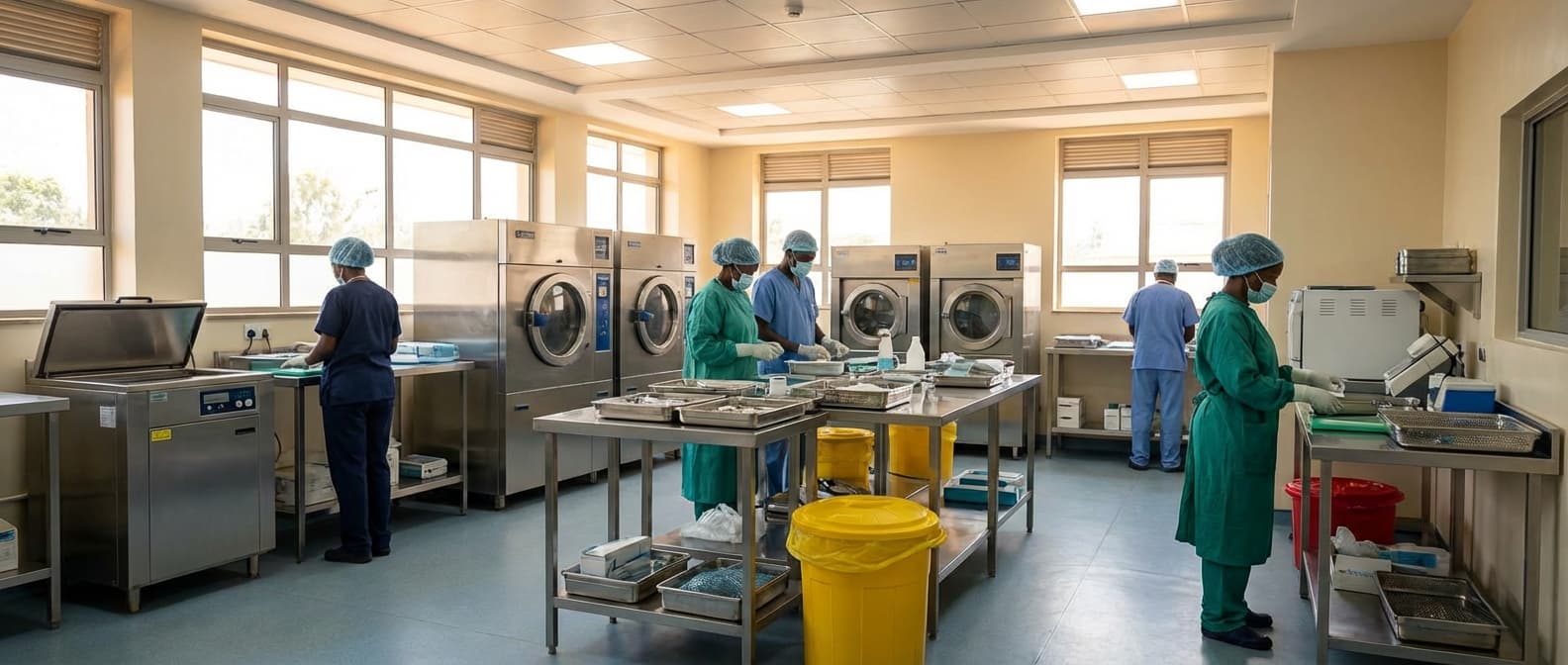
Endoscope Reprocessing Equipment Support Service in Djibouti
Engineering Excellence & Technical Support
Endoscope Reprocessing Equipment Support Service High-standard technical execution following OEM protocols and local regulatory frameworks.
Rapid On-Site Repair & Maintenance
Minimize downtime with our 24/7 on-site technical support. Our certified technicians in Djibouti are equipped to diagnose and resolve issues with your endoscope reprocessing equipment promptly, ensuring operational readiness.
Preventative Maintenance Programs
Proactively extend the lifespan of your critical reprocessing assets. We offer tailored preventative maintenance plans, including calibration and safety checks, designed to prevent failures and maintain optimal performance of your equipment in Djibouti's demanding environment.
Expert Technical Consultation & Training
Empower your staff with our expert technical consultation and hands-on training. We provide comprehensive guidance on equipment operation, troubleshooting, and best practices for endoscope reprocessing, enhancing your team's efficiency and compliance in Djibouti.
What Is Endoscope Reprocessing Equipment Support Service In Djibouti?
Endoscope reprocessing equipment support service in Djibouti refers to the comprehensive range of technical services and maintenance protocols required to ensure the optimal functionality, safety, and regulatory compliance of automated and manual equipment used for the cleaning, disinfection, and sterilization of flexible and rigid endoscopes within healthcare facilities. This service is critical for preventing the transmission of healthcare-associated infections (HAAs) and maintaining the integrity of high-value endoscopic instruments.
| Service Aspect | Target Audience | Typical Use Cases |
|---|---|---|
| Preventive Maintenance | Hospitals, Clinics, Endoscopy Centers, Diagnostic Laboratories | Regular servicing of automated endoscope reprocessors (AERs), washer-disinfectors, ultrasonic cleaners, drying cabinets, and leak testing devices to ensure consistent performance and prevent costly downtime. Verification of disinfection cycles for specific pathogens relevant to Djibouti's healthcare landscape. |
| Corrective Maintenance/Repair | Any facility utilizing endoscope reprocessing equipment facing operational issues. | Addressing a sudden failure of an AER during a critical procedure, resolving error codes on washer-disinfectors, fixing leaks in drying cabinets, or repairing malfunctioning automated flushing and lubrication systems. This is particularly crucial in regions where access to specialized technicians may be limited. |
| Validation and Performance Testing | Accreditation bodies, Quality Assurance departments, Biomedical Engineering departments | Post-installation validation of new equipment, re-validation after major repairs, or periodic performance verification to meet the stringent requirements of infection control committees and regulatory bodies. Ensuring that the reprocessing equipment effectively removes bioburden and inactivates microorganisms from complex endoscopes. |
| Technical Consultation and Training | Biomedical Engineers, Infection Preventionists, Endoscopy Unit Staff | Guidance on selecting the most suitable reprocessing equipment for specific endoscope types and throughput. Training new staff on the safe and effective operation of AERs and associated equipment. Providing expertise on best practices in sterile processing and infection control related to endoscopes. |
| Spare Parts Management | Procurement departments, Biomedical Engineering departments | Ensuring a readily available stock of critical spare parts (e.g., pumps, valves, filters, sensors, heating elements) for common reprocessing equipment models to minimize repair turnaround times. Proactive management to prevent extended periods of equipment unavailability. |
Key Components of Endoscope Reprocessing Equipment Support Service
- Preventive Maintenance (PM): Scheduled inspections, lubrication, calibration, and replacement of worn parts to avert equipment failures and prolong lifespan. This includes verification of cleaning cycles, disinfection parameters (temperature, time, concentration of disinfectants), and alarm systems.
- Corrective Maintenance (CM) / Repair: Troubleshooting and resolution of equipment malfunctions, including software issues, mechanical failures, electrical problems, and component replacements. Rapid response is often a critical requirement.
- Validation and Performance Testing: Post-repair and routine validation of equipment performance against established standards and manufacturer specifications to ensure efficacy of the reprocessing process (e.g., cleaning efficacy tests, bioburden reduction verification).
- Calibration and Certification: Ensuring all sensors, timers, temperature probes, and other critical components are accurately calibrated and certified according to national and international standards (e.g., ISO 13485, AAMI ST79).
- Technical Consultation and Training: Providing expert advice on equipment selection, operation, and troubleshooting. Training for biomedical technicians and clinical staff on proper equipment usage, basic maintenance, and identification of potential issues.
- Spare Parts Management: Ensuring availability of genuine and compatible spare parts for timely repairs, often involving inventory management and procurement strategies.
- Documentation and Record Keeping: Maintaining detailed service logs, calibration certificates, repair histories, and compliance documentation for regulatory audits and quality assurance purposes.
- Software Updates and Upgrades: Implementing manufacturer-recommended software updates to enhance functionality, improve security, and ensure compliance with evolving guidelines.
Who Needs Endoscope Reprocessing Equipment Support Service In Djibouti?
Endoscope reprocessing equipment support services are crucial for maintaining the safety, efficacy, and longevity of vital medical devices used in diagnostic and therapeutic procedures. In Djibouti, as in any healthcare setting, the proper functioning of this equipment is paramount to preventing healthcare-associated infections and ensuring optimal patient outcomes. This service encompasses installation, calibration, preventive maintenance, troubleshooting, repair, and parts replacement for a range of endoscope reprocessing machines, including automated endoscope reprocessors (AERs), washer-disinfectors, and associated accessories.
| Department | Key Functions Related to Endoscope Reprocessing | Specific Needs for Support Service |
|---|---|---|
| Sterilization and Decontamination Unit | Primary responsibility for cleaning, disinfecting, and sterilizing endoscopes after each use. | Ensuring AERs and washer-disinfectors are consistently operational and calibrated for effective pathogen inactivation. Prompt repair of breakdowns to maintain workflow. |
| Endoscopy Suite / Procedure Rooms | Utilize endoscopes for diagnostic and therapeutic procedures. | Ensuring the availability of properly reprocessed endoscopes for scheduled procedures. Quick resolution of any equipment issues that delay or interrupt patient care. |
| Infection Prevention and Control (IPC) Department | Oversees adherence to infection control policies and procedures, including proper reprocessing. | Verification of equipment performance and validation of reprocessing cycles. Support in troubleshooting if IPC concerns arise related to equipment malfunction. |
| Biomedical Engineering Department | Responsible for the maintenance, repair, and inventory of medical equipment. | Performing routine preventive maintenance, conducting repairs, and managing spare parts for endoscope reprocessing equipment. Expertise in the technical aspects of the machinery. |
| Operating Room (OR) | May utilize flexible endoscopes for certain surgical interventions. | Ensuring the seamless integration of endoscope reprocessing into surgical workflows. Availability of reprocessed instruments for urgent or scheduled surgical cases. |
Target Customers in Djibouti
- Hospitals (Public and Private)
- Specialty Clinics (e.g., Gastroenterology, Pulmonology, Urology, Gynecology)
- Diagnostic Centers
- Surgical Centers
Endoscope Reprocessing Equipment Support Service Process In Djibouti
This document outlines the Endoscope Reprocessing Equipment Support Service Process in Djibouti, detailing the workflow from initial customer inquiry to the final execution of service. The process is designed to ensure efficient, timely, and effective support for reprocessing equipment used in healthcare facilities.
| Phase | Step | Description | Key Activities | Responsible Party | Deliverables |
|---|---|---|---|---|---|
| Inquiry |
| The process begins when a customer contacts the service provider with a request for support. | Receiving phone calls, emails, or portal requests; noting down customer details and the nature of the issue. | Customer Service Representative / Service Desk | Service Inquiry Logged |
| Assessment |
| An initial evaluation of the reported problem to determine its severity and required expertise. | Gathering detailed information about the equipment, error codes, symptoms; categorizing the urgency of the request. | Service Technician / Technical Support Engineer | Issue Categorized; Urgency Assessed |
| Confirmation & Scheduling |
| Formalizing the service request and agreeing on a service visit timeline with the customer. | Communicating the assessment findings to the customer; proposing service dates and times; obtaining customer agreement. | Service Coordinator / Scheduler | Confirmed Service Appointment |
| Preparation |
| Ensuring that the necessary spare parts, tools, and technical documentation are available for the service visit. | Checking inventory for required parts; ordering parts if not in stock; gathering manuals and diagnostic tools. | Service Technician / Warehouse Staff | Required Parts and Tools Assembled |
| Execution |
| The service technician travels to the customer's location and performs the necessary repairs or maintenance. | Diagnosing the root cause of the issue; performing repairs or preventative maintenance; replacing faulty components. | Field Service Technician | Equipment Repaired / Maintained |
| Validation |
| Verifying that the equipment is functioning correctly and meets all operational and safety standards. | Conducting operational tests; running diagnostic checks; ensuring reprocessing cycle efficacy. | Field Service Technician | Validated Equipment Performance |
| Closure |
| Formalizing the completion of the service with the customer and documenting the work performed. | Presenting the service report to the customer for review and signature; providing a copy of the signed report. | Field Service Technician | Signed Service Report |
| Billing |
| Generating and processing the invoice for the services rendered. | Submitting the signed service report to the billing department; issuing the invoice to the customer; tracking payment. | Billing Department | Invoice Issued; Payment Received |
| Follow-up |
| Contacting the customer to ensure satisfaction and gather feedback. | Proactive check-in calls or emails; addressing any lingering concerns or questions. | Customer Service Representative | Customer Satisfaction Confirmed |
Endoscope Reprocessing Equipment Support Service Workflow
- Inquiry Reception and Logging
- Initial Assessment and Triage
- Service Request Confirmation and Scheduling
- Parts and Resource Preparation
- On-site Service Execution
- Testing and Validation
- Customer Sign-off and Documentation
- Invoicing and Payment
- Post-Service Follow-up
Endoscope Reprocessing Equipment Support Service Cost In Djibouti
Endoscope reprocessing equipment support services in Djibouti are crucial for maintaining the safety and efficacy of reusable medical devices. The cost of these services is influenced by several factors, leading to a range of pricing. These services typically encompass routine maintenance, calibration, repair, and validation of automated endoscope reprocessors (AERs) and other associated equipment. The primary drivers of cost include the type and complexity of the equipment, the frequency and nature of the service required, the vendor's reputation and expertise, and the availability of spare parts and specialized technicians within Djibouti.
Pricing Factors:
- Equipment Type and Model: More advanced or specialized endoscope reprocessing equipment, such as those with integrated washer-disinfectors or sophisticated validation systems, will generally command higher service costs due to the technical expertise and specialized tools required. The age and brand of the equipment also play a role, with newer models potentially having higher service contract costs, while older models might incur higher repair costs due to the difficulty in sourcing parts.
- Service Level Agreement (SLA): Support services can range from basic preventive maintenance to comprehensive, 24/7 on-call support with guaranteed response times. The more inclusive the SLA, the higher the cost will be. Annual maintenance contracts often offer a more predictable cost than ad-hoc repair services.
- Frequency of Service: Regular preventive maintenance and calibration are essential to minimize breakdowns. The cost will be higher for facilities requiring more frequent service visits or on-demand emergency repairs.
- Technician Expertise and Travel: The availability of certified and experienced technicians for endoscope reprocessing equipment in Djibouti is a significant factor. If specialized technicians need to travel from outside the country, this will add considerable cost in terms of travel, accommodation, and daily rates.
- Spare Parts and Consumables: The cost of genuine, manufacturer-approved spare parts and any necessary consumables (e.g., filters, seals) for repairs or maintenance will directly impact the overall service price. Import duties and logistical challenges for these parts in Djibouti can also increase their cost.
- Vendor/Service Provider: Different service providers will have varying pricing structures based on their overhead, profit margins, and the value they place on their expertise and certifications. Local distributors or authorized service partners of equipment manufacturers often provide the most reliable, albeit sometimes more expensive, support.
- Scope of Work: Whether the service includes just basic functional checks or full validation and performance testing according to international standards (e.g., AAMI ST98, EN ISO 15883) will affect the price. Validation services, in particular, are highly specialized and costly.
Pricing Ranges in Djiboutian Franc (DJF):
Due to the factors outlined above, providing exact figures is challenging without specific equipment details and service requirements. However, based on general market trends for specialized medical equipment support services in a country like Djibouti, the following ranges can be estimated:
- Annual Preventive Maintenance Contract (for a standard AER): This typically covers scheduled inspections, cleaning, lubrication, and basic calibration. A reasonable estimate for an annual contract could range from 250,000 DJF to 750,000 DJF. This may include 1-2 scheduled visits per year.
- On-Demand Repair Services (per incident): This would cover emergency call-outs, diagnosis, and repair. Costs are highly variable depending on the issue. A basic service call with minor repairs might range from 75,000 DJF to 250,000 DJF, excluding the cost of significant spare parts. If major components need replacement or specialized troubleshooting is required, the cost could easily exceed 500,000 DJF.
- Equipment Validation/Re-validation Services: These are often performed annually or bi-annually and involve comprehensive testing to ensure the equipment meets stringent performance standards. The cost for a full validation service could range from 300,000 DJF to 1,000,000 DJF or more, depending on the complexity of the equipment and the extent of testing required.
- Comprehensive Service Contracts (including parts and labor, with defined response times): These are the most expensive but offer the highest level of assurance. For advanced AERs, these could range from 1,000,000 DJF to 3,000,000 DJF annually, or even higher for highly critical or large-scale installations.
It is highly recommended that healthcare facilities in Djibouti obtain detailed quotations from multiple qualified service providers, specifying the exact equipment models, desired service levels, and frequency, to accurately assess their endoscope reprocessing equipment support service costs.
| Service Type | Estimated Price Range (DJF) | Notes |
|---|---|---|
| Annual Preventive Maintenance Contract | 250,000 - 750,000 | Includes scheduled inspections, cleaning, lubrication, and basic calibration. Typically 1-2 visits/year. |
| On-Demand Repair Services (per incident, excluding major parts) | 75,000 - 250,000 | Covers emergency call-out, diagnosis, and minor repairs. Major component replacement can significantly increase cost. |
| Equipment Validation/Re-validation | 300,000 - 1,000,000+ | Comprehensive performance testing according to standards. Cost varies with equipment complexity and testing scope. |
| Comprehensive Service Contracts (e.g., parts & labor, rapid response) | 1,000,000 - 3,000,000+ | Offers the highest level of coverage and assurance. Priced annually. |
Key Factors Influencing Endoscope Reprocessing Equipment Support Service Costs in Djibouti
- Type and Model of Equipment
- Service Level Agreement (SLA) Inclusions
- Frequency and Urgency of Service
- Availability and Cost of Skilled Technicians
- Price of Genuine Spare Parts and Consumables
- Reputation and Pricing of Service Provider
- Scope of Service (Maintenance vs. Validation)
Affordable Endoscope Reprocessing Equipment Support Service Options
Endoscope reprocessing is a critical but often costly aspect of healthcare. Ensuring effective cleaning and sterilization protects patients from infection and maintains the longevity of expensive endoscopic equipment. However, the purchase and ongoing maintenance of reprocessing equipment can strain budgets, especially for smaller facilities or those with limited capital. This document outlines affordable endoscope reprocessing equipment support service options, focusing on value bundles and cost-saving strategies.
| Support Service Option | Description | Value Proposition | Cost-Saving Strategies |
|---|---|---|---|
| Manufacturer Service Contracts (Bundled) | Comprehensive service agreements offered by endoscope or AER manufacturers, often including preventive maintenance, emergency repairs, parts, and sometimes training. | Guaranteed response times, access to certified technicians, and use of OEM parts ensure optimal equipment performance and minimize downtime. Predictable annual costs. | Negotiate contract terms for multi-year commitments. Explore tiered service levels to match needs and budget. Consolidate contracts across multiple equipment types from the same manufacturer. |
| Third-Party Service Providers | Independent companies specializing in servicing medical equipment, including endoscope reprocessing units. Can offer more flexible and potentially lower-cost solutions. | Often more competitive pricing than OEM contracts. Can service equipment from multiple manufacturers. Tailored service plans to fit specific needs. | Obtain multiple quotes and compare service inclusions carefully. Look for providers with a strong reputation and proven track record. Consider service contracts that cover only critical components or PM visits. |
| Preventive Maintenance (PM) Programs (Self-Managed/External) | Scheduled maintenance performed by trained internal staff or external technicians to identify and address potential issues before they lead to breakdowns. | Reduces the likelihood of costly emergency repairs and equipment failures. Extends equipment lifespan. Ensures consistent cleaning efficacy. | Invest in training for internal biomedical staff if feasible. Partner with a third-party provider for PM only, if repairs are handled in-house. Develop a robust internal PM checklist and schedule. |
| Equipment Leasing or Rental Agreements | Instead of purchasing outright, facilities can lease or rent reprocessing equipment, often including maintenance and support as part of the agreement. | Lower upfront capital expenditure. Predictable monthly costs. Access to newer technology without large investments. Maintenance and upgrades often included. | Compare total cost of ownership over the lease term versus purchase. Negotiate favorable lease terms and clauses for upgrades or early termination. Evaluate the need for advanced features before committing to a lease. |
| Consumable Management Programs | Services that optimize the ordering, stocking, and utilization of reprocessing consumables like disinfectants and detergents. | Reduces waste and ensures accurate usage, leading to lower per-cycle costs. Prevents stockouts, ensuring uninterrupted reprocessing. | Bulk purchasing agreements with suppliers. Implement inventory management systems. Standardize on approved and cost-effective consumables. Train staff on proper dilution and usage. |
| Refurbished Equipment and Parts | Utilizing certified refurbished endoscope reprocessing equipment or purchasing refurbished parts for repairs. | Significant cost savings compared to new equipment or OEM parts. Can be a viable option for facilities with budget constraints. | Source from reputable vendors with warranties. Thoroughly inspect and validate refurbished equipment before use. Ensure parts are compatible and certified. |
| Data Analytics and Performance Monitoring | Leveraging software or service providers to track equipment usage, maintenance history, and reprocessing cycles. | Identifies inefficiencies, underutilized equipment, and potential areas for cost reduction. Supports data-driven decisions for service contract renewals and equipment upgrades. | Invest in basic monitoring tools if available within existing systems. Request performance reports from service providers. Analyze downtime to identify recurring issues and negotiate better service. |
Understanding the Challenges of Endoscope Reprocessing Equipment Support
- High initial investment for automated endoscope reprocessors (AERs) and associated equipment.
- Ongoing costs for consumables (disinfectants, detergents, filters).
- Maintenance and repair costs for complex machinery.
- Labor costs associated with manual reprocessing (where applicable).
- Compliance with stringent regulatory requirements, which can necessitate specific equipment and validation processes.
- The need for regular calibration and performance testing of reprocessing equipment.
Verified Providers In Djibouti
In the competitive landscape of healthcare services in Djibouti, discerning the best providers is crucial for ensuring quality and reliable medical care. Franance Health has emerged as a frontrunner, distinguished by its rigorous credentialing process and commitment to excellence. This document outlines why Franance Health's verified providers represent the optimal choice for individuals and organizations seeking superior healthcare solutions in Djibouti.
| Credentialing Aspect | Franance Health's Standard | Benefit to Patients |
|---|---|---|
| Medical Licensing and Registration | Verifies current and valid medical licenses and registrations with relevant Djiboutian and international authorities. | Ensures providers are legally authorized to practice medicine and meet foundational qualifications. |
| Professional Qualifications and Education | Confirms degrees, certifications, and specializations from accredited institutions. | Guarantees that providers possess the necessary academic and specialized training for their practice. |
| Experience and Track Record | Reviews professional history, years of practice, and any relevant clinical experience. | Provides assurance of practical expertise and a proven history of successful patient outcomes. |
| Ethical Conduct and Professionalism | Conducts background checks and verifies adherence to professional ethical codes. | Ensures providers operate with integrity, respect, and uphold the highest standards of patient care. |
| Continuing Medical Education (CME) | Requires providers to demonstrate ongoing engagement in professional development and knowledge updates. | Ensures providers are up-to-date with the latest medical advancements and best practices. |
| Patient Feedback and Satisfaction | Monitors patient reviews and satisfaction scores to identify areas for improvement and excellence. | Promotes a culture of continuous quality improvement and patient-focused service. |
Why Franance Health Providers are the Best Choice in Djibouti:
- Uncompromising Credentialing Standards: Franance Health implements a stringent vetting process for all its partner providers, ensuring they meet the highest international benchmarks for medical expertise, ethical practice, and patient safety.
- Access to Specialized Expertise: We connect you with a network of highly qualified specialists across various medical disciplines, many of whom have international training and extensive experience.
- Commitment to Patient-Centric Care: Franance Health providers prioritize patient well-being, offering personalized treatment plans, compassionate care, and clear communication.
- Seamless Healthcare Navigation: Our verified providers are part of a system designed to offer efficient appointment scheduling, streamlined referrals, and integrated care coordination.
- Trust and Reliability: The 'Franance Health Verified' seal signifies a provider's adherence to our strict quality assurance protocols, giving you confidence in the care you receive.
Scope Of Work For Endoscope Reprocessing Equipment Support Service
This Scope of Work (SOW) outlines the requirements for comprehensive support services for endoscope reprocessing equipment. The service aims to ensure optimal performance, reliability, and compliance of all provided endoscope reprocessors. This includes scheduled preventative maintenance, unscheduled repair services, calibration, validation, and technical support. The objective is to minimize downtime, extend equipment lifespan, and maintain the highest standards of patient safety and infection control.
| Technical Deliverable | Description | Standard Specification / Requirement | Acceptance Criteria | Documentation |
|---|---|---|---|---|
| Preventative Maintenance (PM) | Scheduled inspections, cleaning, lubrication, and replacement of wear-and-tear parts. | PM to be performed at intervals specified by the manufacturer (e.g., semi-annually, annually). All consumables used must be OEM or equivalent quality. Service reports to detail all tasks performed and parts replaced. | Completion of all scheduled PM tasks as per manufacturer's checklist. No performance degradation observed post-PM. | PM Service Report, including checklist, parts used, and technician's findings. |
| Unscheduled Repair Service | On-call support for equipment malfunctions and breakdowns. | Response time for critical failures: within 4 business hours. Resolution time: within 24-48 business hours, depending on part availability. Use of genuine or approved OEM replacement parts only. All repairs to be followed by functional testing. | Equipment restored to full operational status. All alarms cleared and functional tests passed. No recurrence of the same issue within 30 days. | Repair Service Report, detailing the fault, parts replaced, work performed, and functional test results. |
| Calibration | Ensuring accuracy and precision of critical equipment parameters (e.g., temperature, pressure, flow rates). | Calibration to be performed annually or as per manufacturer recommendation, using NIST-traceable calibration equipment. All calibration points to be within manufacturer tolerances. Calibration certificates to be provided. | All critical parameters within manufacturer's specified tolerances. Successful completion of all calibration checks. Calibration sticker affixed to the equipment. | Calibration Certificate, detailing equipment tested, calibration date, results, and technician information. |
| Validation (IQ/OQ/PQ Support) | Assistance with Installation Qualification (IQ), Operational Qualification (OQ), and Performance Qualification (PQ) for new or repaired equipment. | Provision of relevant technical documentation and support for client-led or third-party validation processes. Ensure equipment meets all functional and performance requirements defined in validation protocols. | Successful completion of all validation protocols without requiring significant re-work due to equipment performance issues. | Validation Protocol Support Documentation (e.g., service reports, calibration certificates relevant to validation). |
| Technical Support and Consultation | On-demand technical advice, troubleshooting assistance, and operational guidance. | Availability via phone or email during business hours for technical queries. Provision of best practice recommendations for operation and maintenance. | Timely and accurate responses to all technical queries. Clear and actionable advice provided. | No formal documentation required, but logs of significant consultations may be maintained by the service provider. |
| Reporting and Documentation | Comprehensive record-keeping and reporting of all service activities. | All service activities to be documented in detail. Reports to be submitted within 5 business days of service completion. Records to be maintained for a minimum of 7 years. | All reports are complete, accurate, and submitted on time. Data integrity maintained. | Consolidated Service Summary Reports, individual service reports (PM, Repair, Calibration, Validation Support). |
| Parts Management | Ensuring availability of critical spare parts. | Maintain an inventory of commonly replaced parts. Guaranteed availability of critical spare parts for immediate dispatch within 24 hours. All parts to be genuine OEM or certified equivalent. | No extended downtime due to unavailability of critical spare parts. | Parts inventory list (internal to provider), Parts used in service reports. |
Key Objectives
- Ensure optimal functionality and performance of endoscope reprocessing equipment.
- Minimize equipment downtime through prompt and effective technical support.
- Maintain compliance with relevant regulatory standards and manufacturer guidelines.
- Extend the operational lifespan of endoscope reprocessing equipment.
- Provide comprehensive documentation for all service activities.
- Enhance patient safety and infection control protocols.
Service Level Agreement For Endoscope Reprocessing Equipment Support Service
This Service Level Agreement (SLA) outlines the terms and conditions for the support service provided for Endoscope Reprocessing Equipment. It defines response times for issue resolution and guarantees a specified level of equipment uptime to ensure efficient and compliant patient care.
| Issue Severity | Response Time (from notification) | Resolution Time (target) | Uptime Guarantee |
|---|---|---|---|
| Critical Issue | 1 Hour | 4 Business Hours | 98% (excluding scheduled maintenance) |
| High Priority Issue | 2 Business Hours | 8 Business Hours | 98% (excluding scheduled maintenance) |
| Standard Issue | 4 Business Hours | 2 Business Days | 98% (excluding scheduled maintenance) |
Key Definitions
- Critical Issue: A malfunction or failure of the endoscope reprocessing equipment that prevents the reprocessing of endoscopes, posing an immediate risk to patient safety or regulatory compliance.
- High Priority Issue: A malfunction or failure that significantly impairs the reprocessing workflow, causing delays but not a complete halt to operations, or affecting the performance of specific functionalities.
- Standard Issue: A non-critical malfunction or question regarding the operation or maintenance of the endoscope reprocessing equipment.
- Response Time: The maximum allowable time from the customer's notification of an issue to the commencement of troubleshooting by the support provider.
- Resolution Time: The maximum allowable time from the commencement of troubleshooting to the restoration of the equipment to full operational capacity.
- Uptime Guarantee: The percentage of time the endoscope reprocessing equipment is expected to be operational and functional, excluding scheduled maintenance.
- Scheduled Maintenance: Planned maintenance activities that are communicated to the customer in advance and are necessary for optimal equipment performance and longevity.
Frequently Asked Questions

Ready when you are
Let's scope your Endoscope Reprocessing Equipment Support Service in Djibouti project in Djibouti.

Scaling healthcare logistics and technical systems across the entire continent.