
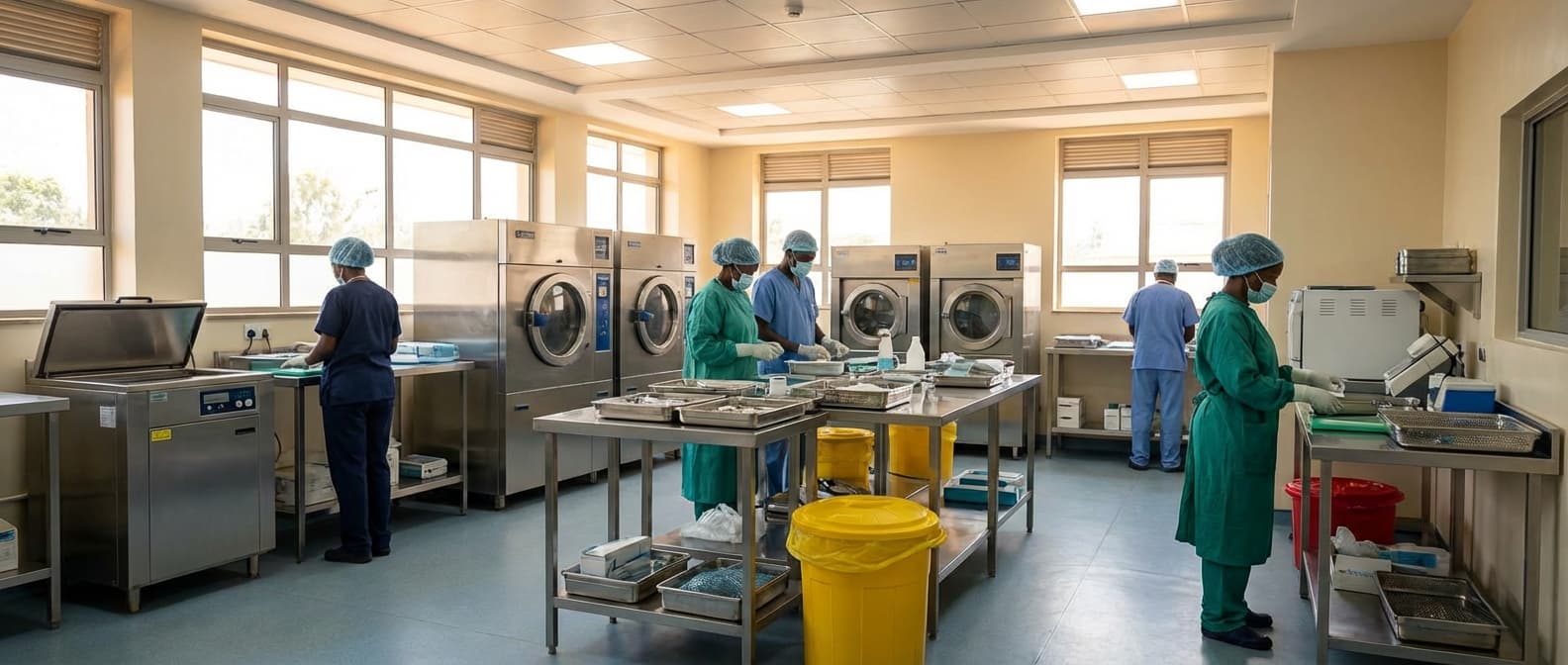
Autoclave Validation Support Service in Djibouti
Engineering Excellence & Technical Support
Autoclave Validation Support Service High-standard technical execution following OEM protocols and local regulatory frameworks.
Rigorous Cycle Development & Qualification
Our expert technicians in Djibouti meticulously develop and validate sterilization cycles tailored to your specific instruments and materials, ensuring optimal efficacy and compliance with international standards (e.g., ISO 17665).
Data-Driven Process Monitoring & Validation
We employ advanced monitoring systems and validated data logging to provide irrefutable evidence of successful sterilization, offering comprehensive reports on temperature, pressure, and time parameters for full traceability and regulatory confidence in Djibouti.
Preventative Maintenance & Calibration Partnership
Beyond validation, we offer preventative maintenance and calibration services for your autoclaves in Djibouti, minimizing downtime and ensuring consistent performance, thereby safeguarding your sterilization processes and patient safety.
What Is Autoclave Validation Support Service In Djibouti?
Autoclave Validation Support Service in Djibouti refers to the comprehensive process of objectively verifying and documenting that an autoclave sterilization system consistently performs as intended, meeting predetermined specifications and regulatory requirements within the Djiboutian context. This service ensures the efficacy of sterilization cycles for critical and semi-critical medical devices, laboratory equipment, and other heat-sensitive materials, thereby safeguarding patient safety and maintaining the integrity of research and industrial processes. The service typically involves a suite of technical procedures to confirm parameters such as temperature, pressure, steam penetration, and cycle time, alongside meticulous record-keeping and reporting.
| Entity/Sector | Reason for Need | Typical Use Cases |
|---|---|---|
| Hospitals and Healthcare Facilities | To ensure the sterility of reusable medical instruments, surgical tools, and other critical/semi-critical devices, thereby preventing healthcare-associated infections (HAIs) and meeting regulatory compliance for patient safety. | Sterilization of surgical instruments (scalpels, forceps), dental instruments, anesthesia equipment, laboratory glassware for diagnostic testing, and linens used in sterile environments. |
| Diagnostic Laboratories (Medical and Veterinary) | To guarantee the sterility of culture media, laboratory glassware, instruments, and other consumables that come into contact with biological samples, preventing contamination and ensuring accurate test results. | Sterilization of Petri dishes, test tubes, pipettes, inoculation loops, and surgical instruments used in sample collection or preparation. |
| Pharmaceutical and Biotechnology Companies | To sterilize equipment, packaging materials, and consumables used in drug manufacturing, research, and quality control, maintaining product integrity and preventing microbial contamination. | Sterilization of bioreactors, filling equipment, vials, stoppers, and laboratory equipment used in drug development and production. |
| Research Institutions and Universities | To ensure the sterility of laboratory equipment, glassware, and supplies for experiments, particularly in microbiology, molecular biology, and life sciences, to prevent experimental errors due to contamination. | Sterilization of culture media components, glassware for media preparation, laboratory tools, and waste disposal before scientific investigations. |
| Veterinary Clinics and Animal Hospitals | Similar to human healthcare, to ensure the sterility of surgical instruments and equipment used in animal care to prevent infections. | Sterilization of surgical kits, examination tools, and related consumables for animal procedures. |
Key Components of Autoclave Validation Support Service
- Installation Qualification (IQ): Verifies that the autoclave is installed correctly according to manufacturer specifications and relevant standards.
- Operational Qualification (OQ): Tests the autoclave's functionality at the limits of its operating parameters to ensure it operates reliably within these defined ranges.
- Performance Qualification (PQ): Demonstrates that the autoclave consistently sterilizes loads under normal operating conditions, often using biological and chemical indicators to prove efficacy.
- Process Validation Studies: Comprehensive testing of representative loads to confirm the effectiveness of the sterilization cycle under various scenarios.
- Calibration and Maintenance Support: Ensuring the accuracy of critical measurement instruments (temperature probes, pressure gauges) and recommending preventive maintenance schedules.
- Documentation and Reporting: Generation of detailed validation reports, certificates, and traceability records compliant with Djiboutian healthcare regulations and international standards (e.g., ISO 13485, FDA guidelines where applicable).
- Revalidation Services: Periodic revalidation to ensure continued compliance and efficacy after significant maintenance, modifications, or at prescribed intervals.
- Training and Consultation: Providing expertise to in-house personnel on the operation, maintenance, and validation requirements of autoclaves.
Who Needs Autoclave Validation Support Service In Djibouti?
Ensuring the efficacy of sterilization processes is paramount in preventing healthcare-associated infections and maintaining the integrity of sensitive medical and research equipment. Autoclave validation is a critical component of this process, confirming that an autoclave consistently achieves the required sterilization parameters. In Djibouti, various organizations and departments rely heavily on effective sterilization and therefore require robust Autoclave Validation Support Services.
| Customer Type | Primary Need | Key Departments Involved |
|---|---|---|
| Hospitals & Clinics | Infection Prevention & Patient Safety | CSSD, Surgical, Operating Rooms, Dental |
| Research Labs | Experimental Integrity & Biosafety | Microbiology, Biotechnology, Pathology |
| Pharma/Biotech Companies | Product Quality & Regulatory Compliance | QC, QA, Manufacturing, R&D |
| Veterinary Facilities | Animal Health & Disease Prevention | Surgical Units, Research Labs |
| Public Health Agencies | Disease Control & Lab Operations | Public Health Labs, Disease Surveillance |
Target Customers and Departments Requiring Autoclave Validation Support in Djibouti
- {"title":"Healthcare Facilities","departments":["Central Sterile Supply Department (CSSD)","Surgical Departments","Operating Rooms","Dental Clinics","Outpatient Clinics","Emergency Departments"],"description":"Hospitals, clinics, and dental practices are at the forefront of infection control and require validated sterilization for all reusable medical instruments."}
- {"title":"Research and Development Laboratories","departments":["Biotechnology Labs","Microbiology Labs","Chemistry Labs","Pathology Labs","University Research Departments"],"description":"Laboratories working with biological samples, cultures, and sensitive research materials need to ensure their autoclaves effectively sterilize equipment and waste to maintain experimental integrity and safety."}
- {"title":"Pharmaceutical and Biotechnology Companies","departments":["Quality Control (QC) Departments","Quality Assurance (QA) Departments","Manufacturing Departments","Research and Development (R&D) Departments"],"description":"Companies involved in drug manufacturing, vaccine production, and other biotechnological processes require validated sterilization for production equipment and consumables."}
- {"title":"Food and Beverage Industry","departments":["Quality Control Departments","Production Engineering"],"description":"While less common, some segments of the food and beverage industry may use autoclaves for sterilization of equipment or packaging materials, especially in sensitive production areas."}
- {"title":"Veterinary Clinics and Animal Research Facilities","departments":["Veterinary Surgical Units","Animal Research Labs"],"description":"Similar to human healthcare, veterinary facilities need to ensure the sterilization of surgical instruments and equipment to prevent the spread of diseases."}
- {"title":"Government and Public Health Agencies","departments":["Public Health Laboratories","Disease Control Centers"],"description":"Agencies responsible for public health, disease surveillance, and outbreak control may operate laboratories that require autoclaves."}
Autoclave Validation Support Service Process In Djibouti
This document outlines the typical workflow for an Autoclave Validation Support Service process in Djibouti, from the initial customer inquiry through to the successful execution of the validation. This process ensures that autoclaves operate effectively and meet regulatory requirements for sterilization.
| Stage | Description | Key Activities | Deliverables | Responsibility |
|---|---|---|---|---|
| The client (e.g., hospital, laboratory, pharmaceutical facility in Djibouti) contacts the service provider with a need for autoclave validation. | Initial contact, discussion of validation requirements (type of autoclave, frequency, regulatory standards), site visit for initial assessment (optional). | Understanding of client's needs, preliminary scope definition. | Client, Service Provider |
| Based on the assessed needs, the service provider prepares a detailed proposal outlining the validation scope, methodology, timeline, and costs. | Development of a formal proposal, risk assessment (if applicable), cost estimation, negotiation, contract finalization. | Formal quotation, scope of work document, Service Level Agreement (SLA). | Service Provider, Client |
| Once the proposal is accepted, the service provider and client agree on a specific date and time for the validation execution. | Calendar coordination, logistics planning (travel, accommodation for technicians), pre-validation checks required from the client (e.g., autoclave availability, access). | Confirmed validation schedule, pre-validation checklist. | Service Provider, Client |
| The validation team arrives on-site to perform initial checks and calibration of the autoclave. | Installation of monitoring equipment (temperature probes, pressure sensors), calibration of sensors against traceable standards, initial functional checks of the autoclave. | Calibrated sensors, documented calibration records. | Service Provider |
| This is the core of the validation process, involving a series of tests to demonstrate the autoclave's consistent ability to sterilize. | Running a series of test cycles with biological indicators (BIs) and chemical indicators (CIs) at critical locations within the chamber, temperature mapping studies, pressure and time cycle monitoring. | Test cycle logs, BI and CI results, temperature mapping data, validation reports. | Service Provider |
| All data collected during the validation process is compiled, analyzed, and documented. | Review of all collected data, preparation of the final validation report, inclusion of all supporting documents (calibration certificates, raw data). | Comprehensive Autoclave Validation Report, Certificate of Validation. | Service Provider |
| The service provider offers support after the validation is complete. | Addressing any client queries regarding the report, advising on corrective actions if issues were identified, scheduling re-validation if required. | Resolved queries, recommendations for ongoing maintenance and re-validation. | Service Provider, Client |
Autoclave Validation Support Service Process in Djibouti
- Inquiry and Needs Assessment
- Proposal and Quotation
- Scheduling and Planning
- On-site Execution: Installation and Calibration
- On-site Execution: Performance Qualification (PQ)
- On-site Execution: Documentation and Reporting
- Post-Validation Support
Autoclave Validation Support Service Cost In Djibouti
Providing autoclave validation support services in Djibouti involves a multi-faceted approach to pricing, influenced by several key factors. These factors determine the overall cost, making it crucial for clients to understand them when budgeting for this essential service. The cost is generally presented in local currency, Djibouti Franc (DJF).
| Service Component / Scenario | Estimated Cost Range (DJF) | Notes |
|---|---|---|
| Basic Autoclave Validation (IQ/OQ/PQ for a standard medical autoclave) | 150,000 - 350,000 | Covers typical number of cycles, standard reporting. |
| Complex Validation (e.g., multiple autoclaves, critical laboratory applications, extensive PQ) | 350,000 - 700,000+ | May involve more probes, custom protocols, and detailed analysis. |
| Protocol Development/Review (per protocol) | 50,000 - 150,000 | Dependent on complexity and existing documentation. |
| Re-validation (following major repairs or significant changes) | 100,000 - 250,000 | Typically a subset of full validation cost. |
| Travel and Accommodation (per day, if applicable) | 25,000 - 50,000 | For validation teams traveling outside Djibouti city. |
| Rush Service Fee (percentage of total cost) | 15% - 30% | For expedited service requests. |
Key Pricing Factors for Autoclave Validation Support Service in Djibouti:
- Scope of Validation: The complexity and extent of the validation process significantly impact cost. This includes the number of autoclaves to be validated, the type of validation (IQ, OQ, PQ), and the criticality of the application (e.g., medical sterilization, laboratory use).
- Number of Cycles/Tests: The validation protocol dictates the number of test cycles required. More cycles mean more time, resources, and consumables, thus increasing the overall price.
- Autoclave Size and Capacity: Larger autoclaves, or those with higher capacities, often require more probes, specialized placement, and longer run times for validation, contributing to higher costs.
- Validation Protocol Development/Review: If a custom validation protocol needs to be developed or an existing one requires significant review and modification, this adds to the service cost.
- Equipment and Calibration: The cost of specialized validation equipment (temperature probes, pressure sensors, data loggers) and ensuring their calibration is factored in. Calibration certificates are often a requirement.
- Personnel Expertise and Time: The experience and qualifications of the validation engineers, along with the time spent on-site and off-site for data analysis and report generation, are direct cost drivers.
- Report Generation and Documentation: Comprehensive validation reports, including raw data, analysis, and conclusions, require significant effort. The level of detail and formatting requested can influence the price.
- Travel and Logistics: For locations outside of Djibouti city, travel and accommodation expenses for the validation team will be added.
- Urgency and Turnaround Time: Expedited validation services, requiring immediate attention and potentially overtime, will generally incur a higher fee.
- Additional Services: Any supplementary services, such as operator training, preventive maintenance recommendations, or re-validation after repairs, will be charged separately.
Affordable Autoclave Validation Support Service Options
Securing reliable and cost-effective autoclave validation is crucial for many industries, including healthcare, pharmaceuticals, and research. This service ensures your autoclaves are functioning correctly, meeting regulatory requirements, and maintaining sterility. This document outlines affordable options, focusing on value bundles and practical cost-saving strategies.
| Value Bundle Type | Description | Potential Cost Savings | Ideal For |
|---|---|---|---|
| Basic Validation Package | Includes essential IQ, OQ, and PQ for a single autoclave. Focuses on core testing and standard reporting. | Lower upfront cost. Streamlined process for basic needs. | Small labs, new facilities with minimal autoclave inventory, or those with less stringent regulatory demands. |
| Multi-Autoclave Discount | Bundles validation services for multiple autoclaves at a reduced per-unit cost. Often includes standardized protocols across units. | Significant per-unit savings when validating several autoclaves simultaneously. | Clinics, dental practices, research institutions with multiple sterilization units. |
| Annual Maintenance & Validation Plan | Combines routine preventative maintenance (PM) with scheduled validation cycles (e.g., annual PQ). | Reduces emergency repair costs, ensures consistent performance, and often provides a discounted rate for combined services. | Facilities with high autoclave usage, those prioritizing operational continuity, and those seeking predictable budgeting. |
| Comprehensive Lifecycle Support | Encompasses IQ, OQ, PQ, routine calibration, preventative maintenance, and ongoing support. | Offers the most significant long-term cost savings through proactive management and bundled services. Avoids piecemeal service costs. | Large healthcare systems, pharmaceutical manufacturing, and organizations with critical sterilization requirements and a commitment to long-term asset management. |
Key Considerations for Affordable Autoclave Validation
- Understanding Validation Cycles: Different validation cycles (e.g., installation qualification (IQ), operational qualification (OQ), performance qualification (PQ)) have varying levels of complexity and cost. Bundle services intelligently.
- Frequency and Scope: Determine the required validation frequency based on regulatory guidelines and internal risk assessments. Larger scopes or more frequent validations will naturally increase costs.
- Vendor Selection: Research and compare multiple validation service providers. Look for those with transparent pricing and a proven track record.
- In-House Capabilities vs. Outsourcing: Assess if any internal resources or equipment can be leveraged to reduce outsourcing costs.
- Documentation Requirements: Clarify precise documentation needs with your provider to avoid unnecessary charges for additional reports.
- Service Level Agreements (SLAs): Consider if an SLA for regular maintenance and validation can offer better long-term pricing and predictability.
Verified Providers In Djibouti
When seeking healthcare services in Djibouti, particularly those requiring specialized attention, it's crucial to identify verified providers. Franance Health stands out as a leader in this regard, offering a rigorous credentialing process that ensures patients receive care from qualified and trustworthy professionals. Their commitment to verification goes beyond basic licensing, encompassing a thorough review of medical education, training, experience, and adherence to ethical standards. This meticulous approach provides patients with the confidence that they are entrusting their well-being to competent and reliable practitioners. Franance Health credentials signify a dedication to excellence in healthcare delivery, making them the best choice for individuals prioritizing quality and safety in their medical journey in Djibouti.
| Verification Aspect | Franance Health Standard | Patient Benefit |
|---|---|---|
| Medical Education and Training | Thorough review of degrees, certifications, and specialized training programs. | Ensures providers possess the foundational knowledge and skills required. |
| Professional Experience | Verification of practice history, duration, and areas of specialization. | Confirms practical application of knowledge and proven track record. |
| Licensing and Regulatory Compliance | Confirmation of current and valid medical licenses and adherence to Djiboutian regulations. | Ensures providers operate legally and ethically within the country. |
| Continuing Medical Education (CME) | Mandatory participation in ongoing professional development to stay current with medical advancements. | Guarantees providers are up-to-date with the latest treatments and technologies. |
| Reputation and Ethical Conduct | Background checks and review of any disciplinary actions or patient complaints. | Ensures providers maintain a high standard of professionalism and patient care. |
Key Benefits of Choosing Franance Health Verified Providers:
- Guaranteed professional qualifications and extensive experience.
- Adherence to the highest ethical and medical standards.
- Reduced risk of medical errors and improved patient safety.
- Access to specialists with verified expertise.
- Peace of mind knowing your healthcare provider is thoroughly vetted.
Scope Of Work For Autoclave Validation Support Service
This Scope of Work (SOW) outlines the services to be provided by the Autoclave Validation Support Service provider for a comprehensive validation of the client's steam sterilization autoclave. The objective is to ensure the autoclave consistently delivers effective sterilization meeting regulatory and internal quality standards. The service includes the planning, execution, and reporting of the validation activities.
| Qualification Phase | Key Activities | Standard Specifications/Acceptance Criteria (Examples) |
|---|---|---|
| Installation Qualification (IQ) | Verify correct installation of the autoclave, including all utilities (power, steam, water, drain), safety features, and documentation. Confirm physical and mechanical installation meets manufacturer specifications. | All utility connections are correct and within specified parameters (e.g., steam pressure, voltage). Safety interlocks function correctly. Manufacturer's installation checklist is completed. Alarm system operational. |
| Operational Qualification (OQ) | Test the autoclave's operational limits and functionality at the upper and lower bounds of its operating parameters. Verify alarm systems and interlocks. Ensure reproducible cycles. | Cycles run successfully at programmed temperature, pressure, and time parameters. Alarm setpoints are verified and trigger appropriately. Door interlock functions correctly. Cycle parameters are within specified ranges for both empty and loaded conditions (if applicable during OQ). |
| Performance Qualification (PQ) | Demonstrate that the autoclave consistently sterilizes a challenging load under normal operating conditions. This involves multiple consecutive cycles using biological indicators (BIs) and physical monitoring (temperature, pressure, time). | All biological indicators (BIs) demonstrate complete inactivation (<N.A.B.T. <10-6). All temperature and pressure probes within the chamber and on the load maintain specified parameters for the entire cycle duration. No cycle failures or deviations recorded. Sterility assurance level (SAL) achieved. |
Technical Deliverables
- Validation Master Plan (VMP) contribution or review
- Protocol for Installation Qualification (IQ)
- Protocol for Operational Qualification (OQ)
- Protocol for Performance Qualification (PQ)
- IQ Test Records and Report
- OQ Test Records and Report
- PQ Test Records and Report
- Validation Summary Report
- Calibration certificates for all test equipment used
- Raw data logs for all tests performed
- Training materials for client personnel on routine operation and basic troubleshooting
Service Level Agreement For Autoclave Validation Support Service
This Service Level Agreement (SLA) outlines the response times and uptime guarantees for the Autoclave Validation Support Service provided by [Your Company Name] to [Client Company Name].
| Service Component | Response Time Guarantee | Uptime Guarantee | Notes/Details |
|---|---|---|---|
| Initial Response to Support Ticket (Critical Issue) | 1 Hour | N/A | For issues preventing autoclave operation or critical validation failures. |
| Initial Response to Support Ticket (High Priority Issue) | 2 Business Hours | N/A | For issues significantly impacting validation workflow but not full operation. |
| Initial Response to Support Ticket (Normal Priority Issue) | 8 Business Hours | N/A | For general inquiries, non-critical performance issues, or validation documentation questions. |
| Remote Diagnostic and Troubleshooting | 4 Business Hours (after initial response) | N/A | Attempt to diagnose and provide initial remote resolution steps. |
| On-site Service Visit Scheduling (if remote resolution fails) | Within 2 Business Days (for critical/high priority) | N/A | Target for scheduling an on-site visit. Actual visit time dependent on engineer availability and travel. |
| On-site Service Visit Commencement (for scheduled visit) | Per agreed schedule | N/A | Focus on efficient resolution once on-site. |
| Availability of Validation Support Personnel (Business Hours) | N/A | 99.5% during standard business hours ([Specify Business Hours, e.g., 9 AM - 5 PM Local Time]) | Refers to the availability of our support team to receive and process requests. Excludes scheduled maintenance. |
| Availability of Online Support Portal/Knowledge Base | N/A | 99.8% | Refers to the accessibility of self-service resources. Excludes scheduled maintenance. |
| Scheduled Maintenance Notifications | Minimum 48 hours notice | N/A | For planned system updates or maintenance that may affect service availability. |
Service Overview
- Autoclave Validation Support Service
- Provided by: [Your Company Name]
- Client: [Client Company Name]
- Effective Date: [Date]
- Review Date: [Date]
Frequently Asked Questions

Ready when you are
Let's scope your Autoclave Validation Support Service in Djibouti project in Djibouti.

Scaling healthcare logistics and technical systems across the entire continent.