
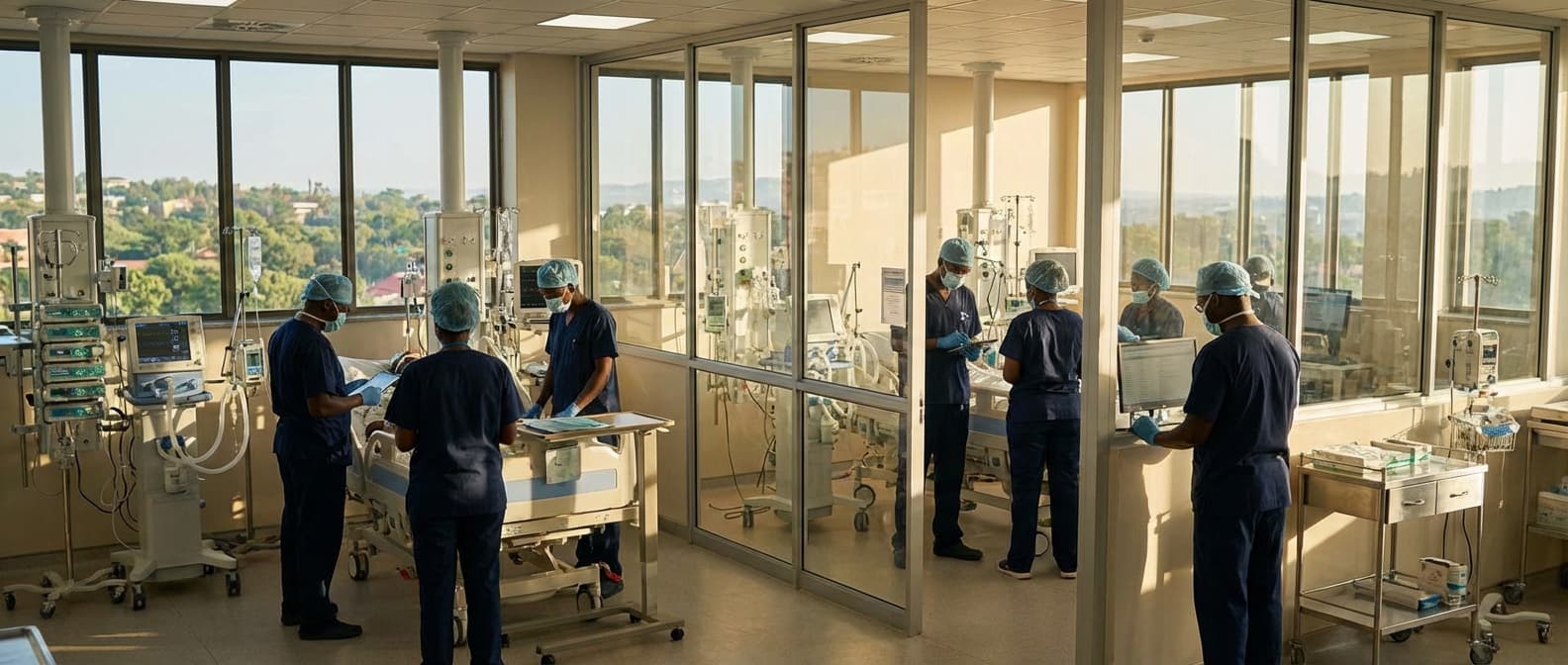
Ventilator Fleet Management & PM in Djibouti
Engineering Excellence & Technical Support
Preventive maintenance and fleet management for ICU ventilators High-standard technical execution following OEM protocols and local regulatory frameworks.
Optimized Ventilator Fleet Deployment
Leveraging real-time location data and demand forecasting to strategically position ventilators across Djibouti, ensuring rapid availability for critical patient needs in remote and urban areas.
Proactive Preventative Maintenance Scheduling
Implementing a robust preventative maintenance program with predictive analytics to identify potential equipment failures before they occur, minimizing downtime and maximizing ventilator operational readiness.
Efficient Mobile Maintenance & Logistics
Establishing dedicated mobile maintenance units and optimized routes for servicing ventilators in situ, significantly reducing transport times and operational disruption for healthcare facilities throughout Djibouti.
What Is Ventilator Fleet Management & Pm In Djibouti?
Ventilator Fleet Management & Preventive Maintenance (PM) in Djibouti refers to the systematic oversight, maintenance, and operational readiness of a fleet of mechanical ventilators. This service ensures that critical respiratory support equipment is consistently available, functioning optimally, and compliant with established standards and regulations. It encompasses a lifecycle approach, from acquisition and deployment to routine servicing, calibration, repair, and eventual decommissioning.
| Who Needs Ventilator Fleet Management & PM? | Typical Use Cases | ||||
|---|---|---|---|---|---|
| Hospitals and Healthcare Facilities: Including general hospitals, specialized care centers, intensive care units (ICUs), emergency departments, and operating rooms that rely on ventilators for patient care. | Emergency Response Organizations: Such as national disaster management agencies and humanitarian organizations that may need to deploy mobile or temporary medical infrastructure, including ventilators, during crises. | Government Health Ministries & Public Health Agencies: Responsible for overseeing the national healthcare infrastructure, ensuring the availability and proper functioning of critical medical equipment across the country. | Military Medical Services: Operating field hospitals or providing medical support in remote or deployed locations. | Medical Equipment Suppliers and Service Providers: Offering managed services for ventilator fleets on behalf of healthcare institutions. | |
| Routine Patient Care: Supporting patients with respiratory failure due to various medical conditions (e.g., pneumonia, COPD exacerbations, ARDS, post-operative recovery). | Emergency Situations: Providing life support during mass casualty incidents, natural disasters, or public health emergencies (e.g., pandemics like COVID-19). | Surgical Procedures: Facilitating mechanical ventilation during anesthesia and surgery. | Transport Ventilation: Ensuring continuous respiratory support for critically ill patients during inter-facility transfers or evacuation. | Clinical Trials & Research: Requiring calibrated and reliable ventilators for research protocols. | Training and Simulation: Utilizing well-maintained ventilators for clinical skills training and simulation exercises. |
Key Components of Ventilator Fleet Management & PM:
- Inventory Management: Detailed tracking of all ventilator units, including model, serial number, acquisition date, location, and status (operational, under maintenance, retired).
- Preventive Maintenance (PM): Scheduled inspections, cleaning, lubrication, calibration, and testing of ventilators according to manufacturer specifications and clinical guidelines to identify and address potential issues before they lead to failure.
- Corrective Maintenance & Repair: Diagnosis and repair of malfunctions and breakdowns to restore ventilator functionality.
- Performance Verification & Calibration: Ensuring ventilators meet specified performance parameters and delivering accurate ventilatory support.
- Software Updates & Management: Managing firmware and software versions to ensure optimal functionality and security.
- Training & Competency: Ensuring biomedical technicians and clinical staff are adequately trained on the operation, maintenance, and troubleshooting of the ventilator fleet.
- Regulatory Compliance: Adhering to Djibouti's national healthcare regulations, international standards (e.g., ISO, IEC), and any specific medical device directives.
- Asset Lifecycle Planning: Strategic planning for equipment replacement, upgrades, and disposal to ensure continuous availability of modern and reliable technology.
- Data Management & Reporting: Maintaining comprehensive records of maintenance activities, equipment performance, and costs for analysis and auditing purposes.
- Contingency & Disaster Preparedness: Developing plans to rapidly deploy ventilators during emergencies, pandemics, or natural disasters.
Who Needs Ventilator Fleet Management & Pm In Djibouti?
Djibouti, a strategically vital nation on the Horn of Africa, faces unique challenges in its healthcare infrastructure. Ensuring the operational readiness of its medical equipment, particularly life-saving ventilators, is paramount. Ventilator Fleet Management and Preventive Maintenance (PM) are crucial for maintaining high-quality patient care, optimizing resource allocation, and mitigating risks associated with equipment failure. This service is indispensable for healthcare providers and governmental bodies in Djibouti committed to public health and emergency preparedness.
| Customer/Department | Key Responsibilities & Needs | Benefits of Fleet Management & PM |
|---|---|---|
| Ministry of Health (Djibouti) | Overall healthcare policy, resource allocation, public health initiatives, national emergency preparedness. | Ensures national health security, reduces capital expenditure through optimized equipment lifespan, data-driven decision-making for future procurements, compliance with international health standards. |
| Public Hospitals (e.g., Peltier Hospital) | Direct patient care, managing medical equipment inventory, staff training, ensuring equipment availability for critical cases. | Minimizes equipment downtime during critical procedures, enhances patient safety, reduces repair costs, extends equipment lifespan, improves diagnostic and treatment capabilities. |
| Military Medical Services | Providing medical support to armed forces, readiness for deployment, managing specialized medical equipment. | Ensures operational readiness of medical units, maintains equipment functionality for field hospitals and deployments, cost-effective equipment management. |
| International Aid Organizations (e.g., WHO, MSF, UN Agencies) | Delivering healthcare services in underserved areas, providing medical aid, establishing temporary health facilities, capacity building. | Guarantees reliable operation of donated or procured medical equipment, ensures sustainability of health programs, efficient use of limited resources, supports long-term healthcare infrastructure development. |
| Private Healthcare Providers | Offering specialized medical services, managing private patient care, maintaining reputation for quality. | Upholds service quality, avoids revenue loss due to equipment malfunction, enhances patient trust and satisfaction, competitive advantage through reliable equipment. |
| Emergency Medical Services (EMS) | Responding to medical emergencies, providing pre-hospital care, transporting patients to facilities. | Ensures ventilators are always functional for critical emergency situations, rapid deployment capability, patient survival rates, improved transport care. |
Target Customers & Departments in Djibouti for Ventilator Fleet Management & PM
- Governmental Health Ministries/Agencies
- Public Hospitals and Healthcare Facilities
- Military and Defense Medical Services
- International Aid Organizations operating in Djibouti
- Private Healthcare Providers (if any)
- Emergency Medical Services (EMS)
Ventilator Fleet Management & Pm Process In Djibouti
This document outlines the workflow for Ventilator Fleet Management and Preventive Maintenance (PM) processes in Djibouti, from initial inquiry to successful execution. It details the steps involved in ensuring the optimal performance and longevity of the ventilator fleet, crucial for healthcare services in the region.
| Phase | Step | Description | Responsible Party | Documentation/Deliverables | Key Considerations |
|---|---|---|---|---|---|
| Inquiry & Planning |
| Hospital or MoH identifies a need for new ventilators, maintenance, or repair of existing units. This can be for procurement, routine PM, or addressing equipment failure. | Hospital/Clinic Administration, Biomedical Engineering, MoH | Request Form, Equipment Maintenance Log, Incident Report (for breakdowns) | Clear identification of equipment model, serial number, location, and nature of the request (new, PM, repair). |
| Inquiry & Planning |
| Biomedical Engineering assesses the existing fleet's condition, identifies critical equipment needs, and prioritizes PM schedules and repair requests based on urgency and resource availability. | Biomedical Engineering Department | Fleet Inventory, PM Schedule, Repair Prioritization Matrix | Availability of spare parts, technician capacity, impact on patient care. |
| Inquiry & Planning |
| The required budget for PM services, spare parts, or new equipment is identified, requested, and approved by the relevant financial authorities (e.g., MoH Finance Department, Hospital Administration). | Hospital Administration, MoH Finance Department | Budget Proposal, Approval Signatures | Timely budget release to avoid delays in service execution. |
| Procurement (if applicable) |
| For PM contracts or repairs, a Request for Quotation (RFQ) is issued to pre-qualified vendors. Vendors submit detailed quotations including scope of work, timelines, and costs. | Procurement Department, Biomedical Engineering | RFQ Document, Vendor Quotations | Clear technical specifications, vendor experience, and warranty terms. |
| Procurement (if applicable) |
| Based on evaluation criteria, a vendor is selected, and a contract or PO is issued for the PM services, repairs, or new ventilator acquisition. | Procurement Department, MoH/Hospital Authority | Service Contract, Purchase Order | Ensuring compliance with procurement regulations and contract terms. |
| Execution - Preventive Maintenance |
| The Biomedical Engineering department or the contracted vendor schedules the PM based on the approved plan and notifies the relevant hospital unit and end-users. | Biomedical Engineering Department, External Service Provider | PM Schedule Notification, Work Order | Minimizing disruption to clinical operations, ensuring access to equipment. |
| Execution - Preventive Maintenance |
| Technicians arrive at the facility, conduct thorough inspections, perform routine maintenance tasks (cleaning, calibration, part replacement as per manufacturer guidelines). | Biomedical Engineering Technician, External Service Provider | PM Checklist, Service Report | Adherence to safety protocols, accurate recording of performed tasks. |
| Execution - Preventive Maintenance |
| After PM, ventilators are tested to ensure they meet performance standards and all functions are operational. | Biomedical Engineering Technician, External Service Provider | Test Results Report | Verification against manufacturer specifications. |
| Execution - Preventive Maintenance |
| Service reports are completed, detailing all work performed, parts used, and any recommendations. The service is signed off by the hospital's Biomedical Engineering representative. | Biomedical Engineering Technician, External Service Provider, Hospital Representative | Signed Service Report, Updated Equipment Maintenance Log | Accurate record-keeping for future reference and warranty claims. |
| Execution - Repair |
| Upon notification of a breakdown, technicians diagnose the issue and identify the root cause of the malfunction. | Biomedical Engineering Technician, External Service Provider | Diagnostic Report, Troubleshooting Log | Rapid response to minimize downtime. |
| Execution - Repair |
| If specific spare parts are required, they are procured according to the established procurement procedures. | Procurement Department, Biomedical Engineering | Requisition for Spare Parts, PO for Parts | Ensuring availability of genuine and compatible parts. |
| Execution - Repair |
| Technicians perform the necessary repairs or replace faulty components to restore the ventilator's functionality. | Biomedical Engineering Technician, External Service Provider | Repair Log, Replacement Part Details | Using appropriate tools and techniques for safe and effective repair. |
| Execution - Repair |
| The repaired ventilator undergoes rigorous testing to confirm full functionality and safety before being returned to service. | Biomedical Engineering Technician, External Service Provider | Post-Repair Test Report | Ensuring the repair has fully resolved the issue. |
| Execution - Repair |
| A detailed report of the repair process is documented, and the equipment is formally handed back to the hospital, with updated maintenance records. | Biomedical Engineering Technician, External Service Provider, Hospital Representative | Signed Repair Report, Updated Equipment Maintenance Log | Clear communication of repair details and any future maintenance recommendations. |
| Follow-up & Reporting |
| The overall performance of the ventilator fleet is monitored. Data from PM and repair activities is analyzed to identify trends, assess vendor performance, and inform future planning. | Biomedical Engineering Department, MoH | Fleet Performance Report, Vendor Performance Review | Identifying areas for improvement in PM strategies and vendor management. |
| Follow-up & Reporting |
| Regular reports on fleet status, PM completion rates, and repair costs are submitted to the Ministry of Health and other relevant authorities. | Biomedical Engineering Department, MoH | Fleet Management Report | Transparency and accountability in resource utilization. |
Key Stakeholders Involved
- Ministry of Health (MoH) - Djibouti
- Hospital/Clinic Administration
- Biomedical Engineering Department (or equivalent)
- Procurement Department
- External Service Provider/Vendor (for PM & repairs)
- Logistics & Supply Chain Team
- End-Users (Healthcare Professionals)
Ventilator Fleet Management & Pm Cost In Djibouti
Managing a ventilator fleet in Djibouti involves various costs, primarily driven by the maintenance and operational aspects of the equipment. Preventive Maintenance (PM) is crucial for ensuring ventilator reliability, minimizing downtime, and extending the lifespan of these critical medical devices. The pricing for these services is influenced by several local factors, leading to a range of costs that can vary significantly.
| Service Category | Estimated Range (DJF) - Basic PM | Estimated Range (DJF) - Comprehensive PM/Management | Notes |
|---|---|---|---|
| Basic Annual Preventive Maintenance (per ventilator) | 50,000 - 150,000 | N/A | Covers routine checks, calibration, cleaning. Excludes parts. |
| Semi-Annual Preventive Maintenance (per ventilator) | 80,000 - 250,000 | N/A | More frequent checks for critical equipment. Excludes parts. |
| Comprehensive PM & Minor Repairs Contract (per ventilator, annual) | N/A | 200,000 - 600,000+ | Includes scheduled PM, labor for minor repairs, and potentially a limited number of service calls. Parts may be extra or capped. |
| Full-Service Fleet Management & PM Contract (per ventilator, annual) | N/A | 400,000 - 1,200,000+ | Includes all PM, labor, most common spare parts, emergency response, and potentially asset tracking. Varies greatly by ventilator type and contract scope. |
| Emergency Call-Out Fee (excluding parts & labor for repair) | 20,000 - 50,000 | Included in higher-tier contracts | For unscheduled maintenance or immediate response. |
| Biomedical Technician Hourly Rate (if not on contract) | 15,000 - 30,000 | N/A | Cost of labor for ad-hoc repairs. Can be higher for specialized expertise. |
Key Pricing Factors for Ventilator Fleet Management & PM in Djibouti:
- Type and Complexity of Ventilators: Different models have varying PM requirements. Advanced ventilators with more intricate features and specialized components will naturally incur higher maintenance costs.
- Age and Condition of Equipment: Older or heavily used ventilators may require more frequent and extensive PM, potentially leading to increased repair or replacement of parts.
- Scope of PM Contract: Contracts can range from basic annual check-ups to comprehensive service agreements that include parts, labor, emergency call-outs, and even training for hospital staff. More inclusive contracts will command higher prices.
- Availability of Skilled Technicians: The local pool of certified and experienced biomedical technicians for ventilators can be limited. This scarcity can drive up labor costs as service providers compete for qualified personnel.
- Importation and Availability of Spare Parts: Djibouti's reliance on imported medical equipment and spare parts means that shipping costs, customs duties, and potential supply chain disruptions can significantly impact the overall price. Lead times for parts can also influence the urgency and cost of repairs.
- Service Provider Reputation and Experience: Established and reputable biomedical service companies with a proven track record and strong supplier relationships may charge a premium for their expertise and reliability.
- Geographic Location within Djibouti: While less of a factor for routine PM, travel and logistics costs for technicians to reach remote healthcare facilities might be factored into service agreements.
- Currency Exchange Rates: As the Djiboutian Franc (DJF) is pegged to the US Dollar, fluctuations in the USD can indirectly affect the cost of imported parts and services, though the official peg provides some stability.
- Market Demand and Competition: The level of competition among biomedical service providers in Djibouti will influence pricing. A more competitive market may lead to more favorable rates for end-users.
- Service Level Agreements (SLAs): Specific response times for emergency repairs, guaranteed uptime, and reporting requirements outlined in SLAs will directly impact the cost of management and PM contracts.
Affordable Ventilator Fleet Management & Pm Options
Managing a ventilator fleet efficiently and ensuring their optimal performance through preventative maintenance (PM) is crucial for healthcare facilities. This requires a strategic approach to both fleet management and PM, aiming to reduce costs without compromising patient care. Value bundles offer a way to consolidate services, creating cost savings through economies of scale and integrated solutions. These bundles often include a combination of equipment acquisition/leasing, ongoing maintenance, and potentially software/data management, all tailored to the specific needs of a hospital or healthcare network. Cost-saving strategies for ventilator fleet management and PM focus on proactive measures, strategic procurement, and leveraging technology.
| Value Bundle Component | Description | Potential Cost Savings |
|---|---|---|
| Equipment Acquisition/Leasing | Includes purchase, lease, or subscription options for new or refurbished ventilators. | Reduced upfront capital expenditure (leasing/subscription), lower acquisition cost (refurbished). |
| Preventative Maintenance (PM) Services | Scheduled inspections, calibration, cleaning, and replacement of wear-and-tear parts. | Reduced emergency repair costs, extended equipment lifespan, minimized downtime. |
| Extended Warranty/Service Contracts | Post-warranty support, including parts and labor for covered repairs. | Predictable repair costs, avoids unexpected high repair bills. |
| Software Updates & Licensing | Ensures ventilators are running on the latest firmware and software for optimal performance and security. | Improved efficiency, access to new features, enhanced data reporting capabilities. |
| Parts & Consumables Management | May include discounted pricing on essential spare parts and consumables. | Lower parts acquisition costs, streamlined ordering process. |
| Remote Monitoring & Diagnostics | Leveraging technology for real-time monitoring of ventilator performance and remote troubleshooting. | Reduced on-site technician visits, faster issue resolution, proactive identification of problems. |
| Training & Technical Support | Training for biomedical staff on PM procedures and clinical staff on proper usage; access to expert technical support. | Improved equipment utilization, reduced operator errors, faster problem resolution. |
Key Cost-Saving Strategies
- Strategic Procurement & Leasing Models: Explore options beyond outright purchase, such as leasing, rental, or subscription-based models that can offer predictable monthly costs and reduce upfront capital expenditure. Consider refurbished or certified pre-owned equipment for significant savings.
- Consolidated PM Contracts: Negotiate comprehensive PM contracts that cover a significant portion or the entirety of your ventilator fleet. This can lead to volume discounts and streamlined service delivery compared to managing individual service agreements.
- Tiered Service Level Agreements (SLAs): Differentiate PM services based on ventilator criticality and usage. High-usage or critical care ventilators may require more frequent and comprehensive PM, while less critical units can have a more standard schedule.
- In-House vs. Outsourced PM: Evaluate the cost-effectiveness of performing PM in-house versus outsourcing to third-party service providers. Consider the cost of technician training, parts inventory, and specialized tools for in-house operations.
- Predictive Maintenance Technologies: Invest in technologies that enable predictive maintenance. By monitoring ventilator performance data, potential issues can be identified and addressed before they lead to costly breakdowns and emergency repairs.
- Standardization of Ventilator Models: Standardizing on a limited number of ventilator models across the fleet simplifies training, maintenance, and spare parts management, leading to significant cost reductions.
- Effective Inventory Management of Spare Parts: Optimize spare parts inventory to minimize holding costs while ensuring availability for essential repairs. Implement a just-in-time (JIT) approach where feasible and leverage vendor consignment programs.
- Data Analytics for Fleet Optimization: Utilize fleet management software and data analytics to track ventilator usage, performance, maintenance history, and failure rates. This data can inform decisions on equipment replacement, PM scheduling, and overall fleet size.
- Training & Education for Clinical Staff: Properly trained clinical staff can contribute to cost savings by using ventilators correctly, identifying minor issues early, and performing basic checks, thus reducing the likelihood of minor problems escalating into major repairs.
- Bundled Service Packages: Seek out vendors offering value bundles that integrate equipment acquisition, PM, and potentially other services (e.g., software updates, technical support) at a discounted combined price.
Verified Providers In Djibouti
In Djibouti, ensuring access to reliable and high-quality healthcare is paramount. This involves partnering with providers who have demonstrated commitment to excellence and adherence to stringent standards. Franance Health stands out as a leading choice due to its rigorous credentialing process and unwavering dedication to patient well-being. Our verification ensures that all affiliated healthcare professionals and facilities meet the highest benchmarks for expertise, ethical practice, and operational efficiency. Choosing a Franance Health-verified provider means opting for confidence, trust, and superior medical care in Djibouti.
| Franance Health Verification Aspect | What it Means for Patients | Example of Verified Attributes |
|---|---|---|
| Medical Licensure and Board Certification | Ensures providers have met all legal and educational requirements to practice medicine. | Doctor's license is up-to-date; relevant specialist certifications are confirmed. |
| Clinical Competence and Experience | Confirms a provider's skills and practical experience in their field. | Review of medical history, peer references, and surgical outcomes (where applicable). |
| Adherence to Ethical Standards | Guarantees that providers operate with integrity and prioritize patient well-being. | No history of malpractice or ethical breaches; commitment to patient confidentiality. |
| Facility Safety and Quality | Verifies that healthcare facilities are safe, clean, and well-equipped. | Compliance with infection control protocols; availability of essential medical equipment. |
| Continuous Professional Development | Ensures providers stay updated with the latest medical advancements and best practices. | Participation in ongoing training, seminars, and medical conferences. |
Key Advantages of Choosing Franance Health Verified Providers in Djibouti:
- Uncompromising Quality Assurance: Franance Health's credentialing process meticulously evaluates each provider, guaranteeing adherence to international standards of medical practice and patient safety.
- Expertise and Specialization: We identify and verify providers with proven track records and specialized skills, ensuring you receive care from the most qualified professionals for your specific needs.
- Ethical Practice and Patient Rights: Verification includes a thorough review of ethical conduct and commitment to patient rights, fostering a transparent and respectful healthcare experience.
- State-of-the-Art Facilities and Technology: Franance Health verifies that affiliated facilities are equipped with modern technology and maintain optimal hygiene and operational standards.
- Streamlined Access to Care: Our network simplifies the process of finding trusted healthcare providers, saving you time and reducing the stress associated with medical appointments.
- Continuous Monitoring and Improvement: We engage in ongoing evaluation of our verified providers to ensure sustained excellence and responsiveness to evolving healthcare needs.
Scope Of Work For Ventilator Fleet Management & Pm
This Scope of Work (SOW) outlines the requirements for comprehensive ventilator fleet management and preventive maintenance (PM) services. The objective is to ensure the optimal performance, reliability, and regulatory compliance of the entire ventilator fleet. This includes all aspects from initial inventory and deployment to routine maintenance, repair, and eventual decommissioning. The services will be delivered according to industry best practices, manufacturer recommendations, and applicable regulatory standards.
| Service Area | Description | Technical Deliverables | Standard Specifications / Reference Documents |
|---|---|---|---|
| Ventilator Inventory Management | Establishing and maintaining a comprehensive, up-to-date inventory of all ventilators, including details of make, model, serial number, location, acquisition date, and service history. | Digital inventory database, regular audits of physical inventory, asset tagging system. | Manufacturer's data sheets, internal asset management policies, ISO 13485 (for medical devices). |
| Preventive Maintenance (PM) | Performing scheduled PM on all ventilators as per manufacturer recommendations and established service intervals to identify and address potential issues before they lead to failure. | PM checklists, completed PM reports, calibration certificates, scheduled maintenance logs. | Manufacturer's Service Manuals, AAMI standards (e.g., ANSI/AAMI ES60601 series), internal PM schedules. |
| Corrective Maintenance and Repair | Responding to and resolving equipment failures and malfunctions in a timely manner to minimize downtime. This includes diagnosis, repair, and replacement of faulty components. | Work order system, repair logs, component replacement records, failure analysis reports, turnaround time metrics. | Manufacturer's Service Manuals, vendor-approved parts lists, incident reporting procedures. |
| Calibration and Performance Verification | Ensuring all ventilators are accurately calibrated and perform within specified parameters. This includes pre- and post-maintenance verification. | Calibration logs, performance verification reports, certificates of calibration. | Manufacturer's calibration procedures, relevant sections of IEC 60601 standards, regulatory body guidelines. |
| Equipment Validation and Testing | Performing initial validation and periodic re-validation of ventilators to ensure they meet functional and safety requirements. | Validation protocols, test reports, validation certificates. | Manufacturer's validation documentation, hospital biomedical engineering protocols, FDA guidelines. |
| Documentation and Record Keeping | Maintaining accurate and complete records of all maintenance, repair, calibration, and service activities for each ventilator. | Service history records, digital documentation management system, audit trails. | HIPAA regulations (for patient data associated with equipment), internal quality management system, manufacturer's record-keeping requirements. |
| Parts and Consumables Management | Managing inventory of spare parts and consumables required for PM and corrective maintenance, ensuring availability and cost-effectiveness. | Inventory reports, stock levels, reorder points, approved parts lists. | Manufacturer's recommended spare parts list, internal inventory management policies. |
| Reporting and Analytics | Providing regular reports on fleet status, maintenance activities, equipment reliability, cost analysis, and compliance metrics. | Monthly/quarterly service reports, fleet performance dashboards, trend analysis reports. | Internal reporting templates, key performance indicator (KPI) definitions. |
| Regulatory Compliance | Ensuring all activities comply with relevant healthcare regulations, accreditation standards, and safety guidelines. | Compliance audit reports, documentation for regulatory inspections. | FDA regulations, Joint Commission standards, local health authority regulations, ISO 13485. |
| Technical Support and Training | Providing on-demand technical support for equipment issues and offering training to in-house biomedical staff on basic troubleshooting and maintenance where applicable. | Support ticket system, training materials, training session records. | Manufacturer's training modules, hospital internal training policies. |
Key Objectives and Scope of Services
- To maintain a complete and accurate inventory of all ventilators.
- To ensure all ventilators are calibrated and maintained according to manufacturer specifications and regulatory requirements.
- To minimize downtime of critical respiratory support equipment.
- To extend the lifespan of the ventilator fleet through proactive maintenance.
- To manage the deployment, relocation, and decommissioning of ventilators.
- To provide detailed reporting on fleet status, maintenance activities, and compliance.
- To offer technical support and training as required.
Service Level Agreement For Ventilator Fleet Management & Pm
This Service Level Agreement (SLA) outlines the terms and conditions for the comprehensive management and preventative maintenance (PM) of the hospital's ventilator fleet. It defines the responsibilities of the service provider and the hospital, focusing on ensuring optimal equipment performance and minimal downtime through timely response and guaranteed uptime.
| Service Level | Definition | Target Metric | Consequences of Non-Compliance |
|---|---|---|---|
| Emergency Response Time | Time from critical equipment failure alert to technician on-site or remote troubleshooting initiated. | Within 2 hours for critical failures (e.g., ventilation support ceased). Within 4 business hours for non-critical failures (e.g., alarm malfunctions not impacting immediate patient care). | Service credit of 5% of monthly management fee for each incident exceeding the target response time. |
| Routine Service Response Time | Time from scheduled PM appointment to commencement of service. | Within 1 business day of scheduled appointment. | Service credit of 2% of monthly management fee for each missed or delayed routine PM appointment without prior hospital approval. |
| Equipment Uptime Guarantee | The percentage of time the total ventilator fleet is operational and available for patient use, excluding scheduled PM and pre-approved downtime for upgrades. | 98% overall fleet uptime. | Service credit of 1% of monthly management fee for every 0.5% decrease in fleet uptime below the 98% guarantee. |
| Preventative Maintenance Adherence | Successful completion of all scheduled PM tasks within the defined timeframe for each ventilator. | 100% adherence to the PM schedule. | Service credit of 3% of monthly management fee if PM adherence falls below 95% in any quarter. |
| Parts Replacement Time | Time from identification of a required replacement part to its installation. | For critical parts (identified in Appendix A): within 24 hours of part availability. For non-critical parts: within 3 business days of part availability. | N/A (handled under Emergency/Routine Response Time and Uptime Guarantee) |
Key Performance Indicators (KPIs) and Service Commitments
- Response Time: The maximum allowable time from an incident report to the initiation of troubleshooting or repair by a qualified technician.
- Uptime Guarantee: The minimum percentage of time the ventilator fleet is expected to be operational and available for use.
- Preventative Maintenance (PM) Schedule: Adherence to a predefined schedule for routine inspections, cleaning, calibration, and functional testing of all ventilators.
- Parts Availability: Commitment to maintaining an adequate stock of critical replacement parts to minimize repair delays.
- Reporting and Documentation: Provision of regular reports detailing service activities, equipment status, and performance metrics.
Frequently Asked Questions

Ready when you are
Let's scope your Ventilator Fleet Management & PM in Djibouti project in Djibouti.

Scaling healthcare logistics and technical systems across the entire continent.