
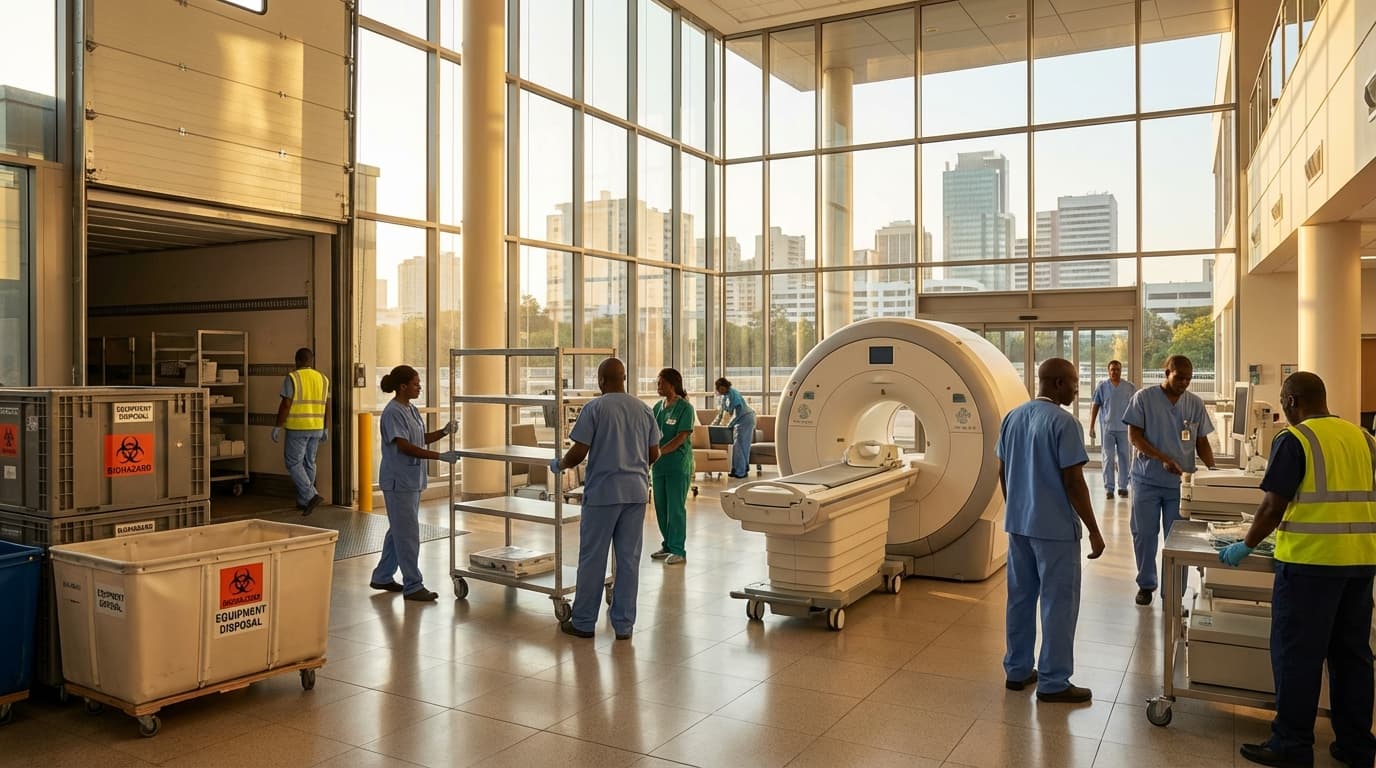
Site Restoration Service After Equipment Removal in Djibouti
Engineering Excellence & Technical Support
Site Restoration Service After Equipment Removal High-standard technical execution following OEM protocols and local regulatory frameworks.
Precision Decommissioning & Site Stabilization
Expertly dismantled and removed industrial equipment, meticulously cleaning and inspecting the site. We then implemented specialized stabilization techniques to remediate any soil compaction or alteration caused by heavy machinery, ensuring structural integrity and preventing future erosion.
Ecological Restoration & Native Vegetation Reseeding
Beyond basic clearing, our team assessed and addressed any ecological impacts. We employed advanced soil conditioning methods to restore nutrient balance and reseeded with native, drought-resistant Djibouti flora, promoting biodiversity and long-term environmental health.
Contaminant Remediation & Water Table Protection
Conducted comprehensive environmental assessments to identify and neutralize any potential contaminants (e.g., hydraulic fluids, lubricants) from equipment operations. Our strategies ensured no adverse impact on the local water table, adhering to Djibouti's strict environmental regulations.
What Is Site Restoration Service After Equipment Removal In Djibouti?
Site restoration service after equipment removal in Djibouti refers to the process of rehabilitating a land parcel and its immediate surroundings to a pre-defined state following the decommissioning and extraction of industrial, construction, or operational equipment. This service is critical for environmental compliance, land repurposing, and ensuring the safety and aesthetic integrity of the site. The scope of work is highly variable, dictated by the nature of the previous operations, the type of equipment removed, and the intended future use of the land. It encompasses a range of activities designed to mitigate the impacts of the prior installation and removal, addressing soil contamination, physical disturbances, and structural remnants.
| Who Needs Site Restoration Service? | Typical Use Cases | ||
|---|---|---|---|
| Industrial Facility Operators: Companies involved in mining, oil and gas extraction, manufacturing, and power generation. | Decommissioning of defunct industrial plants or temporary operational sites. | Temporary infrastructure removal (e.g., construction camps, pipeline staging areas). | End-of-lease obligations for land used for industrial purposes. |
| Construction Companies: Firms undertaking large-scale infrastructure projects. | Removal of temporary construction equipment and associated facilities after project completion. | Restoration of areas affected by temporary material laydown or site offices. | |
| Government Agencies and Municipalities: Entities overseeing land use and environmental protection. | Remediation of abandoned industrial sites or former military installations. | Repurposing of land previously occupied by government-owned equipment or facilities. | |
| Landowners: Private or public entities leasing land for industrial or commercial activities. | Ensuring that lessees fulfill their contractual obligations for site restoration. | Preparing land for subsequent development or ecological conservation after equipment removal. |
Key Components of Site Restoration
- Demolition and Removal of Ancillary Structures: Dismantling and clearing of any foundations, concrete pads, buildings, pipelines, or other supporting infrastructure associated with the removed equipment.
- Hazardous Material Abatement: Identification, containment, and safe disposal of any hazardous substances (e.g., oils, fuels, chemicals) that may have leaked or been stored on-site.
- Soil Remediation: Assessment of soil quality and implementation of techniques such as excavation, capping, or bioremediation to address contamination.
- Grading and Landscaping: Reshaping the land to its original or a desired contour, followed by the re-establishment of vegetation (e.g., seeding, planting) to prevent erosion and restore ecological function.
- Waste Management: Proper collection, segregation, and disposal or recycling of all debris generated during the removal and restoration process, adhering to Djibouti's environmental regulations.
- Site Clearance: Removal of all residual materials, debris, and equipment components to leave the site clean and safe.
- Environmental Monitoring: Post-restoration assessment to verify the effectiveness of the remediation efforts and ensure compliance with environmental standards.
Who Needs Site Restoration Service After Equipment Removal In Djibouti?
Equipment removal, particularly for large-scale industrial or construction projects, can leave behind significant environmental impacts. Site restoration services are crucial to mitigate these impacts, ensuring that land is returned to a safe, functional, and environmentally sound condition. In Djibouti, a country with a growing economy and strategic importance, various entities require these services after equipment is removed.
| Customer Segment | Key Departments/Examples | Reason for Restoration |
|---|---|---|
| Government & Public Sector | Ministry of Environment, Ministry of Energy, Ministry of Public Works | Compliance with environmental regulations, land reclamation for public use, remediation of public infrastructure sites. |
| Industrial & Commercial Enterprises | Oil & Gas, Mining, Construction, Manufacturing | Environmental compliance, corporate social responsibility, site handover for new use, operational safety. |
| International Organizations & NGOs | UN Agencies, Development Banks, Conservation Groups | Project closure requirements, ecological impact mitigation, sustainable development goals. |
| Military & Defense | National Military, Foreign Military Bases | Decommissioning of sites, environmental stewardship, international treaty compliance. |
Target Customers & Departments for Site Restoration Services in Djibouti
- {"items":["Ministry of Environment and Sustainable Development: Oversees environmental regulations and compliance, requiring restoration of sites impacted by industrial activities.","Ministry of Energy and Natural Resources: Manages energy projects (e.g., oil and gas exploration, renewable energy installations) and mining operations, necessitating the remediation of associated sites.","Ministry of Public Works, Transport and Equipment: Responsible for major infrastructure development like ports, roads, and airports, which often involve extensive land disturbance and subsequent restoration.","Local Municipalities: May oversee urban development projects or manage public lands that have undergone temporary industrial use."],"title":"Government & Public Sector","description":"Government bodies are often involved in large infrastructure projects, resource extraction, and land management. Their departments are key clients for site restoration."}
- {"items":["Oil and Gas Companies: Involved in exploration, drilling, and pipeline construction, these companies need to restore extraction sites and staging areas.","Mining and Quarrying Operations: Extracting minerals and construction materials leaves behind quarries and processing sites that require rehabilitation.","Construction Companies: Particularly those involved in large-scale projects like ports, industrial facilities, and residential developments. Upon completion, equipment removal necessitates restoration of temporary worksites.","Logistics and Warehousing Companies: Setting up or expanding large logistical hubs may involve significant land clearing and subsequent restoration needs.","Manufacturing Plants: During expansion, decommissioning, or relocation, manufacturing sites with heavy machinery will require restoration."],"title":"Industrial & Commercial Enterprises","description":"Businesses operating in Djibouti's growing industrial sectors often undertake projects that require subsequent site cleanup and restoration."}
- {"items":["United Nations Agencies: Involved in various development and infrastructure projects, some of which might require equipment removal and site restoration.","Development Banks (e.g., African Development Bank): Funding large infrastructure projects that may have associated site restoration requirements upon completion of equipment deployment or removal.","Environmental Conservation NGOs: Working on ecological restoration projects that might involve clearing remnants of past industrial or military activities."],"title":"International Organizations & NGOs","description":"Organizations involved in development, humanitarian aid, or environmental conservation may also require site restoration services."}
- {"items":["National Defense Forces: Military bases and temporary operational sites may undergo equipment removal and require restoration.","Foreign Military Bases: International military presence in Djibouti may require adherence to local environmental standards for site restoration after equipment removal."],"title":"Military & Defense Entities","description":"Given Djibouti's strategic military importance, defense-related activities can also lead to sites requiring restoration."}
Site Restoration Service After Equipment Removal Process In Djibouti
This document outlines the comprehensive workflow for site restoration services following equipment removal in Djibouti. The process is designed to be efficient, environmentally responsible, and compliant with local regulations, ensuring a seamless transition from an operational site to a restored state.
| Stage | Description | Key Activities | Deliverables | Timeline (Indicative) |
|---|---|---|---|---|
| Inquiry & Initial Assessment | The client contacts the service provider with a request for site restoration after equipment removal. | Understanding client needs, preliminary project scope, and site location in Djibouti. | Initial project brief, confirmation of service scope. | 1-3 business days |
| Site Survey & Planning | A detailed on-site inspection to assess the current condition of the site, the extent of the impact from equipment, and identify specific restoration requirements. | Visual inspection, photographic documentation, soil testing (if necessary), identification of hazards, mapping of disturbed areas, definition of restoration goals. | Detailed site assessment report, preliminary restoration plan, risk assessment. | 3-7 business days |
| Proposal & Agreement | Based on the site survey, a comprehensive proposal is developed, outlining the scope of work, methodology, timeline, costs, and terms of service. Upon acceptance, a formal agreement is signed. | Cost estimation, resource allocation planning, scheduling, contract negotiation, legal review. | Detailed proposal, formal contract/service agreement. | 5-10 business days |
| Permitting & Approvals | Obtaining all necessary permits and approvals from Djibouti authorities for demolition, waste disposal, and any environmental remediation activities. | Liaising with local government bodies, submitting permit applications, addressing any regulatory requirements. | Approved permits and licenses. | Varies significantly based on local regulations (can be 2-8 weeks or more) |
| Site Preparation | Preparing the site for the restoration process. This may involve setting up safety barriers, establishing temporary storage areas, and mobilizing equipment. | Securing the site, establishing exclusion zones, setting up temporary facilities, equipment mobilization. | Prepared and secured work area. | 2-5 business days |
| Equipment Removal Coordination | While not directly part of restoration, this stage involves coordinating with the client or their designated removal team to ensure equipment is removed safely and efficiently, minimizing further site disturbance. | Communication with equipment removal team, site access planning, safety coordination. | Completed equipment removal. | Concurrent with or prior to restoration |
| Demolition & Decommissioning (if applicable) | If structures or foundations associated with the equipment need to be removed, this stage involves controlled demolition and decommissioning. | Structural assessment, demolition planning, execution of controlled demolition, hazardous material identification and handling (if applicable). | Removed structures/foundations. | Duration depends on complexity and scale |
| Debris Removal & Disposal | Efficient and responsible removal of all demolition debris, soil, and any other waste materials generated from the site. | Segregation of waste materials, transportation to authorized disposal sites, compliance with environmental regulations for waste management. | Clean site, waste disposal manifests. | Varies based on volume of debris |
| Soil Remediation (if applicable) | If the equipment or its operation has caused soil contamination, this stage involves remediation to bring the soil back to acceptable environmental standards. | Soil sampling and analysis, implementation of remediation techniques (e.g., excavation and disposal, bioremediation, chemical treatment), post-remediation testing. | Remediated soil, soil quality reports. | Duration depends on contamination level and remediation method |
| Grading & Landscaping | Restoring the site to its original or a predetermined contour. This includes grading the land, backfilling any excavated areas, and implementing landscaping to stabilize the soil and promote vegetation growth. | Earthworks, grading to specified levels, topsoil placement, seeding or planting, erosion control measures. | Restored topography, stabilized ground cover, aesthetically pleasing landscape. | 5-15 business days |
| Final Inspection & Handover | A final inspection of the restored site by the client and the service provider to ensure all work has been completed to the agreed-upon standards. Upon satisfaction, the site is formally handed over. | Joint site walk-through, verification against project plan, addressing any final punch list items. | Signed handover certificate, final project report. | 1-3 business days |
| Post-Restoration Monitoring | In some cases, ongoing monitoring may be required to ensure the long-term stability of the restored site and the success of vegetation establishment. | Regular site visits, environmental monitoring, reporting on site condition. | Monitoring reports (if agreed upon). | As per contract (e.g., 3-6 months) |
Workflow Stages
- Inquiry & Initial Assessment
- Site Survey & Planning
- Proposal & Agreement
- Permitting & Approvals
- Site Preparation
- Equipment Removal Coordination
- Demolition & Decommissioning (if applicable)
- Debris Removal & Disposal
- Soil Remediation (if applicable)
- Grading & Landscaping
- Final Inspection & Handover
- Post-Restoration Monitoring
Site Restoration Service After Equipment Removal Cost In Djibouti
Restoring a site after equipment removal in Djibouti involves several considerations that influence the overall cost. The complexity of the removal, the type of equipment, the extent of damage, and the desired post-restoration condition all play a significant role. Djibouti's economic context, including labor rates, material availability, and transportation costs, further shapes pricing. Local currency for pricing is the Djiboutian Franc (DJF).
| Restoration Component | Estimated Cost Range (DJF) | Notes |
|---|---|---|
| Site Assessment & Planning | 50,000 - 200,000 | Initial survey, scope definition, and project planning. |
| Debris & Waste Removal | 100,000 - 500,000+ | Depends on volume, type of waste, and disposal fees. Can be much higher for hazardous materials. |
| Demolition & Breaking of Foundations | 150,000 - 750,000+ | For concrete foundations, asphalt, etc. Varies by size and thickness. |
| Soil Remediation & Contamination Control | 200,000 - 1,000,000+ | If soil is contaminated. Includes testing and specialized treatment. |
| Grading & Site Leveling | 100,000 - 400,000 | Reshaping the land to desired contours. |
| Topsoil Replacement & Spreading | 50,000 - 250,000 | Depending on the area and thickness of topsoil needed. |
| Revegetation & Landscaping | 75,000 - 300,000 | Seeding, planting, or hydroseeding. Cost of plant materials varies. |
| Minor Structural Repairs (if applicable) | 100,000 - 500,000+ | Repairing damaged fences, walls, or small structures. |
| Permits & Administrative Fees | 25,000 - 100,000 | Varies by local Djiboutian regulations. |
| Contingency (10-15%) | Variable | Recommended for unforeseen issues. |
| Total Estimated Project Cost (Small to Medium Sites) | 750,000 - 3,000,000+ DJF | This is a broad estimate. Complex industrial sites or extensive contamination can significantly increase costs. |
Key Pricing Factors for Site Restoration After Equipment Removal in Djibouti:
- Scope of Work: This is the most crucial factor. It includes activities like debris removal, soil remediation, grading, landscaping, and any necessary structural repairs. A detailed site assessment is essential to define this scope accurately.
- Type and Size of Equipment Removed: Larger, heavier, or more complex machinery may have caused more significant ground disturbance or contamination, requiring more extensive restoration.
- Condition of the Site Post-Removal: The level of damage to the soil, vegetation, existing structures, and underground utilities will directly impact the restoration effort and cost.
- Environmental Remediation Needs: If hazardous materials were associated with the equipment or its operation, specialized and often costly remediation services will be required.
- Soil Type and Geology: Djiboutian soil conditions (e.g., rocky, sandy, or compacted) can affect the ease of grading, excavation, and revegetation.
- Vegetation Restoration Requirements: The extent of revegetation needed, including the choice of local plant species, will influence costs.
- Disposal of Debris and Waste: Costs associated with transporting and disposing of removed equipment and any resulting waste materials (e.g., contaminated soil, concrete) at designated Djiboutian facilities.
- Labor Costs: The availability and cost of skilled and unskilled labor in Djibouti for various restoration tasks, including operating machinery and performing manual labor.
- Material Costs: The price of any new materials required for restoration, such as topsoil, gravel, concrete, or plants, considering their local availability and import costs if necessary.
- Equipment and Machinery Rental: The cost of renting specialized equipment needed for demolition, excavation, grading, and transportation within Djibouti.
- Transportation and Logistics: Moving materials, equipment, and personnel to and from the site, which can be a significant factor in Djibouti's infrastructure.
- Permits and Regulatory Compliance: Any required permits from Djiboutian authorities for demolition, waste disposal, or construction activities.
- Contractor Overhead and Profit: Standard business costs and profit margins of the restoration service provider.
Affordable Site Restoration Service After Equipment Removal Options
Removing heavy equipment from a site can leave behind significant damage, including uneven terrain, soil compaction, debris, and potential contamination. Our affordable site restoration service aims to bring your property back to its original or improved condition efficiently and cost-effectively. We understand that budget is a key concern, which is why we offer flexible solutions, value bundles, and implement smart cost-saving strategies to ensure you receive the best possible outcome without breaking the bank.
| Service Option | Description | Potential Cost Savings | Ideal For |
|---|---|---|---|
| Basic Restoration Bundle | Includes essential services like debris removal, basic grading, and soil compaction relief. Focuses on making the site safe and functional. | Lower upfront cost, efficient execution of core needs. | Sites with minimal damage, immediate need for basic functionality, budget-conscious clients. |
| Standard Restoration Bundle | Builds upon the basic bundle with enhanced grading, soil amendment for improved drainage, and optional basic landscaping (e.g., re-seeding). | Balances comprehensive restoration with cost-effectiveness, prevents future issues. | Sites with moderate damage, clients seeking a more complete restoration, long-term property value. |
| Premium Restoration Bundle | Offers a full-service solution including advanced soil remediation, expert grading for specific land use, and comprehensive landscaping options. | Maximizes property potential, long-term sustainability, potential for increased property value. | Sites requiring extensive repair, clients with specific land use plans, high-value properties. |
| Add-On Services (Customizable) | Individual services like specialized soil testing, hazardous material removal, advanced erosion control, or custom landscaping can be added to any bundle. | Pay only for what you need, tailoring the solution to your specific requirements. | Unique site challenges, specific project goals, clients with partial restoration needs. |
Our Site Restoration Process
- Initial Site Assessment & Planning
- Debris Removal & Cleanup
- Soil Compaction Alleviation
- Grading & Leveling
- Soil Amendment & Re-seeding (if applicable)
- Final Inspection & Handover
Verified Providers In Djibouti
In Djibouti's evolving healthcare landscape, identifying trusted and verified healthcare providers is paramount for ensuring quality patient care. Franance Health stands out as a premier choice due to its rigorous credentialing process and commitment to excellence. This document outlines the verification standards employed by Franance Health and explains why they are the optimal partners for individuals and institutions seeking reliable healthcare services in Djibouti.
| Provider Type | Franance Health Verification Standards | Benefits for Patients |
|---|---|---|
| Hospitals & Clinics | Accredited by national health authorities and/or international bodies (e.g., JCI aspirations). Compliance with Djibouti's healthcare regulations. Evidence of robust infrastructure and equipment maintenance. Strict adherence to hygiene and infection control protocols. | Access to safe, well-equipped facilities. Reduced risk of hospital-acquired infections. Assurance of emergency preparedness. Predictable quality of care. |
| Specialist Physicians | Valid medical license issued by the Ministry of Health. Board certification in their specialty. Documented continuing medical education (CME). Positive peer reviews and patient feedback (where applicable). | Consultation with highly qualified and up-to-date medical experts. Confidence in diagnosis and treatment plans. Access to specialized care for complex conditions. |
| Diagnostic Laboratories | Accreditation by relevant regulatory bodies. Quality control and assurance programs (e.g., ISO standards). Use of validated testing methodologies. Trained and certified laboratory technicians. | Reliable and accurate diagnostic test results. Timely reporting of results. Trust in laboratory findings for informed medical decisions. |
| Emergency Medical Services | Well-maintained and equipped ambulances. Certified and trained paramedics and EMTs. Clear protocols for patient triage and transport. Partnerships with hospitals for seamless patient transfer. | Rapid and professional response to medical emergencies. Safe and efficient transportation of patients. Improved chances of positive outcomes in critical situations. |
Franance Health's Verification Credentials and Why They Matter
- Accreditation and Licensing: Franance Health partners exclusively with facilities and professionals who hold current and recognized accreditations from reputable national and international bodies. This ensures adherence to stringent quality and safety standards.
- Professional Qualifications: All medical practitioners associated with Franance Health undergo thorough vetting of their educational background, board certifications, and professional licenses. This guarantees that patients are treated by qualified and experienced specialists.
- Experience and Specialization: Franance Health prioritizes providers with proven track records and specialized expertise in various medical fields. This ensures access to the right care for specific health needs.
- Patient Safety Protocols: A core component of Franance Health's verification involves assessing and confirming the implementation of robust patient safety protocols, infection control measures, and emergency preparedness plans within partner facilities.
- Ethical Practice and Patient Rights: Franance Health is committed to upholding the highest ethical standards. Providers are vetted for their adherence to patient rights, confidentiality, and transparent communication practices.
- Continuous Quality Improvement: Verified Franance Health providers engage in ongoing professional development and demonstrate a commitment to continuous quality improvement in their services and patient outcomes.
Scope Of Work For Site Restoration Service After Equipment Removal
This Scope of Work (SOW) outlines the services required for the comprehensive restoration of a site following the removal of industrial equipment. The objective is to return the site to a safe, functional, and environmentally sound condition as per industry standards and regulatory requirements. This SOW details the technical deliverables and standard specifications to be adhered to by the service provider.
| Task/Activity | Description | Technical Deliverables | Standard Specifications/Applicable Regulations |
|---|---|---|---|
| Site Preparation and Mobilization | Establish site control, safety protocols, environmental monitoring, and mobilization of personnel and equipment. | Site-specific Health and Safety Plan (HASP), Environmental Protection Plan (EPP), Site Logbook, Pre-mobilization Checklist. | OSHA 29 CFR 1926 Subpart C (General Safety and Health Provisions), EPA RCRA (Resource Conservation and Recovery Act), Local Environmental Regulations. |
| Hazardous Material Abatement and Disposal | Identification, removal, packaging, labeling, transportation, and disposal of all hazardous materials (e.g., asbestos, lead paint, PCBs, residual chemicals). | Manifests for all hazardous waste, Abatement Certificates, Laboratory analysis reports for characterization and clearance. | EPA TSCA (Toxic Substances Control Act), EPA RCRA, State Environmental Agency Regulations, NIOSH (National Institute for Occupational Safety and Health) guidelines. |
| Decontamination and Cleaning | Thorough cleaning and decontamination of all surfaces, equipment foundations, and surrounding areas to remove residual contaminants. | Cleaning Verification Reports, Wipe Sample Analysis Results (if required). | Industry best practices for chemical cleaning, API (American Petroleum Institute) standards, Client-specific cleaning standards. |
| Structural Demolition and Removal (if applicable) | Safe and controlled demolition and removal of any remaining structures associated with the equipment. | Demolition Plan, Waste Disposal Records. | OSHA 29 CFR 1926 Subpart M (Demolition), Local Building Codes. |
| Concrete Cutting, Removal, and Disposal | Cutting, breaking, and removal of concrete foundations, pads, and associated infrastructure. | Concrete Waste Manifests, Disposal Certificates. | ACI (American Concrete Institute) standards, Local Waste Disposal Regulations. |
| Underground Utility Disconnection and Capping | Safe disconnection and capping of all underground utilities (e.g., power, water, gas, drainage) that served the equipment. | Utility Disconnection Records, Photographs of capped utilities. | Local Utility Company Standards, OSHA 29 CFR 1910 Subpart S (Electrical Safety), CGA (Compressed Gas Association) guidelines for gas lines. |
| Soil Remediation and Hazardous Waste Disposal | Excavation, transportation, and disposal of contaminated soil exceeding regulatory limits. | Soil Analytical Reports (pre- and post-remediation), Hazardous Waste Manifests. | EPA RCRA, State Environmental Regulations, ASTM (American Society for Testing and Materials) standards for soil sampling and analysis. |
| Grading and Drainage | Regrading the site to achieve proper drainage and prevent water pooling, ensuring stability. | Grading Plan (if required), As-built grading survey. | Local Stormwater Management Regulations, Civil Engineering best practices. |
| Site Restoration and Landscaping | Restoration of the site to a predetermined condition, which may include backfilling, topsoil placement, seeding, or paving. | Final Site Photographs, As-built drawing of restored areas. | Client specifications, Local landscaping guidelines, DOT (Department of Transportation) standards for paving (if applicable). |
| Waste Management and Documentation | Comprehensive management of all waste streams generated, including segregation, temporary storage, transportation, and disposal. | Waste Stream Log, Final Waste Disposal Summary Report, Certificates of Disposal. | EPA RCRA, State Waste Management Regulations, Local Landfill acceptance criteria. |
| Final Inspection and Sign-off | Joint inspection of the restored site by the service provider and the client to ensure all SOW requirements are met. | Final Acceptance Certificate, Project Close-out Report, As-built drawings. | Client acceptance criteria, Project specifications. |
Key Areas of Site Restoration
- Site Preparation and Mobilization
- Hazardous Material Abatement and Disposal
- Decontamination and Cleaning
- Structural Demolition and Removal (if applicable)
- Concrete Cutting, Removal, and Disposal
- Underground Utility Disconnection and Capping
- Soil Remediation and Hazardous Waste Disposal
- Grading and Drainage
- Site Restoration and Landscaping
- Waste Management and Documentation
- Final Inspection and Sign-off
Service Level Agreement For Site Restoration Service After Equipment Removal
This Service Level Agreement (SLA) outlines the terms and conditions for site restoration services following the removal of equipment. It defines the response times and uptime guarantees to ensure a seamless transition and maintain operational readiness.
| Service Component | Description | Target Time | Measurement Unit |
|---|---|---|---|
| Initial Site Assessment | On-site evaluation to determine restoration requirements after equipment removal. | 4 business hours | Hours |
| Restoration Plan Submission | Delivery of a detailed plan outlining the restoration process, timeline, and resources. | 8 business hours (post-assessment) | Hours |
| Begin Restoration Work | Commencement of physical restoration activities as per the approved plan. | 24 business hours (post-plan approval) | Hours |
| Critical System Uptime (if applicable) | Ensuring any retained or re-installed systems critical to ongoing operations remain functional during the restoration period. | 99.5% | Percentage |
| Post-Restoration Verification | Final inspection and handover of the restored site. | As per agreed-upon timeline in Restoration Plan | Days |
Key Components of Site Restoration SLA
- Scope of Services
- Response Time Metrics
- Uptime Guarantees
- Reporting and Monitoring
- Penalties and Credits
- Exclusions
Frequently Asked Questions

Ready when you are
Let's scope your Site Restoration Service After Equipment Removal in Djibouti project in Djibouti.

Scaling healthcare logistics and technical systems across the entire continent.