
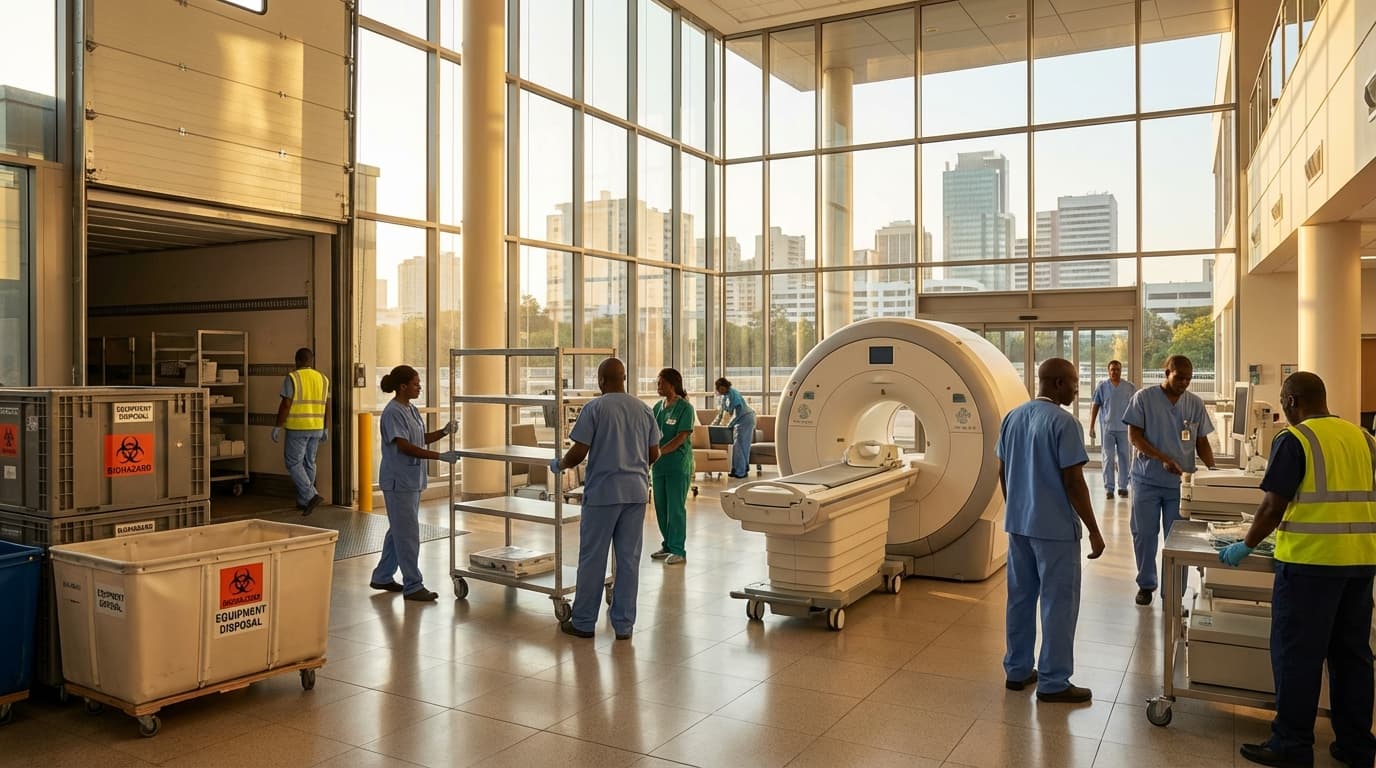
Decommissioning Service for Medical Devices in Djibouti
Engineering Excellence & Technical Support
Decommissioning Service for Medical Devices High-standard technical execution following OEM protocols and local regulatory frameworks.
Expedited Port Clearance & Logistics
Leveraging Djiboutian maritime expertise, we streamline customs, port operations, and specialized transport for swift, secure, and compliant medical device decommissioning and export, minimizing downtime and costs.
Certified Data Sanitization & Environmental Compliance
Employing globally recognized data destruction protocols and adhering to stringent Djiboutian environmental regulations, we ensure all medical devices are rendered irrecoverable and disposed of responsibly, protecting sensitive data and the local ecosystem.
Strategic Asset Recovery & Recycling Pathways
We develop tailored decommissioning plans that maximize asset recovery through certified recycling partners, promoting a circular economy and ensuring adherence to international standards for Djiboutian healthcare facilities.
What Is Decommissioning Service For Medical Devices In Djibouti?
Decommissioning service for medical devices in Djibouti refers to the systematic and secure process of retiring medical equipment from active use. This involves rendering the device non-operational, ensuring the irreversible erasure or destruction of sensitive patient data, and managing its disposal or recycling in compliance with relevant regulations and ethical standards. The primary objective is to prevent unauthorized use, protect patient confidentiality, and minimize environmental impact.
The service encompasses several key phases:
- Assessment and Planning: Evaluating the device's condition, data sensitivity, and regulatory requirements. Developing a detailed decommissioning plan, including data sanitization methods and disposal routes.
- Data Sanitization/Destruction: Implementing secure procedures to eliminate all protected health information (PHI) and other sensitive data. This can involve overwriting data, degaussing, or physical destruction of storage media.
- Physical Deactivation: Rendering the device inoperable to prevent its reuse. This may involve component removal, disabling power sources, or physical alteration.
- Logistics and Transportation: Safely transporting the decommissioned device to its final destination, whether for recycling, resale, or disposal.
- Documentation and Certification: Maintaining thorough records of the entire decommissioning process, including data destruction, disposal methods, and chain of custody. Providing certification of compliant decommissioning.
- Environmental Compliance: Ensuring that disposal or recycling adheres to Djibouti's environmental regulations and international best practices for hazardous waste management.
| Use Case | Description | Key Considerations |
|---|---|---|
| End-of-Life (EOL) Equipment Retirement | Medical devices reaching their operational lifespan or becoming obsolete. Ensures data security and proper disposal. | Regulatory compliance for data erasure (e.g., HIPAA equivalent), environmental disposal protocols, inventory management. |
| Technology Upgrades | Replacing older medical equipment with newer, more advanced systems. Decommissioning frees up space and resources. | Secure data migration from old to new devices, resale value assessment, efficient removal and replacement scheduling. |
| Facility Closures or Relocations | When a healthcare facility ceases operations or moves to a new location, all medical equipment must be decommissioned. | Comprehensive inventory audit, asset tracking, coordinated removal, site remediation. |
| Regulatory Non-Compliance or Recalls | Devices identified as non-compliant with safety standards or subject to recall. Requires immediate and secure removal from service. | Swift and documented destruction or disabling, adherence to recall directives, notification to relevant authorities. |
| Lease Expirations | When medical device leases conclude, the equipment often needs to be returned in a decommissioned state. | Agreement terms review, data sanitization to meet lease return requirements, physical condition assessment. |
Who Needs Medical Device Decommissioning Services in Djibouti?
- Hospitals and healthcare facilities (public and private)
- Clinics and diagnostic centers
- Medical research institutions
- Government health ministries and agencies
- Medical device manufacturers and distributors (for end-of-life equipment)
- Third-party maintenance and service providers
Who Needs Decommissioning Service For Medical Devices In Djibouti?
Djibouti, a strategically located nation in the Horn of Africa, has a growing healthcare sector. As medical technology advances, the need for specialized medical device decommissioning services becomes increasingly crucial for ensuring data security, environmental compliance, and efficient resource management. These services are vital for organizations that utilize a significant number of medical devices and are subject to stringent regulations regarding their disposal and data sanitization.
| Target Customer Type | Key Departments Requiring Decommissioning | Primary Needs Addressed | Specific Device Examples |
|---|---|---|---|
| Hospitals (Public & Private) | IT Department, Biomedical Engineering, Radiology, Cardiology, Surgical Units, Administration | Data security (patient records), regulatory compliance, space optimization, secure disposal of sensitive equipment | MRI machines, CT scanners, X-ray machines, patient monitors, defibrillators, surgical robots |
| Clinics & Health Centers | Administration, Nursing Staff, Lab Technicians | Cost-effective disposal, regulatory adherence, data privacy for smaller practices | ECG machines, ultrasound devices, sterilizers, minor surgical equipment |
| Diagnostic Laboratories | Laboratory Management, IT Department, Quality Assurance | Secure data wiping from analysers, compliance with hazardous waste disposal, inventory management | Automated analyzers, centrifuges, microscopes (digital), immunoassay systems |
| Specialized Medical Facilities | Technical Staff, IT Department, Facility Management | Specialized disposal of complex equipment, adherence to industry-specific regulations, data sanitization | Dental X-ray units, endoscopes, ophthalmic diagnostic equipment, radiotherapy units |
| Government Health Ministries | Procurement, Health Infrastructure, Regulatory Affairs | Establishing national standards for decommissioning, overseeing public health facilities, ensuring compliance across the sector | Diverse range of equipment across all public health institutions |
| NGOs & Research Institutions | Operations Management, IT, Project Managers | Responsible disposal of donated or acquired equipment, data protection, adherence to donor/grant requirements | Research-grade analysers, specialized imaging equipment, laboratory testing devices |
Target Customers for Medical Device Decommissioning Services in Djibouti
- Hospitals (Public and Private)
- Clinics and Health Centers
- Diagnostic Laboratories
- Specialized Medical Facilities (e.g., imaging centers, dental clinics)
- Government Health Ministries and Agencies
- Non-Governmental Organizations (NGOs) involved in healthcare
- Research Institutions utilizing medical equipment
- Medical Device Manufacturers and Distributors (for end-of-life management)
Decommissioning Service For Medical Devices Process In Djibouti
This document outlines the standard workflow for decommissioning medical devices in Djibouti, from the initial inquiry to the successful execution of the service. The process is designed to ensure compliance with local regulations, environmental responsibility, and data security.
| Step | Description | Key Activities | Responsible Parties | Timeline (Typical) |
|---|---|---|---|---|
| The process begins with a healthcare facility or organization expressing interest in decommissioning medical devices. | Contacting the service provider, discussing needs, understanding scope, initial information gathering. | Client, Service Provider | 1-3 Business Days |
| A thorough evaluation of the devices to be decommissioned is conducted at the client's premises. | Physical inspection of devices, identification of device types, serial numbers, condition, location, and potential hazards. | Service Provider (Technical Team) | 1-5 Business Days (depending on scale) |
| Based on the assessment, a detailed proposal outlining the scope of work, methodology, timelines, and costs is provided. | Compilation of service details, cost breakdown, estimated timelines, risk assessment, proposed solutions. | Service Provider | 2-5 Business Days |
| The client reviews the proposal and negotiates terms and conditions before a formal contract is signed. | Review of proposal, clarification of terms, negotiation of pricing and payment schedules, legal review. | Client, Service Provider | 3-7 Business Days |
| A detailed plan is created outlining the specific steps for each device, including safety protocols and environmental considerations. | Developing SOPs for each device type, safety procedures, waste segregation, transport logistics. | Service Provider (Technical & Compliance Teams) | 2-5 Business Days |
| Ensuring all necessary permits and notifications are obtained from Djiboutian regulatory bodies. | Liaising with Ministry of Health, environmental agencies, and other relevant authorities; obtaining permits. | Service Provider (with Client cooperation) | Variable (can range from days to weeks depending on agency response) |
| For devices containing sensitive data, comprehensive data erasure is performed. | Implementing secure data wiping protocols (e.g., DoD 5220.22-M), physical destruction of storage media if necessary. | Service Provider (Specialized Technicians) | Concurrent with or prior to physical decommissioning |
| The actual dismantling, disassembly, and safe removal of the medical devices from the client's facility. | Safe disconnection, labeling, packaging, and transportation of devices. | Service Provider (Decommissioning Team) | As per Decommissioning Plan |
| Ensuring responsible disposal of all components and materials in accordance with Djiboutian environmental laws. | Segregation of hazardous and non-hazardous waste, transport to licensed disposal/recycling facilities, adherence to environmental regulations. | Service Provider (Waste Management Team) | Ongoing during execution |
| Providing the client with comprehensive documentation of the decommissioning process and disposal. | Issuance of certificates of destruction/disposal, waste manifests, compliance reports, asset disposal records. | Service Provider | 3-7 Business Days post-execution |
| Upon successful completion and delivery of all documentation, final payment is processed and the project is formally closed. | Invoicing, payment processing, final review of deliverables, project debrief. | Client, Service Provider | As per contract terms |
Decommissioning Service for Medical Devices Workflow in Djibouti
- Inquiry and Initial Consultation
- Site Assessment and Device Inventory
- Proposal and Quotation
- Contract Negotiation and Agreement
- Decommissioning Plan Development
- Regulatory Approvals and Notifications
- Data Sanitization and Secure Disposal
- Physical Decommissioning and Removal
- Waste Management and Environmental Compliance
- Certification and Documentation
- Final Payment and Project Closure
Decommissioning Service For Medical Devices Cost In Djibouti
Decommissioning medical devices in Djibouti is a critical process that involves safely rendering equipment unusable, preventing unauthorized use, and ensuring environmentally sound disposal. The cost of these services is influenced by several key factors, leading to a range of pricing within the local currency. Understanding these factors is essential for healthcare facilities when budgeting for the decommissioning of their medical equipment.
| Device Category | Estimated Cost Range (DJF) | Notes |
|---|---|---|
| Small Diagnostic Equipment (e.g., Blood Pressure Monitors, Stethoscopes) | 5,000 - 15,000 | Typically involves basic dismantling and standard waste disposal. |
| Medium Imaging/Laboratory Equipment (e.g., X-ray Machines, Basic Analyzers) | 20,000 - 75,000 | May involve specialized dismantling, data sanitization, and specific waste handling. |
| Large Imaging/Surgical Equipment (e.g., MRI, CT Scanners, Sophisticated Anesthesia Machines) | 100,000 - 500,000+ | Requires highly specialized expertise, extensive dismantling, secure data destruction, and potentially hazardous material handling. Costs can escalate significantly for very large or complex systems. |
| General Furniture/Ancillary Medical Equipment | 3,000 - 10,000 | Focuses on basic dismantling and general waste disposal. |
Key Factors Influencing Decommissioning Costs in Djibouti
- Device Type and Complexity: Highly complex or specialized medical equipment (e.g., MRI machines, CT scanners, advanced surgical robots) will generally incur higher decommissioning costs due to the need for specialized tools, expertise, and disposal methods.
- Device Age and Condition: Older or damaged devices may present unique challenges for decommissioning, potentially requiring more labor-intensive dismantling or special handling due to material degradation or safety concerns.
- Data Destruction Requirements: Medical devices often store sensitive patient data. The level of data sanitization or physical destruction required will significantly impact the cost. Secure data wiping or crushing processes are more expensive than standard decommissioning.
- Environmental Disposal Regulations: Djibouti, like other nations, has regulations regarding the disposal of medical waste and potentially hazardous materials. Compliance with these regulations, including proper segregation, treatment, and disposal at certified facilities, adds to the overall cost.
- Logistics and Transportation: The location of the medical facility within Djibouti and the distance to the chosen disposal or recycling site will influence transportation costs. Remote locations will likely have higher logistical expenses.
- Service Provider Expertise and Certification: Decommissioning companies with specialized training, certifications, and a proven track record in medical device decommissioning will typically charge higher rates due to their expertise and the assurance of proper handling and compliance.
- Volume of Devices: For larger decommissioning projects involving multiple devices, some service providers may offer bulk discounts, potentially lowering the per-unit cost.
- Dismantling and Removal: The extent of dismantling required, especially for large equipment that needs to be broken down for removal from a facility, will contribute to labor costs.
Affordable Decommissioning Service For Medical Devices Options
Decommissioning medical devices is a critical process that involves securely removing them from service, ensuring data privacy, and managing their disposal or repurposing responsibly. Opting for affordable decommissioning services doesn't mean compromising on compliance or security. Value bundles offer comprehensive packages at a reduced overall cost, while various cost-saving strategies can be implemented to make the process more economical. This document outlines options for affordable decommissioning services, explains the benefits of value bundles, and details effective cost-saving strategies.
| Decommissioning Strategy | Description | Cost-Saving Potential | Value Bundle Example |
|---|---|---|---|
| Tiered Service Levels | Offering basic data wiping for low-risk devices and advanced services for high-risk equipment. | Pay only for the level of service required for each device. | Basic Package: Data Wipe & Certificate; Standard Package: Data Wipe, Assessment & Certificate; Premium Package: Data Wipe, Assessment, Remarketing Support & Certificate. |
| Bulk Decommissioning Discounts | Negotiating reduced rates for decommissioning a large volume of devices at once. | Economies of scale reduce per-unit costs. | Bundle all devices for a single decommissioning project to unlock volume discounts. |
| Bundled Services | Combining multiple decommissioning tasks (e.g., data wiping, transportation, and recycling) into a single package. | Streamlines the process and often comes with a bundled discount compared to individual services. | "Full Service Decommission" bundle: Includes secure data destruction, physical removal, environmental disposal, and certification. |
| Remarketing and Donation Partnerships | Working with service providers who can facilitate the resale or donation of functional devices. | Offsetting decommissioning costs through revenue generation or tax benefits. | "Sustainable Decommissioning" bundle: Combines secure data erasure with assessment for resale/donation and a portion of resale revenue shared. |
| On-Site vs. Off-Site Decommissioning | Evaluating which method is more cost-effective based on device type, volume, and security requirements. | On-site can reduce transportation costs but may require more facility resources; off-site can offer specialized facilities. | Consider a flexible bundle allowing on-site for some devices and off-site for others. |
| Long-Term Service Agreements | Contracting for ongoing decommissioning needs at a pre-negotiated rate. | Locks in pricing and can offer priority service. | Annual "Managed Decommissioning" agreement covering all equipment refreshes and replacements. |
Key Components of Affordable Medical Device Decommissioning
- Secure data wiping/destruction: Ensuring compliance with HIPAA and other data privacy regulations.
- Functional assessment: Determining the device's potential for resale or donation.
- Environmental compliance: Proper disposal of hazardous materials.
- Documentation and certification: Providing proof of compliant decommissioning.
- Logistics and transportation: Safe and efficient movement of devices.
Verified Providers In Djibouti
In Djibouti's evolving healthcare landscape, identifying reliable and credentialed medical providers is paramount. Franance Health stands out as a beacon of trust, offering a network of verified professionals and facilities that prioritize patient well-being and adhere to the highest standards of care. Their rigorous credentialing process ensures that all affiliated providers possess the necessary qualifications, experience, and ethical standing, making them the optimal choice for comprehensive healthcare solutions in Djibouti.
| Provider Type | Franance Health Verification Criteria | Benefits for Patients |
|---|---|---|
| Doctors & Specialists | Valid medical license, board certification, documented experience, malpractice insurance, professional references, background checks. | Access to highly qualified and experienced medical professionals, reduced risk of misdiagnosis or improper treatment, specialized care from trusted experts. |
| Hospitals & Clinics | Accreditation from recognized national or international bodies, compliance with Djibouti's healthcare regulations, adherence to patient care protocols, evidence of modern medical equipment and facilities. | Safe and sterile environment, access to advanced medical technology, comprehensive range of services, consistent quality of care. |
| Diagnostic Laboratories | Certification by relevant health authorities, adherence to quality control standards (e.g., ISO), qualified and experienced laboratory personnel, accurate and reliable testing procedures. | Trustworthy and precise diagnostic results, informed medical decision-making, timely identification of health issues. |
| Pharmacies | Valid operating license, proper storage and dispensing of medications, qualified pharmacists, compliance with drug safety regulations. | Access to safe and authentic medications, professional pharmaceutical advice, secure dispensing practices. |
Why Franance Health Credentials Matter
- Rigorous Vetting Process: Franance Health employs a multi-faceted approach to verify the credentials of all its partner providers, ensuring they meet stringent quality and competency benchmarks.
- Commitment to Excellence: Their focus on accredited institutions and licensed professionals guarantees access to high-quality medical services across various specialties.
- Patient Safety First: By exclusively partnering with verified providers, Franance Health significantly reduces risks associated with unqualified practitioners, prioritizing patient safety and positive health outcomes.
- Streamlined Access to Care: Their network simplifies the process of finding trusted healthcare providers in Djibouti, saving patients time and effort during critical health situations.
- Ethical Practice Standards: Franance Health promotes and upholds ethical medical practices, ensuring patients receive compassionate and professional care.
Scope Of Work For Decommissioning Service For Medical Devices
This Scope of Work (SOW) outlines the requirements for the decommissioning of medical devices. It specifies the technical deliverables and standard specifications to ensure the safe, secure, and compliant removal and disposal of these assets. This process is critical for maintaining patient data privacy, environmental responsibility, and adherence to regulatory standards.
| Phase | Description | Technical Deliverables | Standard Specifications & Requirements |
|---|---|---|---|
| Initial site survey, inventory verification, risk assessment, and development of a detailed decommissioning plan. | Decommissioning Plan Document, Asset Inventory List (updated), Risk Assessment Report. | Plan must detail device types, locations, data sanitization methods, disposal routes, timelines, and personnel responsibilities. Inventory must include serial numbers, model numbers, and asset tags. |
| Secure erasure or physical destruction of all data storage media within the medical devices. | Data Sanitization Certificates (per device/drive), Certificate of Data Destruction. | Methods must meet or exceed NIST SP 800-88 Rev. 1 guidelines for media sanitization (e.g., secure erase, degaussing, physical shredding). Documentation must specify method used and verification checks. |
| Safe disconnection, dismantling (if necessary), and removal of medical devices from their operational locations. | Photographic evidence of device removal, Log of Removed Devices. | Personnel must be trained in handling specific medical equipment. All power and fluid connections must be safely disconnected and secured. Devices to be handled to prevent damage and ensure safety. |
| Secure and compliant transportation of decommissioned devices to the designated disposal or recycling facility. | Bill of Lading, Manifest of Transported Devices. | Transportation must comply with regulations for hazardous materials if applicable. Devices to be securely packaged and transported to prevent loss, damage, or unauthorized access. |
| Environmentally sound and compliant disposal or recycling of medical devices and their components. | Certificate of Disposal/Recycling, Waste Transfer Notes. | Disposal must be carried out by licensed and accredited facilities. Recycling should maximize material recovery. Hazardous waste must be managed according to relevant regulations. Prioritization of refurbishment/resale where appropriate and compliant. |
| Comprehensive documentation of the entire decommissioning process for auditing and compliance purposes. | Final Decommissioning Report, Certificate of Service Completion, Audit Trail Log. | Report to include all deliverables from previous phases, summary of activities, exceptions, and final sign-off. Audit trail to provide a traceable record of all actions taken. |
Key Objectives
- Ensure secure data sanitization and destruction of all stored patient information.
- Facilitate environmentally responsible disposal or recycling of medical device components.
- Comply with all relevant local, national, and international regulations (e.g., HIPAA, GDPR, EPA).
- Provide auditable documentation for the entire decommissioning process.
- Minimize disruption to ongoing clinical operations.
- Ensure proper handling and transportation of removed devices.
Service Level Agreement For Decommissioning Service For Medical Devices
This Service Level Agreement (SLA) outlines the performance expectations and guarantees for the Decommissioning Service provided for medical devices. It defines response times for incidents and critical events, as well as uptime guarantees for the service infrastructure supporting the decommissioning process.
| Service Level | Definition | Target | Measurement Period | Remedy |
|---|---|---|---|---|
| Critical Event Response Time | Time taken to initiate corrective actions for a Critical Event. | 2 Business Hours | From notification of Critical Event | Service Credits (see section 5) |
| Scheduled Maintenance Notification | Advance notice provided for planned downtime or service interruptions. | 48 Business Hours | Prior to commencement of maintenance | N/A |
| Decommissioning Service Uptime | Percentage of time the core service infrastructure (e.g., reporting portal, scheduling system) is available. | 99.5% | Monthly | Service Credits (see section 5) |
Key Definitions
- Decommissioning Service: The comprehensive service provided to safely and securely render medical devices unusable for their intended purpose, in compliance with relevant regulations and standards.
- Incident: Any unplanned interruption to the Decommissioning Service or a significant degradation of its performance.
- Critical Event: An Incident that renders the Decommissioning Service entirely unavailable or significantly impacts the ability to perform scheduled decommissioning activities.
- Downtime: The period during which the Decommissioning Service is unavailable and unavailable for use by the Customer.
- Response Time: The maximum time allowed from when a Critical Event is reported to the Provider until the Provider begins active work to resolve the issue.
- Resolution Time: The maximum time allowed from when a Critical Event is reported to the Provider until the Decommissioning Service is restored to operational status.
- Uptime Guarantee: The minimum percentage of time the Decommissioning Service infrastructure is expected to be available and operational.
Frequently Asked Questions

Ready when you are
Let's scope your Decommissioning Service for Medical Devices in Djibouti project in Djibouti.

Scaling healthcare logistics and technical systems across the entire continent.