
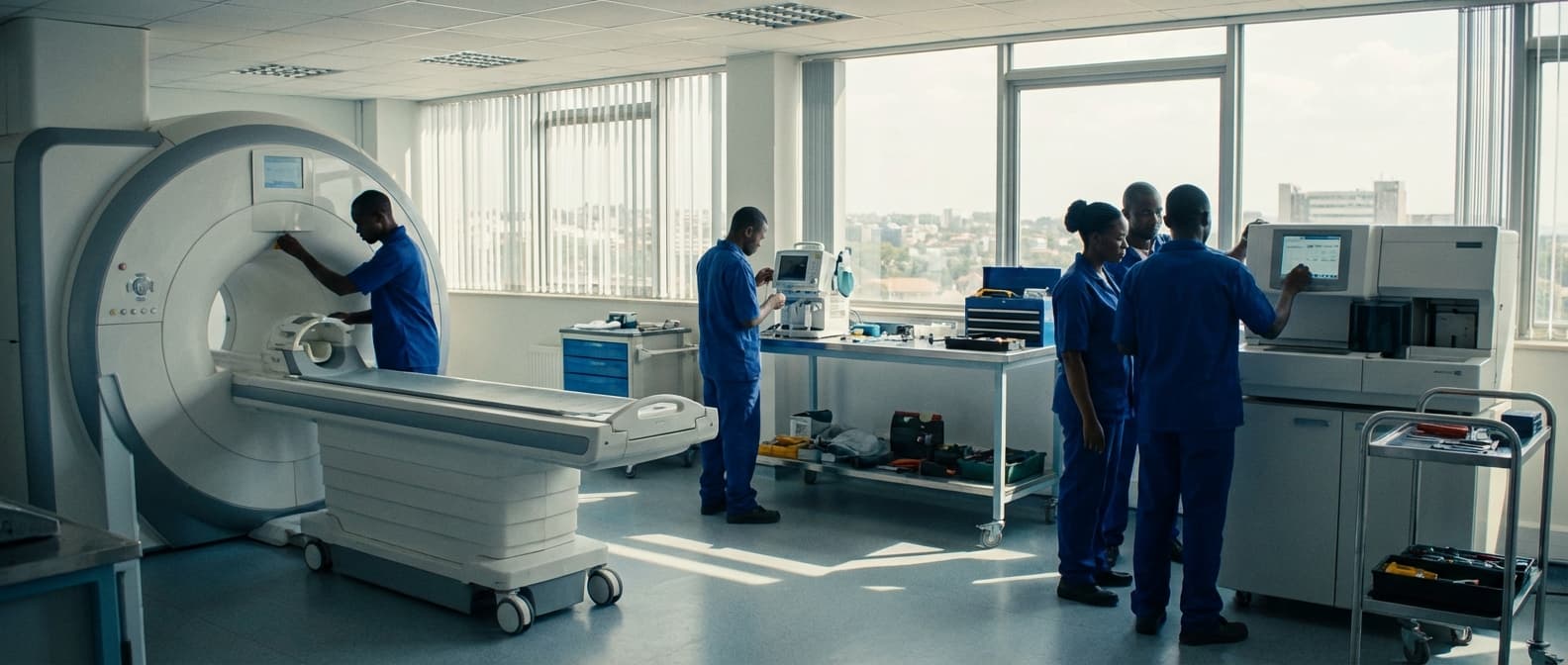
Uptime, Downtime & Root-Cause Analysis Reporting Service in Djibouti
Engineering Excellence & Technical Support
Uptime, Downtime & Root-Cause Analysis Reporting Service High-standard technical execution following OEM protocols and local regulatory frameworks.
Real-time Uptime Monitoring & SLA Compliance
Ensure uninterrupted service delivery in Djibouti with our 24/7 real-time Uptime monitoring. We provide granular insights into system availability, track performance against Service Level Agreements (SLAs), and generate instant alerts for any deviations, guaranteeing business continuity.
Proactive Downtime Prediction & Mitigation
Leverage advanced predictive analytics to identify potential Downtime risks before they impact your Djibouti operations. Our service monitors key performance indicators and system logs to forecast vulnerabilities, allowing for proactive maintenance and minimizing costly outages.
Automated Root-Cause Analysis (RCA) & Trend Reporting
Accelerate issue resolution in Djibouti with our automated Root-Cause Analysis (RCA) engine. We correlate event data, logs, and performance metrics to pinpoint the exact cause of incidents, providing clear, actionable reports and historical trend analysis to prevent recurring problems.
What Is Uptime, Downtime & Root-cause Analysis Reporting Service In Djibouti?
In Djibouti, an Uptime, Downtime & Root-Cause Analysis (RCA) Reporting Service is a critical offering designed to monitor, document, and investigate the operational availability of IT systems, infrastructure, and critical business processes. This service provides a structured methodology for understanding why disruptions occur and how to prevent their recurrence. It is essential for maintaining service level agreements (SLAs), optimizing resource allocation, and ensuring business continuity.
The service typically involves real-time monitoring of predefined key performance indicators (KPIs) related to system health, network connectivity, application performance, and service availability. When deviations from expected performance or complete service interruptions (downtime) are detected, the service initiates an incident response and subsequent RCA. The RCA process involves a systematic investigation to identify the underlying causes of the incident, which can range from hardware failures and software bugs to human error, external dependencies, or cyber-attacks. The output is a comprehensive report detailing the incident timeline, impact, root cause(s), and recommended corrective and preventative actions.
| Use Case Category | Typical Scenarios | Service Benefit |
|---|---|---|
| IT Infrastructure Management | Server failures, network outages, storage system malfunctions, data center power interruptions. | Minimizing unplanned downtime, improving infrastructure resilience, optimizing maintenance schedules. |
| Application Performance Monitoring | Application crashes, slow response times, database errors, API failures, performance degradation due to increased load. | Ensuring application availability, identifying performance bottlenecks, validating software updates and deployments. |
| Network Operations | ISP service disruptions, internet connectivity loss, internal network congestion, firewall or router failures. | Maintaining consistent network uptime, rapid fault localization, improving network reliability and throughput. |
| Business Continuity & Disaster Recovery | Major system outages impacting business operations, successful or unsuccessful DR test scenarios, post-incident review of recovery procedures. | Validating DR plans, identifying weaknesses in recovery processes, ensuring business continuity post-disaster. |
| Service Level Agreement (SLA) Compliance | Instances where SLA uptime targets are missed, contractual obligations for service availability. | Providing auditable proof of service availability, identifying SLA breaches, facilitating performance-based billing adjustments. |
| Security Incident Investigation | Identifying the impact and timeline of security breaches, determining the root cause of unauthorized access or data compromise. | Enhancing security posture, preventing future security incidents, informing incident response strategies. |
Who Needs Uptime, Downtime & RCA Reporting Service in Djibouti?
- Organizations heavily reliant on IT infrastructure for core business operations.
- Telecommunications providers and internet service providers (ISPs).
- Financial institutions (banks, insurance companies).
- Government agencies and public sector entities.
- E-commerce platforms and online service providers.
- Logistics and supply chain management companies.
- Data centers and cloud service providers.
- Businesses with mission-critical applications requiring high availability.
Who Needs Uptime, Downtime & Root-cause Analysis Reporting Service In Djibouti?
In Djibouti's evolving economic landscape, characterized by its strategic port, burgeoning trade, and increasing digital infrastructure, the need for robust Uptime, Downtime, and Root-Cause Analysis (RCA) Reporting Services is paramount for businesses aiming for operational excellence and sustained growth. These services are not a luxury but a critical component for any organization that relies on its IT systems, industrial machinery, or supply chain for revenue generation and customer satisfaction. By proactively identifying, analyzing, and resolving issues that cause service interruptions, businesses can significantly minimize financial losses, protect their brand reputation, and ensure uninterrupted service delivery.
| Target Customer Type | Example Industries/Sectors in Djibouti | Key Departments Benefiting |
|---|---|---|
| Telecommunications Providers | Mobile Network Operators, Internet Service Providers (ISPs) | Network Operations Center (NOC), IT Operations, Customer Support, Service Assurance |
| Logistics and Port Operations | Port Authority of Djibouti, Shipping Companies, Freight Forwarders, Warehousing | Operations Management, IT Department, Supply Chain Management, Terminal Operations |
| Financial Services | Banks, Microfinance Institutions, Insurance Companies | IT Department, Operations, Risk Management, Compliance, Customer Service |
| Government and Public Sector Agencies | Ministries (e.g., Communications, Trade, Infrastructure), Customs, Public Utilities | IT Department, Operations, Service Delivery Units, Infrastructure Management |
| E-commerce and Online Retailers | Online Marketplaces, Digital Service Providers | IT Department, Operations, Customer Experience, Marketing |
| Hospitality and Tourism | Hotels, Airlines, Travel Agencies | IT Department, Front Desk Operations, Reservation Systems, Guest Services |
| Energy and Utilities | Electricity Providers, Water Supply Companies | Operations Management, Field Services, IT Infrastructure, Customer Service |
| Healthcare Providers | Hospitals, Clinics, Diagnostic Centers | IT Department, Clinical Operations, Patient Services, Administration |
Who Needs Uptime, Downtime & Root-Cause Analysis Reporting Service in Djibouti?
- Businesses heavily reliant on IT Infrastructure (e.g., cloud services, data centers, software platforms)
- Companies operating critical infrastructure (e.g., telecommunications, utilities, logistics)
- Organizations with customer-facing services where continuous availability is key
- Sectors experiencing rapid digital transformation and increased reliance on technology
- Businesses seeking to optimize operational efficiency and reduce recurring issues
- Companies aiming to improve service level agreements (SLAs) and customer trust
- Organizations focused on data-driven decision-making for operational improvements
Uptime, Downtime & Root-cause Analysis Reporting Service Process In Djibouti
This document outlines the service process for Uptime, Downtime & Root-Cause Analysis (RCA) Reporting in Djibouti. This comprehensive service aims to provide clients with detailed insights into the performance of their IT infrastructure, identifying reasons for outages and recommending corrective actions. The workflow is designed for clarity, efficiency, and thoroughness, from the initial client inquiry to the final report delivery and action plan.
| Stage | Description | Key Activities | Deliverables | Responsible Party |
|---|---|---|---|---|
| Inquiry & Scope Definition | The initial contact from a client requesting Uptime, Downtime & RCA services. This stage involves understanding the client's needs and defining the scope of the service. | Client outreach, needs assessment, service explanation, quotation, contract negotiation, agreement on monitoring parameters and reporting frequency. | Service Level Agreement (SLA), Scope of Work (SOW), Initial Client Requirements Document. | Client, Service Provider Sales/Account Manager |
| Data Collection & Monitoring Setup | Establishing the necessary infrastructure and tools to collect relevant performance data from the client's systems. | Deployment of monitoring agents/tools, configuration of data collection parameters, ensuring secure data access, baseline performance measurement. | Configured Monitoring System, Baseline Performance Data. | Service Provider Technical Team |
| Incident Identification & Logging | Actively monitoring systems for any deviations from normal performance, indicating potential downtime or performance degradation. | Continuous system monitoring, automated alert generation, manual event logging (if applicable), initial incident categorization. | Incident Log, Alert Notifications. | Service Provider Monitoring Team |
| Downtime Analysis | Investigating identified incidents to determine the exact duration and impact of any downtime experienced by the client's systems. | Correlating alerts with system logs, identifying start and end times of downtime, quantifying impact (e.g., user access, transaction failures). | Downtime Records, Incident Impact Assessment. | Service Provider Technical Analysts |
| Root-Cause Analysis (RCA) | A critical stage focused on determining the fundamental reason(s) behind the identified downtime or performance issues. | Data analysis (logs, metrics, configurations), hypothesis generation, testing of hypotheses, interviews with relevant personnel, fault tree analysis (if necessary). | Identified Root Cause(s), Supporting Evidence. | Service Provider RCA Specialists |
| Reporting & Recommendation Development | Compiling all findings into a clear, concise, and actionable report, including recommendations for preventing future occurrences. | Report writing, data visualization (charts, graphs), formulating corrective and preventive actions, suggesting improvements (e.g., process, technology, training). | Uptime, Downtime & RCA Report, Action Plan. | Service Provider Reporting Team |
| Report Delivery & Presentation | Formally presenting the findings and recommendations to the client to ensure understanding and facilitate decision-making. | Scheduling presentation, delivering the report, answering client queries, clarifying findings, discussing the action plan. | Formal Report Presentation, Meeting Minutes. | Service Provider Account Manager, Technical Lead |
| Follow-up & Validation | Ensuring that the recommended actions are implemented by the client and validating their effectiveness in preventing recurrence. | Tracking implementation of recommendations, conducting follow-up monitoring, providing further support, validating system stability post-implementation. | Post-Implementation Validation Report, Updated Performance Metrics. | Service Provider Account Manager, Technical Team |
Key Service Stages
- Inquiry & Scope Definition
- Data Collection & Monitoring Setup
- Incident Identification & Logging
- Downtime Analysis
- Root-Cause Analysis (RCA)
- Reporting & Recommendation Development
- Report Delivery & Presentation
- Follow-up & Validation
Uptime, Downtime & Root-cause Analysis Reporting Service Cost In Djibouti
Estimating the cost of Uptime, Downtime & Root-Cause Analysis (RCA) Reporting Services in Djibouti involves understanding various factors that influence pricing. These services are crucial for businesses to maintain operational continuity, identify and resolve issues swiftly, and improve overall system reliability. The cost will vary significantly based on the complexity of the systems being monitored, the frequency and depth of reporting, the expertise of the service provider, and the level of customization required.
Key Pricing Factors in Djibouti:
- Scope of Monitoring: The number of servers, applications, network devices, and cloud services requiring monitoring directly impacts the cost. More extensive monitoring setups demand more resources and therefore higher pricing.
- Downtime Impact & SLA Requirements: Businesses with critical operations that cannot tolerate significant downtime will require more robust RCA and reporting with stringent Service Level Agreements (SLAs). Higher uptime guarantees and faster response times translate to higher costs.
- Reporting Frequency and Detail: The regularity of reports (daily, weekly, monthly) and the level of detail (high-level summaries vs. in-depth technical analysis) will affect the service provider's workload and thus the pricing.
- Complexity of Root-Cause Analysis: When incidents are complex or involve intricate dependencies, the RCA process becomes more time-consuming and requires specialized skills, leading to increased costs.
- Technology Stack: The specific technologies and platforms used by a business (e.g., legacy systems, modern cloud-native applications, specific databases) can influence the expertise required by the service provider.
- Service Provider Expertise and Reputation: Established providers with a proven track record, specialized certifications, and a strong team of experts will typically command higher prices.
- On-Premise vs. Cloud-Based Solutions: The deployment model of the monitoring and reporting tools can affect costs. Cloud-based solutions might have subscription fees, while on-premise solutions might involve upfront hardware and software costs, plus ongoing maintenance.
- Level of Automation: The extent to which reporting and initial diagnostics can be automated will influence the manual effort required, impacting pricing.
- Customization and Integration: Bespoke reporting dashboards, custom alert configurations, and integration with existing IT service management (ITSM) tools will add to the overall cost.
- Support Hours and Availability: 24/7 support and emergency RCA services will be priced higher than standard business hours support.
Estimated Pricing Ranges in Djiboutian Franc (DJF):
It's challenging to provide exact figures without a detailed scope of work, but we can offer estimated ranges based on typical service tiers. These are indicative and can fluctuate significantly.
- Basic Monitoring & Reporting (e.g., simple server health, monthly reports): This might be suitable for non-critical systems or smaller businesses with less stringent uptime requirements. Expect costs in the range of DJF 50,000 - DJF 150,000 per month. This could cover automated uptime checks and basic monthly performance reports.
- Standard Monitoring & RCA (e.g., application performance, weekly reports, basic RCA for common issues): This tier would suit most businesses that rely on their IT infrastructure for daily operations. Pricing could range from DJF 150,000 - DJF 400,000 per month. This would include more granular monitoring, proactive alerts, and weekly reports with some RCA.
- Advanced Monitoring & In-Depth RCA (e.g., complex systems, critical applications, daily reports, comprehensive RCA for major incidents, 24/7 support): This is for organizations with mission-critical systems where even short downtimes are costly. Pricing can start from DJF 400,000 and potentially exceed DJF 1,000,000+ per month, depending on the scale and complexity. This would include dedicated support, sophisticated RCA methodologies, and detailed incident post-mortems.
Project-Based or One-Time RCA: For specific incidents or audits, a one-time RCA service might be offered. This could range from DJF 75,000 to DJF 300,000+ per incident, depending on the complexity and time required to conduct the analysis and generate a report.
| Service Tier | Description | Estimated Monthly Cost (DJF) |
|---|---|---|
| Basic | Simple server health checks, automated uptime monitoring, monthly summary reports. | 50,000 - 150,000 |
| Standard | Application performance monitoring, weekly reports, basic RCA for common issues, proactive alerts. | 150,000 - 400,000 |
| Advanced | Comprehensive monitoring of complex systems, critical application performance, daily reports, in-depth RCA, 24/7 support. | 400,000+ |
| One-Time RCA (Project-Based) | Specific incident analysis, detailed investigation, and report generation. | 75,000 - 300,000+ (per incident/project) |
Key Factors Influencing Uptime, Downtime & RCA Reporting Service Costs in Djibouti
- Scope of Monitoring (Number of systems, applications, devices)
- Downtime Impact & Service Level Agreement (SLA) Requirements
- Reporting Frequency and Detail Level
- Complexity of Root-Cause Analysis (RCA)
- Technology Stack and Platform Compatibility
- Service Provider's Expertise, Reputation, and Certifications
- Deployment Model (On-Premise vs. Cloud-Based)
- Level of Automation in Monitoring and Reporting
- Customization of Reports and Integration Needs
- Support Hours and Availability (24/7 vs. Business Hours)
Affordable Uptime, Downtime & Root-cause Analysis Reporting Service Options
This document outlines affordable options for uptime, downtime, and root-cause analysis (RCA) reporting services. We understand the critical need for reliable system performance and the ability to quickly diagnose and resolve issues. This guide explores various service models, highlighting value bundles and cost-saving strategies to ensure you receive robust reporting without breaking your budget.
| Service Tier | Features Included | Typical Use Case | Value Bundle Example | Estimated Monthly Cost (USD) |
|---|---|---|---|---|
| Basic Monitoring | Uptime checks (ping, HTTP), basic downtime alerts, simple reporting. | Small businesses, non-critical applications. | Standard uptime checks, email alerts, monthly summary report. | $25 - $75 |
| Standard Analysis | Advanced uptime checks (transaction monitoring), granular downtime alerts, basic RCA support (automated log correlation). | Growing businesses, moderately critical applications. | Website transaction monitoring, SMS alerts, weekly performance reports, basic RCA assistance. | $75 - $250 |
| Premium RCA | Comprehensive monitoring suite, proactive anomaly detection, dedicated RCA engineers, detailed incident reports, trend analysis. | Large enterprises, mission-critical systems, compliance-driven environments. | Full-stack monitoring, AI-driven anomaly detection, dedicated RCA support, bi-weekly comprehensive reports, quarterly performance reviews. | $250 - $1000+ |
Key Service Components
- Uptime Monitoring: Real-time tracking of system availability and performance.
- Downtime Alerts: Immediate notification of service interruptions.
- Root-Cause Analysis (RCA): In-depth investigation to identify the underlying reasons for downtime.
- Reporting & Dashboards: Clear, actionable insights into performance trends and incident resolution.
- Historical Data & Trends: Analysis of past performance to identify recurring issues and opportunities for improvement.
Verified Providers In Djibouti
Finding reliable and credentialed healthcare providers in Djibouti is crucial for ensuring quality medical care. Franance Health stands out as a leading organization that meticulously verifies the credentials of medical professionals, offering patients peace of mind and confidence in the care they receive. Their rigorous vetting process, which includes extensive background checks, verification of medical licenses and certifications, and assessment of clinical experience, ensures that only highly qualified and ethical practitioners are listed on their platform. This commitment to verification is what makes Franance Health a trusted partner for individuals seeking medical assistance in Djibouti.
| Verification Aspect | Franance Health's Approach | Benefit for Patients |
|---|---|---|
| Medical Licenses & Certifications | Direct confirmation with issuing bodies and thorough documentation review. | Ensures providers possess legally required qualifications and specialized training. |
| Educational Background | Verification of degrees and diplomas from accredited institutions. | Confirms the foundation of a provider's medical knowledge. |
| Clinical Experience | Review of practice history, references, and peer assessments. | Guarantees practical application of medical expertise. |
| Professional Conduct | Background checks for disciplinary actions and ethical adherence. | Protects patients from malpractice and unethical practices. |
| Specialty Competence | Verification of board certifications and specialized training. | Ensures access to experts in specific medical fields. |
Why Franance Health is the Best Choice for Verified Providers in Djibouti:
- Uncompromising Credential Verification: Franance Health's multi-layered verification process goes beyond surface-level checks, ensuring genuine qualifications and ethical standards.
- Access to Top Medical Professionals: Their network comprises a diverse range of specialists and general practitioners, all vetted for excellence.
- Enhanced Patient Safety: By entrusting your health to Franance Health-verified providers, you minimize the risk of encountering unqualified or fraudulent practitioners.
- Streamlined Healthcare Navigation: Franance Health simplifies the process of finding reliable medical care, saving you time and stress.
- Commitment to Transparency: They provide clear information about provider credentials, fostering trust and informed decision-making.
Scope Of Work For Uptime, Downtime & Root-cause Analysis Reporting Service
This Scope of Work (SOW) outlines the services to be provided for Uptime, Downtime & Root-Cause Analysis (RCA) Reporting. The objective is to deliver accurate, timely, and insightful reports that enable proactive identification, resolution, and prevention of service disruptions. This document specifies the technical deliverables, standard specifications, and reporting cadence.
| Deliverable | Description | Frequency | Format | Standard Specifications |
|---|---|---|---|---|
| Uptime/Downtime Report | Detailed report summarizing system availability and periods of unavailability. | Daily & Weekly | PDF & CSV | Includes: System name, Service name, Uptime percentage, Downtime duration (total and per incident), Timestamp of start/end of downtime, Impact level (e.g., critical, major, minor). |
| Downtime Incident Summary | Concise summary of each downtime incident exceeding a defined threshold (e.g., 15 minutes). | As needed (upon occurrence of incident) | Email Notification & Dashboard Update | Includes: Incident ID, System/Service impacted, Brief description of issue, Estimated time to resolution (ETR), Current status. |
| Root-Cause Analysis (RCA) Report | In-depth analysis of the underlying causes of significant downtime events. | Upon resolution of critical/major incidents | PDF Document | Includes: Incident summary, Timeline of events, Problem statement, Identified root cause(s), Contributing factors, Corrective actions taken, Preventive actions recommended, Owner of preventive actions, Target completion date for preventive actions, Lessons learned. |
| Monthly Performance Review | Consolidated report reviewing overall uptime, downtime trends, and effectiveness of RCA and preventive measures. | Monthly | PDF & Presentation Slides | Includes: Summary of uptime/downtime for the month, Top recurring issues, Analysis of RCA effectiveness, Progress on preventive actions, Recommendations for improvement, Key performance indicators (KPIs) dashboard. |
| Real-time Alerting | Automated notifications for critical and major incidents as they occur. | Real-time | Email & SMS (configurable) | Configurable thresholds and escalation paths, clear subject line indicating severity and impacted service. |
Key Objectives
- Accurately track and report on system uptime and downtime.
- Conduct thorough root-cause analysis for all significant downtime events.
- Provide actionable insights to prevent recurrence of similar issues.
- Establish clear communication channels for reporting and incident escalation.
- Maintain a historical repository of incidents and their resolutions.
Service Level Agreement For Uptime, Downtime & Root-cause Analysis Reporting Service
This Service Level Agreement (SLA) outlines the guaranteed uptime, acceptable downtime, and the process for root-cause analysis reporting for the Uptime, Downtime & Root-Cause Analysis Reporting Service (hereinafter referred to as 'the Service'). This agreement is designed to ensure the reliability and transparency of the Service.
| Severity Level | Description | Uptime Guarantee | Target Response Time (Acknowledgement) | Target Resolution Time (Best Effort) |
|---|---|---|---|---|
| 1 (Critical) | Service is completely unavailable or a core function is severely degraded, impacting all users. | 99.99% | 15 minutes | 4 hours |
| 2 (High) | A significant feature is unavailable or degraded, impacting a substantial number of users. | 99.95% | 30 minutes | 8 business hours |
| 3 (Medium) | A non-critical feature is unavailable or degraded, or a workaround exists for most users. | 99.9% | 2 business hours | 24 business hours |
| 4 (Low) | Minor functionality issues, cosmetic problems, or questions that do not impact core operations. | 99.5% | 4 business hours | 72 business hours |
Key Definitions
- Uptime: The percentage of time the Service is available and functioning as intended, excluding Scheduled Downtime and Permitted Downtime.
- Downtime: The period during which the Service is unavailable to users. This includes both Scheduled Downtime and Unscheduled Downtime.
- Scheduled Downtime: Pre-planned maintenance periods during which the Service may be temporarily unavailable. This will be communicated to the Customer in advance.
- Unscheduled Downtime: Any period of Downtime that is not Scheduled Downtime or Permitted Downtime. This is also referred to as 'Outage'.
- Root-Cause Analysis (RCA): A systematic process for identifying the fundamental causes of an incident or problem to prevent recurrence.
- Incident: Any event that causes or may cause an interruption to or a reduction in the quality of the Service.
- Severity Levels: A classification system for Incidents based on their impact on the Service and its users. (See Table 1: Incident Severity Levels)
- Target Response Time: The maximum time allowed for the Service Provider to acknowledge and begin working on an Incident after it is reported.
- Target Resolution Time: The maximum time allowed for the Service Provider to resolve an Incident after it is reported.
- Permitted Downtime: Downtime explicitly excluded from Uptime calculations, such as events beyond the Service Provider's reasonable control (Force Majeure).
Frequently Asked Questions

Ready when you are
Let's scope your Uptime, Downtime & Root-Cause Analysis Reporting Service in Djibouti project in Djibouti.

Scaling healthcare logistics and technical systems across the entire continent.