
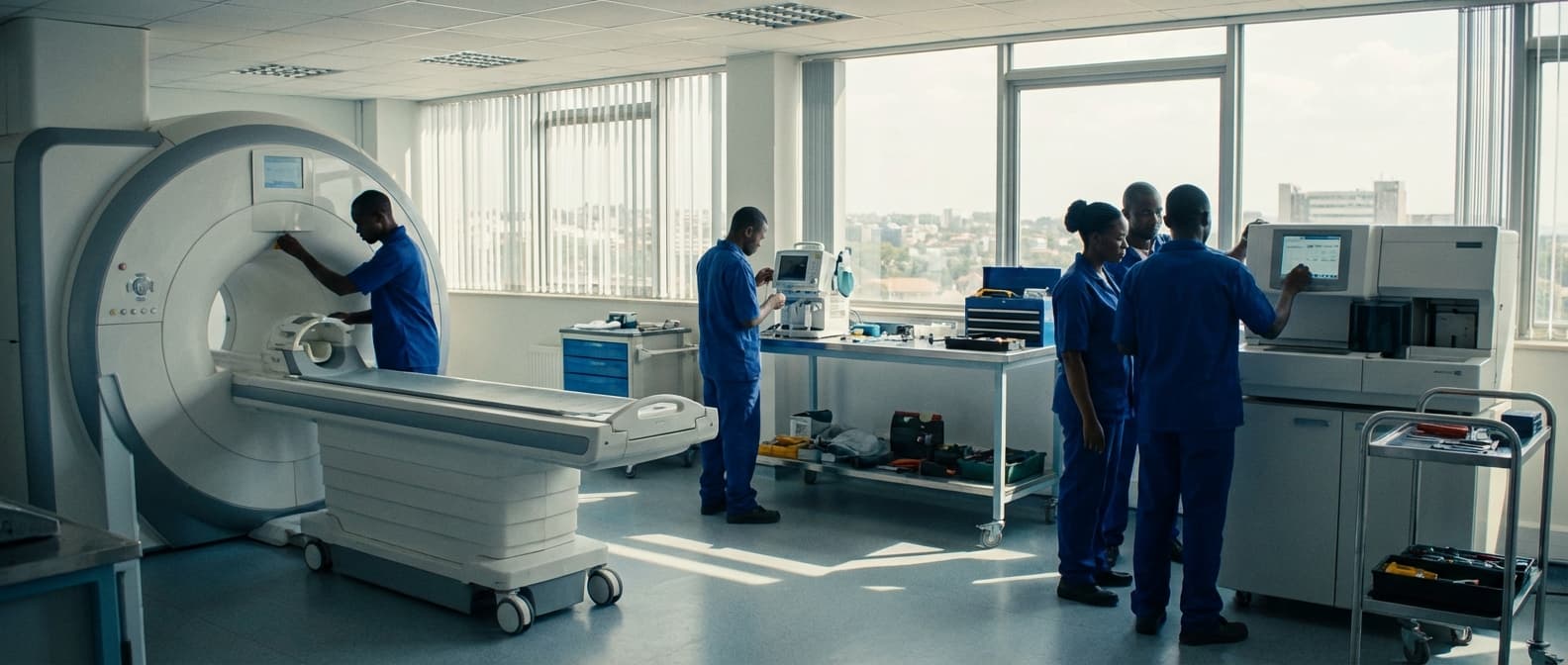
Planned Shutdown Coordination Service for Critical Equipment in Djibouti
Engineering Excellence & Technical Support
Planned Shutdown Coordination Service for Critical Equipment High-standard technical execution following OEM protocols and local regulatory frameworks.
Optimized Downtime for Djibouti's Critical Infrastructure
Our service meticulously plans and coordinates scheduled shutdowns for vital equipment in Djibouti, ensuring minimal disruption to essential services. We leverage advanced predictive analytics and historical data to identify optimal windows for maintenance, maximizing operational uptime and economic continuity.
Seamless Integration and Risk Mitigation
We provide end-to-end coordination, integrating all stakeholders involved in critical equipment shutdowns. Our robust risk assessment and mitigation strategies identify potential challenges, from resource allocation to safety protocols, ensuring a safe and efficient execution of planned maintenance activities across Djibouti's key industrial and utility sectors.
Strategic Resource Allocation and Performance Tracking
Our service ensures the precise allocation of specialized personnel, spare parts, and equipment for planned shutdowns in Djibouti. We implement real-time performance tracking and reporting mechanisms to monitor progress against timelines, identify deviations, and facilitate immediate corrective actions, guaranteeing successful and cost-effective maintenance outcomes.
What Is Planned Shutdown Coordination Service For Critical Equipment In Djibouti?
The Planned Shutdown Coordination Service for Critical Equipment in Djibouti is a specialized logistical and operational management offering designed to facilitate the safe, efficient, and minimally disruptive planned de-energization and recommissioning of essential infrastructure and industrial machinery. This service is crucial for organizations operating critical assets within Djibouti's unique operational environment, encompassing its strategic port facilities, industrial zones, and vital public utilities. It aims to mitigate the inherent risks associated with downtime, such as production loss, safety hazards, and supply chain disruptions, by meticulously planning and executing scheduled maintenance, upgrades, or replacements of critical equipment.
| Who Needs This Service? | Typical Use Cases |
|---|---|
| Power Generation and Distribution Companies: Operating and maintaining power plants, substations, and transmission networks critical for national infrastructure. | Scheduled overhauls of turbines, generators, transformers, and switchgear. |
| Port Authorities and Operators: Managing essential cargo handling equipment, cranes, conveyor systems, and associated electrical infrastructure in the Port of Djibouti and its associated free zones. | Maintenance or replacement of large-scale gantry cranes, bulk handling equipment, and port-wide power distribution systems. |
| Industrial Manufacturing Facilities: Companies involved in processing, production, or heavy industry operating machinery susceptible to wear and tear. | Major maintenance on critical production lines, large furnaces, or specialized processing units. |
| Telecommunications Providers: Ensuring the continuous operation of core network infrastructure, data centers, and transmission towers. | Upgrades or maintenance of critical network hardware, power supply systems, or cooling infrastructure in data centers. |
| Water and Wastewater Treatment Plants: Maintaining essential pumps, filtration systems, and chemical treatment apparatus. | Scheduled maintenance of large pumps, aeration systems, or disinfection equipment. |
| Large-Scale Logistics and Storage Facilities: Requiring synchronized operation of automated systems, refrigeration units, or material handling equipment. | Upgrades to automated storage and retrieval systems (AS/RS) or maintenance of critical refrigeration units. |
Key Components of the Service:
- Detailed Planning and Scheduling: Involves rigorous assessment of equipment criticality, determination of optimal shutdown windows to minimize impact on operations and stakeholders, and development of comprehensive project timelines.
- Risk Assessment and Mitigation: Identification of potential hazards associated with shutdown and recommissioning (e.g., electrical, mechanical, environmental, personnel safety) and implementation of robust mitigation strategies and contingency plans.
- Resource Mobilization and Management: Coordination of all necessary human resources (skilled technicians, engineers, safety officers), specialized tools, equipment, spare parts, and consumables required for the shutdown and subsequent restart.
- Stakeholder Communication and Liaison: Proactive engagement with all relevant internal and external stakeholders, including operational departments, regulatory bodies, utility providers, and potentially neighboring facilities, to inform them of the shutdown schedule and manage expectations.
- Execution Oversight: On-site supervision and management of the shutdown, maintenance, and recommissioning activities to ensure adherence to the planned procedures, safety protocols, and quality standards.
- Permitting and Regulatory Compliance: Facilitation of necessary permits, licenses, and approvals from Djibouti's relevant authorities for undertaking the planned work.
- Documentation and Reporting: Comprehensive record-keeping of all activities, including pre-shutdown checks, maintenance performed, test results, and post-shutdown verification, to ensure traceability and compliance.
Who Needs Planned Shutdown Coordination Service For Critical Equipment In Djibouti?
A Planned Shutdown Coordination Service for critical equipment in Djibouti is essential for organizations that rely heavily on the continuous operation of their machinery and infrastructure. This service ensures that scheduled maintenance, upgrades, and repairs are executed with minimal disruption to operations, safety, and productivity. It's particularly vital in sectors where downtime translates to significant financial losses, safety risks, or service interruptions. The coordination aspect is key, involving meticulous planning, scheduling, resource allocation, and communication among all stakeholders to facilitate a smooth and efficient shutdown process.
| Target Customer | Relevant Departments | Why they need it |
|---|---|---|
| Port Authorities & Logistics Companies | Operations, Maintenance, Engineering, Safety | Ensuring uninterrupted cargo handling, vessel movement, and smooth supply chain operations in Djibouti's strategic port. |
| Telecommunications Providers | Network Operations, Engineering, IT Infrastructure, Customer Service | Minimizing service outages for mobile, internet, and fixed-line services impacting businesses and individuals. |
| Energy & Utilities (Power Generation, Water Treatment) | Plant Operations, Maintenance, Engineering, Dispatch | Preventing power outages and ensuring consistent supply of essential services to homes and industries. |
| Oil & Gas Facilities (Refineries, Depots) | Process Engineering, Maintenance, Operations, Safety & Environment | Maintaining operational integrity, safety, and production levels in sensitive industrial environments. |
| Government & Public Infrastructure | Public Works, Transportation, IT Services, Facility Management | Ensuring the reliable functioning of critical public services and infrastructure like traffic control, water distribution, and government data centers. |
| Large Industrial Manufacturing Plants | Production, Maintenance, Engineering, Supply Chain | Optimizing production schedules, preventing costly breakdowns, and ensuring product quality. |
| Financial Institutions & Data Centers | IT Operations, Infrastructure Management, Security, Business Continuity | Guaranteeing uptime for critical financial transactions, data storage, and business operations. |
| Healthcare Facilities & Hospitals | Biomedical Engineering, Facilities Management, IT, Clinical Operations | Ensuring the continuous operation of life-support systems, diagnostic equipment, and IT infrastructure for patient care. |
Who Needs Planned Shutdown Coordination Service for Critical Equipment in Djibouti?
- Organizations in Djibouti with high-value, continuously operating critical equipment.
- Sectors where operational downtime results in substantial financial losses.
- Industries where safety is paramount and unplanned equipment failure poses significant risks.
- Entities that require scheduled maintenance or upgrades to comply with regulations or enhance performance.
- Businesses operating in environments with limited access to specialized technical expertise or spare parts for urgent repairs.
- Companies looking to optimize resource utilization and minimize logistical complexities during maintenance periods.
Planned Shutdown Coordination Service For Critical Equipment Process In Djibouti
This document outlines the workflow for the Planned Shutdown Coordination Service for Critical Equipment in Djibouti. This service ensures that scheduled maintenance and upgrades for vital infrastructure are executed efficiently, with minimal disruption and maximum safety. The process begins with an inquiry from a client and concludes with the successful completion and documentation of the shutdown.
| Phase | Key Activities | Responsible Parties | Deliverables |
|---|---|---|---|
| Inquiry & Initial Consultation | Client inquiry, needs assessment, preliminary scope, feasibility discussion | Client, Service Provider (Djibouti Coordination Authority) | Initial understanding of requirements, preliminary scope |
| Detailed Assessment & Planning | Site visit, risk assessment, scope definition, schedule development, resource planning, safety plan, communication plan | Service Provider, Client, Technical Specialists, Safety Officers | Detailed shutdown plan, risk assessment report, safety plan, communication plan, resource allocation plan |
| Pre-Shutdown Preparations | Permitting, approvals, team briefings, training, equipment isolation, site setup, logistics | Service Provider, Client, Regulatory Bodies, Contractors | Approved permits, trained personnel, prepared site, isolated equipment |
| Shutdown Execution | Controlled shutdown, maintenance/repair, continuous monitoring, real-time reporting | Service Provider, Technicians, Supervisors, Safety Officers, Client | Completed maintenance/repairs, progress reports, incident logs |
| Post-Shutdown Activities | Testing, commissioning, reintegration, ramp-up, final inspections | Service Provider, Technicians, Client | Tested and commissioned equipment, successful ramp-up, quality assurance reports |
| Documentation & Closure | As-built documentation, final report, client sign-off, lessons learned | Service Provider, Client | Final report, as-built drawings, project closure documentation, lessons learned repository |
Planned Shutdown Coordination Service Workflow
- 1. Inquiry & Initial Consultation:
- Client identifies a need for a planned shutdown of critical equipment.
- Client submits an inquiry detailing the equipment, scope of work, desired dates, and any initial concerns.
- Service provider (Djibouti Coordination Authority) conducts an initial consultation to understand the client's requirements, assess the criticality of the equipment, and identify potential constraints.
- 2. Detailed Assessment & Planning:
- Site Visit & Risk Assessment: A technical team visits the site to conduct a thorough assessment of the equipment, surrounding infrastructure, and potential hazards. A comprehensive risk assessment is performed.
- Scope Definition & Technical Specification: The exact scope of work, including detailed tasks, required resources (personnel, tools, materials), and technical specifications, is finalized in collaboration with the client and relevant stakeholders (e.g., equipment manufacturers).
- Schedule Development: A detailed shutdown schedule is created, including pre-shutdown activities, shutdown period, and post-shutdown ramp-up. This schedule considers dependencies, critical path activities, and potential impact on other operations.
- Resource Allocation & Procurement: Necessary personnel (skilled technicians, safety officers, support staff), specialized equipment, and materials are identified and procured. This may involve internal resources or external contractors.
- Safety Plan Development: A robust safety plan is developed, encompassing safety protocols, emergency procedures, permit-to-work systems, and personal protective equipment (PPE) requirements. This plan adheres to Djibouti's safety regulations and international best practices.
- Communication Plan: A communication plan is established to inform all relevant stakeholders (internal departments, external partners, regulatory bodies, potentially the public) about the shutdown, its duration, and any potential impacts.
- 3. Pre-Shutdown Preparations:
- Permitting & Approvals: All necessary permits and approvals from relevant Djibouti authorities and regulatory bodies are obtained.
- Pre-Shutdown Briefings & Training: All involved personnel undergo detailed briefings on the shutdown plan, safety procedures, and specific tasks. Any necessary specialized training is provided.
- Equipment Isolation & Preparation: Critical equipment is safely isolated from operational systems. Preparatory tasks, such as cleaning or preliminary disassembly, may commence.
- Logistics & Site Setup: Tools, materials, and temporary facilities are transported to the site. Work areas are prepared and secured.
- 4. Shutdown Execution:
- Controlled Shutdown: The critical equipment is systematically and safely shut down according to the approved schedule.
- Maintenance & Repair Activities: The planned maintenance, repair, or upgrade activities are performed by qualified personnel.
- Continuous Monitoring & Supervision: The entire shutdown process is continuously monitored by experienced supervisors. Safety officers are present to enforce safety protocols.
- Real-time Communication & Reporting: Regular updates and progress reports are provided to the client and other stakeholders. Any deviations or unforeseen issues are communicated immediately for prompt decision-making.
- 5. Post-Shutdown Activities:
- Testing & Commissioning: After maintenance, the equipment undergoes rigorous testing and commissioning to ensure it functions correctly and safely.
- System Reintegration & Ramp-up: The equipment is gradually reintegrated into operational systems, and a controlled ramp-up to full capacity is performed.
- Final Inspections & Quality Assurance: Final inspections are conducted to ensure all work meets quality standards and specifications.
- Demobilization: Temporary facilities and equipment are removed from the site. The work area is restored to its original condition.
- 6. Documentation & Closure:
- As-Built Documentation: All modifications, repairs, and test results are meticulously documented.
- Final Report: A comprehensive final report is prepared, detailing the shutdown activities, timeline, resources utilized, safety performance, lessons learned, and recommendations for future operations.
- Client Sign-off & Project Closure: The client reviews and approves the final report. The project is officially closed.
- Knowledge Management: Information and lessons learned are captured for continuous improvement of future shutdown coordination processes.
Planned Shutdown Coordination Service For Critical Equipment Cost In Djibouti
Coordinating planned shutdowns for critical equipment in Djibouti involves a specialized service that ensures minimal disruption and optimal resource allocation. The cost of such a service is influenced by several key factors, including the complexity and duration of the shutdown, the specific type of critical equipment involved, the required expertise and certifications of the personnel, and the overall project management overhead. Djiboutian local currency (Djiboutian Franc - DJF) pricing will reflect these factors. It's essential to engage with experienced service providers to obtain accurate quotes tailored to your specific needs.
| Service Component | Estimated Price Range (DJF) | Notes |
|---|---|---|
| Initial Consultation & Scope Definition | 50,000 - 150,000 | Includes understanding your needs and preliminary planning. |
| Detailed Shutdown Planning & Risk Assessment | 150,000 - 500,000 | Crucial for safe and efficient execution. Varies with complexity. |
| On-site Project Management (per day) | 75,000 - 250,000 | Depends on the experience level of the project manager and site conditions. |
| Specialized Technical Supervision (per day) | 60,000 - 200,000 | For critical equipment, requiring specific engineering expertise. |
| Safety Coordination & Compliance Oversight (per day) | 40,000 - 120,000 | Ensuring adherence to all safety regulations. |
| Logistics & Personnel Management (variable) | Negotiable | Covers transportation, accommodation, and related arrangements. |
| Post-Shutdown Review & Reporting | 50,000 - 200,000 | Comprehensive analysis and documentation of the shutdown process. |
| Total Estimated Project Cost (Example - Medium Complexity Shutdown, 3 Days) | 1,000,000 - 3,500,000+ | This is a broad estimate; actual costs will vary significantly based on specific project requirements. |
Key Pricing Factors for Planned Shutdown Coordination Services in Djibouti
- Complexity and Scope of the Shutdown: More intricate shutdowns involving multiple interconnected systems or extensive maintenance will naturally incur higher coordination costs.
- Duration of the Shutdown: The longer the planned downtime, the more resources and management time will be required, leading to increased expenses.
- Type of Critical Equipment: Specialized equipment (e.g., heavy industrial machinery, sensitive IT infrastructure) may require niche expertise and safety protocols, impacting costs.
- Personnel Requirements: The number of technicians, engineers, safety officers, and project managers needed, along with their specific skill sets and certification levels, directly affects pricing.
- Safety and Regulatory Compliance: Adherence to Djibouti's safety regulations and industry-specific standards necessitates specialized training and oversight, adding to the cost.
- Logistics and Site Access: Arranging access, transportation, and potentially accommodation for personnel in remote or difficult-to-access locations can influence the overall price.
- Risk Assessment and Mitigation Planning: Comprehensive planning to identify and mitigate potential risks during the shutdown adds to the service's value and cost.
- Technology and Tools: The use of advanced diagnostic tools, monitoring software, or specialized lifting equipment can contribute to the service cost.
- Emergency Response Planning: Including provisions for unforeseen issues and emergency response capabilities is a critical, and therefore cost-bearing, component.
- Reporting and Documentation: Detailed reporting and post-shutdown analysis are often included, impacting the final price.
Affordable Planned Shutdown Coordination Service For Critical Equipment Options
Our Affordable Planned Shutdown Coordination Service is designed to minimize downtime and maximize efficiency for your critical equipment maintenance. We understand that unplanned outages are costly and disruptive. This service provides expert planning, scheduling, and execution support to ensure your planned shutdowns are as smooth, short, and cost-effective as possible. We offer flexible value bundles to suit your specific needs and budget, alongside proactive cost-saving strategies throughout the shutdown lifecycle.
| Value Bundle | Included Services | Ideal For | Cost-Saving Focus |
|---|---|---|---|
| Essential Coordination | Basic shutdown planning, scheduling, and on-site coordination support. | Smaller organizations or those with limited shutdown complexity. | Efficient scheduling, resource optimization. |
| Proactive Management | Comprehensive planning, detailed scheduling, risk assessment, vendor management, and on-site supervision. | Medium-sized organizations or those with moderate shutdown complexity. | Reduced change orders, improved logistics, pre-emptive issue resolution. |
| Strategic Partnership | Full-service coordination including pre-shutdown analysis, detailed engineering support coordination, advanced risk mitigation, post-shutdown review, and continuous improvement recommendations. | Large organizations or those with highly complex and critical equipment requiring specialized expertise. | Long-term asset management integration, root cause analysis prevention, optimized spare parts management. |
| Customizable Solution | Tailored package based on specific equipment, criticality, and organizational requirements. | All organizations seeking a highly personalized approach. | Targeted cost reduction based on identified pain points. |
Key Benefits of Our Planned Shutdown Coordination Service
- Minimized unplanned downtime and associated revenue loss.
- Optimized maintenance scheduling to reduce overall shutdown duration.
- Enhanced safety through meticulous planning and risk assessment.
- Improved resource allocation and management.
- Streamlined communication and coordination among all stakeholders.
- Reduced labor costs through efficient task sequencing and pre-planning.
- Extended equipment lifespan through timely and effective maintenance.
- Compliance with regulatory requirements and industry best practices.
Verified Providers In Djibouti
In Djibouti, navigating the healthcare landscape to find verified and trustworthy providers is paramount. Franance Health stands out as a leading organization committed to ensuring the highest standards of medical care. Their rigorous credentialing process guarantees that the healthcare professionals and facilities affiliated with them meet stringent quality and safety benchmarks. This dedication to verification offers patients peace of mind, knowing they are receiving care from competent and ethical practitioners. Choosing Franance Health-credentialed providers means opting for reliability, expertise, and a patient-centric approach to healthcare in Djibouti.
| Credentialing Aspect | Franance Health's Approach | Patient Benefit |
|---|---|---|
| Professional Licensing & Certification | Verified with national and international medical boards. | Ensures practitioners possess legitimate and up-to-date qualifications. |
| Experience & Expertise | Assesses relevant clinical experience and specialized skills. | Connects patients with providers skilled in their specific medical needs. |
| Ethical Conduct & Compliance | Background checks and adherence to a strict code of ethics. | Guarantees patient safety, privacy, and respectful treatment. |
| Facility Standards | Evaluates infrastructure, equipment, and hygiene protocols. | Ensures a safe and well-equipped environment for treatment. |
| Patient Feedback & Outcomes | Monitors patient satisfaction and treatment success rates. | Drives continuous improvement and identifies top-performing providers. |
Why Franance Health Credentials Matter
- Rigorous vetting process for all affiliated providers and facilities.
- Ensures adherence to international quality and safety standards.
- Promotes transparency and accountability in healthcare.
- Empowers patients to make informed decisions about their care.
- Access to a network of highly qualified and experienced medical professionals.
- Commitment to continuous improvement in healthcare delivery.
Scope Of Work For Planned Shutdown Coordination Service For Critical Equipment
This Scope of Work (SOW) outlines the services required for the planned shutdown coordination of critical equipment. The objective is to ensure efficient, safe, and timely execution of scheduled maintenance, repair, and upgrade activities, minimizing downtime and associated risks. This service will encompass comprehensive planning, coordination, execution support, and post-shutdown analysis.
| Technical Deliverable | Description | Standard Specifications / Requirements |
|---|---|---|
| Detailed Shutdown Plan | A comprehensive document outlining all activities, timelines, resources, and responsibilities for the planned shutdown. | Includes critical path analysis, dependency mapping, contingency plans, safety procedures, and detailed task breakdowns. Adheres to industry best practices (e.g., PMI, ISO 55000). |
| Resource Allocation Matrix | A clear breakdown of personnel, equipment, materials, and external services required for the shutdown. | Specifies skill sets, certifications, availability, and quantities. Cross-references with the Detailed Shutdown Plan. |
| Risk Management Plan | Identifies potential hazards and risks associated with the shutdown activities and outlines mitigation strategies. | Includes hazard identification, risk assessment (likelihood and impact), control measures, emergency response procedures, and safety permit management. |
| Daily/Weekly Progress Reports | Regular updates on shutdown progress, including completed tasks, upcoming activities, any encountered issues, and resolutions. | Standardized reporting templates, covering key performance indicators (KPIs) such as schedule adherence, budget status, safety incidents, and resource utilization. |
| Shutdown Close-out Report | A final report summarizing the entire shutdown process, including achievements, lessons learned, and recommendations for future shutdowns. | Includes analysis of actual vs. planned performance, root cause analysis of any deviations, and actionable recommendations for continuous improvement. |
| Critical Equipment List & Status | A documented list of all critical equipment involved in the shutdown, with their current operational status and planned maintenance activities. | Includes equipment identification numbers, criticality ranking, maintenance scope, estimated downtime, and expected return-to-service date. |
| Stakeholder Communication Plan | A strategy for communicating shutdown-related information to all relevant internal and external stakeholders. | Defines communication channels, frequency, key messages, and responsible parties. Ensures timely and accurate dissemination of information. |
Key Services Provided
- Shutdown Planning & Scheduling
- Resource Management & Allocation
- Risk Assessment & Mitigation
- On-Site Coordination & Supervision
- Communication & Stakeholder Management
- Documentation & Reporting
- Post-Shutdown Review & Optimization
Service Level Agreement For Planned Shutdown Coordination Service For Critical Equipment
This Service Level Agreement (SLA) outlines the terms and conditions for the Planned Shutdown Coordination Service (PSCS) for Critical Equipment, focusing on response times for scheduling and coordinating planned shutdowns and uptime guarantees for the service itself. The PSCS aims to minimize disruption to operations by ensuring efficient and well-coordinated planned downtime.
| Service Metric | Target Response Time | Measurement | Uptime Guarantee |
|---|---|---|---|
| Initial Shutdown Request Acknowledgment | 2 Business Hours | Time from request submission to acknowledgment by PSCS | 99.5% Uptime for PSCS platform |
| Proposed Shutdown Schedule Delivery | 8 Business Hours (for standard requests, 48 Business Hours for complex/multi-system shutdowns) | Time from request acknowledgment to delivery of a preliminary shutdown schedule | 99.5% Uptime for PSCS platform |
| Confirmation of Final Shutdown Schedule | 2 Business Days (prior to scheduled shutdown date) | Time from submission of feedback on proposed schedule to delivery of final confirmed schedule | 99.5% Uptime for PSCS platform |
| Emergency Planned Shutdown Support Initiation | 1 Business Hour | Time from emergency request submission to commencement of coordination efforts | 99.5% Uptime for PSCS platform |
Key Service Components
- Scheduled Planned Shutdown Coordination: Proactive scheduling and management of planned downtime for critical equipment.
- Emergency Planned Shutdown Support: Assistance with the expedited scheduling of unplanned but necessary shutdowns.
- Communication and Notification: Timely dissemination of shutdown schedules and related information.
- Post-Shutdown Review: Facilitation of reviews to identify areas for improvement in future coordination.
Frequently Asked Questions

Ready when you are
Let's scope your Planned Shutdown Coordination Service for Critical Equipment in Djibouti project in Djibouti.

Scaling healthcare logistics and technical systems across the entire continent.