
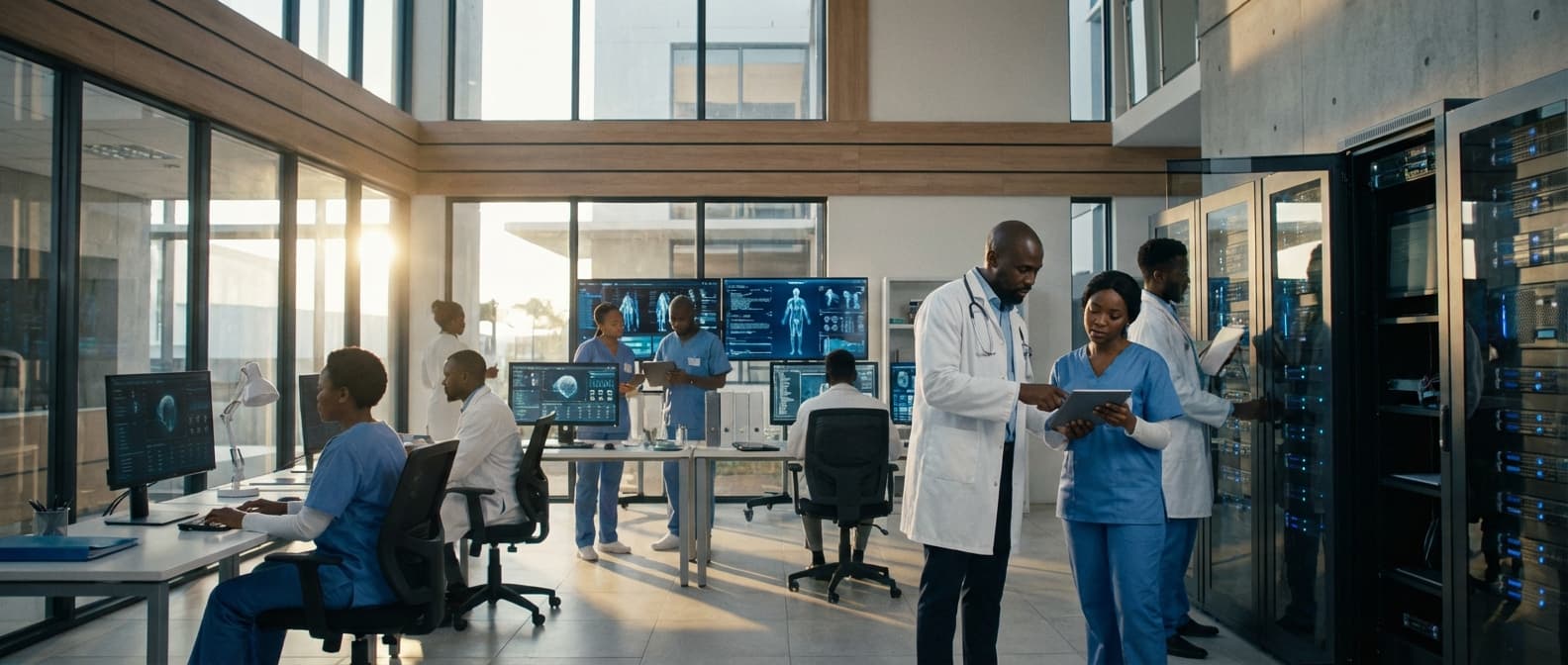
Tele-Radiology in Djibouti
Engineering Excellence & Technical Support
24/7 access to certified radiologists providing rapid, accurate remote interpretation of diagnostic imaging studies. High-standard technical execution following OEM protocols and local regulatory frameworks.
Advanced Satellite Connectivity
Leveraging robust satellite communication infrastructure, we ensure high-speed and reliable transmission of medical images and reports, overcoming geographical limitations and providing seamless access to specialized radiological expertise in Djibouti.
Secure Cloud-Based PACS
Our secure, cloud-based Picture Archiving and Communication System (PACS) facilitates instant uploading, storage, and retrieval of imaging studies, enabling radiologists to access critical patient data from anywhere, anytime, ensuring efficient diagnosis and timely treatment planning.
Expert Remote Consultation Platform
We provide a secure, HIPAA-compliant platform for remote consultations, connecting Djibouti-based healthcare providers with a global network of board-certified radiologists for expert second opinions, subspecialty interpretations, and collaborative case reviews.
What Is Tele-radiology In Djibouti?
Tele-radiology in Djibouti refers to the practice of transmitting radiological images (such as X-rays, CT scans, MRIs) from one location to another for interpretation by a radiologist. This remote interpretation service is crucial for improving diagnostic capabilities and patient care, especially in regions where access to specialized medical professionals and advanced imaging equipment may be limited. It leverages telecommunications technology and Picture Archiving and Communication Systems (PACS) to facilitate the secure transfer and review of medical images.
| Who Needs Tele-radiology? | Typical Use Cases |
|---|---|
| Hospitals and Clinics (Public & Private): | Routine diagnostic imaging interpretation, second opinions, emergency radiology coverage (e.g., stroke, trauma). |
| Remote Healthcare Facilities and Mobile Clinics: | Providing essential diagnostic services where on-site radiologists are unavailable. |
| Medical Training Institutions: | Facilitating case review for educational purposes and training of local medical professionals. |
| Public Health Programs: | Supporting screening programs (e.g., tuberculosis, maternal health) requiring radiological assessments. |
| Emergency Medical Services: | Rapid interpretation of trauma scans in pre-hospital or emergency settings. |
Key Components and Benefits of Tele-radiology in Djibouti:
- Remote Image Interpretation: Radiologists, often located outside Djibouti, analyze medical images and provide diagnostic reports to local healthcare providers.
- Improved Access to Expertise: Overcomes geographical barriers, providing access to subspecialty radiologists for complex cases.
- Enhanced Diagnostic Turnaround Time: Expedites the reporting process, leading to quicker treatment decisions.
- Cost-Effectiveness: Reduces the need for local recruitment and retention of a full-time radiology department, especially in smaller facilities.
- Quality Assurance: Facilitates peer review and continuous professional development for local medical staff.
- Support for Rural and Underserved Areas: Extends diagnostic services to areas with limited medical infrastructure.
- Disaster Preparedness: Enables remote support during public health emergencies or natural disasters.
Who Needs Tele-radiology In Djibouti?
Tele-radiology offers a critical solution for enhancing diagnostic imaging services in Djibouti, a nation facing unique challenges in healthcare infrastructure and specialist availability. By connecting remote healthcare facilities with radiologists, tele-radiology bridges geographical gaps, improves turnaround times for critical diagnoses, and elevates the quality of patient care. This technology is particularly vital for regions with limited access to subspecialty expertise and for providing consistent coverage across the country.
| Customer Type/Department | Specific Needs Addressed by Tele-Radiology | Impact on Patient Care |
|---|---|---|
| Public Hospitals and Clinics (e.g., Hôpital General de Djibouti, regional health centers) | Lack of on-site radiologists, limited subspecialty expertise (e.g., neuroradiology, interventional radiology), need for faster interpretation of urgent scans, consistent diagnostic quality. | Faster diagnosis for stroke, trauma, and critical illnesses; improved management of chronic conditions; reduced patient travel for specialized opinions; enhanced diagnostic accuracy leading to appropriate treatment. |
| Referral Centers and District Hospitals (e.g., in Arta, Dikhil, Tadjourah) | Geographical isolation, shortage of trained personnel, need to handle a wider range of imaging modalities (X-ray, CT, Ultrasound) and complex cases, support for primary care physicians. | Access to expert interpretation without patient transfer; improved early detection of diseases; support for local healthcare providers in managing complex cases; better resource utilization. |
| Private Healthcare Providers (e.g., private clinics and diagnostic centers) | Desire for enhanced service offerings, competitive advantage through faster reporting, access to subspecialty interpretations not available locally, outsourcing of routine reads. | Increased patient satisfaction due to rapid results; expanded service capabilities; improved diagnostic confidence; potential for increased patient volume. |
| Military and International Organizations' Healthcare Facilities (e.g., UN facilities, military bases) | Need for 24/7 coverage, rapid diagnosis for deployed personnel or beneficiaries, handling of diverse medical needs, interoperability with international standards. | Timely and accurate diagnosis for critical medical situations in remote or operational environments; efficient management of health services for personnel. |
| Emergency Departments (ERs) | High volume of trauma, stroke, and acute medical conditions requiring immediate radiological assessment, need for rapid turnaround times to guide life-saving interventions, on-call radiologist availability. | Immediate interpretation of CT scans for head injuries, stroke protocols, and abdominal trauma; faster decision-making for patient management; reduced delays in treatment initiation. |
| Intensive Care Units (ICUs) | Continuous monitoring and assessment of critically ill patients, need for rapid interpretation of chest X-rays, CT scans, and ultrasounds for complications like pneumothorax, pulmonary embolism, or fluid collections. | Early detection and management of life-threatening complications; optimized treatment strategies for critically ill patients. |
| Surgical Departments | Pre-operative planning and assessment, post-operative monitoring, interpretation of imaging for surgical complications, access to interventional radiology guidance. | Improved surgical outcomes through better pre-operative planning; timely identification and management of post-operative issues; support for minimally invasive procedures. |
| Pediatric Departments | Specialized interpretation of pediatric imaging, which requires specific expertise, to diagnose congenital anomalies, developmental disorders, and childhood illnesses. | Accurate diagnosis of pediatric conditions, leading to appropriate management and improved long-term health outcomes for children. |
| Oncology Departments | Staging and monitoring of cancer through CT, MRI, and PET scans, assessment of treatment response, and detection of recurrence. | Precise cancer staging and monitoring, enabling personalized treatment plans and improved patient prognoses. |
| Maternal and Child Health (MCH) Services | Interpretation of obstetric ultrasounds for fetal well-being and anomaly detection, and pediatric imaging for child health assessments. | Improved prenatal care and early detection of fetal abnormalities, contributing to healthier pregnancies and newborns. |
Target Customers and Departments for Tele-Radiology in Djibouti
- {"items":["Public Hospitals and Clinics:","Referral Centers and District Hospitals:","Private Healthcare Providers:","Military and International Organizations' Healthcare Facilities:","Emergency Medical Services:"],"title":"Primary Target Customers"}
- {"items":["Radiology Departments (Existing and Emerging):","Emergency Departments (ERs):","Intensive Care Units (ICUs):","Surgical Departments:","Pediatric Departments:","Oncology Departments:","Maternal and Child Health (MCH) Services:"],"title":"Key Departments Benefiting from Tele-Radiology"}
Tele-radiology Process In Djibouti
Tele-radiology, the practice of interpreting medical images from a remote location, is a growing field in Djibouti, aiming to bridge the gap in radiology expertise and access to specialized diagnostics. This process involves a structured workflow, ensuring efficient and accurate interpretation of radiological studies for patients across the nation, particularly in areas with limited on-site radiologist availability. The workflow typically begins with an inquiry from a healthcare facility, followed by image acquisition, secure transmission, remote interpretation by a qualified radiologist, and finally, the delivery of the interpreted report back to the referring physician.
| Step | Description | Key Stakeholders | Technology/Tools | Challenges |
|---|---|---|---|---|
| Inquiry & Referral | A healthcare facility (e.g., a hospital or clinic) identifies the need for a radiological interpretation for a patient. They initiate a request, often through a dedicated portal or direct communication, providing patient history and clinical information. | Referring Physician, Healthcare Facility Administrator | Secure Communication Channels (Email, Phone, Dedicated Portal) | Lack of standardized referral forms, potential delays in communication. |
| Image Acquisition | The patient undergoes a radiological examination (X-ray, CT, MRI, Ultrasound) at the referring facility using available equipment. | Radiology Technologist, Radiographer | X-ray Machines, CT Scanners, MRI Machines, Ultrasound Devices | Equipment availability, maintenance, and quality of image acquisition. |
| Data Transmission | The acquired medical images (DICOM format) are securely transferred from the referring facility to the tele-radiology service provider. | Radiology Technologist, IT Support | PACS (Picture Archiving and Communication System), Secure VPN, High-speed Internet, Encrypted Transmission Protocols (e.g., HL7, DICOM over IP) | Limited internet bandwidth, unreliable electricity, data security concerns, compatibility issues. |
| Image Archiving & Management | Received images are stored in a secure, compliant Picture Archiving and Communication System (PACS) for access by the tele-radiology team. | Tele-Radiology Provider IT Team | PACS, Cloud Storage Solutions | Storage capacity, data redundancy, long-term archiving. |
| Radiologist Assignment & Interpretation | A qualified and licensed radiologist, from a pool of available specialists, is assigned to interpret the images based on the modality and required expertise. The radiologist reviews the images and clinical information. | Tele-Radiology Service Coordinator, Radiologist | Workstation with high-resolution monitors, Tele-radiology Software, DICOM viewers | Availability of specialized radiologists, workload management, time zone differences. |
| Report Generation & Quality Assurance | The radiologist dictates or writes a comprehensive diagnostic report. This report undergoes a quality assurance (QA) review by a senior radiologist or a dedicated QA process to ensure accuracy and completeness. | Radiologist, QA Radiologist, Transcriptionist (if applicable) | Voice Recognition Software, Reporting Software, QA Protocols | Accuracy of dictation/transcription, adherence to reporting standards. |
| Report Delivery & Integration | The final, approved report is securely transmitted back to the referring healthcare facility, often integrated into their Electronic Medical Record (EMR) system. | Tele-Radiology Service Administrator, Referring Physician | Secure EMR Integration, Secure Portal, Encrypted Email | EMR compatibility, timely delivery of reports, clear communication of findings. |
| Billing & Follow-up | The tele-radiology service provider handles billing for their services, and the referring physician follows up with the patient based on the interpreted report. | Billing Department, Referring Physician, Patient | Billing Software, Patient Management System | Clear billing procedures, insurance reconciliation, patient follow-up scheduling. |
Tele-Radiology Workflow in Djibouti
- Inquiry & Referral
- Image Acquisition
- Data Transmission
- Image Archiving & Management
- Radiologist Assignment & Interpretation
- Report Generation & Quality Assurance
- Report Delivery & Integration
- Billing & Follow-up
Tele-radiology Cost In Djibouti
Tele-radiology services in Djibouti offer a growing solution for medical imaging interpretation, particularly in areas with limited access to specialized radiologists. The cost of these services is influenced by a variety of factors, reflecting the complexities of both the technology and the healthcare landscape in Djibouti. Understanding these pricing dynamics is crucial for healthcare providers and institutions seeking to implement or utilize tele-radiology.
| Imaging Modality | Estimated Cost Range (Djiboutian Francs - DJF) | Notes |
|---|---|---|
| X-ray (Single View) | 5,000 - 15,000 DJF | Basic interpretation, common fractures, chest X-rays. |
| X-ray (Multiple Views/Series) | 10,000 - 25,000 DJF | Skeletal surveys, contrast studies, more complex bone imaging. |
| Ultrasound | 15,000 - 40,000 DJF | Abdominal, pelvic, obstetric, vascular ultrasound interpretation. |
| CT Scan (Basic Series) | 30,000 - 70,000 DJF | Head, chest, abdomen, pelvis - single or limited series. |
| CT Scan (Complex/Multiple Series) | 50,000 - 120,000+ DJF | Advanced protocols, trauma, oncology staging, multi-organ assessment. |
| MRI (Basic Series) | 50,000 - 150,000 DJF | Head, spine, knee, shoulder - single joint or basic neurological. |
| MRI (Complex/Advanced) | 80,000 - 250,000+ DJF | Body MRI, specialized neurological sequences, functional MRI, contrast-enhanced studies. |
| STAT/Urgent Interpretation (Add-on) | +10,000 - 30,000 DJF | Applies to any modality for expedited reporting. |
| Sub-specialist Consultation (Per Session) | 40,000 - 100,000+ DJF | For highly complex cases requiring expert review beyond general radiology. |
Factors Influencing Tele-Radiology Costs in Djibouti:
- Type of Imaging Modality: Different imaging techniques (e.g., X-ray, CT scans, MRI, ultrasound) have varying levels of complexity in acquisition and interpretation, directly impacting the cost of tele-radiology reporting. CT and MRI scans, being more intricate, generally incur higher reporting fees.
- Complexity of the Case: Routine interpretations of simple scans will be less expensive than complex cases requiring in-depth analysis, comparison with prior studies, or consultation with sub-specialists. This includes factors like the number of images to be reviewed and the presence of subtle abnormalities.
- Radiologist's Expertise and Sub-specialization: Reporting by highly specialized radiologists (e.g., neuroradiologists, pediatric radiologists) typically commands higher fees due to their advanced training and niche expertise. The availability of such specialists within Djibouti or remotely contracted will influence pricing.
- Turnaround Time (TAT): Urgent or STAT (as soon as possible) interpretations are usually priced at a premium compared to routine reporting with a standard turnaround time. The urgency often dictates the priority assigned by the reporting radiologist.
- Volume of Services: For healthcare facilities or larger networks, negotiating bulk pricing or volume-based discounts is common. A higher volume of tele-radiology cases can lead to a lower per-case cost.
- Technology Infrastructure and Platform Fees: The cost of the tele-radiology platform, including software licenses, data storage, secure transmission, and ongoing maintenance, is often factored into the pricing. This can be a fixed fee or a variable cost based on usage.
- Local vs. International Radiologists: While tele-radiology offers access to remote expertise, the origin of the radiologist can influence cost. Radiologists based in countries with a higher cost of living or more developed healthcare systems may charge higher rates, even when working remotely. However, local Djibouti-based radiologists, if available, might offer competitive pricing.
- Consultation and Follow-up: Additional fees may apply for direct consultations between the referring physician and the tele-radiologist, or for subsequent follow-up interpretations of new studies related to a previous case.
- Provider Business Model: Tele-radiology providers may have different pricing structures, such as per-study fees, subscription models, or tiered pricing based on service level agreements (SLAs).
Affordable Tele-radiology Options
Tele-radiology offers a cost-effective solution for healthcare providers by leveraging remote expertise. Value bundles are pre-packaged services that combine several tele-radiology functions, often at a discounted rate compared to individual service procurement. These bundles can include a set number of reads, subspecialty consultations, preliminary reads, final reads, or quality assurance protocols. Cost-saving strategies in tele-radiology revolve around optimizing workflow, leveraging technology, and negotiating favorable contracts. This includes selecting vendors with flexible pricing models, considering outsourcing for specific subspecialties, implementing efficient reporting systems, and understanding the total cost of ownership beyond just the per-read fee, such as IT integration and training.
| Value Bundle Type | Components | Potential Cost Savings |
|---|---|---|
| Basic Read Bundle | Set number of routine diagnostic image interpretations (X-ray, CT, MRI) | Lower per-read cost than ad-hoc; predictable budgeting |
| Subspecialty Coverage Bundle | On-demand access to expert reads in neurology, cardiology, oncology, etc. | Avoids hiring expensive in-house specialists; covers niche needs cost-effectively |
| Preliminary & Final Read Bundle | Initial interpretation by a radiologist, followed by a final read | Faster turnaround times; improved efficiency for referring physicians |
| 24/7 Emergency Coverage Bundle | Always-on access to radiologist interpretations for urgent cases | Reduces internal staffing costs for after-hours coverage; ensures timely critical diagnoses |
| Quality Assurance Bundle | Includes peer review, case audits, and performance metrics reporting | Enhances diagnostic accuracy and patient safety; potentially reduces malpractice risk |
Key Cost-Saving Strategies in Tele-Radiology
- Bundle Services for Predictable Costs
- Negotiate Volume-Based Discounts
- Leverage Technology for Efficiency (e.g., AI assistance, integrated PACS/RIS)
- Outsource Specific Subspecialties
- Focus on Service Level Agreements (SLAs) for Quality and Uptime
- Implement Standardized Reporting Templates
- Consider a Hybrid Model (in-house for routine, tele-radiology for complex/after-hours)
- Evaluate Vendor IT Integration Costs and Support
- Explore Geographic Arbitrage (providers in lower cost-of-living areas)
- Regularly Review and Benchmark Pricing
Verified Providers In Djibouti
In Djibouti, ensuring access to reliable and high-quality healthcare is paramount. When seeking medical services, it is crucial to identify Verified Providers – those who have undergone rigorous credentialing processes, demonstrating their expertise, ethical practices, and commitment to patient well-being. Franance Health stands out as a leading entity in this regard, meticulously vetting healthcare professionals and facilities to guarantee exceptional standards. Their credentialing process is comprehensive, encompassing a thorough review of medical licenses, educational qualifications, professional experience, peer reviews, and adherence to international best practices in healthcare delivery.
| Credentialing Aspect | Franance Health's Rigor | Benefit to Patients in Djibouti |
|---|---|---|
| Medical Licenses and Certifications | Verified by national and international regulatory bodies. | Ensures providers are legally qualified and meet minimum competency standards. |
| Educational Background and Training | Thorough review of degrees, diplomas, and specialized training from accredited institutions. | Confirms a strong foundation in medical knowledge and up-to-date training. |
| Professional Experience and Practice History | Assessment of years in practice, areas of specialization, and any disciplinary actions. | Guarantees experience in relevant fields and a clean professional record. |
| Peer Reviews and Reputation | Collection of feedback from other healthcare professionals. | Provides insights into a provider's collaborative skills and standing within the medical community. |
| Adherence to Protocols and Best Practices | Evaluation of compliance with established medical guidelines and international standards. | Ensures patients receive care aligned with the most effective and safe treatments available. |
| Ethical Conduct and Patient Rights | Assessment of commitment to patient confidentiality, informed consent, and ethical decision-making. | Promotes a trustworthy and respectful patient-provider relationship. |
Why Franance Health Credentials Represent the Best Choice:
- Unwavering Commitment to Quality: Franance Health's credentialing process is designed to identify providers who consistently deliver superior medical care. This rigorous evaluation ensures that patients receive treatment from highly skilled and competent professionals.
- Patient Safety and Trust: By exclusively partnering with verified providers, Franance Health prioritizes patient safety. Their credentials offer a layer of assurance, building trust and confidence in the healthcare services received.
- Access to Specialized Expertise: Franance Health's network includes a diverse range of specialists, all thoroughly vetted. This means patients can readily access expert care for a wide spectrum of medical needs, from general practice to highly specialized treatments.
- Adherence to Ethical Standards: The credentialing process goes beyond technical skills to assess a provider's ethical conduct and commitment to patient rights. This ensures a compassionate and respectful healthcare experience.
- Streamlined Healthcare Navigation: For individuals and organizations seeking healthcare in Djibouti, Franance Health simplifies the process by pre-vetting all providers. This saves valuable time and reduces the stress associated with finding reliable medical assistance.
- Continuous Quality Improvement: Franance Health maintains ongoing monitoring of its verified providers, encouraging continuous professional development and upholding the highest standards of medical practice.
Scope Of Work For Tele-radiology
This document outlines the Scope of Work (SOW) for the implementation and operation of a Tele-Radiology service. It details the technical deliverables and standard specifications required to ensure a high-quality, secure, and efficient teleradiology workflow. The service aims to provide remote interpretation of medical images, facilitate consultations between radiologists and referring physicians, and improve access to expert radiological opinions. This SOW covers the technical requirements for the platform, connectivity, image handling, reporting, security, and support.
| Category | Technical Deliverable | Standard Specifications / Requirements |
|---|---|---|
| Tele-Radiology Platform | Cloud-based or On-Premise Tele-Radiology Platform | Secure, scalable, and HIPAA/GDPR compliant. User-friendly interface for radiologists and referring physicians. Supports multi-site access. DICOM 3.0 compliance. Audit trails for all user actions. Integration APIs for PACS/EHR. |
| Image Acquisition & Transmission | Secure Image Transmission Protocol | HL7/DICOM standards for image exchange. Encrypted transmission (TLS 1.2+). High-speed, reliable network connectivity (e.g., dedicated leased lines, secure VPN over internet). Bandwidth management for optimal performance. Error detection and retransmission mechanisms. |
| Image Viewing & Interpretation | Advanced DICOM Image Viewer | High-resolution display capabilities (e.g., 3MP, 5MP monitors). Image manipulation tools (zoom, pan, window/level, MPR, 3D rendering). Integration with radiologist workstations. Loupe function. Measurement tools. Annotation capabilities. |
| Reporting & Dictation | Integrated Reporting Module / Dictation System | Structured reporting templates. Speech recognition integration (optional). Digital signature capability. Report distribution to referring physicians via secure portal or EHR integration. Audit trails for report creation and modification. |
| Data Storage & Archiving | Secure Image and Data Archive | HIPAA/GDPR compliant data storage. Redundant storage and backup solutions. Long-term archiving policies. Data encryption at rest. Access control mechanisms. Data de-identification options. |
| Security & Compliance | Data Encryption & Access Control | End-to-end encryption for data in transit and at rest. Role-based access control. Multi-factor authentication. Regular security audits and penetration testing. Compliance with relevant healthcare regulations (e.g., HIPAA, GDPR, PACS standards). |
| Connectivity & Integration | PACS & EHR Integration | Seamless integration with existing PACS and EHR systems. HL7 integration for patient demographics and orders. DICOM integration for image retrieval and storage. Minimum downtime during integration. Testing and validation of interfaces. |
| System Monitoring & Support | 24/7 System Monitoring & Technical Support | Proactive monitoring of platform performance and network connectivity. Defined Service Level Agreements (SLAs) for uptime and response times. Remote troubleshooting and on-site support (as needed). Regular software updates and maintenance. |
| User Training & Onboarding | Comprehensive User Training | Training for radiologists, referring physicians, and administrative staff on platform usage, workflow, and security protocols. Training materials and documentation in accessible formats. Ongoing support and refresher training. |
| Performance & Scalability | Scalable Infrastructure | Ability to handle increasing volumes of studies and users. Robust performance to ensure low latency in image loading and reporting. Scalability for future growth and expansion. |
Key Objectives of the Tele-Radiology Service
- To extend radiological services to underserved areas or facilities lacking on-site expertise.
- To provide timely and accurate interpretation of medical images, reducing turnaround times.
- To enhance diagnostic capabilities through access to subspecialty radiologists.
- To improve patient care by facilitating faster diagnoses and treatment planning.
- To ensure secure and compliant data transmission and storage.
- To integrate seamlessly with existing Picture Archiving and Communication Systems (PACS) and Electronic Health Records (EHR).
Service Level Agreement For Tele-radiology
This Service Level Agreement (SLA) outlines the guaranteed response times and uptime for the tele-radiology services provided by [Your Company Name] (the 'Provider') to [Client Company Name] (the 'Client'). This SLA is an integral part of the Master Service Agreement between the parties.
| Service Component | Service Level Objective (SLO) | Definition of Achievement | Remedy for Failure |
|---|---|---|---|
| System Uptime | 99.9% | The tele-radiology Service is accessible and functional for [Client Company Name]'s users for at least 99.9% of the time during each calendar month, excluding Scheduled Maintenance. | If Uptime falls below 99.9% in a calendar month, the Client will receive a service credit of [Percentage]% of the monthly service fee for that month. |
| Emergency Study Report Turnaround Time | Within [Number] minutes (or hours) | A preliminary or final report (as agreed) for an Emergency Study is available to the Client within the specified timeframe from the successful receipt of the study. | If the Emergency Study Report Turnaround Time is missed for more than [Number]% of Emergency Studies in a calendar month, the Client will receive a service credit of [Percentage]% of the monthly service fee for that month. |
| Routine Study Report Turnaround Time | Within [Number] hours (or business days) | A final report for a Routine Study is available to the Client within the specified timeframe from the successful receipt of the study. | If the Routine Study Report Turnaround Time is missed for more than [Number]% of Routine Studies in a calendar month, the Client will receive a service credit of [Percentage]% of the monthly service fee for that month. |
| Image Transmission Availability | 99.9% | The Provider's systems are able to receive imaging studies transmitted by the Client's modalities for at least 99.9% of the time during each calendar month, excluding Scheduled Maintenance. | If Image Transmission Availability falls below 99.9% in a calendar month, the Client will receive a service credit of [Percentage]% of the monthly service fee for that month. |
| Report Accessibility | 99.9% | The Client's authorized users can securely access reports generated by the Provider through the designated portal for at least 99.9% of the time during each calendar month, excluding Scheduled Maintenance. | If Report Accessibility falls below 99.9% in a calendar month, the Client will receive a service credit of [Percentage]% of the monthly service fee for that month. |
Key Definitions
- Service: The tele-radiology services, including image transmission, interpretation, reporting, and secure access to imaging studies and reports, provided by the Provider.
- Emergency Study: An imaging study flagged by the Client as requiring immediate review due to the critical condition of the patient.
- Routine Study: An imaging study not designated as an Emergency Study.
- Uptime: The percentage of time the tele-radiology Service is available and operational for use by the Client, excluding scheduled maintenance.
- Downtime: The percentage of time the tele-radiology Service is unavailable or not operational, excluding scheduled maintenance.
- Scheduled Maintenance: Pre-announced periods of planned service interruption for system upgrades, patches, or preventative maintenance, communicated to the Client at least [Number] days in advance.
- Response Time: The maximum time elapsed from the successful receipt of an imaging study or request by the Provider's system to the availability of a preliminary or final report (as applicable).
Frequently Asked Questions

Ready when you are
Let's scope your Tele-Radiology in Djibouti project in Djibouti.

Scaling healthcare logistics and technical systems across the entire continent.