
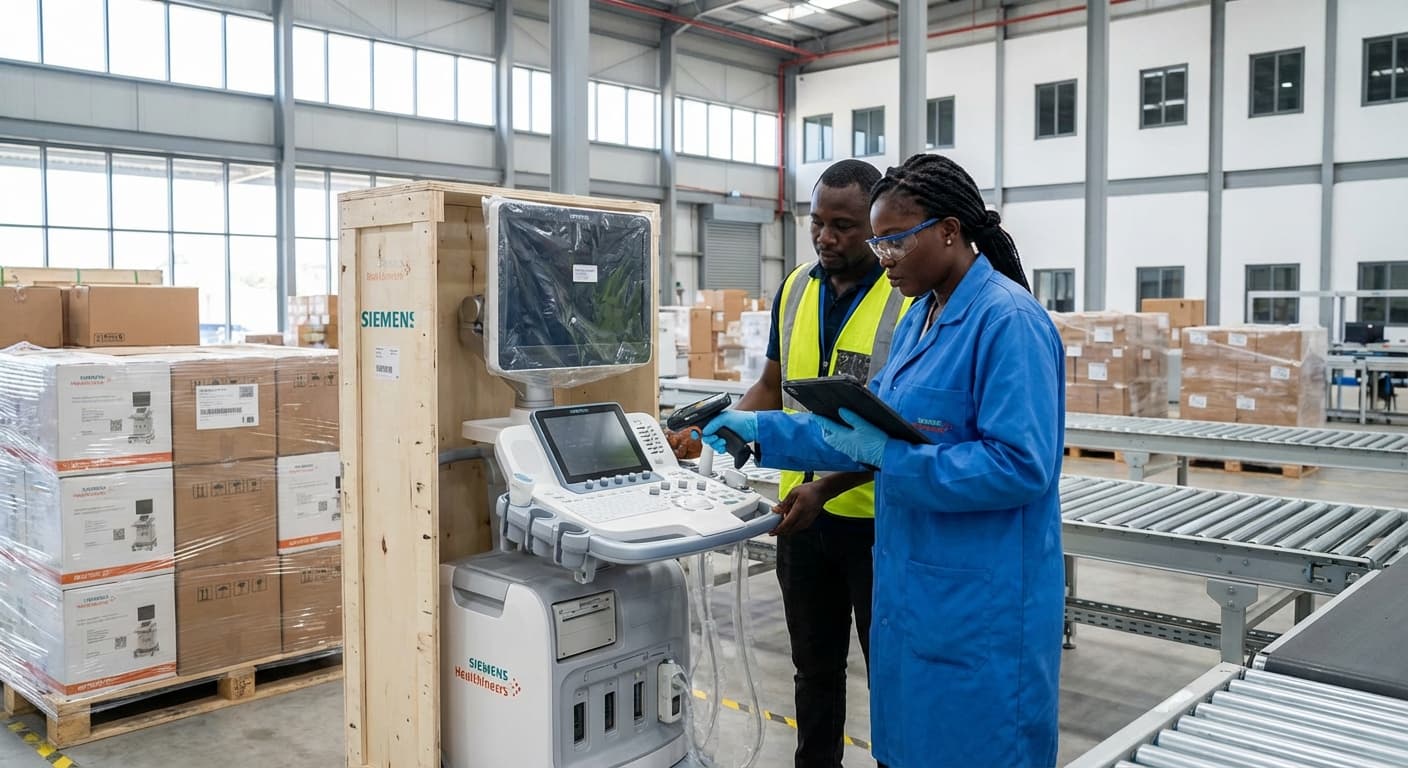
Warehouse Receiving Inspection Service (Medical Equipment) in Djibouti
Engineering Excellence & Technical Support
Warehouse Receiving Inspection Service (Medical Equipment) High-standard technical execution following OEM protocols and local regulatory frameworks.
Advanced Barcode & Serial Number Verification
Leveraging state-of-the-art scanners and proprietary software, we ensure 100% accuracy in verifying equipment barcodes and serial numbers against purchase orders, preventing costly errors and inventory discrepancies for medical facilities in Djibouti.
Detailed Visual & Material Inspection
Our trained inspectors conduct meticulous visual examinations and, where applicable, material integrity checks to identify any manufacturing defects, damage, or non-compliance with ISO and regulatory standards for medical equipment received in Djibouti's ports.
Regulatory Compliance Documentation & Certification
We provide comprehensive inspection reports that meticulously document adherence to international medical device regulations (e.g., FDA, CE marking) and Djibouti-specific import requirements, facilitating swift customs clearance and ensuring patient safety.
What Is Warehouse Receiving Inspection Service (Medical Equipment) In Djibouti?
Warehouse Receiving Inspection Service (Medical Equipment) in Djibouti refers to the systematic examination and verification of medical equipment upon its arrival at a designated warehouse facility within Djibouti. This service ensures that the received equipment conforms to predefined specifications, quality standards, and contractual agreements prior to its acceptance into inventory. The objective is to mitigate risks associated with receiving substandard, damaged, incorrect, or incomplete consignments, thereby safeguarding public health, operational efficiency, and financial investments. This service is critical for entities involved in the procurement, storage, and distribution of medical devices and supplies.
| Who Needs This Service? | Typical Use Cases | |
|---|---|---|
| Government Health Ministries and Agencies: Responsible for national procurement and distribution of medical supplies and equipment. | Procurement and supply chain management of essential medicines and medical devices for public healthcare facilities. | Implementation of large-scale medical equipment donation or aid programs. |
| Hospitals and Healthcare Facilities (Public and Private): Managing their own medical equipment inventory. | Direct procurement of specialized medical equipment and consumables for operational use. | Ensuring the reliability and functionality of critical medical devices. |
| Non-Governmental Organizations (NGOs) and International Aid Organizations: Delivering healthcare services and supplies in Djibouti. | Logistics and distribution of medical aid in emergency situations or for development projects. | Managing donated medical equipment to ensure it is appropriate and functional. |
| Medical Equipment Suppliers and Distributors: Operating within Djibouti. | Receiving bulk shipments from international manufacturers for local distribution. | Ensuring quality control before onward supply to end-users. |
| Logistics and Warehousing Providers: Offering specialized storage solutions for medical equipment. | Providing third-party logistics (3PL) services for medical supply chains, including receiving and inspection. | Ensuring compliance with specific storage and handling requirements for sensitive medical goods. |
Key Components of Warehouse Receiving Inspection Service for Medical Equipment:
- Documentation Verification: Cross-referencing shipping manifests, bills of lading, purchase orders, certificates of origin, import permits, and other relevant paperwork against the physical shipment.
- Quantity Verification: Confirming the exact number and unit of issue of each item received against the order and shipping documents.
- Quality Assessment: Visual inspection for any physical damage, defects, or signs of tampering. This may extend to functional testing for certain categories of equipment.
- Specifications Compliance: Verifying that the received equipment matches the ordered specifications, including model numbers, serial numbers, technical parameters, and regulatory compliance marks (e.g., CE marking, FDA approval, if applicable and recognized in Djibouti).
- Condition Assessment: Evaluating the integrity of packaging and the condition of the equipment itself to ensure it is fit for purpose and has not been compromised during transit.
- Traceability Verification: Confirming the presence and accuracy of lot numbers, batch numbers, and expiry dates, particularly crucial for pharmaceuticals, consumables, and sterile devices.
- Regulatory Compliance Check: Ensuring that imported medical equipment meets Djibouti's national regulatory requirements and standards for medical devices.
- Discrepancy Reporting: Documenting any deviations, damages, shortages, or non-conformities identified during the inspection process and initiating appropriate corrective actions.
Who Needs Warehouse Receiving Inspection Service (Medical Equipment) In Djibouti?
In Djibouti, robust medical equipment receiving inspection services are crucial for ensuring the quality, safety, and regulatory compliance of all incoming medical devices. This service is essential for organizations that procure, distribute, or utilize medical equipment, safeguarding patient well-being and operational efficiency.
| Customer Segment | Relevant Departments | Key Responsibilities Related to Receiving Inspection |
|---|---|---|
| Hospitals and Healthcare Facilities | Procurement Department, Biomedical Engineering Department, Stores/Logistics Department, Quality Assurance Department | Verifying order accuracy, ensuring equipment functionality, checking for damage, confirming regulatory compliance before deployment. |
| Medical Equipment Suppliers and Distributors | Logistics and Warehouse Management, Quality Control, Sales and Procurement Teams | Confirming supplier shipments, documenting incoming goods, identifying defects, managing inventory accuracy, ensuring product integrity. |
| Government Health Ministries and Agencies | Regulatory Affairs, Public Health Services, Procurement and Tenders Division | Ensuring compliance with national and international standards, validating import documentation, overseeing quality of public health supplies. |
| NGOs and Humanitarian Aid Organizations | Logistics and Supply Chain Management, Program Management, Procurement | Ensuring donated or procured equipment is fit for purpose, verifying shipment contents, managing the flow of essential medical resources. |
| Research Institutions and Laboratories | Laboratory Management, Procurement Office, Technical Staff | Confirming equipment specifications for research, ensuring instrument calibration readiness, verifying performance parameters. |
| International Organizations | Procurement Unit, Logistics Department, Program Implementation Teams | Ensuring efficient and safe deployment of medical assets, managing international supply chains, verifying quality of received goods for project success. |
Target Customers and Departments for Warehouse Receiving Inspection Service (Medical Equipment) in Djibouti
- {"title":"Hospitals and Healthcare Facilities","description":"This is a primary customer base, encompassing both public and private hospitals, clinics, and specialized medical centers. They directly handle and use medical equipment, making its proper reception and inspection a critical patient safety and operational necessity."}
- {"title":"Medical Equipment Suppliers and Distributors","description":"Companies that import, store, and distribute medical equipment within Djibouti require meticulous receiving inspections to verify shipment integrity, product specifications, and adherence to manufacturer standards before onward delivery."}
- {"title":"Government Health Ministries and Agencies","description":"National health authorities are responsible for overseeing the quality and safety of medical supplies entering the country. They may engage inspection services to ensure compliance with national regulations and international standards."}
- {"title":"Non-Governmental Organizations (NGOs) and Humanitarian Aid Organizations","description":"Organizations involved in providing medical aid and support in Djibouti often import significant quantities of medical equipment. Ensuring the quality of these donations is paramount for effective and safe service delivery."}
- {"title":"Research Institutions and Laboratories","description":"Facilities conducting medical research or diagnostic testing rely on accurate and well-maintained equipment. Receiving inspections guarantee that procured instruments meet the required specifications and are free from defects."}
- {"title":"International Organizations (e.g., UN Agencies involved in health)","description":"Various UN agencies and other international bodies operating in Djibouti that procure or manage medical equipment for their programs will benefit from independent receiving inspection services."}
Warehouse Receiving Inspection Service (Medical Equipment) Process In Djibouti
This document outlines the workflow for the Warehouse Receiving Inspection Service for Medical Equipment in Djibouti, detailing the process from initial inquiry to final execution. The service ensures that all incoming medical equipment adheres to specified quality, safety, and regulatory standards before being accepted into the warehouse. This systematic approach minimizes risks, ensures compliance, and maintains the integrity of the medical supply chain.
| Phase | Step | Description | Key Activities | Responsible Parties | Deliverables/Outcomes |
|---|---|---|---|---|---|
| 1.1 Initial Contact | Client expresses interest in the receiving inspection service. | Client contacts service provider via phone, email, or inquiry form. | Client, Service Provider Sales/Inquiry Team | Initial understanding of client needs, contact information gathered. |
| 1.2 Information Gathering | Understanding the scope and requirements of the inspection. | Client provides details on equipment type, quantity, origin, intended use, and any specific regulatory requirements (e.g., Djibouti Ministry of Health standards). | Client, Service Provider Technical Team | Detailed scope of work, preliminary understanding of inspection criteria. | |
| 2.1 Proposal Development | Service provider prepares a detailed proposal based on gathered information. | Costing, timeline, inspection methodology, team composition, and terms and conditions are outlined. | Service Provider Technical & Commercial Teams | Formal quotation/proposal document. |
| 2.2 Negotiation & Agreement | Discussion and finalization of the service agreement. | Client reviews proposal, may request revisions. Upon agreement, a formal contract or service order is issued. | Client, Service Provider Commercial Team | Signed contract/service order, clearly defined scope, deliverables, and payment terms. | |
| 3.1 Inspection Plan Creation | Developing a detailed plan for the inspection. | Defining specific inspection checklists, testing procedures, sampling plans, and the roles/responsibilities of the inspection team. | Service Provider Inspection Team Lead | Approved Inspection Plan. |
| 3.2 Resource Allocation | Assigning the appropriate personnel and equipment. | Mobilizing qualified inspectors, necessary testing equipment, and ensuring logistical arrangements (transport, access). | Service Provider Operations Manager | Inspection team appointed, logistics confirmed. | |
| 3.3 Client Notification | Informing the client of the planned inspection date and time. | Coordinating with the client's warehouse operations for smooth access and minimal disruption. | Service Provider Operations Coordinator | Confirmed inspection schedule with client. | |
| 4.1 Site Arrival | Inspection team arrives at the designated warehouse in Djibouti. | Check-in with warehouse management, confirm access to the inspection area. | Service Provider Inspection Team | Inspection team present at the site. |
| 4.2 Shipment Verification | Confirming the received shipment against shipping documents. | Matching bills of lading, packing lists, and other shipping documents with the physical consignment. Checking for any signs of damage during transit. | Service Provider Inspection Team, Client Warehouse Staff | Initial confirmation of shipment integrity and contents. | |
| 4.3 Documentation Review | Examining required documentation for each medical equipment item. | Reviewing manufacturer's certificates of analysis/compliance, sterilization certificates, user manuals, warranty information, and any import/regulatory permits. | Service Provider Inspection Team | Verification of essential documentation for compliance. | |
| 5.1 Visual Inspection | Physical examination of the medical equipment. | Assessing for external damage, correct model/serial numbers, packaging integrity, and any manufacturing defects. | Service Provider Inspection Team | Visual assessment report. |
| 5.2 Functional Testing (as applicable) | Verifying the operational capabilities of the equipment. | Performing basic functional tests as per the inspection plan and manufacturer's specifications. This may involve powered-on checks, basic operational cycles, etc. | Service Provider Inspection Team | Functional test results documented. | |
| 5.3 Quality & Compliance Checks | Ensuring adherence to specified standards and regulations. | Checking for proper labeling, expiry dates (if applicable), conformity to Djibouti Ministry of Health regulations, and any client-specific quality requirements. | Service Provider Inspection Team | Compliance assessment report. | |
| 5.4 Sampling & Testing (if required) | Conducting detailed laboratory or performance testing. | For critical equipment or specific requirements, samples may be taken for independent laboratory analysis or more in-depth performance testing. | Service Provider Inspection Team, Independent Laboratories (if contracted) | Laboratory test reports, performance data. | |
| 6.1 Draft Report Generation | Compiling findings and observations into a preliminary report. | Documenting all inspection activities, test results, deviations, and non-conformities with supporting evidence (photos, videos). | Service Provider Inspection Team | Draft inspection report. |
| 6.2 Client Review | Submitting the draft report to the client for review. | Allowing the client to review findings and provide feedback or clarification. | Service Provider Inspection Team, Client | Client feedback incorporated into the final report. | |
| 6.3 Final Report Issuance | Providing a comprehensive and finalized inspection report. | The report will clearly state whether the equipment meets the inspection criteria or if there are any non-conformities. | Service Provider Inspection Team | Final Inspection Report, Inspection Certificate (if passed). | |
| 7.1 Non-Conformity Identification | Identifying specific issues that prevent acceptance. | Listing all deviations from the specified requirements. | Service Provider Inspection Team | List of non-conformities. |
| 7.2 Corrective Action Plan | Developing a plan to address identified non-conformities. | Collaborating with the client and supplier to define corrective actions (e.g., repair, replacement, re-testing). | Client, Supplier, Service Provider (facilitator) | Agreed-upon Corrective Action Plan (CAP). | |
| 7.3 Re-inspection & Verification | Verifying the implementation of corrective actions. | Conducting follow-up inspections to ensure that the issues have been resolved and the equipment now meets the required standards. | Service Provider Inspection Team | Re-inspection report, updated inspection status. | |
| 8.1 Formal Notification | Communicating the final decision on the acceptance of the equipment. | Based on the inspection results and any corrective actions, the service provider formally informs the client of the acceptance or rejection of the shipment. | Service Provider Inspection Team Lead | Formal acceptance/rejection notification. |
| 8.2 Invoice & Payment | Issuing the final invoice for services rendered. | Client processes payment according to the agreed terms. | Service Provider Finance Department, Client Finance Department | Service fee settled. |
Warehouse Receiving Inspection Service (Medical Equipment) Workflow - Djibouti
- Inquiry & Service Request
- Quotation & Agreement
- Pre-Inspection Planning
- Arrival & Documentation Review
- On-Site Inspection Execution
- Reporting & Documentation
- Corrective Actions & Follow-up (if necessary)
- Final Acceptance/Rejection Notification
Warehouse Receiving Inspection Service (Medical Equipment) Cost In Djibouti
Determining the precise cost of a warehouse receiving inspection service for medical equipment in Djibouti requires a nuanced understanding of several contributing factors. These services are crucial for ensuring the integrity, functionality, and compliance of incoming medical devices before they enter storage or are distributed. While a definitive, universally applicable price list is not readily available due to the bespoke nature of these services, we can explore the key pricing determinants and provide estimated ranges in Djiboutian Francs (DJF).
| Service Level/Complexity | Estimated Price Range (DJF) | Notes |
|---|---|---|
| Basic Visual Inspection & Documentation Review (per shipment/pallet) | 15,000 - 40,000 | Suitable for high-volume, low-complexity items. Focuses on physical condition and paperwork accuracy. |
| Standard Inspection (per shipment/pallet) | 40,000 - 100,000 | Includes visual inspection, basic functional checks (if applicable), and verification of key specifications against documentation. |
| Detailed Functional & Compliance Inspection (per unit/complex device) | 100,000 - 500,000+ | For complex medical equipment. Involves in-depth functional testing, calibration checks, software verification, and compliance with relevant standards. Price varies significantly with device complexity. |
| Per Hour Rate (for ad-hoc or specialized tasks) | 20,000 - 60,000 | Applicable for specific troubleshooting, consultation, or when the scope is not easily definable in advance. |
| Daily Rate (for extended inspections or project-based work) | 150,000 - 500,000+ | Used for comprehensive projects or when an inspection team needs to be on-site for an extended period. |
Key Pricing Factors for Warehouse Receiving Inspection Service (Medical Equipment) in Djibouti
- {"title":"Volume and Frequency of Inspections","description":"The number of inspection requests a service provider handles significantly influences their pricing. Larger volumes or regular, scheduled inspections often benefit from economies of scale, leading to lower per-unit costs. Conversely, ad-hoc or single-instance inspections may carry a higher price."}
- {"title":"Complexity and Type of Medical Equipment","description":"Inspecting highly complex medical devices (e.g., imaging machines, surgical robots) requires specialized knowledge, tools, and more time than inspecting simpler items (e.g., consumables, basic diagnostic tools). The level of expertise needed will directly impact the labor cost."}
- {"title":"Scope of Inspection Services","description":"The specific checks performed are a major cost driver. This can range from basic visual inspection and documentation verification to detailed functional testing, calibration checks, environmental monitoring, and compliance verification against specific regulatory standards (e.g., WHO, local health ministry guidelines)."}
- {"title":"Level of Detail and Reporting Requirements","description":"Clients requiring in-depth, comprehensive inspection reports with photographic evidence, detailed findings, and recommendations will incur higher costs than those needing only a basic sign-off."}
- {"title":"Service Provider's Expertise and Reputation","description":"Established inspection firms with a proven track record in medical equipment and strong relationships with regulatory bodies in Djibouti may command higher fees due to their reliability and specialized knowledge."}
- {"title":"Location and Accessibility of the Warehouse","description":"Warehouses located in more remote or difficult-to-access areas within Djibouti might incur additional charges for transportation and logistics for the inspection team."}
- {"title":"Urgency and Turnaround Time","description":"Expedited inspection services, requiring immediate attention and rapid turnaround, will typically come with a premium price."}
- {"title":"Inclusion of Specialized Testing Equipment","description":"If the inspection requires the use of specialized, calibrated testing equipment that the service provider must supply, this cost will be factored into the overall pricing."}
- {"title":"Certification and Accreditation","description":"Service providers holding relevant certifications and accreditations for conducting inspections of medical equipment may charge more for their recognized quality assurance."}
Affordable Warehouse Receiving Inspection Service (Medical Equipment) Options
Seeking an affordable warehouse receiving inspection service specifically for medical equipment requires a strategic approach. Medical equipment demands rigorous inspection due to its critical role in patient care and stringent regulatory requirements. This document outlines valuable options, explains the concept of value bundles, and details cost-saving strategies to ensure both quality and budget-friendliness.
| Value Bundle Option | Description | Cost-Saving Strategy Alignment |
|---|---|---|
| Basic Visual & Documentation Check | Focuses on identifying obvious physical damage, verifying shipping manifests against received items, and checking for essential documentation (e.g., certificates of origin, user manuals). | Cost-effective for non-critical equipment or initial screening. Reduces inspection time and complexity. |
| Standard Functional & Verification Bundle | Includes basic checks plus initial functional testing (e.g., power on, basic operation verification, key component checks). Also includes serial number verification against purchase orders and inventory systems. | Balances cost with a moderate level of assurance. Reduces risk of receiving non-functional or misidentified equipment. |
| Comprehensive Compliance & Quality Assurance Bundle | Encompasses all aspects of the standard bundle, plus more in-depth functional testing, validation against specifications, verification of specific regulatory markings, and detailed reporting with photographic evidence. | Higher upfront cost but minimizes long-term risks and potential recalls. Ensures adherence to strict medical device regulations, avoiding costly non-compliance penalties. |
| Ad-Hoc / On-Demand Inspection | Services provided on a per-inspection or per-incident basis. Ideal for unexpected shipments or specific needs. | Pay-as-you-go model. Avoids fixed costs for services not always required. Best for businesses with variable incoming volumes. |
| Subscription-Based Tiered Service | A recurring monthly or annual fee that provides a set number of inspections or a defined service level. Often includes discounted rates for higher volumes. | Predictable budgeting. Potential for volume discounts. Encourages a consistent quality control process. |
Key Considerations for Affordable Medical Equipment Receiving Inspections
- Scope of Inspection: Clearly define what needs to be inspected (e.g., visual damage, functionality, documentation verification, serial number matching, environmental conditions). A well-defined scope prevents unnecessary work and associated costs.
- Frequency of Inspections: Determine if inspections are needed for every incoming shipment or on a sample basis. High-value or critical equipment may warrant more frequent checks.
- Regulatory Compliance: Understand the specific regulations applicable to your medical equipment (e.g., FDA, ISO 13485). Inspections must align with these standards.
- Service Provider Expertise: Ensure the inspection service provider has specific experience with medical equipment. This expertise can lead to more efficient and accurate inspections, reducing the risk of costly errors or re-inspections.
- Technology Integration: Explore providers who leverage technology (e.g., mobile inspection apps, digital reporting) to streamline the process and reduce administrative overhead.
- Scalability: Choose a service that can scale with your business needs, avoiding overpaying for services you don't currently require.
- Location of Service: Proximity of the inspection service to your warehouse can impact travel costs. Consider local providers where possible.
Verified Providers In Djibouti
In Djibouti, ensuring access to reliable and high-quality healthcare is paramount. When seeking medical services, identifying verified providers is crucial. Franance Health stands out as a premier choice due to its rigorous credentialing process and commitment to excellence. This document outlines why Franance Health credentials signify superior care and why they are the best choice for your health needs in Djibouti.
| Credential Type | Verification Process | Benefit to Patient |
|---|---|---|
| Medical License Verification | Confirmation with Djibouti's Ministry of Health and relevant international bodies. | Ensures practitioners are legally authorized to practice medicine. |
| Board Certification | Validation of specialty training and examination by recognized medical boards. | Confirms expertise in a specific medical field. |
| Educational Background Check | Verification of degrees and diplomas from accredited institutions. | Ensures a strong foundation in medical knowledge. |
| Professional Experience Review | Assessment of past practice history and references. | Confirms practical application of skills and experience. |
| Malpractice History Check | Screening for any history of malpractice claims or disciplinary actions. | Prioritizes patient safety and reduces risk. |
Why Franance Health Credentials Matter:
- Rigorous Vetting Process: Franance Health implements a comprehensive vetting system for all its affiliated healthcare professionals and facilities. This includes verifying medical licenses, board certifications, educational background, and professional experience.
- Commitment to Quality Standards: We adhere to stringent international and national quality standards in healthcare delivery. Our credentialing process ensures that providers meet and exceed these benchmarks, guaranteeing a high level of patient care.
- Specialized Expertise: Franance Health connects you with specialists across a wide range of medical disciplines. Our credentialing verifies their specific expertise, ensuring you receive care from the most qualified professionals for your condition.
- Patient Safety Focus: Patient safety is our utmost priority. The credentialing of our providers includes a thorough review of their track record, adherence to safety protocols, and commitment to ethical medical practices.
- Continuous Professional Development: Franance Health encourages and verifies ongoing training and professional development for all its affiliated practitioners. This ensures they remain at the forefront of medical advancements and best practices.
- Transparency and Trust: Our transparent credentialing process builds trust. Patients can be confident that when they choose a Franance Health verified provider, they are selecting a practitioner who has met the highest standards of competence and integrity.
Scope Of Work For Warehouse Receiving Inspection Service (Medical Equipment)
This Scope of Work (SOW) defines the requirements for Warehouse Receiving Inspection Services for Medical Equipment. The objective is to ensure that all incoming medical equipment meets the specified quality, condition, and documentation standards before being accepted into the warehouse inventory. This SOW outlines the technical deliverables and standard specifications that will be adhered to throughout the inspection process.
| Inspection Area | Key Parameters | Standard Specifications / Acceptance Criteria | Methods/Tools |
|---|---|---|---|
| Documentation Verification | Purchase Order (PO) Match | Item number, quantity, description, and lot/serial numbers on packing slip/invoice must match PO. | PO comparison, document review. |
| Documentation Verification | Manufacturer's Certificate of Conformance/Analysis | Must be present and accurate, matching product specifications. Valid for product type. | Document review, cross-referencing with product documentation. |
| Physical Inspection - Exterior | Packaging Condition | Packaging must be intact, clean, free from damage (tears, punctures, water damage, crushing). | Visual inspection, tactile assessment. |
| Physical Inspection - Exterior | Labeling and Markings | Clear, legible, and accurate. Includes item name, model number, serial number, lot number, manufacturer, expiry date (if applicable), hazard symbols, and any regulatory markings (e.g., CE, FDA). | Visual inspection, magnification if needed. |
| Physical Inspection - Product | Item Identification | Product model and serial number (if applicable) must match documentation. | Visual inspection, comparison with labels and documentation. |
| Physical Inspection - Product | Visible Damage | No dents, scratches, cracks, corrosion, or other physical defects on the equipment. | Visual inspection, tactile assessment. |
| Physical Inspection - Product | Completeness of Parts/Accessories | All listed components, accessories, cables, manuals, and warranty information must be present. | Visual inspection, cross-referencing with packing list and product manual. |
| Physical Inspection - Product | Cleanliness | Equipment must be free from dust, debris, or foreign matter. | Visual inspection. |
| Functional/Performance Testing (where applicable) | Basic Functionality Check | Performs basic intended functions as per manufacturer's specifications (e.g., powers on, displays basic interface). Requires pre-defined test scripts and authorized personnel. | Pre-defined test scripts, basic user interface checks, controlled environment testing. |
| Functional/Performance Testing (where applicable) | Calibration Status | For calibrated equipment, calibration certificate must be current and within acceptable tolerance. Requires access to calibration standards. | Verification of calibration certificate, comparison with equipment readings (if possible and authorized). |
| Storage Requirements | Temperature and Humidity | If specific storage conditions are required (e.g., refrigerated, controlled humidity), verify via data loggers or visual inspection of storage environment. | Data loggers, environmental monitoring systems. |
Technical Deliverables
- Receiving Inspection Report (RIR): A detailed report documenting the findings of each inspection.
- Non-Conformance Report (NCR): Issued for any equipment failing to meet specifications.
- Acceptance/Rejection Status Log: A running record of all inspected items and their disposition.
- Digital Photographs: Visual evidence of received items, packaging, and any identified defects.
- Certificates of Analysis/Conformance (if applicable): Verification of compliance with specific material or performance standards.
- Calibration Certificates (for specific equipment): Proof of recent and valid calibration.
- Training Records: Documentation of personnel training on inspection procedures and standards.
Service Level Agreement For Warehouse Receiving Inspection Service (Medical Equipment)
This Service Level Agreement (SLA) outlines the response times and uptime guarantees for the Warehouse Receiving Inspection Service of medical equipment, provided by [Your Company Name] (hereinafter referred to as 'Provider') to [Client Company Name] (hereinafter referred to as 'Client'). This SLA is an integral part of the Master Service Agreement (MSA) between the parties.
| Service Metric | Target Level | Measurement Method | Reporting Frequency | Grace Period | Remedy for Failure |
|---|---|---|---|---|---|
| Inspection Request Acknowledgment Time | Within 4 business hours of receiving a complete inspection request. | Timestamp of receipt of the inspection request via the agreed-upon electronic system. | Monthly | None | 1% service credit of monthly inspection fee for each 1-hour delay beyond the grace period, capped at 5%. |
| Initial Inspection Report Availability | Within 24 business hours of the physical arrival of the medical equipment at the designated warehouse facility. | Timestamp of the uploading of the initial inspection report to the client's designated portal. | Monthly | None | 2% service credit of the monthly inspection fee for each 4-hour delay beyond the grace period, capped at 10%. |
| Discrepancy Resolution Request Response Time | Within 8 business hours of receiving a discrepancy notification from the Client. | Timestamp of acknowledgment of the discrepancy notification via email or the client's designated communication channel. | Monthly | None | 1% service credit of monthly inspection fee for each 2-hour delay beyond the grace period, capped at 5%. |
| System Availability for Inspection Scheduling & Reporting | 99.5% uptime during standard business hours (Monday-Friday, 8:00 AM - 6:00 PM Client's Local Time). | Monitoring of the Provider's designated online portal and communication systems used for scheduling and reporting. Measured by calculating the percentage of minutes the system is available out of the total scheduled business minutes. | Monthly | None | For each 0.5% decrease in uptime below 99.5% in a given month, a service credit of 3% of the monthly inspection fee will be issued, capped at 15%. |
Key Service Level Objectives
- The Provider commits to meeting the response time and uptime guarantees specified herein to ensure efficient and reliable receiving inspection of medical equipment.
- Failure to meet these agreed-upon service levels may result in the application of service credits as defined in the 'Remedies for Service Failures' section.
Frequently Asked Questions

Ready when you are
Let's scope your Warehouse Receiving Inspection Service (Medical Equipment) in Djibouti project in Djibouti.

Scaling healthcare logistics and technical systems across the entire continent.