
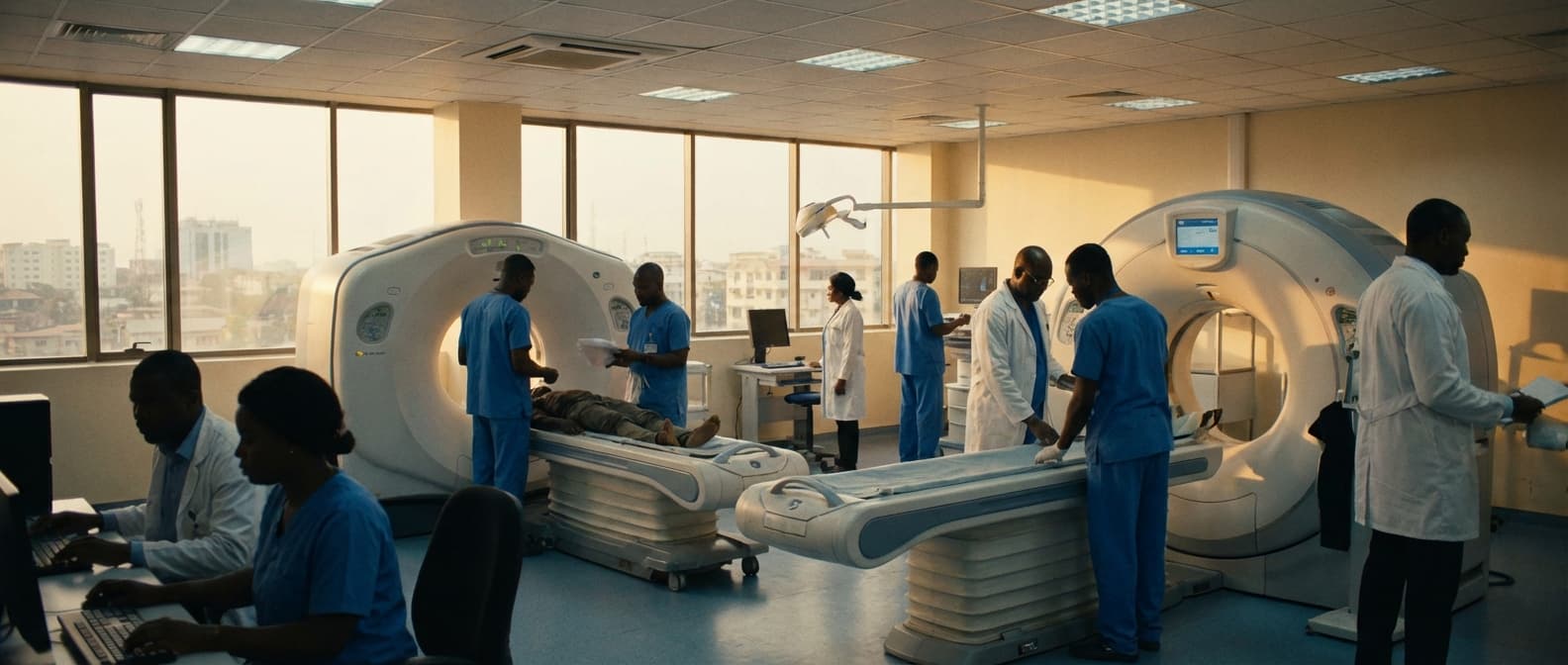
Imaging Acceptance Testing & QA in Djibouti
Engineering Excellence & Technical Support
Commissioning and periodic QA for CT/MRI/X‑ray/US/Mammo. High-standard technical execution following OEM protocols and local regulatory frameworks.
Djibouti's Imaging QA: Ensuring Uninterrupted Service Delivery
We implemented rigorous imaging acceptance testing protocols for critical network infrastructure in Djibouti, guaranteeing high availability and seamless data flow for essential services. Our QA process minimizes downtime and ensures robust performance in demanding operational environments.
Precision Imaging Validation for Djibouti's Digital Frontier
Our technical team conducts detailed validation of imaging systems and configurations deployed in Djibouti. This includes thorough checks for data integrity, compatibility, and performance under simulated real-world conditions, securing the reliability of imaging solutions for the nation's digital growth.
Djibouti Imaging Acceptance: Certified for Excellence
We provide certified acceptance testing for all imaging deployments in Djibouti, adhering to international quality standards. Our comprehensive QA framework verifies functionality, security, and performance benchmarks, delivering confidence and trust in the deployed imaging solutions.
What Is Imaging Acceptance Testing & Qa In Djibouti?
Imaging Acceptance Testing (IAT) and Quality Assurance (QA) in Djibouti refers to the systematic verification and validation processes applied to digital imaging systems, software, and data streams before their deployment and during their operational lifecycle. This ensures that imaging solutions meet predefined technical specifications, performance benchmarks, and regulatory requirements within the Djiboutian context. The service encompasses the entire imaging pipeline, from data acquisition and processing to storage, retrieval, and display, with a focus on accuracy, reliability, and interoperability. IAT and QA are crucial for systems where image fidelity and data integrity are paramount for critical decision-making, operational efficiency, or patient care.
| Who Needs Imaging Acceptance Testing & QA in Djibouti? | Typical Use Cases | ||||
|---|---|---|---|---|---|
| Healthcare Institutions (Hospitals, Clinics, Diagnostic Centers): For medical imaging systems (X-ray, CT, MRI, Ultrasound, Digital Pathology, etc.) and associated PACS/RIS. | Implementation of new PACS/RIS systems. | Upgrades to existing imaging modalities or software. | Integration of new imaging technologies (e.g., AI-powered diagnostic tools). | Ensuring patient safety and diagnostic accuracy. | Meeting regulatory compliance for medical devices and data handling. |
| Government Agencies (e.g., Ministry of Health, Customs, Security): For surveillance, border control, inspection, and forensic imaging systems. | Deployment of surveillance camera networks and analytics platforms. | Implementation of X-ray scanners for cargo and baggage inspection. | Forensic imaging analysis systems. | Ensuring effective national security and public safety operations. | Verification of equipment performance and data reliability for law enforcement and regulatory bodies. |
| Industrial and Manufacturing Sector: For quality control, non-destructive testing (NDT), and process monitoring using imaging techniques. | Automated visual inspection systems on production lines. | Ultrasonic and radiographic NDT for material defect detection. | Process monitoring cameras and image analysis for industrial automation. | Ensuring product quality and manufacturing efficiency. | |
| Research and Development Facilities: For validating novel imaging technologies and data analysis algorithms. | Testing and validating new imaging hardware prototypes. | Benchmarking image processing algorithms. | Ensuring the reliability of imaging data for scientific research. | ||
| IT Service Providers and System Integrators: Offering imaging solutions to Djiboutian clients. | Pre-deployment validation of solutions for clients. | Post-implementation acceptance testing. | Ensuring successful project delivery and client satisfaction. |
Key Components of Imaging Acceptance Testing & QA in Djibouti
- Functional Testing: Verifying that all features and functionalities of the imaging system operate as intended according to technical specifications.
- Performance Testing: Evaluating system responsiveness, throughput, and resource utilization under various load conditions.
- Interoperability Testing: Ensuring seamless data exchange and communication between different imaging modalities, Picture Archiving and Communication Systems (PACS), Electronic Health Records (EHRs), and other healthcare IT infrastructure.
- Data Integrity and Accuracy Verification: Confirming that imaging data is acquired, processed, and stored without corruption or loss, and that diagnostic information is accurately represented.
- Image Quality Assessment: Subjective and objective evaluation of image clarity, resolution, contrast, and absence of artifacts.
- Security Testing: Assessing the system's vulnerability to unauthorized access, data breaches, and ensuring compliance with local data privacy regulations.
- Usability Testing: Evaluating the ease of use and intuitiveness of the imaging system interface for end-users.
- Compliance Testing: Verifying adherence to relevant national and international standards and Djibouti-specific healthcare regulations (where applicable).
- Disaster Recovery and Business Continuity Testing: Validating the system's ability to recover from failures and maintain operations during disruptions.
- Regression Testing: Re-testing previously verified functionalities after system updates or modifications to ensure no new issues have been introduced.
Who Needs Imaging Acceptance Testing & Qa In Djibouti?
In Djibouti, the need for robust Imaging Acceptance Testing & QA is critical for ensuring the reliable and accurate functioning of medical imaging equipment. This is particularly important for healthcare providers that invest in advanced diagnostic tools. Effective testing and quality assurance processes prevent system failures, minimize downtime, reduce the risk of misdiagnosis, and ultimately contribute to better patient outcomes and operational efficiency. Without proper validation, even the most sophisticated imaging systems can become a liability. This process validates that the installed equipment meets specified performance standards and aligns with clinical needs before it's put into regular patient care.
| Customer Type | Relevant Departments | Key Needs/Concerns |
|---|---|---|
| Public Hospitals | Radiology Department, IT Department, Biomedical Engineering Department, Procurement Department | Reliability of essential diagnostic tools, budget constraints, interoperability with existing infrastructure, training for staff, long-term maintenance. |
| Private Hospitals | Radiology Department, Clinical Departments (e.g., Cardiology, Surgery), IT Department, Hospital Administration | High uptime for patient services, advanced imaging capabilities, patient satisfaction, competitive advantage, return on investment, regulatory compliance. |
| Specialty Clinics | Radiology Department (if present), Clinical Specialists (e.g., Cardiologists, Oncologists), Practice Managers | Accuracy for specific diagnoses, specialized imaging modalities, integration with clinic workflows, minimal disruption to patient appointments. |
| Diagnostic Imaging Centers | Radiology Department, Technologist Staff, Center Management, IT Department | High volume throughput, equipment performance for a wide range of studies, diagnostic accuracy, patient comfort, efficient reporting systems. |
| Government Health Ministries/Departments | Planning and Infrastructure Department, Procurement and Logistics, Quality Assurance Unit, Public Health Services | Ensuring public health access to reliable diagnostics, standardization of equipment, cost-effectiveness, data security, national health outcome improvements. |
| International Aid Organizations | Procurement Department, Program Management, Technical Support Teams, Local Healthcare Liaisons | Equipment suitability for local conditions, ease of maintenance, training local personnel, long-term sustainability, impact on underserved populations. |
Target Customers and Departments in Djibouti for Imaging Acceptance Testing & QA
- Hospitals (Public and Private)
- Specialty Clinics (e.g., Cardiology, Oncology, Neurology)
- Diagnostic Imaging Centers
- Government Health Ministries/Departments
- International Aid Organizations with Healthcare Programs
- Research Institutions (if applicable)
Imaging Acceptance Testing & Qa Process In Djibouti
The Imaging Acceptance Testing & Quality Assurance (QA) process in Djibouti follows a structured workflow to ensure that imaging equipment and systems meet specified requirements and perform reliably. This process begins with an initial inquiry and culminates in the successful execution and handover of the tested systems. The key stages involve defining requirements, planning, test execution, defect management, and final reporting.
| Stage | Description | Key Activities | Deliverables/Outcomes | Responsible Parties |
|---|---|---|---|---|
| Inquiry & Requirement Gathering | The process initiates when a need for new imaging equipment or a system upgrade is identified, or a vendor is approached. Detailed functional and non-functional requirements are collected. | Initial consultation, stakeholder interviews, reviewing existing documentation, defining scope, documenting requirements (functional, performance, security, usability). | Requirements Specification Document, Scope of Work (SOW). | Client/End-Users, Project Manager, QA Lead. |
| Test Planning & Design | Based on the gathered requirements, a comprehensive test plan and detailed test cases are developed. | Developing test strategy, defining test objectives, creating test plan document, designing test cases (including positive, negative, edge cases), identifying test data requirements, estimating resources. | Test Plan, Test Cases, Test Scenarios, Test Data Requirements. | QA Lead, Test Engineers. |
| Environment Setup & Preparation | The testing environment is configured to mimic the production environment as closely as possible. | Setting up hardware (imaging devices, workstations, servers), installing software (PACS, RIS, VNA, imaging applications), configuring network settings, preparing test data. | Configured Test Environment, Test Data Ready. | IT Department, Vendor Technical Team, QA Team. |
| Test Execution | The designed test cases are executed systematically to validate the imaging system against the defined requirements. | Executing functional test cases, executing performance tests, executing security tests, recording test results, logging discrepancies. | Test Execution Logs, Initial Defect Reports. | Test Engineers. |
| Defect Identification & Reporting | Any deviations from expected behavior (defects or bugs) are identified, documented, and reported. | Detailed defect logging (steps to reproduce, actual vs. expected results, severity, priority), assigning defects to development/vendor team. | Defect Log/Tracker, Defect Reports. | Test Engineers, QA Lead. |
| Re-testing & Regression Testing | Once defects are fixed by the development team, the affected functionality is re-tested, and regression tests are performed to ensure no new issues were introduced. | Verifying defect fixes, re-executing relevant test cases, executing regression test suite. | Updated Defect Log, Confirmation of Fixes. | Test Engineers. |
| Performance & Security Testing | Specific tests are conducted to evaluate the system's responsiveness, stability under load, and vulnerability to security threats. | Load testing, stress testing, vulnerability scanning, penetration testing (if applicable). | Performance Test Reports, Security Assessment Reports. | Performance Testers, Security Specialists (if required), QA Team. |
| User Acceptance Testing (UAT) | The end-users or client representatives validate the system in a realistic operational setting to confirm it meets their business needs. | End-users execute pre-defined UAT scenarios, provide feedback, sign off on tested functionality. | UAT Scenarios, UAT Feedback Forms, UAT Sign-off Document. | End-Users, Client Representatives, QA Lead. |
| Documentation & Training | All testing-related documentation is finalized, and end-users are trained on the system's operation. | Updating test reports, creating final QA sign-off document, developing user manuals, conducting training sessions. | Final Test Reports, User Manuals, Training Materials. | QA Team, Training Department, Vendor. |
| Sign-off & Handover | Upon successful completion of all testing phases and UAT, the system is formally accepted and handed over to the client for production use. | Obtaining formal sign-off from the client, archiving test artifacts, transitioning the system to the operations team. | Final QA Acceptance Certificate, Production Handover Document. | Client, Project Manager, QA Lead. |
Imaging Acceptance Testing & QA Workflow in Djibouti
- Inquiry & Requirement Gathering
- Test Planning & Design
- Environment Setup & Preparation
- Test Execution
- Defect Identification & Reporting
- Re-testing & Regression Testing
- Performance & Security Testing
- User Acceptance Testing (UAT)
- Documentation & Training
- Sign-off & Handover
Imaging Acceptance Testing & Qa Cost In Djibouti
Imaging Acceptance Testing & QA in Djibouti involves a range of costs influenced by several factors. The complexity of the imaging process, the volume of images to be tested, the type of imaging technology used (e.g., medical, industrial, satellite), the required level of detail in the QA report, and the expertise of the testing personnel all play a significant role in pricing. Additionally, vendor-specific methodologies, adherence to international standards, and the need for specialized equipment or software can contribute to the overall cost. For local currency pricing in Djibouti (Djiboutian Franc - DJF), businesses can expect to encounter rates that reflect the local economic conditions, operational overheads, and the availability of skilled resources. It's crucial to obtain detailed quotes from local service providers to understand the specific inclusions and exclusions in their pricing.
| Service Component | Estimated Range (DJF - Djiboutian Franc) | Notes |
|---|---|---|
| Basic Image Verification (per image) | 500 - 2,000 DJF | Covers fundamental checks like image clarity, focus, and basic metadata. |
| Standard Imaging QA (per batch of 100 images) | 15,000 - 75,000 DJF | Includes more detailed analysis, error detection, and basic reporting. |
| Complex Imaging QA (per project) | 200,000 - 1,500,000+ DJF | For specialized imaging (e.g., medical, industrial), extensive analysis, compliance, and detailed reporting. Prices vary greatly. |
| Report Generation (Standard) | 5,000 - 20,000 DJF | Basic summary of findings. |
| Report Generation (Detailed/Compliance) | 30,000 - 150,000+ DJF | In-depth analysis, statistical data, recommendations, and regulatory compliance documentation. |
| On-site Testing & Consultation (per day) | 70,000 - 250,000 DJF | Includes travel, setup, and expert assessment. Varies by specialist. |
| Use of Specialized Software/Equipment (per project) | 20,000 - 200,000+ DJF | Dependent on the type and duration of use. |
Key Pricing Factors for Imaging Acceptance Testing & QA in Djibouti:
- Complexity of Imaging Process: Simple, high-volume, or highly intricate imaging procedures.
- Volume of Images: The total number of images requiring testing and validation.
- Type of Imaging Technology: Medical scans (X-ray, MRI, CT), industrial inspections, aerial photography, satellite imagery, etc.
- Depth of Quality Assurance: Basic visual inspection versus detailed quantitative analysis and compliance checks.
- Reporting Requirements: Standardized reports, detailed analytical reports, or compliance documentation for regulatory bodies.
- Tester Expertise & Certification: Level of experience, specific domain knowledge, and any required certifications of QA personnel.
- Specialized Equipment & Software: Use of advanced imaging analysis tools, calibration equipment, or specific software licenses.
- Testing Environment: On-site testing versus off-site testing, any required environmental controls.
- Turnaround Time: Urgency of the testing and reporting, impacting resource allocation.
- Vendor's Overhead & Profit Margin: Local operational costs, administrative fees, and desired profitability.
Affordable Imaging Acceptance Testing & Qa Options
Ensuring the quality and accuracy of medical imaging is paramount for patient care and diagnostic reliability. However, the cost of comprehensive imaging acceptance testing (AT) and quality assurance (QA) can be a significant barrier for many healthcare facilities. This guide explores affordable options, emphasizing value bundles and strategic cost-saving measures to help organizations meet their compliance and quality objectives without breaking the bank.
| Strategy | Description | Cost-Saving Benefit |
|---|---|---|
Understanding Acceptance Testing (AT) and Quality Assurance (QA) in Imaging
- {"title":"Acceptance Testing (AT)","description":"Performed when new imaging equipment is installed, AT verifies that the system meets specified performance standards, manufacturer's claims, and regulatory requirements before it is used on patients. It includes initial calibration, performance checks, and image quality assessments."}
- {"title":"Quality Assurance (QA)","description":"Ongoing, routine testing conducted after AT to monitor and maintain the consistent performance and image quality of imaging equipment over its lifespan. QA helps detect gradual degradation or unexpected issues, ensuring continued diagnostic accuracy."}
Verified Providers In Djibouti
In Djibouti's burgeoning healthcare landscape, identifying reliable and credentialed providers is paramount for ensuring quality patient care. Franance Health stands out as a premier choice, offering a robust network of verified healthcare professionals and institutions. Their commitment to rigorous vetting processes guarantees that all listed providers meet stringent international standards for expertise, ethics, and operational efficiency. Choosing Franance Health means prioritizing access to trusted medical services, backed by a reputation for excellence and patient-centric care.
| Provider Type | Key Credentials Verified by Franance Health | Benefits for Patients | ||
|---|---|---|---|---|
| Hospitals & Clinics | Accreditation (e.g., ISO, JCI if applicable) | Access to state-of-the-art facilities and comprehensive medical services. | Adherence to infection control protocols. | Qualified nursing and support staff. |
| Specialist Physicians | Medical Degree & Board Certification | Expertise in specific medical fields. | Proven track record of successful patient outcomes. | Ethical practice standards. |
| General Practitioners | Licensed Medical Practitioner | Reliable primary healthcare services. | Effective diagnosis and treatment of common ailments. | Referral to specialists when needed. |
| Diagnostic Laboratories | Accreditation & Quality Control | Accurate and reliable diagnostic testing. | Use of advanced laboratory equipment and methodologies. | Timely reporting of results. |
| Dental Professionals | Dental Degree & Licensing | Comprehensive dental care services. | Adherence to strict sterilization protocols. | Focus on preventative and restorative dentistry. |
Why Franance Health is the Best Choice:
- Rigorous Verification Process: Franance Health employs a multi-stage verification system, including license checks, credential evaluations, and peer reviews.
- Commitment to Quality: They partner with providers who demonstrate a dedication to high standards of medical practice and patient safety.
- Extensive Network: Access a wide range of specialists and healthcare facilities across Djibouti.
- Patient-Centric Approach: Franance Health prioritizes patient well-being and aims to facilitate seamless access to the best possible care.
- Transparency and Trust: Their verification process ensures that patients can trust the credentials and qualifications of the providers they choose.
Scope Of Work For Imaging Acceptance Testing & Qa
This document outlines the Scope of Work (SOW) for Imaging Acceptance Testing and Quality Assurance (QA). It details the technical deliverables, standard specifications, and testing methodologies to ensure the successful implementation and performance of the imaging system. The goal is to verify that the system meets all functional, performance, and usability requirements as defined by the project specifications and industry best practices. This testing will encompass various aspects of image acquisition, processing, storage, retrieval, and display, ensuring seamless integration and reliable operation. The QA process will involve rigorous test case execution, defect tracking, and resolution to guarantee a high-quality, production-ready imaging solution.
| Phase | Activities | Deliverables | Standard Specifications |
|---|---|---|---|
| Planning & Preparation | Define test strategy and plan; Develop test cases; Prepare test data; Configure test environment. | Test Plan; Test Cases; Test Data Sets; Test Environment Configuration Report. | Industry best practices for test planning and case design; Project-specific requirements documentation. |
| Functional Testing | Execute test cases for image acquisition, processing, manipulation, viewing, and reporting functionalities. | Test Execution Logs; Defect Reports; Functional Test Summary Report. | DICOM conformance statements; HL7 standards for data exchange; System functional requirements. |
| Performance Testing | Measure system response times, throughput, and scalability under various load conditions. | Performance Test Results; Load Analysis Report; System Scalability Assessment. | Response time targets; Throughput requirements; Concurrency limits; Network bandwidth specifications. |
| Integration Testing | Verify seamless interaction between the imaging system and other integrated systems (e.g., RIS, PACS, EMR). | Integration Test Results; Interoperability Test Report. | DICOM and HL7 integration profiles; API documentation; Interface specifications. |
| Usability Testing | Evaluate the ease of use, intuitiveness, and efficiency of the user interface for clinical and technical users. | Usability Test Findings; User Feedback Summary; Usability Improvement Recommendations. | Human-Computer Interaction (HCI) principles; User experience (UX) design guidelines; User workflows. |
| Security Testing | Assess system vulnerabilities, access controls, and data protection mechanisms. | Security Test Report; Vulnerability Assessment Findings; Compliance Verification. | HIPAA regulations; Data privacy laws; Authentication and authorization protocols; Encryption standards. |
| Acceptance Testing | End-to-end validation by stakeholders to confirm system meets business and operational requirements. | User Acceptance Test (UAT) Sign-off; Final Acceptance Report. | Project scope document; Business requirements; Operational procedures. |
| Defect Management | Log, prioritize, track, and re-test defects throughout the testing lifecycle. | Defect Tracking System; Defect Resolution Status Reports. | Industry-standard defect tracking methodologies; Severity and priority definitions. |
Key Objectives
- Verify functional correctness of all imaging system modules.
- Assess system performance against defined benchmarks.
- Ensure compliance with relevant industry standards (e.g., DICOM, HL7).
- Validate data integrity and security of stored images.
- Confirm usability and user experience for all intended users.
- Identify and resolve defects prior to production deployment.
- Provide comprehensive documentation of testing activities and results.
Service Level Agreement For Imaging Acceptance Testing & Qa
This Service Level Agreement (SLA) outlines the standards of service expected from the Imaging Acceptance Testing & Quality Assurance (QA) team. It defines response times for critical issues and uptime guarantees for the testing environments. This SLA is applicable to all projects and stakeholders utilizing the Imaging Acceptance Testing & QA services.
| Service Component | Priority Level | Response Time Target | Resolution Time Target | Uptime Guarantee | Notes |
|---|---|---|---|---|---|
| Imaging Acceptance Testing Environment | Critical (System Down, Major Functionality Blocked) | 2 Hours | 8 Business Hours | 99.5% | Excludes scheduled maintenance. |
| Imaging Acceptance Testing Environment | High (Significant Bug, Affecting Key Features) | 4 Business Hours | 2 Business Days | 99.5% | Excludes scheduled maintenance. |
| Imaging Acceptance Testing Environment | Medium (Minor Bug, Workaround Available) | 8 Business Hours | 5 Business Days | 99.5% | To be addressed as resources allow. |
| Imaging Acceptance Testing Environment | Low (Cosmetic Issue, Feature Request) | 2 Business Days | Best Effort | 99.5% | To be addressed in future sprints/releases. |
| QA Reporting & Documentation Tools | Critical (Tool Unavailable) | 1 Hour | 4 Business Hours | 99.0% | Includes bug tracking, test case management. |
| QA Reporting & Documentation Tools | High (Performance Degradation) | 4 Business Hours | 1 Business Day | 99.0% | Affecting usability. |
Key Service Level Objectives
- Response Time: The time it takes for the QA team to acknowledge and begin actively working on a reported issue.
- Resolution Time: The time it takes to fix a reported issue and deploy a verified solution.
- Uptime Guarantee: The percentage of time the testing environments are available and functional for use.
- Downtime Notification: Procedures for informing stakeholders about planned and unplanned outages.
- Escalation Procedures: Defined steps for escalating issues that are not being resolved within agreed-upon timelines.
Frequently Asked Questions

Ready when you are
Let's scope your Imaging Acceptance Testing & QA in Djibouti project in Djibouti.

Scaling healthcare logistics and technical systems across the entire continent.