
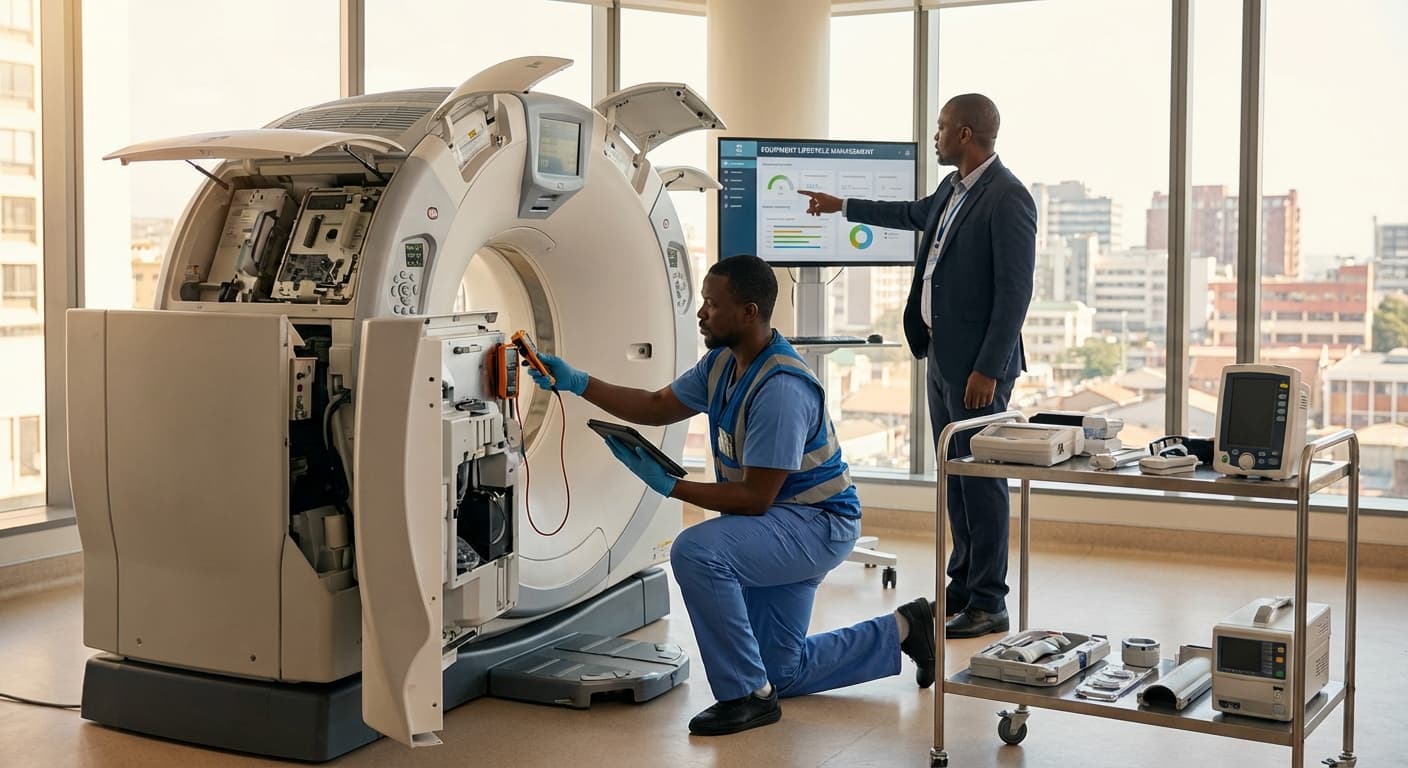
Equipment Replacement Planning & Obsolescence Strategy Service in Djibouti
Engineering Excellence & Technical Support
Equipment Replacement Planning & Obsolescence Strategy Service High-standard technical execution following OEM protocols and local regulatory frameworks.
Proactive Obsolescence Mitigation
Leverage advanced data analytics to predict component obsolescence risks in critical equipment. Our service provides Djibouti's organizations with early warnings and actionable replacement timelines, ensuring uninterrupted operations and minimizing costly emergency procurements.
Optimized Lifecycle Management
We engineer tailored equipment replacement strategies for Djibouti's unique operational environment. By analyzing usage patterns, maintenance history, and future demand, we ensure timely and cost-effective upgrades, maximizing asset lifespan and operational efficiency across your infrastructure.
Strategic Capital Allocation
Our service provides Djibouti's businesses and government agencies with robust financial forecasting for equipment replacement. We identify optimal procurement windows and financing options, enabling smart capital expenditure decisions and enhancing long-term financial sustainability.
What Is Equipment Replacement Planning & Obsolescence Strategy Service In Djibouti?
Equipment Replacement Planning & Obsolescence Strategy Service in Djibouti refers to a specialized consultancy offering aimed at assisting organizations in Djibouti to proactively manage the lifecycle of their critical equipment. This service encompasses the systematic evaluation of existing assets, forecasting their end-of-life or obsolescence points, and developing strategic plans for their replacement, upgrade, or decommissioning. The objective is to minimize operational disruptions, mitigate risks associated with outdated technology, optimize capital expenditure, and ensure continued compliance with industry standards and regulations.
| Who Needs This Service? | Typical Use Cases in Djibouti |
|---|---|
| Large industrial enterprises (e.g., manufacturing, energy, mining). | Replacing aging machinery in a garment factory to improve efficiency and meet export quality standards. |
| Infrastructure operators (e.g., telecommunications, utilities, transportation). | Developing a plan to upgrade outdated telecommunication switching equipment to support 5G deployment. |
| Government agencies and public sector organizations managing critical national assets. | Strategizing the replacement of aging air traffic control systems at Djibouti-Ambouli International Airport. |
| Logistics and port management companies. | Planning the phased replacement of port cranes and handling equipment to accommodate larger vessels and increased cargo volume. |
| Healthcare institutions with specialized medical equipment. | Establishing a replacement schedule for diagnostic imaging equipment (e.g., MRI, CT scanners) to ensure diagnostic accuracy and patient safety. |
| Companies with long-lived or highly specialized capital equipment. | Developing an obsolescence strategy for critical IT infrastructure in a financial institution to prevent data security breaches and service interruptions. |
Key Components of the Service:
- Asset Inventory & Condition Assessment: Detailed cataloging of all relevant equipment, including its specifications, age, maintenance history, and current operational status.
- Performance Monitoring & Analysis: Continuous tracking of equipment performance metrics to identify degradation, inefficiencies, and potential failure points.
- Obsolescence Risk Assessment: Evaluating the likelihood of equipment becoming outdated due to technological advancements, lack of spare parts, or diminished manufacturer support.
- Life Cycle Costing (LCC) Analysis: Projecting the total cost of ownership for equipment, including acquisition, operation, maintenance, and disposal, to inform replacement decisions.
- Replacement Strategy Development: Formulating optimal strategies for replacement, which may include outright purchase of new equipment, leasing, refurbishment, or phased upgrades.
- Technological Forecasting & Benchmarking: Analyzing emerging technologies and industry best practices to identify superior alternatives and ensure future-proofing.
- Risk Mitigation Planning: Developing contingency plans to address potential equipment failures and the impact of obsolescence.
- Implementation Support: Assisting with the procurement, installation, and commissioning of new equipment, as well as the decommissioning and disposal of old assets.
- Training & Knowledge Transfer: Equipping internal teams with the knowledge and skills to effectively manage equipment lifecycles going forward.
Who Needs Equipment Replacement Planning & Obsolescence Strategy Service In Djibouti?
Equipment Replacement Planning & Obsolescence Strategy services are crucial for organizations in Djibouti that rely on specialized or mission-critical equipment, especially as these assets age and become harder to maintain or replace. These services help organizations proactively manage their equipment lifecycle, mitigate the risks associated with obsolescence, and ensure operational continuity and cost-effectiveness.
| Target Customer Segment | Key Departments Involved |
|---|---|
| Government Agencies & Public Sector | Public Works, Infrastructure Development, National Security, Health Services, Transportation Ministry, Utilities Authority |
| Telecommunications Companies | Network Operations, Engineering, IT Infrastructure, Procurement, Asset Management |
| Energy & Utilities Providers | Operations, Maintenance, Engineering, Asset Management, Planning, Procurement |
| Transportation & Logistics | Fleet Management, Operations, Maintenance, Infrastructure Management, Supply Chain |
| Manufacturing & Industrial Sectors | Production, Maintenance, Engineering, Operations, Procurement, Asset Management |
| Healthcare Institutions | Biomedical Engineering, Facilities Management, Procurement, IT, Clinical Departments |
| Defense & Security Forces | Logistics, Engineering, Procurement, Operations, Maintenance, IT |
Target Customers & Departments in Djibouti
- Government Agencies & Public Sector: Essential for maintaining national infrastructure and critical services.
- Telecommunications Companies: Vital for ensuring network uptime and technological advancement.
- Energy & Utilities Providers: Critical for reliable power generation, distribution, and water supply.
- Transportation & Logistics: Important for the efficient movement of goods and people.
- Manufacturing & Industrial Sectors: Key for maintaining production lines and operational efficiency.
- Healthcare Institutions: Necessary for ensuring the availability of reliable medical equipment.
- Defense & Security Forces: Paramount for operational readiness and national security.
Equipment Replacement Planning & Obsolescence Strategy Service Process In Djibouti
This document outlines the workflow for the Equipment Replacement Planning & Obsolescence Strategy Service Process in Djibouti, from initial inquiry to final execution. This structured approach ensures a comprehensive and efficient service delivery for clients seeking to optimize their asset management and mitigate risks associated with outdated equipment.
| Stage | Description | Key Activities | Deliverables | Timeline (Indicative) |
|---|---|---|---|---|
| The client expresses interest in the Equipment Replacement Planning & Obsolescence Strategy service. | Initial contact, understanding client's general needs and objectives, service overview presentation. | Service interest confirmation, preliminary understanding of client's asset portfolio. | 1-2 days |
| Detailed understanding of the client's specific requirements, existing equipment, and operational context in Djibouti. | On-site/remote meetings, interviews with key stakeholders, defining project scope, objectives, and key performance indicators (KPIs). | Scope of Work (SOW) document, identified stakeholders, agreed-upon project objectives and KPIs. | 3-7 days |
| Gathering comprehensive data on the client's current equipment inventory and related information. | Inventory audit (physical or digital), collecting data on equipment age, condition, maintenance history, performance, operational costs, supplier information, and obsolescence risks. | Detailed equipment inventory database, condition assessment reports, initial risk matrix. | 1-3 weeks (depending on inventory size) |
| Formulating a tailored replacement and obsolescence management strategy based on the collected data and client objectives. | Analyzing data for trends, identifying critical equipment, assessing technological advancements, developing replacement criteria, evaluating risk mitigation options, considering budgetary constraints and operational continuity. | Draft obsolescence strategy document, prioritized equipment replacement list, risk mitigation plans. | 1-2 weeks |
| Presenting the developed strategy and specific recommendations to the client. | Developing a detailed proposal outlining recommended replacement schedules, technology upgrades, vendor selection criteria, cost estimates, and expected ROI. Conducting a presentation to the client. | Formal proposal document, detailed financial projections, recommended action plan. | 3-5 days |
| Client reviews and approves the proposal, leading to a formal agreement. | Client review and feedback, negotiation of terms, contract signing. | Signed Service Agreement/Contract, defined project milestones and payment schedule. | 1-2 weeks |
| Detailed planning for the execution of the approved strategy. | Developing detailed project plans, timelines, resource allocation, procurement strategies, change management plans, and communication protocols. | Detailed Implementation Plan, Procurement Schedule, Communication Plan. | 1-2 weeks |
| Implementing the replacement strategy and managing ongoing obsolescence mitigation efforts. | Procurement of new equipment, decommissioning of old equipment, installation and commissioning, vendor management, progress tracking, issue resolution, regular project status meetings. | New equipment installed and operational, old equipment retired, project progress reports, updated asset register. | Variable (based on project scope and equipment complexity) |
| Assessing the effectiveness of the implemented strategy and identifying areas for improvement. | Tracking equipment performance against KPIs, monitoring operational costs, evaluating the impact of obsolescence mitigation measures, gathering client feedback. | Performance monitoring reports, updated risk assessments, feedback analysis. | Ongoing during execution and post-implementation |
| Providing comprehensive reports to the client and ensuring the integration of the strategy into their ongoing operations. | Final project report, handover of documentation and operational procedures, training for client's personnel, recommendations for continuous improvement. | Final Project Report, Handover Documentation, Training Materials, Future Recommendations. | 1 week (post-execution) |
Equipment Replacement Planning & Obsolescence Strategy Service Process Workflow in Djibouti
- Inquiry & Initial Consultation
- Needs Assessment & Scoping
- Data Collection & Analysis
- Strategy Development
- Recommendation & Proposal
- Approval & Contract Finalization
- Implementation Planning
- Execution & Project Management
- Monitoring & Evaluation
- Reporting & Knowledge Transfer
Equipment Replacement Planning & Obsolescence Strategy Service Cost In Djibouti
Equipment Replacement Planning & Obsolescence Strategy Service Cost In Djibouti
Planning for equipment replacement and developing obsolescence strategies are critical for businesses in Djibouti to maintain operational efficiency, minimize downtime, and avoid unexpected capital expenditures. The cost of these specialized services is influenced by a variety of factors, making it essential to understand these drivers when seeking quotes from local providers. This discussion outlines the key pricing elements and provides estimated cost ranges in Djiboutian Francs (DJF).
| Service Component/Complexity | Estimated Cost Range (DJF) |
|---|---|
| Basic Asset Inventory & Condition Assessment (Small Scale) | 50,000 - 150,000 |
| Detailed Equipment Replacement Planning (Medium Scale, Moderate Complexity) | 150,000 - 400,000 |
| Comprehensive Obsolescence Strategy Development (Large Scale, High Complexity) | 400,000 - 1,000,000+ |
| Per-Asset Assessment (for highly specialized or critical equipment) | 10,000 - 50,000 per asset |
| Ongoing Advisory & Update Services (Monthly/Quarterly) | 50,000 - 200,000 per engagement |
| Expedited Project Fee (if applicable) | 15-25% premium |
Key Pricing Factors:
- {"title":"Scope of Services","description":"The breadth and depth of the services required significantly impact cost. This can range from a basic asset inventory and condition assessment to a comprehensive multi-year replacement plan with detailed risk analysis for obsolescence."}
- {"title":"Complexity and Type of Equipment","description":"The nature of the equipment being managed is a major determinant. Specialized industrial machinery, complex IT infrastructure, or critical utilities will command higher service fees than standard office equipment due to the expertise, tools, and data required for accurate assessment and planning."}
- {"title":"Number of Assets/Inventory Size","description":"A larger inventory of equipment will naturally lead to a higher service cost, as it requires more time for assessment, data collection, analysis, and reporting. The complexity of each asset within the inventory also plays a role."}
- {"title":"Data Availability and Quality","description":"The ease of access to existing equipment data (purchase dates, maintenance logs, specifications, warranty information) will affect the service provider's effort. Poor or missing data will necessitate more investigative work, increasing costs."}
- {"title":"Level of Detail in the Strategy","description":"Whether the client requires a high-level overview or a granular, detailed obsolescence strategy with specific vendor recommendations, phased replacement schedules, and budget forecasts will influence the pricing. The inclusion of risk mitigation strategies for critical components will also add to the cost."}
- {"title":"Consultant Expertise and Experience","description":"Highly experienced consultants with a proven track record in asset management and obsolescence planning, especially within the Djibouti context, will likely charge higher rates due to their specialized knowledge and ability to deliver more effective solutions."}
- {"title":"Reporting and Deliverables","description":"The format and detail of the final reports and deliverables (e.g., detailed spreadsheets, interactive dashboards, formal presentations) will influence the cost. Custom reporting requirements can also add to the service fee."}
- {"title":"Project Duration and Timeline","description":"The urgency of the project and the required timeline can affect pricing. Expedited services may incur premium charges. The overall duration of the engagement (e.g., a one-time assessment versus an ongoing advisory service) is also a factor."}
- {"title":"Additional Services","description":"Ancillary services such as asset tagging, condition assessment site visits, vendor sourcing, or negotiation support will contribute to the overall cost."}
Affordable Equipment Replacement Planning & Obsolescence Strategy Service Options
Our Affordable Equipment Replacement Planning & Obsolescence Strategy Service is designed to help your organization proactively manage the lifecycle of your critical assets. By implementing a well-defined strategy, you can avoid costly emergency replacements, mitigate the risks associated with outdated technology, and optimize your capital expenditure. We offer flexible value bundles to suit diverse business needs and budgets, along with proven cost-saving strategies that deliver tangible returns on investment.
| Value Bundle | Description | Key Features | Cost-Saving Strategies Included | Ideal For |
|---|---|---|---|---|
| Essential Planning | Our foundational package providing core capabilities for understanding your current asset landscape and initial replacement planning. | Asset inventory and condition assessment, basic obsolescence risk identification, initial replacement scheduling. | Phased replacement planning, identifying critical assets for immediate attention. | Small to medium-sized businesses with limited IT/maintenance resources or those just beginning their asset management journey. |
| Strategic Growth | A comprehensive solution that builds upon essential planning with advanced obsolescence management and proactive lifecycle strategies. | Detailed obsolescence forecasting, predictive maintenance integration, lifecycle cost analysis, strategic sourcing options. | Bulk purchasing discounts for planned replacements, negotiating long-term support contracts, exploring refurbished or certified pre-owned options. | Growing businesses and organizations with a moderate level of critical infrastructure and a desire for more robust asset management. |
| Enterprise Solutions | Our premium offering for large organizations requiring end-to-end asset lifecycle management, including custom integration and advanced analytics. | Full integration with existing ERP/CMMS systems, advanced scenario modeling, risk-based replacement prioritization, total cost of ownership (TCO) optimization. | Capital budget optimization through detailed financial modeling, vendor consolidation, leveraging economies of scale, proactive end-of-life management and responsible disposal/recycling. | Large enterprises with complex asset portfolios, multiple locations, and a need for highly customized and integrated asset management solutions. |
| Customized Bundle | Tailored to your specific organizational needs and budget, allowing you to select the exact services required. | Flexible combination of features from other bundles, on-demand consulting, specialized reporting. | Focus on the most impactful cost-saving strategies identified through initial assessment, prioritizing return on investment (ROI) for selected services. | Organizations with unique requirements, specific project-based needs, or a desire to address particular pain points in their asset management. |
Key Benefits of Our Service
- Reduced capital expenditure through optimized replacement cycles.
- Minimized downtime and operational disruptions from equipment failure.
- Enhanced operational efficiency and productivity.
- Mitigation of cybersecurity risks associated with obsolete technology.
- Improved forecasting and budgeting accuracy.
- Extended useful life of existing assets through effective maintenance planning.
- Streamlined procurement processes for new equipment.
Verified Providers In Djibouti
In Djibouti, where reliable healthcare access is paramount, identifying verified providers is crucial. Franance Health stands out as a leading organization committed to ensuring the highest standards of medical care. Their rigorous credentialing process for healthcare professionals and facilities signifies a dedication to quality, safety, and patient well-being. Choosing a Franance Health-verified provider means entrusting your health to practitioners who have met stringent criteria for expertise, ethical conduct, and adherence to best medical practices.
| Credential Aspect | Franance Health Verification Standard | Benefit for Patients in Djibouti |
|---|---|---|
| Professional Qualifications & Licensing | Verification of academic degrees, specialized training, and valid medical licenses. | Ensures providers possess the necessary knowledge and legal authority to practice. |
| Clinical Experience & Expertise | Assessment of practical experience and demonstrated proficiency in their respective fields. | Guarantees that patients are treated by experienced and skilled healthcare professionals. |
| Adherence to Ethical Guidelines | Review of professional conduct and commitment to patient-centered care. | Promotes a safe and respectful healthcare environment, building trust and patient satisfaction. |
| Facility Standards & Equipment | Evaluation of the infrastructure, cleanliness, and availability of appropriate medical equipment. | Ensures that treatments are delivered in a safe, sterile, and well-equipped environment. |
| Continuous Professional Development | Requirement for ongoing education and staying abreast of medical advancements. | Confirms that providers are up-to-date with the latest medical knowledge and techniques. |
Why Franance Health Credentials Matter in Djibouti:
- Rigorous Vetting Process: Franance Health employs a comprehensive evaluation of medical professionals and institutions, ensuring they meet international benchmarks for quality and safety.
- Enhanced Patient Trust: Their verification acts as a seal of approval, providing patients with confidence in the expertise and reliability of the healthcare services they receive.
- Commitment to Excellence: Franance Health's standards encourage providers to maintain up-to-date knowledge, employ advanced technologies, and uphold ethical medical practices.
- Improved Healthcare Outcomes: By promoting access to qualified and well-equipped providers, Franance Health contributes to better health outcomes for individuals and communities in Djibouti.
- Streamlined Healthcare Navigation: For those seeking medical care, Franance Health's verified provider directory simplifies the search for trusted specialists and facilities.
Scope Of Work For Equipment Replacement Planning & Obsolescence Strategy Service
This Scope of Work (SOW) outlines the services to be provided for Equipment Replacement Planning and Obsolescence Strategy. The objective is to develop a comprehensive strategy and actionable plan for the proactive management of equipment lifecycle, ensuring optimal performance, minimizing operational disruptions, and mitigating risks associated with obsolescence. The services will encompass a thorough assessment of existing equipment, forecasting future needs, identifying obsolescence risks, and defining replacement strategies and investment plans.
| Technical Deliverable | Description | Standard Specifications/Format |
|---|---|---|
| Equipment Inventory Report | A comprehensive database or spreadsheet detailing all existing equipment, including manufacturer, model, serial number, installation date, condition, maintenance history, and current operational status. | Excel spreadsheet or relational database (e.g., Access, SQL). Standardized data fields with clear definitions. |
| Obsolescence Risk Assessment Report | An analysis of each equipment item's risk of obsolescence, categorized by factors such as vendor end-of-life announcements, availability of spare parts, declining support, and emerging alternative technologies. | PDF document. Includes scoring methodology, risk matrix, and prioritized list of at-risk equipment. |
| Equipment Lifecycle Cost Analysis (LCCA) Model | A quantitative model to evaluate the total cost of ownership for each equipment type over its lifecycle, including acquisition, operation, maintenance, and disposal costs, to inform replacement decisions. | Excel-based financial model or specialized LCCA software output. Clearly defined assumptions, inputs, and outputs. |
| Replacement Strategy & Prioritization Document | A strategic document outlining the recommended approach for equipment replacement, including criteria, phased plans, and prioritization of specific equipment based on risk, criticality, and cost-benefit analysis. | PDF document. Includes executive summary, detailed recommendations, justification, and a visual roadmap. |
| Capital Expenditure (CapEx) & Operational Expenditure (OpEx) Forecast | Projected budgets for equipment replacement and associated operational costs over a defined period (e.g., 5-10 years). | Excel spreadsheet. Breakdown by year, equipment category, and cost type (CapEx/OpEx). |
| Obsolescence Management Policy & Procedures | Documented guidelines and best practices for ongoing equipment management, proactive identification of obsolescence, and the process for initiating replacement. | PDF document. Clear, concise language, incorporating best practices for asset management. |
| Implementation Roadmap & Project Plan | A detailed plan for executing the recommended replacement strategies, including timelines, key milestones, resource allocation, and responsibilities. | Microsoft Project file or similar project management software output. Gantt charts, task lists, and critical path analysis. |
Key Service Components
- Assessment of Current Equipment Inventory: Detailed cataloging, condition assessment, and performance evaluation of all relevant equipment.
- Obsolescence Risk Identification: Analysis of vendor support, technology trends, maintenance availability, and regulatory compliance.
- Demand Forecasting & Future Needs Analysis: Projection of operational requirements, technological advancements, and capacity planning.
- Replacement Strategy Development: Defining criteria for replacement (e.g., age, performance, cost, risk), outlining phased replacement plans, and prioritizing actions.
- Budgeting & Financial Planning: Estimating capital and operational expenditures for replacement, exploring funding options, and developing investment justifications.
- Risk Management Framework: Identifying potential risks associated with obsolescence and replacement, and proposing mitigation strategies.
- Implementation Roadmap: Detailed action plan for executing the replacement strategy, including timelines, responsibilities, and key milestones.
- Policy & Procedure Development: Establishing guidelines for future equipment management and obsolescence mitigation.
Service Level Agreement For Equipment Replacement Planning & Obsolescence Strategy Service
This Service Level Agreement (SLA) outlines the performance standards for the Equipment Replacement Planning & Obsolescence Strategy Service provided by [Service Provider Name] to [Client Name]. It details the agreed-upon response times for incidents and support requests, as well as uptime guarantees for critical service components.
| Service Area | Response Time Guarantee (Business Hours) | Resolution Time Target (Business Hours) | Uptime Guarantee (Critical Service Components) |
|---|---|---|---|
| Urgent Support Request (e.g., critical planning blocker) | 1 Business Hour | 4 Business Hours | N/A |
| High Priority Support Request (e.g., significant planning delay) | 2 Business Hours | 8 Business Hours | N/A |
| Medium Priority Support Request (e.g., standard inquiry) | 4 Business Hours | 24 Business Hours | N/A |
| Low Priority Support Request (e.g., general information) | 8 Business Hours | 48 Business Hours | N/A |
| Obsolescence Risk Alert Notification System | Immediate (Automated) | N/A | 99.5% |
| Strategic Planning Portal/Dashboard (if applicable) | N/A | N/A | 99.8% |
| Data Availability for Planning Models | N/A | N/A | 99.9% |
Key Service Components
- Proactive identification of equipment nearing end-of-life or end-of-support.
- Development of strategic replacement roadmaps.
- Analysis of obsolescence risks and mitigation strategies.
- Provision of expert consultation on technology refresh cycles.
- Support for vendor selection and procurement processes related to replacements.
- Regular performance reporting and review meetings.
Frequently Asked Questions

Ready when you are
Let's scope your Equipment Replacement Planning & Obsolescence Strategy Service in Djibouti project in Djibouti.

Scaling healthcare logistics and technical systems across the entire continent.