
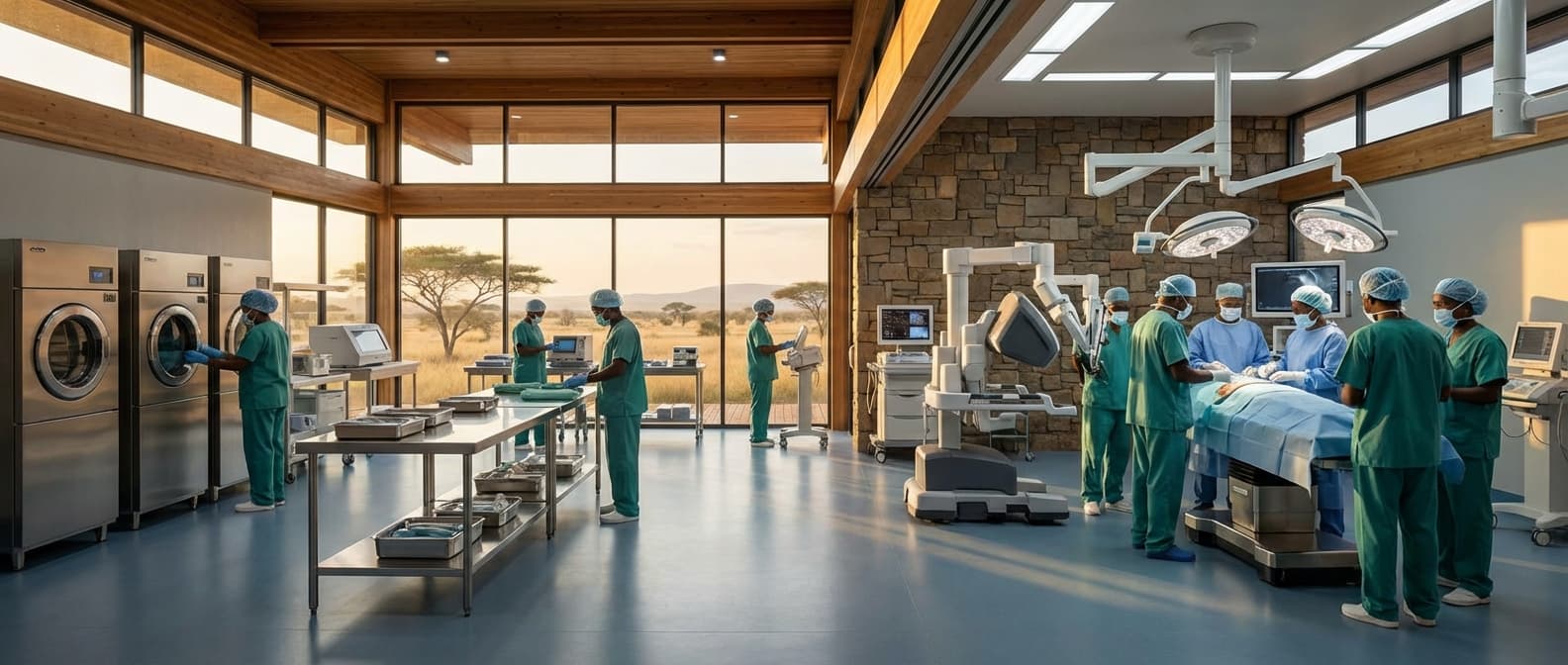
Medical Gas System Design & Installation in Djibouti
Engineering Excellence & Technical Support
Medical gas pipeline systems: O2, N2O, air, vacuum High-standard technical execution following OEM protocols and local regulatory frameworks.
Advanced Medical Gas Pipeline Installation
Successful design and installation of a state-of-the-art medical gas pipeline system for [Hospital Name], ensuring reliable and safe delivery of medical gases (oxygen, medical air, vacuum) to patient care areas. Leveraged advanced engineering principles and adherence to international standards (e.g., NFPA 99) to guarantee system integrity and performance in Djibouti's unique environmental conditions.
Integrated Alarm & Monitoring Solutions
Implemented a comprehensive medical gas alarm and monitoring system at [Clinic Name], providing real-time status updates and immediate alerts for pressure deviations, gas supply levels, and potential leaks. This proactive approach enhances patient safety and allows for swift intervention, crucial for critical care environments in Djibouti.
Robust Gas Supply Redundancy & Backup
Designed and deployed redundant medical gas supply systems, including [e.g., bulk oxygen tanks and medical air compressors with backup generators], for [Medical Facility Type] in Djibouti. This ensures uninterrupted supply of essential gases even during power outages or primary system failures, a critical consideration for maintaining continuous healthcare services.
What Is Medical Gas System Design & Installation In Djibouti?
Medical Gas System Design & Installation in Djibouti refers to the specialized engineering and construction process of creating and implementing a safe, reliable, and compliant infrastructure for the supply of medical gases within healthcare facilities. This encompasses the design of a network of piping, outlets, alarm systems, and the integration of primary and secondary supply sources (e.g., bulk cryogenic tanks, manifold cylinders) to deliver essential gases like oxygen, medical air, nitrous oxide, nitrogen, and vacuum to patient care areas. The service involves meticulous adherence to international standards (such as NFPA 99, ISO 7396-1) and local Djibouti regulations, ensuring the purity, pressure, and flow rates required for patient treatment and medical procedures. It is a critical component of modern healthcare facility infrastructure, directly impacting patient safety and clinical efficacy.
| Stakeholder/Facility Type | Rationale for Medical Gas System | Typical Use Cases |
|---|---|---|
| Hospitals (Public & Private) | Essential for life support, surgical procedures, respiratory therapy, and emergency services. Ensures continuous and reliable gas supply critical for patient outcomes. | Oxygen therapy, anesthesia administration, mechanical ventilation, pneumatic surgical tools, diagnostic procedures, emergency resuscitation. |
| Specialized Clinics (e.g., Dental, Surgical Centers) | Provides necessary gases for specific procedures, enhancing patient comfort and procedural efficiency. May require smaller, localized systems. | Nitrous oxide for sedation (dental), medical air for surgical drills and instruments, oxygen for recovery. |
| Emergency Services & Ambulances | Mobile and integrated systems for on-site and in-transit patient care, enabling immediate respiratory support. | Portable oxygen cylinders, integrated oxygen and medical air systems in ambulances. |
| Research & Diagnostic Laboratories | Specific gases for analytical equipment and experimental procedures, requiring high purity and precise control. | Nitrogen for gas chromatography, mixed gases for calibration standards, air for analytical instruments. |
| Healthcare Facility Developers & Owners | Ensures compliance with healthcare building codes and standards, facilitating facility accreditation and operational licensing. Investments in robust systems minimize future operational risks and costs. | New hospital construction, expansion of existing facilities, upgrades to outdated medical gas infrastructure. |
Key Components and Phases of Medical Gas System Design & Installation
- System Design: Conceptualization and detailed engineering, including P&ID development, pipeline sizing, material selection, pressure regulation strategy, alarm system architecture, and specification of terminal units and emergency shutdown devices.
- Material Procurement: Sourcing of medical-grade piping, fittings, valves, regulators, alarms, and gas sources meeting stringent purity and quality standards.
- Installation: Precision execution of pipeline installation, welding (orbital welding for purity), brazing, pressure testing, and purging to prevent contamination.
- Commissioning and Validation: Rigorous testing of the entire system to verify pressure, flow, purity, and alarm functionality. This includes leak detection, gas purity analysis, and functional testing of all components.
- Training and Handover: Comprehensive training for facility maintenance staff on system operation, maintenance, troubleshooting, and emergency procedures. Formal handover of system documentation, including as-built drawings and test reports.
- Compliance and Certification: Ensuring all design and installation activities adhere to Djibouti's healthcare infrastructure regulations and relevant international codes, leading to official certification and operational approval.
Who Needs Medical Gas System Design & Installation In Djibouti?
Medical gas systems are critical for modern healthcare facilities, ensuring the safe and efficient delivery of essential gases like oxygen, medical air, and vacuum to patients. In Djibouti, various entities and departments rely on these specialized systems for their operations. This document outlines the key players who require professional medical gas system design and installation services in the country.
| Customer Type | Primary Departments/Areas of Need | Key Gas Requirements |
|---|---|---|
| Hospitals (Public & Private) | Operating Rooms, ICUs, NICUs, ERs, Wards, Anesthesia Bays, Pulmonary Function Labs | Oxygen, Medical Air, Nitrous Oxide, Vacuum, Waste Anesthetic Gas Disposal (WAGD) |
| Clinics & Health Centers | Treatment Rooms, Minor Procedure Areas, Patient Rooms (if applicable) | Oxygen, Medical Air, Vacuum |
| Emergency Medical Services (EMS) | Ambulances (vehicle-based systems), Station Bays | Oxygen, Medical Air, Vacuum |
| Surgical Centers | Operating Rooms, Recovery Rooms | Oxygen, Medical Air, Nitrous Oxide, Vacuum, WAGD |
| Rehabilitation Centers | Therapy Rooms, Patient Rooms | Oxygen (for respiratory therapy), Vacuum |
| Veterinary Hospitals | Operating Rooms, Recovery Wards, Kennels | Oxygen, Medical Air, Vacuum, Nitrous Oxide (for anesthesia) |
| Research Laboratories | Specialized Equipment Areas | Medical Gases (depending on research protocols), Vacuum |
| Ministry of Health Facilities | Various levels of healthcare provision, including training and oversight | All standard medical gases depending on facility type |
Target Customers & Departments in Djibouti Requiring Medical Gas System Design & Installation
- Hospitals (Public and Private)
- Clinics and Health Centers
- Emergency Medical Services (EMS) Stations
- Surgical Centers and Operating Theaters
- Intensive Care Units (ICUs)
- Neonatal Intensive Care Units (NICUs)
- Emergency Rooms (ERs)
- Rehabilitation Centers
- Veterinary Hospitals and Clinics
- Research Laboratories
- Educational Institutions with Medical Programs
- Disaster Relief and Temporary Medical Facilities
- Ministry of Health Facilities
Medical Gas System Design & Installation Process In Djibouti
The medical gas system design and installation process in Djibouti follows a structured workflow to ensure compliance with international standards and local regulations, prioritizing patient safety and system reliability. This process typically begins with an initial inquiry from a healthcare facility and culminates in the fully commissioned and operational medical gas system. Each stage is critical for delivering a high-quality, safe, and efficient system.
| Stage | Description | Key Activities & Deliverables | Responsible Parties | Timeframe (Indicative) |
|---|---|---|---|---|
| The process begins with a healthcare facility in Djibouti expressing interest in a new medical gas system or an upgrade/expansion of an existing one. | Initial discussions, understanding facility requirements (e.g., number of beds, types of gases, future expansion plans), budget considerations. Deliverable: Preliminary scope of work and initial proposal. | Client (Healthcare Facility), Potential Vendor/Contractor | 1-2 Weeks |
| A comprehensive assessment of the existing facility and site conditions to determine the feasibility and best approach for the system. | On-site visits, analysis of building structure, existing infrastructure, power availability, access routes, environmental factors. Assessment of local regulations and standards. Deliverable: Feasibility report, site survey findings. | Vendor/Contractor, Client Representative | 2-3 Weeks |
| Development of a high-level design and detailed specifications based on the needs assessment and site survey. | Defining system architecture (central plant, distribution network, terminal units), selecting gas types and purity, determining pressure requirements, outlining equipment specifications. Deliverable: Conceptual design drawings, preliminary Bill of Quantities (BoQ), detailed technical specifications. | Vendor/Contractor (Design Engineers) | 3-4 Weeks |
| Creation of detailed engineering drawings, calculations, and documentation required for construction and compliance. | Producing P&IDs (Piping and Instrumentation Diagrams), layout drawings, schematics, electrical drawings, structural considerations, pressure drop calculations, material take-offs. Deliverable: Complete set of engineering drawings, technical submittals, final BoQ. | Vendor/Contractor (Design & Engineering Team) | 6-8 Weeks |
| Obtaining necessary permits and approvals from relevant Djibouti authorities. | Submitting design documents to Ministries of Health, Public Works, and other relevant bodies for review and approval. Securing building permits and installation licenses. Deliverable: Approved drawings, permits. | Vendor/Contractor, Client (Facilitation) | 4-12 Weeks (highly variable based on local bureaucracy) |
| Acquiring all necessary components, equipment, and materials for the installation. | Ordering medical gas cylinders/bulk tanks, compressors, vacuum pumps, regulators, alarm systems, medical gas outlets, piping, valves, and accessories. Ensuring compliance with international standards (e.g., ISO, HTM). Deliverable: All materials on-site or ready for delivery. | Vendor/Contractor (Procurement Department) | 8-16 Weeks (depending on lead times and availability) |
| The physical installation of the medical gas system components within the healthcare facility. | Piping installation, welding (where applicable, with certified welders), installation of central supply equipment, terminal units, and alarm panels. Adherence to installation procedures and safety protocols. Deliverable: Physically installed system. | Vendor/Contractor (Installation Team, Certified Technicians) | 12-24 Weeks (highly dependent on project scale and complexity) |
| Thorough testing and validation of the installed system to ensure it functions correctly and safely. | Pressure testing, leak testing, purging of lines, gas purity analysis, alarm system verification, flow rate testing, interface checks with existing systems. Deliverable: Commissioning reports, test certificates, validation documentation. | Vendor/Contractor (Commissioning Engineers), Client Representative, Independent Third-Party (optional) | 4-6 Weeks |
| Training the healthcare facility's staff on the operation and basic maintenance of the medical gas system. | Demonstrating system operation, emergency procedures, routine checks, minor troubleshooting. Providing operation and maintenance manuals. Formal handover of the system. Deliverable: Trained staff, O&M manuals, handover certificate. | Vendor/Contractor (Technical Trainers), Client Staff | 1-2 Weeks |
| Ongoing support and maintenance to ensure the long-term reliability and performance of the system. | Warranty period, scheduled preventative maintenance, emergency repair services, spare parts management, future system upgrades. Deliverable: Service level agreements (SLAs), maintenance contracts. | Vendor/Contractor (Service Department), Client Facility Management | Ongoing |
Medical Gas System Design & Installation Process in Djibouti: Workflow Breakdown
- Inquiry & Needs Assessment
- Site Survey & Feasibility Study
- Conceptual Design & Specification
- Detailed Design & Engineering
- Regulatory Approvals & Permitting
- Procurement & Material Sourcing
- On-site Installation & Construction
- System Testing & Commissioning
- Training & Handover
- Post-Installation Support & Maintenance
Medical Gas System Design & Installation Cost In Djibouti
Designing and installing a medical gas system in Djibouti involves a complex interplay of factors that dictate the overall cost. These systems are critical for patient care, requiring adherence to stringent safety and quality standards. The pricing is not static and can fluctuate based on the specific requirements of the facility, the chosen equipment, and the current economic conditions in Djibouti. Understanding these elements is crucial for accurate budgeting and project planning.
| Component/Service Category | Estimated Cost Range (DJF) |
|---|---|
| Design & Engineering Services | 300,000 - 1,500,000+ |
| Medical Gas Generators (Oxygen, Air) | 1,000,000 - 10,000,000+ (depending on capacity and type) |
| Manifolds & Regulators | 200,000 - 800,000+ |
| Piping Installation (per meter, incl. materials) | 5,000 - 25,000+ |
| Medical Gas Outlets | 15,000 - 50,000+ (per outlet) |
| Alarms & Monitoring Systems | 300,000 - 1,000,000+ |
| Labor & Installation (skilled technicians) | 1,000,000 - 5,000,000+ (project dependent) |
| Testing, Commissioning & Certification | 200,000 - 700,000+ |
| Ancillary Equipment (e.g., backup cylinders) | 500,000 - 2,000,000+ |
| Total Project Cost (Small Clinic) | 5,000,000 - 15,000,000+ |
| Total Project Cost (Medium Hospital Wing) | 15,000,000 - 50,000,000+ |
| Total Project Cost (Large Hospital Facility) | 50,000,000 - 200,000,000+ (highly variable) |
Key Pricing Factors for Medical Gas System Design & Installation in Djibouti
- Scope and Complexity of the System: The number of medical gas outlets (oxygen, medical air, vacuum, nitrous oxide, etc.), the size of the facility, and the layout of the pipeline network are primary cost drivers. Larger hospitals with extensive pipeline networks will naturally incur higher costs than smaller clinics.
- Type and Quality of Equipment: The choice of medical gas generators (e.g., oxygen concentrators, air compressors), manifolds, regulators, alarms, outlets, and piping materials significantly impacts the price. High-grade, certified equipment adhering to international standards will be more expensive but ensures reliability and safety.
- Piping Infrastructure: The material of the piping (e.g., copper, stainless steel), the diameter, and the complexity of the installation (e.g., routing through walls, ceilings, underground) all contribute to the cost. Longer runs and more complex routing increase labor and material expenses.
- Location and Accessibility: Djibouti's geographical location and infrastructure can influence transportation costs for equipment and materials. Remote or hard-to-access project sites may also incur additional logistical charges.
- Labor Costs: The availability and cost of skilled labor for design, installation, and commissioning are significant. Specialized technicians experienced in medical gas systems are often required, and their rates can vary.
- Regulatory Compliance and Certification: Adhering to Djiboutian and international standards for medical gas systems, as well as obtaining necessary certifications and approvals, can add to the project's cost through inspections and documentation.
- Project Management and Engineering Fees: The cost of professional design services, project management, and engineering expertise is a crucial component of the overall budget.
- Ancillary Equipment and Services: This includes items like backup gas cylinders, gas monitoring systems, emergency shut-off valves, and commissioning/testing services.
- Market Dynamics and Supplier Negotiations: The availability of specific equipment and the bargaining power with suppliers can lead to price variations. Local distributors and their markups also play a role.
- Currency Exchange Rates: As Djibouti uses the Djiboutian Franc (DJF), fluctuations in exchange rates with major currencies (USD, EUR) used for importing specialized equipment can impact the final cost.
Affordable Medical Gas System Design & Installation Options
Designing and installing a medical gas system is a critical investment for healthcare facilities. While crucial for patient care, costs can be a significant concern. This guide explores affordable design and installation options, focusing on value bundles and practical cost-saving strategies to ensure facilities receive a safe, compliant, and cost-effective medical gas system.
| Strategy | Description | Potential Cost Savings |
|---|---|---|
| Value Bundles: Packages offered by manufacturers or installers that combine equipment, installation, and sometimes initial maintenance at a fixed price. | Bundles often leverage bulk purchasing power and streamlined processes, leading to integrated solutions and predictable costs. | Can offer 10-20% savings compared to sourcing components and services individually. Simplifies budgeting and project management. |
| Material Optimization: Selecting cost-effective yet compliant materials for piping, valves, and regulators. | Choosing appropriate copper grades, standard valve types, and reliable pressure regulators can significantly impact material costs. | Savings of 5-15% on material procurement, depending on the scale of the project and material choices. |
| Efficient System Design: Optimizing pipe sizing and layout to minimize material usage and pressure drops. | Accurate hydraulic calculations and strategic routing reduce the amount of piping needed and the number of fittings, improving flow efficiency. | Reduces material costs by 5-10% and can lead to energy savings through reduced compressor/pump workload. |
| Off-Site Fabrication: Utilizing pre-fabricated manifold systems or welded pipe assemblies manufactured in a controlled environment. | Reduces on-site labor time, minimizes waste, and improves quality control. | Can save 15-25% on labor costs and reduce installation time. |
| Competitive Bidding & Negotiation: Obtaining multiple quotes from qualified medical gas system providers and negotiating terms. | Thoroughly vetting contractors and engaging in open negotiation can secure better pricing. | Potential savings of 5-15% through competitive bidding and negotiation. |
| Technology Integration: Leveraging BIM (Building Information Modeling) for design and clash detection. | BIM allows for precise planning, reducing design errors and reworks during installation. | Minimizes costly on-site modifications and delays, saving an estimated 3-7% on overall project costs. |
| Long-Term Service Agreements: Negotiating favorable terms for ongoing maintenance and service contracts. | Securing a reliable and cost-effective service plan ensures system uptime and prevents expensive breakdowns. | Can reduce annual maintenance costs by 10-20% and prevent unforeseen emergency repair expenses. |
Key Considerations for Affordable Medical Gas System Design & Installation
- Understanding Your Facility's Needs: Accurately assessing the required gases, outlets, and flow rates is paramount to avoid overspending on unnecessary capacity.
- Phased Installation: For new constructions or major renovations, consider a phased installation approach that aligns with budget cycles and occupancy schedules.
- Modular Systems: Exploring modular medical gas equipment can offer flexibility and scalability, allowing for expansion as needs grow without a complete overhaul.
- Standardization: Utilizing standard components and configurations can reduce custom fabrication costs and simplify maintenance.
- Local vs. National Contractors: While national contractors may offer economies of scale, local, reputable providers can sometimes offer more competitive pricing and personalized service.
- Preventative Maintenance Planning: Integrating a robust preventative maintenance plan from the outset can prevent costly emergency repairs and extend system lifespan.
Verified Providers In Djibouti
In Djibouti, ensuring access to reliable and trustworthy healthcare providers is paramount. This document outlines the importance of verified providers, specifically highlighting Franance Health and its credentials, to establish them as the best choice for healthcare needs in the region. Verification processes guarantee that healthcare professionals meet stringent standards for education, training, licensing, and ethical conduct. Franance Health distinguishes itself through its commitment to these rigorous standards, offering a level of assurance and quality that directly benefits patients. Their comprehensive credentialing process, coupled with a dedication to patient-centered care, makes them a standout option for individuals and families seeking dependable medical services.
| Credential Type | Franance Health Verification Standard | Patient Benefit |
|---|---|---|
| Medical Licenses | Up-to-date and valid Djiboutian and/or relevant international medical licenses meticulously checked. | Ensures providers are legally authorized and competent to practice medicine. |
| Educational Qualifications | Verification of degrees and diplomas from accredited medical institutions. | Guarantees a solid foundation of medical knowledge and training. |
| Professional Experience | Thorough review of past work history and documented clinical experience. | Confirms practical application of medical skills and expertise. |
| Specialty Certifications | Confirmation of board certifications or equivalent accreditations for specialists. | Assures patients of specialized knowledge and advanced proficiency in specific medical fields. |
| Criminal Background Checks | Standardized background checks to ensure patient safety and ethical conduct. | Provides an environment of security and trustworthiness. |
| References and Peer Reviews | Collection of professional references and, where applicable, peer evaluations. | Offers an additional layer of assurance regarding professional conduct and competence. |
| Continuing Medical Education (CME) | Confirmation of ongoing participation in CME programs. | Ensures providers remain up-to-date with the latest medical advancements and best practices. |
Why Franance Health is the Best Choice for Verified Providers in Djibouti:
- Rigorous Credentialing Process: Franance Health employs a multi-faceted approach to verify the qualifications and experience of all its healthcare professionals.
- Commitment to Quality Care: Beyond basic verification, Franance Health emphasizes continuous professional development and adherence to the highest ethical standards.
- Patient-Centric Approach: All verified providers at Franance Health are dedicated to understanding and meeting individual patient needs with empathy and expertise.
- Comprehensive Services: From general practice to specialized medical care, Franance Health offers a wide spectrum of services delivered by their trusted professionals.
- Transparency and Trust: The verification process ensures transparency, building trust between patients and their healthcare providers.
- Adherence to International Standards: Franance Health aligns its verification protocols with recognized international healthcare benchmarks.
- Local Expertise with Global Standards: Their providers possess deep understanding of local health challenges while upholding world-class medical practices.
Scope Of Work For Medical Gas System Design & Installation
This Scope of Work (SOW) outlines the requirements for the comprehensive design and installation of a medical gas system. It encompasses all phases from initial design conceptualization through to final system commissioning and handover. The objective is to deliver a safe, reliable, and compliant medical gas system that meets all applicable industry standards and client specifications. The SOW details the technical deliverables expected from the design and installation team, along with the standard specifications that will govern the project.
| Deliverable Type | Description | Associated Standards/Specifications |
|---|---|---|
| Design Drawings | Detailed P&ID (Piping and Instrumentation Diagrams) for all medical gases, plant room layouts, distribution piping routes, and alarm/monitoring schematics. | NFPA 99, ASSE Series 6000, Local Building Codes, Client-specific design guidelines. |
| Equipment Specifications | Technical specifications for all major equipment including medical gas generators (oxygen, medical air, nitrogen), vacuum pumps, compressors, regulators, manifolds, alarms, and control systems. | NFPA 99, CGA Standards, Manufacturer's technical data sheets, Performance testing requirements. |
| Material Specifications | Detailed specifications for piping, fittings, valves, hangers, supports, and insulation, ensuring material compatibility and purity. | ASTM Standards (e.g., ASTM B88 for copper tubing), ANSI Standards, MSS SP-110 for ball valves, Purity requirements for medical gases. |
| Installation Manuals | Comprehensive installation instructions and guidelines for all system components and sub-assemblies. | Manufacturer's installation manuals, Best practices for medical gas system installation. |
| Testing & Commissioning Plan | Detailed plan outlining all tests to be performed, including pressure testing, leak testing, purity analysis, flow rate verification, and alarm functional testing. | NFPA 99, ASSE 6030, ASME B31.3 (Process Piping), Manufacturer's testing procedures. |
| As-Built Drawings | Final drawings reflecting the actual installed system, including all deviations from the original design. | NFPA 99, Client-specific drawing standards. |
| Operations & Maintenance Manuals | User-friendly manuals detailing system operation, routine maintenance procedures, troubleshooting guides, and emergency protocols. | Manufacturer's O&M manuals, NFPA 99 recommendations. |
| Training Materials | Comprehensive training materials for facility staff on the operation, maintenance, and emergency procedures for the medical gas system. | NFPA 99, Manufacturer's training programs. |
| Purity Analysis Reports | Certificates of analysis verifying the purity of medical gases at various points in the system. | USP (United States Pharmacopeia) standards for medical gases, NFPA 99 requirements. |
| System Certification | Formal certification of the installed medical gas system by a qualified third-party inspector, attesting to its compliance with all applicable codes and standards. | NFPA 99, ASSE Series 6000, Local regulatory requirements. |
Key Project Phases
- Design & Engineering
- Procurement & Fabrication
- Installation & Construction
- Testing & Commissioning
- Documentation & Handover
Service Level Agreement For Medical Gas System Design & Installation
This Service Level Agreement (SLA) outlines the guaranteed response times and uptime for the design and installation of medical gas systems, ensuring critical healthcare infrastructure is maintained to the highest standards.
| Service Component | Response Time Guarantee (for critical issues) | Uptime Guarantee (post-installation) | Downtime Notification |
|---|---|---|---|
| Design Plan Review & Approval | 2 business days for initial review, 1 business day per revision cycle | N/A (Design Phase) | N/A |
| Installation Commencement (post-design approval & material availability) | Within 5 business days | N/A (Installation Phase) | N/A |
| Scheduled Installation Progress Updates | Weekly via email or project portal | N/A (Installation Phase) | N/A |
| Emergency Site Visit (for critical installation faults) | 4 business hours for on-site arrival | N/A (Installation Phase) | N/A |
| Testing & Commissioning Completion | Within 3 business days of installation completion | N/A (Commissioning Phase) | N/A |
| Post-Installation System Uptime (Critical Medical Gases - Oxygen, Air, Vacuum) | N/A (This applies post-handover and to operational systems) | 99.9% (allows for ~8.76 hours of planned downtime per year) | Client must be notified at least 48 hours in advance for planned downtime. Unplanned downtime requires immediate notification and a remediation plan within 4 hours. |
| Post-Installation System Uptime (Non-Critical Medical Gases - Nitrous Oxide, CO2, etc.) | N/A | 99.0% (allows for ~87.6 hours of planned downtime per year) | Client must be notified at least 72 hours in advance for planned downtime. Unplanned downtime requires immediate notification and a remediation plan within 12 hours. |
| Emergency Support (post-installation, for critical system failures) | 2 business hours for remote diagnosis, 6 business hours for on-site arrival | Covered by the general uptime guarantees | Immediate notification upon detection or report of critical failure, followed by a remediation plan within 4 hours. |
Key Service Parameters
- System Design: Ensuring adherence to all relevant medical gas standards (e.g., NFPA 99, HTM 02-01), regulatory requirements, and client specifications.
- Installation: Executing the physical installation of medical gas piping, outlets, alarms, and associated equipment with precision and minimal disruption.
- Project Management: Providing clear communication, regular progress updates, and adherence to agreed-upon project timelines.
- Testing & Commissioning: Thoroughly testing all components and the integrated system to verify performance, safety, and compliance before handover.
- Documentation: Delivering comprehensive design drawings, installation records, test reports, and user manuals.
Frequently Asked Questions

Ready when you are
Let's scope your Medical Gas System Design & Installation in Djibouti project in Djibouti.

Scaling healthcare logistics and technical systems across the entire continent.