
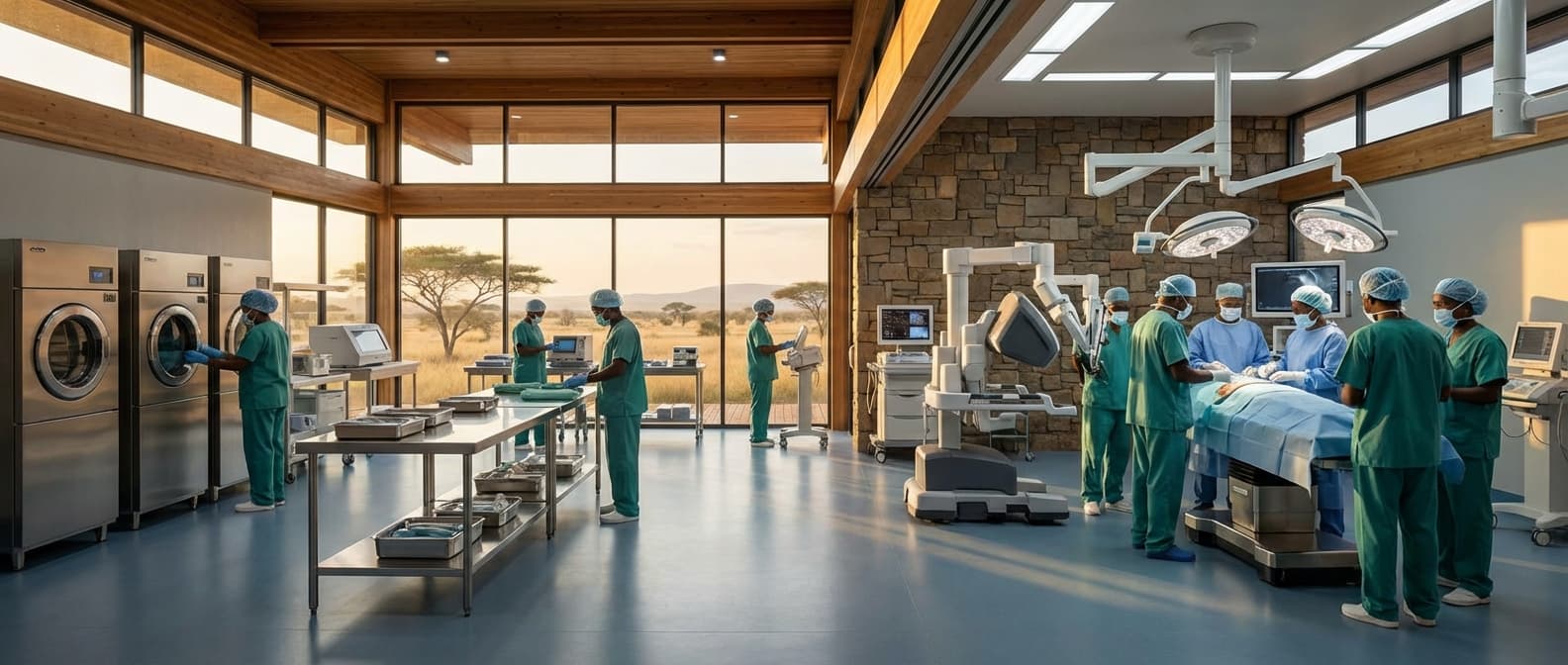
Endoscopy Reprocessing Validation in Djibouti
Engineering Excellence & Technical Support
AER validation, SOP development and compliance High-standard technical execution following OEM protocols and local regulatory frameworks.
Rigorous Cleaning Efficacy Verification
Implemented multi-stage cleaning validation protocols, including ATP bioluminescence and simulated soil testing, to confirm the removal of biological debris and ensure optimal surface cleanliness of endoscopes, meeting international reprocessing standards.
High-Level Disinfection Parameter Assurance
Established and validated critical parameters for high-level disinfection (HLD) processes, including chemical concentration, contact time, and temperature monitoring, to guarantee complete inactivation of pathogenic microorganisms and prevent healthcare-associated infections.
Endoscope Channel Integrity and Sterilization Testing
Conducted comprehensive validation of endoscope channel cleaning and sterilization, utilizing methods like methylene blue dye tests and microbial challenge studies, to ensure the effectiveness of reprocessing in reaching and eliminating pathogens within internal lumens.
What Is Endoscopy Reprocessing Validation In Djibouti?
Endoscopy reprocessing validation in Djibouti is a critical quality assurance process designed to confirm the efficacy and safety of the methods employed in cleaning, disinfection, and sterilization of flexible and rigid endoscopes. This service ensures that reusable medical devices achieve a state of microbial inactivation that renders them safe for subsequent patient use, thereby mitigating the risk of healthcare-associated infections (HAIs) transmitted via contaminated endoscopes. The validation process is paramount for adhering to international standards and local regulatory requirements governing medical device reprocessing.
| Stakeholder/Entity | Reason for Needing Validation | Typical Use Cases |
|---|---|---|
| Healthcare Facilities (Hospitals, Clinics, Diagnostic Centers) in Djibouti: | Mandatory for patient safety, prevention of HAIs, compliance with national health regulations and accreditation standards, and risk management. Ensures the effectiveness of their internal reprocessing protocols and purchased equipment. | Routine validation of in-house reprocessing protocols for gastroscopes, colonoscopes, bronchoscopes, cystoscopes, arthroscopes, and other flexible and rigid endoscopes used in various medical specialties (gastroenterology, pulmonology, urology, orthopedics, surgery, etc.). |
| Endoscope Manufacturers and Service Providers: | To demonstrate that their equipment and accessories (e.g., AERs, detergents, disinfectants) meet performance standards and can be effectively validated by end-users. Crucial for market entry and product support. | Performance qualification (PQ) of new automated endoscope reprocessors before deployment in healthcare facilities. Validation of specific cleaning chemistries or accessory devices designed to improve reprocessing outcomes. |
| Regulatory Bodies and Accreditation Agencies: | To ensure that healthcare facilities are adhering to established safety protocols and providing a safe environment for patient care. Provides an objective basis for assessing compliance. | Auditing and inspection of endoscopy reprocessing suites within healthcare facilities to verify documented validation processes and adherence to best practices. |
Key Components of Endoscopy Reprocessing Validation
- Manual Cleaning Verification: Assessing the thoroughness of manual pre-cleaning steps, including lumen flushing and surface scrubbing, to remove gross soil and organic debris. This often involves visual inspection, testing for residual protein, blood, and carbohydrates.
- Automated Reprocessing Device Performance: Evaluating the operational parameters and efficacy of automated endoscope reprocessors (AERs), including cycle times, water temperatures, disinfectant concentrations and contact times, and rinse cycles.
- Disinfectant/Sterilant Efficacy Testing: Confirming that the chosen chemical agents achieve the intended level of microbial kill (high-level disinfection or sterilization) against a broad spectrum of microorganisms, including bacteria, fungi, viruses, and bacterial spores, under simulated worst-case conditions.
- Sterilization Process Validation (if applicable): For steam or chemical sterilization methods, validating the achievement of sterility through methods like Bowie-Dick tests, biological indicators, and process parameter monitoring.
- Water Quality Testing: Analyzing the quality of water used in rinsing and disinfection cycles to ensure it meets established microbiological standards (e.g., potable water or purified water, depending on the protocol) to prevent recontamination.
- Environmental Monitoring: Assessing the microbiological quality of the reprocessing environment, including air and surfaces, to identify potential sources of contamination.
- Documentation and Record-Keeping Review: Verifying that all reprocessing steps are meticulously documented, including staff training, equipment maintenance, and validation results.
Who Needs Endoscopy Reprocessing Validation In Djibouti?
Endoscopy reprocessing validation is a critical safety measure for any facility performing endoscopic procedures. In Djibouti, this need is particularly pronounced in hospitals and clinics where endoscopes are used for diagnostic and therapeutic purposes. Ensuring that reprocessed endoscopes are free from viable microorganisms significantly reduces the risk of patient-to-patient transmission of infections, a paramount concern in healthcare settings worldwide.
| Customer Type | Relevant Departments | Key Concerns |
|---|---|---|
| Public Hospitals | Gastroenterology, Pulmonology, Urology, Infection Control, CSSD | High patient volume, diverse patient demographics, public health mandate |
| Private Hospitals & Clinics | Gastroenterology, Pulmonology, Urology, Infection Control, CSSD | Patient safety, reputation, regulatory compliance (potential) |
| Military/International Facilities | All Endoscopy-Performing Departments, Infection Control, CSSD | Strict international standards, personnel safety |
| Training Hospitals | All Endoscopy-Performing Departments, Infection Control, CSSD | Setting high safety standards, educational integrity |
| Diagnostic Centers | Gastroenterology, Pulmonology, Urology, Infection Control, CSSD | Specialized focus, patient throughput |
Target Customers and Departments in Djibouti Requiring Endoscopy Reprocessing Validation
- Public Hospitals: Central hospitals and regional medical centers in Djibouti are likely to perform the highest volume of endoscopic procedures, making them primary candidates for validation. Their patient populations are diverse, and maintaining infection control is crucial.
- Private Hospitals and Clinics: As private healthcare providers grow in Djibouti, those offering specialized services like gastroenterology, pulmonology, and urology will require robust reprocessing validation to ensure patient safety and maintain their reputation.
- Military and International Organization Healthcare Facilities: Facilities serving military personnel or operating under international organizations in Djibouti will have stringent infection control standards, often aligning with international best practices that include reprocessing validation.
- Training and Teaching Hospitals: Any institution involved in training medical professionals in endoscopic procedures must demonstrate a commitment to the highest safety standards, which necessitates validated reprocessing protocols.
- Diagnostic and Endoscopy Centers: Standalone centers focused on diagnostic endoscopy will inherently require validated reprocessing to ensure the safety of their patients.
- Infection Control Departments: These departments are directly responsible for overseeing and implementing infection prevention strategies, making them key stakeholders in driving the adoption of reprocessing validation.
- Gastroenterology Departments: This is the most common specialty utilizing endoscopes (gastroscopy, colonoscopy, ERCP).
- Pulmonology Departments: Bronchoscopes are frequently used for diagnostic and therapeutic interventions in the lungs.
- Urology Departments: Ureteroscopes and cystoscopes are used for procedures within the urinary tract.
- Surgical Departments (Minimal Access Surgery): While not always termed 'endoscopy', surgical instruments used in minimally invasive procedures often undergo similar complex reprocessing and may benefit from validation principles.
- Central Sterile Services Departments (CSSD) / Sterilization Units: These departments are directly responsible for the reprocessing of endoscopes and are central to implementing and maintaining validated procedures.
Endoscopy Reprocessing Validation Process In Djibouti
This document outlines the standard workflow for the Endoscopy Reprocessing Validation Process within healthcare facilities in Djibouti, from the initial inquiry to the successful execution of the validation. This process is critical for ensuring the safety of patients undergoing endoscopic procedures by confirming that reusable endoscopes are effectively reprocessed to eliminate microbial contamination.
| Step | Description | Key Activities | Responsible Parties | Deliverables/Outcomes |
|---|---|---|---|---|
| The process begins when a healthcare facility in Djibouti identifies the need for or undergoes routine validation of their endoscopy reprocessing procedures. This can be triggered by new equipment, changes in protocols, regulatory requirements, or scheduled revalidation. | Facility contacts validation service provider (internal or external). Initial discussion regarding needs and objectives. | Healthcare Facility Management, Infection Control Department, Validation Service Provider | Confirmation of service engagement, preliminary understanding of requirements. |
| A detailed understanding of the specific endoscopes, reprocessing equipment, and chemicals involved is established. This step ensures that the validation will cover all critical aspects. | Identify all types of endoscopes to be validated. List all reprocessing equipment (e.g., automated endoscope reprocessors, manual cleaning stations). Specify all cleaning and high-level disinfection (HLD) agents. | Validation Service Provider, Healthcare Facility Biomedical Engineering, Infection Control Department | Agreed-upon scope of validation, list of validated items, quotation. |
| An on-site visit to assess the current reprocessing environment and review existing documentation is conducted. | Observe current reprocessing workflow. Review Standard Operating Procedures (SOPs) for cleaning and HLD. Inspect reprocessing equipment for calibration and maintenance status. Review staff training records. | Validation Service Provider, Healthcare Facility Infection Control and Nursing Staff | Assessment report highlighting strengths and areas for improvement, identification of any deviations from best practices or manufacturer recommendations. |
| A comprehensive protocol is created, outlining the methodology, materials, acceptance criteria, and testing procedures for the validation. | Design testing methods (e.g., microbial challenge testing, rinse water sampling, adenosine triphosphate (ATP) testing). Define sampling points and frequency. Establish acceptance criteria based on national/international guidelines and manufacturer’s instructions for use (IFU). | Validation Service Provider (with input from facility) | Approved Validation Protocol document. |
| All necessary materials, reagents, equipment, and personnel are prepared and organized for the validation execution. | Procure or prepare microbiological media and reagents. Calibrate and prepare testing equipment. Ensure availability of qualified personnel for sample collection and testing. Coordinate with facility staff for access and scheduling. | Validation Service Provider | Ready-to-use testing materials and equipment. |
| The validation protocol is implemented on-site, involving simulated or actual reprocessing cycles. | Perform manual cleaning verification (e.g., visual inspection, fluorescent markers). Conduct automated reprocessing cycles with microbial challenge. Collect samples from endoscope lumens and rinse water. Perform ATP testing on endoscope surfaces. | Validation Service Provider, Healthcare Facility Staff (for operational support) | Collected samples, raw data from testing, observational notes. |
| Collected data is meticulously analyzed against the established acceptance criteria. | Analyze microbiological culture results. Process ATP and other physicochemical test results. Compare results with the defined acceptance criteria. Identify any failures or non-conformities. | Validation Service Provider (Laboratory and Technical Team) | Preliminary data analysis, identification of potential issues. |
| If any part of the reprocessing process fails to meet the validation criteria, corrective actions are identified and implemented, followed by revalidation. | Investigate root cause of failure. Implement corrective actions (e.g., adjust cleaning procedures, recalibrate equipment, revise HLD protocols). Re-execute relevant validation tests to confirm effectiveness of corrective actions. | Healthcare Facility Management, Infection Control, Biomedical Engineering, Validation Service Provider | Documented corrective actions, results of revalidation tests. |
| A comprehensive report is generated, detailing the entire validation process, findings, and conclusions. A certification is issued if the process is deemed successful. | Compile all data, analysis, and results into a formal validation report. Include recommendations for ongoing monitoring and improvement. Issue a validation certificate if all criteria are met. | Validation Service Provider | Final Validation Report, Validation Certificate. |
| To ensure continued compliance and patient safety, routine monitoring and periodic revalidation are crucial. | Implement routine internal quality control checks. Schedule periodic revalidation of the entire process or specific components (e.g., annually, or after significant changes). | Healthcare Facility Infection Control and Biomedical Engineering | Sustained compliance, enhanced patient safety, preparedness for audits. |
Endoscopy Reprocessing Validation Process Workflow in Djibouti
- Inquiry and Initial Contact
- Scope of Work Definition
- Site Assessment and Documentation Review
- Validation Protocol Development
- Preparation and Material Gathering
- On-site Validation Execution
- Data Analysis and Reporting
- Corrective Actions and Revalidation (if necessary)
- Final Validation Report and Certification
- Ongoing Monitoring and Scheduled Revalidation
Endoscopy Reprocessing Validation Cost In Djibouti
Endoscopy reprocessing validation is a critical step to ensure patient safety by confirming the effectiveness of cleaning and disinfection protocols for reusable medical devices. In Djibouti, as in many developing nations, the cost of such validation can be influenced by a multitude of factors, making it challenging to provide a single definitive price. The available local currency for such services is the Djiboutian Franc (DJF). Pricing is often determined on a case-by-case basis, considering the complexity of the validation, the number of scopes, and the specific laboratory or service provider conducting the tests.
| Validation Type | Estimated Cost Range (DJF) | Notes |
|---|---|---|
| Basic Chemical Indicator Testing (per cycle) | 1,000 - 3,000 DJF | Assesses whether critical parameters like temperature and time were met during the cleaning cycle. Simple and cost-effective. |
| ATP Testing (per scope) | 2,500 - 6,000 DJF | Measures residual organic material. Provides a quick indication of cleaning effectiveness. More indicative than chemical indicators. |
| Biological Indicator Testing (per test pack) | 7,000 - 15,000 DJF | Uses highly resistant spores to confirm the lethality of the disinfection/sterilization process. Considered a gold standard. |
| Microbial Culturing (per sample) | 5,000 - 12,000 DJF | Detects the presence of viable microorganisms. Can be more time-consuming but offers direct microbial detection. |
| Comprehensive Validation Package (e.g., for initial setup or audit) | 50,000 - 150,000+ DJF | May include multiple testing types, documentation, and consultation. Highly variable based on scope and specific requirements. |
Key Pricing Factors for Endoscopy Reprocessing Validation in Djibouti
- Type of Validation Required: Different validation methods (e.g., biological indicators, chemical indicators, ATP testing, microbial culturing) carry varying costs.
- Scope Type and Quantity: Larger or more complex endoscopes might require specialized testing, and the number of scopes to be validated directly impacts the overall cost.
- Laboratory Capabilities and Expertise: The availability of specialized laboratories with trained personnel and calibrated equipment in Djibouti will influence pricing.
- Reagents and Consumables: The cost of specialized chemicals, growth media, and disposable testing kits used in the validation process.
- Turnaround Time: Urgent or expedited validation services often incur higher fees.
- Geographic Location and Logistics: For facilities located outside major urban centers, transportation costs for samples might be factored in.
- Service Provider's Overhead and Profit Margin: The operational costs and profit expectations of the entity performing the validation.
- Regulatory Requirements: Any specific local or international regulatory mandates for validation frequency and methodology can impact the scope and cost of testing.
- Contractual Agreements: Hospitals or clinics with long-term contracts or bulk testing agreements may benefit from discounted rates.
Affordable Endoscopy Reprocessing Validation Options
Ensuring the efficacy of endoscopy reprocessing is paramount for patient safety and infection control. However, the cost of validation can be a significant barrier, especially for smaller facilities or those operating on tighter budgets. This document explores affordable validation options, focusing on value bundles and cost-saving strategies to make crucial reprocessing validation accessible.
| Validation Component | Typical Cost Range (per item/cycle) | Affordable Alternatives/Strategies |
|---|---|---|
| Microbial Challenge Testing (e.g., B. atrophaeus, P. aeruginosa) | $100 - $500+ | Bulk purchasing of consumables for internal testing, partnering with academic labs for shared resources, utilizing pre-qualified test kits. |
| Chemical Indicator Testing (e.g., lumens, external surfaces) | $20 - $100+ | Negotiating bulk discounts with suppliers, exploring multi-use indicators where appropriate (with validation). |
| Enzyme Testing (e.g., protein residue detection) | $15 - $75+ | Implementing regular visual inspection protocols in conjunction with routine chemical indicators, using bundled testing services. |
| Biofilm Simulant Testing | $200 - $800+ | Focusing on validating the core cleaning steps with more accessible methods, relying on manufacturer's data for specialized biofilm challenges if available and supplemented by internal checks. |
| Water Quality Testing | $50 - $200+ | Establishing a regular, in-house sampling and testing schedule with a local accredited lab, rather than solely relying on expensive third-party validation cycles. |
| Equipment Performance Verification (e.g., washer-disinfector cycles) | $150 - $600+ | Utilizing manufacturer-recommended internal verification processes, scheduling maintenance and calibration proactively to minimize downtime and the need for extensive re-validation. |
| Staff Training & Competency Assessment | Variable (time-based) | Developing in-house training modules based on evidence-based guidelines, utilizing free online resources and webinars, cross-training staff. |
Understanding the Need for Validation
- Patient safety is non-negotiable; inadequate reprocessing can lead to the transmission of serious infections.
- Regulatory bodies (e.g., FDA, CDC, professional societies) mandate stringent reprocessing standards.
- Validation confirms that the chosen reprocessing method effectively eliminates microorganisms.
- Documentation of validation is essential for compliance and accreditation.
Verified Providers In Djibouti
Ensuring access to reliable healthcare in Djibouti is paramount, and identifying 'Verified Providers' is crucial for peace of mind. Among these, Franance Health stands out due to its rigorous credentialing process and unwavering commitment to patient well-being. This document outlines why Franance Health represents the best choice for healthcare services in Djibouti.
| Provider Type | Franance Health Assurance | Key Benefits for Patients |
|---|---|---|
| Doctors | Board-certified with verified degrees and licensure | Expert diagnoses, evidence-based treatment plans, specialized care |
| Nurses | Licensed and trained in advanced patient care protocols | Attentive monitoring, compassionate support, effective post-treatment care |
| Specialists | Extensive experience and recognized expertise in their fields | Access to advanced treatments and management of complex conditions |
| Medical Facilities | Adherence to strict hygiene, safety, and quality control standards | Safe, comfortable, and technologically equipped environment for treatment |
Why Franance Health is the Best Choice:
- Rigorous Credentialing: Franance Health meticulously vets all its healthcare professionals, ensuring they meet and exceed international standards of qualification, experience, and ethical practice.
- Patient-Centric Approach: Their philosophy is centered on providing compassionate, personalized care, prioritizing patient needs and comfort throughout their medical journey.
- Comprehensive Services: Franance Health offers a wide spectrum of medical services, from general consultations to specialized treatments, ensuring that diverse healthcare needs are met under one roof.
- Modern Facilities & Technology: They invest in state-of-the-art medical equipment and maintain clean, modern facilities to facilitate accurate diagnoses and effective treatments.
- Cultural Sensitivity & Accessibility: Franance Health is committed to understanding and respecting the cultural nuances of Djibouti, ensuring clear communication and accessible care for all patients.
- Continuous Professional Development: Their providers are encouraged and supported in ongoing learning and skill enhancement, guaranteeing they are up-to-date with the latest medical advancements.
Scope Of Work For Endoscopy Reprocessing Validation
This Scope of Work (SOW) outlines the requirements for the validation of the endoscopy reprocessing procedures at [Your Facility Name]. The objective is to ensure that the current reprocessing protocols meet regulatory standards, best practices, and are effective in eliminating microbial contamination from flexible endoscopes. This validation will provide documented evidence that the reprocessing steps consistently produce clean and high-level disinfected or sterilized endoscopes suitable for patient use.
| Area of Validation | Standard/Guideline Reference | Key Parameters/Tests | Acceptance Criteria (Examples) |
|---|---|---|---|
| Cleaning Validation | AAMI ST79:2017 (Comprehensive guide to sterilization and sterile processing of health care facilities) FDA General Principles of Process Validation Manufacturer's Instructions for Use (IFU) | Visual inspection for gross soil (luminal and external) Total Organic Carbon (TOC) analysis (luminal and external) Protein detection assays (luminal and external) Endotoxin testing (luminal) | No visible soil TOC levels below manufacturer's specified limits or established internal limits (e.g., < 200 µg/mL per lumen) Protein levels below manufacturer's specified limits or established internal limits (e.g., < 30 µg/device) Endotoxin levels below critical limits (e.g., < 20 EU/device for flexible endoscopes, as per AAMI ST79) |
| High-Level Disinfection (HLD) Validation | AAMI ST79:2017 APIC/CDC Guidelines for Disinfection and Sterilization in Healthcare Facilities Manufacturer's IFU | Microbiological challenge testing (e.g., using a surrogate organism like Mycobacterium terrae or a panel of common pathogens) Concentration verification of HLD solution Contact time verification Temperature monitoring of HLD solution | A minimum log reduction of X (e.g., 6-log) for the challenge organism in the HLD solution within the specified contact time. HLD solution concentration maintained within manufacturer's recommended range. Contact time and temperature as per manufacturer's IFU. |
| Sterilization Validation (if applicable) | AAMI ST79:2017 ISO 17665 (Moist heat sterilization) / ISO 11135 (Ethylene Oxide sterilization) / ISO 13485 (Quality management systems) Manufacturer's IFU | Microbiological challenge testing (using biological indicators appropriate for the sterilization method) Process parameter verification (e.g., temperature, pressure, time, gas concentration, humidity for EO) Geometrical mapping of sterilizer chamber | Achieve a Sterility Assurance Level (SAL) of 10⁻⁶ for biological indicators. Process parameters maintained within validated ranges throughout the cycle. Consistent lethality across the sterilizer chamber. |
| Storage and Handling | AAMI ST79:2017 Manufacturer's IFU | Environmental monitoring (temperature, humidity) in storage areas Inspection for barrier integrity (e.g., sterile packaging) Date tracking and shelf-life assessment | Environmental conditions maintained within recommended ranges. No breaches in sterile packaging. Clear labeling and adherence to shelf-life. |
Technical Deliverables
- Validation Master Plan (VMP): A comprehensive document detailing the overall validation strategy, scope, objectives, responsibilities, and timeline for the endoscopy reprocessing validation project.
- Protocols: Detailed study protocols for each validation test, including sampling plans, test methods, acceptance criteria, and data analysis procedures.
- Raw Data: All collected raw data from laboratory testing, environmental monitoring, and process observations.
- Validation Reports: Individual reports for each protocol, summarizing the results, deviations, and conclusions. This includes reports for cleaning validation, high-level disinfection (HLD) or sterilization validation, and potentially environmental monitoring if applicable.
- Final Validation Summary Report: A consolidated report that integrates the findings from all individual validation reports, providing an overall assessment of the reprocessing validation and recommending a validation status (e.g., validated, conditionally validated, not validated).
- Standard Operating Procedures (SOPs) for Reprocessing: If revisions are identified as necessary during the validation process, updated or new SOPs for endoscopy cleaning, HLD/sterilization, and storage will be a deliverable.
- Equipment Calibration and Maintenance Records: Documentation demonstrating that all equipment used in the reprocessing and testing phases is properly calibrated and maintained.
- Training Records: Evidence of training for personnel involved in the reprocessing and validation activities.
- Risk Assessment Report: A report detailing the identification, assessment, and mitigation of risks associated with endoscopy reprocessing.
- Method Validation Reports (if applicable): If new or modified analytical methods are used for testing, method validation reports will be required.
Service Level Agreement For Endoscopy Reprocessing Validation
This Service Level Agreement (SLA) outlines the response times and uptime guarantees for the Endoscopy Reprocessing Validation service. This service ensures the validated reprocessing of endoscopic equipment, critical for patient safety and regulatory compliance.
| Service Component | Response Time Guarantee | Uptime Guarantee |
|---|---|---|
| Initial Validation Assessment | Within 2 business days of request submission | N/A (Project-based) |
| Validation Plan Delivery | Within 5 business days of assessment completion | N/A (Project-based) |
| On-site Validation Execution | Scheduled as per agreed project timeline | N/A (Project-based) |
| Validation Report Generation | Within 7 business days of completion of on-site execution | N/A (Project-based) |
| Technical Support (Non-Validation Execution) | Critical Issues: Within 4 business hours; Non-Critical Issues: Within 8 business hours | 99.5% during standard business hours (Monday-Friday, 8:00 AM - 5:00 PM local time) |
| System Monitoring and Alerting (if applicable) | Automated alerts for system anomalies | 99.9% availability of monitoring infrastructure |
Scope of Service
- Validation of automated endoscopic reprocessors.
- Validation of manual cleaning procedures.
- Performance testing and verification.
- Documentation and reporting of validation results.
- Ongoing monitoring and revalidation support.
Frequently Asked Questions

Ready when you are
Let's scope your Endoscopy Reprocessing Validation in Djibouti project in Djibouti.

Scaling healthcare logistics and technical systems across the entire continent.