
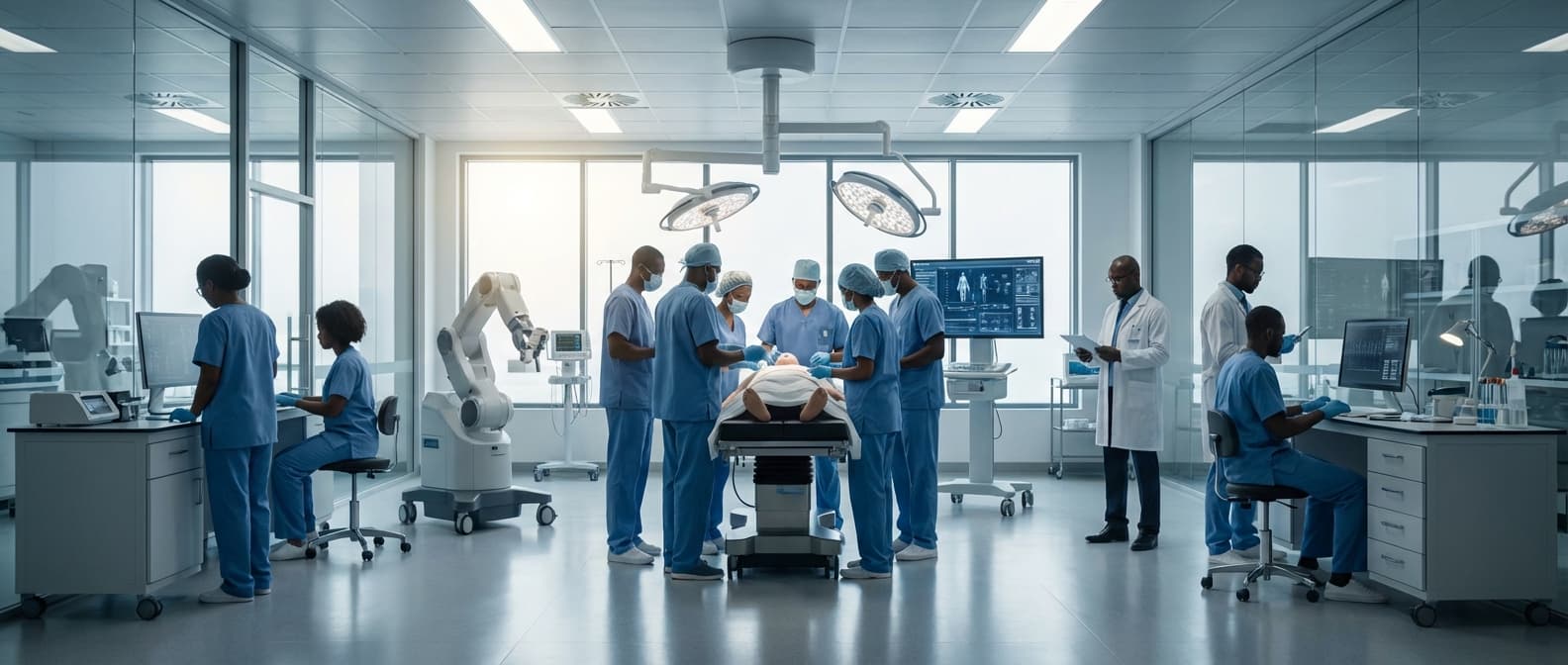
Managed Equipment Service (MES) in Djibouti
Engineering Excellence & Technical Support
Long‑term equipment provision with uptime SLAs and lifecycle management. High-standard technical execution following OEM protocols and local regulatory frameworks.
Optimized Equipment Uptime
Leveraging advanced predictive maintenance and proactive service scheduling, our MES in Djibouti ensures critical operational equipment consistently achieves maximum uptime, minimizing costly disruptions and maximizing productivity for your Djibouti-based operations.
On-Site Technical Expertise & Rapid Response
Our Djibouti MES provides dedicated, on-site technical teams equipped with specialized tools and extensive knowledge. We offer rapid diagnostic and repair capabilities, ensuring swift resolution of equipment issues and reducing downtime significantly within the unique operational environment of Djibouti.
Comprehensive Maintenance & Asset Management
Our Managed Equipment Service in Djibouti encompasses end-to-end lifecycle management, from installation and routine maintenance to performance monitoring and end-of-life planning. We deliver a holistic approach to asset management, enhancing operational efficiency and extending the lifespan of your valuable equipment in Djibouti.
What Is Managed Equipment Service (Mes) In Djibouti?
Managed Equipment Service (MES) in Djibouti refers to a comprehensive outsourcing model where a third-party provider takes responsibility for the acquisition, installation, maintenance, repair, and eventual disposal of critical medical equipment for healthcare facilities. This service is designed to optimize the operational efficiency, cost-effectiveness, and technological advancement of healthcare infrastructure within Djibouti, addressing challenges such as limited capital investment, scarcity of specialized technical expertise, and the need for consistent equipment uptime. MES effectively transforms the equipment lifecycle management from a capital expenditure-intensive and operationally burdensome undertaking into a predictable, service-based operational expense.
| Who Needs MES in Djibouti? | Typical Use Cases in Djibouti |
|---|---|
| Public Hospitals and Clinics: Government-funded healthcare facilities seeking to modernize their equipment without significant upfront capital outlay and to ensure reliable service delivery across the nation. | Installation and maintenance of diagnostic imaging equipment (e.g., X-ray, CT scanners, MRI) in regional hospitals to improve diagnostic capabilities. |
| Private Healthcare Providers: Private hospitals, clinics, and diagnostic centers aiming to enhance their service offerings, improve patient outcomes, and maintain a competitive edge through advanced medical technology. | Outfitting and managing a new specialized medical unit (e.g., cardiology, oncology) with state-of-the-art monitoring and treatment systems. |
| Non-Governmental Organizations (NGOs) and International Aid Organizations: Entities operating healthcare projects in Djibouti that require efficient and predictable management of medical equipment for their missions. | Establishing and sustaining the operational readiness of essential medical equipment in remote health posts or mobile clinics. |
| Specialized Medical Centers: Facilities focusing on specific medical disciplines that require highly technical and continuously operational equipment. | Ensuring the uninterrupted operation of life-support systems (e.g., ventilators, dialysis machines) in intensive care units. |
| Training and Research Institutions: Medical schools and research centers needing access to advanced equipment for educational and research purposes, with guaranteed technical support. | Providing and servicing laboratory analysis equipment for diagnostic and research purposes in a university medical faculty. |
Key Components of Managed Equipment Service (MES) in Djibouti:
- Equipment Procurement and Installation: Sourcing, purchasing, and deploying appropriate medical technologies based on the healthcare provider's needs and specifications.
- Preventive Maintenance (PM): Implementing scheduled maintenance routines to ensure optimal equipment performance, minimize downtime, and extend equipment lifespan.
- Corrective Maintenance and Repair: Providing prompt and effective repair services for equipment malfunctions and failures, often with guaranteed response and resolution times.
- Technical Support and Training: Offering expert technical assistance and user training to healthcare professionals, ensuring safe and efficient operation of the equipment.
- Asset Management and Tracking: Maintaining a detailed inventory of all managed equipment, including its location, service history, and lifecycle status.
- Consumables Management (Optional): In some MES contracts, the management and supply of associated consumables may also be included.
- Technology Upgrades and Replacement: Planning and executing the timely replacement or upgrade of equipment to ensure access to current and effective medical technologies.
- Performance Monitoring and Reporting: Providing regular reports on equipment utilization, uptime, maintenance activities, and overall service performance.
- Risk Mitigation: Transferring the operational and financial risks associated with equipment ownership and maintenance to the service provider.
Who Needs Managed Equipment Service (Mes) In Djibouti?
Managed Equipment Service (MES) offers a comprehensive solution for organizations to outsource the management, maintenance, and often the procurement of their essential equipment. This frees up internal resources, reduces capital expenditure, and ensures operational efficiency. In Djibouti, a country undergoing economic development and with specific logistical and environmental challenges, MES is particularly valuable for a range of businesses and government entities.
| Target Customer Group | Key Departments/Functions Benefiting |
|---|---|
| Logistics and Transportation Companies | Fleet Management, Maintenance Workshops, Operations Centers, Warehouse Management |
| Ports and Maritime Operations | Terminal Operations, Equipment Maintenance, Safety & Security, Engineering |
| Construction and Infrastructure Development | Project Management, Plant & Machinery Management, Site Operations, Procurement |
| Telecommunications Providers | Network Operations Centers, Field Maintenance Teams, Infrastructure Deployment, Technical Support |
| Healthcare Sector (Hospitals, Clinics, Diagnostic Centers) | Biomedical Engineering, IT Department, Radiology, Laboratory Services, Facilities Management |
| Government Agencies (e.g., Ministry of Infrastructure, Ministry of Health, Ministry of Defense) | Public Works Departments, Transportation Management, Healthcare Facilities Management, Defense Logistics, IT Services |
| Energy and Utilities (e.g., Power Generation, Water Treatment) | Operations & Maintenance, Engineering, Plant Management, Field Services |
| Large Industrial and Manufacturing Enterprises | Production Floor Management, Maintenance Departments, Quality Control, Supply Chain |
| Hospitality and Tourism (Large Hotels & Resorts) | Engineering & Maintenance, Housekeeping (for specialized equipment), IT Infrastructure, Facilities Management |
Who Needs Managed Equipment Service (MES) in Djibouti?
- Organizations aiming to optimize operational costs and improve budget predictability.
- Businesses in sectors with high equipment utilization and maintenance demands.
- Government agencies and parastatals seeking to enhance service delivery and infrastructure management.
- Companies looking to leverage advanced technology and expertise without significant upfront investment.
- Entities operating in environments where specialized maintenance and rapid response are crucial.
Managed Equipment Service (Mes) Process In Djibouti
The Managed Equipment Service (MES) process in Djibouti, often implemented by government entities or large organizations to outsource the management and maintenance of specialized equipment, follows a structured workflow from the initial inquiry to the final execution and ongoing management. This process aims to ensure operational efficiency, cost-effectiveness, and timely access to functioning equipment for essential services.
| Stage | Description | Key Activities | Responsible Parties | Output/Outcome |
|---|---|---|---|---|
| Inquiry and Needs Assessment | The initial stage where the client (e.g., a ministry, a hospital, a public utility) identifies a need for specialized equipment and explores the possibility of an MES solution. | Internal needs analysis, defining equipment requirements, budget allocation, feasibility study. | Client Ministry/Department, Procurement Department, Technical Experts. | Documented equipment needs, justification for MES, preliminary budget. |
| Tender/Request for Proposal (RFP) Process | A formal process to solicit proposals from qualified MES providers. | Development of RFP document, advertisement, pre-bid meetings, proposal submission. | Client Procurement Department, Technical Committee, Legal Department. | Received proposals from potential MES providers. |
| Vendor Selection and Negotiation | Evaluation of submitted proposals based on predefined criteria, followed by negotiations with shortlisted vendors. | Technical evaluation, financial evaluation, due diligence, clarification meetings, best and final offer (BAFO) request, negotiation of contract terms and pricing. | Evaluation Committee, Technical Experts, Procurement Department, Legal Department. | Selected preferred vendor, agreed-upon contract terms and pricing. |
| Contract Award and Mobilization | Formalization of the agreement and the commencement of the vendor's preparations to deliver the service. | Contract signing, issuance of Letter of Award, vendor mobilization plan, site preparation, securing necessary permits. | Client Ministry/Department, MES Provider, Legal Department. | Signed MES contract, mobilized vendor resources. |
| Equipment Deployment and Installation | The physical delivery, installation, and commissioning of the required equipment at the client's designated sites. | Equipment procurement, shipping and logistics, site preparation, installation, testing, commissioning, user training. | MES Provider, Technical Subcontractors, Client End-Users. | Fully installed, tested, and operational equipment, trained end-users. |
| Operational Management and Maintenance | The ongoing provision of services by the MES provider as stipulated in the contract, including maintenance, repairs, and consumables management. | Routine maintenance, preventive maintenance, corrective maintenance, spare parts management, technical support, performance monitoring. | MES Provider (dedicated team), Client Site Managers. | Consistently functional equipment, minimized downtime, efficient resource utilization. |
| Performance Monitoring and Reporting | Regular tracking and reporting of the MES provider's performance against agreed-upon Key Performance Indicators (KPIs). | Data collection (uptime, response times, repair times), performance analysis, generation of regular reports, client review meetings. | MES Provider, Client Performance Monitoring Team. | Performance reports, identification of areas for improvement, client feedback. |
| Contract Review and Renewal/Termination | Periodic reviews of the contract's effectiveness, with decisions on renewal, modification, or termination. | Contractual obligations review, KPI assessment, financial review, stakeholder consultations, decision on renewal or termination, transition planning (if applicable). | Client Ministry/Department, MES Provider, Legal Department. | Extended contract, revised contract, or termination of service with a handover plan. |
MES Process Workflow in Djibouti
- Inquiry and Needs Assessment
- Tender/Request for Proposal (RFP) Process
- Vendor Selection and Negotiation
- Contract Award and Mobilization
- Equipment Deployment and Installation
- Operational Management and Maintenance
- Performance Monitoring and Reporting
- Contract Review and Renewal/Termination
Managed Equipment Service (Mes) Cost In Djibouti
Managed Equipment Service (MES) in Djibouti involves contracting with a third-party provider to manage, maintain, and often finance a company's essential equipment. This can range from office machinery like printers and copiers to specialized industrial or medical equipment. The cost of MES in Djibouti is influenced by several factors, leading to a wide range of pricing. Understanding these factors is crucial for businesses seeking to budget effectively. The local currency in Djibouti is the Djiboutian Franc (DJF).
| Service Scope / Equipment Type | Estimated Monthly Cost Range (DJF) | Notes |
|---|---|---|
| Basic Office Equipment (Printers, Copiers - limited units) | 15,000 - 45,000 DJF | Covers basic maintenance, toner replenishment, and on-call support for a small fleet. |
| Advanced Office Equipment (High-volume copiers, multifunction devices - multiple units) | 50,000 - 150,000 DJF | Includes proactive maintenance, guaranteed response times, all consumables, and potentially some remote management. |
| Small to Medium Business IT Infrastructure (Servers, Networking - basic setup) | 80,000 - 300,000 DJF | Focuses on monitoring, patching, basic troubleshooting, and hardware support. May not include full device replacement costs. |
| Specialized Industrial Equipment (Manufacturing, Construction - per unit/system) | 100,000 - 500,000+ DJF | Highly dependent on the specific equipment, complexity, and criticality. Often involves on-site technicians, specialized parts, and stringent SLAs. |
| Medical Equipment (Diagnostic devices, imaging systems - per unit) | 150,000 - 1,000,000+ DJF | Requires highly specialized technicians, calibration, regulatory compliance, and critical uptime. Costs can be substantial. |
Key Pricing Factors for MES in Djibouti
- Type and Quantity of Equipment: The complexity, age, and sheer number of devices to be managed are primary drivers of cost. High-end, specialized, or numerous pieces of equipment will naturally incur higher fees.
- Service Level Agreement (SLA): The agreed-upon response times for maintenance, guaranteed uptime, proactive monitoring, and the scope of services (e.g., repairs, consumables, replacements) significantly impact pricing. More comprehensive SLAs command higher costs.
- Contract Duration: Longer-term contracts often come with discounted rates compared to short-term agreements, reflecting the provider's commitment and reduced administrative overhead over time.
- Consumables and Spare Parts: The cost of ongoing consumables (ink, toner, paper) and the availability and price of spare parts for the specific equipment will be factored into the overall MES package.
- Geographic Location within Djibouti: While Djibouti is a relatively small country, the logistical challenges and travel time for technicians to reach remote business locations can influence pricing.
- Provider's Overhead and Profit Margin: Each MES provider will have its own operational costs and desired profit margins, which are reflected in their pricing structures.
- Financing Options (if applicable): If the MES contract includes financing for the equipment itself, the interest rates and terms of that financing will be a major component of the total cost.
- Value-Added Services: Additional services like IT support integration, software updates, or data security management can increase the overall price.
Affordable Managed Equipment Service (Mes) Options
Securing reliable and cost-effective Managed Equipment Services (MES) is crucial for organizations to maintain operational efficiency and control expenses. MES providers offer a comprehensive solution for managing, maintaining, and upgrading a company's equipment, often leading to significant cost savings compared to in-house management. Understanding the different MES options, particularly value bundles and implementing smart cost-saving strategies, is key to maximizing return on investment.
| MES Component | Typical Cost-Saving Mechanism | Benefit |
|---|---|---|
| Proactive Maintenance | Reduces unexpected breakdowns and emergency repairs | Minimizes downtime, extends equipment life |
| Predictive Maintenance | Identifies potential issues before failure | Prevents catastrophic failures, optimizes repair schedules |
| Consolidated Procurement | Leverages provider's bulk purchasing power | Lower acquisition costs for equipment |
| Lifecycle Management | Planned upgrades and replacements | Avoids obsolescence, ensures access to efficient technology |
| Energy Efficiency | Optimization of equipment power consumption | Reduced utility bills |
| Remote Support | Reduced need for on-site technician visits | Lower travel and labor costs |
Key MES Value Bundles & Cost-Saving Strategies
- All-Inclusive Service Bundles: These packages often cover equipment acquisition, installation, proactive maintenance, repairs, software updates, and even end-of-life disposal. They provide predictability in budgeting and eliminate unexpected costs.
- Usage-Based or Tiered Pricing: Some MES models offer pricing based on actual equipment usage or service levels. This can be highly cost-effective for organizations with fluctuating needs or those who want to pay only for what they use.
- Predictive Maintenance Programs: Leveraging IoT sensors and data analytics, MES providers can predict equipment failures before they occur. This prevents costly downtime, reduces emergency repair expenses, and extends equipment lifespan.
- Consolidated Procurement: MES providers can leverage their purchasing power to acquire equipment at discounted rates, passing those savings onto clients. This also simplifies the procurement process.
- Lifecycle Management & Refresh Strategies: Proactive planning for equipment upgrades and replacements, often integrated into MES contracts, helps avoid costly emergency purchases and ensures access to newer, more efficient technology.
- Energy Efficiency Optimization: MES providers can identify and implement solutions to reduce equipment energy consumption, leading to lower utility bills. This can include recommending energy-efficient models or optimizing operational settings.
- Remote Monitoring & Diagnostics: Many MES solutions include remote capabilities, allowing providers to monitor equipment performance and diagnose issues without requiring on-site visits, saving on travel and labor costs.
- Standardization of Equipment: Encouraging or mandating the use of standardized equipment across the organization can simplify maintenance, reduce spare parts inventory, and improve technician efficiency.
- Negotiating Flexible Contract Terms: Working with MES providers to tailor contracts to specific needs, including service level agreements (SLAs) and payment structures, can unlock further cost efficiencies.
Verified Providers In Djibouti
In Djibouti, ensuring access to quality healthcare is paramount. When selecting healthcare providers, trust and verified credentials are key. Franance Health stands out as a premier choice, offering a network of rigorously vetted medical professionals and facilities. Their commitment to excellence, transparent credentialing process, and patient-centric approach make them an indispensable partner in Djibouti's healthcare landscape.
| Provider Type | Franance Health Verification Standard | Benefits for Patients |
|---|---|---|
| General Practitioners | Verified medical degree, valid license to practice, proven experience, adherence to ethical guidelines. | Reliable primary care, early diagnosis, referrals to specialists when needed. |
| Specialist Physicians (e.g., Cardiologists, Pediatricians, Dermatologists) | Board certification in specialty, extensive clinical experience, peer reviews, continuous professional development. | Expert diagnosis and treatment for specific health conditions, access to advanced medical knowledge. |
| Hospitals and Clinics | Accreditation from recognized health organizations, adherence to safety protocols, quality of infrastructure, qualified medical staff. | Safe and well-equipped facilities, comprehensive medical services, coordinated patient care. |
| Diagnostic Laboratories | Certification by relevant authorities, advanced equipment, qualified technicians, quality control measures. | Accurate and reliable diagnostic testing, timely results for effective treatment planning. |
Why Franance Health is the Best Choice for Verified Providers in Djibouti:
- Rigorous Vetting and Credentialing: Franance Health employs a multi-stage verification process for all providers, ensuring they meet the highest international standards of expertise, qualifications, and ethical practice.
- Comprehensive Network: Access a diverse range of specialists and healthcare facilities across Djibouti, catering to a wide spectrum of medical needs.
- Patient-Centric Approach: Franance Health prioritizes patient well-being, facilitating smooth appointment scheduling, clear communication, and access to quality care.
- Commitment to Quality: They continuously monitor provider performance and patient feedback to maintain and elevate the standard of care.
- Transparency and Trust: The credentialing process is transparent, providing patients with confidence in the medical professionals they engage with.
Scope Of Work For Managed Equipment Service (Mes)
This Scope of Work (SOW) outlines the requirements for a Managed Equipment Service (MES) provider. The MES provider will be responsible for the complete lifecycle management of specified medical equipment within the client's healthcare facilities. This includes procurement, installation, maintenance, repair, calibration, decommissioning, and disposal of all contracted equipment. The objective is to ensure optimal equipment performance, availability, and cost-effectiveness, thereby supporting high-quality patient care and operational efficiency.
| Category | Item | Standard Specification/Requirement | Measurement/Verification Method | Frequency/Target |
|---|---|---|---|---|
| Equipment Uptime | Critical Equipment | Minimum 95% uptime | Calculated based on scheduled PM and unplanned downtime | Monthly reporting |
| Equipment Uptime | Non-Critical Equipment | Minimum 90% uptime | Calculated based on scheduled PM and unplanned downtime | Monthly reporting |
| Preventive Maintenance | PM Completion | 100% of scheduled PMs completed on time | MES asset management system records | Monthly reporting |
| Corrective Maintenance | Response Time (Critical Equipment) | Within 4 business hours | Service ticket timestamps | Monthly reporting |
| Corrective Maintenance | Response Time (Non-Critical Equipment) | Within 8 business hours | Service ticket timestamps | Monthly reporting |
| Corrective Maintenance | Repair Time (Critical Equipment) | Within 24 business hours to restore basic function | Service ticket timestamps | Monthly reporting |
| Calibration | Calibration Accuracy | Within manufacturer's specified tolerances | Calibration certificates and test results | As per manufacturer recommendations and regulatory requirements |
| Training | Clinical Staff Training | Mandatory training for new equipment/new staff | Training logs, attendance records | On-demand and scheduled |
| Reporting | Monthly Performance Report | Comprehensive report covering all KPIs | Digital report submission | Within 5 business days of month-end |
| Asset Management | Inventory Accuracy | 99% accuracy of equipment data | Periodic audits of physical inventory against system data | Quarterly audits |
| Decommissioning | Disposal Compliance | 100% compliance with environmental and data security regulations | Certificates of destruction/disposal | As per equipment lifecycle |
Technical Deliverables
- Equipment Inventory Management: A comprehensive and up-to-date digital inventory of all managed equipment, including make, model, serial number, location, acquisition date, warranty status, and maintenance history.
- Preventive Maintenance (PM) Program: Development and execution of a robust PM schedule for all managed equipment, adhering to manufacturer recommendations and industry best practices.
- Corrective Maintenance (CM) and Repair Services: Prompt and efficient response to equipment malfunctions and breakdowns, including diagnosis, repair, and testing to restore full functionality.
- Calibration Services: Regular calibration of equipment to ensure accuracy and compliance with regulatory standards.
- Technical Support and Consultation: Provision of expert technical support to clinical and biomedical engineering staff, including troubleshooting and advice on equipment usage and maintenance.
- Performance Monitoring and Reporting: Regular reporting on key performance indicators (KPIs) such as equipment uptime, PM completion rates, repair response times, and cost per device.
- Technology Refresh and Upgrade Recommendations: Proactive identification of equipment nearing end-of-life or obsolescence and recommendations for technology upgrades or replacements.
- Training: Provision of training for clinical staff on the proper use and basic maintenance of equipment.
- Decommissioning and Disposal: Safe and environmentally compliant decommissioning and disposal of retired equipment.
- Asset Management System: Implementation and management of a centralized asset management system for tracking all equipment data.
- Compliance and Regulatory Adherence: Ensuring all managed equipment and services comply with relevant healthcare regulations, standards (e.g., FDA, ISO), and accreditation requirements.
- Spare Parts Management: Efficient management of spare parts inventory to minimize downtime.
Service Level Agreement For Managed Equipment Service (Mes)
This Service Level Agreement (SLA) outlines the guaranteed response times and uptime for the Managed Equipment Service (MES) provided by [Your Company Name] to [Client Company Name]. This SLA is an addendum to the Master Services Agreement (MSA) dated [Date of MSA].
| Service Level | Response Time Guarantee | Uptime Guarantee | Resolution Time Target (Best Effort) |
|---|---|---|---|
| Critical Incident | 1 Hour (during Business Hours) | 99.9% (Monthly) | 4 Hours |
| Major Incident | 2 Business Hours (during Business Hours) | 99.5% (Monthly) | 8 Business Hours |
| Minor Incident | 4 Business Hours (during Business Hours) | N/A (Focus on resolution) | 2 Business Days |
| Scheduled Maintenance | N/A | Excluded from Uptime Calculation | N/A |
Key Definitions
- Service: Refers to the Managed Equipment Service, encompassing the provision, maintenance, and support of specified equipment as detailed in the attached Schedule A.
- Equipment: All hardware and associated peripherals covered under this MES, as listed in Schedule A.
- Downtime: Any period during which the Equipment is unavailable for use by the Client due to a failure of the Equipment or a failure of the MES provided by [Your Company Name], excluding Scheduled Maintenance.
- Response Time: The maximum time allowed for [Your Company Name] to acknowledge and begin troubleshooting a reported Service Incident.
- Resolution Time: The maximum time allowed for [Your Company Name] to restore the Equipment to a functional state, or provide a satisfactory workaround, following a Service Incident.
- Scheduled Maintenance: Planned periods of downtime for necessary maintenance, upgrades, or repairs. Clients will be notified at least [Number] business days in advance. Scheduled Maintenance periods do not count towards Downtime.
- Critical Incident: An incident that renders a significant portion of the Equipment or core functionality unusable, impacting business operations severely.
- Major Incident: An incident that renders a specific piece of Equipment unusable, or impacts a limited set of functionalities, causing moderate disruption.
- Minor Incident: An incident that causes minimal disruption to service, such as a cosmetic issue or a non-critical functionality impairment.
Frequently Asked Questions

Ready when you are
Let's scope your Managed Equipment Service (MES) in Djibouti project in Djibouti.

Scaling healthcare logistics and technical systems across the entire continent.