
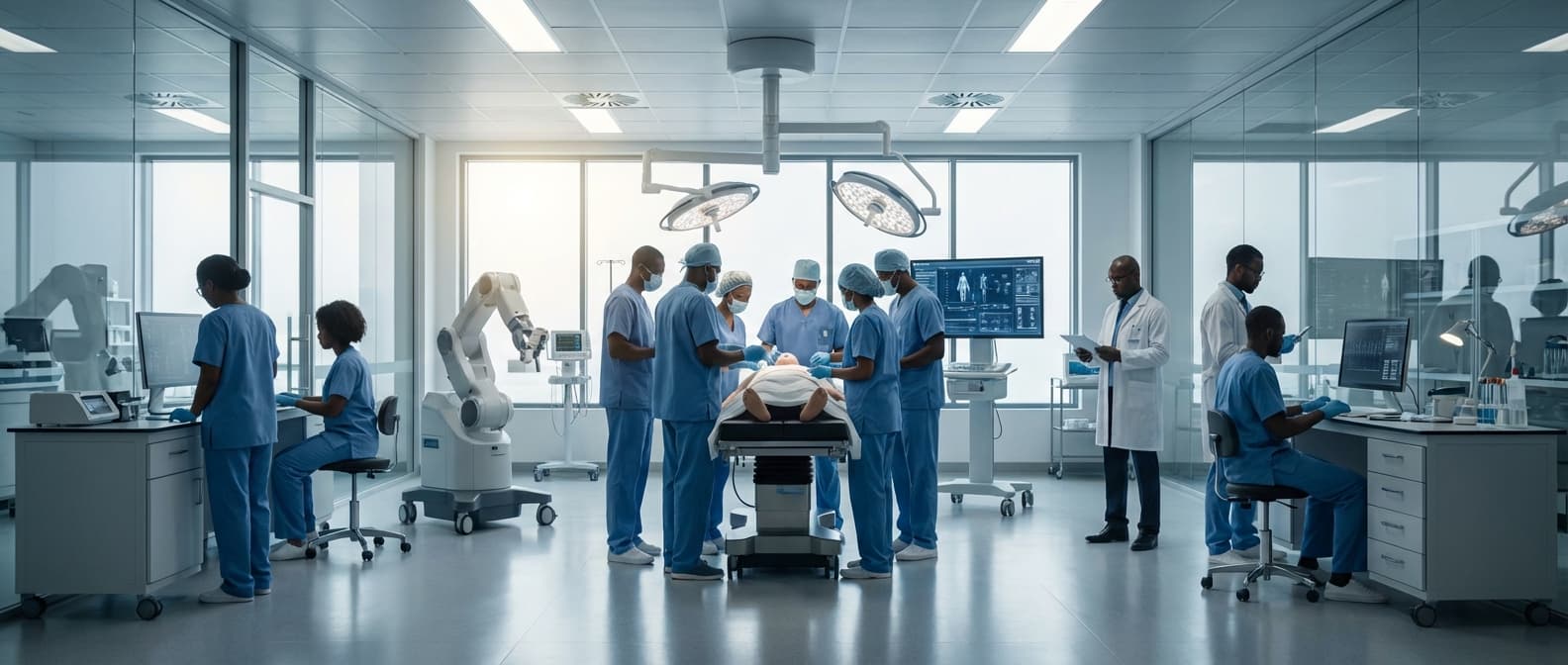
Calibration & Electrical Safety Testing in Djibouti
Engineering Excellence & Technical Support
Equipment calibration and IEC safety testing High-standard technical execution following OEM protocols and local regulatory frameworks.
Precise Instrument Calibration
We ensure the accuracy and reliability of your critical measurement instruments through meticulous calibration services, adhering to international standards. This guarantees the integrity of your data and operational efficiency in Djibouti's unique environmental conditions.
Comprehensive Electrical Safety Testing
Protect your assets and personnel with our rigorous electrical safety testing. We identify potential hazards and ensure compliance with relevant regulations, mitigating risks associated with electrical installations and equipment in Djibouti's demanding climate.
Advanced Diagnostic Capabilities
Leverage our cutting-edge diagnostic tools and expertise to pinpoint subtle performance deviations and potential failures in your electrical systems and calibrated instruments. Early detection through our services minimizes downtime and costly repairs.
What Is Calibration & Electrical Safety Testing In Djibouti?
Calibration and Electrical Safety Testing are critical services for ensuring the accuracy and safety of electrical equipment and measurement devices within Djibouti. Calibration involves the comparison of a measurement device's readings against a known standard of high accuracy. This process determines and documents any deviation of the device's performance from its specified parameters, allowing for adjustments or corrections to be made. Electrical Safety Testing, on the other hand, is a systematic evaluation of electrical equipment to verify its compliance with relevant safety standards and regulations. This testing identifies potential hazards such as insulation breakdown, grounding faults, and overcurrent conditions, which could lead to electric shock, fire, or equipment damage. Both services are essential for maintaining operational integrity, regulatory compliance, and worker safety across various sectors in Djibouti.
| Who Needs Calibration & Electrical Safety Testing in Djibouti? | Typical Use Cases | ||
|---|---|---|---|
| Manufacturing & Industrial Facilities: For process control instrumentation, production line equipment, and quality assurance devices. |
|
|
|
| Healthcare Sector: For medical diagnostic equipment (e.g., X-ray machines, patient monitors, defibrillators) and laboratory instrumentation. |
|
|
|
| Research & Development Laboratories: For scientific instruments and measurement tools used in experiments. |
|
|
|
| Telecommunications & IT Infrastructure: For power supplies, servers, and networking equipment. |
|
|
|
| Energy & Utilities (including Oil & Gas): For monitoring equipment, safety devices, and control systems in power plants, substations, and exploration sites. |
|
|
|
| Construction & Civil Engineering: For surveying equipment, testing apparatus, and power tools. |
|
|
|
| Government & Public Services: For various equipment used in administrative, defense, and emergency services. |
|
|
|
Key Components of Calibration & Electrical Safety Testing
- Calibration:
- Verification: Comparing device readings against a traceable, certified standard.
- Adjustment: Modifying the device to bring its readings within acceptable tolerance limits.
- Certification: Issuing a calibration certificate detailing the results, uncertainties, and date of calibration.
- Traceability: Ensuring the calibration standard is linked to national or international metrology standards.
- Electrical Safety Testing:
- Visual Inspection: Checking for physical damage, loose connections, and improper wiring.
- Earth Continuity Test: Verifying the integrity of the protective earth connection.
- Insulation Resistance Test: Measuring the resistance of insulating materials to detect leakage currents.
- High Voltage/Dielectric Strength Test: Applying a higher voltage to check for breakdown of insulation.
- Polarity Test: Ensuring correct connection of live, neutral, and earth conductors.
- Functional Test: Operating the equipment to ensure it performs its intended function safely.
Who Needs Calibration & Electrical Safety Testing In Djibouti?
Calibration and electrical safety testing are crucial for ensuring the accuracy of medical equipment, maintaining operational efficiency, and most importantly, guaranteeing the safety of patients and healthcare professionals in Djibouti. These services are vital across a spectrum of healthcare facilities and related industries.
| Target Customer Type | Key Departments/Areas of Focus | Why Calibration is Crucial | Why Electrical Safety Testing is Crucial |
|---|---|---|---|
| Hospitals (Public & Private) | ICU, OR, Diagnostics (Radiology, Labs), Wards, Anesthesia, Emergency | Accurate diagnostic readings, reliable patient monitoring, correct drug delivery dosages. | Preventing electric shock to patients and staff, ensuring equipment doesn't interfere with other devices, fire prevention. |
| Clinics and Health Centers | Examination Rooms, Small Labs, Minor Procedure Areas | Accurate vital signs measurement, reliable basic diagnostic tests, consistent treatment delivery. | Safe operation of essential medical devices, preventing equipment failure, protecting staff and patients. |
| Diagnostic Laboratories | Hematology, Chemistry, Microbiology, Imaging | Precise test results, consistent sample analysis, accurate image interpretation. | Protecting technicians from electrical hazards, maintaining equipment longevity, ensuring data integrity. |
| Pharmaceuticals & Research | Quality Control Labs, R&D Labs | Accurate measurements for drug efficacy, purity, and stability; reliable research data. | Ensuring workplace safety, preventing equipment damage, maintaining regulatory compliance. |
| Government Health Bodies | Regulatory Compliance, Public Health Facilities Management | Ensuring quality of care standards, validating equipment performance in public health. | Promoting patient safety across the nation, verifying safety protocols in public facilities. |
Target Customers and Departments in Djibouti
- {"title":"Hospitals (Public & Private)","description":"All departments within hospitals rely on accurately functioning and safe electrical equipment. This includes critical care units, surgical theaters, diagnostic imaging, laboratories, and general wards. Regular calibration ensures diagnostic accuracy, while electrical safety testing prevents potential harm from faulty equipment."}
- {"title":"Clinics and Health Centers","description":"Smaller healthcare facilities, whether primary care clinics, specialized clinics (e.g., dental, physiotherapy), or rural health centers, also utilize essential medical devices that require calibration for accurate readings and electrical safety checks for safe operation. This is particularly important in areas with limited access to specialized repair services."}
- {"title":"Diagnostic Laboratories","description":"Pathology, radiology, and other diagnostic labs depend heavily on calibrated instruments (e.g., centrifuges, analyzers, X-ray machines) for precise results. Electrical safety is paramount for staff operating sensitive equipment and for maintaining the integrity of diagnostic processes."}
- {"title":"Pharmaceutical Companies & Research Institutions","description":"Any entity involved in pharmaceutical production, quality control, or medical research in Djibouti will have laboratory equipment that requires rigorous calibration and electrical safety compliance to ensure the validity and reliability of their findings and products."}
- {"title":"Government Health Ministries & Regulatory Bodies","description":"These bodies are responsible for setting and enforcing standards for healthcare services. They may require or recommend calibration and electrical safety testing for accredited facilities and could also manage public health infrastructure where these services are essential."}
- {"title":"Medical Equipment Suppliers & Service Providers","description":"Companies that sell, install, and maintain medical equipment in Djibouti would benefit from offering these services to their clients as part of a comprehensive maintenance package, ensuring their products are safe and effective post-installation."}
- {"title":"Educational Institutions (Medical & Technical Schools)","description":"Schools training future healthcare professionals and technicians will have laboratories with various medical and electrical equipment. Calibration and safety testing are crucial for student learning and for preventing accidents during practical training sessions."}
Calibration & Electrical Safety Testing Process In Djibouti
This document outlines the typical workflow for Calibration and Electrical Safety Testing services in Djibouti, from initial customer inquiry to the final execution and reporting. The process is designed to ensure that equipment meets regulatory standards and performs accurately and safely.
| Step | Description | Key Activities | Responsible Parties | Deliverables |
|---|---|---|---|---|
| The client initiates contact to request calibration and/or electrical safety testing services. | Client provides details of equipment (type, model, serial number, quantity), required tests, desired timeline, and location. Service provider gathers technical specifications and understanding of client needs. | Client, Service Provider's Sales/Technical Team | Initial understanding of scope, equipment list. |
| Based on the gathered information, a formal proposal is prepared. | Service provider generates a detailed quotation outlining services, scope of work, pricing, terms and conditions, and estimated timeline. Client reviews and approves the quotation, leading to a service agreement or purchase order. | Service Provider's Sales/Estimating Team, Client | Formal Quotation, Service Agreement/Purchase Order. |
| Arrangements are made for the service execution. | Service provider confirms availability of technicians and equipment. Logistics for on-site access, including any necessary permits or site inductions, are coordinated with the client. Travel and accommodation arrangements are made if applicable. | Service Provider's Operations/Scheduling Team, Client | Confirmed service date(s), technician(s) assigned, logistics plan. |
| Upon arrival, technicians prepare for the testing and initial assessment of the equipment. | Technicians conduct a site walk-through to identify potential hazards or access issues. Equipment is visually inspected for any obvious damage. Safety protocols and client-specific procedures are reviewed. | Service Provider's Technicians | Site readiness confirmation, initial equipment assessment. |
| The core service is performed according to relevant standards and procedures. | Calibration: Measuring and adjusting equipment to meet specified accuracy requirements using traceable reference standards. Electrical Safety Testing: Performing tests such as insulation resistance, earth continuity, and dielectric strength to ensure electrical safety. | Service Provider's Certified Technicians | Raw test data, calibration adjustments (if applicable). |
| The collected data is analyzed and documented. | Technicians process test results, compare them against specifications and standards. A comprehensive report is generated, detailing all tests performed, results, any deviations, and calibration adjustments made. Reports typically include equipment details, test methods, pass/fail status, and uncertainty of measurement (for calibration). | Service Provider's Technicians/Quality Control | Calibration Certificate (if applicable), Electrical Safety Test Report. |
| Official documentation is provided to the client. | The calibration certificates and/or electrical safety test reports are formally presented to the client. If any equipment fails testing or calibration, recommendations for repair or replacement may be provided. | Service Provider's Project Manager/Technician, Client | Signed and stamped Calibration Certificates, Electrical Safety Test Reports. |
| Ensuring client satisfaction and maintaining records for future reference. | Service provider may follow up with the client to confirm satisfaction. All records, including raw data, reports, and client communication, are archived by the service provider for future audits and repeat services. | Service Provider's Administration/Quality Control | Archived service records, client satisfaction confirmation. |
Calibration & Electrical Safety Testing Workflow in Djibouti
- Inquiry & Information Gathering
- Quotation & Agreement
- Scheduling & Logistics
- On-site Preparation & Assessment
- Execution of Testing & Calibration
- Data Analysis & Reporting
- Certification & Handover
- Follow-up & Record Keeping
Calibration & Electrical Safety Testing Cost In Djibouti
Calibration and electrical safety testing are crucial services for businesses in Djibouti to ensure the accuracy of their instruments and the safety of their electrical equipment. The cost of these services can vary significantly based on several factors. These factors include the type and complexity of the equipment being tested, the number of items requiring service, the specific calibration standards or safety protocols being followed, the reputation and accreditation of the testing laboratory or service provider, and the urgency of the service. For specialized or highly sensitive equipment, more time and expertise are generally required, leading to higher costs. Similarly, if a business requires rapid turnaround times, expedited fees may apply. Local currency in Djibouti is the Djiboutian Franc (DJF).
| Service Type | Estimated Cost Range (DJF) | Notes |
|---|---|---|
| Basic Electrical Safety Test (per item) | 10,000 - 30,000 | Includes basic checks like insulation resistance, earth continuity. Suitable for common office equipment. |
| Comprehensive Electrical Safety Test (per item) | 25,000 - 75,000 | More in-depth testing, potentially including functional tests and specific standard compliance. For industrial or more critical equipment. |
| Calibration of Basic Measurement Tools (e.g., Multimeter, Clamp Meter) | 15,000 - 50,000 | Includes traceable calibration certificate. Price depends on accuracy requirements. |
| Calibration of Industrial/Specialized Instruments (e.g., Pressure Gauges, Temperature Sensors) | 40,000 - 150,000+ | More complex instruments require specialized equipment and expertise. Price escalates significantly with precision and function. |
| On-site Service Call Fee | 20,000 - 60,000 | Additional fee for technicians to travel to your premises, independent of testing/calibration costs. |
| Rush/Expedited Service Fee | 15,000 - 50,000 | Charged on top of standard service fees for urgent requests. |
Key Factors Influencing Calibration & Electrical Safety Testing Costs in Djibouti:
- Type and complexity of equipment (e.g., basic multimeters vs. advanced industrial machinery).
- Number of instruments or devices requiring testing.
- Specific calibration standards (e.g., ISO, national standards) and their rigor.
- Electrical safety testing protocols (e.g., IEC 60601 for medical devices).
- Accreditation and reputation of the service provider.
- Location of the service (on-site vs. laboratory testing).
- Urgency of the service (standard vs. expedited).
- Inclusion of calibration certificates and reports.
- Need for repairs or adjustments identified during testing.
Affordable Calibration & Electrical Safety Testing Options
Ensuring your electrical equipment is calibrated and safe is paramount for operational efficiency, compliance, and personnel safety. However, the costs associated with regular calibration and electrical safety testing can be a concern for many businesses, especially smaller ones. This guide explores affordable calibration and electrical safety testing options, focusing on value bundles and cost-saving strategies to help you manage your budget without compromising on essential services.
| Service Type | Typical Benefits of Bundling | Cost-Saving Strategies |
|---|---|---|
| Basic Electrical Safety Testing (PAT Testing) | Reduced per-item cost, streamlined scheduling for multiple devices, compliance assurance for a fleet of portable appliances. | Consolidate testing across a site, negotiate bulk discounts, consider annual or bi-annual testing based on usage and risk. |
| Calibration of Measurement Instruments (e.g., multimeters, oscilloscopes) | Discounted rates for calibrating a range of instruments, bundled accreditation costs, prioritized turnaround times. | Schedule calibration for multiple instruments together, opt for accredited calibration only where regulatory or critical; consider in-house verification for less critical parameters. |
| Combined Calibration & Safety Testing Packages | Significant cost reduction for comprehensive service, simplified vendor management, ensures all regulatory and operational requirements are met. | Annual contracts for combined services, tiered packages based on asset criticality, inquire about early renewal discounts. |
| Specialized Equipment Calibration (e.g., medical, industrial) | Cost-effective access to specialized technicians and equipment, bundled traceability and certification costs. | Negotiate long-term service agreements for critical specialized equipment, explore remote support options for pre-testing diagnostics. |
Understanding Value Bundles and Cost-Saving Strategies
- Value Bundles: These are pre-packaged service offerings that combine multiple calibration and safety testing requirements at a discounted rate compared to individual service bookings. They are designed to provide comprehensive coverage and encourage regular maintenance.
- Strategic Scheduling: Consolidating testing for multiple devices or across different departments into a single appointment can reduce travel time and administrative overhead for the service provider, often translating into cost savings for you.
- Long-Term Contracts: Committing to a longer-term service agreement (e.g., annual, bi-annual) can secure preferential pricing and predictable budgeting, shielding you from potential price increases.
- Tiered Service Levels: Many providers offer different tiers of service, from basic functional checks to comprehensive accredited calibrations. Understanding your actual needs and opting for the appropriate tier can prevent overspending.
- Preventive Maintenance Programs: Integrating calibration and safety testing as part of a broader preventive maintenance program can identify potential issues before they lead to costly failures or downtime.
- In-House Training & Basic Checks: For non-critical equipment or routine visual inspections, investing in basic in-house training for your staff can supplement professional services and identify obvious issues early.
- Remote Diagnostics & Support: Some providers offer remote diagnostic capabilities, which can sometimes resolve minor issues or determine if a physical visit is truly necessary, saving on call-out fees.
- Choosing Reputable, Yet Flexible Providers: While accreditation is important, look for service providers who understand the budgetary constraints of their clients and offer flexible solutions and clear pricing structures.
- Negotiation & Comparison: Don't hesitate to get quotes from multiple reputable providers and negotiate pricing, especially when discussing larger or recurring service needs.
- Leveraging Manufacturer Recommendations: Understand the calibration and testing intervals recommended by your equipment manufacturers and use this to inform your service schedule and discussions with providers.
Verified Providers In Djibouti
Ensuring access to reliable healthcare is paramount in any region, and Djibouti is no exception. When seeking medical services, it's crucial to identify healthcare providers who are not only qualified but also operate with the highest ethical standards. This is where verified providers, such as those accredited by Franance Health, stand out. Franance Health's rigorous credentialing process ensures that their partner providers meet stringent criteria for medical expertise, patient safety, and operational integrity. By choosing Franance Health-verified providers in Djibouti, individuals and organizations gain the assurance of receiving top-tier medical care, backed by a trusted international health accreditation body.
| Provider Type | Franance Health Verification Benefits | Why This Matters in Djibouti |
|---|---|---|
| Hospitals & Clinics | Adherence to international standards in infrastructure, equipment, and patient care protocols. | Ensures access to modern medical facilities and consistent quality of treatment, vital for diverse healthcare needs. |
| Specialist Medical Professionals | Verification of academic credentials, licenses, and practical experience. | Guarantees that patients are treated by qualified doctors and surgeons, reducing the risk of misdiagnosis or substandard care. |
| Diagnostic Laboratories | Confirmation of quality control measures, calibrated equipment, and qualified technicians. | Provides reliable and accurate test results essential for effective medical decision-making and treatment planning. |
| Emergency Medical Services | Assessment of response times, equipment availability, and staff training in critical care. | Ensures prompt and effective emergency response, a critical factor in saving lives and preventing complications. |
Why Franance Health Credentials Matter for Djibouti Healthcare
- Unwavering Commitment to Quality: Franance Health's accreditation signifies a provider's dedication to upholding the highest standards of medical practice.
- Enhanced Patient Safety: Rigorous checks for infection control, equipment maintenance, and emergency preparedness minimize risks.
- Expert Medical Professionals: Verification confirms that healthcare practitioners possess the necessary qualifications, experience, and licenses.
- Ethical and Transparent Operations: Accreditation ensures adherence to ethical guidelines and transparent patient care practices.
- Improved Healthcare Outcomes: Access to accredited facilities and professionals leads to more effective diagnosis and treatment.
- International Recognition: Franance Health's global standing provides an added layer of confidence for patients and partners.
Scope Of Work For Calibration & Electrical Safety Testing
This Scope of Work outlines the requirements for calibration and electrical safety testing of specified equipment. It details the technical deliverables expected and the standard specifications to be adhered to. The objective is to ensure the accuracy, reliability, and safety of the equipment for its intended use.
| Task | Description | Standard Specification | Deliverable |
|---|---|---|---|
| Calibration | Performing calibration procedures on identified measurement instruments to ensure accuracy and traceability to national or international standards. | ISO/IEC 17025, ANSI/NCSL Z540-1, manufacturer's specifications, or customer-specified requirements. | Calibration Certificate (including as-found/as-left data, uncertainty values, traceability statement, and calibration dates). Equipment labels indicating calibration status. |
| Electrical Safety Testing | Conducting tests to verify electrical safety parameters such as insulation resistance, ground continuity, leakage current, and dielectric strength. | IEC 60601 series, UL 60601, IEC 61010 series, OSHA requirements, or equivalent national standards. | Electrical Safety Test Report (detailing test procedures, parameters tested, pass/fail results, and equipment identification). Safety compliance labels. |
| Documentation Review | Reviewing existing calibration and maintenance records to ensure continuity and compliance. | Customer's record-keeping policies, internal quality procedures. | Summary report of documentation review, highlighting any discrepancies or recommendations. |
| Reporting | Compiling all calibration and safety test results into a comprehensive report. | Accuracy and completeness as per defined standards and customer requirements. | Final Report including all individual certificates and test reports, executive summary, and recommendations. |
Key Objectives:
- To verify and adjust measurement instruments to meet specified accuracy standards.
- To confirm that electrical equipment complies with relevant safety regulations and standards.
- To provide documented evidence of successful calibration and safety testing.
- To minimize risks associated with equipment malfunction or electrical hazards.
Service Level Agreement For Calibration & Electrical Safety Testing
This Service Level Agreement (SLA) outlines the terms and conditions for Calibration and Electrical Safety Testing services provided by [Your Company Name] to [Client Company Name]. It defines the expected response times for service requests and the uptime guarantees for our calibration management platform.
| Service Category | Response Time (Business Hours) | Uptime Guarantee (Platform Access) |
|---|---|---|
| Urgent Service Request (e.g., critical equipment failure, regulatory deadline) | 2 Business Hours | 99.9% |
| Standard Service Request (e.g., scheduled calibration, routine testing) | 8 Business Hours | 99.9% |
| Reporting & Administrative Requests (e.g., requesting calibration certificates, updating asset information) | 24 Business Hours | 99.9% |
Key Definitions
- Service Request: Any request for calibration or electrical safety testing initiated by the Client.
- Response Time: The maximum time allowed for [Your Company Name] to acknowledge and begin addressing a Service Request.
- Uptime Guarantee: The percentage of time the Calibration Management Platform is accessible and functional for the Client.
- Calibration Management Platform: The web-based or software system used by [Your Company Name] to manage calibration schedules, records, and reporting.
Frequently Asked Questions

Ready when you are
Let's scope your Calibration & Electrical Safety Testing in Djibouti project in Djibouti.

Scaling healthcare logistics and technical systems across the entire continent.