
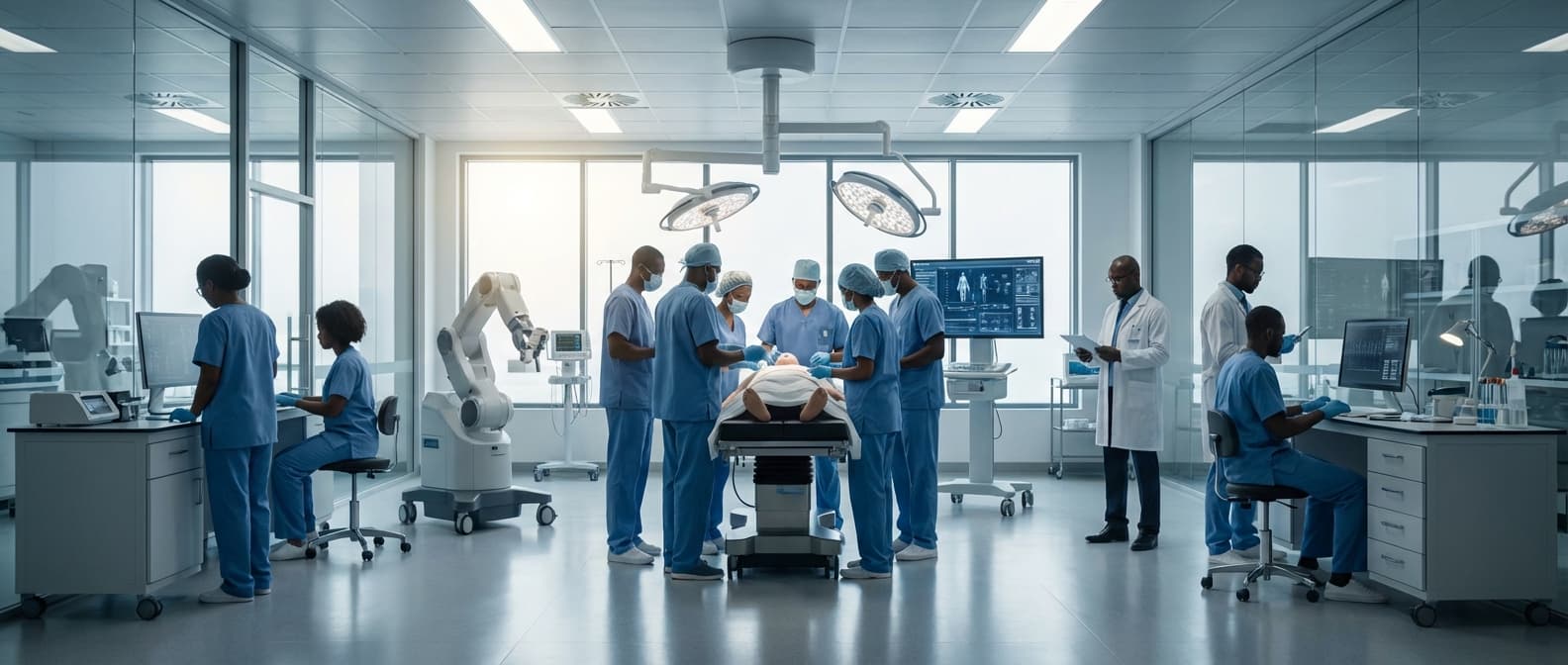
Biomedical Engineering Consulting in Djibouti
Engineering Excellence & Technical Support
Equipment selection, procurement and implementation consulting High-standard technical execution following OEM protocols and local regulatory frameworks.
Advanced Medical Device Integration & Compliance
We provide expert consulting services for the selection, integration, and regulatory compliance of advanced medical devices within Djibouti's healthcare infrastructure. Our focus is on ensuring adherence to international standards and local regulations, optimizing device functionality, and enhancing patient care outcomes.
Healthcare Facility Design & Optimization
Leveraging biomedical engineering principles, we offer comprehensive consulting for the design and optimization of new and existing healthcare facilities in Djibouti. This includes spatial planning for medical equipment, workflow analysis, infection control strategies, and ensuring the efficient and safe operation of clinical environments.
Biomedical Data Analytics & Health Information Systems
Our expertise extends to the analysis of biomedical data and the implementation of robust Health Information Systems (HIS) tailored for Djibouti's unique healthcare needs. We empower institutions to harness data for improved diagnostics, predictive modeling, resource allocation, and evidence-based decision-making.
What Is Biomedical Engineering Consulting In Djibouti?
Biomedical Engineering Consulting in Djibouti encompasses the provision of specialized technical expertise and advisory services related to the design, development, implementation, maintenance, and optimization of medical technologies and healthcare infrastructure. It bridges the gap between engineering principles and clinical applications, aiming to enhance the quality, efficiency, and accessibility of healthcare services within the Djiboutian context. This service is critical for organizations seeking to navigate the complexities of medical device acquisition, regulatory compliance, facility planning, and the integration of advanced biomedical technologies.
| Who Needs Biomedical Engineering Consulting? | Typical Use Cases in Djibouti |
|---|---|
| Government Health Ministries and Agencies: Responsible for national health policy, infrastructure development, and public healthcare services. | Developing national medical equipment procurement strategies, establishing regulatory frameworks for medical devices, and planning the expansion of public healthcare facilities. |
| Hospitals and Healthcare Facilities (Public & Private): Operators of clinical services requiring efficient and safe technology utilization. | Selecting and procuring specialized medical equipment (e.g., MRI, CT scanners, advanced surgical tools), optimizing operating room design for minimally invasive procedures, and implementing digital health solutions. |
| Medical Device Manufacturers and Distributors: Entities involved in the supply and support of medical technologies in the region. | Navigating import regulations, establishing local service and support networks, and ensuring compliance with Djibouti's healthcare standards. |
| Research Institutions and Academic Bodies: Engaged in medical research and training. | Advising on laboratory equipment acquisition, setting up research infrastructure, and ensuring compliance with laboratory safety standards. |
| Non-Governmental Organizations (NGOs) and International Aid Organizations: Involved in healthcare development and humanitarian assistance. | Assessing needs for medical equipment in underserved areas, implementing health technology projects, and ensuring the sustainability of healthcare infrastructure. |
| Investors and Developers in the Healthcare Sector: Entities looking to establish or expand healthcare services in Djibouti. | Feasibility studies for new hospital projects, design and fit-out of medical facilities, and selection of appropriate medical technologies. |
Key Aspects of Biomedical Engineering Consulting in Djibouti
- Needs Assessment and Strategy Development: Evaluating existing healthcare infrastructure and identifying technological needs to align with national health priorities and available resources.
- Medical Equipment Planning and Procurement: Assisting in the selection, specification, and acquisition of appropriate medical devices, ensuring cost-effectiveness, functionality, and adherence to international standards.
- Technology Integration and Implementation: Overseeing the installation, calibration, and integration of new biomedical equipment into existing clinical workflows and IT systems.
- Regulatory Compliance and Standards Adherence: Guiding clients through local and international regulatory frameworks governing medical devices, quality management systems (e.g., ISO 13485), and safety protocols.
- Infrastructure Design and Development: Providing expertise in the design and planning of healthcare facilities, including laboratories, operating theaters, imaging centers, and sterile processing departments, with a focus on optimal workflow and technology integration.
- Maintenance and Service Management: Developing and implementing robust preventive and corrective maintenance programs for medical equipment, including vendor management and spare parts logistics.
- Clinical Engineering Services: Offering technical support for clinical departments, troubleshooting equipment issues, and training clinical staff on the safe and effective use of medical devices.
- Risk Management and Patient Safety: Identifying and mitigating risks associated with medical technology use, ensuring patient safety, and implementing quality improvement initiatives.
- Technology Lifecycle Management: Managing the entire lifecycle of medical equipment, from acquisition and deployment to decommissioning and disposal.
Who Needs Biomedical Engineering Consulting In Djibouti?
Biomedical Engineering consulting services are crucial for a variety of stakeholders in Djibouti, aiming to enhance healthcare infrastructure, improve patient care, and ensure the effective operation and maintenance of medical equipment. These services are particularly valuable for organizations and departments grappling with the complexities of modern medical technology, regulatory compliance, and the need for specialized expertise that may not be readily available in-house.
| Target Customer | Relevant Departments/Areas of Need | Key Consulting Needs |
|---|---|---|
| Public Healthcare Institutions (e.g., Hospitals, Health Centers) | Procurement, Clinical Engineering/Biomedical Department, IT Department, Facilities Management | Medical equipment lifecycle management (selection, acquisition, installation, maintenance, decommissioning); Equipment calibration and repair; Medical device safety and risk management; Infrastructure assessment and upgrades; Training for clinical staff on equipment usage; Development of maintenance protocols. |
| Private Hospitals and Clinics | Management/Administration, Procurement, Technical Services | Optimizing equipment utilization and ROI; Ensuring compliance with national and international standards; Developing service level agreements (SLAs) with vendors; Implementing quality management systems for medical devices; Strategic planning for technology acquisition. |
| Non-Governmental Organizations (NGOs) involved in healthcare | Program Management, Logistics, Technical Support | Needs assessment for medical equipment in project areas; Procurement and deployment of equipment for field clinics and hospitals; Training local staff on equipment operation and basic maintenance; Ensuring the sustainability of medical equipment through proper servicing plans. |
| Medical Equipment Suppliers and Distributors | Sales, Technical Support, Service Department, Training | Market analysis and needs assessment for new product introductions; Developing installation and commissioning procedures; Providing advanced technical training to their own service engineers; Ensuring compliance with import/export regulations for medical devices; After-sales service strategy development. |
| Government Health Ministries and Regulatory Bodies | Policy and Planning, Medical Device Regulation, Quality Assurance | Developing national medical device regulations and standards; Establishing frameworks for medical equipment procurement and management; Capacity building for regulatory oversight; Advising on health technology assessment (HTA); Developing national strategies for healthcare technology. |
| Research and Educational Institutions | Research Departments, Laboratories, Biomedical Engineering Programs | Guidance on selecting and maintaining specialized research equipment; Ensuring compliance with safety standards in laboratories; Curriculum development for biomedical engineering education; Facilitating technology transfer from research to clinical practice. |
Who Needs Biomedical Engineering Consulting in Djibouti?
- Public Healthcare Institutions
- Private Hospitals and Clinics
- Non-Governmental Organizations (NGOs) involved in healthcare
- Medical Equipment Suppliers and Distributors
- Government Health Ministries and Regulatory Bodies
- Research and Educational Institutions
Biomedical Engineering Consulting Process In Djibouti
This document outlines the typical workflow for biomedical engineering consulting services in Djibouti, from the initial client inquiry to the final project execution and closeout. The process is designed to be systematic, transparent, and tailored to the specific needs of healthcare facilities and organizations within Djibouti. It emphasizes collaboration, expert analysis, and the delivery of practical, sustainable solutions.
| Phase | Key Activities | Deliverables | Timeframe (Indicative) |
|---|---|---|---|
| Client expresses interest. Initial discussion to understand broad needs, objectives, and potential areas of concern. Preliminary information exchange. | Understanding of client's general requirements. Identification of potential consulting service relevance. | 1-3 Business Days |
| Detailed discussion with the client to identify specific challenges, goals, and desired outcomes. Clarification of project scope, boundaries, and critical success factors. Site visit may be initiated. | Defined project objectives, scope of work, key performance indicators (KPIs), and constraints. Agreed-upon high-level requirements. | 3-7 Business Days |
| Preparation of a comprehensive consulting proposal outlining objectives, methodology, deliverables, timeline, team expertise, and fees. Client review and negotiation. Finalization of a service agreement or contract. | Detailed Consulting Proposal. Signed Service Agreement/Contract. | 7-14 Business Days |
| Collection of relevant data, including existing equipment inventories, maintenance records, operational workflows, facility layouts, and regulatory requirements. On-site assessment of infrastructure, equipment condition, and staff capabilities. | Comprehensive data repository. Detailed site assessment report. Identification of strengths, weaknesses, opportunities, and threats (SWOT) related to biomedical engineering services. | 1-3 Weeks (depending on complexity) |
| In-depth analysis of gathered information. Identification of root causes for identified problems. Development of tailored solutions, strategies, and recommendations based on best practices and local context. | Diagnostic reports. Root cause analysis. Conceptual designs for solutions (e.g., new workflows, equipment upgrade plans, training programs). | 2-4 Weeks (depending on complexity) |
| Presentation of detailed findings, analysis, and proposed solutions to the client. Development of a comprehensive final report including executive summary, detailed recommendations, implementation plan, budget estimations, and risk mitigation strategies. | Interim reports (if applicable). Final Consulting Report. Presentation of findings and recommendations. | 1-2 Weeks |
| Execution of agreed-upon recommendations. This may involve equipment procurement, installation, calibration, workflow redesign, policy development, or infrastructure upgrades. Ongoing project management, monitoring progress, and managing resources. | Implemented solutions. Progress reports. Milestones achieved. Project documentation. | Variable (depending on scope and complexity) |
| Provision of training to relevant staff on new equipment, procedures, or management systems. Facilitation of knowledge transfer to ensure sustainability of implemented solutions. | Training materials. Conducted training sessions. Competency assessments. Knowledge transfer documentation. | Variable (integrated with implementation) |
| Post-implementation review to assess the effectiveness of the implemented solutions against defined KPIs. Final reporting on project outcomes, lessons learned, and client satisfaction. Formal project closure. | Post-implementation evaluation report. Project closure document. Final invoice. | 1-2 Weeks |
| Ongoing advisory services, troubleshooting, or performance monitoring as per contract. Continued support for the client in maintaining and optimizing biomedical engineering services. | Support logs. Performance reports. Ad-hoc advice. | As per contract agreement |
Biomedical Engineering Consulting Process Workflow
- Inquiry and Initial Consultation
- Needs Assessment and Scope Definition
- Proposal Development and Agreement
- Information Gathering and Site Assessment
- Analysis and Solution Design
- Recommendation and Reporting
- Implementation and Project Management
- Training and Knowledge Transfer
- Evaluation and Project Closeout
- Post-Implementation Support (Optional)
Biomedical Engineering Consulting Cost In Djibouti
Biomedical engineering consulting costs in Djibouti are influenced by several key factors, leading to a range of pricing that can be difficult to pinpoint without specific project details. These factors include the complexity and scope of the project, the experience and specialization of the consultant, the duration of the engagement, and the specific services required. Djibouti's developing healthcare infrastructure and the relative scarcity of highly specialized local biomedical engineering talent can also contribute to higher costs compared to more established markets. Therefore, understanding these determinants is crucial for accurate budgeting.
| Service Type / Duration | Estimated Range (Djiboutian Franc - DJF) | Notes |
|---|---|---|
| Hourly Rate (Junior Consultant) | 40,000 - 70,000 DJF | Suitable for basic advice, quick assessments, or administrative tasks. |
| Hourly Rate (Senior/Specialized Consultant) | 80,000 - 150,000+ DJF | For complex problem-solving, strategic planning, or specialized technical expertise. |
| Daily Rate (General Consulting) | 250,000 - 500,000 DJF | Typically for a standard 8-hour workday, covering a range of project activities. |
| Daily Rate (Highly Specialized/Project Management) | 500,000 - 1,000,000+ DJF | For critical projects, senior project leadership, or niche expertise. |
| Project-Based Fee (Small/Medium Scope - e.g., Equipment Needs Assessment, Single Device Procurement Advice) | 1,000,000 - 5,000,000 DJF | Covers a defined set of deliverables over a short to medium term. |
| Project-Based Fee (Large Scope - e.g., Hospital Department Design, Major Procurement Strategy) | 5,000,000 - 20,000,000+ DJF | For extensive projects requiring significant planning, coordination, and multiple stages of development. |
| Regulatory Compliance & Documentation Review | 300,000 - 1,500,000 DJF | Depends on the volume and complexity of documents, and the specific regulatory framework. |
| Equipment Installation & Commissioning Supervision | 500,000 - 3,000,000 DJF (per project/site) | Can be a daily rate or a percentage of equipment cost, depending on the agreement. |
| Feasibility Studies / Needs Assessments | 1,500,000 - 7,000,000 DJF | Varies significantly based on the size and scope of the healthcare facility or initiative. |
Pricing Factors Influencing Biomedical Engineering Consulting Costs in Djibouti
- Project Scope and Complexity: Larger, more intricate projects (e.g., hospital design, complex equipment procurement and installation, development of specialized medical device protocols) will naturally command higher fees than smaller, more straightforward consultations (e.g., basic equipment maintenance assessments, regulatory compliance advice).
- Consultant Experience and Expertise: Senior consultants with extensive experience and specialized knowledge in areas like medical imaging, critical care equipment, or hospital information systems will charge premium rates. Junior consultants or those with broader, less specialized expertise will be more affordable.
- Duration of Engagement: The length of the consulting project directly impacts the overall cost. Hourly rates are common for short-term tasks, while daily or project-based fees are more typical for longer engagements.
- Specific Services Required: The nature of the services is a significant driver. This could include needs assessments, feasibility studies, equipment selection and procurement, installation and commissioning supervision, training, maintenance strategy development, regulatory affairs support, or quality management system implementation.
- Travel and Accommodation: If the consultant needs to travel within Djibouti or internationally for the project, associated travel and accommodation expenses will be added to the overall cost.
- Local Market Dynamics: As a developing market, Djibouti may experience higher costs due to limited availability of specialized skills and potentially higher import duties or logistical challenges for foreign consultants.
- Urgency of the Project: Expedited projects requiring immediate attention may incur higher fees due to the need for rapid mobilization and prioritization.
Affordable Biomedical Engineering Consulting Options
Navigating the complex world of biomedical engineering can be a significant undertaking for startups and established companies alike. Hiring full-time experts can be prohibitively expensive, especially when specific expertise is only needed for a limited time or on a project basis. Fortunately, there are several affordable biomedical engineering consulting options available. Understanding value bundles and employing smart cost-saving strategies can make accessing high-quality expertise accessible and budget-friendly.
| Consultant Type | Typical Cost Range (per hour) | Pros | Cons |
|---|---|---|---|
| Freelance Biomedical Engineers | $75 - $300+ | Cost-effective, specialized skills, flexibility | Varied quality, requires thorough vetting, potential for less structure |
| Boutique Consulting Firms | $150 - $500+ | Specialized expertise, often high quality, personalized service | Can be more expensive than freelancers, limited by firm size |
| University-Affiliated Groups | $100 - $250+ | Access to cutting-edge research, potentially lower cost, educational component | May have limited availability, less business-centric experience |
| Online Freelance Platforms | $50 - $250+ | Wide talent pool, competitive pricing, reviews available | Quality can vary greatly, requires careful selection, platform fees |
| Large Consulting Firms | $300 - $1000+ | Extensive resources, broad expertise, established reputation | Most expensive option, higher overhead, less personalized attention |
Affordable Biomedical Engineering Consulting Options
- {"title":"Freelance Biomedical Engineers","description":"Independent consultants offer specialized skills on a project-by-project basis. This can be significantly cheaper than a large firm, as you're paying for direct expertise without overhead costs."}
- {"title":"Boutique Consulting Firms","description":"Smaller, specialized firms often focus on specific areas of biomedical engineering (e.g., regulatory affairs, device design, clinical trials). They can offer competitive pricing and personalized service."}
- {"title":"University-Affiliated Consulting Groups","description":"Many universities have engineering departments with faculty and graduate students who offer consulting services. This can be a cost-effective way to access cutting-edge knowledge and research."}
- {"title":"Online Freelance Platforms","description":"Platforms like Upwork, Fiverr, and Toptal host a wide range of freelance biomedical engineers. You can often find highly skilled individuals at competitive rates. Thorough vetting is crucial."}
- {"title":"Pro Bono or Reduced-Rate Services","description":"Some consultants or firms may offer pro bono or reduced-rate services for startups or non-profit organizations, particularly for early-stage concept development or social impact projects."}
Verified Providers In Djibouti
In Djibouti's evolving healthcare landscape, identifying reliable and credentialed providers is paramount for ensuring quality patient care. Franance Health stands out as a leading organization committed to upholding the highest standards in medical services. Their rigorous credentialing process, which scrutinizes the qualifications, experience, and ethical conduct of their healthcare professionals, guarantees that patients receive care from competent and trustworthy individuals. This dedication to verification is what positions Franance Health as the superior choice for healthcare needs in Djibouti.
| Credentialing Aspect | Franance Health's Approach | Benefit to Patients |
|---|---|---|
| Medical Education & Training | Thorough verification of degrees, certifications, and specialized training from accredited institutions. | Ensures providers possess the foundational knowledge and skills required for effective diagnosis and treatment. |
| Professional Experience | In-depth review of past work history, practice settings, and peer evaluations. | Confirms practical application of knowledge and ability to handle diverse medical scenarios. |
| Licensure & Regulatory Compliance | Strict adherence to all national and international licensing requirements and regulations. | Guarantees that providers are legally authorized and operate within established healthcare guidelines. |
| Clinical Competency Assessment | May include simulations, case reviews, or ongoing performance monitoring. | Verifies up-to-date clinical skills and proficiency in current medical practices. |
| Background & Ethical Checks | Comprehensive checks for any disciplinary actions, malpractice claims, or ethical concerns. | Protects patients by ensuring care is delivered by professionals with a strong ethical compass and a history of responsible practice. |
Why Franance Health is the Best Choice:
- Rigorous credentialing process ensuring provider competence and reliability.
- Commitment to upholding the highest standards of medical ethics and patient care.
- A network of experienced and qualified healthcare professionals.
- Focus on patient safety and satisfaction through verified excellence.
- Contribution to a more trusted and accessible healthcare system in Djibouti.
Scope Of Work For Biomedical Engineering Consulting
This Scope of Work (SOW) outlines the services to be provided by the Biomedical Engineering Consulting firm (hereinafter referred to as "Consultant") to [Client Name] (hereinafter referred to as "Client") for the development and evaluation of [Specific Biomedical Device/Project]. The project aims to [Briefly state project goals, e.g., design a novel diagnostic device, optimize a medical implant, conduct pre-clinical testing, prepare for regulatory submission]. The Consultant will leverage its expertise in biomedical engineering principles, regulatory affairs, and product development lifecycle to achieve the Client's objectives. This SOW details the project phases, key activities, technical deliverables, and standard specifications that will guide the engagement.
| Technical Deliverable | Description | Standard Specification/Reference | Phase |
|---|---|---|---|
| Product Requirements Document (PRD) | A comprehensive document detailing the functional, performance, and user requirements for the biomedical device. | ISO 13485:2016, FDA Quality System Regulation (21 CFR Part 820) | 1 |
| Design History File (DHF) | A compilation of records that describe the design and development of a finished medical device, enabling a product to be traced through its lifecycle. | FDA Quality System Regulation (21 CFR Part 820.30), ISO 13485:2016 | 2, 3, 4 |
| Prototypes (Functional/Engineering) | Working models of the device used for testing and demonstration of core functionalities. | Based on specific project requirements and industry best practices | 2 |
| Verification & Validation (V&V) Plans and Reports | Detailed plans outlining the testing methodology and comprehensive reports documenting the results of verification and validation testing. | ISO 13485:2016, IEC 60601-1 (for electrical medical equipment), specific industry standards | 3 |
| Risk Management File (RMF) | Documentation of identified risks, their assessment, evaluation, and control measures throughout the product lifecycle. | ISO 14971:2019 | 1, 2, 3, 4 |
| Regulatory Strategy Document | Outlines the proposed regulatory pathway, target markets, and necessary submissions for market clearance or approval. | FDA Guidance Documents, MDR (EU) 2017/745, IVDR (EU) 2017/746 | 4 |
| Technical File / Design Dossier | A compilation of technical documentation required for regulatory submissions to demonstrate conformity with essential requirements. | MDR (EU) 2017/745, IVDR (EU) 2017/746, relevant harmonized standards | 4 |
| Usability Engineering File | Documentation demonstrating that the device is safe and effective when used by intended users in the intended environment. | IEC 62366-1:2015 | 3 |
| Final Project Report | A comprehensive summary of the project, including outcomes, lessons learned, and recommendations for future development or commercialization. | Client-defined format, industry best practices | 5 |
Project Phases and Key Activities
- Phase 1: Needs Assessment and Conceptualization
- Conduct in-depth market research and identify unmet clinical needs.
- Define product requirements, performance specifications, and target user profiles.
- Develop initial product concepts and design architectures.
- Perform feasibility studies and risk assessments.
- Phase 2: Design and Development
- Create detailed engineering designs, including schematics, CAD models, and bill of materials.
- Select appropriate materials, components, and manufacturing processes.
- Develop prototypes and conduct initial functional testing.
- Iteratively refine designs based on testing feedback and stakeholder input.
- Phase 3: Verification and Validation (V&V)
- Develop comprehensive V&V plans and protocols.
- Execute laboratory testing to verify design specifications and performance.
- Conduct usability studies and pre-clinical testing (if applicable).
- Document all V&V activities and results rigorously.
- Phase 4: Regulatory Strategy and Submission Preparation
- Develop a tailored regulatory strategy based on target markets and product classification.
- Compile necessary documentation for regulatory submissions (e.g., FDA 510(k), CE marking).
- Assist with the preparation of technical files and quality management system documentation.
- Phase 5: Project Management and Reporting
- Provide regular project status updates and progress reports.
- Manage project timelines, resources, and budget.
- Facilitate communication between the Client and any third-party collaborators or testing labs.
Service Level Agreement For Biomedical Engineering Consulting
This Service Level Agreement (SLA) outlines the guaranteed response times and uptime for Biomedical Engineering consulting services provided by [Your Company Name] (hereinafter referred to as 'Provider') to [Client Name] (hereinafter referred to as 'Client'). This SLA is an addendum to the Master Services Agreement (MSA) executed on [Date of MSA].
| Incident Priority | Response Time Target | Resolution Time Target (Best Effort) | Uptime Guarantee (Remote Support) |
|---|---|---|---|
| Critical Incident | Within 1 hour during Business Hours | Within 4 business hours (initial assessment and action plan) | 99.5% during Business Hours |
| High-Priority Incident | Within 2 business hours during Business Hours | Within 8 business hours (initial assessment and action plan) | 99.5% during Business Hours |
| Standard Incident | Within 4 business hours during Business Hours | As soon as practically possible, based on resource availability | 99.5% during Business Hours |
Key Service Definitions
- Business Hours: Monday to Friday, 9:00 AM to 5:00 PM [Client's Time Zone], excluding public holidays recognized in [Client's Location].
- Critical Incident: An event that renders a client's medical device or system inoperable, posing a significant risk to patient safety, or causing a major disruption to critical clinical operations.
- High-Priority Incident: An event that significantly degrades the performance of a medical device or system, potentially impacting clinical workflow but not posing an immediate critical risk to patient safety.
- Standard Incident: Any other incident that does not fall under Critical or High-Priority, including routine inquiries, minor performance issues, or requests for information.
- Uptime Guarantee: Refers to the guaranteed availability of Provider's remote support systems and consultation channels during Business Hours. This does not guarantee uptime of the Client's internal systems or third-party services.
Frequently Asked Questions

Ready when you are
Let's scope your Biomedical Engineering Consulting in Djibouti project in Djibouti.

Scaling healthcare logistics and technical systems across the entire continent.