
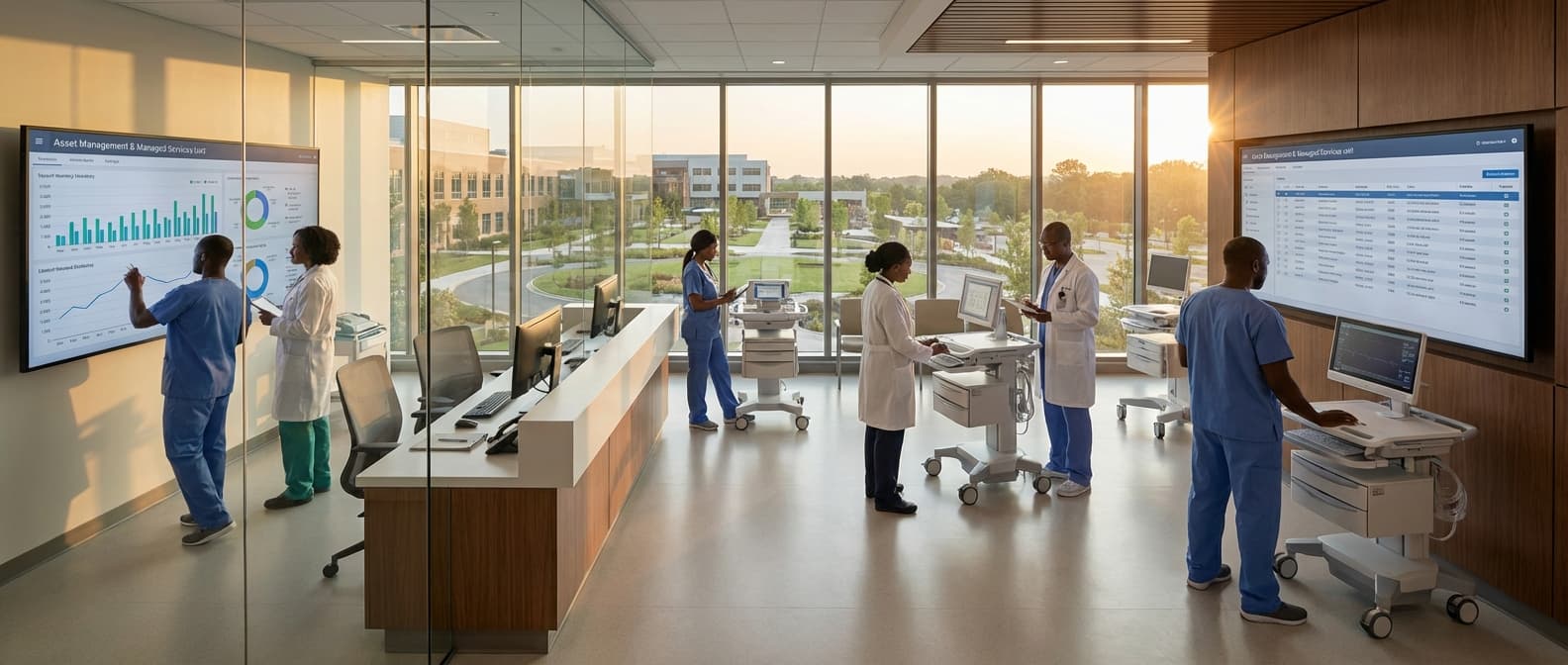
Maintenance KPI Reporting Service (Uptime/MTBF/MTTR) in Djibouti
Engineering Excellence & Technical Support
Maintenance KPI Reporting Service (Uptime/MTBF/MTTR) High-standard technical execution following OEM protocols and local regulatory frameworks.
Enhanced Uptime Visibility
Leverage our advanced Maintenance KPI reporting service to gain real-time, granular insights into asset uptime across all your Djiboutian operations. Proactively identify bottlenecks and optimize schedules to maximize operational continuity and reduce costly downtime.
Optimized MTBF & MTTR for Djiboutian Assets
Our service provides robust reporting on Mean Time Between Failures (MTBF) and Mean Time To Repair (MTTR) specifically tailored for Djibouti's unique operational environment. Drive strategic maintenance planning, minimize unplanned outages, and ensure quicker, more efficient resolutions.
Data-Driven Maintenance Strategy in Djibouti
Transform your maintenance approach with comprehensive KPI reporting. Our platform delivers actionable data on uptime, MTBF, and MTTR, empowering Djiboutian businesses to make informed decisions, reduce maintenance costs, and improve overall asset performance and longevity.
What Is Maintenance Kpi Reporting Service (Uptime/mtbf/mttr) In Djibouti?
Maintenance KPI Reporting Service (Uptime/MTBF/MTTR) in Djibouti refers to a specialized offering that focuses on the systematic collection, analysis, and presentation of key performance indicators (KPIs) related to the reliability and maintainability of assets and systems. This service is crucial for organizations operating in Djibouti, a strategic maritime and logistics hub, where operational continuity and efficiency are paramount. The core KPIs addressed are: Uptime (percentage of time an asset is operational), Mean Time Between Failures (MTBF - average time an asset operates before failing), and Mean Time To Repair (MTTR - average time taken to restore a failed asset to operational status). The service involves defining reporting methodologies, establishing data capture mechanisms (manual or automated), conducting statistical analysis of historical and real-time data, and generating actionable reports and dashboards for stakeholders. The objective is to provide objective, data-driven insights into maintenance effectiveness, identify trends, pinpoint root causes of failures, and inform strategic decisions regarding asset management, maintenance scheduling, spare parts inventory, and resource allocation.
| Typical Use Cases for Maintenance KPI Reporting Service in Djibouti | Description |
|---|---|
| Optimizing Asset Lifecycle Management: Using Uptime, MTBF, and MTTR data to inform decisions on asset replacement, refurbishment, and total cost of ownership. | Analysis of historical performance to predict future reliability and identify assets nearing the end of their economically viable life. |
| Improving Maintenance Strategy Effectiveness: Evaluating the performance of preventive, predictive, and corrective maintenance activities. | Determining if current maintenance interventions are successfully reducing failure rates (increasing MTBF) and minimizing downtime (reducing MTTR). |
| Enhancing Spare Parts Inventory Management: Identifying critical spare parts based on failure frequency and repair times. | Reducing inventory holding costs by stocking only essential components and ensuring availability for critical repairs. |
| Resource Allocation and Workforce Planning: Understanding the demand for maintenance services based on failure trends and repair complexity. | Optimizing the deployment of maintenance technicians, engineers, and specialized equipment to minimize response times and repair durations. |
| Vendor Performance Evaluation: Assessing the reliability and maintainability of equipment supplied by different manufacturers or service providers. | Using KPI data to negotiate service level agreements (SLAs) and hold vendors accountable for equipment performance. |
| Identifying Root Causes of Failures: Analyzing patterns in MTBF data to pinpoint recurring issues and systemic problems. | Facilitating root cause analysis (RCA) investigations to implement corrective actions and prevent future occurrences. |
| Benchmarking Performance: Comparing internal maintenance KPIs against industry standards or best-in-class organizations. | Setting realistic performance targets and identifying areas for continuous improvement. |
| Budgeting and Cost Control: Forecasting maintenance expenditure based on historical performance and expected future needs. | Justifying maintenance budgets by demonstrating the impact of maintenance on operational uptime and cost reduction. |
Who Needs Maintenance KPI Reporting Service (Uptime/MTBF/MTTR) in Djibouti?
- Industrial Facilities: Manufacturing plants, processing facilities, and power generation units that require high availability of their production machinery and infrastructure.
- Logistics and Port Operations: Companies managing ports, terminals, and warehousing facilities, where the uptime of material handling equipment (cranes, forklifts, conveyor systems) directly impacts throughput and efficiency.
- Transportation Sector: Airlines, shipping companies, and land-based transport operators needing to ensure the reliability and safety of their fleets.
- Telecommunications Providers: Companies managing critical network infrastructure (cell towers, data centers) where service uptime is a primary customer expectation.
- Energy and Utilities: Organizations responsible for power grids, water supply systems, and oil & gas infrastructure where continuous operation is vital.
- Large-Scale Commercial Properties: Facility management companies overseeing office buildings, hotels, and shopping malls, particularly concerning HVAC, elevators, and security systems.
- Government and Public Sector: Agencies responsible for critical public infrastructure and services.
- Companies Implementing Predictive Maintenance Strategies: Organizations seeking to transition from reactive to proactive or predictive maintenance models require robust KPI data for validation and optimization.
Who Needs Maintenance Kpi Reporting Service (Uptime/mtbf/mttr) In Djibouti?
Maintaining operational efficiency and minimizing downtime are critical for businesses and organizations in Djibouti. For sectors heavily reliant on continuous operation, understanding and improving uptime, Mean Time Between Failures (MTBF), and Mean Time To Repair (MTTR) is paramount. A specialized Maintenance KPI Reporting Service can provide invaluable insights to optimize asset performance, reduce costs, and ensure uninterrupted service delivery. This service is particularly beneficial for entities that manage a significant number of critical assets, operate in demanding environments, or face potential economic losses due to unexpected equipment failures.
| Target Customer/Organization Type | Key Departments / Roles Benefiting | Primary Needs Addressed by KPI Reporting | Potential Impact of Improved KPIs |
|---|---|---|---|
| Energy Companies (Power Generation/Distribution) | Operations Department, Maintenance Department, Asset Management, Engineering | Maximizing power output, minimizing unplanned outages, optimizing fuel efficiency, proactive component replacement, ensuring grid stability. | Reduced energy costs, increased revenue, improved customer satisfaction, enhanced grid reliability, extended asset lifespan. |
| Telecommunications Providers | Network Operations Center (NOC), Field Operations, Infrastructure Management, IT Department | Ensuring network uptime, rapid fault resolution, minimizing service disruptions, optimizing technician deployment, predicting equipment failures. | Higher customer retention, reduced churn, improved service level agreements (SLAs), enhanced brand reputation, optimized operational expenditure. |
| Port Authorities and Maritime Operations | Terminal Operations, Maintenance & Engineering, Fleet Management, Logistics Planning | Maximizing cargo handling efficiency, minimizing crane downtime, ensuring vessel turnaround times, optimizing equipment availability, predictive maintenance for critical machinery. | Increased throughput, reduced demurrage charges, improved competitiveness, safer operations, higher revenue generation. |
| Industrial Manufacturing Plants | Production Management, Maintenance Engineering, Operations, Quality Control | Minimizing production line stoppages, optimizing machine utilization, reducing spare parts inventory, improving OEE (Overall Equipment Effectiveness), proactive defect detection. | Increased production output, reduced manufacturing costs, improved product quality, shorter lead times, enhanced profitability. |
| Government Ministries (Public Works, Utilities) | Infrastructure Management, Asset Maintenance, Operations Management, Procurement | Ensuring reliable public services (water, electricity), efficient maintenance of public assets, optimizing budget allocation for maintenance, long-term asset planning. | Improved public service delivery, cost savings for taxpayers, enhanced citizen satisfaction, greater accountability, sustainable infrastructure development. |
| Facility Management Companies | Operations Management, Account Management, Technical Services, Field Technicians | Demonstrating value to clients, optimizing service delivery, improving technician efficiency, proactive problem-solving, meeting contractual SLAs. | Increased client retention, expanded service offerings, improved profit margins, stronger competitive position, enhanced reputation for reliability. |
Target Customers and Departments in Djibouti Requiring Maintenance KPI Reporting Service
- {"items":["Energy Sector: Power generation plants (thermal, renewable), transmission and distribution networks, oil and gas exploration and processing facilities.","Telecommunications: Mobile network operators, internet service providers, data centers, submarine cable landing stations.","Water and Wastewater Management: Treatment plants, pumping stations, distribution networks.","Transportation and Logistics: Ports and maritime facilities (cranes, conveyor systems, tugboats), airports (air traffic control, baggage handling, ground support equipment), road infrastructure maintenance.","Industrial Manufacturing: Factories, processing plants (food and beverage, cement, textiles), assembly lines.","Mining and Extractive Industries: (if applicable in Djibouti's context for raw material processing or extraction support)","Construction and Heavy Equipment: Companies operating and maintaining large fleets of construction machinery.","Hospitality and Tourism: Large hotels and resorts with extensive HVAC, electrical, and plumbing systems.","Healthcare: Hospitals and clinics with critical medical equipment (MRI machines, ventilators, generators)."],"title":"Industries with Critical Infrastructure and Equipment:"}
- {"items":["Ministries and Agencies: Responsible for public infrastructure, utilities, and emergency services.","Defense and Security Forces: Maintaining military equipment and operational readiness.","Public Works Departments: Managing and maintaining public buildings, roads, and utilities."],"title":"Government and Public Sector Organizations:"}
- {"items":["Facility Management Companies: Providing maintenance services for multiple clients and properties.","Third-Party Maintenance (TPM) Providers: Offering specialized repair and upkeep for equipment.","Equipment Rental Companies: Managing and ensuring the uptime of their rental fleets."],"title":"Specialized Service Providers:"}
Maintenance Kpi Reporting Service (Uptime/mtbf/mttr) Process In Djibouti
This document outlines the Maintenance KPI Reporting Service (Uptime, Mean Time Between Failures (MTBF), and Mean Time To Repair (MTTR)) process in Djibouti. The service is designed to provide clients with clear, actionable insights into their equipment's reliability and maintainability, enabling them to optimize maintenance strategies and minimize downtime. The workflow encompasses the entire lifecycle from initial client inquiry to the final delivery of comprehensive KPI reports.
| Step | Description | Responsible Party | Key Activities | Deliverables/Outputs | Timeline (Typical) |
|---|---|---|---|---|---|
| Initial contact from a prospective client seeking maintenance KPI reporting services. | Prospective Client, Sales/Business Development Team | Client expresses interest, discusses their needs, existing systems, and desired reporting frequency. Service provider explains capabilities and scope. | Initial meeting notes, preliminary scope of work, high-level service offering. | 1-3 business days |
| Tailoring the service offering to meet the client's specific requirements. | Sales/Business Development Team, Technical Team | Detailed assessment of client's assets, data collection methods, desired KPIs. Development of a customized proposal including pricing, service levels, and reporting format. | Formal proposal, pricing structure, draft Service Level Agreement (SLA). | 3-7 business days |
| Formalizing the agreement and preparing for service commencement. | Legal Team, Project Management Team, Client | Review and signing of contract/SLA. Establishment of communication channels, access requirements for client systems (if applicable), and project kickoff meeting. | Signed contract, kickoff meeting minutes, access credentials (if required). | 5-10 business days |
| Defining how maintenance data will be gathered and integrated. | Project Management Team, Technical Analysts, Client's Maintenance Team | Identifying data sources (CMMS, SCADA, manual logs). Designing data collection templates or integrating with existing systems. Establishing data validation rules. | Data collection plan, data templates, integration specifications (if applicable). | 7-14 business days |
| Gathering raw maintenance data from designated sources. | Technical Analysts, Client's Maintenance Team | Executing the data collection plan. Performing initial data quality checks and seeking clarification from the client for any anomalies. | Raw maintenance data logs, preliminary data validation reports. | Ongoing, based on reporting frequency (e.g., weekly, monthly) |
| Processing collected data to compute Uptime, MTBF, and MTTR. | Technical Analysts, Data Scientists | Applying formulas to calculate KPIs. Identifying trends, outliers, and potential root causes of failures or extended repair times. | Calculated KPI values, statistical analysis reports, initial trend identification. | 2-5 business days (after data collection) |
| Compiling the calculated KPIs and analysis into a clear, comprehensive report. | Technical Analysts, Report Designers | Creating visually appealing and informative reports, including charts, graphs, and written summaries. Tailoring reports to client's specified format and executive summary needs. | Draft KPI reports, visual dashboards. | 2-4 business days |
| Presenting the draft report to the client for feedback and final approval. | Project Management Team, Client | Submitting draft reports for client review. Addressing any client queries or requests for clarification. Incorporating minor revisions if necessary. | Finalized KPI reports, client feedback log. | 3-5 business days |
| Delivering the approved reports and potentially discussing findings. | Project Management Team, Key Account Manager | Providing final report versions. Conducting presentation meetings to discuss performance, insights, and recommendations. | Final approved KPI reports, presentation slides, meeting minutes. | 1-2 business days (delivery) + presentation time |
| Gathering feedback to refine the service and ongoing client relationship management. | Project Management Team, Account Manager, Client | Soliciting client feedback on report quality, timeliness, and overall service. Discussing future needs and potential service enhancements. | Client satisfaction feedback, service improvement suggestions. | Ongoing |
Key Maintenance KPIs Explained
- Uptime: The percentage of time equipment is operational and available for use. High uptime indicates reliability and effective maintenance.
- Mean Time Between Failures (MTBF): The average time elapsed between inherent failures of a repairable system during normal operation. A higher MTBF signifies greater reliability.
- Mean Time To Repair (MTTR): The average time taken to repair equipment after a failure occurs, from the moment the repair begins until the equipment is operational again. A lower MTTR indicates efficient repair processes.
Maintenance Kpi Reporting Service (Uptime/mtbf/mttr) Cost In Djibouti
Estimating the precise cost of a Maintenance KPI Reporting Service (focusing on Uptime, Mean Time Between Failures (MTBF), and Mean Time To Repair (MTTR)) in Djibouti requires a detailed understanding of specific project needs. However, we can outline the key pricing factors and provide general cost ranges in Djiboutian Franc (DJF). These services are crucial for businesses aiming to optimize operational efficiency, minimize downtime, and enhance equipment reliability.
| Service Level / Scope | Estimated Cost Range (DJF per Month) | Typical Inclusions |
|---|---|---|
| Basic Uptime Reporting (Limited Assets) | 150,000 - 300,000 | Monthly uptime percentage calculation, basic dashboard. Manual or semi-automated data entry. |
| Standard Uptime, MTBF, MTTR Reporting (Moderate Assets) | 300,000 - 750,000 | Automated data collection (if integrated), monthly/quarterly reports on Uptime, MTBF, MTTR, basic trend analysis. Standard software platform. |
| Advanced Reliability & Maintenance Analytics (Extensive Assets) | 750,000 - 2,000,000+ | Real-time monitoring, predictive analytics for potential failures, root cause analysis for MTTR, customized dashboards, integration with CMMS/ERP, dedicated analyst support, potential for on-site consultations. |
| Consultancy & Implementation (Project-Based) | 1,500,000 - 5,000,000+ (One-time or phased) | System assessment, CMMS/IoT sensor implementation strategy, custom reporting framework development, extensive training, and change management support. |
Key Pricing Factors for Maintenance KPI Reporting Services in Djibouti:
- {"title":"Scope and Complexity of Reporting:","description":"The number of assets or systems to be monitored, the frequency of reporting (daily, weekly, monthly), and the depth of analysis (basic uptime percentage vs. detailed root cause analysis for MTTR) significantly influence cost. More assets and complex reporting require more resources."}
- {"title":"Data Collection and Integration:","description":"How will data be collected? Manual input, integration with existing SCADA/CMMS systems, or installation of new IoT sensors? The complexity of integrating with existing infrastructure or the cost of deploying new data acquisition hardware will impact pricing."}
- {"title":"Software and Technology:","description":"This includes the cost of specialized reporting software, analytics platforms, and any associated licensing fees. Some providers may use off-the-shelf solutions, while others develop custom dashboards and reports."}
- {"title":"Expertise and Personnel:","description":"The level of expertise of the analysts and technicians performing the reporting is a major factor. Highly skilled personnel with experience in reliability engineering and data analysis command higher rates."}
- {"title":"Customization and Bespoke Solutions:","description":"While standard KPI reporting is common, many businesses require customized dashboards, specific alert thresholds, or tailored analysis. The extent of customization will affect the overall cost."}
- {"title":"On-site vs. Remote Services:","description":"Services requiring on-site presence in Djibouti (e.g., for installation, initial setup, or specific audits) will incur additional travel and accommodation costs compared to fully remote reporting."}
- {"title":"Provider's Reputation and Experience:","description":"Established providers with a proven track record and strong reputation may charge a premium for their services. Smaller or newer consultancies might offer more competitive pricing."}
- {"title":"Training and Support:","description":"The inclusion of training for your internal team on how to interpret and utilize the reports, as well as ongoing technical support, will be factored into the pricing."}
Affordable Maintenance Kpi Reporting Service (Uptime/mtbf/mttr) Options
This service offers comprehensive KPI reporting for maintenance operations, focusing on key metrics like Uptime, Mean Time Between Failures (MTBF), and Mean Time To Repair (MTTR). We provide flexible value bundles and cost-saving strategies to help businesses optimize their maintenance efforts and reduce operational expenses.
| Cost-Saving Strategy | Description | Bundle Alignment | Potential Savings |
|---|---|---|---|
| Automated Data Collection | Leveraging sensors, IoT devices, and system integrations to automatically capture maintenance data, reducing manual entry errors and saving labor time. | Standard Performance, Advanced Optimization | Moderate to High (Reduced labor, improved data accuracy) |
| Root Cause Analysis Focus | Prioritizing the identification and resolution of underlying causes of failures, rather than just fixing symptoms, leading to fewer recurring issues. | Standard Performance, Advanced Optimization | High (Reduced downtime, fewer repeat repairs) |
| Predictive Maintenance Integration | Utilizing advanced analytics to predict equipment failures before they occur, allowing for scheduled maintenance during off-peak hours and preventing costly emergency repairs. | Advanced Optimization | Very High (Minimized unplanned downtime, extended asset life) |
| Standardized Reporting & Dashboards | Providing clear, consistent reports and intuitive dashboards that make it easy to understand performance, identify trends, and make informed decisions quickly. | Basic Insight, Standard Performance, Advanced Optimization | Moderate (Improved decision-making speed, better resource allocation) |
| Trend Analysis & Benchmarking | Analyzing historical data to identify recurring patterns and benchmark performance against industry standards or internal goals to drive targeted improvements. | Standard Performance, Advanced Optimization | Moderate (Strategic focus on high-impact areas) |
| Proactive vs. Reactive Maintenance Shift | Encouraging a move from reactive (fix it when it breaks) to proactive (preventive/predictive) maintenance, which is generally more cost-effective. | Standard Performance, Advanced Optimization | Very High (Reduced overall maintenance expenditure) |
Value Bundles
- {"title":"Basic Insight Bundle","features":["Monthly Uptime Percentage Report","Basic MTBF Calculation & Trend Analysis","Basic MTTR Calculation & Trend Analysis","Standardized Report Templates"],"description":"Ideal for smaller operations or those just beginning KPI tracking. Includes foundational reporting on Uptime, MTBF, and MTTR. Limited historical data retention (e.g., 3 months).","targetAudience":"Small businesses, startups, teams new to KPI reporting."}
- {"title":"Standard Performance Bundle","features":["Weekly & Monthly Uptime Reports with Root Cause Categorization","Detailed MTBF Analysis with Failure Mode Breakdown","Detailed MTTR Analysis with Repair Step Breakdown","Customizable Report Dashboards","Quarterly Performance Review Call"],"description":"A balanced offering for growing businesses seeking deeper insights. Includes more detailed analysis and longer historical data retention (e.g., 12 months).","targetAudience":"Medium-sized businesses, established operational teams."}
- {"title":"Advanced Optimization Bundle","features":["Real-time Uptime Monitoring & Alerts","Predictive MTBF & Failure Likelihood Analysis","MTTR Optimization Recommendations","Integration with CMMS/EAM systems (API-based)","Custom KPI Development & Tracking","Bi-weekly Performance Review & Strategic Consulting","Priority Support"],"description":"For organizations committed to proactive maintenance and continuous improvement. Offers predictive insights, advanced analytics, and dedicated support.","targetAudience":"Large enterprises, businesses with critical uptime requirements, organizations focused on predictive maintenance."}
Verified Providers In Djibouti
In Djibouti's evolving healthcare landscape, the assurance of verified providers is paramount for individuals and organizations seeking reliable medical services. Franance Health stands out as a premier choice, distinguished by its rigorous credentialing process and unwavering commitment to quality. Understanding the importance of trust and expertise, Franance Health meticulously vets its network of healthcare professionals, ensuring they meet the highest international standards of competence and ethical practice. This dedication to verification not only safeguards patient well-being but also streamlines access to exceptional care, making Franance Health the definitive partner for your healthcare needs in Djibouti.
| Provider Type | Key Verification Criteria | Franance Health Advantage |
|---|---|---|
| General Practitioners | Medical Degree, Licensing, Board Certification, Professional References | Access to experienced GPs with verified expertise and patient-centered approaches. |
| Specialists (e.g., Cardiology, Pediatrics, Oncology) | Specialty Board Certification, Fellowship Training, Clinical Experience, Peer Review | Connection to highly specialized physicians with proven track records in their respective fields. |
| Hospitals and Clinics | Accreditation, Facility Standards, Equipment Availability, Quality Management Systems, Patient Safety Protocols | Partnerships with leading healthcare facilities that meet stringent quality and safety benchmarks. |
| Diagnostic Centers (e.g., Imaging, Labs) | Technology Standards, Staff Qualifications, Quality Control Measures, Turnaround Times | Reliable access to advanced diagnostic services performed by qualified technicians. |
Why Franance Health Represents the Best Choice for Verified Providers in Djibouti:
- Rigorous Credentialing Process: Franance Health employs a multi-faceted verification system that scrutinizes the qualifications, experience, and professional standing of every healthcare provider within its network.
- Commitment to Quality and Safety: Our primary focus is on ensuring the highest standards of patient care, safety, and ethical conduct from all our affiliated medical professionals.
- Access to Elite Medical Professionals: By partnering with Franance Health, you gain access to a curated list of Djibouti's most reputable and skilled doctors, specialists, and healthcare facilities.
- Streamlined Healthcare Navigation: We simplify the process of finding and accessing the right medical expertise, saving you time and reducing uncertainty.
- International Standards Alignment: Franance Health ensures its providers adhere to internationally recognized best practices and quality benchmarks in healthcare delivery.
- Peace of Mind: Knowing you are engaging with verified and trusted healthcare providers offers invaluable peace of mind for your health and well-being.
Scope Of Work For Maintenance Kpi Reporting Service (Uptime/mtbf/mttr)
This Scope of Work (SOW) outlines the requirements for a Maintenance KPI Reporting Service focused on Uptime, Mean Time Between Failures (MTBF), and Mean Time To Repair (MTTR). The service will provide regular, standardized reporting on these critical maintenance performance indicators, enabling data-driven decision-making for optimizing asset reliability and availability. This document details the technical deliverables, standard specifications, and expected outcomes of the service.
| Deliverable | Description | Format/Specification | Frequency |
|---|---|---|---|
| Initial KPI Baseline Report | Establishes the current performance levels for Uptime, MTBF, and MTTR based on historical data. Identifies data sources and validates data integrity. | PDF Document, Raw Data Export (CSV/Excel) | One-time (at service inception) |
| Monthly KPI Performance Report | Presents the calculated values for Uptime, MTBF, and MTTR for the reporting period. Includes trend analysis and comparison against targets or previous periods. | Interactive Dashboard (e.g., Power BI, Tableau, custom web portal), PDF Summary | Monthly |
| Quarterly KPI Performance Review | A deeper dive into the monthly reports, identifying root causes for performance deviations, highlighting significant trends, and providing actionable recommendations. | Presentation Deck (PowerPoint/Google Slides), Executive Summary Report (PDF) | Quarterly |
| Ad-hoc KPI Analysis | On-demand reporting for specific assets, events, or operational changes to investigate performance anomalies or support special projects. | Customized Report (PDF/Excel), Data Visualization Charts | As required (with pre-defined SLA for response time) |
| Data Validation and Quality Assurance Process | A documented process for ensuring the accuracy, completeness, and consistency of the data used for KPI calculations. Includes anomaly detection and correction procedures. | Process Document (PDF), Audit Trail Log | Ongoing |
| KPI Calculation Methodology Documentation | Clear and concise documentation detailing the formulas and logic used to calculate each KPI. Ensures transparency and consistency in reporting. | Technical Document (PDF/Word) | One-time (at service inception) and updated as needed |
Key Performance Indicators (KPIs) to be Reported
- Uptime: Percentage of time an asset or system is available and operational.
- Mean Time Between Failures (MTBF): Average time a repairable asset operates between breakdowns.
- Mean Time To Repair (MTTR): Average time it takes to repair a broken-down asset and return it to operational status.
Service Level Agreement For Maintenance Kpi Reporting Service (Uptime/mtbf/mttr)
This Service Level Agreement (SLA) outlines the terms and conditions for the Maintenance KPI Reporting Service, specifically focusing on Uptime, Mean Time Between Failures (MTBF), and Mean Time To Repair (MTTR). It defines the performance standards, response times, and uptime guarantees provided by [Your Company Name] (hereinafter referred to as 'Provider') to [Client Name] (hereinafter referred to as 'Client').
| Service Component | Uptime Guarantee | Response Time (Critical Incident) | Response Time (Major Incident) | Response Time (Minor Incident) |
|---|---|---|---|---|
| Maintenance KPI Reporting Service (Core Functionality) | 99.9% per calendar month | 15 minutes | 1 hour | 4 business hours |
| Data Ingestion & Processing | 99.5% per calendar month | 30 minutes | 2 hours | 8 business hours |
| Reporting Dashboard Access | 99.8% per calendar month | 15 minutes | 1 hour | 4 business hours |
Key Performance Indicators (KPIs)
- {"title":"Uptime","description":"The percentage of time the Maintenance KPI Reporting Service is available and operational. This is calculated as: ((Total Minutes in Period - Downtime Minutes) / Total Minutes in Period) * 100%."}
- {"title":"Mean Time Between Failures (MTBF)","description":"The average time that the Maintenance KPI Reporting Service operates successfully between any failure. Calculated as: Total Uptime / Number of Failures."}
- {"title":"Mean Time To Repair (MTTR)","description":"The average time it takes to repair the Maintenance KPI Reporting Service after a failure occurs. Calculated as: Total Downtime / Number of Repairs."}
Frequently Asked Questions

Ready when you are
Let's scope your Maintenance KPI Reporting Service (Uptime/MTBF/MTTR) in Djibouti project in Djibouti.

Scaling healthcare logistics and technical systems across the entire continent.