
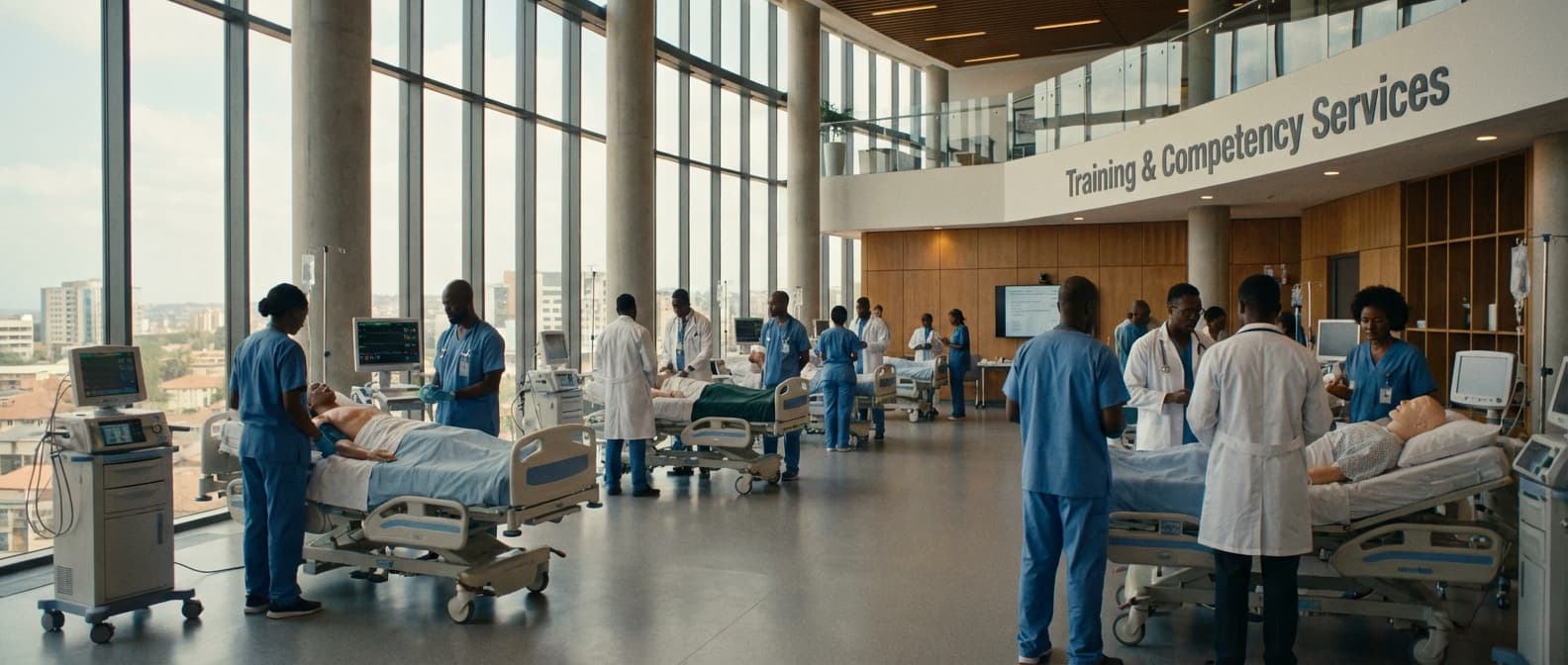
Ultrasound Application Training Service (Protocol-Based) in Congo (Kinshasa)
Engineering Excellence & Technical Support
Ultrasound Application Training Service (Protocol-Based) High-standard technical execution following OEM protocols and local regulatory frameworks.
Standardized Protocol Training
Our comprehensive training program in Kinshasa provides hands-on instruction on internationally recognized ultrasound protocols. Clinicians will master standardized scanning techniques for improved diagnostic accuracy and consistency across examinations.
Expert-Led Workshops
Benefit from in-depth training delivered by experienced sonographers and radiologists. Our workshops in Congo are designed to impart practical skills and critical interpretation abilities, tailored to the specific needs of your healthcare facility.
On-Site & Remote Support
We offer flexible training solutions in Kinshasa, including on-site sessions at your clinic or hospital, and remote learning options. Our protocol-based approach ensures seamless integration into your daily practice for enhanced patient care.
What Is Ultrasound Application Training Service (Protocol-based) In Congo (Kinshasa)?
Ultrasound Application Training Service (Protocol-Based) in Congo (Kinshasa) refers to a structured, standardized educational program designed to equip healthcare professionals with the knowledge and practical skills to perform and interpret ultrasound examinations according to established, evidence-based protocols. This service is crucial for ensuring diagnostic accuracy, consistency in patient care, and efficient utilization of ultrasound technology within the healthcare infrastructure of Congo (Kinshasa). The training emphasizes adherence to specific scanning sequences, optimal probe manipulation, image optimization techniques, and the identification of key anatomical structures and pathological findings relevant to various clinical scenarios.
| Who Needs This Service? | Typical Use Cases | ||||||
|---|---|---|---|---|---|---|---|
| Radiologists: To standardize their practice, incorporate new protocols, and enhance diagnostic accuracy. | Sonographers/Ultrasound Technicians: To acquire foundational skills, specialize in specific applications, and achieve proficiency according to established guidelines. | Obstetricians & Gynecologists: For specialized training in fetal anomaly scans, obstetric biometry, and gynecological imaging. | Internal Medicine Physicians: To gain proficiency in point-of-care ultrasound (POCUS) applications for rapid diagnosis and management. | Emergency Medicine Physicians: For rapid assessment of trauma, fluid status, and other critical conditions. | Surgeons: To assist in pre-operative planning, intra-operative guidance, and post-operative assessment. | Healthcare Institutions (Hospitals, Clinics, Diagnostic Centers): To ensure a standardized quality of ultrasound services, improve patient outcomes, and meet accreditation standards. | Medical Schools and Training Institutions: To integrate practical ultrasound training into their curricula. |
| Obstetric Ultrasound: Gestational age assessment, fetal growth monitoring, anomaly screening, Doppler studies. | Abdominal Ultrasound: Assessment of liver, gallbladder, kidneys, spleen, pancreas, and aorta. | Pelvic Ultrasound (Gynecological): Evaluation of uterus, ovaries, and adnexa. | Vascular Ultrasound: Carotid Doppler, peripheral vascular assessment, deep vein thrombosis (DVT) screening. | Echocardiography: Assessment of cardiac structure and function (though specialized training is often required). | Musculoskeletal (MSK) Ultrasound: Evaluation of joints, tendons, ligaments, and soft tissues. | Thyroid and Breast Ultrasound: Evaluation of nodules and lesions. | Point-of-Care Ultrasound (POCUS): Rapid bedside assessments in emergency, critical care, and primary care settings. |
Key Components of Ultrasound Application Training Service (Protocol-Based):
- Curriculum Design: Development of comprehensive training modules based on international and national best practice protocols for specific ultrasound applications (e.g., obstetrics, abdominal, vascular, musculoskeletal).
- Didactic Instruction: Lectures and theoretical sessions covering ultrasound physics, instrumentation, anatomy, physiology, pathology, and protocol-specific knowledge.
- Supervised Practical Sessions: Hands-on training using phantoms and/or real patients under the guidance of experienced sonographers or radiologists, focusing on protocol adherence and image acquisition.
- Image Interpretation Training: Instruction on identifying normal and abnormal findings, understanding artifact recognition, and formulating preliminary reports based on protocol-driven assessments.
- Competency Assessment: Formal evaluation of trainee performance through practical examinations, case study reviews, and written assessments to ensure proficiency and protocol compliance.
- Continuing Professional Development (CPD): Provision of ongoing training opportunities for updating skills, learning new applications, and adapting to technological advancements.
- On-site and Remote Delivery: Offering training programs either at healthcare facilities within Congo (Kinshasa) or through remote learning platforms with virtual supervision.
Who Needs Ultrasound Application Training Service (Protocol-based) In Congo (Kinshasa)?
This document outlines the critical need for Protocol-Based Ultrasound Application Training Services in Congo (Kinshasa). Such training is essential for healthcare professionals to effectively and accurately utilize ultrasound technology for diagnosis and patient management, leading to improved healthcare outcomes in a region with developing medical infrastructure. The training will focus on established, evidence-based protocols to ensure standardization and consistency in ultrasound practice.
| Target Customer Group | Key Departments Requiring Training | Specific Ultrasound Applications |
|---|---|---|
| Hospitals (General and Specialized) | Radiology/Diagnostic Imaging, Obstetrics & Gynecology, Cardiology, Emergency Medicine, Internal Medicine, Pediatrics, Surgery | Abdominal, Pelvic, Obstetric, Cardiac, Vascular, Musculoskeletal, Small Parts, Point-of-Care Ultrasound (POCUS) |
| Clinics (Primary Care & Specialty) | General Practice, Family Medicine, Gynecology, Cardiology, Pediatrics | Basic abdominal and pelvic scans, POCUS for quick assessments, obstetric dating and anomaly scans |
| University Teaching Hospitals | All clinical departments, Medical Education departments | Comprehensive training across all specialties, research-oriented ultrasound applications, training of trainers |
| NGOs & Humanitarian Organizations | Medical Teams, Public Health Units | Portable ultrasound applications for remote areas, emergency ultrasound, basic obstetric and abdominal scans |
| Government Health Ministries | Healthcare Planning and Management, Public Health Programs | Training needs assessment, capacity building strategy development, standardization of ultrasound protocols |
| Diagnostic Imaging Centers | Radiology, Sonography | Advanced abdominal, pelvic, vascular, musculoskeletal, and obstetric/gynecological imaging protocols |
Target Customers and Departments for Ultrasound Application Training in Congo (Kinshasa)
- {"title":"Hospitals and Clinics (Public and Private)","description":"These facilities are the primary providers of healthcare services and will benefit from enhanced diagnostic capabilities through ultrasound."}
- {"title":"University Teaching Hospitals","description":"Essential for training the next generation of medical professionals, ensuring future ultrasound practitioners are well-equipped."}
- {"title":"Non-Governmental Organizations (NGOs) and Humanitarian Organizations","description":"Organizations involved in medical missions, primary healthcare, and emergency response often rely on portable ultrasound and require trained personnel."}
- {"title":"Government Health Ministries and Agencies","description":"For capacity building initiatives, standardization of medical equipment, and public health programs."}
- {"title":"Diagnostic Imaging Centers","description":"Dedicated centers offering specialized imaging services, requiring advanced protocol-based training for their radiographers and sonographers."}
Ultrasound Application Training Service (Protocol-based) Process In Congo (Kinshasa)
This document outlines the Ultrasound Application Training Service (Protocol-Based) process in Congo (Kinshasa), detailing the workflow from initial inquiry to the successful execution of the training. This service aims to equip healthcare professionals with the knowledge and skills to perform ultrasound examinations according to established protocols, ensuring standardized and accurate diagnostic capabilities.
| Stage | Activities | Key Stakeholders | Deliverables/Outcomes |
|---|---|---|---|
| Initial contact by potential client (hospital, clinic, NGO) expressing interest in ultrasound training. Discussion to understand specific training needs, target audience (doctors, nurses, technicians), current skill levels, desired ultrasound applications (e.g., OB/GYN, general, point-of-care), and institutional goals. Assessment of existing ultrasound equipment and facilities. | Client (Healthcare Institution/Organization), Training Provider Representative | Documented understanding of client's training requirements, Identification of specific protocols to be covered. |
| Development of a detailed training proposal outlining:
| Training Provider, Client | Formal training proposal, Detailed quotation, Contract negotiation points. |
| Review and negotiation of the training proposal and quotation by the client. Signing of a service agreement or contract. Finalization of training dates, times, and venue in coordination with the client. | Client, Training Provider | Signed service agreement/contract, Confirmed training schedule. |
| Training Provider:
| Training Provider, Client, Trainees | Training materials ready, Logistics confirmed, Trainees informed and prepared. |
| Theoretical sessions: lectures, case discussions, video demonstrations on ultrasound physics, image acquisition principles, and specific protocol interpretation. Hands-on practical sessions: supervised scanning on phantom models and/or patients, focusing on systematic approach, probe handling, image optimization, and protocol adherence. Interactive Q&A sessions and problem-solving. Demonstration of advanced techniques and troubleshooting. | Trainer(s), Trainees, Client Staff (support) | Knowledge transfer, Skill development, Proficiency in protocol-based ultrasound scanning. |
| Assessment of trainee learning through practical evaluations, quizzes, or case reviews. Collection of feedback from trainees and client regarding the training quality. Issuance of certificates of completion. Provision of post-training support: access to trainers for questions, provision of additional resources, or follow-up consultations (as per agreement). Reporting on training outcomes to the client. | Trainer(s), Trainees, Client, Training Provider Management | Trainee competency assessment, Feedback report, Certificates, Post-training support plan. |
Ultrasound Application Training Service (Protocol-Based) Process - Congo (Kinshasa)
- Inquiry & Needs Assessment
- Proposal Development & Quotation
- Agreement & Scheduling
- Pre-Training Preparations
- Training Execution
- Post-Training Evaluation & Support
Ultrasound Application Training Service (Protocol-based) Cost In Congo (Kinshasa)
Providing ultrasound application training services, particularly protocol-based, in Congo (Kinshasa) involves a dynamic cost structure influenced by several key factors. The pricing is not a fixed amount but rather a reflection of the resources, expertise, and logistical considerations involved. Understanding these elements is crucial for healthcare institutions and individuals seeking to invest in such training to enhance their diagnostic capabilities. The local currency, the Congolese Franc (CDF), is the standard for these transactions, and the ranges provided are indicative and subject to negotiation and specific provider offerings.
| Training Type/Scope | Estimated Cost Range (CDF per participant/course) | Notes |
|---|---|---|
| Basic Ultrasound Principles & Protocol Introduction (e.g., 2-3 days) | 250,000 - 600,000 CDF | Covers foundational concepts and general protocols. Often for general practitioners or nurses. |
| General Abdominal & Pelvic Ultrasound Protocol Training (e.g., 5 days) | 600,000 - 1,200,000 CDF | Focuses on common abdominal and pelvic scan protocols. May include basic obstetric scanning. |
| Obstetrics & Gynecology Ultrasound Protocol Specialization (e.g., 5-7 days) | 900,000 - 1,800,000 CDF | In-depth training on fetal biometry, anomaly scans, and gynecological imaging protocols. High demand. |
| Vascular & Echocardiography Ultrasound Protocol Training (e.g., 7-10 days) | 1,500,000 - 3,000,000 CDF | Highly specialized training requiring advanced techniques and interpretation. Often for sonographers or radiologists. |
| On-site / In-house Customized Training (per day/per trainer) | Negotiable (e.g., 500,000 - 1,500,000 CDF per day + expenses) | Cost varies significantly based on trainer's travel, accommodation, and the extent of customization. May require a minimum number of participants. |
| Refresher / Advanced Protocol Workshops (1-2 days) | 300,000 - 800,000 CDF | For trained professionals looking to update skills or learn new protocols. Shorter duration. |
Key Pricing Factors for Ultrasound Application Training in Congo (Kinshasa)
- Duration and Intensity of Training: Longer and more intensive training programs naturally command higher fees.
- Specific Ultrasound Modalities Covered: Training in specialized areas like obstetric, abdominal, or vascular ultrasound may differ in cost.
- Trainer's Expertise and Qualifications: Highly experienced and internationally recognized trainers will charge more.
- Location and Logistics: Training delivered at remote locations or requiring extensive travel for trainers will incur additional costs.
- Training Materials and Equipment: Provision of comprehensive training manuals, simulation equipment, or access to advanced ultrasound machines can influence pricing.
- Number of Participants: Group training often offers a lower per-participant cost compared to individual sessions.
- Certification and Assessment: Inclusion of formal certification exams and assessments will add to the overall cost.
- Provider Reputation and Accreditation: Established and accredited training providers might have higher fees but offer greater value and recognition.
- Customization of Training Protocol: Tailoring the training protocol to the specific needs of an institution can affect the price.
- Pre-requisite Knowledge Assessment: If a preliminary assessment of participants' existing knowledge is required, it might be factored into the cost.
Affordable Ultrasound Application Training Service (Protocol-based) Options
Our Affordable Ultrasound Application Training Service (Protocol-Based) offers comprehensive learning experiences tailored to your needs. We provide structured, protocol-driven training designed to equip you with the practical skills and theoretical knowledge required for accurate and efficient ultrasound examinations. Our value bundles are designed to maximize your learning investment while minimizing costs, ensuring you receive high-quality education without breaking the bank. We focus on practical application and understanding the 'why' behind each protocol, fostering confidence and competency in real-world scenarios.
| Value Bundle Option | Description | Included Modules | Target Audience | Cost-Saving Strategies | Price Range (USD) |
|---|---|---|---|---|---|
| Essentials Bundle | Foundational ultrasound principles and core application protocols. | Abdominal Basics, Pelvic Essentials, Vascular Access. | Beginners, students, medical assistants. | Group discounts, early bird registration. | $499 - $799 |
| Specialty Focus Bundle | In-depth training on specific ultrasound applications. | Cardiac Fundamentals, OB/GYN Advanced, Small Parts & Musculoskeletal. | Sonographers seeking specialization, advanced practitioners. | Modular pricing, bundled module discounts. | $799 - $1299 |
| Comprehensive Certification Prep Bundle | All-encompassing training designed for certification exams. | Includes all Essentials and selected Specialty modules, mock exams, review sessions. | Individuals preparing for ARDMS or equivalent exams. | Long-term payment plans, institutional packages. | $1499 - $2499 |
| Customizable Institutional Package | Tailored training programs for healthcare facilities and departments. | Flexible module selection, on-site training options, staff development. | Hospitals, clinics, training schools. | Volume discounts, multi-year contracts, train-the-trainer programs. | Custom Quote |
Key Features and Benefits
- Protocol-Driven Curriculum: Ensures standardized and reproducible scanning techniques.
- Hands-on Practice: Emphasis on practical application with simulated or real patient scenarios.
- Experienced Instructors: Learn from seasoned ultrasound professionals.
- Flexible Learning Formats: Options for in-person, remote, or blended learning.
- Certification Opportunities: Potential for recognized certifications upon completion.
- Cost-Effective Solutions: Designed to be accessible for individuals and institutions.
Verified Providers In Congo (Kinshasa)
In the Democratic Republic of Congo (Kinshasa), navigating the healthcare landscape can be challenging. Ensuring you access services from verified providers is paramount for your well-being. Franance Health stands out as a premier choice due to its stringent credentialing process, commitment to quality care, and extensive network of trusted medical professionals. This approach guarantees that patients receive safe, effective, and ethical medical services.
| Provider Type | Verification Criteria | Franance Health Advantage |
|---|---|---|
| General Practitioners | Medical License, Graduation Certificate, Internship Completion | Verified for up-to-date licensing and proven general medical expertise. |
| Specialist Doctors (e.g., Cardiologists, Dermatologists) | Medical License, Specialist Degree/Certification, Residency Completion, Board Certification (where applicable) | Ensured through rigorous verification of specialized training and ongoing professional development. |
| Hospitals and Clinics | Operating Licenses, Accreditation (e.g., Ministry of Health), Facility Standards, Equipment Maintenance Records | Confirmed for compliance with national health regulations and quality infrastructure. |
| Diagnostic Laboratories | Laboratory Permits, Technical Staff Qualifications, Quality Control Procedures | Validated for accurate diagnostic capabilities and skilled technicians. |
Why Franance Health is the Best Choice:
- Rigorous Verification Process: Franance Health meticulously vets all healthcare providers within its network. This includes checking licenses, educational qualifications, professional experience, and adherence to ethical standards.
- Commitment to Quality: Beyond basic verification, Franance Health actively monitors provider performance and patient feedback to ensure consistently high standards of care.
- Extensive Network: Franance Health partners with a wide array of specialists, general practitioners, and healthcare facilities across Kinshasa, offering comprehensive medical solutions.
- Patient-Centric Approach: Franance Health prioritizes patient safety and satisfaction, providing resources and support to help individuals make informed healthcare decisions.
- Transparency and Trust: By clearly displaying verified credentials, Franance Health builds trust and empowers patients to choose providers with confidence.
Scope Of Work For Ultrasound Application Training Service (Protocol-based)
This Scope of Work (SOW) outlines the requirements for a protocol-based Ultrasound Application Training Service. The service aims to provide comprehensive training to designated personnel on the effective and efficient use of ultrasound applications, adhering to established protocols and best practices. The training will focus on technical skills, image acquisition, interpretation fundamentals, and application-specific knowledge, ensuring proficiency and consistency in ultrasound examinations.
| Category | Technical Deliverables | Standard Specifications | Metrics/Verification |
|---|---|---|---|
| Training Curriculum & Materials | Development of comprehensive, protocol-based training modules for selected ultrasound applications (e.g., Abdominal, Cardiac, OB/GYN, Vascular, Musculoskeletal). | Modules will include theoretical content, visual aids (diagrams, videos), interactive exercises, case studies, and assessment tools, all aligned with recognized international/national ultrasound guidelines and departmental protocols. | Review and approval of training modules by client's subject matter experts. Successful completion rate of trainee assessments. |
| Hands-on Practical Sessions | Structured, supervised practical training sessions utilizing ultrasound phantoms, simulators, and/or supervised live patient scanning (as agreed upon). | Minimum number of hours per application, focus on protocol adherence for image acquisition, optimization of machine parameters, and exploration of different transducer types. Instructor-to-trainee ratio maintained for effective guidance. | Trainee demonstration of proficiency in image acquisition according to protocol. Observation checklist completed by instructors. |
| Image Acquisition & Optimization | Demonstration and practice of standardized scanning techniques and probe manipulation for optimal visualization. | Trainees will be able to identify and correct common imaging artifacts. Understanding and application of various imaging modes (B-mode, Doppler, etc.) as relevant to the protocol. | Quality assessment of acquired images against benchmark images. Trainee's ability to achieve protocol-defined image quality within a specified timeframe. |
| Protocol Adherence & Interpretation Fundamentals | Training on the systematic approach to scanning as dictated by the specific protocol. | Introduction to normal anatomy and common pathologies as visualized by ultrasound, with emphasis on recognizing findings relevant to the protocol. Basic principles of Doppler assessment where applicable. | Verbal or written quiz on protocol steps and key anatomical landmarks. Trainee's ability to identify major anatomical structures and potential deviations from normal. |
| Assessment & Competency Evaluation | Development and administration of pre- and post-training assessments (theoretical and practical). | Assessments will measure knowledge retention, skill acquisition, and protocol adherence. A defined passing score will be established. | Comparative analysis of pre- and post-assessment scores. Formal competency sign-off by the training provider and client for each trainee. |
| Reporting & Documentation | Guidance on the standard format for ultrasound reports according to departmental protocols. | Emphasis on documenting key findings, measurements, and limitations based on the protocol. Familiarization with relevant diagnostic terminology. | Review of sample reports generated by trainees (if applicable) for accuracy and completeness according to protocol. |
| Equipment Familiarization & Troubleshooting | Instruction on the operation and basic maintenance of specific ultrasound systems. | Understanding of common equipment settings and their impact on image quality. Basic troubleshooting of common equipment issues. | Trainee's ability to perform basic equipment checks and adjustments. |
| Post-Training Support | Provision of access to training materials and resources for a defined period post-training. | Access to online portals, FAQs, or limited email support for clarification of protocol-related queries. | Client feedback on the usability of post-training resources. |
Key Objectives of the Ultrasound Application Training Service:
- To equip trainees with the theoretical knowledge and practical skills necessary for performing ultrasound examinations according to defined protocols.
- To ensure trainees can effectively operate ultrasound equipment, including transducer selection, parameter optimization, and image manipulation.
- To foster the ability to acquire high-quality ultrasound images relevant to specific clinical applications and protocols.
- To introduce fundamental principles of ultrasound image interpretation, including artifact recognition and basic anatomical correlation.
- To provide hands-on experience with simulated or supervised patient scenarios, reinforcing protocol adherence and diagnostic reasoning.
- To ensure trainees understand safety guidelines and quality assurance measures related to ultrasound procedures.
- To promote standardized reporting practices based on established protocols.
Service Level Agreement For Ultrasound Application Training Service (Protocol-based)
This Service Level Agreement (SLA) outlines the agreed-upon service levels for the Ultrasound Application Training Service (Protocol-Based). It defines the responsibilities of both the Service Provider and the Client, and establishes metrics for performance, including response times and uptime guarantees.
| Service Component | Uptime Guarantee | Response Time (Business Hours) | Resolution Time Target (Critical Issues) | Resolution Time Target (Major Issues) | Resolution Time Target (Minor Issues) |
|---|---|---|---|---|---|
| Training Platform Accessibility | 99.5% | 1 hour | 4 business hours | 1 business day | 3 business days |
| Access to On-Demand Training Modules | 99.5% | 2 business hours | 4 business hours | 1 business day | 3 business days |
| Support for Scheduled Training Sessions (Technical Issues) | N/A (Support provided during session) | Immediate (during session) | During session | During session | During session |
Key Definitions
- Service Provider: The entity providing the Ultrasound Application Training Service.
- Client: The entity receiving the Ultrasound Application Training Service.
- Training Platform: The software or system used to deliver the ultrasound application training.
- Scheduled Training Session: A pre-arranged training session for a specific group of users, conducted at a designated time.
- On-Demand Training Module: Self-paced training content accessible by the Client at any time.
- Response Time: The maximum time allowed for the Service Provider to acknowledge and begin addressing a reported issue or request.
- Uptime: The percentage of time the Training Platform is operational and accessible to the Client for its intended use.
- Downtime: The percentage of time the Training Platform is unavailable or not accessible.
- Critical Issue: An issue that renders the core functionality of the Training Platform unusable, preventing users from accessing or completing essential training.
- Major Issue: An issue that significantly impacts the usability of the Training Platform but does not completely prevent access to core functionality.
- Minor Issue: An issue that has a minimal impact on the usability of the Training Platform or is a cosmetic defect.
Frequently Asked Questions

Ready when you are
Let's scope your Ultrasound Application Training Service (Protocol-Based) in Congo (Kinshasa) project in Congo (Kinshasa).

Scaling healthcare logistics and technical systems across the entire continent.