
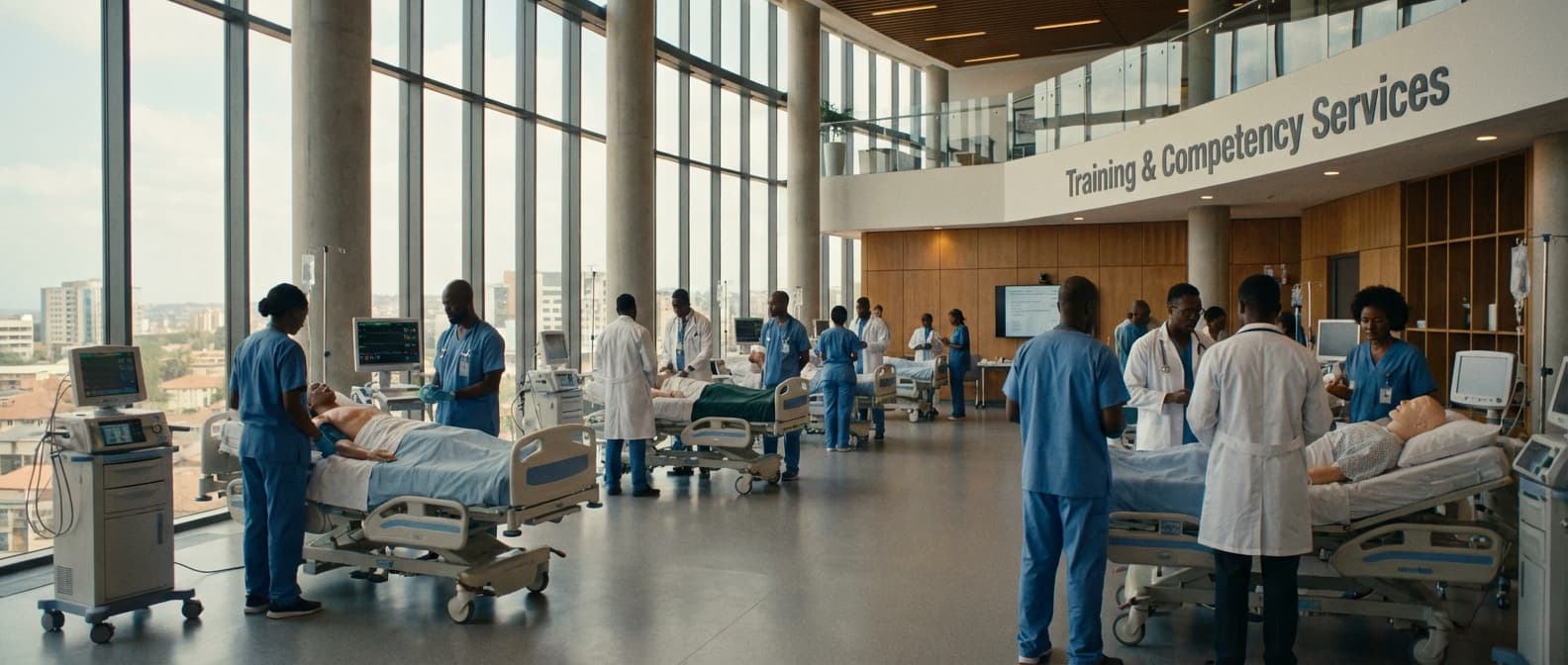
MRI Operator Training Service (Radiographers) in Congo (Kinshasa)
Engineering Excellence & Technical Support
MRI Operator Training Service (Radiographers) High-standard technical execution following OEM protocols and local regulatory frameworks.
Advanced MRI Physics & Protocol Mastery
Hands-on training in fundamental MRI physics, pulse sequences, and advanced protocol optimization tailored to Congolese clinical needs, ensuring superior image quality and accurate diagnoses.
Equipment Operation & Troubleshooting Excellence
Comprehensive training on operating and maintaining modern MRI scanners, with a focus on practical troubleshooting techniques to maximize uptime and ensure patient safety in local healthcare settings.
Patient Care & Safety Protocols in Practice
In-depth modules on patient communication, anxiety management, contrast agent administration, and infection control, specifically addressing the unique challenges and cultural considerations in Kinshasa.
What Is Mri Operator Training Service (Radiographers) In Congo (Kinshasa)?
MRI Operator Training Service (Radiographers) in Congo (Kinshasa) refers to specialized educational programs designed to equip qualified radiographers with the knowledge and practical skills necessary to safely and effectively operate Magnetic Resonance Imaging (MRI) scanners. This service is crucial for healthcare institutions in the Democratic Republic of Congo aiming to establish or enhance their MRI diagnostic capabilities. The training typically covers fundamental principles of MRI physics, image acquisition techniques, patient preparation and safety protocols, quality assurance measures, and troubleshooting common issues. It aims to ensure radiographers can produce high-quality diagnostic images while minimizing risks to patients and staff.
| Who Needs This Service? | Typical Use Cases | |||
|---|---|---|---|---|
| Radiographers (Certified/Licensed): Individuals already holding credentials as radiographers who wish to specialize in MRI. | Hospitals and Diagnostic Centers: Healthcare facilities acquiring new MRI equipment or upgrading existing systems requiring trained personnel. | Medical Imaging Departments: Enhancing the skill set of existing radiology staff to offer comprehensive MRI services. | Training Institutions: Universities and technical colleges offering radiology programs looking to incorporate MRI training into their curriculum. | Government Health Initiatives: Programs aimed at improving diagnostic imaging infrastructure and capacity within the country. |
| Neurological Imaging: Diagnosing brain tumors, stroke, multiple sclerosis, and other neurological conditions. | Musculoskeletal Imaging: Evaluating joint injuries, ligament tears, bone tumors, and spinal conditions. | Abdominal and Pelvic Imaging: Assessing organs like the liver, kidneys, pancreas, uterus, and prostate for various pathologies. | Cardiovascular Imaging: Evaluating heart structure and function, and blood vessels. | Oncology Imaging: Staging and monitoring of cancers. |
Key Components of MRI Operator Training Service (Radiographers)
- MRI Physics Fundamentals: Understanding the principles of nuclear magnetic resonance, radiofrequency pulses, gradient fields, signal detection, and image reconstruction.
- Scanner Operation and Protocols: Hands-on training on specific MRI scanner models, including system calibration, sequence selection, parameter optimization for various anatomical regions and pathologies, and protocol management.
- Patient Care and Safety: Comprehensive education on patient screening for contraindications (e.g., metallic implants, pacemakers), administration of contrast agents, management of claustrophobia and anxiety, and emergency procedures.
- Image Quality Assurance and Optimization: Techniques for ensuring diagnostic image quality, artifact reduction, and implementation of quality control protocols.
- Radiation Safety (Indirect Relevance): While MRI is non-ionizing, understanding general radiation safety principles is important in a multi-modal imaging department. More critically, understanding magnetic field safety is paramount.
- Post-Processing and Archiving: Basic understanding of image viewing software, manipulation, and adherence to Picture Archiving and Communication System (PACS) protocols.
Who Needs Mri Operator Training Service (Radiographers) In Congo (Kinshasa)?
MRI Operator Training Service (Radiographers) in Congo (Kinshasa) is crucial for various healthcare facilities seeking to enhance their diagnostic imaging capabilities. This specialized training ensures radiographers possess the necessary skills to operate MRI scanners effectively, safely, and efficiently, leading to improved patient care and diagnostic accuracy. The demand for such training is driven by the increasing adoption of advanced medical technologies and the need for skilled professionals to manage them.
| Target Customer Type | Typical Departments Involved | Reasons for Training Need |
|---|---|---|
| Public Hospitals | Radiology, Neurology, Orthopedics, Oncology | Upgrade existing skills, introduce new MRI technology, improve diagnostic accuracy, comply with national health standards. |
| Private Hospitals | Radiology, Neurology, Orthopedics, Cardiology, Oncology | Enhance competitive edge, offer advanced diagnostic services, improve patient throughput and satisfaction, ensure compliance with international standards. |
| Diagnostic Imaging Centers | Radiology | Maintain high-quality imaging services, expand service offerings, attract and retain skilled radiographers, optimize equipment utilization. |
| Government Health Agencies | National Health Services Management, Public Health Infrastructure Development | Standardize training across public facilities, ensure equitable access to advanced diagnostics, build a skilled healthcare workforce, support national health initiatives. |
| NGOs/Humanitarian Organizations | Medical Services, Imaging Units | Establish or enhance medical imaging capabilities in underserved areas, train local staff, ensure effective use of donated or purchased equipment, provide essential diagnostics. |
| Medical Schools/Training Institutions | Radiography Programs, Continuing Medical Education | Integrate specialized MRI training into curriculum, provide practical hands-on experience, produce job-ready graduates, stay current with technological advancements. |
Target Customers & Departments for MRI Operator Training in Congo (Kinshasa)
- Hospitals: Both public and private hospitals are primary targets, especially those with existing or planned MRI facilities. This includes university teaching hospitals, general hospitals, and specialized medical centers.
- Diagnostic Imaging Centers/Clinics: Independent imaging centers that offer a range of diagnostic services, including MRI, are key clients. These centers rely on well-trained operators to provide competitive and high-quality imaging.
- Government Health Agencies: Ministries of Health or other governmental bodies responsible for overseeing public healthcare infrastructure may procure training services to upskill staff in public hospitals and clinics across the country.
- Non-Governmental Organizations (NGOs) & Humanitarian Organizations: Organizations involved in providing healthcare services in remote or underserved areas, particularly those operating mobile clinics or establishing new medical facilities, may require training for their imaging personnel.
- Medical Schools & Training Institutions: Institutions that train future radiographers can partner for specialized MRI modules, ensuring their curriculum remains up-to-date with industry standards.
- Radiology Departments: The core department within any healthcare facility that utilizes MRI technology. This includes both new facilities establishing their radiology department and existing ones looking to upgrade skills.
- Neurology Departments: Often a major user of MRI for diagnostic purposes, requiring operators familiar with specific protocols for brain and spinal cord imaging.
- Orthopedic Departments: Utilize MRI for detailed imaging of joints, muscles, and bones.
- Oncology Departments: Employ MRI for staging, treatment planning, and monitoring of various cancers.
- Cardiology Departments: Increasingly using cardiac MRI for diagnosing heart conditions.
- Emergency Departments: For rapid assessment of trauma and acute conditions requiring MRI.
- Research Institutions: Academic or medical research centers conducting studies that involve MRI imaging.
Mri Operator Training Service (Radiographers) Process In Congo (Kinshasa)
The MRI Operator Training Service for Radiographers in Congo (Kinshasa) involves a structured workflow designed to deliver specialized training to radiographers in the operation and management of MRI machines. This process begins with initial inquiries and culminates in the successful execution of comprehensive training programs.
| Stage | Description | Key Activities | Responsible Parties |
|---|---|---|---|
| Initial Inquiry & Needs Assessment | Potential clients (hospitals, radiology centers) express interest in MRI operator training for their radiographers. | Initial contact, understanding training requirements, number of trainees, existing infrastructure, specific MRI modalities, and desired learning outcomes. | Client (Hospital/Center), Training Provider (Service Provider) |
| Proposal Development & Negotiation | The training provider develops a tailored proposal outlining the training curriculum, methodology, duration, trainers, costs, and expected deliverables. | Drafting the proposal, reviewing with the client, making revisions based on feedback, and negotiating terms and conditions. | Training Provider, Client |
| Contracting & Agreement | Formalizing the training engagement through a legally binding contract. | Legal review of the contract, signing of the agreement, and payment of any advance fees. | Client, Training Provider, Legal Counsel (if applicable) |
| Training Program Design & Customization | Developing or adapting the training curriculum to meet the specific needs and context of the Kinshasa facility. | Defining theoretical modules (MRI physics, safety, protocols) and practical components (machine operation, image acquisition, artifact management), potentially incorporating case studies relevant to local medical practices. | Training Provider (Instructional Designers, Subject Matter Experts), Client (for input on specific needs) |
| Logistics & Scheduling | Coordinating the practical arrangements for the training delivery. | Scheduling training dates, arranging travel and accommodation for trainers (if external), ensuring availability of the MRI equipment for practical sessions, and preparing training materials. | Training Provider, Client (for facility access and equipment availability) |
| Pre-Training Preparations | Ensuring all participants and resources are ready for the commencement of training. | Communicating training schedules to trainees, providing pre-reading materials, verifying trainee eligibility, and setting up the training environment (classroom, lab). | Training Provider, Client (HR/Department Heads) |
| Training Delivery | The core phase where the training is conducted by qualified instructors. | Delivering theoretical lectures, conducting hands-on practical sessions on the MRI scanner, demonstrating scanning techniques, and facilitating Q&A sessions. | Training Provider (Trainers), Trainees (Radiographers) |
| Assessment & Evaluation | Measuring the effectiveness of the training and the trainees' comprehension. | Conducting written examinations, practical assessments, and feedback surveys from both trainees and trainers. | Training Provider, Trainees |
| Certification & Follow-up | Issuing certificates upon successful completion and providing ongoing support. | Awarding certificates to trainees who meet the required standards, providing post-training support, and potentially offering refresher courses or advanced training modules. | Training Provider, Client |
MRI Operator Training Service Workflow (Radiographers) in Congo (Kinshasa)
- Initial Inquiry & Needs Assessment
- Proposal Development & Negotiation
- Contracting & Agreement
- Training Program Design & Customization
- Logistics & Scheduling
- Pre-Training Preparations
- Training Delivery
- Assessment & Evaluation
- Certification & Follow-up
Mri Operator Training Service (Radiographers) Cost In Congo (Kinshasa)
The cost of MRI operator training for radiographers in Congo (Kinshasa) can vary significantly due to several factors. These factors include the reputation and accreditation of the training institution, the duration and intensity of the program, the expertise of the instructors, and whether the training is delivered in-person or remotely. Additional costs can arise from materials, assessments, and potential travel and accommodation if the training is not locally accessible. It's important to note that formal, specialized MRI operator training might be less common in Kinshasa compared to larger global centers, potentially leading to higher costs or reliance on international programs.
| Service Component | Estimated Cost Range (Congolese Francs - CDF) | Notes |
|---|---|---|
| Basic MRI Principles & Operation Course (e.g., 3-5 days) | 750,000 - 1,500,000 CDF | May be delivered by local health training centers or online. Primarily theoretical with limited hands-on. |
| Intermediate MRI Operator Training (e.g., 1-2 weeks) | 1,500,000 - 3,000,000 CDF | Could involve more in-depth theory, practical scanning protocols, and potentially simulator access. |
| Advanced/Specialized MRI Training (e.g., specific sequences, applications, 2-4 weeks) | 3,000,000 - 6,000,000+ CDF | Often requires highly specialized instructors and may involve partnerships with international bodies. Hands-on with actual MRI equipment is crucial here. |
| On-site Training (at a hospital/clinic) | Variable (Negotiable, often per-day rate + instructor fees) | Cost is highly dependent on the number of trainees, duration, and instructor's travel/accommodation expenses. |
| Certification Exam Fees | 200,000 - 500,000 CDF | Separate fee for formal assessment and certification. |
| Training Materials (manuals, software access) | 100,000 - 300,000 CDF | Included in some packages, separate in others. |
Key Factors Influencing MRI Operator Training Costs in Congo (Kinshasa)
- Training Provider Accreditation and Reputation: Internationally recognized institutions or those with a strong track record in medical imaging training will likely command higher fees.
- Program Duration and Curriculum: Comprehensive programs covering advanced MRI techniques will be more expensive than shorter introductory courses.
- Instructor Expertise: Highly qualified and experienced MRI radiographers or physicists as instructors will contribute to higher training costs.
- Training Modality (In-person vs. Online): In-person training, especially with hands-on equipment use, is typically more expensive due to facility and equipment overhead. Online or blended learning can be more cost-effective.
- Training Materials and Resources: The provision of comprehensive manuals, case studies, and access to simulation software can add to the overall cost.
- Assessment and Certification: Fees for examinations and the issuance of certificates will be factored into the price.
- Location and Logistics (for In-person): If training requires travel to a specific facility, costs for accommodation, local transportation, and potentially visa fees (if applicable) will be incurred.
- Demand and Availability: Limited availability of specialized MRI training programs in Kinshasa could lead to premium pricing.
Affordable Mri Operator Training Service (Radiographers) Options
Investing in skilled MRI operators (radiographers) is crucial for diagnostic imaging centers. However, the cost of comprehensive MRI operator training can be a significant barrier. This document outlines affordable training options, emphasizing value bundles and cost-saving strategies for radiographers seeking to specialize in Magnetic Resonance Imaging.
| Cost-Saving Strategy | Description | Potential Savings (Approximate) | Considerations |
|---|---|---|---|
| Leverage Online & Blended Learning | Utilize online modules for theoretical components and supplement with limited on-site or virtual simulator sessions for practical application. This reduces travel and instructor time. | 15-30% compared to fully in-person training | Requires self-discipline for online learning; ensure quality of virtual simulation. |
| Seek Employer Sponsorship/Tuition Reimbursement | Many healthcare facilities offer tuition reimbursement or sponsorship for professional development that directly benefits the organization. Inquire with your HR department. | 100% of training costs | Requires commitment to work for the sponsoring facility for a specified period. |
| Explore Manufacturer-Provided Training | Some MRI equipment manufacturers offer basic or advanced training for users of their specific machines. This can be a cost-effective option if you operate a particular brand. | Can range from free to significantly discounted | May be limited to specific equipment models; may not cover all aspects of MRI theory. |
| Utilize Professional Organization Resources | Radiography professional organizations (e.g., ARRT, ASRT) often provide educational resources, webinars, and sometimes even discounted training opportunities for their members. | 5-15% on courses and materials | Membership fees may apply; benefits vary by organization. |
| Phased Training Approach | Instead of a single, all-encompassing program, consider completing foundational training first and then pursuing advanced modules as budget allows and experience is gained. | Spreads out financial burden | May extend the timeline to full MRI competency. |
| Group Discounts and Negotiated Rates | When a group of radiographers from the same facility or a consortium of facilities are interested, negotiate directly with training providers for bulk discounts. | 10-20% on group enrollments | Requires coordination and a clear commitment from the group. |
Value Bundles for Affordable MRI Operator Training
- {"title":"Basic Certification Package","description":"Includes foundational MRI physics, safety protocols, patient positioning, and basic image acquisition techniques. Ideal for entry-level radiographers or those new to MRI.","included_features":["Online theory modules","Virtual simulator access (limited hours)","Study guides and practice quizzes","Final online certification exam"],"estimated_cost_range":"$800 - $1500"}
- {"title":"Advanced Specialization Bundle","description":"Builds upon basic knowledge with in-depth training in specific MRI applications (e.g., neuro, musculoskeletal, abdominal). Requires completion of the Basic Certification Package.","included_features":["Specialized online modules","Case study analysis","Advanced protocol development","Access to expert Q&A sessions","Certification in chosen specialty"],"estimated_cost_range":"$1200 - $2000 (per specialty)"}
- {"title":"Comprehensive 'MRI Ready' Program","description":"Combines both Basic Certification and a chosen Advanced Specialization into a single, discounted package. Offers a holistic approach to MRI competency.","included_features":["All features of Basic Certification Package","One chosen Advanced Specialization","Reduced overall price compared to purchasing separately","Priority access to simulator time"],"estimated_cost_range":"$1800 - $3000"}
- {"title":"On-Site Group Training Discount","description":"For imaging centers looking to train multiple radiographers. A dedicated instructor provides on-site training, customized to the facility's equipment and needs. Significant cost savings per individual.","included_features":["On-site lectures and hands-on demonstrations","Customized curriculum","Group assessment and feedback","Facility-specific protocol guidance"],"estimated_cost_range":"Varies based on group size and duration, typically 10-20% less per person than individual online courses."}
Verified Providers In Congo (Kinshasa)
Navigating healthcare in Congo (Kinshasa) requires access to reliable and certified medical professionals. Franance Health stands out as a leading platform dedicated to verifying healthcare providers, ensuring that patients receive high-quality care from qualified and ethical practitioners. Their rigorous credentialing process, commitment to transparency, and focus on patient well-being make them the premier choice for finding trusted healthcare services.
| Aspect | Franance Health Advantage | Benefit for Patients |
|---|---|---|
| Credential Verification | Strict multi-step process including license, education, and ethical checks. | Assurance of competence and legitimacy of healthcare providers. |
| Provider Transparency | Detailed profiles with specializations, experience, and patient feedback. | Informed decision-making and selection of suitable practitioners. |
| Quality of Care Focus | Prioritizes safety and adherence to high medical standards. | Reduced risk of encountering substandard or unethical medical practices. |
| Accessibility | Comprehensive listing across various medical specialties and locations. | Convenient access to a wide range of healthcare services. |
| Trust and Reliability | Building a reputation for trusted and verified healthcare referrals. | Peace of mind and confidence in seeking medical assistance. |
Why Franance Health is the Best Choice for Verified Providers in Congo (Kinshasa):
- Rigorous Verification Process: Franance Health employs a multi-faceted approach to verify credentials, including checking medical licenses, educational qualifications, professional certifications, and ethical standing. This ensures that only legitimate and competent healthcare professionals are listed on their platform.
- Commitment to Transparency: The platform provides detailed profiles of healthcare providers, including their specializations, experience, and patient reviews. This allows individuals to make informed decisions about their healthcare choices.
- Focus on Patient Safety and Quality of Care: By meticulously vetting providers, Franance Health prioritizes patient safety and the delivery of high-quality medical services. This reduces the risk of encountering unqualified or unethical practitioners.
- Wide Range of Specialties: Franance Health aims to cover a comprehensive spectrum of medical specialties, from general practitioners to highly specialized surgeons and therapists, making it a one-stop solution for diverse healthcare needs.
- User-Friendly Platform: The platform is designed for ease of use, allowing individuals to search for providers by specialty, location, and even specific conditions, streamlining the process of finding the right care.
- Empowering Patients: By providing verified information and facilitating access to reputable providers, Franance Health empowers individuals in Congo (Kinshasa) to take control of their health and well-being with confidence.
Scope Of Work For Mri Operator Training Service (Radiographers)
This Scope of Work (SOW) outlines the requirements for a comprehensive MRI Operator Training Service specifically tailored for radiographers. The objective is to equip radiographers with the theoretical knowledge and practical skills necessary to safely and effectively operate MRI scanners, produce high-quality diagnostic images, and adhere to established protocols and safety standards.
| Technical Deliverable | Description | Standard Specifications / Requirements | Acceptance Criteria |
|---|---|---|---|
| Training Curriculum Development | Comprehensive curriculum covering MRI physics, safety, protocols, and operational procedures. | Curriculum to include theoretical modules, practical demonstrations, and hands-on sessions. Content to be aligned with current ACR, AAPM, and IMRT guidelines. Modules should cover: Basic MRI Physics (Signal generation, T1, T2, PD, Gradient Echoes), Pulse Sequences (Spin Echo, Gradient Echo, Fast Spin Echo, EPI), MRI Safety (Magnetic field, RF, Gradient, Acoustic noise, Contrast agents, Screening forms, Emergency procedures), Patient Care & Management, Coil Selection, Image Acquisition Techniques, Artifact Identification and Correction, Introduction to MRI Contrast Agents, Basic Post-Processing and Image Viewing. | Curriculum documentation submitted and approved by the client. Curriculum to cover all specified modules and align with industry standards. Evidence of subject matter expert review. |
| Training Materials | Development and provision of all necessary training materials for participants and instructors. | Materials to include lecture slides, participant workbooks, practical checklists, case studies, and assessment tools. Materials to be in digital format (e.g., PDF) and printed copies as specified. Materials should be clear, concise, and visually engaging. | All training materials to be delivered in the agreed format and reviewed by the client for completeness and accuracy prior to training commencement. |
| Theoretical Training Sessions | Delivery of instructor-led theoretical sessions covering the developed curriculum. | Sessions to be interactive and engaging, utilizing visual aids and real-world examples. Duration and frequency of sessions to be as per agreed training schedule. Q&A sessions integrated into each module. | Successful completion of attendance records and post-module quizzes demonstrating participant comprehension. Instructor evaluations to be within acceptable range as defined by the client. |
| Practical Training Sessions & Hands-on Simulation | Supervised practical training on actual MRI scanners or high-fidelity simulators. | Sessions to include patient positioning, coil placement, protocol selection, image acquisition, and basic troubleshooting. A minimum number of hours dedicated to hands-on operation per participant. Specific scanner models (if applicable) to be detailed. Training to cover common MRI protocols for neuro, MSK, abdominal, and cardiac imaging. | Demonstrated proficiency of participants in performing standard MRI scans under supervision. Successful completion of practical assessment checklists. Positive feedback from supervising radiographers on participant competence. |
| MRI Safety Training | Dedicated training module on MRI safety principles and practices. | Focus on ferromagnetic detection, patient screening, contraindications, quench procedures, and emergency response. Compliance with site-specific safety policies and procedures. | Successful completion of a dedicated MRI safety assessment (written or practical). Participants to demonstrate understanding of all site-specific safety protocols. |
| Assessment & Evaluation Tools | Development and administration of pre- and post-training assessments to measure learning outcomes. | Assessments to include written (multiple-choice, short answer) and practical components. A passing score to be defined. Training effectiveness evaluation forms for participants to provide feedback on the training program. | Submission of pre- and post-assessment results demonstrating measurable improvement in knowledge and skills. Analysis of participant feedback for program improvement. A defined pass rate for all assessments. |
| Training Report | Comprehensive report detailing the training activities, participant performance, and overall effectiveness. | Report to include attendance records, assessment scores, summary of practical performance, identified areas for improvement, and recommendations for further training. Report to be submitted within a specified timeframe post-training completion. | Report to be delivered on time, accurately reflecting training outcomes, and to the satisfaction of the client. |
| Certification | Issuance of certificates of completion to participants who successfully complete the training and assessments. | Certificates to clearly state the name of the participant, the training program title, the date of completion, and the issuing organization. Certificates to be in a professional and verifiable format. | Certificates to be issued to all eligible participants within a specified timeframe after the successful completion of the training program. |
Key Objectives
- To provide radiographers with a thorough understanding of MRI physics, principles, and safety considerations.
- To train radiographers in the operation of various MRI scanner functionalities, including sequence selection, parameter optimization, and image acquisition.
- To develop radiographers' skills in patient positioning, coil selection, and artifact recognition/minimization.
- To ensure radiographers are proficient in understanding and applying MRI safety protocols, including screening procedures and contraindications.
- To familiarize radiographers with post-processing techniques and basic image analysis.
- To provide hands-on experience with contemporary MRI equipment.
Service Level Agreement For Mri Operator Training Service (Radiographers)
This Service Level Agreement (SLA) outlines the service levels and guarantees provided by [Your Company Name] for the MRI Operator Training Service, specifically designed for Radiographers. This SLA covers response times for support requests and uptime guarantees for the training platform and associated resources.
| Service Component | Response Time Guarantee (Business Hours) | Uptime Guarantee | Remediation/Credits | |
|---|---|---|---|---|
| Training Platform Access & Functionality | Critical Issues (e.g., inability to log in, core module failure): < 4 Business Hours | General Issues (e.g., minor display bugs, content loading issues): < 8 Business Hours | 99.5% Monthly Uptime | For each full 2% cumulative deficit in monthly uptime below 99.5%, Customer will receive a 5% credit on their monthly training service fee. Credits are capped at 20% of the monthly fee. |
| Technical Support (e.g., platform navigation, assignment issues) | Critical Support Issues (e.g., inability to submit assignments, grade calculation errors): < 8 Business Hours | General Support Issues (e.g., clarification on module content, resource access): < 24 Business Hours | N/A (Support resolution is not measured by uptime, but by response and resolution time. Uptime for support channels is covered under 'Training Platform Access & Functionality'.) | Not applicable. Focus is on timely response and resolution of support tickets. |
| Scheduled Maintenance Notifications | N/A | N/A | All Scheduled Maintenance will be communicated to the Customer at least 48 hours in advance via email. | Failure to provide adequate notice for scheduled maintenance may result in a review of the SLA and potential adjustments. |
Definitions
- SLA: Service Level Agreement.
- Radiographer: A qualified professional who performs diagnostic imaging examinations using X-rays, MRI, CT, ultrasound, and other medical imaging technologies.
- Training Platform: The online learning management system (LMS) and any associated digital resources provided for the MRI Operator Training Service.
- Scheduled Maintenance: Pre-announced periods where the Training Platform may be unavailable for updates, upgrades, or system maintenance. These are typically scheduled during low-usage hours.
- Downtime: The period during which the Training Platform is unavailable for access and use by the Customer.
- Response Time: The maximum time allowed for [Your Company Name] to acknowledge a support request and begin working on its resolution.
- Uptime Guarantee: The percentage of time the Training Platform is expected to be available and operational.
Frequently Asked Questions

Ready when you are
Let's scope your MRI Operator Training Service (Radiographers) in Congo (Kinshasa) project in Congo (Kinshasa).

Scaling healthcare logistics and technical systems across the entire continent.