
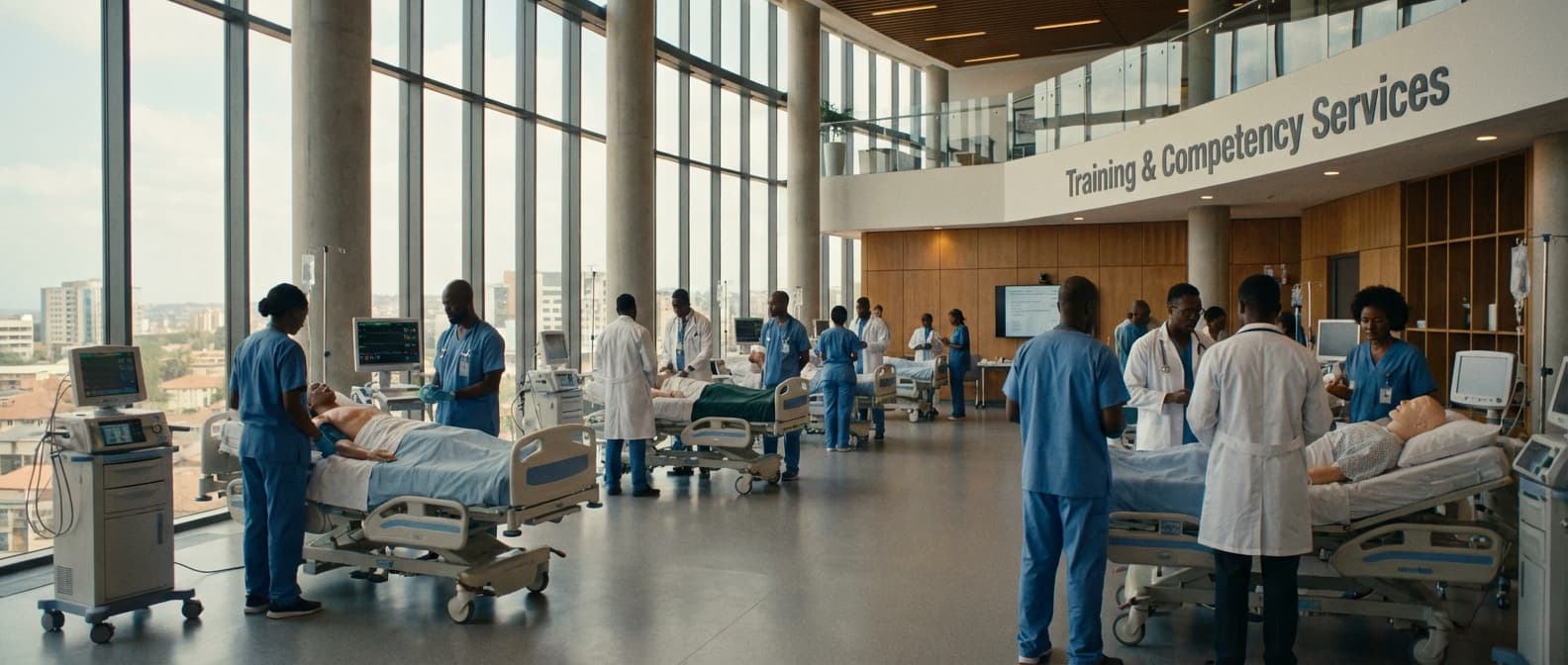
CT Operator Training Service (Radiographers) in Congo (Kinshasa)
Engineering Excellence & Technical Support
CT Operator Training Service (Radiographers) High-standard technical execution following OEM protocols and local regulatory frameworks.
Advanced CT Imaging Proficiency
Our CT Operator Training Service in Congo (Kinshasa) equips radiographers with comprehensive hands-on training in operating state-of-the-art CT scanners, mastering advanced imaging protocols, and optimizing scan parameters for superior diagnostic quality.
Radiation Safety & Dose Management
We emphasize rigorous training in radiation safety principles and ALARA (As Low As Reasonably Achievable) practices. Trainees learn advanced dose reduction techniques and regulatory compliance essential for safe and effective CT examinations in the Congolese healthcare landscape.
Quality Assurance & Image Interpretation Fundamentals
Our program includes crucial modules on CT image quality assessment and artifact recognition. Radiographers gain foundational knowledge in identifying common artifacts and implementing quality control measures, ensuring reliable image data for diagnostic interpretation by radiologists.
What Is Ct Operator Training Service (Radiographers) In Congo (Kinshasa)?
CT Operator Training Service (Radiographers) in Congo (Kinshasa) refers to specialized educational programs designed to equip certified radiographers with the requisite knowledge and practical skills to operate Computed Tomography (CT) scanners effectively and safely. This service is crucial for ensuring high-quality diagnostic imaging, minimizing radiation exposure, and adhering to international standards of radiologic practice within the Congolese healthcare sector. The training encompasses theoretical instruction on CT physics, anatomy, physiology, pathology, contrast media administration, image acquisition protocols, and quality assurance, as well as hands-on experience with CT equipment and associated software.
| Need For Service | Target Audience | Typical Use Cases | ||||||||||
|---|---|---|---|---|---|---|---|---|---|---|---|---|
| Establishment of new CT imaging facilities or upgrade of existing ones. | Certified Radiographers seeking specialization in CT imaging. | Diagnostic imaging of trauma patients (e.g., head injuries, fractures, internal bleeding). | Screening and diagnosis of oncological conditions (e.g., staging, treatment monitoring). | Evaluation of abdominal and pelvic pathologies (e.g., appendicitis, diverticulitis, renal stones). | Cardiovascular imaging (e.g., CT angiography for coronary artery disease, pulmonary embolism). | Neurological imaging (e.g., stroke, brain tumors, vascular malformations). | Pulmonary imaging (e.g., interstitial lung disease, lung nodules, pulmonary embolism). | Minimizing radiation exposure and ensuring patient safety through standardized protocols. | Healthcare professionals in public and private hospitals, diagnostic imaging centers, and specialized clinics. | Radiographers working with limited prior CT experience or those requiring refresher training. | Compliance with national and international regulatory requirements for medical imaging. | Enhancing diagnostic accuracy and patient care through advanced imaging techniques. |
Key Components of CT Operator Training:
- CT Physics and Instrumentation: Understanding X-ray generation, beam hardening, detector technology, and image reconstruction algorithms.
- Patient Positioning and Protocol Selection: Mastering optimal patient preparation, positioning techniques, and selection of appropriate imaging protocols based on clinical indication.
- Image Acquisition Parameters: Optimizing factors such as slice thickness, kVp, mAs, pitch, and scan time for diagnostic image quality.
- Contrast Media Administration: Safe and effective administration of intravenous contrast agents, including risk assessment and management of adverse reactions.
- Image Interpretation Fundamentals: Basic understanding of cross-sectional anatomy and common pathologies visualized by CT.
- Radiation Safety and Dose Optimization: Implementing ALARA (As Low As Reasonably Achievable) principles to minimize patient and staff radiation dose.
- Quality Assurance and Control: Performing routine checks and calibration to maintain equipment performance and image integrity.
- PACS and DICOM Standards: Familiarization with Picture Archiving and Communication Systems and Digital Imaging and Communications in Medicine standards for data management.
- Emergency Procedures: Recognizing and responding to potential patient emergencies during CT examinations.
Who Needs Ct Operator Training Service (Radiographers) In Congo (Kinshasa)?
This document outlines the essential need for CT Operator Training Services for radiographers in Congo (Kinshasa). With the growing demand for advanced medical imaging, ensuring highly skilled CT operators is paramount for accurate diagnosis, patient safety, and the overall quality of healthcare services in the region. This training will equip radiographers with the latest techniques, protocols, and safety measures necessary for operating CT scanners effectively and efficiently.
| Target Customer Segment | Primary Department(s) Involved | Key Needs & Benefits of Training |
|---|---|---|
| Public Hospitals | Radiology Department | Improved diagnostic accuracy, reduced repeat scans, enhanced patient safety, efficient utilization of existing CT equipment, capacity building for healthcare professionals. |
| Private Hospitals | Radiology Department, Imaging Centers | Maintaining competitive edge, offering advanced imaging services, attracting more patients, adherence to international quality standards, professional development for staff. |
| Specialized Diagnostic Centers | Radiology/Imaging Department | Focus on specific CT applications (e.g., neuro, cardiac, oncological imaging), expertise in advanced protocols, improved workflow efficiency, provision of highly specialized diagnostic services. |
| University Teaching Hospitals | Radiology Department, Medical Education | Training future radiographers, research and development in CT imaging, implementation of cutting-edge CT techniques, standardization of best practices in medical education. |
| Non-Governmental Organizations (NGOs) & Humanitarian Organizations | Healthcare Programs, Mobile Clinics | Providing essential diagnostic imaging in underserved areas, training local healthcare personnel, ensuring effective use of donated or acquired CT equipment, addressing public health needs. |
| Government Health Agencies | Ministry of Health, Public Health Institutes | Standardization of CT imaging services across the nation, quality assurance and control, development of national training curricula, ensuring adequate skilled workforce for public health initiatives. |
Target Customers & Departments for CT Operator Training Service in Congo (Kinshasa)
- Radiographers in public hospitals
- Radiographers in private hospitals
- Radiographers in specialized diagnostic centers
- Radiographers in university teaching hospitals
- Radiographers working in remote or underserved areas requiring mobile imaging units
- New graduates of radiography programs
- Experienced radiographers seeking advanced or specialized CT training
Ct Operator Training Service (Radiographers) Process In Congo (Kinshasa)
This document outlines the standard operating procedure for CT Operator Training Services for Radiographers in Congo (Kinshasa). The process is designed to ensure efficient and effective delivery of specialized CT training, from initial client inquiry to the successful completion of the training program.
| Phase | Key Activities | Responsible Party | Deliverables/Outcomes | Timeline (Indicative) |
|---|---|---|---|---|
| Client initiates contact (phone, email, website). Trainer provides initial information. Detailed discussion to understand specific training needs, existing skill levels of radiographers, available CT equipment, desired learning outcomes, and any special requirements. | Client, Training Provider | Clear understanding of training requirements, identification of target audience. | 1-3 Business Days |
| Based on the needs assessment, the Training Provider develops a comprehensive proposal detailing the training program, curriculum outline, methodology, duration, trainer qualifications, logistics, and a detailed quotation. | Training Provider | Formal training proposal and financial quotation. | 3-5 Business Days |
| Client reviews the proposal and quotation. Negotiation of terms, payment schedule, and any contractual obligations. Once mutually agreed, a formal training contract is signed. | Client, Training Provider | Signed training contract, payment agreement. | 5-10 Business Days |
| The Training Provider tailors the curriculum to the specific needs and CT equipment of the client. A mutually convenient training schedule is established, considering client operational needs and trainer availability. | Training Provider, Client | Finalized training curriculum, agreed training schedule. | 3-7 Business Days |
| Training materials (presentations, manuals, case studies) are prepared and sent to the client in advance. Logistics for the training venue (if on-site) or virtual platform are confirmed. Necessary equipment (if provided by trainer) is arranged. Pre-assessment questionnaires may be distributed to participants. | Training Provider, Client | Training materials, confirmed logistics, pre-assessment data. | 5-10 Business Days before training |
| The training program is delivered as per the agreed schedule. This includes theoretical sessions (lectures, discussions) and practical sessions (hands-on experience with CT scanners, image interpretation, protocol optimization, quality control). | Training Provider | Interactive training sessions, practical skill development. | Duration varies based on training scope (e.g., 3-5 days) |
| Participants are assessed through theoretical tests (quizzes, exams) and practical evaluations (performance on CT scanner, case study analysis). Both participants and the training program are evaluated through feedback forms to gauge effectiveness and identify areas for improvement. | Training Provider, Client (for participant progress) | Assessment results, participant feedback reports, trainer evaluation of the program. | During and immediately after training |
| Upon successful completion of the training and assessments, participants receive certificates of completion. The Training Provider may offer post-training support, such as follow-up consultations or refresher courses, as agreed in the contract. | Training Provider | Certificates of completion, post-training support as required. | Within 5 Business Days after assessment completion |
CT Operator Training Service (Radiographers) Workflow in Congo (Kinshasa)
- Inquiry & Needs Assessment
- Proposal Development & Quotation
- Contract Negotiation & Agreement
- Curriculum Customization & Scheduling
- Pre-Training Preparations
- Training Execution
- Assessment & Evaluation
- Certification & Follow-up
Ct Operator Training Service (Radiographers) Cost In Congo (Kinshasa)
Providing accurate cost estimates for CT Operator Training Services for Radiographers in Congo (Kinshasa) is challenging due to several influencing factors. The 'cost' itself can encompass a broad range of services, from basic on-the-job training to comprehensive, accredited courses delivered by specialized institutions. The local currency, the Congolese Franc (CDF), experiences fluctuating exchange rates and inflation, which directly impact the pricing of imported equipment, materials, and international expertise often associated with specialized training.
Key Pricing Factors:
- Training Provider: The type of institution offering the training is a primary determinant. This could range from in-house training organized by a hospital, to training provided by a local medical training center, or even specialized courses delivered by international organizations or external consultants. Reputable and accredited providers typically command higher fees.
- Course Duration and Intensity: Shorter, introductory courses will naturally be less expensive than extensive, multi-week or multi-month programs that cover advanced techniques and hands-on practice.
- Curriculum Content: The depth and breadth of the curriculum are crucial. Basic operation and safety training will be more affordable than courses that include advanced imaging protocols, specific CT scanner model training, quality assurance, or specialized applications (e.g., cardiac CT, interventional CT).
- Hands-on Practical Experience: The availability and quality of practical, hands-on training on actual CT scanners significantly influence cost. This often requires access to functional equipment and supervised clinical time, which can be resource-intensive for the training provider.
- Certification and Accreditation: If the training leads to recognized certifications or accreditations, the cost will likely be higher due to the associated administrative and quality assurance processes.
- Location within Congo (Kinshasa): While Kinshasa is the capital, the cost of delivery might vary slightly within the city or if training needs to be conducted in more remote areas, incurring travel and accommodation expenses for trainers.
- Trainer Expertise and Nationality: Training delivered by highly experienced local radiographers or imported international specialists will have different cost implications. International trainers often add costs for travel, accommodation, and potentially higher daily rates.
- Equipment and Materials: The cost of training materials (manuals, software, simulations) and the use of specialized training equipment (phantoms, simulators) will be factored in. If the training requires trainees to use specific CT scanner models, the provider's ability to access these will affect pricing.
- Negotiation and Volume: For larger groups or ongoing training partnerships, there is often room for negotiation, leading to a lower per-participant cost.
| Training Category | Estimated Cost Range (CDF) | Description and Inclusions |
|---|---|---|
| Basic CT Operation & Safety (Short Course) | 500,000 - 1,500,000 CDF | 1-3 days. Focus on fundamental scanner operation, patient positioning, basic safety protocols, and image acquisition. May include theoretical sessions and limited supervised practice. Often provided by internal hospital trainers or basic local medical training entities. |
| Standard CT Operator Training (Intermediate) | 1,500,000 - 4,000,000 CDF | 1-2 weeks. Covers a broader range of common CT protocols, image quality optimization, artifact recognition, and basic troubleshooting. Includes more substantial hands-on supervised practice. Likely delivered by local training centers or experienced external trainers. |
| Advanced/Specialized CT Training | 4,000,000 - 10,000,000+ CDF | 2+ weeks, or modular. Focuses on advanced techniques (e.g., contrast administration protocols, specific body part imaging), CT angiography, dose reduction strategies, quality control, and potentially training on specific scanner models. May involve international trainers or specialized medical institutions and could lead to certifications. |
| On-Demand/Customized Training | Varies Widely | Costs are highly dependent on the specific requirements, duration, trainer expertise, and any travel/logistical needs. Can be more expensive due to bespoke curriculum development and specialized trainer engagement. |
Factors Influencing CT Operator Training Costs in Congo (Kinshasa)
- Training Provider (In-house, Local Center, International)
- Course Duration and Intensity
- Curriculum Scope (Basic vs. Advanced Protocols)
- Level of Hands-on Practical Experience
- Certification and Accreditation Requirements
- Trainer Qualifications and Nationality
- Inclusion of Travel and Accommodation for Trainers
- Availability and Cost of Training Materials and Equipment
- Group Size and Potential for Negotiation
Affordable Ct Operator Training Service (Radiographers) Options
This document outlines affordable CT operator training service options for radiographers, focusing on value bundles and cost-saving strategies. Effective CT operator training is crucial for ensuring patient safety, image quality, and efficient workflow. We explore various approaches to make this essential training accessible without compromising on quality.
| Training Approach | Description | Value Proposition / Cost-Saving Strategy | Potential Cost Range (Illustrative) |
|---|---|---|---|
| Online/Blended Learning Programs | Combines self-paced online modules with live webinars, virtual simulations, and potentially limited in-person clinical components. | Cost-Saving: Significantly reduces travel, accommodation, and instructor costs. Highly scalable and flexible for individual schedules. | $500 - $2,500 per person (depending on depth and CEU inclusion) |
| Vendor-Specific Training Packages | Provided by CT scanner manufacturers, often includes equipment-specific operation, troubleshooting, and basic protocol training. | Value Bundle: Often bundled with equipment purchase or service contracts. Ensures proficiency on specific hardware. Negotiable for bulk training. | Variable (can be included with purchase, or $1,000 - $5,000 per person if purchased separately) |
| Partnerships with Educational Institutions | Collaborating with local community colleges or universities offering radiologic technology programs. | Cost-Saving: Leverages existing infrastructure and faculty. Can offer bulk discounts or customized curriculum development at a lower rate. | $800 - $3,000 per person (depending on program structure and credit transfer) |
| In-House Train-the-Trainer Programs | Training experienced radiographers within the institution to become internal trainers. | Cost-Saving: Creates a sustainable internal training resource, reducing reliance on external providers for ongoing training. Long-term cost efficiency. | $2,000 - $7,000 per trainer (initial investment), significantly lower per-trainee cost thereafter. |
| Micro-Credentialing & Skill-Based Modules | Focuses on specific CT skills or competencies rather than a full certification program. | Value Bundle: Allows for targeted training on areas needing improvement, optimizing budget. Can be combined with other training methods. | $100 - $500 per module/credential |
| Group Discounts & Bundled Services | Negotiating lower rates for training multiple individuals from the same institution or bundling training with other HR/professional development services. | Cost-Saving: Direct negotiation and economies of scale. Seek providers offering discounts for cohorts or package deals. | Variable, typically 10-30% discount on standard per-person rates |
Key Training Components & Considerations
- Core Curriculum: Essential knowledge of CT physics, anatomy, pathology, protocols, radiation safety, and image acquisition techniques.
- Hands-on Simulation/Clinical Rotations: Practical experience using CT scanners (simulated or real-world) under supervision.
- Advanced Modules: Specializations in areas like cardiac CT, interventional CT, or specific advanced applications.
- Continuing Education Credits (CEUs): Often a requirement for maintaining licensure and certification.
- Training Provider Type: In-house, external training institutions, online platforms, vendor-specific training.
- Scalability: The ability to train multiple individuals or cohorts effectively.
- Customization: Tailoring the training to specific institutional needs and equipment.
Verified Providers In Congo (Kinshasa)
In the complex landscape of healthcare in Congo (Kinshasa), identifying reliable and high-quality healthcare providers is paramount for both residents and expatriates. Franance Health stands out as a leading organization dedicated to ensuring access to verified medical professionals and facilities. This commitment translates into a superior healthcare experience, offering peace of mind and effective medical solutions.
| Category | Franance Health Advantage | Benefits for Patients |
|---|---|---|
| Provider Verification | Comprehensive credentialing, licensing, and performance review. | Ensures you are treated by qualified and reputable medical professionals. |
| Quality of Care | Partnerships with facilities adhering to international standards. | Access to modern medical practices and effective treatment. |
| Service Range | Broad network of specialists and general practitioners across Kinshasa. | Convenient access to a wide array of medical services, from routine check-ups to specialized procedures. |
| Patient Experience | Focus on empathy, professionalism, and patient satisfaction. | A more comfortable and reassuring healthcare journey. |
| Trust and Reliability | Trusted intermediary connecting patients with the best in Congolese healthcare. | Peace of mind knowing you are receiving care from vetted and dependable sources. |
Why Franance Health is the Premier Choice for Verified Providers in Congo (Kinshasa)
- Rigorous Vetting Process: Franance Health employs a multi-stage verification process for all affiliated providers. This includes thorough credential checks, license validation, background screenings, and a review of past performance and patient feedback.
- Commitment to Quality Standards: We partner with facilities and practitioners who adhere to international best practices and quality control measures, ensuring a high standard of care across all medical disciplines.
- Extensive Network: Our network encompasses a wide range of specialists, general practitioners, hospitals, and clinics, providing comprehensive medical coverage for various needs.
- Patient-Centric Approach: Franance Health prioritizes the patient's well-being and experience. Our verified providers are known for their professionalism, empathy, and dedication to providing personalized care.
- Accessibility and Convenience: We aim to make accessing quality healthcare as seamless as possible, with an easy-to-navigate platform and dedicated support services.
- Cost Transparency: While focusing on quality, Franance Health also strives for transparency in pricing, helping patients understand their healthcare costs upfront.
Scope Of Work For Ct Operator Training Service (Radiographers)
This Scope of Work (SOW) outlines the requirements for a comprehensive CT Operator Training Service specifically designed for Radiographers. The objective is to ensure qualified personnel are proficient in the safe and effective operation of CT scanners, image acquisition, post-processing, and quality assurance procedures, adhering to industry best practices and relevant regulatory standards.
| Deliverable | Description | Standard Specification | Acceptance Criteria |
|---|---|---|---|
| Training Curriculum Development | A detailed curriculum covering all listed Key Training Areas, tailored to the specific CT scanner models in use. | Curriculum must be modular, easily adaptable, and include learning objectives, content outlines, and assessment methods. | Curriculum approved by the client, demonstrating alignment with training objectives and industry standards. |
| Training Materials (Participant) | Comprehensive training manuals, presentations, handouts, and practical exercises for each participant. | Materials must be clear, concise, well-organized, and include relevant diagrams, images, and case studies. Available in digital and/or printed format as specified by the client. | Participant materials reviewed and approved by the client, confirming accuracy and completeness. |
| Training Materials (Instructor) | Instructor guides, lesson plans, presentation slides, and assessment tools for trainers. | Instructor materials should provide guidance on delivery, discussion points, and activity facilitation. Must include answer keys for assessments. | Instructor materials reviewed and approved by the client, ensuring ease of use and effective instruction. |
| Hands-on Practical Training Sessions | Supervised practical sessions on the client's CT scanner(s) to apply theoretical knowledge. | Sessions must cover patient positioning, protocol selection, image acquisition, and basic post-processing. Trainer-to-participant ratio not exceeding 1:4 for hands-on components. | Demonstrated proficiency by participants in core CT operational tasks as observed and documented by the trainer. |
| Competency Assessment | Written and/or practical examinations to evaluate participant understanding and skill acquisition. | Assessments should be aligned with learning objectives and include a mix of question types (multiple choice, short answer, practical demonstration). A minimum passing score of 80% is required for certification. | Successful completion of assessments by participants, as evidenced by assessment reports and individual scorecards. |
| Certification of Completion | Issuance of certificates to participants who successfully complete the training and assessments. | Certificates must include the participant's name, course title, date of completion, and the issuing organization's details. May include a unique identifier for verification. | Certificates issued to all eligible participants in a timely manner, meeting the specified format. |
| Post-Training Support (Optional/As Specified) | Follow-up support to address ongoing questions or challenges encountered by operators post-training. | Support channels (e.g., email, dedicated helpline) and response times to be clearly defined. Duration of support as per contract. | Defined support channels utilized effectively, with documented resolution of participant queries. |
| Training Report | A comprehensive report detailing the training conducted, including participant attendance, assessment results, and overall feedback. | Report should be submitted within 10 business days of training completion and include recommendations for further training or skill development. | Training report submitted in the agreed-upon format and on schedule. |
Key Training Areas
- CT Physics and Principles
- CT Scanner Anatomy and Functionality
- Patient Preparation and Protocol Selection
- Image Acquisition Techniques (including advanced applications)
- Image Reconstruction and Post-Processing
- Radiation Safety and Dose Optimization
- Contrast Media Administration and Management
- Artifact Identification and Mitigation
- Quality Assurance and Quality Control (QA/QC)
- Troubleshooting Common Issues
- Legal and Ethical Considerations in CT Imaging
Service Level Agreement For Ct Operator Training Service (Radiographers)
This Service Level Agreement (SLA) outlines the guaranteed response times and uptime for the CT Operator Training Service provided to Radiographers by [Your Company Name]. This SLA aims to ensure minimal disruption to training schedules and efficient support for our clients.
| Service Component | Response Time Guarantee | Uptime Guarantee | Notes |
|---|---|---|---|
| CT Operator Training Platform Availability (Access to modules, simulations, assessments) | 99.5% Uptime (excluding Scheduled Downtime) | Acknowledgement of Critical Issues: < 2 business hours; Acknowledgement of Standard Issues: < 4 business hours | Scheduled downtime will be communicated at least 7 days in advance. Critical issues are defined as complete service unavailability preventing any user access. Standard issues are defined as functional impairments affecting a subset of users or features. |
| Technical Support (Platform-related inquiries, login issues, technical errors) | Acknowledgement: < 4 business hours | N/A | Resolution targets will be communicated upon acknowledgement of the ticket, with priority given to critical issues. |
| Content Updates & New Module Releases | N/A | N/A | New modules and significant content updates will be released on a [Specify Cadence, e.g., quarterly] basis. Customers will be notified of upcoming releases. |
| Scheduled Maintenance | N/A | N/A | All scheduled maintenance will occur during off-peak hours and will be communicated at least 7 days in advance. |
Key Service Commitments
- Scope: This SLA covers all aspects of the CT Operator Training Service, including access to training modules, platform availability, and technical support.
- Definitions:
- Scheduled Downtime: Planned maintenance periods communicated in advance.
- Unscheduled Downtime: Unexpected service interruptions.
- Response Time: The maximum time it takes for [Your Company Name] to acknowledge a support request.
- Resolution Time: The maximum time it takes to resolve a reported issue, acknowledging that complex issues may require longer.
- Uptime: The percentage of time the service is available and functional.
- Customer Responsibilities:
- Reporting Issues: Promptly reporting any service issues through the designated support channels.
- Providing Information: Supplying all necessary information to facilitate troubleshooting.
- Maintaining Equipment: Ensuring that the customer's infrastructure (internet connectivity, compatible devices) meets the minimum requirements for the training service.
Frequently Asked Questions

Ready when you are
Let's scope your CT Operator Training Service (Radiographers) in Congo (Kinshasa) project in Congo (Kinshasa).

Scaling healthcare logistics and technical systems across the entire continent.