
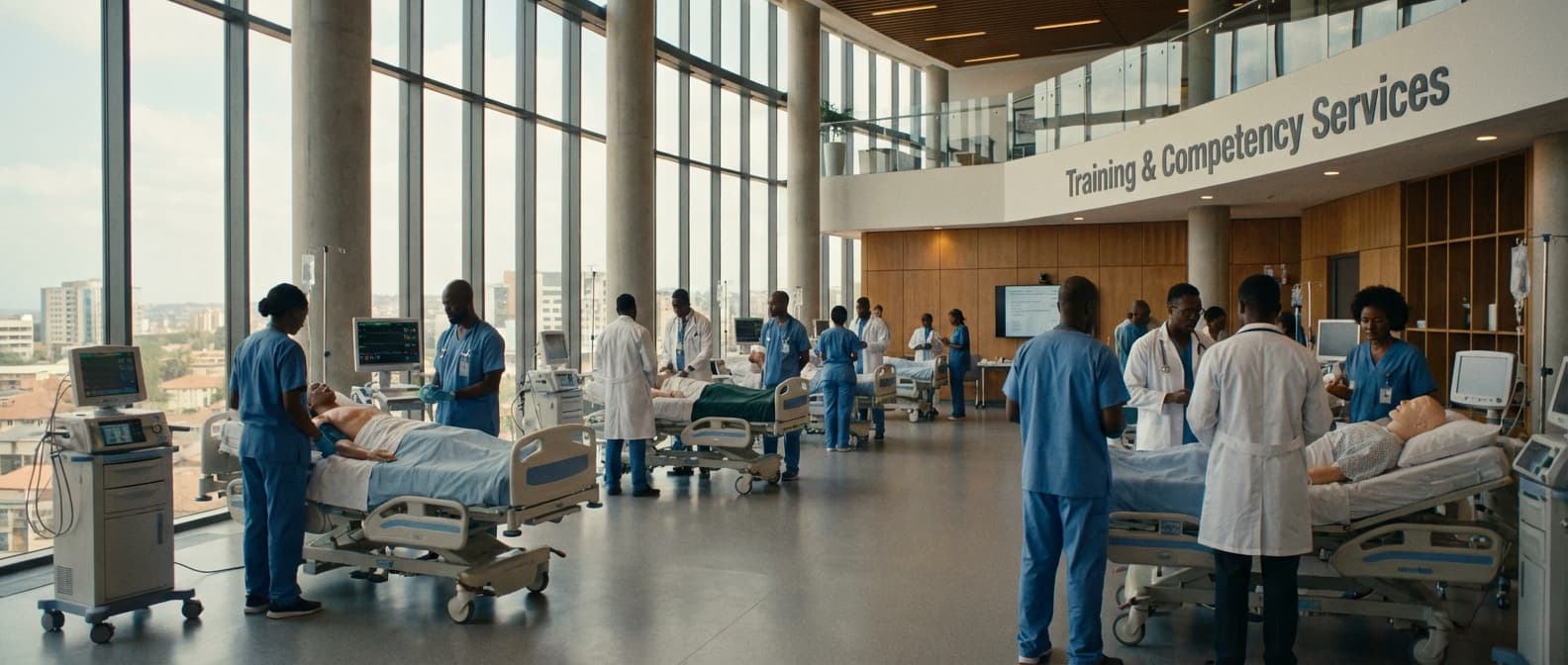
Anesthesia Workstation User Training Service in Congo (Kinshasa)
Engineering Excellence & Technical Support
Anesthesia Workstation User Training Service High-standard technical execution following OEM protocols and local regulatory frameworks.
Advanced Ventilator Management
Master the Anesthesia Workstation's sophisticated ventilation modes (e.g., Pressure Support, Volume Controlled, APNEA Ventilation) and their specific application in various clinical scenarios common in Kinshasa's healthcare settings. Learn to optimize patient breathing parameters for improved outcomes and patient safety.
Integrated Patient Monitoring & Alarms
Gain proficiency in utilizing the workstation's comprehensive patient monitoring suite, including ECG, SpO2, EtCO2, and invasive/non-invasive blood pressure. Understand how to configure alarm thresholds effectively to ensure timely and appropriate responses to critical patient events.
Anesthetic Gas Delivery & Waste Management
Become adept at the precise delivery and accurate monitoring of anesthetic agents using the workstation's vaporizers and gas analysis system. Learn best practices for efficient agent utilization and safe waste gas scavenging, crucial for maintaining a healthy operating room environment.
What Is Anesthesia Workstation User Training Service In Congo (Kinshasa)?
The Anesthesia Workstation User Training Service in Congo (Kinshasa) refers to a specialized educational program designed to equip healthcare professionals, primarily anesthesiologists, nurse anesthetists, and biomedical engineers, with the necessary knowledge and practical skills to safely and effectively operate modern anesthesia workstations. This service is crucial for optimizing patient safety, ensuring correct administration of anesthetic agents, managing ventilatory support, and troubleshooting potential equipment malfunctions in the clinical environment of Congo (Kinshasa).
| Who Needs the Service? | Typical Use Cases in Congo (Kinshasa) | |||
|---|---|---|---|---|
| Anesthesiologists and Certified Registered Nurse Anesthetists (CRNAs): To perform their duties proficiently and ensure patient safety during surgical and non-surgical procedures requiring anesthesia. | Routine Surgical Procedures: Training on the standard operation of anesthesia workstations for general, regional, and local anesthesia administration during elective surgeries. | Emergency Situations: Simulating and practicing responses to common anesthetic emergencies, such as difficult intubations, adverse drug reactions, and cardiovascular instability, using workstation functionalities. | Critical Care Settings: Applying knowledge of advanced ventilation modes and monitoring capabilities for patients in intensive care units (ICUs) requiring mechanical ventilatory support. | Complex Cases: Familiarization with specialized functions for pediatric anesthesia, obstetric anesthesia, or procedures requiring prolonged mechanical ventilation. |
| Biomedical Engineers and Technicians: To perform installation, calibration, preventive maintenance, and advanced troubleshooting of anesthesia workstations. | New Equipment Installation and Commissioning: Ensuring newly acquired anesthesia workstations are set up correctly and validated for clinical use. | Regular Preventive Maintenance: Implementing scheduled checks and servicing to uphold equipment functionality and safety standards. | On-site Repair and Diagnostics: Identifying and rectifying hardware or software issues affecting workstation performance. | Staff Training and Support: Providing technical guidance to clinical users on operational aspects and basic troubleshooting. |
| Hospital and Clinic Administrators: To ensure their medical staff is adequately trained, thereby enhancing the quality of care and patient safety, and optimizing the use of capital investment in medical equipment. | Compliance and Accreditation: Meeting requirements for internal quality assurance and external accreditation bodies concerning equipment training and competency. | Risk Management: Mitigating risks associated with equipment failure or improper use, thus reducing potential adverse patient outcomes and associated liabilities. | Operational Efficiency: Ensuring efficient workflow in operating rooms and critical care areas through well-trained personnel. |
Key Components of Anesthesia Workstation User Training:
- Theoretical Instruction: Covering the principles of anesthesia delivery, gas dynamics, pharmacology of anesthetic agents, waveform interpretation, and the integrated functionalities of specific anesthesia workstation models.
- Practical Simulation: Hands-on sessions utilizing actual or simulated anesthesia workstations to practice induction, maintenance, emergence, and emergency scenarios under supervision.
- Equipment Familiarization: Detailed exploration of the hardware components, user interface (UI) and user experience (UX), alarm systems, safety features, and routine maintenance procedures.
- Troubleshooting and Maintenance: Training on identifying common errors, performing basic troubleshooting, and understanding preventive maintenance schedules to ensure equipment longevity and reliability.
- Integration with Patient Monitoring: Understanding how the anesthesia workstation interfaces with vital signs monitors and other critical care equipment.
- Regulatory Compliance: Awareness of local and international standards pertaining to anesthesia equipment use and patient safety protocols.
Who Needs Anesthesia Workstation User Training Service In Congo (Kinshasa)?
Anesthesia workstation user training services are crucial in Congo (Kinshasa) for ensuring the safe and effective operation of critical medical equipment. These services empower healthcare professionals to maximize the potential of modern anesthesia machines, leading to improved patient outcomes and reduced risks.
| Department | Specific Roles Requiring Training | Key Training Needs |
|---|---|---|
| Anesthesiology Department | Anesthesiologists, Certified Registered Nurse Anesthetists (CRNAs), Anesthesia Technicians | Operation of advanced anesthesia machines, ventilation modes, gas monitoring, drug delivery systems, emergency procedures, troubleshooting. |
| Operating Room (OR) / Surgical Suite | Circulating Nurses, Surgical Technologists (who may assist in equipment setup and monitoring) | Understanding basic functions, emergency alarms, and communication with anesthesiologists regarding equipment status. |
| Intensive Care Unit (ICU) | Intensivists, ICU Nurses, Respiratory Therapists | Use of anesthesia workstations in critical care settings for prolonged ventilation, advanced monitoring, and weaning protocols. |
| Biomedical Engineering Department | Biomedical Engineers, Medical Equipment Technicians | Preventive maintenance, calibration, basic troubleshooting, and understanding the technical aspects for effective repair and servicing. |
| Procurement and Logistics Departments | Procurement Officers, Hospital Administrators | Understanding the features and technical specifications of different anesthesia workstations to make informed purchasing decisions and plan for maintenance. |
| Medical Education and Training Institutions | Medical Educators, Simulation Lab Staff | Integrating anesthesia workstation simulation into curriculum for training future healthcare professionals. |
Target Customers & Departments
- Hospitals (Public and Private)
- Surgical Centers
- Clinics with Surgical Capabilities
- Teaching Hospitals and Medical Schools
- Government Health Ministries and Agencies
- Non-Governmental Organizations (NGOs) focused on healthcare
Anesthesia Workstation User Training Service Process In Congo (Kinshasa)
This document outlines the typical workflow for providing Anesthesia Workstation User Training Services in Congo (Kinshasa), from initial inquiry to the successful execution of the training program.
| Stage | Key Activities | Responsible Party | Deliverables/Outcomes |
|---|---|---|---|
| Inquiry | Client expresses interest; Initial contact made. | Client, Service Provider | Initial communication established. |
| Needs Assessment | Gathering requirements, understanding client's context. | Service Provider, Client | Detailed understanding of training needs. |
| Proposal & Quotation | Developing training plan, cost estimation. | Service Provider | Formal proposal and quotation. |
| Contract & Agreement | Reviewing, negotiating, and signing contract. | Client, Service Provider | Signed service agreement. |
| Pre-Training Preparations | Logistics, materials, curriculum finalization. | Service Provider, Client | Readiness for training delivery. |
| Training Execution | Delivering theoretical and practical training. | Service Provider (Trainers) | Trained personnel, knowledge transfer. |
| Assessment & Evaluation | Testing comprehension and practical skills, gathering feedback. | Service Provider | Trainee performance assessment, training feedback. |
| Post-Training Support | Certificates, reports, ongoing assistance. | Service Provider | Certificates, training report, ongoing support. |
| Payment | Invoicing and processing payment. | Service Provider, Client | Financial closure. |
Anesthesia Workstation User Training Service Process
- Inquiry & Initial Contact: Potential clients (hospitals, clinics, training institutions) express interest in anesthesia workstation user training. This can be via email, phone, or through a dedicated inquiry form on the service provider's website.
- Needs Assessment & Consultation: A preliminary discussion is held to understand the client's specific requirements. This includes:
- Type and model(s) of anesthesia workstations in use.
- Number of personnel to be trained (anesthesiologists, nurses, technicians).
- Desired training objectives (basic operation, advanced features, troubleshooting, maintenance).
- Client's preferred training dates, duration, and location (on-site vs. remote).
- Any specific challenges or prior training experiences.
- Proposal Development & Quotation: Based on the needs assessment, a detailed proposal is prepared. This typically includes:
- Training curriculum outline and learning objectives.
- Training methodology (lectures, hands-on demonstrations, simulations).
- Schedule and duration of the training.
- Trainer qualifications and experience.
- Required equipment and materials (workstations, simulators, training manuals).
- Cost breakdown (trainer fees, travel, accommodation, materials, certifications).
- Payment terms and conditions.
- Client Review & Negotiation: The client reviews the proposal. Discussions may occur to clarify aspects, negotiate terms, or adjust the scope of training.
- Contract & Agreement: Upon mutual agreement, a formal contract or service agreement is signed by both parties. This legally binds the provider and client to the agreed-upon terms.
- Pre-Training Preparations: The service provider undertakes several preparatory steps:
- Curriculum Customization: Tailoring the training content to the specific workstations and skill levels of the trainees.
- Logistics Arrangement: Booking flights, accommodation, and local transportation for trainers if training is on-site.
- Equipment & Materials Procurement/Verification: Ensuring all necessary training equipment (if provided by the trainer) is available and functional, or coordinating with the client for the availability of their workstations. Printing or digital distribution of training manuals and other resources.
- Scheduling Confirmation: Finalizing training dates and times with the client.
- Communication: Informing trainees about the training schedule, location, and any prerequisites.
- On-site/Remote Training Execution: The training is delivered according to the agreed-upon schedule and curriculum.
- Introduction & Overview: Setting the context, introducing trainers and trainees, and outlining the training objectives.
- Theoretical Sessions: Lectures, presentations, and discussions on anesthesia workstation principles, features, and safety protocols.
- Practical Demonstrations: Hands-on demonstrations of workstation operation, parameter settings, and emergency procedures.
- Hands-on Practice: Trainees actively use the anesthesia workstations under the guidance of trainers, performing various scenarios.
- Q&A and Troubleshooting: Addressing trainee questions and resolving any operational issues or challenges encountered.
- Simulation Exercises (if applicable): Using simulators to replicate real-life clinical scenarios.
- Assessment & Evaluation: Trainees are assessed to gauge their understanding and proficiency.
- Knowledge Checks: Quizzes or written tests.
- Practical Skills Assessment: Observation of trainees performing specific tasks on the workstation.
- Feedback Collection: Trainees provide feedback on the training quality, trainers, and materials.
- Post-Training Support & Follow-up: After the training concludes:
- Certification Issuance: Providing certificates of completion to successful trainees.
- Reporting: Submitting a training report to the client, detailing attendance, performance, and any recommendations.
- Ongoing Support: Offering post-training technical support via email or phone for a defined period.
- Follow-up Consultation: Scheduling follow-up sessions or discussions as needed to reinforce learning or address evolving needs.
- Invoice & Payment: The service provider issues an invoice for the services rendered, and the client processes the payment as per the contract terms.
Anesthesia Workstation User Training Service Cost In Congo (Kinshasa)
Providing user training for anesthesia workstations in Congo (Kinshasa) involves a range of costs influenced by several key factors. The complexity of the workstation, the duration and depth of the training, the qualifications and experience of the trainers, and the location of the training facility (on-site at the hospital or at a dedicated training center) all play a significant role in the final pricing. Additionally, the number of participants, the need for specialized equipment or simulation tools, and travel and accommodation expenses for trainers (if applicable) contribute to the overall cost. The currency used for pricing is the Congolese Franc (CDF).
| Training Package (Example) | Estimated Range (CDF per participant) | Notes |
|---|---|---|
| Basic Operation & Safety Training (1-2 days) | 300,000 - 700,000 CDF | Covers fundamental functions, user interface, and safety protocols. Suitable for new users or as a refresher. |
| Comprehensive User Training (3-5 days) | 800,000 - 1,500,000 CDF | Includes advanced features, troubleshooting, maintenance basics, and clinical applications. May involve simulation exercises. |
| Advanced Clinical Application Training (2-3 days) | 1,000,000 - 2,000,000 CDF | Focuses on specific anesthetic techniques, advanced ventilation modes, and integration with other patient monitoring systems. |
| On-site Training (Additional Cost) | Varies significantly based on travel distance, duration, and accommodation. | Often quoted as a separate line item or included in a custom package. |
Factors Influencing Anesthesia Workstation User Training Costs in Congo (Kinshasa)
- Workstation Complexity: Advanced workstations with more features and intricate software typically require longer and more in-depth training, leading to higher costs.
- Training Duration and Depth: The number of days or hours of training, and whether it covers basic operation, advanced troubleshooting, or specific clinical applications, will impact the price.
- Trainer Qualifications and Experience: Highly experienced and certified trainers, especially those with international recognition, will command higher fees.
- Training Location: On-site training at the hospital may incur additional costs for travel and accommodation for the trainers, but can be more convenient. Dedicated training centers might offer standardized packages.
- Number of Participants: While some providers might offer per-participant pricing, group rates are common, and larger groups can sometimes lead to a lower per-person cost.
- Specialized Equipment/Simulation: The use of simulators or specific training equipment can increase the overall cost of the training package.
- Travel and Accommodation: If trainers are required to travel to the client's location (especially if it's outside Kinshasa), these expenses will be factored in.
- Post-Training Support: The inclusion of ongoing technical support or refresher courses can also influence the pricing structure.
Affordable Anesthesia Workstation User Training Service Options
Providing effective and affordable user training for anesthesia workstations is crucial for ensuring patient safety, operational efficiency, and maximizing the return on investment for healthcare facilities. This service focuses on empowering anesthesia providers with the knowledge and skills to operate modern anesthesia machines proficiently and safely. We offer a range of training solutions designed to be cost-effective, catering to the diverse needs and budgets of hospitals, clinics, and training institutions. Our approach emphasizes hands-on experience, case-based scenarios, and a thorough understanding of workstation functionalities, alarms, and safety features.
| Bundle Name | Included Services | Target Audience | Estimated Cost Savings (vs. individual services) | Key Benefits |
|---|---|---|---|---|
| Essential Basics Bundle | 1 x On-site Basic Operation Training (1 day), 2 x Remote Refresher Sessions, Access to Online Knowledge Base | New staff, smaller departments, budget-conscious facilities | 15-20% | Covers core functionalities, cost-effective foundational training, convenient refreshers. |
| Comprehensive Skill-Up Bundle | 2 x On-site Advanced Operation & Troubleshooting Training (2 days), 1 x Train-the-Trainer Session, 4 x Remote Q&A Sessions | Mid-sized departments, facilities seeking internal expertise, improving advanced skills | 25-30% | Builds in-house capability, enhances troubleshooting, deepens operational understanding. |
| Total Facility Integration Bundle | Customized On-site Training for all shifts/teams, Train-the-Trainer Program, Simulation Integration (if applicable), Ongoing Support Subscription (1 year) | Large hospitals, multi-site facilities, institutions prioritizing comprehensive competency and long-term efficiency | 30-40% | Holistic approach, sustainable in-house expertise, reduced long-term training overhead, optimized workstation utilization. |
Value-Added Training Service Options
- On-site Training: Our certified instructors deliver comprehensive training directly at your facility, minimizing travel costs and disruption to your workflow. This option allows for tailored content based on your specific equipment and clinical protocols.
- Remote/Virtual Training: Leveraging video conferencing and interactive platforms, we provide flexible and accessible training sessions that can be conducted from anywhere. This is ideal for geographically dispersed teams or for refresher courses.
- Train-the-Trainer Programs: Empower your internal staff to become proficient trainers, enabling sustainable, in-house expertise and reducing long-term training expenses.
- Customized Curriculum Development: We work with your clinical leadership to design training modules that address your unique patient populations, common procedures, and specific workstation configurations.
- Simulation-Based Training Integration: Partnering with simulation centers or utilizing portable simulation equipment to provide realistic, high-fidelity practice scenarios in a safe learning environment.
- Post-Training Support & Refresher Courses: Ongoing access to our expert support team and scheduled refresher courses to reinforce learning, introduce new features, and address evolving clinical practices.
Verified Providers In Congo (Kinshasa)
Navigating healthcare in a new or unfamiliar region can be challenging. In Congo (Kinshasa), finding reliable and qualified medical professionals is paramount for ensuring quality care and peace of mind. This document highlights verified providers and specifically delves into the credentials of Franance Health, presenting them as a leading choice for medical services.
| Credential/Attribute | Description | Significance for Patients |
|---|---|---|
| Franance Health: Medical Expertise & Specializations | Franance Health boasts a team of highly qualified physicians, nurses, and specialists with extensive experience in various medical fields, including general practice, pediatrics, internal medicine, and potentially more specialized areas relevant to the local population's needs. | Ensures patients receive care from competent professionals with the right expertise for their specific medical conditions. |
| Franance Health: Licensing & Accreditation | All medical professionals at Franance Health hold valid licenses issued by the Ministry of Health or equivalent governing bodies in Congo (Kinshasa). Furthermore, their facilities and operational practices are likely to be accredited by national or international health standards organizations. | Confirms that providers meet legal and professional requirements, and that facilities adhere to quality and safety protocols. |
| Franance Health: Patient-Centric Approach & Communication | Franance Health emphasizes compassionate care, clear communication, and patient education. They strive to create a supportive environment where patients feel heard and understood, often with multilingual capabilities to bridge language barriers. | Enhances the patient experience, improves understanding of medical conditions and treatment plans, and fosters trust. |
| Franance Health: Commitment to Ethical Practices & Confidentiality | The organization is committed to upholding the highest ethical standards in medical practice, including patient confidentiality and informed consent. This is often reinforced through internal policies and ongoing professional development. | Guarantees that patient information is protected and that medical decisions are made collaboratively and ethically. |
| Franance Health: Integration with International Standards (Potential) | While operating locally, Franance Health may align its practices with internationally recognized healthcare protocols and guidelines, making it easier for expatriates and those accustomed to global standards to receive care. | Provides a familiar framework for international patients and ensures adherence to best practices in medicine. |
Understanding Verified Providers in Congo (Kinshasa)
- What constitutes a 'verified provider'? Verified providers typically undergo a rigorous vetting process by recognized health organizations, government bodies, or trusted accreditation agencies. This verification often includes checks on educational background, professional licensing, adherence to ethical standards, and facility compliance.
- Why is verification important? Verification assures patients that the healthcare provider meets established standards of competence, safety, and professionalism. It minimizes the risk of encountering unqualified practitioners or substandard facilities, especially crucial in regions where regulatory oversight might vary.
- Where to find verified providers? Information can often be found through embassy health advisories, international health insurance providers, reputable local hospitals with accreditation, and specific health directory services that focus on verification.
Scope Of Work For Anesthesia Workstation User Training Service
This Scope of Work outlines the requirements for providing comprehensive user training services for the Anesthesia Workstation. The training will ensure that qualified healthcare professionals can safely and effectively operate the Anesthesia Workstation, understand its features, and perform routine maintenance. The training will cover theoretical knowledge, practical application, and troubleshooting.
| Section | Description | Standard Specifications |
|---|---|---|
| Target Audience | Anesthesiologists, CRNAs, Anesthesia Technicians, and other relevant clinical staff. | All participants must possess a foundational understanding of anesthesia principles and procedures. Pre-requisite knowledge may be specified. |
| Training Objectives | Upon completion, participants will be able to:
| All objectives must be measurable and demonstrable through practical application and knowledge assessment. |
| Training Content | Topics will include:
| Content must be accurate, up-to-date with the latest workstation software/hardware, and aligned with current clinical practice guidelines. |
| Training Methodology | A blended learning approach incorporating:
| Training sessions should be interactive and engaging. For hands-on sessions, a minimum participant-to-workstation ratio will be defined to ensure adequate practice time. |
| Training Duration and Schedule | The duration and schedule will be mutually agreed upon, taking into consideration the complexity of the workstation and the number of participants. Typically, this could range from 1 to 3 days per training group. | Training must be scheduled at a time that minimizes disruption to clinical operations. Flexible scheduling options may be preferred. |
| Trainer Qualifications | Trainers must be experienced in anesthesia delivery, possess in-depth knowledge of the specific Anesthesia Workstation, and have proven training and presentation skills. | Trainers should be certified by the manufacturer or possess equivalent credentials. Evidence of experience and qualifications will be required. |
| Training Environment | A suitable training space equipped with:
| The training environment must be conducive to learning and allow for safe and effective hands-on practice. |
| Post-Training Support | Provision of ongoing support mechanisms, which may include:
| Post-training support should be readily available and responsive to user inquiries. |
Technical Deliverables
- Training curriculum and modules developed and approved.
- Training materials (presentations, handouts, user guides) provided in digital and/or hard copy format.
- Competency assessment tools (quizzes, practical evaluations) designed and administered.
- Training attendance and completion records maintained.
- Post-training support plan and materials.
- Training feedback forms collected and analyzed.
- Certification of completion for participants who successfully meet competency requirements.
Service Level Agreement For Anesthesia Workstation User Training Service
This Service Level Agreement (SLA) outlines the guaranteed response times and uptime for the Anesthesia Workstation User Training Service provided by [Your Company Name] (hereinafter referred to as "Provider") to [Client Company Name] (hereinafter referred to as "Client"). This SLA is an integral part of the overall service agreement between the Provider and the Client.
| Service Element | Uptime Guarantee | Response Time (During Business Hours) | Response Time (Outside Business Hours/Emergency) |
|---|---|---|---|
| Online Training Platform Accessibility | 99.5% Uptime (excluding scheduled maintenance) | N/A (platform is generally available) | N/A (platform is generally available) |
| Access to Training Materials | 99.8% Uptime (excluding scheduled maintenance) | Within 2 Business Hours for access issues | Within 4 Business Hours for access issues |
| Live Training Session Availability (Scheduled) | 100% (scheduled sessions will commence as planned) | N/A (session is pre-scheduled) | N/A (session is pre-scheduled) |
| Technical Support for Training Queries (via email/portal) | N/A (support is event-driven) | Within 4 Business Hours for non-critical issues | Within 8 Business Hours for non-critical issues |
| Emergency Technical Support for Training Queries (via phone) | N/A (support is event-driven) | Within 1 Business Hour for critical issues | Within 2 Business Hours for critical issues |
Scope of Service
- The Anesthesia Workstation User Training Service encompasses online and/or on-site training sessions designed to familiarize authorized users with the operation, maintenance, and troubleshooting of specific Anesthesia Workstation models.
- Training materials, including user manuals, quick reference guides, and online modules, are part of this service.
- Technical support for training-related queries will be provided during defined support hours.
Frequently Asked Questions

Ready when you are
Let's scope your Anesthesia Workstation User Training Service in Congo (Kinshasa) project in Congo (Kinshasa).

Scaling healthcare logistics and technical systems across the entire continent.