
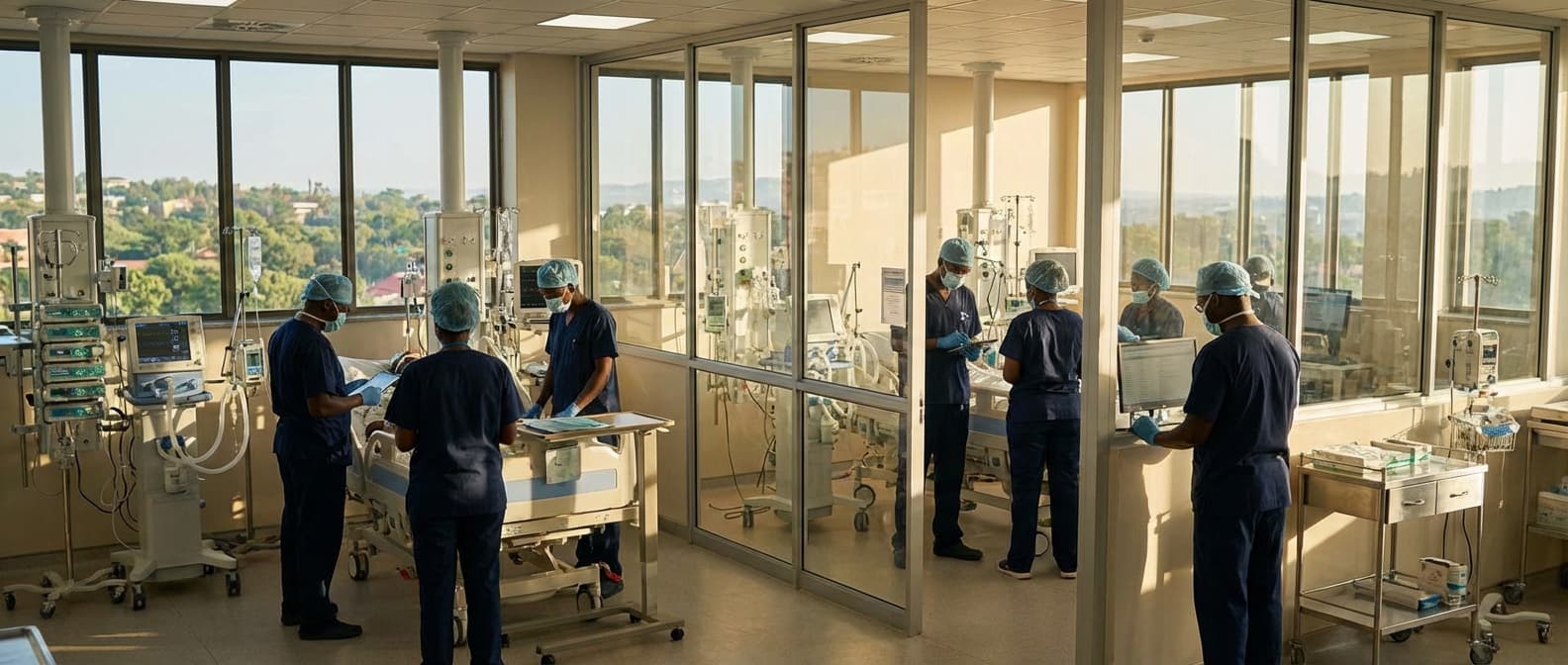
Ventilator Fleet Management & PM in Congo (Kinshasa)
Engineering Excellence & Technical Support
Preventive maintenance and fleet management for ICU ventilators High-standard technical execution following OEM protocols and local regulatory frameworks.
Remote Ventilator Status Monitoring Platform
Implemented a secure, cloud-based platform allowing real-time remote monitoring of ventilator operational status, utilization rates, and critical parameter deviations across all partner healthcare facilities in Kinshasa. This proactive approach enables immediate identification of units requiring maintenance or intervention, minimizing downtime and ensuring critical care readiness.
Predictive Maintenance Algorithm for Critical Equipment
Developed and deployed a machine learning algorithm that analyzes historical performance data, environmental factors, and usage patterns to predict potential equipment failures in the ventilator fleet. This predictive maintenance strategy allows for scheduled servicing before critical component failures occur, significantly reducing unexpected breakdowns and extending the operational lifespan of essential medical devices.
Integrated Digital Preventative Maintenance Scheduling System
Established a centralized digital system for scheduling and tracking all preventative maintenance (PM) activities for the ventilator fleet. This system automates PM reminders, manages service technician workloads, tracks completed tasks, and maintains a comprehensive digital audit trail, ensuring compliance with manufacturer recommendations and improving the overall efficiency and effectiveness of fleet upkeep.
What Is Ventilator Fleet Management & Pm In Congo (Kinshasa)?
Ventilator Fleet Management & Preventive Maintenance (PM) in Congo (Kinshasa) refers to the comprehensive operational and maintenance strategy for a collection of mechanical ventilators within healthcare facilities. This service encompasses the entire lifecycle of the equipment, from initial acquisition and deployment to routine servicing, calibration, repair, and eventual decommissioning or replacement. The primary objective is to ensure the optimal functionality, reliability, and safety of these critical life-support devices, thereby maintaining the continuity of patient care and minimizing downtime.
This service is essential for any healthcare institution in Congo (Kinshasa) that utilizes mechanical ventilators. This includes, but is not limited to, public and private hospitals, specialized intensive care units (ICUs), emergency response services, and potentially field hospitals or medical camps established for specific public health initiatives. The need arises from the inherent complexity of ventilator technology, the critical nature of their function, and the potential for rapid degradation or malfunction without proper oversight.
Typical use cases for Ventilator Fleet Management & PM in Congo (Kinshasa) are diverse and often dictated by the prevailing healthcare infrastructure and epidemiological challenges. These include:
- Routine Performance Verification and Calibration: Ensuring ventilators meet manufacturer specifications and international standards for ventilation parameters (e.g., tidal volume, respiratory rate, pressure, oxygen concentration) through regular scheduled checks.
- Proactive Component Replacement: Identifying and replacing components with finite lifespans (e.g., batteries, filters, sensors) before they fail, thereby preventing unexpected service interruptions.
- Diagnostic and Troubleshooting: Rapidly identifying and resolving technical issues that arise during patient use or scheduled maintenance, minimizing diagnostic time and associated costs.
- Repair and Refurbishment: Performing necessary repairs to restore malfunctioning ventilators to operational status, extending their usable life and reducing the need for immediate capital expenditure.
- Asset Tracking and Inventory Management: Maintaining an accurate and up-to-date inventory of all ventilators, including their location, operational status, maintenance history, and service contract details.
- Software Updates and Firmware Management: Ensuring ventilators are running the latest approved software versions for enhanced functionality, security, and compliance with evolving medical guidelines.
- End-of-Life Management: Planning for the obsolescence of older ventilator models, including disposal, recycling, and replacement strategies.
- Training and Competency Assurance: Providing technical training to biomedical engineers and technicians responsible for the maintenance and operation of the ventilator fleet.
- Compliance and Regulatory Adherence: Ensuring all maintenance activities and equipment meet local and international regulatory requirements and accreditation standards.
| Healthcare Setting | Primary Need | Typical Ventilator Utilization |
|---|---|---|
| Public Hospitals (e.g., HGRs) | Maintaining a reliable, functional fleet for general critical care, trauma, and infectious disease outbreaks. | High volume, varied patient demographics, potentially older or diverse equipment models. |
| Private Hospitals & Clinics | Ensuring high uptime and advanced patient care capabilities, often for specialized medical procedures. | Moderate to high volume, typically newer and specialized ventilator models. |
| Intensive Care Units (ICUs) | Uninterrupted life support for critically ill patients, requiring immediate response to malfunctions. | Constant high-demand usage, often with advanced ventilation modes. |
| Emergency Medical Services (EMS) | Portable and reliable ventilation for pre-hospital patient stabilization. | Intermittent but critical use, requiring robust and easily deployable units. |
| Field Hospitals / Temporary Medical Facilities | Rapid deployment and maintenance of essential life support during crises or public health campaigns. | Variable, dependent on the scale and duration of the operation, often with logistical challenges. |
Key Components of Ventilator Fleet Management & PM
- Asset Registration and Tracking
- Scheduled Preventive Maintenance (PM) Protocols
- Corrective Maintenance and Repair Services
- Calibration and Performance Verification
- Component Lifecycle Management
- Inventory Management of Spare Parts
- Technical Training and Support
- Documentation and Record Keeping
- Regulatory Compliance Audits
- End-of-Life (EOL) Assessment and Planning
Who Needs Ventilator Fleet Management & Pm In Congo (Kinshasa)?
Effective ventilator fleet management and preventive maintenance (PM) are crucial in Congo (Kinshasa) to ensure patient safety, optimal equipment lifespan, and cost-efficiency, especially in a setting with potentially limited resources and challenging infrastructure. This involves a systematic approach to tracking, maintaining, and repairing the critical medical devices that support respiration.
| Target Customer/Department | Key Needs & Responsibilities related to Ventilator Fleet Management & PM | Departmental Focus/Impact |
|---|---|---|
| Hospitals (Public/Private/NGO) | Maintaining a reliable inventory of functional ventilators, scheduling regular PM, ensuring timely repairs, managing procurement and disposal of equipment, training staff on basic operation and troubleshooting. | Clinical care delivery, patient outcomes, operational efficiency, budget management, risk mitigation. |
| Intensive Care Units (ICUs) / Respiratory Care Units | Ensuring ventilators are always operational and calibrated for critically ill patients, rapid response to equipment malfunctions, proactive PM to avoid downtime during critical procedures. | Direct patient care for respiratory failure, life support, patient safety. |
| Emergency Medical Services (EMS) / Ambulance Services | Maintaining portable and reliable ventilators for transport, regular checks and maintenance for mobile units, ensuring immediate availability during emergencies. | Pre-hospital care, patient stabilization during transport, emergency response. |
| Disaster Relief & Humanitarian Organizations | Deploying and maintaining ventilators in temporary or austere environments, managing equipment logistics and repairs with limited local support, ensuring rapid deployment capabilities. | Humanitarian aid, disaster response, public health emergencies. |
| Government Health Ministries/Agencies | Developing national guidelines for medical equipment management, coordinating procurement and distribution of ventilators, overseeing PM standards, supporting training initiatives, data collection on equipment status. | National health policy, public health infrastructure, resource allocation, quality assurance. |
| Medical Equipment Suppliers/Distributors | Providing installation, training, and maintenance services for new and existing ventilator fleets, offering PM contracts and spare parts supply, technical support for complex issues. | Equipment availability, technical expertise, after-sales service, long-term equipment viability. |
| Biomedical Engineering Departments | Executing comprehensive PM schedules, performing repairs and calibration, managing spare parts inventory, maintaining equipment logs and documentation, advising on equipment selection and lifecycle management. | Technical maintenance and repair, equipment reliability, patient safety, cost-effective equipment utilization. |
Target Customers & Departments in Congo (Kinshasa) for Ventilator Fleet Management & PM
- Hospitals (public, private, and non-governmental organization - NGO-run)
- Specialized Treatment Centers (e.g., Intensive Care Units - ICUs, Respiratory Care Units)
- Emergency Medical Services (EMS) and Ambulance Services
- Disaster Relief and Humanitarian Organizations
- Government Health Ministries and Agencies
- Medical Equipment Suppliers and Distributors
- Biomedical Engineering Departments
Ventilator Fleet Management & Pm Process In Congo (Kinshasa)
This document outlines the typical workflow for ventilator fleet management and preventative maintenance (PM) processes within a healthcare setting in Kinshasa, Congo. It covers the stages from an initial inquiry or identification of a need to the successful execution of a PM task or repair.
| Phase | Stage | Description | Key Activities | Responsible Party | Documentation/Output |
|---|---|---|---|---|---|
| Inquiry & Planning | Need Identification/Inquiry | A request is made for a new ventilator, a PM service, or a repair is identified as necessary. | Receive request (email, verbal, form). | Clinical Staff, BMED, or System Alert. | Service Request Form/Ticket. |
| Inquiry & Planning | Initial Assessment & Prioritization | The BMED assesses the request, determines urgency, and checks inventory/availability. | Review request details. Assess urgency. Check equipment inventory. Check PM schedule. | BMED. | Prioritized Work Order/Service Ticket. |
| Inquiry & Planning | Resource Allocation | Resources (technicians, parts, tools) are assigned to the task. | Assign technician(s). Check for required spare parts. Ensure tools are available. | BMED Lead/Supervisor. | Assigned Work Order. |
| Execution | Scheduling & Notification | The PM or repair task is scheduled, and relevant personnel are informed. | Schedule date/time. Notify clinical staff of equipment downtime. Notify BMED team. | BMED. | Scheduled Maintenance Calendar/Work Order Notification. |
| Execution | Pre-Execution Checks | Technicians prepare for the task, gathering necessary equipment and information. | Review equipment service manual. Gather tools and diagnostic equipment. Confirm spare parts availability. | BMED Technician. | Pre-Maintenance Checklist. |
| Execution | On-Site Execution (PM/Repair) | The technician performs the scheduled preventative maintenance or repair on the ventilator. | Perform visual inspection. Conduct functional tests. Replace worn parts (PM). Diagnose and replace faulty components (Repair). Clean and disinfect equipment. | BMED Technician. | Completed Work Order (with details of work done, parts used, readings). |
| Execution | Post-Execution Testing & Calibration | The ventilator is thoroughly tested to ensure it's functioning correctly and within specifications. | Perform full operational checks. Calibrate settings. Document test results. | BMED Technician. | Calibration Report/Test Results. |
| Completion & Follow-up | Documentation & Record Keeping | All aspects of the PM or repair are meticulously documented. | Update work order with all details (time, labor, parts, findings, recommendations). Upload service reports/invoices. Update equipment history in the asset management system. | BMED. | Updated Asset Management System, Completed Work Order, Service Reports. |
| Completion & Follow-up | Quality Assurance & Sign-off | A supervisor reviews the completed work to ensure quality and adherence to standards. | Review work order and documentation. Verify test results. Obtain sign-off from clinical lead (if required). | BMED Lead/Supervisor. | Signed-off Work Order, QA Checklist. |
| Completion & Follow-up | Return to Service & Feedback | The equipment is formally returned to service, and feedback is gathered. | Notify clinical staff of equipment availability. Solicit feedback on equipment performance. Close work order. | BMED. | Equipment Return Notification, Closed Work Order. |
| Completion & Follow-up | Inventory & Procurement Follow-up (if applicable) | If parts were used or are needed, inventory levels are updated and new orders are initiated. | Update spare parts inventory. Initiate procurement requests for used or needed parts. | BMED, Procurement Department. | Inventory Adjustment Records, Purchase Requisitions. |
Key Stakeholders in Ventilator Fleet Management
- Biomedical Engineering Department (BMED)
- Clinical Staff (Doctors, Nurses, Respiratory Therapists)
- Procurement Department
- Warehouse/Inventory Management
- External Service Providers (if applicable)
- IT/Data Management Team (for tracking)
Ventilator Fleet Management & Pm Cost In Congo (Kinshasa)
Managing a ventilator fleet in Kinshasa, Congo, involves several cost considerations beyond the initial purchase. Preventive maintenance (PM) is crucial for ensuring the reliability and longevity of these vital medical devices. The pricing for ventilator fleet management and PM in Kinshasa is influenced by a combination of local economic conditions, the complexity of the ventilators, the availability of specialized technicians, and the service provider's overhead. These factors contribute to a range of costs that can fluctuate significantly.
| Service Component | Estimated Price Range (CDF) | Notes |
|---|---|---|
| Annual Preventive Maintenance (per ventilator): | 1,500,000 - 5,000,000+ | Varies greatly by ventilator type, age, and service provider. May include routine checks, calibration, and replacement of standard consumables. |
| Hourly Rate for Biomedical Technician (On-demand repairs/troubleshooting): | 150,000 - 400,000+ | Depends on the technician's specialization, experience, and if they are part of a company or an independent contractor. |
| Cost of Replacement Parts (e.g., sensors, filters, batteries): | 50,000 - 1,000,000+ | Highly variable. Simple filters might be in the lower range, while complex sensors or power modules can be significantly more expensive. Import costs are a factor. |
| Comprehensive Fleet Management Contract (Annual): | 10,000,000 - 50,000,000+ (per facility/number of ventilators) | Includes regular PMs, emergency repair response, parts inventory management, and potentially staff training. Customized based on fleet size and service level agreements. |
| Training for Hospital Biomedical Staff: | 500,000 - 2,000,000+ | Per training session or per technician, depending on the manufacturer and the scope of training. |
| Emergency Call-out Fee (outside business hours): | 100,000 - 300,000+ | Often a fixed fee plus hourly charges for the technician's time and travel. |
Key Pricing Factors for Ventilator Fleet Management & PM in Kinshasa
- Ventilator Type and Complexity: High-flow oxygen systems, invasive ventilators with advanced monitoring capabilities, and older, simpler models will have different PM requirements and associated costs. More complex machines require specialized tools and highly trained technicians.
- Availability of Skilled Technicians: The number of certified biomedical engineers and technicians proficient in specific ventilator brands and models is a significant cost driver. Scarcity of expertise can lead to higher hourly rates or contract prices.
- Parts and Consumables: The cost and availability of genuine manufacturer parts and consumables (filters, sensors, tubing, batteries) in Kinshasa can be a major factor. Import duties, shipping costs, and local markups will impact pricing.
- Service Provider Overhead: Local service companies or hospital in-house departments incur costs related to workshop facilities, tools, training, insurance, and administrative staff. These are factored into their pricing.
- Contractual Agreements: The duration and scope of the PM contract (e.g., number of PMs per year, response time for breakdowns, inclusion of spare parts) will influence the overall cost. Longer-term, comprehensive contracts may offer volume discounts.
- Location and Accessibility: The geographical location of the healthcare facility within Kinshasa and the ease of access for technicians can affect travel time and associated transportation costs.
- Currency Exchange Rates and Inflation: Fluctuations in the exchange rate of the Congolese Franc (CDF) against major international currencies (USD, EUR) can impact the cost of imported parts and services. Local inflation also plays a role in the overall cost of doing business.
- Brand and Manufacturer Support: Some ventilator manufacturers offer direct service contracts or training, which can influence pricing compared to third-party service providers.
- Regulatory Requirements: While not a direct PM cost, compliance with local health regulations may necessitate specific documentation or calibration procedures, potentially adding to the service scope.
Affordable Ventilator Fleet Management & Pm Options
Optimizing ventilator fleet management is crucial for healthcare facilities to ensure patient safety, operational efficiency, and financial sustainability. This involves proactive maintenance, strategic procurement, and effective resource allocation. Affordable options can be achieved through carefully designed value bundles and the implementation of targeted cost-saving strategies.
| Value Bundle Component | Description | Cost-Saving Benefit |
|---|---|---|
| Comprehensive PM Contracts | Includes scheduled maintenance, labor, and basic parts replacement for a fixed annual fee. | Predictable budgeting, reduced risk of unexpected repair costs, extended equipment lifespan. |
| Extended Warranties | Coverage beyond the standard manufacturer warranty, protecting against major component failures. | Avoids high out-of-pocket expenses for critical repairs, offers peace of mind. |
| Parts Pooling & Stocking Agreements | Collaborative agreements with vendors or other facilities to share or maintain a stock of common replacement parts. | Reduced lead times for repairs, potential for bulk discounts on parts, minimized downtime. |
| Training & Certification Packages | Includes hands-on training for technicians on specific ventilator models, along with certification. | Improved in-house repair capabilities, reduced reliance on external service providers, faster turnaround times. |
| Managed Fleet Services | Outsourced management of the entire ventilator fleet, including PM scheduling, inventory, and repair coordination. | Frees up internal resources, leverages expert knowledge, can lead to optimized utilization and reduced overall costs. |
Key Components of Affordable Ventilator Fleet Management
- Preventive Maintenance (PM) Programs: Regular, scheduled maintenance is paramount to prevent unexpected breakdowns, extend equipment lifespan, and ensure optimal performance. This includes inspections, calibration, cleaning, and part replacements.
- Value Bundles: These are pre-packaged service offerings that combine various elements of fleet management, often at a discounted rate compared to purchasing services individually.
- Cost-Saving Strategies: These are tactical approaches designed to reduce expenses associated with ventilator acquisition, maintenance, and operation.
- Remote Monitoring & Diagnostics: Leveraging technology to monitor ventilator status and identify potential issues remotely can reduce the need for on-site visits and enable faster troubleshooting.
- Staff Training & Competency: Well-trained biomedical technicians and clinical staff can perform basic troubleshooting, identify potential problems early, and ensure proper equipment usage, thereby reducing costly repairs and downtime.
Verified Providers In Congo (Kinshasa)
In the Democratic Republic of Congo (Kinshasa), ensuring access to verified and trustworthy healthcare providers is paramount. Franance Health stands out as a premier organization, dedicated to upholding the highest standards of medical care and patient safety. Their rigorous credentialing process and commitment to excellence make them the optimal choice for individuals seeking reliable health services in the region.
| Provider Type | Franance Health Verification Criteria | Benefits for Patients |
|---|---|---|
| Physicians | Valid medical license, board certification (where applicable), verified experience, background checks, peer reviews. | Access to qualified doctors with proven expertise, reduced risk of medical errors, personalized care plans. |
| Specialists (e.g., Surgeons, Cardiologists) | Advanced certifications, documented successful procedures, hospital affiliations, ongoing training in their specialty. | Access to highly specialized care, advanced treatment options, improved outcomes for complex conditions. |
| Nurses | Registered nursing license, relevant certifications (e.g., critical care, pediatrics), competency assessments, positive work history. | Skilled and compassionate nursing care, adherence to treatment protocols, effective patient support. |
| Hospitals & Clinics | Accreditation (national/international), quality control measures, infection prevention protocols, patient safety records, availability of essential equipment. | Safe and well-equipped healthcare facilities, adherence to international standards, comprehensive medical services. |
Why Franance Health Credentials Matter
- Rigorous Vetting: Franance Health employs a multi-layered vetting process to assess the qualifications, experience, and ethical standing of all affiliated healthcare professionals.
- Continuous Professional Development: They mandate and monitor ongoing education and training for their providers, ensuring they remain at the forefront of medical advancements.
- Patient-Centric Approach: The credentialing process emphasizes a provider's commitment to patient well-being, communication, and ethical treatment.
- Compliance and Regulation: Franance Health ensures all affiliated providers adhere to both national and international healthcare regulations and best practices.
- Specialized Expertise: Their network includes a diverse range of specialists, all thoroughly vetted for their specific areas of expertise.
Scope Of Work For Ventilator Fleet Management & Pm
This Scope of Work (SOW) outlines the requirements for a comprehensive Ventilator Fleet Management and Preventive Maintenance (PM) program. The objective is to ensure the optimal performance, reliability, and safety of the entire ventilator fleet through proactive maintenance, efficient inventory management, and timely repairs. This SOW details the technical deliverables and standard specifications expected from the service provider.
| Category | Deliverable | Standard Specification / Requirement | Frequency / Timeline | Documentation / Reporting |
|---|---|---|---|---|
| Fleet Inventory & Asset Management | Comprehensive Fleet Inventory Database | Accurate, up-to-date database including serial numbers, model numbers, purchase dates, warranty status, location, maintenance history, and calibration records for all ventilators. | Ongoing (Initial population within 30 days) | Monthly inventory reconciliation report |
| Preventive Maintenance (PM) | Scheduled Preventive Maintenance | All PMs performed according to manufacturer's recommendations and established best practices. Includes cleaning, calibration, functional testing, inspection of all components, and replacement of worn parts as per manufacturer guidelines. | As per manufacturer's recommended schedule (e.g., semi-annually, annually) | Detailed PM report for each unit, including checklist completion, parts used, any issues found, and recommended corrective actions |
| Corrective Maintenance & Repair | Emergency Repair Service | Prompt diagnosis and repair of equipment failures. Utilization of trained and certified technicians. Use of genuine manufacturer parts or approved equivalents. | On-demand (within SLA response times) | Service report detailing the fault, diagnosis, repair actions taken, parts used, and time to repair. Root Cause Analysis (RCA) for recurring failures. |
| Parts & Inventory Management | Replacement Parts Management | Maintain an adequate stock of critical and commonly used replacement parts to minimize downtime. Implement an inventory control system for parts. | Ongoing (Proactive stock management) | Monthly parts usage report, inventory valuation, and stock level recommendations |
| Training & Competency | Technician Training and Certification | All technicians assigned to this service must be factory-trained and certified for the specific ventilator models in the fleet. Ongoing training to keep pace with new models and software updates. | Initial: Prior to commencement of service. Ongoing: As required by manufacturer or technology updates. | Copies of current certifications for all assigned technicians |
| Calibration & Performance Verification | Regular Calibration and Performance Testing | Ensure all ventilators are calibrated and performance tested against manufacturer specifications to guarantee accurate delivery of ventilation parameters. | As per manufacturer's recommended schedule, or more frequently if usage/environmental factors dictate. | Calibration certificates and performance verification reports for each unit |
| Documentation & Reporting | Comprehensive Service Reporting | Provide detailed reports for all maintenance activities (PMs, repairs), including technician notes, parts used, time spent, and equipment status. Maintain a historical record for each unit. | As per service activity completion | Monthly summary report including fleet status, PM compliance, repair trends, SLA performance, and recommendations. |
| Compliance & Safety | Adherence to Regulatory Standards | All maintenance activities must comply with relevant healthcare regulations, accreditation standards (e.g., Joint Commission), and manufacturer guidelines. | Ongoing | Audit trails and compliance documentation as requested by the client |
Key Performance Indicators (KPIs) and Service Level Agreements (SLAs)
- Uptime Percentage: 98% for critical care ventilators, 95% for other ventilator types.
- Response Time for Emergency Service Calls: Within 4 hours for critical failures, 8 hours for non-critical failures.
- Preventive Maintenance Completion Rate: 100% of scheduled PMs completed within the defined window.
- Parts Availability: 95% of common replacement parts in stock or readily available within 24 hours.
- Technician Training & Certification: All technicians to be certified by the manufacturer or equivalent accredited body.
Service Level Agreement For Ventilator Fleet Management & Pm
This Service Level Agreement (SLA) outlines the performance standards and guarantees for the management and preventative maintenance (PM) of the organization's ventilator fleet. The primary objectives are to ensure maximum equipment availability and operational readiness through proactive maintenance and timely response to any service disruptions.
| Service Category | Response Time Target | Uptime Guarantee | Notes |
|---|---|---|---|
| Critical Equipment Failure (e.g., immediate impact on patient care) | <= 1 Hour (Initial Response) | N/A (Focus on immediate repair) | Requires immediate notification via emergency hotline. |
| Non-Critical Issue / Routine Maintenance Request | <= 4 Business Hours | N/A (Focus on scheduled completion) | Submit via ticketing system. |
| Scheduled Preventative Maintenance (PM) | N/A (Scheduled) | N/A (Scheduled downtime is planned) | PM activities will be scheduled in advance with departmental input to minimize disruption. |
| Overall Fleet Availability | N/A | = 98% | Excludes scheduled PM, recalls, and force majeure events. |
Key Performance Indicators (KPIs) and Guarantees
- Uptime Guarantee: A minimum uptime of 98% will be maintained for the entire ventilator fleet. This excludes scheduled preventative maintenance and manufacturer-initiated recalls or unavoidable external events (e.g., natural disasters).
- Preventative Maintenance (PM) Completion: 100% of scheduled PM tasks will be completed within the manufacturer's recommended service intervals and organizational timelines.
- Response Time for Critical Failures: For critical equipment failures impacting patient care, a response time of no more than 1 hour from the time of reporting is guaranteed for initial diagnostic assessment and initiation of repair.
- Response Time for Non-Critical Issues: For non-critical issues or routine maintenance requests, a response time of no more than 4 business hours from the time of reporting is guaranteed.
- Repair Completion Time: While repair completion times are dependent on the nature of the fault and availability of parts, efforts will be made to complete repairs for critical failures within 24 hours of diagnosis and parts availability. Non-critical repairs will aim for completion within 48 business hours.
Frequently Asked Questions

Ready when you are
Let's scope your Ventilator Fleet Management & PM in Congo (Kinshasa) project in Congo (Kinshasa).

Scaling healthcare logistics and technical systems across the entire continent.