
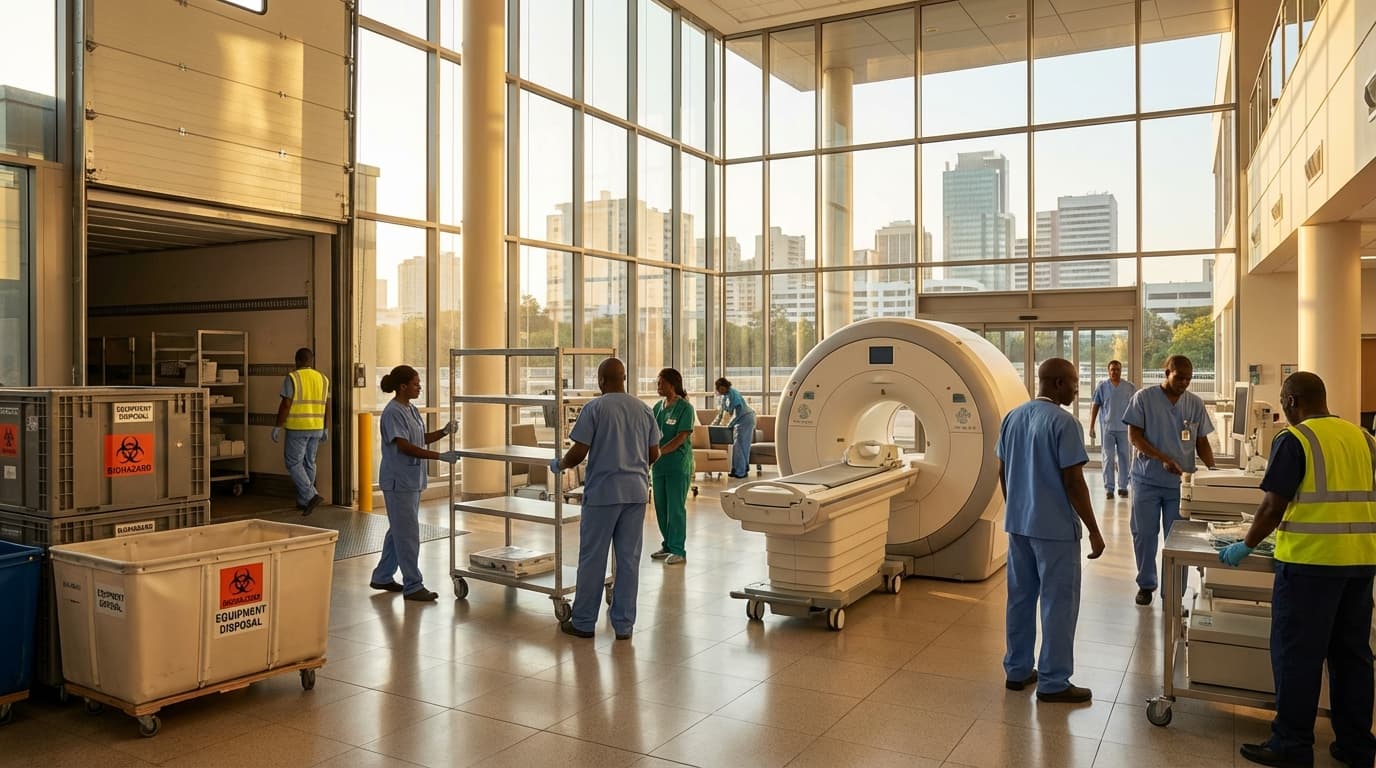
Site Restoration Service After Equipment Removal in Congo (Kinshasa)
Engineering Excellence & Technical Support
Site Restoration Service After Equipment Removal High-standard technical execution following OEM protocols and local regulatory frameworks.
Advanced Remediation & Soil Stabilization
Expertly deployed advanced soil stabilization techniques and bioremediation processes to neutralize hydrocarbon and heavy metal contamination left by heavy equipment, restoring soil integrity and ecological function in compliance with stringent environmental regulations.
Geotechnical Engineering & Landform Restoration
Conducted comprehensive geotechnical surveys to assess ground stability and engineered precise landform restoration, including re-contouring, erosion control measures (e.g., hydroseeding, terracing), and vegetation re-establishment to prevent landslides and ensure long-term site stability.
Hydrological Impact Assessment & Waterway Rehabilitation
Performed thorough hydrological impact assessments to identify and mitigate any disruption to local water tables and surface water flow. Implemented effective waterway rehabilitation strategies, including sediment removal and bank stabilization, to restore natural drainage patterns and protect aquatic ecosystems.
What Is Site Restoration Service After Equipment Removal In Congo (Kinshasa)?
Site restoration services after equipment removal in Congo (Kinshasa) refer to the comprehensive process of rehabilitating and returning a project site to its pre-disturbance or a predetermined post-construction environmental condition following the dismantling and extraction of industrial or heavy equipment. This service is critical for ensuring environmental compliance, mitigating long-term ecological impacts, and promoting land reusability for various purposes.
| Who Needs Site Restoration? | Typical Use Cases | ||||
|---|---|---|---|---|---|
| Mining operations: Companies involved in the extraction of minerals (e.g., cobalt, copper, gold, diamonds) that require the removal of drilling rigs, processing equipment, and associated infrastructure. | Oil and gas exploration and production: Companies operating in the upstream sector who need to decommission and remove drilling platforms, wellheads, pipelines, and processing facilities. | Construction and infrastructure projects: Developers and contractors who have utilized heavy machinery and temporary structures for large-scale construction (e.g., roads, dams, power plants) and require site cleanup upon completion. | Industrial facilities: Manufacturing plants or processing sites undergoing decommissioning, relocation, or significant equipment upgrades that necessitate the removal of machinery and structural components. | Telecommunications infrastructure: Companies removing obsolete or upgraded tower sites, base stations, and associated equipment. | Temporary project sites: Any entity that has established a temporary operational footprint for a specific project duration and needs to return the land to its original state. |
| Post-mining land reclamation for agriculture or conservation. | Reinstatement of land for residential, commercial, or recreational development after oil and gas operations. | Returning cleared land for its original agricultural use or natural habitat after construction. | Brownfield redevelopment of former industrial sites. | Restoration of environmentally sensitive areas impacted by temporary infrastructure. | Decommissioning of legacy sites with potential environmental liabilities. |
Key Components of Site Restoration
- Site assessment and characterization: Detailed evaluation of the existing environmental conditions, including soil composition, potential contamination (hydrocarbons, heavy metals), water bodies, flora, and fauna.
- Decommissioning and dismantling: Safe and systematic removal of all equipment, associated infrastructure (e.g., foundations, pipelines, storage tanks), and waste materials.
- Contamination remediation: If contamination is identified, this involves implementing appropriate techniques such as soil excavation and disposal, in-situ treatment (bioremediation, chemical oxidation), or groundwater treatment.
- Geotechnical stabilization: Addressing any changes in soil stability, grading, and topography resulting from equipment presence and removal. This may involve re-contouring, compaction, or erosion control measures.
- Regrassing and revegetation: Re-establishment of native or appropriate vegetation cover to prevent erosion, improve soil health, and restore ecological function.
- Habitat restoration: Where applicable, efforts to recreate or enhance habitats for local wildlife.
- Waste management and disposal: Proper segregation, transportation, and disposal or recycling of all generated waste materials in accordance with Congolese environmental regulations.
- Monitoring and validation: Post-restoration monitoring to ensure the effectiveness of remediation and revegetation efforts and to confirm compliance with environmental standards.
Who Needs Site Restoration Service After Equipment Removal In Congo (Kinshasa)?
When heavy machinery and specialized equipment are deployed and subsequently removed from project sites in Congo (Kinshasa), the land is often left scarred and impacted. This is particularly true for industries that rely on extensive infrastructure and resource extraction. Site restoration services become essential to reclaim these areas, mitigate environmental damage, and ensure compliance with regulations. The need for such services is driven by a variety of organizations and their specific operational phases. Understanding who requires these services helps in tailoring offerings and marketing efforts.
| Customer Type | Key Departments Involved | Reason for Restoration Needs |
|---|---|---|
| Mining Companies | Environmental Health & Safety (EHS), Operations, Land Management, Legal & Compliance | Reclaiming mined-out areas, controlling erosion, preventing water contamination, returning land to a usable state for other purposes or for biodiversity. |
| Oil and Gas Exploration & Production Companies | EHS, Operations, Facilities Management, Regulatory Affairs | Decommissioning well pads, pipelines, and processing plants; remediating soil and water contamination; restoring natural habitats. |
| Construction and Infrastructure Development Firms | Project Management, EHS, Site Operations, Procurement, Legal | Restoring temporary construction sites, access roads, and laydown areas after project completion. |
| Logistics and Heavy Equipment Rental Companies | Operations, Contract Management, Risk Management | Often contractually obligated to ensure client compliance with restoration requirements or to remediate areas impacted by their equipment's movement and operation. |
| Government and Public Sector Agencies | Environmental Protection, Land Management, Public Works, Regulatory Bodies | Enforcing environmental regulations, managing legacy industrial sites, ensuring public safety and land usability after projects. |
| Agricultural and Forestry Project Developers | Operations, Environmental Management, Land Management | Rehabilitating land after clearing and intensive use, soil conservation, and preventing erosion. |
Target Customers & Departments for Site Restoration Service After Equipment Removal in Congo (Kinshasa)
- {"title":"Mining Companies","description":"These are perhaps the most significant beneficiaries. Mining operations, by their nature, involve extensive land disturbance for open pits, access roads, processing plants, and waste disposal. Once extraction ceases or sections are depleted, the need for rehabilitation becomes paramount."}
- {"title":"Oil and Gas Exploration & Production Companies","description":"Exploration activities, including seismic surveys and drilling, along with the installation and eventual decommissioning of production facilities, pipelines, and associated infrastructure, create a substantial need for post-operational site restoration."}
- {"title":"Construction and Infrastructure Development Firms","description":"Companies involved in building major infrastructure like dams, large-scale industrial complexes, transportation networks (roads, railways), and power plants will require restoration services after their equipment is no longer on-site and projects are completed or moved to a new phase."}
- {"title":"Logistics and Heavy Equipment Rental Companies","description":"While they may not directly own the land, these companies are often contracted by the primary operators. Their involvement in transporting, deploying, and removing large equipment means they can play a role in the restoration process or be responsible for ensuring it's undertaken by their clients."}
- {"title":"Government and Public Sector Agencies","description":"Agencies overseeing land use, environmental protection, and resource management may mandate site restoration as part of permitting processes or for decommissioned government-owned facilities. This also includes managing former industrial sites or legacy contamination."}
- {"title":"Agricultural and Forestry Project Developers","description":"Large-scale agricultural ventures or forestry operations that utilize heavy machinery for land clearing, cultivation, or timber extraction will require restoration to return the land to a usable or natural state."}
Site Restoration Service After Equipment Removal Process In Congo (Kinshasa)
This document outlines the standard workflow for our Site Restoration Service following equipment removal in Congo (Kinshasa). Our comprehensive approach ensures that sites are returned to a safe, environmentally compliant, and aesthetically acceptable condition after industrial equipment has been decommissioned and removed.
| Phase | Key Activities | Deliverables/Outcomes | Timeline (Indicative) |
|---|---|---|---|
| Phase 1: Inquiry & Assessment | Client submits inquiry detailing site and equipment removal plans. Initial discussions to understand project scope and requirements. On-site visit for preliminary assessment of the site's condition, existing infrastructure, and potential environmental concerns. | Understanding of project scope. Preliminary site assessment report. | 1-2 Weeks |
| Phase 2: Proposal & Planning | Develop a detailed site restoration proposal including scope of work, methodology, timelines, and cost estimations. Client review and negotiation of proposal. Contract finalization. Obtain necessary permits and regulatory approvals from local authorities (e.g., Ministry of Environment). | Formal proposal. Signed contract. Approved permits. | 2-4 Weeks |
| Phase 3: Mobilization & Preparation | Mobilize personnel, equipment, and materials to the site. Establish site security and safety protocols. Conduct detailed site surveys and environmental sampling (soil, water, air) to identify any contamination. Develop a detailed Health, Safety, and Environmental (HSE) plan. | Mobilized team and equipment. Site-specific HSE plan. Baseline environmental data. | 1 Week |
| Phase 4: Restoration Execution | Perform necessary demolition of non-essential structures. Abate and dispose of hazardous materials (e.g., asbestos, lead paint) according to regulations. Excavate and treat/dispose of contaminated soil and water. Perform grading, compaction, and landscaping. Implement revegetation strategies using native species. | Restored site surfaces. Treated/disposed waste. Re-established topography. Planted vegetation. | Variable (Weeks to Months, depending on site complexity) |
| Phase 5: Verification & Closure | Conduct final site inspections and validation sampling to ensure compliance with regulatory standards and contractual obligations. Client review and acceptance of the restored site. Prepare and submit final project report including all documentation, monitoring data, and waste disposal manifests. | Final site acceptance. Comprehensive project report. Certificate of completion. | 1-2 Weeks |
| Phase 6: Post-Restoration (Optional) | Implement post-restoration monitoring for a specified period to ensure the long-term stability of the restored environment and the success of revegetation efforts. | Ongoing environmental monitoring data. Performance reports. | Months to Years (as per agreement) |
Site Restoration Service Workflow
- Inquiry and Initial Consultation
- Site Assessment and Scope Definition
- Proposal and Contract Negotiation
- Permitting and Regulatory Approvals
- Pre-Restoration Mobilization
- Demolition and Decommissioning (as required)
- Hazardous Material Abatement (if identified)
- Contaminated Soil/Water Remediation
- Grading and Earthwork
- Revegetation and Landscaping
- Final Inspection and Sign-off
- Post-Restoration Monitoring and Reporting
Site Restoration Service After Equipment Removal Cost In Congo (Kinshasa)
Site restoration after equipment removal in Kinshasa, Congo (DRC) is a crucial but often complex service. The cost is highly variable, influenced by numerous factors. This service aims to return the land to its pre-construction or pre-operation state, addressing environmental impacts and ensuring safety. Key considerations include the type and scale of equipment removed, the nature of the site (urban, rural, industrial), the extent of disturbance, and specific environmental regulations. Local labor rates, material availability, and transportation costs also play a significant role in determining the final price. It's essential for businesses to obtain detailed quotes from reputable service providers to accurately budget for these expenses.
| Restoration Scope | Estimated Cost Range (XAF) |
|---|---|
| Basic Surface Restoration (e.g., filling small trenches, minor grading, debris removal) | 500,000 - 2,000,000 |
| Moderate Restoration (e.g., significant grading, basic re-vegetation, minor soil amendment) | 2,000,000 - 8,000,000 |
| Extensive Restoration (e.g., major excavation, soil remediation, comprehensive re-vegetation, complex landscaping) | 8,000,000 - 30,000,000+ |
| Specialized Remediation (e.g., significant contamination cleanup, deep excavation) | 30,000,000+ (highly project-specific) |
Key Pricing Factors for Site Restoration in Kinshasa:
- Type and Size of Equipment Removed: Larger, heavier, or more complex equipment (e.g., mining machinery, large industrial generators) will typically require more extensive removal efforts and thus higher restoration costs.
- Site Accessibility: Remote or difficult-to-access locations will incur higher transportation and logistical costs for both equipment removal and restoration materials/personnel.
- Extent of Site Disturbance: The degree of soil compaction, vegetation removal, potential contamination (oil, fuel spills), and structural damage will directly impact the scope and cost of restoration.
- Environmental Impact and Remediation: If the site has suffered environmental damage, such as soil or water contamination, specialized remediation techniques will be required, significantly increasing costs.
- Decommissioning Requirements: Specific regulations or client-imposed standards for decommissioning and site handover will influence the required level of restoration.
- Landscaping and Re-vegetation: The cost of re-establishing native vegetation, soil grading, and landscaping will depend on the size of the area and the desired end-state.
- Waste Disposal and Recycling: Costs associated with the safe and compliant disposal or recycling of removed equipment, debris, and contaminated materials.
- Permits and Regulatory Compliance: Obtaining necessary permits for removal, disposal, and restoration activities, and ensuring compliance with local environmental laws.
- Labor Costs: The prevailing wages for skilled and unskilled labor in Kinshasa for demolition, excavation, environmental services, and landscaping.
- Material Costs: The price of backfill material, topsoil, seeds, plants, and any necessary erosion control measures.
- Geotechnical Conditions: Soil type, stability, and the presence of groundwater can affect excavation and remediation costs.
- Project Timeline and Urgency: Rush projects may incur premium charges for expedited services.
Affordable Site Restoration Service After Equipment Removal Options
Removing heavy equipment from a site can leave behind a damaged landscape, including compacted soil, uneven terrain, debris, and potential contamination. Our affordable site restoration services aim to bring your property back to its pre-construction or a usable state without breaking the bank. We offer flexible options and cost-saving strategies tailored to your specific needs, ensuring a professional and efficient restoration process.
| Service Component | Description | Cost-Saving Aspect |
|---|---|---|
| Site Assessment & Planning | Thorough evaluation of damage and creation of a tailored restoration plan. | Prevents costly rework by identifying all necessary steps upfront, optimizing resource allocation. |
| Debris Removal & Disposal | Efficient clearing of all leftover materials, including concrete, metal, and vegetation. | Bulk disposal rates and responsible recycling/reuse of materials can significantly reduce landfill fees. |
| Soil Aeration & Remediation | Breaking up compacted soil to improve drainage and aeration; addressing any potential contamination. | Targeted treatments minimize the need for extensive soil replacement; using natural remediation methods where applicable. |
| Grading & Leveling | Restoring the site's natural contours or creating a specific grade for future use. | Efficient use of heavy machinery and skilled operators minimizes time and fuel consumption. |
| Revegetation & Landscaping | Planting native grasses, shrubs, or trees; applying topsoil and mulch. | Utilizing drought-resistant and low-maintenance native species reduces long-term care costs. Sourcing local materials when possible. |
| Erosion Control | Implementing measures to prevent soil erosion and runoff. | Proactive measures are less expensive than repairing extensive erosion damage later. |
| Bundle Discount | Combining multiple services into pre-defined packages. | Offers a significant percentage reduction compared to booking individual services separately. |
| Off-Season Scheduling | Scheduling restoration during less busy periods. | May result in reduced labor and equipment rental rates. |
| Phased Restoration | Breaking down the restoration into manageable stages. | Allows for budgeting and cash flow management, potentially spreading costs over time. |
Understanding Value Bundles and Cost-Saving Strategies
- {"title":"Value Bundles: Comprehensive Solutions for Maximum Savings","description":"Instead of piecemeal services, our value bundles offer a complete site restoration package at a discounted rate. These bundles are designed to address common restoration needs holistically, saving you time and money by consolidating multiple services into one streamlined process."}
- {"title":"Cost-Saving Strategies: Smart Approaches to Reduce Expenses","description":"We implement various cost-saving strategies throughout the restoration process, from careful planning and efficient execution to utilizing sustainable practices. Our goal is to deliver high-quality results at the most competitive price possible."}
Verified Providers In Congo (Kinshasa)
Navigating the healthcare landscape in a new city or country can be a daunting task. For those in Congo (Kinshasa), finding reliable and high-quality medical services is paramount. Franance Health stands out as a leading entity, offering a meticulously curated network of verified healthcare providers. This commitment to verification ensures that patients receive care from professionals who meet stringent standards of expertise, ethical practice, and patient safety. Choosing Franance Health's network means opting for peace of mind, knowing you are in capable hands.
| Provider Type | Franance Health Verification Criteria | Why This Matters to You |
|---|---|---|
| General Practitioners | Valid medical license, proven experience, positive patient feedback, adherence to ethical guidelines. | Ensures you receive competent and compassionate primary care for everyday health concerns. |
| Specialists (e.g., Cardiologists, Pediatricians, Dermatologists) | Board certification in their specialty, extensive clinical experience, advanced training, peer endorsements. | Guarantees access to highly qualified experts for complex medical conditions and specific health needs. |
| Hospitals and Clinics | Accreditation by recognized bodies, state-of-the-art facilities, qualified medical staff, robust safety protocols, efficient administration. | Provides assurance of a safe, well-equipped, and professionally managed healthcare environment. |
| Diagnostic Centers | Qualified technicians and radiologists, calibrated and up-to-date equipment, adherence to quality control standards. | Ensures accurate and reliable diagnostic results crucial for effective treatment planning. |
Key Benefits of Choosing Franance Health Verified Providers
- Uncompromising Quality: All providers undergo rigorous credentialing, including verification of medical licenses, educational qualifications, and professional experience.
- Patient-Centric Approach: Franance Health prioritizes providers who demonstrate a strong commitment to patient well-being, communication, and ethical treatment.
- Access to Specialists: Our network encompasses a wide range of medical disciplines, ensuring you can find the right specialist for your specific needs.
- Trust and Reliability: The verification process eliminates the guesswork, providing a trusted source for healthcare services.
- Streamlined Experience: Franance Health aims to simplify your healthcare journey, from finding a provider to managing appointments and understanding your care options.
Scope Of Work For Site Restoration Service After Equipment Removal
This Scope of Work (SOW) details the requirements for comprehensive site restoration services following the successful removal of industrial equipment. The objective is to return the site to a safe, clean, and environmentally sound condition, meeting all applicable regulatory standards and the client's specifications. This SOW outlines the technical deliverables and standard specifications to be adhered to throughout the restoration process.
| Task Description | Technical Deliverables | Standard Specifications | Acceptance Criteria |
|---|---|---|---|
| Site Assessment & Planning | Detailed site assessment report (including soil, water, and air sampling if applicable); Restoration plan proposal. | ASCE 37-02 (Temporary Structures for Construction and Demolition Operations), OSHA 29 CFR 1926 (Safety and Health Regulations for Construction), EPA guidelines for site assessment. | Client approval of restoration plan; Certification of assessment accuracy and completeness. |
| Hazardous Material Identification & Abatement (if applicable) | Hazardous Material Survey Report; Abatement plan; Certificates of disposal for hazardous waste. | EPA RCRA (Resource Conservation and Recovery Act); OSHA 29 CFR 1910.120 (HAZWOPER). | Documentation of proper handling and disposal; Clearance certificates from regulatory bodies. |
| Decontamination of Surfaces | Decontamination logs; Chemical analysis reports of washed surfaces. | Client-specific cleaning protocols; Industry best practices for equipment decontamination. | Surface cleanliness verified by visual inspection and/or laboratory analysis below specified thresholds. |
| Ground Surface Restoration | Grading plans; Topsoil certification; Seed/vegetation mix specification. | ASTM D1556 (Density of Soil In-Place by the Sand-Cone Method); ASTM D698 (Moisture-Density Relations of Soils Using 5.6-lb (2.5-kg) Rammer and 12-in. (305-mm) Drop); Local landscaping standards. | Achieved final grade within specified tolerances; Vegetation establishment rate meeting contract requirements. |
| Pavement & Structural Repair | Repair material specifications; As-built drawings of repaired areas. | AASHTO (American Association of State Highway and Transportation Officials) standards for pavement repair; Client-specific architectural and structural specifications. | Repaired areas indistinguishable from surrounding undisturbed areas (or as per design); Structural integrity confirmed. |
| Waste Management & Disposal | Waste manifest; Certificates of disposal for all waste streams (hazardous and non-hazardous). | RCRA regulations; Local landfill acceptance criteria; Licensed hazardous waste disposal facilities. | Compliance with all waste tracking and disposal regulations; Proof of responsible disposal. |
| Final Site Inspection & Documentation | Final restoration report; Photographic documentation of restored site; As-built drawings (if applicable). | Client-approved checklist; All previously submitted documentation. | Client sign-off on final report and site acceptance; Completion of all contractually obligated tasks. |
Key Objectives
- Safe and effective removal of residual contamination (if any).
- Repair and reinstatement of disturbed ground surfaces.
- Proper disposal of all removed materials and waste.
- Compliance with all local, state, and federal environmental regulations.
- Restoration of the site to a pre-determined functional or aesthetic state.
- Minimization of environmental impact during and after restoration activities.
Service Level Agreement For Site Restoration Service After Equipment Removal
This Service Level Agreement (SLA) outlines the response times and uptime guarantees for site restoration services provided after the removal of equipment. This agreement is intended to ensure timely and effective restoration of the site to its agreed-upon condition.
| Service Level | Description | Target | SLA Guarantee |
|---|---|---|---|
| Response Time (Issue Acknowledgment) | Time from notification of an issue impacting site restoration until the Service Provider acknowledges the issue and begins investigation. | 2 business hours | 99% of all issues within 2 business hours |
| Response Time (Initiation of Restoration Work) | Time from notification of completion of equipment removal until the Service Provider commences site restoration activities. | 8 business hours | 95% of all restorations initiated within 8 business hours |
| Resolution Time (Standard Restoration) | Maximum time allowed to complete standard site restoration activities (e.g., backfilling, basic landscaping, removal of minor debris) after equipment removal is confirmed complete. | 5 business days | 90% of standard restorations completed within 5 business days |
| Resolution Time (Complex Restoration) | Maximum time allowed to complete complex site restoration activities (e.g., structural repairs, extensive landscaping, specialized environmental remediation) as defined in the initial scope of work. | 15 business days | 85% of complex restorations completed within 15 business days |
| Uptime Guarantee (Active Restoration) | Percentage of the agreed-upon restoration period during which active restoration work is being performed by the Service Provider, excluding scheduled breaks and approved delays. | 95% | The site will be undergoing active restoration for at least 95% of the scheduled restoration period, excluding Force Majeure and customer-caused delays. |
Key Definitions
- Site Restoration: The process of returning a physical location to its pre-equipment installation state, or a mutually agreed-upon condition, after equipment has been removed.
- Equipment Removal: The complete disconnection, dismantling, and physical extraction of the contracted equipment from the site.
- Downtime: Any period during which the site is not undergoing restoration work due to reasons attributable to the Service Provider, excluding scheduled maintenance or Force Majeure events.
- Response Time: The maximum time allowed for the Service Provider to acknowledge a reported restoration issue and initiate investigation or action.
- Resolution Time: The maximum time allowed for the Service Provider to resolve a reported restoration issue and complete the restoration work.
- Uptime Guarantee: The percentage of time the site is expected to be undergoing active restoration work, as defined by the agreement.
- Force Majeure: Events beyond the reasonable control of the Service Provider, including but not limited to natural disasters, acts of war, terrorism, civil unrest, or government action.
Frequently Asked Questions

Ready when you are
Let's scope your Site Restoration Service After Equipment Removal in Congo (Kinshasa) project in Congo (Kinshasa).

Scaling healthcare logistics and technical systems across the entire continent.