
Heavy Medical Equipment De-Installation Service (MRI/CT/Cath Lab) in Congo (Kinshasa)
Engineering Excellence & Technical Support
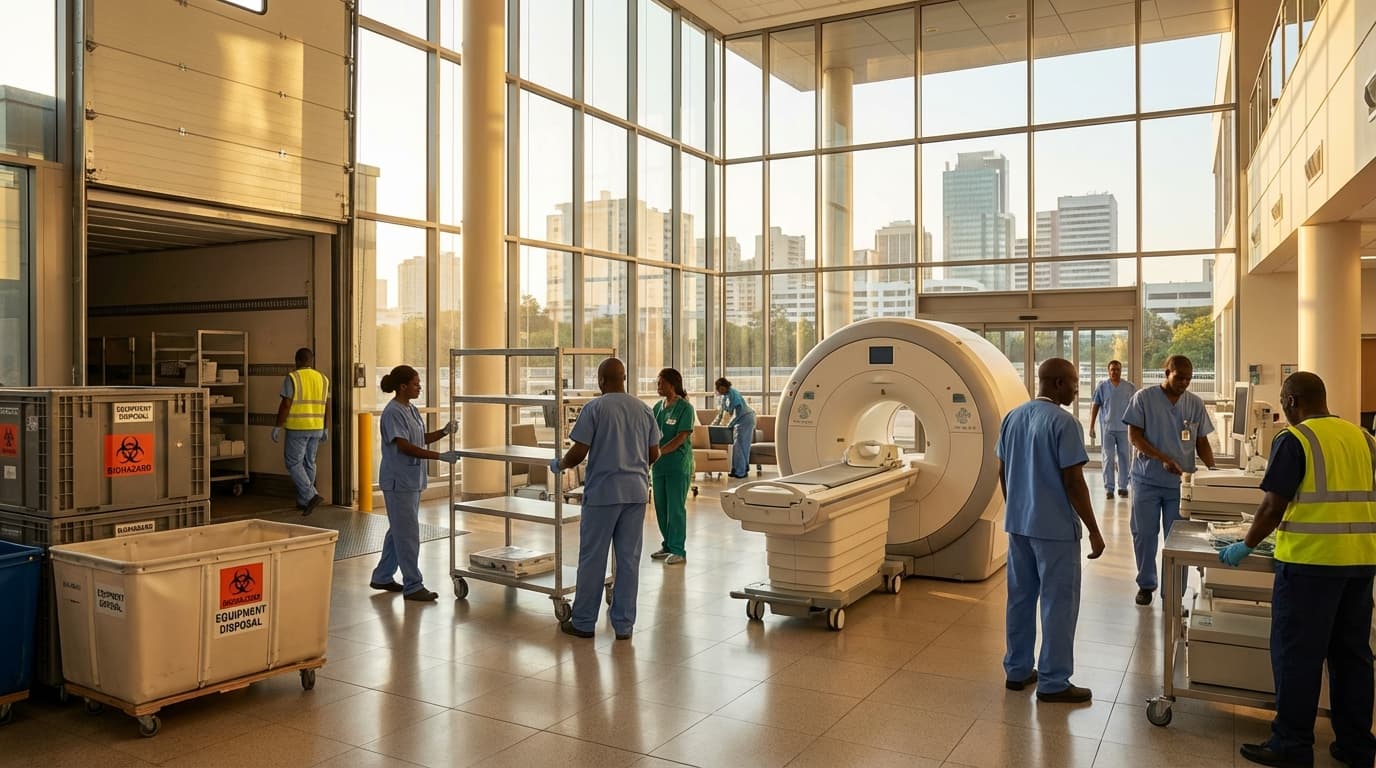
Heavy Medical Equipment De-Installation Service (MRI/CT/Cath Lab) High-standard technical execution following OEM protocols and local regulatory frameworks.
Specialized De-Installation Expertise
Our highly trained technicians possess the advanced knowledge and specialized tools required for the safe and meticulous de-installation of complex medical imaging equipment, including MRI, CT scanners, and Cath Labs, adhering to stringent industry standards and manufacturer guidelines within the challenging logistical landscape of Kinshasa.
Logistical Prowess for Heavy Equipment
We excel in overcoming the logistical hurdles inherent in de-installing and relocating large, heavy medical machinery in Kinshasa. Our comprehensive service includes expert rigging, precise dismantling, secure packaging, and planning for transportation to ensure seamless project execution and minimal disruption to your operations.
Compliance and Safety Assurance
Prioritizing safety and regulatory compliance, our de-installation process in Congo guarantees that all procedures are conducted by certified professionals, with a strong emphasis on environmental protection, hazardous material handling (if applicable), and documentation for complete auditable records.
What Is Heavy Medical Equipment De-installation Service (Mri/ct/cath Lab) In Congo (Kinshasa)?
Heavy Medical Equipment De-Installation Service (MRI/CT/Cath Lab) in Congo (Kinshasa) refers to the specialized process of safely and systematically dismantling, preparing, and packaging complex, high-value medical imaging and interventional diagnostic systems such as Magnetic Resonance Imaging (MRI) scanners, Computed Tomography (CT) scanners, and Cardiac Catheterization Laboratories (Cath Labs) for relocation, decommissioning, or disposal. This service is critical for healthcare facilities undergoing upgrades, expansions, closures, or the transfer of assets. It necessitates a team of highly trained technicians with expertise in electrical engineering, mechanical engineering, cryogenics (for MRI), radiation safety, and logistics, equipped with specialized tools and adherence to stringent safety protocols. The objective is to minimize equipment damage, ensure personnel safety, and comply with regulatory requirements during the dismantling phase.
| Who Needs This Service? | Typical Use Cases | |||
|---|---|---|---|---|
| Hospitals and Diagnostic Imaging Centers: Facilities upgrading or replacing existing MRI, CT, or Cath Lab systems. | Relocation of imaging equipment to a new wing, building, or a different healthcare facility within Congo (Kinshasa) or internationally. | Healthcare Providers undertaking facility renovations or expansions that require temporary or permanent removal of installed equipment. | Institutions undergoing equipment decommissioning due to obsolescence or end-of-life. | Manufacturers or third-party service providers involved in the logistics and reinstallation of medical equipment. |
| Government Health Ministries and Agencies: Overseeing the management and modernization of public healthcare infrastructure. | International Aid Organizations and NGOs: Involved in the establishment or upgrade of medical facilities in underserved regions. | Equipment Leasing Companies: Managing the retrieval or relocation of leased medical assets. | Companies specializing in the buying and selling of used medical equipment. | Research Institutions and Universities: Relocating or decommissioning specialized medical imaging equipment for research purposes. |
Key Components of Heavy Medical Equipment De-Installation:
- Site Assessment and Planning: Pre-installation survey to determine access routes, structural requirements, utility disconnect points, and safety hazards.
- Systematic Component Disassembly: Deconstruction of the equipment into manageable modules or components, often involving intricate sub-assemblies.
- Cryogen Management (MRI): Safe venting, recovery, and/or transfer of helium coolant to prevent environmental release and maintain cryogen integrity.
- Radiation Shielding and Containment (CT/Cath Lab): Procedures to manage and secure radioactive components or shielding materials.
- Electrical and Data Disconnection: Secure and compliant disconnection of all power supplies, control systems, and data interfaces.
- Mechanical Support and Stabilization: Utilization of specialized lifting, bracing, and support equipment to manage heavy and sensitive components.
- Component Packaging and Protection: Secure packaging using custom crates, shock-absorbent materials, and environmental protection to prevent damage during transit.
- Documentation and Labeling: Comprehensive record-keeping of the de-installation process, including photographic evidence, component inventories, and detailed labeling for reassembly.
- Waste Management and Disposal: Environmentally responsible disposal of any ancillary materials or retired components in compliance with local regulations.
Who Needs Heavy Medical Equipment De-installation Service (Mri/ct/cath Lab) In Congo (Kinshasa)?
De-installing complex and heavy medical equipment like MRI scanners, CT scanners, and Cath Labs is a specialized and critical process. In Congo (Kinshasa), several entities and departments would require such services, primarily when upgrading, relocating, or decommissioning existing medical facilities. This involves intricate technical knowledge, specialized tools, and adherence to strict safety protocols to ensure the safe dismantling, packing, and transportation of these high-value assets. The process demands expertise in areas such as radiation safety (for MRI/CT), electrical engineering, mechanical engineering, and logistics.
| Target Customer Type | Key Departments Requiring De-Installation | Reasons for De-Installation | Specific Equipment Examples |
|---|---|---|---|
| Public Hospitals & University Medical Centers | Radiology Department, Cardiology Department, Imaging Services | Equipment Upgrade/Replacement, Facility Renovation, Relocation to new wing/building, Decommissioning of obsolete equipment | MRI Scanners, CT Scanners, Cath Lab Systems, Linear Accelerators (for Radiation Oncology, though not explicitly mentioned, often de-installed similarly) |
| Private Hospitals & Clinics | Diagnostic Imaging Centers, Cardiac Catheterization Labs, Radiology Units | Expansion of services, Acquisition of newer technology, Relocation of facility, Consolidation of operations | High-field MRI machines, Multi-slice CT scanners, Interventional Cardiology Suites |
| International Medical Organizations & NGOs | Mobile medical units, Field hospitals, Health centers with advanced diagnostics | Project completion, Equipment redeployment to other regions, Upgrade of deployed medical infrastructure | Portable CT scanners, Mobile MRI units, Diagnostic imaging packages |
| Government Ministries of Health | National health facilities management, Public health infrastructure development | National equipment replacement programs, Centralized facility upgrades, Rationalization of public health assets | Large-scale MRI/CT installations in government hospitals |
| Research Institutions | Biomedical research labs, Medical imaging research departments | Research project closure, Transition to new research equipment, Relocation of research facilities | Advanced research-grade MRI scanners, High-resolution CT scanners |
| Medical Equipment Distributors & Manufacturers | Service and installation divisions, Refurbishment centers | Re-exporting equipment, Moving equipment to refurbishment facilities, Installing equipment in new locations (requiring de-installation at old site) | Any of the above equipment types as part of their service lifecycle |
Target Customers for Heavy Medical Equipment De-Installation in Congo (Kinshasa)
- Public Hospitals and University Medical Centers
- Private Hospitals and Clinics
- International Medical Organizations and NGOs
- Government Ministries of Health
- Research Institutions with Medical Imaging Facilities
- Medical Equipment Distributors and Manufacturers (for relocation or refurbishment purposes)
Heavy Medical Equipment De-installation Service (Mri/ct/cath Lab) Process In Congo (Kinshasa)
This document outlines the comprehensive workflow for our Heavy Medical Equipment De-Installation Service (MRI/CT/Cath Lab) in Congo (Kinshasa), from initial inquiry to the successful completion of the de-installation process. Our team is equipped to handle the complexities of specialized medical equipment removal, ensuring safety, efficiency, and adherence to international standards. We understand the critical nature of these procedures and the unique logistical challenges present in Kinshasa, including infrastructure, customs, and local regulations. This detailed process ensures transparency and facilitates smooth execution for our clients.
| Phase | Step | Description | Key Activities | Deliverables | Responsible Party | Estimated Timeline (Varies) |
|---|---|---|---|---|---|---|
| Receive Inquiry | Client contacts us regarding de-installation needs for MRI, CT, or Cath Lab equipment. | Gather initial equipment details (model, manufacturer, age), location, reason for de-installation, desired timeline. | Acknowledgement of inquiry, preliminary understanding of scope. | Client, Service Provider | 1-2 Business Days |
| Initial Consultation | Discussion to understand specific requirements, challenges, and objectives. | Technical team engagement, clarification of project scope, preliminary risk identification. | Detailed understanding of client needs, identification of potential challenges. | Service Provider, Client | 2-3 Business Days |
| On-Site Visit | Our specialized engineers visit the Kinshasa site to conduct a thorough assessment. | Physical inspection of equipment, power supply, cooling systems, access routes, building structural integrity, local infrastructure (road conditions, power stability). | Detailed site survey report, identification of specific de-installation requirements and potential risks. | Service Provider (Engineering Team) | 3-7 Business Days (including travel if needed) |
| De-installation Strategy Development | Based on site assessment, a detailed de-installation plan is formulated. | Defining dismantling procedures, required tools and equipment, personnel allocation, safety protocols, waste management plan, risk mitigation strategies. | Comprehensive de-installation plan, safety management plan. | Service Provider (Engineering & Project Management) | 2-4 Business Days (post-site visit) |
| Develop Quotation | A detailed quotation is prepared based on the de-installation plan, scope of work, and logistical considerations. | Cost breakdown for labor, equipment, consumables, travel, permits, and any unforeseen expenses. | Formal quotation document. | Service Provider (Commercial & Project Management) | 2-3 Business Days (post-planning) |
| Contract Review & Negotiation | Client reviews the quotation and proposed contract terms. Negotiations ensue if necessary. | Clarification of contract clauses, payment terms, insurance, liability, and dispute resolution. | Signed Service Agreement/Contract. | Client, Service Provider | 5-10 Business Days (negotiation dependent) |
| Permits & Approvals | Securing all necessary permits and approvals from local authorities in Kinshasa. | Liaising with relevant ministries (health, environment), obtaining import/export permits if applicable, ensuring compliance with local regulations. | All required permits and documentation. | Service Provider (Local Liaison & Project Management) | Varies greatly (5-30+ Business Days, dependent on local bureaucracy) |
| Logistics & Equipment Mobilization | Mobilizing specialized tools, lifting equipment, and trained personnel to the site. | Procurement or rental of specialized de-installation tools, scheduling of transport, accommodation for personnel. | All necessary equipment and personnel on-site, ready for commencement. | Service Provider (Logistics & Operations) | 3-7 Business Days (concurrent with permits) |
| Client Site Preparation | Coordinating with the client to prepare the area for de-installation. | Ensuring clear access routes, disconnecting utilities (if client responsibility), providing secure storage for components. | Site ready for de-installation commencement. | Client, Service Provider | 1-2 Business Days (prior to de-installation) |
| Pre-De-installation Briefing | A final briefing with the client and the de-installation team to review the plan and safety procedures. | Confirming roles, responsibilities, communication protocols, emergency procedures. | Team alignment and confirmation of readiness. | Service Provider (Project Manager), Client Representative | 1-2 Hours (prior to commencement) |
| Phased De-installation | Systematic dismantling of the medical equipment following the approved plan. | Careful disconnection of electrical, cooling, and data cables; safe dismantling of components; securing and labeling parts. | Dismantled equipment components, organized and ready for packaging/transport. | Service Provider (De-installation Team) | Varies significantly based on equipment complexity (2-10+ Business Days) |
| Safety Monitoring & Quality Control | Continuous monitoring of safety protocols and quality of work throughout the de-installation process. | Adherence to safety guidelines, regular quality checks on dismantling procedures, documentation of progress. | Safe and high-quality de-installation, adherence to plan. | Service Provider (Safety Officer & Project Manager) | Ongoing throughout execution |
| Packaging & Securing | Proper packaging and securing of all dismantled equipment components for transport. | Use of specialized packaging materials, crating, and bracing to prevent damage during transit. | Securely packaged equipment components. | Service Provider (Logistics Team) | 1-3 Business Days (post-de-installation) |
| Transportation to Destination | Arranging and managing the transportation of the equipment to its next destination. | Coordinating with local and international transport providers, managing customs clearance, tracking shipments. | Equipment delivered to the specified destination. | Service Provider (Logistics & Freight Forwarding) | Varies greatly based on destination and transport mode |
| Site Cleanup | Ensuring the de-installation area is left clean and free of debris. | Removal of all tools, packaging materials, and waste. | Clean and safe work environment restored. | Service Provider (De-installation Team) | 1-2 Business Days |
| Final Report Compilation | Preparation of a comprehensive report detailing the de-installation process. | Including photos, checklists, personnel involved, any issues encountered and resolutions, and confirmation of completed work. | Detailed de-installation completion report. | Service Provider (Project Management) | 2-3 Business Days (post-cleanup) |
| Project Handover | Formal handover of the site and all associated documentation to the client. | Review of the completion report, confirmation of client satisfaction. | Signed acceptance of completed work and handover documents. | Service Provider (Project Manager), Client Representative | 1-2 Business Days |
| Feedback Collection | Requesting feedback from the client on the de-installation service. | Surveys, follow-up calls to gauge satisfaction and identify areas for improvement. | Client feedback documented for continuous improvement. | Service Provider (Client Relations) | 1 Week Post-Handover |
| Archiving & Record Keeping | Archiving all project documentation for future reference. | Ensuring all records are securely stored and accessible. | Project files securely archived. | Service Provider (Administration) | Ongoing |
Workflow Overview
- Inquiry & Initial Consultation
- Site Assessment & Planning
- Quotation & Contract Negotiation
- Pre-De-installation Preparation
- Equipment De-installation Execution
- Logistics & Transportation (if applicable)
- Post-De-installation Report & Handover
- Client Feedback & Follow-up
Heavy Medical Equipment De-installation Service (Mri/ct/cath Lab) Cost In Congo (Kinshasa)
De-installing heavy medical equipment like MRI, CT scanners, and Cath Labs in Kinshasa, Congo, is a complex and specialized service. The cost is significantly influenced by a multitude of factors, making it difficult to provide a single, definitive price. These services require skilled technicians, specialized tools, and careful logistical planning to ensure the safe dismantling, packaging, and preparation for transport of incredibly sensitive and valuable machinery. The pricing is generally provided on a case-by-case basis after an initial assessment of the specific site and equipment.
| Equipment Type | Estimated De-Installation Cost Range (USD) | Estimated De-Installation Cost Range (Congolese Franc - CDF - Approximate Conversion) |
|---|---|---|
| Small to Medium CT Scanner | $3,000 - $8,000 | 15,600,000 - 41,600,000 |
| Large CT Scanner | $5,000 - $12,000 | 26,000,000 - 62,400,000 |
| Small to Medium MRI Scanner | $7,000 - $20,000 | 36,400,000 - 104,000,000 |
| Large MRI Scanner (e.g., 3 Tesla) | $15,000 - $35,000+ | 78,000,000 - 182,000,000+ |
| Basic Cath Lab System | $10,000 - $25,000 | 52,000,000 - 130,000,000 |
| Advanced Cath Lab System | $20,000 - $50,000+ | 104,000,000 - 260,000,000+ |
Key Pricing Factors for Heavy Medical Equipment De-Installation in Kinshasa:
- Equipment Type and Complexity: The size, weight, and intricate nature of the equipment are primary drivers. An MRI scanner with its powerful magnet, for example, will be more complex and costly to de-install than a standard CT scanner. Cath lab equipment often involves numerous interconnected components and delicate imaging systems.
- Site Accessibility and Logistics: The ease of access to the installation site within the hospital or clinic plays a crucial role. Narrow corridors, multiple flights of stairs, limited entry points, or the need for specialized lifting equipment (cranes, hoists) due to building constraints will increase costs.
- Dismantling Requirements: The degree of disassembly needed. Some equipment may require extensive component separation, while others can be moved with partial dismantling. This directly impacts labor hours and the need for specialized tools.
- Specialized Tools and Equipment: The de-installation process often demands specialized tools, including those for handling high-voltage components, magnetic field containment (for MRI), and precise calibration tools. The rental or availability of such equipment contributes to the overall cost.
- Labor Costs and Expertise: Highly skilled and experienced technicians are essential for this work. Their hourly rates, combined with the number of personnel required, form a significant part of the expense. This includes engineers, medical equipment technicians, and potentially rigging specialists.
- Safety and Environmental Precautions: De-installation of medical equipment often involves handling hazardous materials (e.g., refrigerants in CT scanners) and adhering to strict safety protocols. The cost of implementing these measures, including personal protective equipment and waste disposal, is factored in.
- Packaging and Protection: Proper packaging is vital to protect sensitive components during transport. This can involve custom crating, shock-absorbing materials, and climate-controlled packaging, adding to the material and labor costs.
- Timeframe and Urgency: If the de-installation needs to be completed within a tight deadline, overtime rates and expedited logistics can increase the overall price.
- Permits and Approvals: Depending on local regulations, specific permits or approvals might be required for moving or dismantling large equipment. The cost and time involved in obtaining these can add to the project expense.
- Dismantling for Relocation vs. Disposal: If the equipment is being de-installed for relocation to a new site within Congo or for export, the dismantling and packaging will be more detailed and costly than if it's being disposed of.
Affordable Heavy Medical Equipment De-installation Service (Mri/ct/cath Lab) Options
De-installing heavy medical equipment like MRI, CT, and Cath Labs is a complex and costly undertaking. However, by understanding value bundles and employing smart cost-saving strategies, healthcare facilities can significantly reduce their expenses. This service involves meticulous planning, specialized rigging, transportation, and often requires coordinated efforts with vendors, site preparation, and waste disposal. Opting for comprehensive service packages and proactive planning are key to maximizing value and minimizing budget impact.
| Cost-Saving Strategy | Description | Potential Savings |
|---|---|---|
| Advance Planning & Scheduling | Thoroughly planning the de-installation timeline well in advance allows for better resource allocation and avoids rush fees. Scheduling during off-peak hours can also reduce costs. | 5-15% |
| Bundle Services | Consolidating multiple services (de-installation, transportation, site prep coordination) with a single provider often results in discounted rates compared to using separate vendors. | 10-20% |
| Negotiate Service Level Agreements (SLAs) | Clearly defined SLAs with performance metrics and penalty clauses can ensure quality and prevent costly delays or errors. | Variable, but can prevent costly overruns. |
| Pre-De-installation Site Assessment | Identifying potential challenges (access routes, structural limitations, power requirements) before the de-installation begins minimizes unexpected costs and delays on the day of the operation. | 5-10% |
| Partner with Specialized Rigging Companies | While full-service providers are convenient, sometimes engaging highly specialized rigging companies for the most critical phases can be more cost-effective if you manage other aspects internally. | Can vary significantly based on scope, potentially 10-25% on rigging if managed efficiently. |
| Explore Local vs. National Providers | For less complex de-installations or when transportation is not a primary concern, local providers may offer more competitive pricing. | 5-15% |
| Leverage Vendor Contracts | If equipment is still under a manufacturer's service contract, inquire about included or discounted de-installation services. Sometimes vendors offer bundled upgrade packages. | Up to manufacturer's quoted rates, potentially significant savings. |
| Minimize Site Disruption | Efficient de-installation that minimizes downtime for other departments and avoids property damage can prevent indirect financial losses. | Indirect savings, difficult to quantify but crucial. |
Key Value Bundles for Medical Equipment De-installation
- Full-Service De-installation: This is the most comprehensive option, typically including disconnection, dismantling, rigging, transportation, and basic site restoration. It offers the highest level of convenience and minimizes the need for multiple vendors.
- De-installation & Site Prep Coordination: This bundle focuses on the core de-installation while also incorporating planning and coordination for the subsequent site preparation for new equipment, reducing downtime and potential scheduling conflicts.
- Equipment Relocation Package: For facilities moving equipment within the same campus or to a new location, this bundle integrates de-installation with specialized transportation and re-installation services, streamlining the entire relocation process.
- Disposal & Recycling Integration: This value-added service bundles de-installation with environmentally responsible disposal or recycling of old equipment, often including proper documentation for compliance.
- Vendor-Agnostic De-installation: For facilities not tied to specific equipment manufacturers, this bundle offers independent de-installation services, potentially leading to greater flexibility and cost negotiation power.
Verified Providers In Congo (Kinshasa)
In the Democratic Republic of Congo (Kinshasa), navigating the healthcare landscape can be challenging. Ensuring you are receiving care from verified and reputable providers is paramount for your health and well-being. Franance Health stands out as a leading organization dedicated to this very mission, offering a comprehensive credentialing process that guarantees a high standard of care. Their rigorous vetting system not only verifies medical expertise but also assesses operational integrity and patient-centric practices, making them the premier choice for accessing trusted healthcare services in Congo (Kinshasa).
| Credentialing Aspect | Franance Health's Approach | Benefit to Patients |
|---|---|---|
| Medical Qualifications | Rigorous verification of degrees, licenses, and board certifications. | Ensures providers have the foundational knowledge and legal authorization to practice. |
| Clinical Experience | Thorough review of past practice history and peer endorsements. | Confirms practical application of knowledge and a proven track record. |
| Specialized Training | Validation of any sub-specialty certifications or advanced training. | Guarantees access to highly specialized care when needed. |
| Professional Reputation | Checks for any disciplinary actions or malpractice claims. | Protects patients from providers with a history of unethical or substandard practice. |
| Facility Standards (if applicable) | Assessment of hygiene, equipment, and emergency preparedness. | Ensures a safe and well-equipped environment for treatment. |
Why Franance Health Credentials Matter:
- Uncompromising Quality Assurance: Franance Health's credentialing process involves a multi-faceted evaluation of healthcare professionals and facilities.
- Expertise Verification: They meticulously check educational backgrounds, licenses, certifications, and professional experience to ensure providers possess the necessary skills.
- Safety and Compliance Standards: Franance Health ensures that all credentialed providers adhere to stringent safety protocols and national/international healthcare regulations.
- Ethical Practice Assessment: Beyond technical skills, they evaluate a provider's commitment to ethical conduct and patient rights.
- Patient-Centric Approach: The credentialing process often includes an assessment of patient satisfaction mechanisms and a commitment to compassionate care.
- Building Trust and Confidence: By choosing a Franance Health-verified provider, patients gain peace of mind knowing they are in capable and trustworthy hands.
Scope Of Work For Heavy Medical Equipment De-installation Service (Mri/ct/cath Lab)
This Scope of Work (SOW) details the requirements for the professional de-installation of heavy medical imaging equipment, specifically Magnetic Resonance Imaging (MRI) scanners, Computed Tomography (CT) scanners, and Cardiac Catheterization (Cath Lab) systems. The service encompasses all necessary technical procedures, safety protocols, and documentation to ensure the equipment is safely and properly dismantled and prepared for transport or storage. Standard specifications for de-installation are provided to ensure consistent quality and compliance.
| Equipment Type | Key De-installation Considerations | Standard Specification Reference |
|---|---|---|
| MRI Scanner | Coil disassembly, magnet shielding considerations, cryogen handling (if applicable), RF shielding integrity, heavy lifting and rigging | IEC 60601 series, manufacturer-specific procedures, local safety regulations |
| CT Scanner | Gantry disassembly, X-ray tube cooling system disconnection, detector array handling, heavy component movement | IEC 60601 series, manufacturer-specific procedures, local safety regulations |
| Cath Lab | C-arm disassembly, detector handling, hydraulic/pneumatic system disconnection, table mechanism disengagement, cable management | IEC 60601 series, manufacturer-specific procedures, local safety regulations |
Key Services Included
- Pre-De-installation Survey and Planning
- Hazardous Material Identification and Management (if applicable)
- Disconnection of Electrical, Cooling, and Data Systems
- Mechanical De-installation and Disassembly
- Component Packaging and Protection
- Site Cleanup and Restoration
- De-installation Documentation and Reporting
Service Level Agreement For Heavy Medical Equipment De-installation Service (Mri/ct/cath Lab)
This Service Level Agreement (SLA) outlines the guaranteed response times and uptime for the de-installation of heavy medical equipment, specifically MRI, CT, and Cath Lab systems. This agreement is designed to minimize disruption and ensure efficient project completion.
| Service Component | Response Time Guarantee | Uptime Guarantee (during scheduled de-installation windows) |
|---|---|---|
| Initial Site Assessment & Planning Meeting | Within 48 business hours of request receipt. | N/A |
| On-Site De-installation Commencement (Post-Planning) | Within 7 business days of finalized plan approval. | 98% during scheduled window |
| Technician Availability (during scheduled de-installation window) | 24/7 availability for emergency escalation during the de-installation window. | 99% technician presence during scheduled work hours |
| Escalation for Critical Issues (e.g., equipment damage, safety concerns) | Immediate on-site presence or remote support within 2 business hours. | N/A |
| Post-De-installation Site Handover & Documentation | Within 24 business hours of completion. | N/A |
Scope of Services
- Professional de-installation of specified MRI, CT, and Cath Lab equipment.
- Site preparation and remediation as required for safe equipment removal.
- Coordination with logistics and transportation partners (if applicable).
- Documentation of de-installation process and site handover.
Frequently Asked Questions

Ready when you are
Let's scope your Heavy Medical Equipment De-Installation Service (MRI/CT/Cath Lab) in Congo (Kinshasa) project in Congo (Kinshasa).

Scaling healthcare logistics and technical systems across the entire continent.