
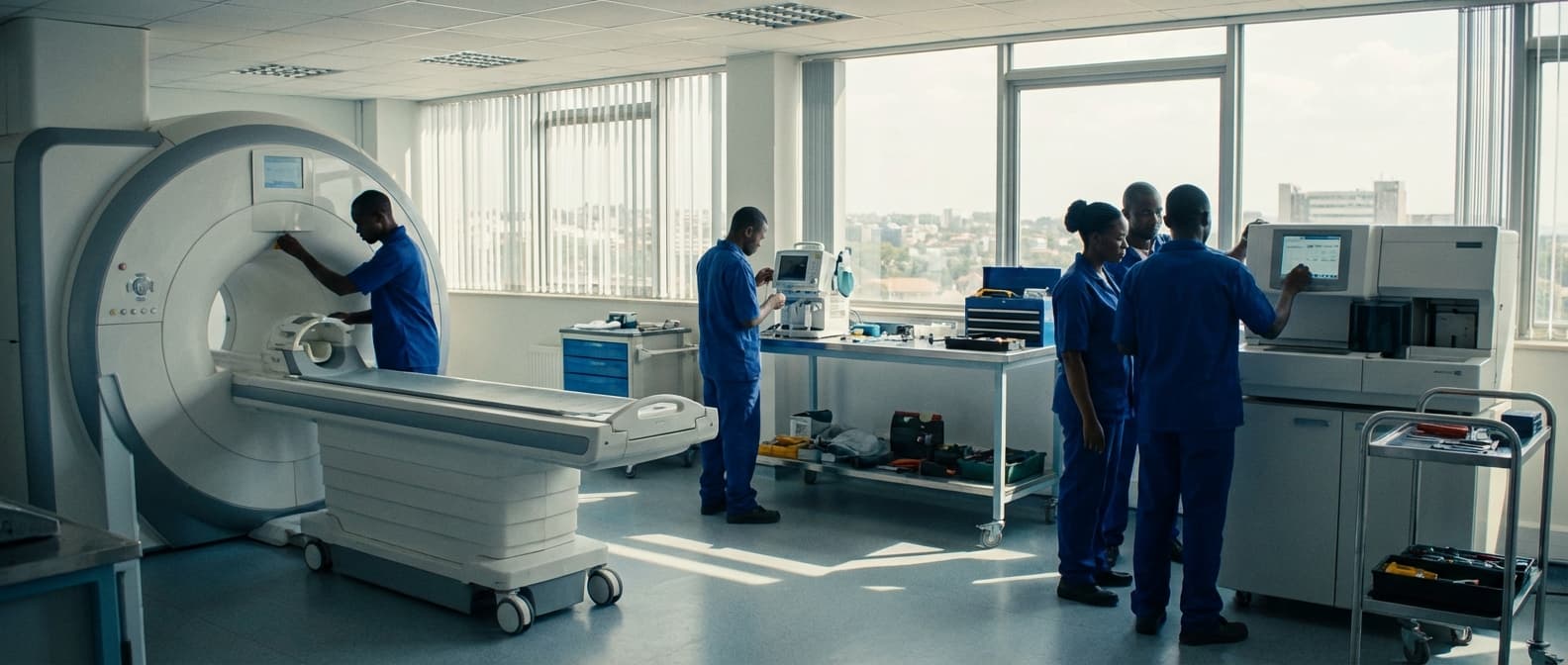
Uptime, Downtime & Root-Cause Analysis Reporting Service in Congo (Kinshasa)
Engineering Excellence & Technical Support
Uptime, Downtime & Root-Cause Analysis Reporting Service High-standard technical execution following OEM protocols and local regulatory frameworks.
Real-time Uptime Monitoring & SLA Compliance
Leverage our advanced, geo-distributed monitoring nodes across Kinshasa to achieve near-instantaneous detection of service outages. We provide granular uptime reports, demonstrating strict adherence to your Service Level Agreements (SLAs) and ensuring minimal business disruption. Gain immediate visibility into network and application availability.
Rapid Downtime Alerting & Incident Management
Receive immediate, actionable alerts via multiple channels (SMS, email, webhook) the moment a service experiences downtime in Congo. Our platform aggregates incident data, streamlining your incident management process and enabling faster response times to mitigate impact on your operations within the Kinshasa region.
Automated Root-Cause Analysis (RCA) & Trend Identification
Go beyond just knowing *when* a service was down. Our intelligent RCA engine automatically pinpoints the most probable root causes of downtime events in Kinshasa, correlating logs, network metrics, and configuration changes. Identify recurring issues and proactively prevent future outages.
What Is Uptime, Downtime & Root-cause Analysis Reporting Service In Congo (Kinshasa)?
In the context of the Democratic Republic of Congo (Kinshasa), Uptime, Downtime & Root-Cause Analysis Reporting Service refers to a specialized offering designed to monitor, document, and investigate the operational availability and unavailability of critical IT infrastructure, systems, and services. This service is paramount for organizations operating in an environment that may present unique challenges to service continuity, such as fluctuating power grids, limited access to specialized technical expertise, and potentially complex logistical constraints. The service encompasses three core components: Uptime Reporting (quantifying periods of successful operation), Downtime Reporting (detailing instances of service interruption), and Root-Cause Analysis (RCA) (investigating the fundamental reasons for downtime to prevent recurrence).
| Typical Use Cases | Description | Impact of Failure | |
|---|---|---|---|
| Network Outage Investigation: | Diagnosing and documenting the reasons for telecommunications network failures, including fiber cuts, equipment malfunctions, or power interruptions. | Loss of communication services, inability to conduct business, emergency response delays. | |
| ATM & POS System Availability Monitoring: | Tracking the operational status of automated teller machines (ATMs) and point-of-sale (POS) terminals to ensure continuous transaction processing. | Lost sales opportunities for businesses, customer frustration, inability to access cash. | |
| Cloud Service Performance Assurance: | Verifying the uptime of cloud-hosted applications and infrastructure utilized by organizations in Kinshasa, especially concerning latency and accessibility from local networks. | Application unavailability, data access issues, reduced productivity. | |
| Power Fluctuation Impact Assessment: | Analyzing how inconsistent power supply affects IT equipment (servers, network devices) and identifying mitigation strategies like generator maintenance and UPS monitoring. | Data corruption, hardware damage, unscheduled downtime. | Hardware damage, unscheduled downtime. |
| Data Center Reliability Audits: | Assessing the uptime of on-premises data center facilities, including power, cooling, and network infrastructure. | Cascading failures affecting multiple business-critical systems. | |
| Disaster Recovery (DR) & Business Continuity (BC) Validation: | Using RCA findings to refine and validate the effectiveness of DR and BC plans in the event of major service interruptions. | Inability to recover critical operations within defined recovery time objectives (RTOs) and recovery point objectives (RPOs). | |
| SLA Compliance Reporting: | Providing documented evidence of system availability to clients and stakeholders to meet contractual obligations. | Breach of contract, financial penalties, damage to business reputation. |
Who Needs Uptime, Downtime & Root-Cause Analysis Reporting Service in Congo (Kinshasa)?
- Telecommunications Providers: Essential for maintaining network availability, cellular service, and internet connectivity across the vast geographical area. Downtime directly impacts subscriber experience and revenue.
- Financial Institutions (Banks, Microfinance Institutions): Critical for ensuring the availability of transaction processing systems, ATMs, online banking platforms, and internal operational systems. Service disruptions can lead to significant financial losses and customer trust erosion.
- Government Agencies & Public Services: Vital for maintaining the functionality of essential services such as public administration systems, digital identification platforms, and emergency response communications. Reliability is key for citizen engagement and national security.
- Mining & Extractive Industries: These sectors heavily rely on robust IT systems for operational control, data acquisition, communication, and logistics in often remote locations. Downtime can halt production, leading to immense financial implications.
- Logistics & Transportation Companies: Ensuring the availability of tracking systems, fleet management software, and communication channels is crucial for efficient and reliable movement of goods and people.
- Healthcare Providers: Maintaining access to electronic health records (EHRs), diagnostic equipment interfaces, and communication systems is non-negotiable for patient care. System outages can have life-threatening consequences.
- Energy & Utilities Companies: Monitoring and controlling power grids, water supply systems, and associated IT infrastructure requires high availability. Downtime can lead to widespread service disruptions.
- Large Enterprises with Distributed Operations: Companies with multiple branches or operational sites within Congo (Kinshasa) benefit from centralized reporting to understand and address performance across their IT landscape.
- IT Service Providers & Managed Service Providers (MSPs): Organizations that offer IT support and infrastructure management to other businesses require this service to demonstrate service level agreement (SLA) compliance and assure their clients of system availability.
Who Needs Uptime, Downtime & Root-cause Analysis Reporting Service In Congo (Kinshasa)?
In the dynamic and rapidly developing economy of Congo (Kinshasa), ensuring the continuous operation of critical infrastructure and services is paramount for business success and public welfare. Downtime, even for short periods, can lead to significant financial losses, reputational damage, and a disruption of essential services. Therefore, organizations operating in Kinshasa need a robust Uptime, Downtime & Root-Cause Analysis Reporting Service to proactively identify, address, and prevent issues that impact their operational continuity.
| Target Customer Segment | Key Departments Benefiting | Specific Needs/Impact of Downtime |
|---|---|---|
| Telecommunication Providers | Network Operations Center (NOC), IT Operations, Customer Service, Engineering | Loss of subscriber connectivity, revenue impact, customer churn, reputational damage. |
| Financial Institutions | IT Operations, Security Operations Center (SOC), Compliance, Branch Operations, Online Banking Teams | Inability to process transactions, ATM outages, data breaches, regulatory fines, loss of customer trust. |
| Government Agencies | IT Department, Public Services Administration, National Security, Infrastructure Management | Disruption of citizen services, data integrity issues, security vulnerabilities, impact on public safety. |
| Healthcare Providers | IT Department, Clinical Operations, Biomedical Engineering, Patient Records Management | Interruption of patient care, inability to access medical records, diagnostic equipment failures, potential patient harm. |
| Energy & Utilities | Operations Control Center, Grid Management, Customer Service, Maintenance Teams | Power outages, service interruptions, safety hazards, economic disruption, public dissatisfaction. |
| Mining and Extractive Industries | Operations Management, IT Infrastructure, Safety and Compliance, Logistics | Production stoppages, equipment damage, safety incidents, supply chain disruptions, significant financial losses. |
| Logistics and Transportation Companies | Operations Management, Fleet Management, IT Systems, Customer Service | Delayed shipments, cargo damage, inability to track assets, loss of client confidence, increased operational costs. |
| Manufacturing and Industrial Businesses | Production Management, Maintenance, IT Department, Quality Control | Production line halts, equipment failure, product defects, supply chain disruptions, missed delivery targets. |
| Internet Service Providers (ISPs) | Network Operations Center (NOC), Technical Support, Infrastructure Engineering | Widespread internet outages, customer dissatisfaction, revenue loss, increased support ticket volume. |
| E-commerce and Digital Service Platforms | Platform Operations, Software Development, Customer Support, Marketing | Inability to process orders, website downtime, loss of sales, damaged brand reputation, customer exodus. |
Target Customers & Departments in Congo (Kinshasa) Requiring Uptime, Downtime & Root-Cause Analysis Reporting Service
- Telecommunication Providers
- Financial Institutions (Banks, Microfinance)
- Government Agencies (including critical infrastructure ministries)
- Healthcare Providers (hospitals, clinics)
- Energy & Utilities (electricity, water)
- Mining and Extractive Industries
- Logistics and Transportation Companies
- Manufacturing and Industrial Businesses
- Internet Service Providers (ISPs)
- E-commerce and Digital Service Platforms
- Large Retail Chains
- International Aid and Non-Governmental Organizations (NGOs)
Uptime, Downtime & Root-cause Analysis Reporting Service Process In Congo (Kinshasa)
This document outlines the workflow for the Uptime, Downtime & Root-Cause Analysis Reporting Service in Congo (Kinshasa). This service is designed to provide clients with comprehensive reports on their system availability, identify periods of inactivity, and meticulously investigate the underlying causes of any disruptions. The process is structured to ensure efficient communication, accurate data collection, and timely delivery of actionable insights.
| Stage | Description | Key Activities | Client Involvement | Service Provider Actions | Deliverables/Outcomes |
|---|---|---|---|---|---|
| Initial contact from a potential client expressing interest in uptime, downtime, and root-cause analysis reporting. | Client contacts the service provider via phone, email, or website. | Expresses need for service. | Acknowledges inquiry, provides initial service overview. | Initial contact log. |
| Understanding the client's specific needs, systems to be monitored, reporting frequency, and desired outcomes. Developing a tailored service proposal. | Discussing existing infrastructure, monitoring capabilities, reporting requirements, service level agreements (SLAs). | Provides detailed information about systems and needs. Reviews and discusses proposal. | Conducts needs assessment, prepares and presents detailed service proposal with pricing and timeline. | Service Proposal Document. |
| Formalizing the service agreement and initiating the onboarding process for the client. | Signing of contract/service agreement, payment of initial fees (if applicable). | Signs agreement, provides necessary access credentials. | Finalizes contract, sets up client account, initiates onboarding procedures, schedules kick-off meeting. | Signed Service Agreement, Client Account Setup. |
| Establishing the necessary monitoring tools and configurations to collect real-time uptime and downtime data. | Installing/configuring monitoring agents, setting up network probes, defining critical system thresholds, establishing alert mechanisms. | Grants access to systems/networks for monitoring setup. Confirms monitoring parameters. | Configures monitoring infrastructure, verifies data flow, conducts initial system health checks. | Monitoring System Configuration, Initial Data Feed. |
| Real-time identification of system outages or performance degradation and immediate notification to the client. | Continuous monitoring of systems, detection of deviations from normal operating parameters. | Receives notifications. | Monitors systems 24/7, triggers alerts based on predefined rules, sends immediate notifications to client contacts. | Incident Alert Notifications (email, SMS, portal). Initial Incident Log. |
| Quantifying the duration and impact of any detected downtime. | Logging start and end times of outages, categorizing downtime (e.g., planned, unplanned, partial). | May provide input on downtime events. | Records precise downtime start and end times, calculates downtime duration and percentage. | Downtime Records, Downtime Duration Calculation. |
| Thorough investigation to identify the specific reason(s) for the downtime. | Analyzing logs (system, application, network), reviewing configuration changes, interviewing relevant personnel, performing diagnostics, correlating events. | Provides access to relevant logs and personnel. May participate in investigation meetings. | Employs skilled analysts, uses diagnostic tools, documents investigation steps and findings. | Investigation Findings Log, Evidence Collection. |
| Compiling all collected data into comprehensive reports and presenting them to the client. | Summarizing uptime/downtime metrics, detailing root causes, providing recommended corrective actions, generating historical trend analysis. | Reviews reports, provides feedback, asks clarifying questions. | Generates detailed reports, schedules review meetings, presents findings and recommendations. | Uptime/Downtime Report, Root-Cause Analysis Report, Actionable Recommendations. |
| Concluding the reporting cycle, addressing any outstanding issues, and potentially planning for future services. | Implementing corrective actions, providing feedback on service effectiveness, discussing ongoing monitoring needs. | Confirms resolution of issues. May request follow-up services. | Confirms report acceptance, closes incident tickets, provides recommendations for long-term improvements, initiates potential follow-up service discussions. | Closed Incident Records, Service Performance Review. |
Workflow Stages
- Inquiry & Service Request
- Service Scope Definition & Proposal
- Agreement & Onboarding
- Data Collection & Monitoring Setup
- Incident Detection & Notification
- Downtime Event Analysis
- Root-Cause Investigation
- Report Generation & Review
- Service Closure & Follow-up
Uptime, Downtime & Root-cause Analysis Reporting Service Cost In Congo (Kinshasa)
Providing a Uptime, Downtime, and Root-Cause Analysis (RCA) Reporting Service in Congo (Kinshasa) involves a dynamic pricing structure influenced by several key factors. These services are crucial for businesses to maintain operational continuity, identify and resolve issues promptly, and ultimately improve overall efficiency and customer satisfaction. The cost will vary significantly based on the complexity of the IT infrastructure, the desired level of detail in reporting, the frequency of analysis, and the expertise of the service provider. When considering pricing, it's important to understand that the local currency, the Congolese Franc (CDF), is subject to its own economic fluctuations, which can impact the stability of quoted prices. Service providers often quote in USD or EUR for international clients, with a conversion rate applied for local transactions.
| Service Level | Typical Scope | Estimated Monthly Cost (USD) | Estimated Monthly Cost (CDF equivalent)* |
|---|---|---|---|
| Basic Monitoring & Alerting | Uptime monitoring for critical systems, basic alert notifications for downtime. | $300 - $800 | ~ 600,000 - 1,600,000 CDF |
| Standard Monitoring & Incident Reporting | Uptime/downtime monitoring, basic incident logging, and weekly summary reports. | $800 - $2,000 | ~ 1,600,000 - 4,000,000 CDF |
| Comprehensive Monitoring & RCA | 24/7 monitoring, detailed incident analysis, root-cause investigation, trend reporting, and basic recommendations. | $2,000 - $5,000 | ~ 4,000,000 - 10,000,000 CDF |
| Advanced RCA & Proactive Support | All features of comprehensive RCA plus proactive performance analysis, capacity planning, security monitoring integration, and strategic recommendations. | $5,000+ | ~ 10,000,000+ CDF |
Key Pricing Factors for Uptime, Downtime & RCA Reporting Services in Congo (Kinshasa)
- Scope of Services: This is the most significant determinant. Are you looking for basic uptime monitoring and incident reporting, or a comprehensive service including proactive monitoring, detailed root-cause analysis, trend identification, and recommendation development?
- Infrastructure Complexity: The number of servers, applications, network devices, cloud services, and their interdependencies will directly impact the effort required for monitoring and analysis. A larger and more complex environment will naturally incur higher costs.
- Data Volume & Retention: The amount of log data to be collected, processed, and stored for analysis, as well as the required data retention period, will influence storage and processing costs.
- Reporting Frequency & Detail: Whether you require real-time alerts, daily summaries, weekly reports, or in-depth monthly analyses with executive summaries and technical deep-dives will affect the labor involved.
- Service Level Agreements (SLAs): Guaranteed response times for critical incidents, uptime targets, and remediation timeframes will come with a premium.
- Provider Expertise & Reputation: Established IT consulting firms with specialized expertise in RCA and a proven track record will generally command higher fees than smaller or newer providers.
- On-site vs. Remote Support: While most monitoring can be done remotely, the need for on-site presence for incident investigation or system audits will add travel and accommodation costs.
- Technology Stack: The specific monitoring and analysis tools used by the provider can influence their operational costs, which are then passed on to the client.
- Customization Requirements: Any bespoke reporting formats, integration with existing internal systems, or unique analytical needs will increase the implementation and ongoing service costs.
- Contract Duration: Longer-term contracts often come with discounted rates compared to short-term engagements.
Affordable Uptime, Downtime & Root-cause Analysis Reporting Service Options
This report outlines affordable service options for Uptime, Downtime, and Root-Cause Analysis (RCA) reporting. We understand the critical need for reliable system monitoring and incident post-mortems without breaking the bank. This document explores various service bundles and cost-saving strategies to help you achieve these objectives effectively. Our goal is to provide transparency and actionable insights to minimize business impact from outages and prevent recurrence.
| Service Bundle | Description | Key Features | Target Audience | Estimated Monthly Cost Range (USD) |
|---|---|---|---|---|
| Basic Monitoring | Essential uptime checks and basic downtime alerts. | Uptime checks (frequency configurable), Email/SMS alerts, Basic incident logs. | Small businesses, startups with limited infrastructure. | $25 - $75 |
| Standard Reporting | Includes basic monitoring plus detailed downtime reports and introductory RCA. | All Basic features, Detailed downtime reports (per incident), Guided RCA questionnaires, Basic post-mortem templates. | Growing businesses, SMBs with moderate infrastructure. | $75 - $250 |
| Pro RCA & Analytics | Comprehensive solution with advanced RCA, trend analysis, and customizable reporting. | All Standard features, Advanced RCA tools, Trend analysis and recurring issue identification, Customizable dashboards, API access for integrations, Dedicated support. | Medium to large enterprises, businesses with complex IT environments, compliance-driven organizations. | $250 - $750+ |
| Custom Enterprise | Tailored solutions for unique requirements, high volume, or specific compliance needs. | Fully customizable features, Dedicated account management, Advanced security options, SLA guarantees. | Large enterprises, mission-critical applications, organizations with specialized needs. | Quote-based |
Key Service Offerings & Features
- Real-time Uptime Monitoring: Proactive checks of your critical services and infrastructure.
- Automated Downtime Alerts: Instant notifications via email, SMS, or Slack upon service interruption.
- Comprehensive Downtime Reporting: Detailed logs and timelines of all outages.
- Root-Cause Analysis (RCA) Facilitation: Guided process to identify underlying issues.
- Post-Mortem Report Generation: Structured documentation of incidents, their impact, and remediation steps.
- Trend Analysis: Identification of recurring issues to improve system stability.
- Customizable Dashboards: Visualizations of uptime, downtime, and key performance indicators (KPIs).
- Integration Capabilities: Seamless connection with existing IT management tools.
- Scalable Solutions: Services that grow with your business needs.
Verified Providers In Congo (Kinshasa)
In the Democratic Republic of Congo (Kinshasa), navigating the healthcare landscape can be challenging. Ensuring you are accessing services from verified providers is paramount for your well-being. Franance Health has emerged as a leading entity committed to connecting individuals with reliable and credentialed healthcare professionals. Their rigorous vetting process and dedication to quality standards make them an indispensable resource for anyone seeking trustworthy medical care in Kinshasa.
| Provider Type | Franance Health Verification | Why it's the Best Choice |
|---|---|---|
| General Practitioners | Certified and licensed by relevant Congolese medical boards. Positive patient feedback. | Access to primary care physicians with proven track records and consistent positive patient experiences. |
| Specialist Physicians (e.g., Cardiologists, Dermatologists) | Verified specialist qualifications and accreditations. Demonstrated expertise in their field. | Connect with highly specialized doctors who have undergone extensive training and are recognized for their advanced medical knowledge. |
| Surgeons | Board-certified surgeons with extensive surgical experience and a history of successful procedures. Hospital affiliations verified. | Entrust your surgical needs to surgeons with impeccable credentials and affiliations with reputable medical facilities. |
| Dentists | Licensed dental practitioners with ongoing professional development. Sterilization protocols verified. | Find dental professionals committed to oral health with modern practices and adherence to strict hygiene standards. |
| Mental Health Professionals (e.g., Psychologists, Psychiatrists) | Licensed and credentialed mental health experts. Confidentiality agreements in place. | Access confidential and professional mental health support from qualified therapists and psychiatrists. |
| Laboratories and Diagnostic Centers | Accredited facilities with certified technicians and quality control measures. Equipment calibration verified. | Ensure accurate and reliable diagnostic testing from accredited centers equipped with modern technology and skilled personnel. |
Why Franance Health Credentials Matter:
- Rigorous Vetting Process: Franance Health meticulously vets all providers on their platform, verifying their licenses, certifications, and professional backgrounds. This ensures that only qualified and legitimate practitioners are listed.
- Commitment to Quality: Beyond basic verification, Franance Health assesses providers based on their patient reviews, treatment methodologies, and adherence to ethical standards, guaranteeing a higher level of care.
- Transparency and Trust: Franance Health provides clear and accessible information about each provider, empowering patients to make informed decisions about their healthcare journey. This transparency builds trust and reduces anxiety.
- Accessibility to Specialized Care: The platform facilitates access to a wide range of medical specialists, from general practitioners to surgeons and mental health professionals, all verified and ready to serve.
- Patient-Centric Approach: Franance Health prioritizes the patient experience, aiming to simplify the process of finding and booking appointments with the right healthcare providers.
- Local Expertise: With a deep understanding of the Kinshasa healthcare system, Franance Health bridges the gap between patients and the best local medical talent.
Scope Of Work For Uptime, Downtime & Root-cause Analysis Reporting Service
This Scope of Work (SoW) outlines the requirements for a Uptime, Downtime & Root-Cause Analysis (RCA) Reporting Service. The service will provide comprehensive reporting and analysis of system availability, identifying causes of outages and proposing remediation strategies to improve reliability and minimize future disruptions. This document specifies the technical deliverables and standard specifications for the service.
| Deliverable | Description | Format/Specification | Frequency/Trigger | Owner |
|---|---|---|---|---|
| Uptime/Downtime Report | Detailed report outlining system availability over a defined period, including percentage uptime, total downtime, and breakdown by service or component. | PDF, CSV (for data analysis). Standardized template with key metrics, graphs, and tables. | Weekly (standard), Monthly (comprehensive review). | Service Provider |
| Downtime Incident Notification | Timely alert upon detection of a system outage or significant performance degradation impacting availability. | Email, SMS, or integration with an incident management system (e.g., PagerDuty, Opsgenie). Clear subject line indicating severity and affected systems. | Immediate upon detection of an event exceeding pre-defined thresholds. | Service Provider |
| Root-Cause Analysis (RCA) Report | In-depth investigation into the underlying causes of a downtime incident, including contributing factors, impact assessment, and timeline of events. | PDF. Standardized RCA template including: Executive Summary, Incident Timeline, Root Cause(s), Impact Analysis, Remediation Actions (short-term and long-term), Lessons Learned, and Prevention Strategies. | Within 48-72 hours of incident resolution, depending on complexity. | Service Provider |
| Service Availability SLA Compliance Report | Report demonstrating adherence to agreed-upon Service Level Agreements for system uptime. | PDF. Clearly states SLA targets, actual performance, and any deviations with explanations. | Monthly. | Service Provider |
| Trend Analysis & Recommendations Report | Analysis of historical uptime/downtime data to identify recurring patterns, potential risks, and proactive improvement opportunities. | PDF. Includes trend graphs, statistical analysis, and actionable recommendations for infrastructure, configuration, or process improvements. | Quarterly. | Service Provider |
| Incident Management System Integration (Optional) | Integration with the client's chosen incident management platform for seamless reporting and workflow automation. | API-based integration, adhering to standard protocols (e.g., REST). Detailed integration plan and testing procedures. | As per project kickoff and phased rollout. | Service Provider |
| Data Retention Policy | Specification of how historical uptime/downtime and RCA data will be stored and for how long. | Documented policy outlining storage duration (e.g., 1 year, 2 years), backup procedures, and access controls. | Defined at SoW signing, reviewed annually. | Service Provider & Client |
Key Objectives
- To accurately track and report on system uptime and downtime metrics.
- To conduct thorough root-cause analysis for all significant downtime events.
- To provide actionable recommendations for preventing recurrence of downtime.
- To enhance overall system reliability and performance.
- To ensure compliance with agreed-upon Service Level Agreements (SLAs).
Service Level Agreement For Uptime, Downtime & Root-cause Analysis Reporting Service
This Service Level Agreement (SLA) outlines the guaranteed uptime, acceptable downtime, and the process for root-cause analysis reporting for the Uptime, Downtime & Root-Cause Analysis Reporting Service provided by [Your Company Name].
| Service Component | Uptime Guarantee (Monthly) | Maximum Permitted Downtime (Monthly) | Response Time for Critical Incidents | Response Time for Major Incidents | Response Time for Minor Incidents | RCA Report Delivery Timeline |
|---|---|---|---|---|---|---|
| Uptime, Downtime & Root-Cause Analysis Reporting Service | 99.9% | 43.2 minutes | 15 minutes (Initial Acknowledgment) | 30 minutes (Initial Acknowledgment) | 2 hours (Initial Acknowledgment) | Within 2 business days of incident resolution for Critical/Major Incidents |
Key Definitions
- Uptime: The percentage of time the Service is operational and accessible to Users as measured over a calendar month.
- Downtime: The cumulative period within a calendar month during which the Service is unavailable to Users. Downtime does not include Scheduled Maintenance.
- Scheduled Maintenance: Pre-announced periods during which the Service may be unavailable for maintenance, upgrades, or repairs. Such maintenance will be communicated at least [Number] days in advance and will ideally occur during off-peak hours.
- Root-Cause Analysis (RCA) Report: A detailed report provided to the Customer following a significant service interruption, identifying the underlying cause of the incident, the impact, and the corrective actions taken or planned.
- Critical Incident: An incident that renders the Service entirely or substantially unusable for a majority of Users.
- Major Incident: An incident that significantly degrades the performance or availability of the Service, impacting a substantial portion of Users.
- Minor Incident: An incident that has a limited impact on the Service or a small number of Users, with workarounds available.
Frequently Asked Questions

Ready when you are
Let's scope your Uptime, Downtime & Root-Cause Analysis Reporting Service in Congo (Kinshasa) project in Congo (Kinshasa).

Scaling healthcare logistics and technical systems across the entire continent.