
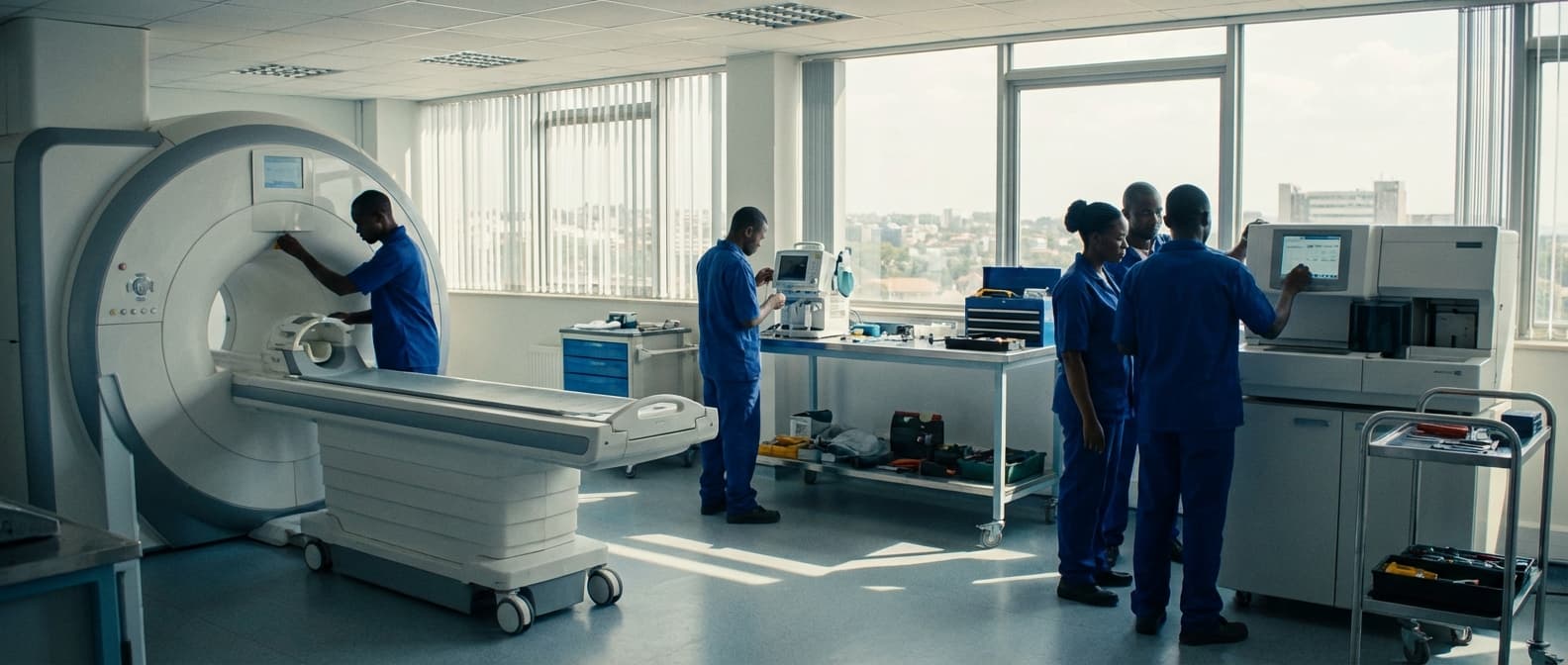
Planned Shutdown Coordination Service for Critical Equipment in Congo (Kinshasa)
Engineering Excellence & Technical Support
Planned Shutdown Coordination Service for Critical Equipment High-standard technical execution following OEM protocols and local regulatory frameworks.
Predictive Maintenance Integration for Minimized Downtime
Our service leverages advanced predictive maintenance analytics to identify optimal shutdown windows for critical mining and industrial equipment in Congo (Kinshasa). By analyzing real-time operational data and historical failure patterns, we proactively schedule maintenance during periods of lowest operational impact, significantly reducing unplanned outages and maximizing equipment lifespan.
Geo-Risk Assessment & Mitigation for Remote Operations
Operating in the diverse and sometimes challenging terrain of Congo (Kinshasa), our planned shutdown coordination includes comprehensive geo-risk assessments. We meticulously evaluate logistical challenges, local infrastructure readiness, and potential environmental hazards to develop robust mitigation strategies, ensuring the safety of personnel and the integrity of equipment during complex shutdown operations in remote areas.
Optimized Resource Allocation & Supply Chain Management
We excel at optimizing the allocation of skilled labor, specialized tools, and critical spare parts for equipment shutdowns across Congo (Kinshasa). Our service integrates with local and international supply chains to ensure timely delivery of all necessary resources, minimizing lead times and reducing overall project costs, while adhering to stringent quality and safety standards.
What Is Planned Shutdown Coordination Service For Critical Equipment In Congo (Kinshasa)?
Planned Shutdown Coordination Service for Critical Equipment in Congo (Kinshasa) refers to a specialized operational management service focused on the meticulous planning, scheduling, and execution of scheduled downtimes for essential industrial and infrastructure assets. This service is paramount in environments where continuous operation of critical equipment is vital for economic stability, public safety, and service delivery. The core objective is to minimize operational disruption, reduce associated risks, and optimize the efficiency of maintenance, repair, and upgrade activities during these controlled interruptions.
| Who Needs Planned Shutdown Coordination? | Typical Use Cases | |||||||
|---|---|---|---|---|---|---|---|---|
| Mining and Extractive Industries: Companies operating mines, processing plants, and associated infrastructure (e.g., conveyor systems, crushing circuits, ventilation systems). | Power Generation and Distribution: Operators of thermal, hydro, or other power plants, including substations and transmission networks. | Oil and Gas Sector: Refineries, processing facilities, pumping stations, and upstream/midstream infrastructure. | Manufacturing and Heavy Industry: Large-scale industrial facilities with continuous processing lines (e.g., cement plants, steel mills, chemical plants). | Water and Wastewater Treatment: Municipal and industrial facilities responsible for water supply and sewage treatment. | Telecommunications Infrastructure: Providers managing critical network equipment and data centers. | Transportation and Logistics: Operators of ports, large rail yards, and essential airport facilities. | Healthcare Infrastructure: Large hospitals with critical life-support systems and medical equipment. | Government and Public Utilities: Entities managing essential public services and infrastructure. |
| Major Overhauls and Refurbishments: Comprehensive maintenance of critical machinery, turbines, generators, or processing units. | Replacement of Key Components: Installation of new pumps, motors, valves, or electrical switchgear. | System Upgrades and Modernization: Integration of new technology or expansion of existing capacity. | Regulatory Compliance Inspections and Certifications: Scheduled maintenance and verification required by industry standards and government regulations. | Preventative Maintenance Programs: Proactive servicing to avert unscheduled failures. | Asset Life Extension Projects: Activities aimed at prolonging the operational lifespan of critical equipment. | Infrastructure Augmentation: Modifications or additions to existing plant infrastructure. | Emergency Preparedness Drills: Simulated shutdown scenarios to test response capabilities. |
Key Components of Planned Shutdown Coordination
- Strategic Planning & Scheduling: Development of comprehensive shutdown schedules, considering equipment interdependencies, production cycles, resource availability, and regulatory compliance.
- Risk Assessment & Mitigation: Identification and analysis of potential hazards (safety, environmental, operational) during shutdown periods and the implementation of robust mitigation strategies.
- Resource Management: Coordination of skilled personnel (internal and external), specialized tools, equipment, and materials required for the shutdown activities.
- Logistics & Supply Chain Integration: Management of the procurement, delivery, and staging of all necessary components and consumables.
- Communication & Stakeholder Engagement: Establishment of clear communication channels and protocols with all relevant stakeholders, including internal departments, external contractors, regulatory bodies, and affected communities.
- Execution Oversight: On-site management and supervision of all shutdown activities, ensuring adherence to the plan, safety protocols, and quality standards.
- Performance Monitoring & Reporting: Tracking of progress against schedule, identification of deviations, and comprehensive reporting on shutdown outcomes and lessons learned.
- Restoration & Commissioning: Planning and execution of the safe and efficient restart and commissioning of equipment after maintenance activities are completed.
Who Needs Planned Shutdown Coordination Service For Critical Equipment In Congo (Kinshasa)?
Planned shutdown coordination is a critical service for any operation in Congo (Kinshasa) that relies on critical equipment for continuous production, service delivery, or safety. When these vital assets require scheduled maintenance, upgrades, or repairs, meticulous planning is essential to minimize disruption, ensure safety, and optimize resource allocation. Without effective coordination, unplanned downtime can lead to significant financial losses, safety hazards, environmental incidents, and reputational damage. This service bridges the gap between technical teams, operational departments, and external contractors, ensuring a seamless transition into and out of shutdown periods.
| Target Customer Industry | Specific Departments Involved |
|---|---|
| Mining and Extractive Industries (e.g., Copper, Cobalt, Gold, Diamonds) | Mine Operations, Plant Maintenance, Electrical Engineering, Mechanical Engineering, Health, Safety, and Environment (HSE), Supply Chain, Logistics, Production Management |
| Oil and Gas (Exploration, Production, Refining, Distribution) | Production Operations, Maintenance Departments (Mechanical, Electrical, Instrumentation), HSE, Engineering, Logistics, Supply Chain, Terminal Operations |
| Energy and Utilities (Power Generation, Transmission, Distribution) | Plant Operations, Maintenance Teams (Turbine, Boiler, Electrical, Civil), Grid Operations, HSE, Engineering, Asset Management |
| Telecommunications | Network Operations, Site Maintenance, Engineering, Infrastructure Management, HSE |
| Manufacturing and Industrial Processing | Production Management, Maintenance Departments (Mechanical, Electrical, Process), Quality Control, HSE, Engineering |
| Transportation and Logistics (Ports, Airports, Rail) | Operations Management, Maintenance Departments (Equipment, Infrastructure), HSE, Engineering, Logistics |
| Water and Wastewater Treatment | Plant Operations, Maintenance Departments (Mechanical, Electrical, Chemical), HSE, Engineering |
| Large Industrial Facilities and Infrastructure Projects | Project Management Offices (PMO), Operations & Maintenance (O&M) Departments, Engineering Teams, HSE Departments |
Who Needs Planned Shutdown Coordination Service for Critical Equipment in Congo (Kinshasa)?
- Organizations with a high reliance on continuous operation of critical machinery and infrastructure.
- Companies operating in sectors where unscheduled downtime carries substantial financial or safety penalties.
- Businesses seeking to improve operational efficiency and reduce the impact of maintenance activities.
- Entities that require specialized expertise in managing complex shutdown projects involving multiple stakeholders.
- Organizations aiming to enhance the lifespan and performance of their critical assets through proactive and well-managed maintenance.
Planned Shutdown Coordination Service For Critical Equipment Process In Congo (Kinshasa)
This document outlines the workflow for a Planned Shutdown Coordination Service for Critical Equipment in Kinshasa, Congo. This service ensures minimal disruption, maximizes efficiency, and maintains safety during planned maintenance activities on essential machinery. The process is designed to be transparent and collaborative, involving stakeholders from inquiry to successful execution.
| Stage | Activities | Key Deliverables | Responsibility |
|---|---|---|---|
| Client submits an inquiry regarding a planned shutdown for critical equipment. Service provider conducts an initial assessment of the equipment, potential impact, and client's general requirements. | Initial understanding of scope and feasibility, preliminary cost estimate. | Client, Service Provider |
| Detailed discussion with the client to define the precise scope of work, identify all critical equipment involved, establish desired shutdown duration, and agree on specific maintenance tasks. Risk assessment and mitigation strategies are developed. A detailed project plan, including milestones, timelines, and communication protocols, is created. | Detailed Scope of Work document, Risk Assessment Report, Project Plan, Communication Plan. | Service Provider, Client |
| Identification and procurement of all necessary resources: specialized technicians, engineers, tools, equipment (e.g., lifting gear, testing equipment), spare parts, safety equipment, and consumables. A detailed schedule is finalized, considering equipment dependencies, inter-departmental coordination (e.g., production, safety, security), and external stakeholder approvals (if any). | Resource Allocation Matrix, Finalized Shutdown Schedule, Procurement Orders. | Service Provider |
| Conducting pre-shutdown safety briefings and training. Ensuring all safety procedures and permits are in place. Verifying the availability and condition of all mobilized resources. Performing any necessary pre-work or isolation procedures as per the plan. Communicating the shutdown schedule to all affected personnel and departments. | Pre-shutdown Safety Briefings, Valid Permits, Resource Readiness Confirmation, Communication Updates. | Service Provider, Client |
| Implementing the planned shutdown procedures, safely de-energizing and isolating equipment. Executing the agreed-upon maintenance, repair, or inspection tasks according to the schedule and safety protocols. Continuous monitoring of progress, immediate addressing of any unforeseen issues or deviations. Regular progress reporting to the client. | Execution of Maintenance Tasks, Daily Progress Reports, Incident Reports (if any). | Service Provider |
| Performing all necessary re-commissioning and testing of the equipment. Conducting final safety checks and inspections. Documenting all work performed, including parts used, adjustments made, and test results. Officially handing over the equipment back to the client's operations with all relevant documentation. | Re-commissioning & Testing Reports, As-Built Documentation, Handover Certificate. | Service Provider, Client |
| Conducting a post-shutdown review meeting with the client to discuss the overall performance of the service, identify lessons learned, and gather feedback. Updating procedures and plans for future shutdowns based on this review to ensure continuous improvement in service delivery. | Post-Shutdown Review Report, Lessons Learned Document, Updated Procedures. | Service Provider, Client |
Workflow Stages
- Inquiry & Initial Assessment
- Scope Definition & Planning
- Resource Mobilization & Scheduling
- Pre-Shutdown Activities
- Shutdown Execution
- Post-Shutdown & Handover
- Performance Review & Continuous Improvement
Planned Shutdown Coordination Service For Critical Equipment Cost In Congo (Kinshasa)
Coordinating planned shutdowns for critical equipment in Congo (Kinshasa) involves a complex interplay of factors influencing the overall cost. This service is vital for minimizing operational disruptions, ensuring safety, and maximizing the lifespan of essential machinery. The pricing for such a service is not a fixed rate but rather a tailored estimate based on various elements. Key pricing factors include the complexity and scale of the shutdown, the type and number of critical equipment involved, the duration of the shutdown, the level of expertise required from the coordination team, and the specific location within Kinshasa. Additional costs can arise from logistical challenges, safety compliance, and potential for unforeseen issues. Therefore, obtaining a precise quote necessitates a detailed assessment of the client's specific needs.
| Service Component | Estimated Cost Range (Congolese Franc - CDF) | Notes |
|---|---|---|
| Initial Assessment & Planning | 500,000 - 2,500,000 CDF | Covers site visits, equipment surveys, risk analysis, and initial scheduling. |
| Core Coordination Team (Project Manager, Engineers, Safety Officers) | 1,500,000 - 7,500,000 CDF per week | Varies based on team size, experience, and seniority. This is a significant portion of the cost. |
| Specialized Technical Consultation | 300,000 - 1,000,000 CDF per day/per expert | For niche equipment requiring highly specialized knowledge. |
| Logistics and Transportation | 200,000 - 1,500,000 CDF | Includes travel, accommodation, and movement of personnel and equipment within Kinshasa. |
| Safety & Compliance Management | 400,000 - 2,000,000 CDF | Covers safety plan development, training, permits, and on-site safety supervision. |
| Contingency & Emergency Response Planning | 10% - 20% of total estimated cost | To cover unforeseen circumstances and urgent interventions. |
| Final Reporting and Debriefing | 300,000 - 1,000,000 CDF | Comprehensive documentation of the shutdown process and outcomes. |
| Total Estimated Project Cost (Small to Medium Scale Shutdown) | 5,000,000 - 25,000,000 CDF | This is a general range and can be significantly higher for complex, large-scale operations. |
Key Pricing Factors for Planned Shutdown Coordination in Congo (Kinshasa):
- Complexity and Scale of the Shutdown: Larger, more intricate shutdowns involving multiple interconnected systems will naturally incur higher coordination costs.
- Type and Number of Critical Equipment: The variety and quantity of machinery requiring shutdown and maintenance significantly impact planning and resource allocation.
- Duration of the Shutdown: Extended shutdown periods require more prolonged coordination efforts, leading to increased expenses.
- Required Expertise and Specialization: Specialized technical knowledge for specific equipment (e.g., power generation, heavy industrial machinery) will command higher rates.
- Location within Kinshasa: Accessibility and logistical challenges in certain areas of Kinshasa can influence travel, accommodation, and resource deployment costs.
- Safety and Regulatory Compliance: Adherence to stringent safety protocols and local regulations often necessitates additional training, equipment, and oversight, adding to the cost.
- Resource Mobilization and Logistics: The need to mobilize specialized personnel, equipment, and materials to the site impacts the overall budget.
- Contingency Planning and Risk Management: The extent of planning for potential unforeseen issues and the associated risk mitigation strategies will be factored into the price.
- Reporting and Documentation: The level of detail and frequency of reporting and documentation required by the client can influence the service cost.
Affordable Planned Shutdown Coordination Service For Critical Equipment Options
Our affordable Planned Shutdown Coordination Service is designed to minimize downtime and maximize efficiency for your critical equipment. We offer flexible value bundles and strategic cost-saving approaches to ensure your maintenance operations are both effective and budget-friendly. Understanding the impact of planned and unplanned shutdowns is crucial, and our service focuses on proactive planning, streamlined execution, and thorough post-shutdown analysis to deliver tangible benefits.
| Cost-Saving Strategy | Description | Benefit |
|---|---|---|
| Optimized Scheduling | Leveraging historical data and predictive analytics to identify the most efficient shutdown windows, minimizing lost production time. | Reduced lost revenue due to shorter downtime. |
| Efficient Resource Allocation | Ensuring the right personnel and equipment are available at the right time, avoiding costly overstaffing or delays. | Lower labor and equipment rental costs. |
| Proactive Risk Mitigation | Identifying and addressing potential issues before they cause delays or safety hazards. | Prevention of costly rework, accidents, and emergency repairs. |
| Bulk Procurement & Vendor Negotiation | Leveraging our network and experience to secure favorable pricing on parts and external services. | Reduced material and contractor expenses. |
| Standardized Procedures | Implementing best practices and repeatable processes for common shutdown tasks. | Increased efficiency and reduced error rates, leading to faster completion. |
| Remote Monitoring & Diagnostics Integration | Utilizing technology to identify potential issues before they require a full shutdown. | Minimizing the frequency and duration of planned shutdowns. |
Value Bundles Explained
- Basic Shutdown Planning: Includes initial site assessment, scope definition, preliminary scheduling, and risk identification. Ideal for smaller operations or less complex equipment.
- Standard Shutdown Coordination: Encompasses all Basic features plus detailed scheduling, resource allocation, contractor management, and on-site supervision. Suited for moderate complexity and duration shutdowns.
- Comprehensive Shutdown Management: Offers end-to-end support, including advanced risk assessment, HAZOP studies, full project management, procurement assistance, quality control, and post-shutdown performance reporting. Best for large-scale, high-risk, or mission-critical equipment maintenance.
- Customizable Bundles: We can tailor a service package to your specific needs, combining elements from different bundles for a perfect fit.
Verified Providers In Congo (Kinshasa)
Navigating healthcare in a new country can be daunting. For those seeking reliable and high-quality medical services in Congo (Kinshasa), understanding which providers are 'verified' is crucial. This term often implies a level of endorsement, adherence to standards, and patient trust. Franance Health has emerged as a leading platform in this regard. Their rigorous credentialing process ensures that all listed providers meet stringent criteria, offering patients peace of mind and access to competent medical professionals. This commitment to quality makes Franance Health the best choice for individuals and families in Congo (Kinshasa) looking for trustworthy healthcare.
| Provider Type | Key Verification Criteria | Franance Health Assurance |
|---|---|---|
| Doctors (General & Specialists) | Valid medical license, board certifications, proven experience, positive patient reviews. | Verified credentials and professional standing confirmed through a multi-stage review. |
| Hospitals & Clinics | Accreditation (where applicable), adherence to safety protocols, availability of essential equipment, qualified medical staff. | Assessed for operational standards and commitment to patient safety and care quality. |
| Laboratories & Diagnostic Centers | Certification by relevant health authorities, quality control measures, accurate reporting. | Ensured for reliability and accuracy of diagnostic services. |
| Pharmacies | Legitimate operating licenses, proper storage of medications, availability of licensed pharmacists. | Verified for authentic medication supply and professional dispensing. |
Why Franance Health Providers are the Best Choice:
- Rigorous Verification Process: Franance Health meticulously vets all healthcare providers, ensuring they meet established standards of practice and ethical conduct.
- Patient-Centric Approach: The platform prioritizes patient well-being, connecting individuals with doctors and facilities known for their excellent care and patient satisfaction.
- Comprehensive Network: Franance Health offers access to a wide range of medical specialties, covering diverse healthcare needs.
- Transparency and Trust: By providing verified credentials, Franance Health builds trust and empowers patients to make informed decisions about their healthcare.
- Accessibility: The platform simplifies the process of finding and booking appointments with qualified healthcare professionals in Congo (Kinshasa).
Scope Of Work For Planned Shutdown Coordination Service For Critical Equipment
This Scope of Work (SOW) outlines the requirements for a Planned Shutdown Coordination Service for Critical Equipment. The service aims to ensure safe, efficient, and timely execution of planned maintenance, repairs, and upgrades for critical assets within the client's facility. This includes comprehensive planning, resource management, execution oversight, and post-shutdown reporting. The service provider will be responsible for all aspects of shutdown coordination, from initial scope definition to final demobilization and lessons learned.
| Technical Deliverable | Description | Standard Specification/Reference |
|---|---|---|
| Shutdown Plan Document | A comprehensive document detailing the scope, schedule, resource allocation, risk assessment, safety procedures, communication plan, and contingency measures for the planned shutdown. | Client's standard shutdown planning templates; ISO 31000 (Risk Management); OSHA 1910 (Occupational Safety and Health Administration Standards) |
| Resource Management Plan | Details on the identification, procurement, allocation, and management of all personnel (internal/external), equipment, tools, and materials required for the shutdown. | Client's procurement policies; relevant industry best practices for resource planning |
| Safety Management Plan | A detailed plan outlining safety protocols, hazard identification and mitigation strategies, permit-to-work systems, emergency response procedures, and safety training requirements. | Client's HSE policies; applicable local and international safety regulations (e.g., OSHA, HSE UK); NFPA 70E (Electrical Safety in the Workplace) |
| Daily/Weekly Progress Reports | Regular reports summarizing work completed, schedule adherence, identified issues, proposed solutions, resource utilization, and safety observations. | Client's reporting templates; agreed-upon KPIs for shutdown execution |
| Quality Control/Assurance Records | Documentation of inspections, testing, and verification activities performed during the shutdown to ensure work conforms to technical specifications and standards. | Client's quality management system; relevant industry codes and standards (e.g., ASME, API, IEEE); Manufacturer's specifications |
| As-Built Documentation (if applicable) | Updated drawings, schematics, and equipment manuals reflecting any changes made during the shutdown. | Client's drafting standards; ISO 9001 (Quality Management Systems) |
| Post-Shutdown Report | A final report summarizing the overall shutdown execution, including performance against plan, final costs, deviations, lessons learned, and recommendations for future improvements. | Client's post-shutdown review templates; industry best practices for project closeout |
| Permit to Work (PTW) System Implementation | Ensuring a robust PTW system is in place and adhered to for all activities requiring special authorization, including hot work, confined space entry, and work at height. | Client's PTW procedures; industry best practices for PTW management |
| Emergency Response Plan Integration | Ensuring the shutdown plan is fully integrated with the facility's existing emergency response plan, and that all shutdown personnel are aware of emergency procedures. | Client's emergency response plan; relevant emergency preparedness standards |
Key Activities and Responsibilities
- Develop a detailed shutdown plan, including scope, schedule, resource requirements, risk assessments, and contingency plans.
- Liaise with all relevant internal departments and external contractors to ensure alignment and coordination.
- Manage the procurement and allocation of all necessary resources, including personnel, equipment, materials, and specialized services.
- Conduct pre-shutdown site surveys and inspections to identify potential hazards and ensure readiness.
- Develop and implement a comprehensive safety plan and oversee its execution during the shutdown.
- Provide on-site supervision and coordination during the shutdown period, ensuring adherence to the plan and schedule.
- Manage communication channels and provide regular progress updates to stakeholders.
- Oversee quality control and assurance processes to ensure work meets specified standards.
- Facilitate troubleshooting and problem-solving to mitigate delays and resolve unforeseen issues.
- Coordinate the demobilization of personnel and equipment post-shutdown.
- Conduct a post-shutdown review, including lessons learned and recommendations for future shutdowns.
- Prepare and submit comprehensive shutdown reports, including performance metrics and cost analysis.
Service Level Agreement For Planned Shutdown Coordination Service For Critical Equipment
This Service Level Agreement (SLA) outlines the performance standards and commitments for the Planned Shutdown Coordination Service for Critical Equipment. It defines the response times for scheduled maintenance requests and the uptime guarantees for the coordination platform itself. This SLA is designed to ensure minimal disruption to operations and maximum efficiency during planned maintenance activities.
| Service Component | Performance Metric | Target | Measurement Frequency | Reporting Frequency |
|---|---|---|---|---|
| Planned Shutdown Request Submission | Response Time to Acknowledge Request | 2 business hours | Per request | Monthly |
| Coordination Service Platform Availability | Uptime Guarantee | 99.8% within a calendar month | Continuous monitoring | Monthly |
| Escalated Coordination Issues (during planned shutdowns) | Response Time to Escalate and Engage | 1 business hour | Per escalation | As needed / Monthly |
| Post-Shutdown Report Generation | Time to provide draft report | 3 business days after shutdown completion | Per shutdown | Monthly |
Key Definitions
- Planned Shutdown Coordination Service: A service responsible for managing, scheduling, and coordinating all aspects of planned maintenance shutdowns for critical equipment, including communication, resource allocation, and risk management.
- Critical Equipment: Equipment identified as essential for business operations, where downtime directly impacts revenue, safety, or regulatory compliance.
- Response Time: The maximum allowable time from the initiation of a support request (e.g., submitting a planned shutdown request) to the acknowledgment and initial engagement by the coordination service team.
- Uptime Guarantee: The percentage of time the Planned Shutdown Coordination Service platform is available and operational for users to access and utilize its features.
- Scheduled Maintenance Window: A pre-defined period during which planned maintenance activities are authorized to occur.
- Force Majeure: Events beyond reasonable control, including but not limited to, natural disasters, acts of war, terrorism, or widespread utility failures, that may impact service delivery.
Frequently Asked Questions

Ready when you are
Let's scope your Planned Shutdown Coordination Service for Critical Equipment in Congo (Kinshasa) project in Congo (Kinshasa).

Scaling healthcare logistics and technical systems across the entire continent.