
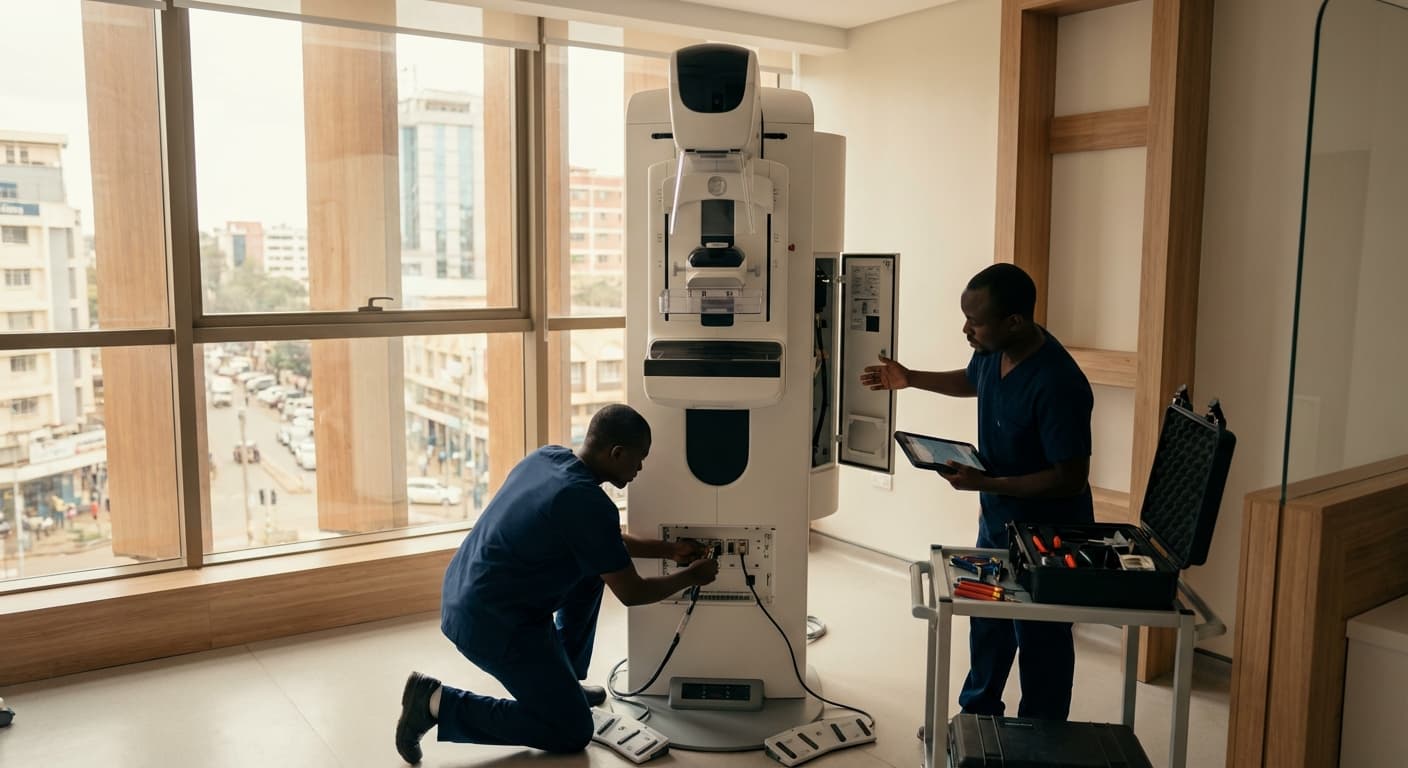
Mammography Installation Service in Congo (Kinshasa)
Engineering Excellence & Technical Support
Mammography Installation Service High-standard technical execution following OEM protocols and local regulatory frameworks.
Expert Installation of Advanced Mammography Systems
We provide meticulous installation of state-of-the-art mammography units in Kinshasa, ensuring optimal performance and compliance with international medical standards. Our certified technicians handle everything from site preparation and power supply integration to intricate system calibration and initial testing.
Seamless Integration with PACS and HIS
Our service ensures smooth integration of your new mammography equipment with existing Picture Archiving and Communication Systems (PACS) and Hospital Information Systems (HIS). This guarantees efficient workflow, secure data management, and immediate accessibility of patient imaging for radiologists and clinicians across Kinshasa.
Comprehensive Training and Post-Installation Support
Beyond installation, we offer comprehensive training for your radiology staff on the operation and basic maintenance of the mammography system. Our commitment extends to providing dedicated post-installation support and troubleshooting services to ensure uninterrupted, high-quality patient care in Kinshasa.
What Is Mammography Installation Service In Congo (Kinshasa)?
Mammography Installation Service in Congo (Kinshasa) refers to the comprehensive process of procuring, transporting, setting up, calibrating, and validating mammography equipment within healthcare facilities in the Democratic Republic of Congo, specifically in its capital city, Kinshasa. This service ensures that advanced medical imaging technology for breast cancer screening and diagnosis is operational, adheres to international safety and quality standards, and is integrated into the clinical workflow. The service encompasses logistical management from the point of origin to the installation site, including customs clearance, site preparation (electrical, structural, environmental), equipment assembly, performance testing, and personnel training.
| Who Needs Mammography Installation Service? | Typical Use Cases | ||
|---|---|---|---|
| Hospitals and Medical Centers in Kinshasa: Public and private healthcare institutions requiring advanced diagnostic imaging capabilities for breast health. | Establishment of new breast imaging departments or upgrading existing radiology facilities. | Replacement of outdated or non-functional mammography equipment. | Deployment of mobile mammography units for outreach programs in underserved areas. |
| Government Health Agencies: Ministry of Health and public health organizations aiming to expand access to breast cancer screening programs. | Implementing national breast cancer screening initiatives. | Equipping regional or district hospitals to improve diagnostic capacity. | Disaster relief or humanitarian efforts requiring rapid deployment of medical imaging equipment. |
| Specialized Clinics and Diagnostic Centers: Facilities focusing on women's health or radiology services. | Offering dedicated mammography services for early detection and diagnosis of breast pathologies. | Integrating mammography into comprehensive health check-up packages. | |
| Research Institutions: Academic and medical research centers conducting studies related to breast cancer. | Acquiring state-of-the-art equipment for clinical trials and research projects. |
Key Components of Mammography Installation Service
- Site Assessment and Preparation: Evaluating the designated installation area for structural integrity, power supply stability, environmental controls (temperature, humidity), radiation shielding requirements, and network connectivity. This may involve civil works and infrastructure upgrades.
- Logistics and Transportation: Managing the secure and compliant transportation of mammography units from the manufacturer or supplier to the installation site, including specialized handling and insurance.
- Equipment Assembly and Integration: Unpacking, assembling, and connecting all components of the mammography system, including the X-ray generator, detector, image acquisition workstation, and associated peripherals.
- Calibration and Quality Assurance: Performing rigorous calibration procedures to ensure accurate image acquisition, dose consistency, and adherence to regulatory standards. This includes phantom testing and acceptance testing.
- System Testing and Validation: Conducting functional tests to verify all system parameters, imaging capabilities, and software functionalities. Clinical validation may be performed with medical imaging professionals.
- Radiation Safety Compliance: Ensuring that the installation adheres to all national and international radiation protection guidelines and regulations, including the implementation of safety interlocks and shielding verification.
- User Training and Support: Providing comprehensive training to radiographers, technologists, and medical physicists on the operation, maintenance, and basic troubleshooting of the mammography system.
- Post-Installation Support and Maintenance Planning: Establishing protocols for ongoing maintenance, service contracts, and access to technical support to ensure long-term system reliability.
Who Needs Mammography Installation Service In Congo (Kinshasa)?
Mammography installation is a critical service for any healthcare facility equipped with or planning to acquire this advanced imaging technology. In Congo (Kinshasa), the need for reliable and professional mammography installation arises from several key sectors focused on women's health, diagnostic imaging, and overall healthcare improvement.
| Customer Type | Key Departments Involved | Primary Need |
|---|---|---|
| Public Hospitals | Radiology, Oncology, Gynecology, Women's Health | Early breast cancer detection and diagnosis for a wide population. |
| Private Hospitals & Clinics | Radiology, Diagnostic Imaging, Gynecology, Women's Health | Providing advanced diagnostic imaging and specialized women's care. |
| Diagnostic Imaging Centers | Radiology, Mammography Unit | Offering comprehensive and high-quality mammography services. |
| Women's Health Centers | Screening, Diagnostic Imaging, Gynecology | Dedicated breast cancer screening and assessment. |
| Oncology Departments | Radiology, Medical Oncology, Surgical Oncology | Accurate staging and monitoring of breast cancer. |
| Radiology Departments | Diagnostic Imaging, Mammography | Integration of modern mammography into diagnostic workflows. |
| Government Health Initiatives | Public Health Facilities, Ministry of Health Departments | Implementing national breast cancer screening programs. |
| Research & Academic Institutions | Radiology Research Labs, Medical Training Facilities | Facilitating research and educating future medical professionals. |
Target Customers and Departments Requiring Mammography Installation Service in Congo (Kinshasa)
- {"title":"Public Hospitals","description":"Large public hospitals serving a broad population are primary candidates. They often have dedicated oncology departments, radiology units, and women's health clinics that would benefit from mammography services for early breast cancer detection and diagnosis."}
- {"title":"Private Hospitals and Clinics","description":"The growing private healthcare sector in Kinshasa, catering to a segment of the population with greater access to specialized medical care, will require professional installation for their radiology departments and specialized women's health centers."}
- {"title":"Diagnostic Imaging Centers","description":"Facilities solely focused on medical imaging are key clients. These centers often invest in the latest technology and require precise installation of mammography equipment to offer comprehensive diagnostic services."}
- {"title":"Women's Health Centers and Breast Clinics","description":"Specialized centers dedicated to women's health and breast disease screening and treatment are prime targets. The installation of mammography units is fundamental to their core services."}
- {"title":"Oncology Departments","description":"Any department dealing with cancer diagnosis and treatment will require accurate mammography readings, necessitating professional installation of the equipment."}
- {"title":"Radiology Departments","description":"The central hub for all medical imaging, radiology departments in various healthcare settings are the most direct recipients of mammography installation services. This includes ensuring proper power, ventilation, and radiation shielding."}
- {"title":"Government Health Initiatives","description":"Government-led health programs focused on improving maternal and child health, or specific campaigns for breast cancer awareness and screening, may require installation services in public health facilities across the country."}
- {"title":"Research and Academic Institutions","description":"Medical schools and research institutions involved in studies related to breast cancer or medical imaging technology will need expertly installed mammography equipment for their research and training purposes."}
Mammography Installation Service Process In Congo (Kinshasa)
This document outlines the comprehensive workflow for mammography installation services in Congo (Kinshasa), from the initial customer inquiry to the successful execution and handover. The process is designed to ensure a smooth, efficient, and compliant installation, meeting both technical specifications and regulatory requirements.
| Phase | Key Activities | Responsible Parties | Deliverables/Outcomes | Estimated Timeline (variable) |
|---|---|---|---|---|
| Customer contacts service provider with interest in mammography installation. Discussion of specific equipment model, site requirements, and any existing infrastructure. Initial technical consultation. | Customer (Hospital/Clinic), Service Provider (Sales/Technical Team) | Understanding of customer needs, preliminary site assessment report, identification of potential challenges. | 1-3 Days |
| Development of a detailed quotation based on the identified needs. Includes equipment costs, installation fees, shipping, taxes, and potential additional services. Negotiation of terms, payment schedule, and service level agreements (SLAs). | Service Provider (Sales/Commercial Team), Customer (Procurement/Administration) | Formal quotation, mutually agreed-upon contract/purchase order. | 3-7 Days |
| Once contract is signed, a thorough site survey is conducted. Assessment of power supply, environmental conditions (temperature, humidity), radiation shielding requirements, physical space, accessibility for equipment delivery, and networking capabilities. Development of a detailed site preparation plan. | Service Provider (Technical Team/Project Manager), Customer (Facility Management/IT) | Detailed site survey report, site preparation checklist, confirmed technical specifications for installation. | 5-10 Days |
| Order placement for mammography unit and accessories. Management of international or local shipping, customs clearance, and transportation to the installation site in Kinshasa. Ensuring all necessary documentation for import is in order. | Service Provider (Logistics/Procurement), Customer (Customs Broker/Local Agents) | Procured equipment, cleared customs, delivered to site. | 2-8 Weeks (highly variable due to customs and shipping) |
| Arrival of technical installation team. Unpacking and inspection of equipment. Assembly and connection of the mammography unit and associated components. Installation of any required infrastructure modifications (e.g., electrical, network). | Service Provider (Certified Installation Technicians) | Assembled and physically installed mammography system. | 3-7 Days |
| Comprehensive testing of all system functions, including image acquisition, processing, and display. Calibration of the system to ensure accurate image quality and adherence to international diagnostic standards. Performing quality control (QC) tests. | Service Provider (Certified Technicians/Application Specialists) | Fully functional and calibrated mammography system, test reports, QC documentation. | 2-4 Days |
| Training of clinical staff (radiologists, radiographers) on the operation of the mammography system, basic troubleshooting, and routine maintenance. Formal handover of the installed system to the customer, including all user manuals, warranty information, and service documentation. | Service Provider (Application Specialists/Trainers), Customer (Clinical Staff/IT) | Trained personnel, signed handover certificate, comprehensive documentation package. | 2-5 Days |
| Provision of ongoing technical support, preventive maintenance, and spare parts availability as per the service contract. Regular follow-ups to ensure customer satisfaction and system performance. | Service Provider (Technical Support Team/Service Engineers) | Ongoing system support, maintained performance, customer satisfaction. | Continuous (as per contract) |
Mammography Installation Service Process Workflow in Congo (Kinshasa)
- Inquiry and Needs Assessment
- Quotation and Contract Negotiation
- Site Preparation and Survey
- Equipment Procurement and Logistics
- Installation and Assembly
- Testing and Calibration
- Training and Handover
- Post-Installation Support
Mammography Installation Service Cost In Congo (Kinshasa)
The cost of mammography installation services in Congo (Kinshasa) can vary significantly due to several influencing factors. These factors dictate the overall investment required for setting up a functional mammography unit, ensuring it meets clinical standards and operational needs. Understanding these elements is crucial for accurate budgeting and procurement. Key pricing determinants include the type and brand of mammography equipment, the complexity of the installation, the existing infrastructure at the healthcare facility, and the service provider's expertise and reputation. Additional costs can arise from necessary electrical upgrades, specialized shielding, training for medical personnel, and ongoing maintenance contracts.
| Service Component | Estimated Price Range (Congolese Francs - CDF) | Notes |
|---|---|---|
| Basic Installation of Digital Mammography Unit | 5,000,000 - 15,000,000 CDF | Assumes basic site readiness, standard electrical connections, and manufacturer-provided setup. |
| Advanced Digital Mammography Installation (e.g., DBT) | 10,000,000 - 30,000,000+ CDF | Includes more complex integration, potentially software setup, and higher-end equipment. |
| Site Preparation & Electrical Upgrades | 2,000,000 - 10,000,000 CDF | Highly variable depending on existing infrastructure. May include dedicated circuits, power conditioning. |
| Radiation Shielding (if required) | 3,000,000 - 15,000,000 CDF | Cost depends on the size of the room and the shielding materials needed (e.g., lead lining). |
| Staff Training (Radiologists & Technologists) | 1,000,000 - 5,000,000 CDF | Per session or per group, depending on the training package. |
| Installation Service Provider Fees (Labor & Expertise) | Included in the overall installation cost or quoted separately. | Typically 10-20% of equipment cost for specialized services. |
| Contingency/Miscellaneous | 1,000,000 - 3,000,000 CDF | For unforeseen circumstances and minor adjustments. |
Pricing Factors for Mammography Installation in Congo (Kinshasa)
- Type and Brand of Mammography Equipment: Advanced digital mammography systems (FFDM or DBT) are generally more expensive than older analog models. Brand reputation and technological features also impact price.
- Complexity of Installation: This includes site preparation requirements, accessibility for equipment delivery and assembly, and the need for specialized structural modifications.
- Existing Infrastructure: The current state of the healthcare facility's electrical supply, room dimensions, ventilation, and radiation shielding can necessitate significant upgrades, increasing installation costs.
- Service Provider's Expertise and Reputation: Experienced and certified installation teams may command higher fees, but often provide superior service and reduce the risk of future issues.
- Geographical Location within Kinshasa: While Kinshasa is the capital, transportation costs for equipment and personnel to more remote areas within the city or its outskirts might add to the overall price.
- Additional Services: This can include comprehensive site surveys, radiation shielding assessment and installation, UPS/generator integration, and specialized medical imaging software setup.
- Training and Support: The cost of training radiologists, technologists, and maintenance staff on the new equipment is often bundled into the installation package.
- Warranty and Maintenance Contracts: While not strictly installation, the initial period of warranty and any included maintenance agreements are often factored into the initial procurement and installation cost.
Affordable Mammography Installation Service Options
Securing affordable mammography installation is crucial for healthcare providers aiming to offer essential diagnostic services without breaking the bank. Beyond simply purchasing equipment, the installation process itself can incur significant costs. Understanding value bundles and implementing cost-saving strategies can make this essential service more accessible and manageable. Value bundles often package installation with equipment purchase, training, and maintenance contracts, offering a more integrated and potentially cost-effective solution. Exploring these bundles, alongside independent service provider options and strategic procurement approaches, allows for optimized investment in mammography technology.
| Value Bundle Component | Potential Cost Savings | Considerations |
|---|---|---|
| Equipment Purchase & Installation | Reduced overall cost through package pricing, streamlined logistics. | Compare bundled pricing against separate quotes from manufacturers and installers. Ensure the bundled installation meets all regulatory and technical requirements. |
| Calibration & Quality Assurance | Ensures immediate compliance and avoids costly downtime for re-calibration. | Verify the scope of QA services included and the qualifications of the technicians. |
| Initial Staff Training | Reduces the need for external, costly training sessions later, speeds up adoption. | Assess the duration and depth of training. Ensure it's hands-on and relevant to your clinical workflow. |
| Extended Warranty/Service Contract | Predictable maintenance costs, prevents expensive emergency repairs. | Understand the coverage details (parts, labor, response time) and compare to independent service options. |
| Site Preparation Consultation | Identifies potential issues early, preventing costly rework or delays. | Ensure the consultation is comprehensive and covers electrical, structural, and environmental needs. |
Cost-Saving Strategies for Mammography Installation
- Negotiate Bundle Deals: Inquire about package deals that combine mammography equipment purchase with installation, calibration, and initial training.
- Explore Independent Service Organizations (ISOs): While manufacturers offer installation, independent specialists can sometimes provide competitive pricing for installation and subsequent maintenance.
- Phased Installation: If budget is a constraint, consider a phased approach. Install core infrastructure and essential components initially, with advanced features or supplementary units added later.
- Used or Refurbished Equipment: Opting for certified pre-owned or refurbished mammography machines can significantly reduce upfront costs, often with comparable warranties and performance.
- Leverage Existing Infrastructure: Maximize the use of your current imaging suite's electrical, structural, and environmental controls to minimize site preparation expenses.
- Bulk Purchasing & Group Discounts: For larger healthcare networks or purchasing consortia, explore opportunities for bulk discounts on equipment and installation services.
- Seek Multiple Quotes: Obtain detailed quotes from at least three reputable installation providers to compare pricing, scope of services, and timelines.
- Understand All Fees: Scrutinize installation quotes for hidden costs such as site assessment fees, travel expenses, specialized disposal fees, or extended warranty charges.
- Long-Term Service Agreements: While an upfront cost, a comprehensive service agreement bundled with installation can prevent unexpected repair bills and ensure optimal equipment uptime.
- Training Package Optimization: Ensure training is tailored to your specific needs. Avoid paying for redundant training modules and explore train-the-trainer programs for internal staff.
Verified Providers In Congo (Kinshasa)
In the Democratic Republic of Congo (Kinshasa), navigating the healthcare landscape to find verified providers is crucial for ensuring quality and trustworthy medical services. Franance Health has emerged as a leading entity in this regard, offering a robust platform that vets and showcases healthcare professionals and facilities. Their rigorous credentialing process provides a significant advantage to patients seeking reliable care, establishing them as the best choice for accessing verified healthcare in Kinshasa.
| Credential Type | Franance Health Verification Standard | Patient Benefit |
|---|---|---|
| Medical Licenses | Mandatory submission and cross-verification with relevant regulatory bodies. | Ensures providers are legally qualified to practice medicine. |
| Educational Qualifications | Verification of degrees and certifications from accredited institutions. | Confirms providers have received appropriate academic training. |
| Professional Experience | Verification through peer reviews, previous employer references, and documented practice history. | Indicates a proven track record and practical expertise. |
| Specialty Certifications | Confirmation of specialized training and board certifications. | Identifies providers with advanced knowledge in specific medical fields. |
| Facility Accreditations (for clinics/hospitals) | Verification of operational permits and adherence to health facility standards. | Guarantees that healthcare facilities meet essential safety and quality benchmarks. |
Why Franance Health is the Best Choice:
- Comprehensive Vetting Process: Franance Health employs a multi-layered approach to verify the credentials, licenses, and qualifications of all listed providers.
- Focus on Quality and Safety: Their stringent standards ensure that patients are connected with healthcare professionals committed to high standards of care and patient safety.
- Accessibility and Convenience: The platform simplifies the process of finding verified doctors, specialists, and hospitals, saving patients valuable time and effort.
- Transparency and Trust: By providing verified information, Franance Health builds trust and empowers patients to make informed decisions about their health.
- Diverse Range of Specialties: Franance Health covers a wide spectrum of medical disciplines, ensuring that patients can find specialists for almost any health concern.
Scope Of Work For Mammography Installation Service
This Scope of Work (SOW) outlines the requirements for the professional installation of a new mammography system at [Hospital/Clinic Name]. The service provider will be responsible for all aspects of the installation process, ensuring the system is fully operational, calibrated, and integrated with existing hospital IT infrastructure. This SOW also details the technical deliverables and standard specifications required for a successful installation.
| Deliverable | Description | Standard Specification / Requirement | Acceptance Criteria |
|---|---|---|---|
| Pre-Installation Survey Report | Detailed assessment of the installation site, including power, network, environmental conditions, and structural integrity. | Report includes floor plans, power outlet locations, network port availability, ambient temperature/humidity readings, and any necessary modifications. | Report approved by the hospital's facilities and IT departments prior to commencement of installation. |
| Equipment Received and Inspected | Confirmation of receipt and visual inspection of all delivered mammography system components. | All components present as per the equipment manifest, free from visible damage or defects. | Signed delivery confirmation by hospital representative, detailing any discrepancies or damages. |
| Site Preparation Complete | Ensuring the installation area meets all manufacturer and regulatory requirements. | Dedicated power circuits, appropriate ventilation, shielding (if applicable), and adequate space for the system and operator. | Confirmation of compliance with manufacturer's site preparation guide and local building codes. |
| Mammography System Installed and Assembled | Physical assembly and placement of the mammography unit, including all detectors, gantry, workstation, and associated peripherals. | System components assembled according to manufacturer's installation manual, with proper alignment and clearances. | Visual inspection and functional checks by the installation team and hospital representative. |
| Electrical and Network Connectivity Established | Connection of the mammography system to the hospital's power supply and IT network. | Dedicated, grounded power outlets; stable network connectivity (wired Ethernet preferred) with appropriate IP addressing and firewall configurations. | Successful power-on of all system components; network connectivity confirmed via ping tests and accessibility to PACS/RIS. |
| System Software Installed and Configured | Installation and configuration of all necessary operating systems, application software, and drivers. | Software installed according to manufacturer's specifications; user accounts and permissions configured. | Successful launch of all software applications; basic system settings verified. |
| Calibration and QA Performed | Comprehensive calibration and quality assurance (QA) testing of the mammography system. | All tests performed using calibrated phantoms and equipment, adhering to ACR (American College of Radiology) and manufacturer guidelines. Includes image quality, dose, and performance checks. | Calibration and QA reports signed by a qualified medical physicist, demonstrating all parameters are within specified tolerances. |
| User Training Conducted | Training for designated hospital staff (radiographers, technologists) on the operation and basic maintenance of the new mammography system. | Training covers system operation, image acquisition protocols, patient positioning, troubleshooting, and safety procedures. | Attendance sheets and training feedback forms completed and reviewed. |
| Installation Completion Report and Handover | Formal documentation confirming the successful installation, testing, and handover of the mammography system. | Report includes all test results, calibration certificates, training records, user manuals, and warranty information. | Signed acceptance form by the hospital's authorized representative, signifying full acceptance of the installed system. |
Key Project Phases
- Pre-Installation Survey and Planning
- Equipment Delivery and Unpacking
- Site Preparation and Infrastructure Verification
- System Installation and Assembly
- Electrical and Network Connectivity
- Software Installation and Configuration
- System Testing and Calibration
- User Training
- System Handover and Documentation
Service Level Agreement For Mammography Installation Service
This Service Level Agreement (SLA) outlines the terms and conditions for the Mammography Installation Service provided by [Your Company Name] (hereinafter referred to as "Provider") to [Client Name] (hereinafter referred to as "Client") for the installation of mammography equipment at [Client's Location(s)]. This SLA focuses on response times for service requests and uptime guarantees for the installed mammography systems.
| Service Level | Description | Target | Measurement Method |
|---|---|---|---|
| Installation Completion Time | Time taken from site readiness confirmation to successful system handover. | 10 business days (subject to equipment availability and client site readiness) | Tracking of project start and end dates based on signed handover documentation. |
| Emergency Support Response Time | Time taken by Provider's technical support to acknowledge and begin remote troubleshooting for critical system failures preventing mammography operation. | 4 hours (within business hours) | Timestamp of ticket creation in Provider's support system and initial contact timestamp. |
| On-Site Technician Dispatch Time (Emergency) | Time taken to dispatch a qualified on-site technician after the initial remote assessment for critical system failures. | 8 business hours (if remote troubleshooting is unsuccessful and on-site intervention is required) | Timestamp of dispatch notification to technician and confirmation of arrival at client site. |
| Routine Support Response Time | Time taken by Provider's technical support to acknowledge and begin remote troubleshooting for non-critical system issues or inquiries. | 24 business hours | Timestamp of ticket creation in Provider's support system and initial contact timestamp. |
| System Uptime Guarantee | Percentage of time the installed mammography system is operational and available for use, excluding scheduled maintenance and client-induced downtime. | 98% (monthly average) | Monthly calculation based on logged system operational status, excluding scheduled maintenance periods and documented client-caused interruptions. |
| Scheduled Maintenance Notification | Advance notice provided to the Client for planned system maintenance. | At least 7 calendar days | Date of formal notification (email or service portal) to the Client. |
Key Service Objectives
- To ensure prompt and efficient response to reported issues affecting the mammography installation or its operational status.
- To guarantee a high level of availability and reliability for the installed mammography systems, minimizing downtime.
- To clearly define responsibilities and expectations for both the Provider and the Client.
Frequently Asked Questions

Ready when you are
Let's scope your Mammography Installation Service in Congo (Kinshasa) project in Congo (Kinshasa).

Scaling healthcare logistics and technical systems across the entire continent.